
Tesla Powerwall in Kentucky: Cost, Availability & Is It Worth It?

Kentucky homeowners are paying less for electricity than most Americans — about 12 cents per kWh on average in 2023, roughly 20–25% below the U.S. residential average, according to the U.S. Energy Information Administration (EIA). Low rates make pure bill-arbitrage with batteries tougher. But the 30% federal clean energy tax credit now applies to standalone storage, and storm-driven outages in the Ohio Valley are getting more disruptive. If you’re weighing a Tesla Powerwall in Kentucky, here’s how the technology, incentives, utility rates, and real-world economics pencil out.
Tesla Powerwall in Kentucky: Specs and how it works
Tesla’s Powerwall is a lithium-based home battery that stores electricity and automatically powers your home during grid outages. It can also shift your solar production to evening hours or charge from the grid when rates are low (where time-of-use pricing is available), then discharge when rates are higher.
The Grid: The Fraying Wires Between Americans and Our Energy Future: Bakke, Gretchen
Cultural anthropologist Gretchen Bakke <strong>unveils the many facets of America's energy infrastructure, its most dynamic moments and its most stable ones, and its essential role in personal an
Check Price on AmazonKey models you’ll encounter in 2026 installations:
- Powerwall 3 (PW3): 13.5 kWh usable energy, integrated hybrid inverter, up to ~11.5 kW continuous output for backup, stackable in parallel for more power and capacity. Uses lithium iron phosphate (LFP) chemistry, prized for long cycle life and thermal stability. Weather rating suitable for indoor/outdoor (NEMA 3R). Tesla’s app controls modes like Self-Powered, Time-Based Control (for TOU), and Storm Watch.
- Powerwall 2 (PW2) / Powerwall+: 13.5 kWh usable energy, 5 kW continuous (7 kW peak) per unit. AC-coupled (PW2) or paired with a Tesla solar inverter (Powerwall+). Many Kentucky homes installed PW2/Powerwall+ in recent years; these remain serviceable and expandable.
Other essentials:
- Round-trip efficiency: typically ~90% for lithium-ion home batteries (NREL benchmarks). That means you get back about 90% of the energy you put in, after conversion losses.
- Warranty: Tesla offers a 10-year warranty to at least 70% of original capacity. Throughput/cycling terms can vary by operating mode; ask your installer for the latest Tesla warranty document.
- Safety and codes: Systems are certified to UL 9540 and tested to UL 9540A; placement follows NFPA 855 fire code setbacks (e.g., distances from living spaces and ignition sources). Your installer should handle permitting and code compliance.
In plain terms: one Powerwall stores roughly a day’s worth of essential loads (refrigerator, Wi-Fi, lights, sump pump, gas furnace blower, some outlets). Whole-home backup with central air or a heat pump typically needs 2–3 units to cover higher starting and running loads.
By the numbers: Tesla Powerwall in Kentucky
- Energy capacity: 13.5 kWh usable per unit (Tesla)
- Power output: 5 kW (PW2) or up to ~11.5 kW (PW3) per unit; stack units for more power (Tesla)
- Round-trip efficiency: ~90% (NREL)
- Warranty: 10 years to 70% capacity (Tesla)
- Typical installed price in KY: $12,000–$16,000 for the first unit; $7,000–$10,000 for each additional unit (before incentives)
- Federal tax credit (ITC): 30% on standalone batteries ≥3 kWh through at least 2032 (U.S. Treasury/IRS under the Inflation Reduction Act)
- Kentucky avg residential rate: ~$0.12/kWh in 2023 (EIA)
Powerwall pricing in Kentucky, including installation
Installed costs vary with site complexity (main panel upgrades, trenching, whole-home vs essential-loads backup) and whether you combine with new solar.
Typical 2026 ranges we see from Kentucky quotes:
- Hardware (Powerwall 3 or 2): $8,500–$10,500
- Balance-of-system and labor: $3,500–$6,000 for the first unit; $1,500–$3,000 per additional unit
- Permit, design, commissioning: $500–$1,500
Result: $12,000–$16,000 installed for a single Powerwall; $19,000–$26,000 for two. After the 30% federal ITC, the net cost falls to roughly $8,400–$11,200 for one, or $13,300–$18,200 for two, assuming you have sufficient tax liability. Where labor is straightforward and installers are competitive, Kentucky quotes often land toward the lower half of national ranges.
Consider a panel upgrade. Many mid-century Kentucky homes have 100–150A service. If you want whole-home backup with large HVAC, a main panel upgrade or a load-management device may be needed. Expect $1,500–$3,500 for an upgrade; sometimes load-shedding hardware can avoid that cost.
Kentucky battery storage incentives: state rebates, SGIP, utility programs
- Federal Investment Tax Credit (ITC): The 30% credit now applies to standalone batteries ≥3 kWh capacity regardless of whether they charge from solar. This alone is the primary incentive for a Tesla Powerwall in Kentucky.
- State incentives: As of 2026, Kentucky does not offer a statewide battery rebate or personal income tax credit for residential storage. Always verify with your installer and the Kentucky Department of Revenue in case new programs emerge.
- Utility programs: Kentucky utilities do not run an SGIP-style statewide incentive (SGIP is a California program). Some utilities periodically pilot demand response or research programs for home batteries; enrollment windows are limited and terms vary. Ask your local provider (LG&E/KU, Duke Energy Kentucky, Kentucky Power/AEP, or your TVA local power company) whether any battery pilot offers bill credits for allowing limited utility control during peak events.
Tip: If a utility-backed “virtual power plant” (VPP) option becomes available, it can materially improve economics by paying performance-based incentives for peak support. Participation rules, cycling limits, and warranty implications should be reviewed carefully.
For solar-specific Kentucky incentives and installer context, see our state guide: Solar in Kentucky: Costs, Incentives & Top Installers (2026).
How the Powerwall pairs with solar in Kentucky: backup vs. self-consumption
A Powerwall can be installed with new solar or retrofitted to an existing array. Pairing considerations:

Emporia Vue 3 Home Energy Monitor - Smart Home Automation Module and Real Time Electricity Usage Monitor, Power Consumption Meter, Solar and Net Metering for UL Certified Safe Energy Monitoring - Amazon.com
View on Amazon- AC- vs. DC-coupled: Powerwall 2 is AC-coupled (easy retrofit); Powerwall 3 integrates a hybrid inverter and DC-couples to solar for efficient charging. In day-to-day use, both enable backup and time-shifting; DC coupling improves round-trip efficiency slightly by avoiding some AC conversions.
- Self-consumption: Kentucky’s post-2020 net metering structure compensates most new solar customers below the full retail rate for exports (rates are set utility-by-utility by the Public Service Commission). Storing mid-day solar and using it in the evening reduces exports at sub-retail credit values and raises your solar self-consumption — a real driver of battery value in Kentucky.
- Backup power: In grid outages, solar without a battery typically shuts down for safety. A battery-backed system can island and keep critical loads running. With 1 Powerwall, many Kentucky homes can keep essentials powered for 12–24 hours of typical use; adding a second unit extends runtime and supports larger loads.
Sizing rules of thumb:
- Essential-backup: 1 Powerwall for homes using ~20–30 kWh/day, prioritizing fridge, lights, outlets, gas furnace blower, and a sump pump.
- Whole-home with central AC or heat pump: 2–3 Powerwalls to handle higher startup currents and evening usage, especially in summer.
- Solar-to-battery ratio: For self-consumption, a rough planning metric is 1 Powerwall per 5–8 kW of solar, but your daily load shape and seasonal solar output matter most. Your installer should model your 15-minute interval data (if available) to right-size.
Kentucky utility rate structures and how a Powerwall saves with time-of-use
Kentucky’s savings math hinges on three rate mechanics:
Retail rate level: At ~12 cents/kWh average, Kentucky’s base rates are lower than the national mean (EIA). Lower rates mean each shifted kWh saves fewer dollars than in high-cost states.
Net metering crediting: After SB 100 (2019), new net metering exports are compensated at a rate set by the Kentucky PSC for each utility, rather than full retail. Credits are often a fraction of retail — commonly in the range of a few to several cents per kWh depending on the utility’s avoided costs and capacity value. Using a battery to consume your own solar at night avoids exporting those kWh at a discount.
Time-of-use (TOU) and demand-based options: Some Kentucky utilities (e.g., LG&E/KU, Duke Energy Kentucky) offer optional residential TOU or time-of-day rates; a few have demand-based pilots. If enrolled, a Powerwall can charge off-peak and discharge during peak windows to reduce bills.
Illustrative savings scenarios:
- Self-consumption uplift: Suppose your export credit is $0.06/kWh and retail is $0.12/kWh. Storing 10 kWh of mid-day solar and using it at night avoids a 6¢/kWh shortfall, or about $0.60/day on sunny days. Across 200 high-production days, that’s ~$120/year before efficiency losses.
- TOU arbitrage: If peak vs off-peak spread is 6¢/kWh and you shift 9–10 kWh/day (net of losses), annual savings might land near $180–$220. Larger spreads can raise this into the $300–$500 range; smaller spreads reduce it.
- Demand charge shaving: If you’re on an optional demand rate that charges for your monthly kW peak, a battery can clip that peak. Savings are highly specific to your usage and tariff; ask your installer to simulate with your interval data.
Takeaway: In Kentucky, the primary economic benefit of a Tesla Powerwall is usually reliability (backup power) plus modest bill improvements from higher solar self-consumption. TOU arbitrage is a bonus when available but rarely the sole justification at current rate spreads.
Powerwall availability and certified installers in Kentucky
Tesla sells Powerwall 3 nationwide through certified installers and, in many regions, direct installation teams. In Kentucky, you’ll primarily work with a Tesla Certified Installer that covers the Louisville–Lexington corridor, Northern Kentucky/Cincinnati suburbs, and Western Kentucky. Typical timelines are:
- Site visit to proposal: 1–2 weeks
- Permitting and utility interconnection: 2–6 weeks (varies by jurisdiction and utility)
- Installation to commissioning: 1–2 days on site, with inspection and app setup soon after
What to ask prospective installers:
- Are you proposing PW3 (hybrid inverter) or AC-coupled PW2/Powerwall+? Why for my site?
- Will I get whole-home or essential-loads backup? What are the backed-up circuits and expected runtimes in summer vs winter?
- Do I need a service panel upgrade or load-management device? Cost impact?
- How will my net metering/export credit work with my utility? Can you model my bill under current tariffs and an optional TOU rate, if available?
- Where will the battery be mounted to comply with NFPA 855 and my local AHJ (authority having jurisdiction)?
If you live near state lines, note that many installers also serve neighboring markets. For example, Louisville-area homeowners comparing cross-border quotes may find relevant details in our nearby coverage: Tesla Powerwall in Indiana: Cost, Availability & Is It Worth It?.
Alternatives to Tesla Powerwall available in Kentucky
Competition is healthy and can improve pricing and fit for your home. Common alternatives your installer may offer:
- Enphase IQ Battery 5P/10T: LFP chemistry, tightly integrated with Enphase microinverters, strong app and modularity. The Enphase IQ Battery 10T often represents excellent value when paired with existing Enphase PV systems due to seamless control and monitoring.
- LG Energy Solution RESU Prime 16H: High-capacity LFP option with reputable cell quality. For homes needing >13.5 kWh per unit, the LG RESU Prime 16H can reduce unit count while retaining a 10-year warranty.
- Generac PWRcell: Modular DC-coupled system integrated with Generac inverters; can be a cost-competitive choice in some quotes. If you’re prioritizing outage performance with managed loads, the Generac PWRcell plus smart load controls is worth a side-by-side comparison.
Feature checklist to compare:
- Chemistry and safety: LFP is now common for residential storage due to thermal stability and long cycle life.
- Continuous and surge power: Starting large compressors (A/C, well pump) may favor systems with higher kW output or stackable power.
- Integration with your current PV: If you already have Enphase or SolarEdge, consider batteries that play natively with those ecosystems.
- Warranty terms: 10 years is standard; verify energy throughput limits and capacity retention.
- Service network: Ask how quickly local teams can respond and whether the manufacturer has regional parts availability.
Some Kentucky homeowners also compare a battery-plus-smaller-generator combo (battery handles short/quiet outages and daily shifting; generator covers multi-day events). This hybrid approach can cost less than 3+ batteries while retaining resilience for extreme weather.
FAQ: Common questions about Tesla Powerwall in Kentucky
How many Powerwalls do I need?
- One unit (13.5 kWh) typically covers essentials for 12–24 hours depending on usage. Two units can support more loads (including many central A/C systems) and extend runtime. Your installer should model your actual circuits and seasonal needs.
Can a Powerwall run my central air conditioner?
- Often yes with Powerwall 3 or multiple units, but it depends on your A/C size and startup current. Many 2–3 ton systems work with 2+ Powerwalls; soft starters can help. Your installer will check nameplate LRA/FLA and propose load management if needed.
What happens during an outage if I have solar?
- With a compatible inverter and a battery, your system can island and keep selected circuits powered while solar recharges the battery during the day. Without a battery, most grid-tied solar arrays shut off during outages for safety (anti-islanding requirements).
Is the Powerwall eligible for the 30% federal tax credit in Kentucky?
- Yes. As of 2023 onward, standalone batteries ≥3 kWh qualify under the Inflation Reduction Act, subject to your tax liability. Consult a tax professional about your situation.
Are there Kentucky state rebates for batteries?
- Not statewide as of 2026. Some utilities occasionally run pilots with bill credits or incentives, but availability is limited and program terms vary. Ask your utility and installer for current options.
How does cold weather affect performance?
- Powerwalls include internal heating to protect cells and maintain operation down to around -4°F. Very cold conditions can reduce charge/discharge power and slightly reduce usable capacity until the unit warms. Mounting in a garage or conditioned space helps.
Will a Powerwall lower my bill without time-of-use rates?
- Savings are usually modest without TOU. The main financial lift in Kentucky comes from increasing solar self-consumption when export credits are below retail. Reliability and outage protection are often the primary reasons homeowners choose batteries.
How long do they last?
- Many residential LFP batteries are designed for daily cycling for 10+ years. Tesla warrants at least 70% capacity at year 10. Real-world life depends on cycling intensity, temperatures, and operating mode.
What about safety and placement?
- Install to UL 9540/NFPA 855 standards. Avoid sleeping rooms and habitable spaces. Keep required clearances. Your installer coordinates with local inspectors to ensure compliance.
Practical implications for Kentucky homeowners
- If you value resilience, start with one Powerwall for essential loads. If you also want to run HVAC during outages or maximize self-consumption, plan for two units.
- With low Kentucky rates, stack value streams: backup + higher solar self-use + optional TOU arbitrage if available + potential future utility programs.
- Get three quotes. Ask each installer to model your bill under your exact tariff and any optional TOU/demand rate. Transparent modeling is the best predictor of satisfaction.
Where the market is heading
- More LFP, more power: 2025–2027 products emphasize higher continuous power per battery for whole-home backup without extensive load-shedding.
- Smarter tariffs: As utilities modernize, time-differentiated rates are likely to expand. Batteries gain value when peak spreads widen or when demand charges are introduced.
- Grid services: Virtual power plants are scaling in several U.S. markets. If Kentucky utilities launch residential battery programs with fair compensation, Powerwalls could earn new revenue streams.
For current solar incentives, installer lists, and payback scenarios in your area, see our state resource: Solar in Kentucky: Costs, Incentives & Top Installers (2026).
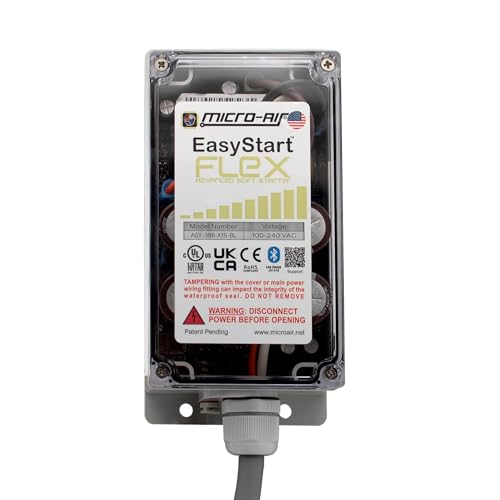
MICRO-AIR EasyStart 368 Bluetooth Soft Start Kit for Home Air Conditioner, RV & Commercial Use, Works with Generators, Reduces Power Surge, Efficient Start-Up - Up to 2-3.5 Tons(ASY-368-X48 BlueTooth) : Automotive
View on AmazonRecommended Products
The Grid: The Fraying Wires Between Americans and Our Energy Future: Bakke, Gretchen
Cultural anthropologist Gretchen Bakke <strong>unveils the many facets of America's energy infrastructure, its most dynamic moments and its most stable ones, and its essential role in personal an
MICRO-AIR EasyStart 368 Bluetooth Soft Start Kit for Home Air Conditioner, RV & Commercial Use, Works with Generators, Reduces Power Surge, Efficient Start-Up - Up to 2-3.5 Tons(ASY-368-X48 BlueTooth) : Automotive
COMPATIBILITY WITH GENERATORS: ... power-limited locations. This Easy Start flex home ac soft starter is <strong>compatible with 2-stage compressors and heat pump units</strong>, making it a versatile
Emporia Vue 3 Home Energy Monitor - Smart Home Automation Module and Real Time Electricity Usage Monitor, Power Consumption Meter, Solar and Net Metering for UL Certified Safe Energy Monitoring - Amazon.com
<strong>Add individual 50A sensors to your Vue to monitor up to 16 individual circuits</strong> — providing accurate energy use for the appliances and equipment that is important to you. No guesswork.