
Solar in Kansas: Costs, Incentives & Top Installers (2026)

Kansas sits in the heart of the U.S. solar belt, with 5.0–5.5 average peak sun hours across much of the state and strong summer irradiance that makes residential rooftop arrays compelling. For homeowners evaluating solar in Kansas in 2026, the combination of a 30% federal tax credit, a statewide property tax exemption for renewable equipment, and competitive Midwest installation prices can translate into 9–12 year paybacks under typical assumptions (sources: NREL PVWatts/NSRDB; EIA Electric Power Monthly; DSIRE).
By the numbers: Solar in Kansas (2026)
- Solar resource: 5.0–5.5 average peak sun hours (Wichita ~5.4; Manhattan ~5.1) under standard tilt (Source: NREL PVWatts/NSRDB)
- Typical residential system size: 6–8 kW DC
- Installed price: about $2.60–$3.30 per watt before incentives; $15,600–$26,400 for 6–8 kW (Source: LBNL Tracking the Sun 2024; NREL cost benchmarks)
- Federal incentive: 30% Investment Tax Credit (ITC) through at least 2032 (Source: IRS/Inflation Reduction Act)
- Retail electricity price: ~13–14¢/kWh statewide average in 2024 (Source: EIA)
- Production: 1,350–1,500 kWh per kW per year for well-sited arrays (8,100–12,000 kWh for 6–8 kW; Source: NREL PVWatts)
- Simple payback: 9–12 years depending on rate, netting policy, and system cost
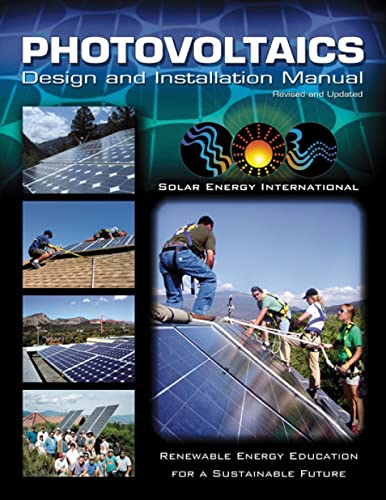
Photovoltaics: Design and Installation Manual: Solar Energy International
It also includes chapters on sizing photovoltaic systems, analyzing sites and installing PV systems, as well as detailed appendices on PV system maintenance, troubleshooting and solar insolation data
Check Price on AmazonSolar energy potential in Kansas: sun hours, irradiance, and climate factors
Kansas benefits from clear skies and strong summer irradiance. NREL’s National Solar Radiation Database shows much of the state in the 5.0–5.5 peak sun hours band when panels are installed near latitude tilt facing south. That translates to capacity factors around 18–20% for well-sited residential systems (capacity factor is the percentage of time a system effectively produces its rated output over a year).
Climate considerations unique to solar in Kansas:
- Hail and severe storms: Modern panels certified under IEC 61215 are tested to withstand 25 mm (1-inch) hail at 23 m/s. Many premium modules carry enhanced hail ratings up to 35–40 mm. Selecting higher hail-rated modules, tempered glass, robust racking, and ensuring homeowners insurance covers rooftop solar are prudent steps. Low-tilt installs reduce direct hail impact.
- Wind loading and tornado risk: Properly engineered racking and attachment (with stamped structural letters when required) helps manage uplift forces. Building to current International Residential Code and ASCE 7 wind-load requirements is standard.
- Summer heat: High-temperature operation slightly reduces panel efficiency (typical temperature coefficient −0.35 to −0.45%/°C). Good rear ventilation and lighter roof colors can help.
- Snow: Kansas sees less persistent snow loading than northern neighbors; winter soiling losses are typically modest in the south and central regions.
Average cost of solar panels in Kansas and price-per-watt breakdown
Residential installed prices in Kansas are generally competitive with the broader Midwest. In 2026, homeowners typically see quotes in the $2.60–$3.30/W range before incentives. That implies:
- 6 kW system: $15,600–$19,800
- 7 kW system: $18,200–$23,100
- 8 kW system: $20,800–$26,400
These figures align with Lawrence Berkeley National Laboratory’s Tracking the Sun 2024 dataset for 2023 installs and NREL’s cost benchmarks, adjusted for continued supply-chain normalization into 2025–2026. Real quotes vary by roof complexity, equipment brand, and add-ons like batteries or EV chargers.
Typical price-per-watt components (illustrative):
- Modules: $0.30–$0.45/W for Tier-1 monocrystalline panels
- Inverters: $0.20–$0.40/W (string + optimizers vs. microinverters)
- Balance of system hardware (racking, wiring, switches): $0.40–$0.60/W
- Labor and soft costs (design, permitting, overhead, profit): $1.50–$1.90/W
Cost drivers in Kansas:
- Roof type and pitch: Steep or tile roofs add labor time and specialized attachments.
- Distance to service panel and main panel upgrades: Long conduit runs or 100A-to-200A service upgrades add cost.
- Hail-rated equipment: Premium modules or thicker-glass options carry modest price premiums but can be worthwhile in hail-prone counties.
Kansas solar incentives: state tax credits, rebates, net metering, and SRECs
Kansas does not currently offer a standalone state income tax credit for residential solar. However, two policies significantly shape solar economics:
Property tax exemption: Kansas provides a property tax exemption for qualifying renewable energy equipment, including residential solar PV (Source: DSIRE; Kansas statutes). This generally means the added value of your PV system is excluded from property tax assessment for the allowed term under state law. Check with your county appraiser for how they apply the exemption locally.
Sales tax: Kansas does not have a universal statewide sales-tax exemption on residential solar equipment as some states do. Some local jurisdictions or municipal utilities may offer targeted programs from time to time—ask your installer about any current local rebates.
Net metering (investor-owned utilities only): Kansas requires investor-owned utilities (e.g., Evergy and Liberty/Empire District) to offer net metering to residential customers up to a system-size cap (commonly 15 kW for residential). For systems installed on or after July 1, 2014, monthly excess generation is typically credited at the utility’s average monthly wholesale cost (avoided cost) rather than the full retail rate, with annual settlement rules defined in utility tariffs (Sources: Kansas Corporation Commission; DSIRE). Cooperative and municipal utilities are not required to offer net metering, though some offer parallel generation or buyback tariffs.
SRECs: Kansas has no solar renewable energy certificate (SREC) market or solar carve-out in a renewable portfolio standard. Homeowners should not expect SREC income.
Important note on rates: In 2020, the Kansas Supreme Court held that imposing a special demand charge on solar customers was discriminatory, removing a key disincentive that had been proposed for residential solar customers. Current utility tariffs still matter—time-of-use or seasonal rates can affect savings profiles. Always request the specific netting/buyback rules for your service territory and installation date.
Federal ITC and how it applies to Kansas homeowners
The federal Investment Tax Credit (ITC) covers 30% of the total installed cost of residential solar through at least 2032 under the Inflation Reduction Act. That 30% applies to:
- PV modules, inverters, racking, wiring, balance of system
- Labor and permitting
- Standalone or paired batteries of 3 kWh or larger installed beginning in 2023
Example: A 7 kW system quoted at $21,000 before incentives would see a $6,300 federal tax credit, lowering the effective net cost to $14,700. The ITC is a nonrefundable credit that can be carried forward if it exceeds your tax liability. Consult a tax professional for eligibility.
For a deeper walkthrough of eligibility, carryforward rules, and batteries, see our guide: Solar Tax Credit Explained: Save on Solar with the Federal ITC.
Best solar installers and companies serving Kansas
Kansas homeowners can choose from local specialists and regional/national providers. Always solicit multiple bids, verify licensing and insurance, and ask for recent Kansas references. Criteria to weigh:
- NABCEP-certified PV Installation Professional on staff
- Clear warranty terms (workmanship 10+ years; manufacturer 25 years on panels/inverters)
- Hail/wind engineering and attachment details
- Transparent production modeling (NREL PVWatts or equivalent) and rate-tariff assumptions
- Service and monitoring commitments
Examples of installers serving Kansas markets as of 2024–2026 (verify current service areas):
- Good Energy Solutions (Lawrence-based): Long-time regional solar and electrical contractor; commercial and residential; NABCEP credentials commonly noted.
- King Solar (Hesston/Central KS): Focus on residential and agricultural arrays; strong experience with ground mounts and rural interconnections.
- Cromwell Solar (Lawrence region): Residential/commercial PV with engineering depth and monitoring support.
- KC Solar (Kansas City metro, KS/MO): Rooftop PV, batteries, and EV charger integration.
- Helio GreenTech (KC area): Residential PV and storage; microinverter-heavy designs for complex roofs.
- Blue Raven Solar (national, active in KC metro): Streamlined sales/permits; typically offers loan financing; ensure clarity on subcontracting and service.
Tip: Request at least one quote each for string inverter with optimizers and microinverters. Microinverters can excel on complex or partially shaded roofs; string inverters with optimizers can be cost-effective on simple, unshaded roof planes.
ROI and payback period for solar in Kansas
Kansas electricity rates average around 13–14¢/kWh, lower than the U.S. average but high enough—combined with strong solar resource—to deliver solid returns.

EF ECOFLOW Smart Home Panel 2, the Center of the Whole
Alternatively connect <strong>3 x EcoFlow DELTA Pro 3 units with 6 x Extra Batteries for energy storage up to 36kWh</strong>. It's not just for longer backup but lets you to control and run every
Check Price on AmazonIllustrative 7 kW scenario:
- System cost: $21,000 before ITC; $14,700 after 30% ITC
- Production: ~9,800 kWh/year (based on 1,400 kWh/kW-year from NREL PVWatts for central KS, south-facing, ~25–30° tilt)
- Bill offset: If most energy is self-consumed or credited at retail within the billing cycle, annual savings at 13.8¢/kWh ≈ $1,352
- O&M: $20–$30/kW-year for monitoring/cleaning/reserves ≈ $175/year (inverter replacement around year 12–15 may be $1,500–$2,500 in today’s dollars)
- Simple payback: ~10–11 years; faster with higher retail rates or optimized self-consumption, slower if most excess is compensated at avoided cost
- 25-year internal rate of return (IRR): ~7–10% under 2% annual utility rate escalation and typical performance assumptions
Design choices that improve ROI:
- Right-sizing to your load so most kWh are offset at the retail rate
- Adding a smart water heater controller or EV charging timer to soak up mid-day solar
- Using time-of-use rates (if available) to align high-consumption tasks with solar hours
Batteries: In Kansas, batteries typically pencil for resilience (storm outages) more than pure bill savings, especially where netting is monthly and export credits are modest. If you value backup power for severe-weather events, a 10–13.5 kWh battery can keep critical loads online. Consider demand-response programs if your utility offers credits for dispatchable storage.
Kansas-specific permitting, HOA rules, and interconnection process
Permitting and inspections are local in Kansas. Expect:
- Permits: Electrical and, in many jurisdictions, building/structural permits. Submittals include single-line diagrams, roof attachment details, and wind-load calculations. Many cities operate on the 2017–2023 NEC; confirm which code cycle applies.
- Inspections: Rough (if needed) and final electrical; some jurisdictions require structural inspections.
- Timeline: 3–10 weeks for design, permit, interconnection approval, and installation, varying by utility and city workload.
Interconnection and net metering with investor-owned utilities (IOUs):
- Size limits: Commonly up to 15 kW for residential net metering; larger systems may interconnect under parallel generation/buyback tariffs.
- Application: Line drawings, spec sheets, site plan; utilities may require an external AC disconnect.
- Fees and meters: Some utilities charge application and/or meter fees; a bi-directional meter is standard.
- Timelines: Utilities typically review complete applications within 20–30 business days; final approval follows inspection and meter set. Check your utility’s current tariff and handbook.
Homeowners associations (HOAs): Kansas does not have a widely cited statewide solar access/solar rights statute akin to those in states like Colorado or California. HOA covenants can influence placement or aesthetics. Work with your installer early to submit drawings and, if needed, propose reasonable accommodations (conduit color, array alignment) while preserving performance.
Third-party ownership: The legal status of residential power purchase agreements (PPAs) and leases can be constrained by utility territorial laws. Many Kansas homeowners opt for cash or loan purchases; verify with your installer whether leases/PPAs are available in your utility territory and compliant with state regulations.
Equipment recommendations for Kansas homes
Given hail and storm risks, prioritize durability and monitoring:
- Panels with enhanced hail ratings: Look for IEC 61215 enhanced hail certifications (e.g., 35–40 mm ice-ball tests). Based on these ratings and strong module efficiency, the REC Alpha Pure-R represents solid value for rooftops in hail-prone counties.
- Inverters for complex roofs: Where multiple roof planes or partial shading exist, Enphase IQ8 Microinverters can maintain module-level production and visibility.
- Storm-ready storage: For outage resilience, a 13.5 kWh class battery like the Tesla Powerwall 3 offers islanding capability and integrates well with TOU optimization if available.

Enphase ENPHASE IQ8PLUS-72-2-US IQ8+ ...
View on AmazonAlways confirm equipment certifications (UL 61730 for modules, UL 1741 SB for inverters) and warranty terms (25-year performance and product on modules; 10–25 years on inverters and batteries).
FAQ: common questions about going solar in Kansas
How much sunlight does my roof need?
- NREL PVWatts suggests Kansas rooftops with 5.0–5.5 peak sun hours can produce 1,350–1,500 kWh/kW-year with proper tilt and orientation. Tools like PVWatts or installer site assessments can refine this using your exact coordinates and shading.
Will hail destroy my panels?
- Modern panels are engineered for hail. In hail-prone areas, select modules with enhanced hail ratings, ensure secure racking/attachments, and verify your homeowner’s insurance covers rooftop PV. Many insurers add riders at minimal cost.
What’s the best roof orientation in Kansas?
- Due south at ~25–35° tilt maximizes annual production. East-west arrays broaden production into morning/late afternoon and can better match household loads, sometimes improving economics under time-based rates.
Are batteries worth it in Kansas?
- For resilience, yes—especially in storm-prone regions. For bill savings alone, value depends on your utility’s export credit and rate structure. Batteries paired with time-of-use rates or demand-response programs provide better paybacks than simple netting.
What maintenance is required?
- PV is low-maintenance: periodic visual inspections, monitoring alerts, and occasional cleaning if dust/pollen accumulates. Budget ~$20–$30/kW-year. Most issues arise from roof penetrations or inverter electronics over long timeframes.
Does solar add to home value?
- Multiple studies, including LBNL’s “Selling Into the Sun,” have found solar homes sell for a premium roughly in line with a portion of system cost, controlling for other factors. Local appraiser familiarity and the property tax exemption help in Kansas.
Can I install a ground mount on acreage?
- Yes. Ground mounts allow optimal tilt, excellent airflow, and easy cleaning—at the cost of trenching and racking, which can add ~$0.20–$0.50/W. They’re popular in rural Kansas with ample land and minimal shading.
What about community solar?
- Offerings vary. Some Kansas utilities have subscription-based solar shares that credit your bill with a portion of a utility-scale array’s production. Ask your utility whether programs are available in your service territory.
How do I choose an installer?
- Get at least three quotes; ask for a module/inverter bill of materials, production estimate assumptions, full-walkable roof inspection, and a line-item price. Check NABCEP certifications, recent local references, and workmanship warranty length.
Do EVs pair well with solar in Kansas?
- Yes. Smart EV charging can time charging to solar hours, boosting self-consumption. A 7 kW PV array can often cover 10,000+ miles/year of EV driving depending on vehicle efficiency (kWh/mi) and driving habits.
How long does permitting and interconnection take?
- Most projects move from contract to Permission to Operate in 1–2 months, depending on city/utility workload and any required service upgrades.
Practical steps and next moves
- Pull your last 12 months of utility bills and calculate your kWh use by season.
- Use NREL PVWatts with your address, a 25–30° tilt, and south-facing azimuth to estimate production.
- Request multiple quotes with different inverter architectures and at least one hail-rated module option.
- Ask your utility to confirm: netting interval (monthly vs. instantaneous), export rate (retail vs. avoided cost), system-size caps, and any TOU options.
- Confirm the county’s application of the property tax exemption for solar equipment.
If you’re comparing policies in neighboring or similar markets, our state guides can help frame differences in net metering and costs, such as Solar in Colorado: Costs, Incentives & Top Installers (2026) and Solar in Iowa: Costs, Incentives & Top Installers (2026).
Where solar in Kansas is heading
Module efficiencies continue to rise, and hardware costs have eased from 2022 supply-chain peaks. NREL’s benchmarks suggest incremental cost declines ahead, while the 30% federal ITC remains in place. The biggest swing factor for Kansas homeowners is utility rate design: policies that value mid-day solar exports or encourage load shifting (EV charging, heat-pump water heating) will improve returns. Expect more storage-ready inverters, storm-resilient designs, and utility programs that reward flexible demand. For households that prioritize resilience and long-term bill stability, 2026 remains a strong window to go solar in Kansas.
Recommended Products
Photovoltaics: Design and Installation Manual: Solar Energy International
It also includes chapters on sizing photovoltaic systems, analyzing sites and installing PV systems, as well as detailed appendices on PV system maintenance, troubleshooting and solar insolation data
Enphase ENPHASE IQ8PLUS-72-2-US IQ8+ ...
Enphase · 240v · Solar · Hoymiles · Iq8 See more · Eligible for Free Shipping · Free Shipping by Amazon · Get FREE Shipping on eligible orders shipped by Amazon · Delivery Day · Get It by Tomorrow · D
EF ECOFLOW Smart Home Panel 2, the Center of the Whole
Alternatively connect <strong>3 x EcoFlow DELTA Pro 3 units with 6 x Extra Batteries for energy storage up to 36kWh</strong>. It's not just for longer backup but lets you to control and run every