
Solar in Montana: Costs, Incentives & Top Installers (2026)
Montana averages 4.6–5.2 peak sun hours per day across much of the state, with eastern counties nudging the high end—a solar resource comparable to Colorado’s Front Range. That means solar in Montana can deliver 15–18% capacity factors for well‑sited rooftop systems, according to NREL PVWatts modeling. Pair that resource with the 30% federal tax credit now locked in through 2032, and residential systems pencil out for many homeowners even with the state’s relatively low electricity rates.
This guide breaks down solar potential, installed costs, incentives, net metering, the best Montana installers, and what payback looks like in 2026. It’s written for Montana homeowners comparing bids—and for off‑grid cabin owners weighing batteries and hybrids.
Solar energy potential in Montana: sun hours, irradiance, and climate factors
- Solar resource: NREL’s Global Horizontal Irradiance (GHI) maps show annual average GHI of roughly 4.4–5.0 kWh/m²/day statewide, with Billings, Miles City, and Glendive often above 4.8. Peak sun hours (PSH) for fixed‑tilt rooftop arrays typically average 4.6–5.2 hours/day in populated areas like Bozeman, Helena, and Missoula.
- Capacity factor: A 7 kW south‑facing array at 30–35° tilt in Bozeman modeled in PVWatts shows a 16–17% capacity factor, producing about 9,000–9,600 kWh/year. Eastern Montana sites may be 3–8% higher due to clearer winter skies.
- Cold‑climate performance: Photovoltaic (PV) modules are slightly more efficient in cold temperatures. While snow can temporarily reduce production, NREL field studies find annual snow losses for pitched, grid‑tied arrays typically in the 0–10% range, depending on tilt and local snowfall. Steeper tilts (>30°), dark‑framed modules, and smooth glass facilitate snow shedding.
- Weather risks: Montana does see hail events. Most Tier‑1 panels are tested to IEC 61215/IEC 61730 standards (hail at 25 mm ice balls, ~23 m/s). Some modules carry enhanced hail ratings; if you’re east of the Divide, consider panels and mounting certified for higher impact resistance and ask your installer about insurance riders.

Photovoltaics: Design and Installation Manual: Solar Energy International
It also includes chapters on sizing photovoltaic systems, analyzing sites and installing PV systems, as well as detailed appendices on PV system maintenance, troubleshooting and solar insolation data
Check Price on AmazonIf you’re researching similar cold‑weather performance, see our coverage of Solar in Minnesota: Costs, Incentives & Top Installers (2026), Solar in Maine: Costs, Incentives & Top Installers (2026), and high‑latitude Solar in Alaska: Costs, Incentives & Top Installers (2026).
Average cost of solar panels in Montana and price‑per‑watt breakdown
- Price per watt (2026): $2.80–$3.40/W (before incentives) for typical residential rooftop systems of 6–10 kW. This aligns with LBNL’s Tracking the Sun trends adjusted for Mountain West markets and installer quotes reported in 2025–2026.
- Typical system price: A 7 kW system at $3.00/W costs about $21,000 before incentives. After the 30% federal credit, the net cost drops to roughly $14,700. Equipment upgrades (premium modules, snow‑rated racking, battery storage) add to this.
- What drives cost differences:
- Hardware: Monocrystalline modules ($0.35–$0.55/W), microinverters or string inverters with optimizers ($0.25–$0.50/W), snow/wind‑rated racking.
- Soft costs: Montana’s wide service territories increase travel and labor time. Permitting and utility interconnection are modest but can add $300–$800.
- Batteries: Add $900–$1,300 per usable kWh installed for whole‑home systems; smaller cabin systems can be less per kWh if DC‑coupled.
Based on these efficiency and durability considerations, high‑efficiency, hail‑tough modules like the REC Alpha Pure‑R and microinverter platforms such as Enphase IQ8 represent strong value for residential installations in Montana’s climate.
Montana solar incentives: state tax credits, rebates, net metering, and SRECs
Montana’s incentive stack is lean but meaningful when paired with the federal credit.
- State personal income tax credit: Montana’s Alternative Energy Systems credit (Montana Code Annotated 15‑32‑201) has historically provided a credit of up to $500 per taxpayer (up to $1,000 per household) for qualifying residential renewable systems. Consult the Montana Department of Revenue or DSIRE for 2026 filing guidance and current eligibility.
- Property tax: Montana’s Renewable Energy Systems Property Tax Exemption (administered at the county level) generally exempts the added value of a residential renewable energy system from property taxes for 10 years. Check with your county assessor for documentation and local interpretation.
- Low‑interest loans: The Montana Alternative Energy Revolving Loan Program (AERLP), managed by the Montana Department of Environmental Quality (DEQ), has historically offered low‑interest loans (often ~3–4% APR) up to $40,000 for residential systems, with terms up to 10 years. This is particularly helpful for homeowners who prefer loans over third‑party financing.
- Utility rebates: Montana does not have statewide residential solar rebates. Occasional utility or co‑op programs may support energy efficiency or water heating; confirm with your provider.
- Net metering: State law enables net metering for investor‑owned utilities up to 50 kW system size. See the next section for rate details.
- SRECs/RECs: Montana does not have a solar carve‑out or a state SREC market. Homeowners can sometimes sell Renewable Energy Certificates (RECs) into voluntary markets, but prices are typically low (often $1–$5/MWh). Treat REC revenue as a bonus, not a core assumption.
Regulatory references: DSIRE (Database of State Incentives for Renewables & Efficiency), Montana DEQ, and the Montana Public Service Commission (PSC) provide program specifics and updates.
Net metering in Montana: how credits work
- Eligibility and caps: Under Montana’s net metering statutes (MCA 69‑8‑601 to 69‑8‑604), customer‑generators interconnected to investor‑owned utilities (e.g., NorthWestern Energy, MDU) may net meter systems up to 50 kW. Rural electric co‑ops and municipal utilities can set different policies.
- Credit value: For most residential customers of investor‑owned utilities, exported energy is credited roughly at the retail energy rate and nets against consumption within the billing month. Most tariffs carry forward excess credits to future months; there is typically no cash payout at year‑end. Rates and crediting structures are subject to PSC proceedings—always confirm with your current tariff when you sign an interconnection agreement.
- Co‑ops: Many co‑ops credit at avoided‑cost rates for excess generation and may have additional monthly fees or lower system‑size caps. Policies vary significantly; contact your co‑op early in the design process.
Net metering policy has been relatively stable in Montana compared with rapidly changing markets elsewhere, which helps forecast cash flows—but do confirm your utility’s most recent tariff before purchase.
Federal ITC and how it applies to Montana homeowners
The Residential Clean Energy Credit (Internal Revenue Code §25D), expanded by the Inflation Reduction Act, provides a 30% tax credit on eligible costs for systems placed in service through 2032, stepping down afterward.
- What qualifies: Solar PV equipment, inverters, balance‑of‑system hardware, permitting, installation labor, and energy storage integrated with solar. Standalone batteries also qualify at 30% as of 2023.
- Battery specifics: Residential battery storage must have a capacity of at least 3 kWh to qualify. Standalone or solar‑charged batteries are both eligible.
- Carryforward: Unused credit can typically carry forward to future tax years if your federal tax liability is lower than the credit in the installation year. Consult a tax professional for your situation.
- Stacking: You can claim the 30% federal credit and Montana’s state credit (if eligible) and property tax exemption concurrently.
Best solar installers and companies serving Montana
Montana’s market is driven by experienced regional firms comfortable with snow loads, steep roofs, and long winter days.
Reputable Montana‑based and regional installers to consider:
- OnSite Energy (Bozeman): Known for high‑quality residential and commercial PV, battery integration, and NABCEP‑certified staff.
- Independent Power Systems (Bozeman): Longstanding regional firm with experience in grid‑tied, battery‑backed, and off‑grid systems.
- SBS Solar (Ravalli County): Focus on residential and small commercial, including mountain installations and battery systems.
- Solar Montana (Helena): Residential/off‑grid specialist serving central Montana and cabin communities.
- Harvest Solar MT (statewide): Residential systems and battery storage; check service coverage by county.
- Big Sky Solar & Wind (Billings area): Residential and small commercial, with experience in wind/solar hybrids for rural sites.
How to choose in Montana’s climate:
- Seek NABCEP‑certified designers/installers and proof of manufacturer training (inverters, batteries).
- Ask for snow/wind load calculations to ASCE 7 for your county, and verify racking certification and attachment schedules.
- Request PVWatts production estimates with snow‑loss assumptions and shade analysis (drone/LiDAR or Solar Pathfinder).
- Confirm utility interconnection experience with your specific provider (NorthWestern, MDU, or your co‑op) and typical timelines.
For regional comparisons and additional installer research, you can also scan our guides for neighboring markets like Solar in Idaho: Costs, Incentives & Top Installers (2026) and Solar in Colorado: Costs, Incentives & Top Installers (2026).
ROI and payback period for solar in Montana
Key variables: installed cost, your electric rate and usage, roof orientation/tilt, snow losses, and your net metering tariff.
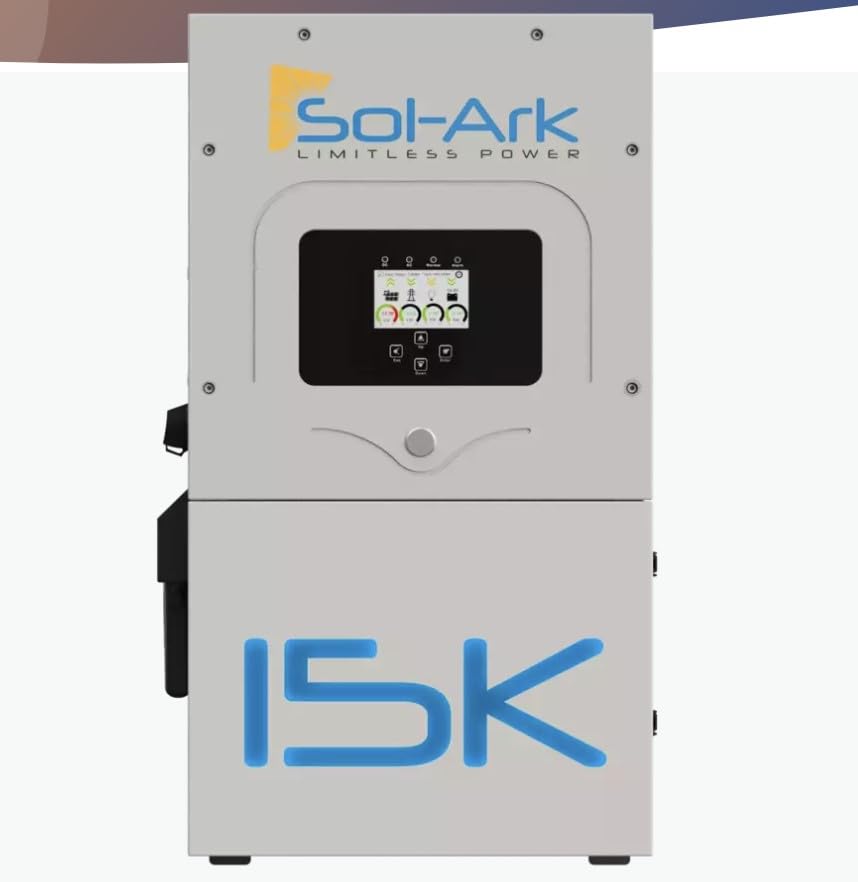
PGTC Sol-Ark 15K All-in-One Hybrid Inverter - 15,000W 120/240/208V AC, Outdoor Rated, 10-Year Warranty, Solar & Battery Ready for Home & Commercial Use : Patio, Lawn & Garden
The Sol-Ark Whole Home hybrid inverter is <strong>the most powerful and versatile home energy storage solution on the market today</strong>. The 15K-2P hybrid solar inverter is a complete whole home b
Check Price on Amazon- Baseline scenario: 7 kW at $3.00/W ($21,000). After 30% ITC: $14,700 net.
- Modeled production: ~9,200 kWh/year (Bozeman‑like site, 16–17% capacity factor, modest shading, 5% snow loss).
- Electricity rate: EIA reports Montana residential rates around 12–13¢/kWh in recent years (below the U.S. average). Using 12.5¢/kWh saves ~$1,150/year initially.
- Simple payback: ~$14,700 ÷ $1,150 ≈ 12.8 years.
- Range: 11–15 years is common statewide. Eastern Montana sites with stronger sun or households with higher rates/consumption trend toward the shorter end; co‑op members with avoided‑cost crediting trend longer.
What improves ROI:
- Right‑sizing: Offset daytime and shoulder‑season usage without dramatically over‑producing in summer.
- Energy efficiency: Weatherization and heat‑pump water heaters can free up kWh your PV can offset at retail value.
- Storage: Batteries rarely shorten simple payback under current tariffs, but they add resilience and can be compelling for homes with frequent outages or time‑variant rates (if offered). The 30% credit on batteries improves the value case.
For homeowners prioritizing resilience, an integrated battery such as the Powerwall 3 or a hybrid inverter like the Sol‑Ark 15K can maintain essential loads during winter outages and make smart use of shoulder‑season solar.
Montana‑specific permitting, HOA rules, and interconnection process
Permitting
- Building/electrical permits: Most jurisdictions require an electrical permit at minimum; many also require a building/roof permit. Montana’s Department of Labor & Industry oversees electrical inspections in many areas; some cities/counties have their own building departments.
- Structural review: Expect stamped structural calculations for racking and attachments where required. Snow load design is critical east and west of the Divide.
- Timelines: 1–3 weeks for permits in many jurisdictions; rural areas may have faster reviews but coordinate field inspections early.
HOAs and solar access
- Solar easements: Montana law allows for voluntary solar easements between property owners to protect access to sunlight (useful for new builds).
- HOA restrictions: Montana does not have a broad statewide “solar rights” statute that categorically prohibits HOAs from restricting panels. Many HOAs allow solar with design guidelines (setbacks, flush‑mounting, color). Review covenants early and obtain architectural approval before you sign a contract.
Interconnection (investor‑owned utilities; co‑ops vary)
- Pre‑application: Submit a site plan, single‑line diagram, and equipment spec sheets. Some utilities offer optional pre‑application data.
- Application and review: Systems ≤10 kW typically qualify for fast‑track review under IEEE 1547/UL 1741 SB certified equipment.
- Approval and construction: Once approved, your installer pulls permits and builds. Most utilities require an external AC disconnect switch.
- Inspection and meter swap: After city/county/state electrical inspection, the utility installs a net meter and grants permission to operate (PTO).
- Billing: Confirm how credits roll over and whether any monthly customer charges apply to net‑metered accounts.
Typical timeline is 4–10 weeks from signed contract to PTO, depending on permitting office, time of year, and utility scheduling.
By the numbers: solar in Montana (2026)
- Solar resource: 4.6–5.2 peak sun hours/day (NREL)
- Capacity factor: 15–18% for well‑sited rooftops (PVWatts)
- Installed cost: $2.80–$3.40/W before incentives (LBNL trend + regional quotes)
- Typical system: 6–10 kW; 7 kW produces ~9,000–9,600 kWh/year
- Federal credit: 30% through 2032 (IRC §25D); batteries ≥3 kWh eligible
- State incentives: Personal tax credit up to $500 per taxpayer (historically); 10‑year property tax exemption on added value; low‑interest AERLP loans
- Net metering: Up to 50 kW for IOUs; retail‑rate monthly crediting common; co‑op policies vary
- Payback: 11–15 years typical; faster in sunnier eastern counties
FAQ: common questions about going solar in Montana
Do panels work in winter and on snowy roofs?
- Yes. Cold improves panel efficiency, and arrays still produce on clear winter days. Snow will temporarily reduce output; steeper tilts and dark‑framed modules help shedding. Annual snow losses are commonly 0–10% for pitched, grid‑tied arrays per NREL studies.
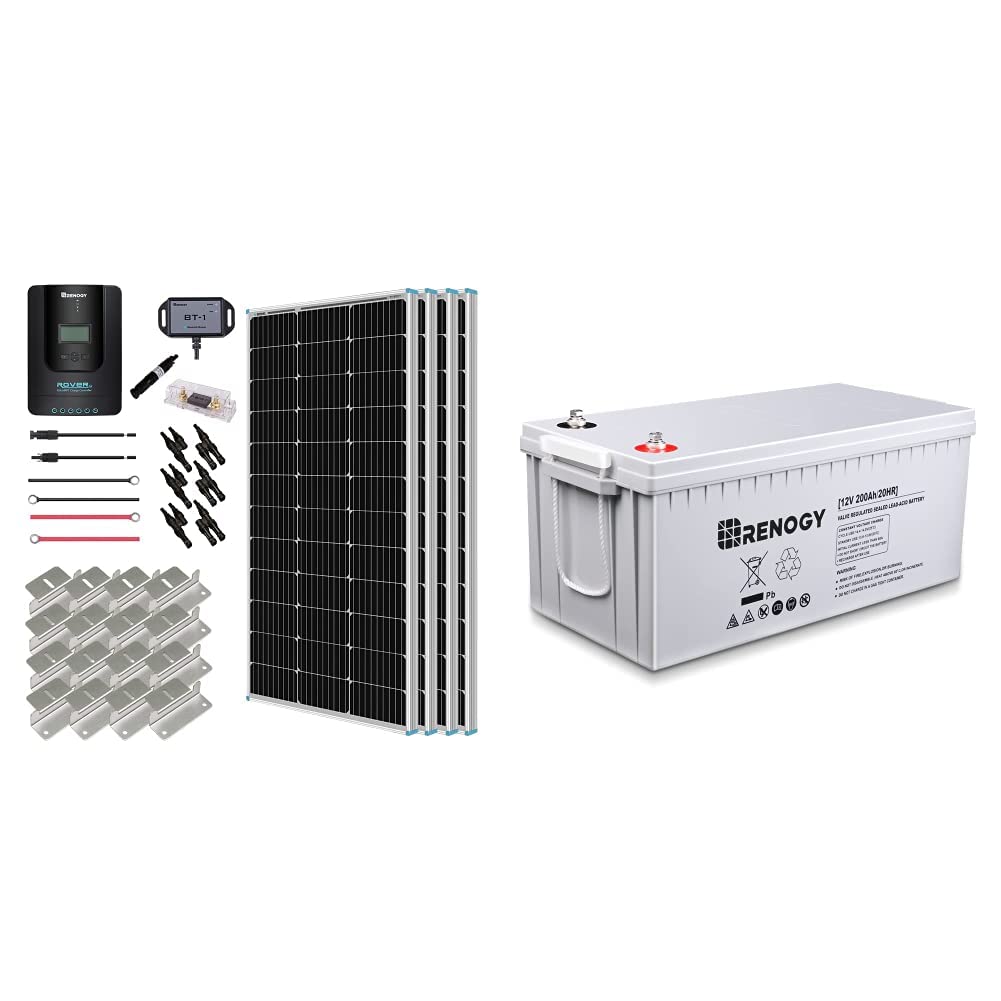
Renogy 400 Watt 12 Volt Premium 4 Pcs 100W Panel+40A MPPT Charge Controller+ Bluetooth Module Fuse+ Mounting Z Brackets+Adaptor Kit +Tray Cables Set, 400W, Grid 12V Solar Power System : Patio, Lawn & Garden
View on AmazonWill hail damage my panels?
- Panels are tested to international impact standards. In hail‑prone areas, consider modules with enhanced hail ratings and robust racking. Homeowner insurance often covers roof‑mounted PV; ask your agent about any policy riders and claim process.
Is off‑grid solar practical for Montana cabins?
- Yes, but design for winter. Many cabins pair PV with propane or wood heat, a hybrid inverter/charger, and 10–30+ kWh of storage. Ground mounts at steeper winter angles reduce snow buildup. A generator for multi‑day storms is common. A rugged hybrid like the Sol‑Ark 15K is popular for off‑grid/backup applications.
What size system do I need?
- Size to your annual kWh usage and roof constraints. As a rule of thumb, 1 kW of PV in Montana produces ~1,250–1,400 kWh/year on a good site. To offset 9,000 kWh/year, you’ll often need 6.5–7.5 kW if shade is minimal.
How long do panels and inverters last?
- Panels typically carry 25‑ to 30‑year performance warranties; inverters 10–25 years depending on technology. Microinverters and DC optimizers simplify snowy, complex roofs and reduce shade losses.
Can I add a battery later?
- Yes. Many inverter platforms are battery‑ready, and storage can be retrofitted. The 30% credit also applies to standalone batteries ≥3 kWh installed after 2022.
Will my HOA allow solar?
- Many do with design guidelines, but Montana lacks a broad HOA preemption law. Obtain written approval early and follow setback/visibility rules.
What maintenance is required?
- Minimal: occasional visual checks, snow safety awareness, and monitoring via your inverter app. Avoid climbing on icy roofs; production lost to mid‑winter snow is usually modest over the year.
What about time‑of‑use (TOU) rates?
- If your utility offers TOU, batteries can arbitrage peak periods. Most Montana residential customers are on flat rates, but check your tariff.
How do Montana rates affect payback?
- Montana’s rates are below the U.S. average (EIA), so paybacks are longer than in high‑rate states. However, the state’s solid solar resource and 30% federal credit still deliver 11–15 year paybacks in many cases.
Practical next steps for Montana homeowners
- Pull 12 months of usage from your utility portal and get three quotes with production estimates that include snow losses.
- Ask for detailed price‑per‑watt, equipment spec sheets, and warranty terms. Compare DC vs AC nameplate sizing across bids.
- Verify your installer’s interconnection experience with your specific utility and ask for recent PTO timelines.
- Consider module hail ratings, roof snow loads, and racking attachment counts as you compare options.
With the state’s strong sun, winter‑friendly PV performance, and a stable 30% federal credit, well‑sited systems across Montana—from Missoula bungalows to Billings ranch homes and off‑grid cabins—are delivering reliable energy and double‑digit percentage bill reductions today.
Sources: National Renewable Energy Laboratory (NREL PVWatts and irradiance maps), U.S. Energy Information Administration (EIA) retail rate data, Database of State Incentives for Renewables & Efficiency (DSIRE), Montana Department of Environmental Quality (AERLP), Montana Public Service Commission (net metering statutes and tariffs).
Recommended Products
Photovoltaics: Design and Installation Manual: Solar Energy International
It also includes chapters on sizing photovoltaic systems, analyzing sites and installing PV systems, as well as detailed appendices on PV system maintenance, troubleshooting and solar insolation data
PGTC Sol-Ark 15K All-in-One Hybrid Inverter - 15,000W 120/240/208V AC, Outdoor Rated, 10-Year Warranty, Solar & Battery Ready for Home & Commercial Use : Patio, Lawn & Garden
The Sol-Ark Whole Home hybrid inverter is <strong>the most powerful and versatile home energy storage solution on the market today</strong>. The 15K-2P hybrid solar inverter is a complete whole home b
Renogy 400 Watt 12 Volt Premium 4 Pcs 100W Panel+40A MPPT Charge Controller+ Bluetooth Module Fuse+ Mounting Z Brackets+Adaptor Kit +Tray Cables Set, 400W, Grid 12V Solar Power System : Patio, Lawn & Garden
【New Version】 Renogy Premium 400 Watt 12 Volt Solar Kit 4 Pcs 100W Panel+40A MPPT Charge Controller+ Bluetooth Module Fuse+ Mounting Z Brackets+Adaptor Kit +Tray Cables Set for RV Cabin and More · Ren