
Solar in New Hampshire: Costs, Incentives & Top Installers (2026)
New Hampshire’s electricity prices have hovered among the highest in the U.S. in recent years—often in the mid‑20s cents per kWh, according to the U.S. Energy Information Administration (EIA) for 2023–2024. That price pressure, paired with steady technology improvements, is why solar in New Hampshire has become an increasingly strong household investment. With average peak sun hours around 4.0–4.4 and cold‑weather efficiency gains, a well‑sited New Hampshire rooftop can generate roughly 1,150–1,300 kWh per kW of DC capacity each year (NREL PVWatts). Below, we break down the state’s solar potential, current costs, incentives, the federal tax credit, top installers, and what payback looks like in 2026.
Note: Policy details and prices change. Figures cited here draw on NREL, LBNL, DSIRE, NH Public Utilities Commission (PUC), and EIA data available through late 2024; check utility and state websites for current program specifics.
Solar energy potential in New Hampshire: sun hours, irradiance, and climate factors
- Solar resource: NREL’s PVWatts tool estimates average annual production around 1,150–1,300 kWh per installed kW (fixed‑tilt, south‑facing, typical losses) across much of New Hampshire. That equates to 4.0–4.4 peak sun hours (PSH) per day.
- Cold‑climate benefit: PV module efficiency improves as temperatures drop. Silicon modules typically gain about 0.4–0.5% efficiency per °C below their standard test temperature, which partly offsets shorter winter days.
- Snow and shading: Winter snow can temporarily cover modules, but long‑term energy loss is usually modest. Studies in northern states estimate annual snow‑related losses in the range of roughly 1–10%, depending on roof tilt and maintenance practices (NREL and utility field studies). A 30–40° tilt sheds snow faster than low‑slope arrays.
- Production profile: Expect strongest output March–October. Net metering lets summer overproduction help offset higher winter consumption.

Solar Electricity Handbook - 2023 Edition: A simple, practical guide to solar energy – designing and installing solar photovoltaic systems: Boxwell, Michael
Solar Electricity Handbook - 2023 Edition: <strong>A simple, practical guide to solar energy – designing and installing solar photovoltaic systems</strong> [Boxwell, Michael] on Amazon.com. *FREE* shi
Check Price on AmazonPractical takeaway: With careful site design—good tilt, minimal shading, and robust racking for snow loads—solar in New Hampshire can deliver consistent, bankable energy, even if annual yield is lower than the Desert Southwest.
Average cost of solar panels in New Hampshire and price‑per‑watt breakdown
Installed price per watt (DC) for residential systems in New Hampshire typically ranges from about $2.70–$3.60/W before incentives in 2026, based on regional bid data and national benchmarks from NREL and LBNL’s Tracking the Sun. For a common 7–9 kW system, that implies:
- 7 kW: $18,900–$25,200 before incentives
- 8 kW: $21,600–$28,800 before incentives
- 9 kW: $24,300–$32,400 before incentives
After the 30% federal tax credit (see below), net costs drop to roughly $1.90–$2.50/W, depending on equipment and roof complexity.
Price‑per‑watt cost structure (typical shares; NREL U.S. Solar PV Cost Benchmark, 2023):
- Hardware (modules, inverters, racking): ~35–45%
- Modules: ~20–30% of total system price
- Inverter(s): ~5–10%
- Racking and BOS hardware: ~10–15%
- Soft costs (labor, permitting, overhead, customer acquisition): ~55–65%
What moves the needle locally:
- Roof complexity, service upgrades (e.g., 100A to 200A), and long wire runs
- Premium equipment choices (microinverters or DC optimizers, high‑efficiency modules)
- Installer backlog and seasonal demand
Equipment notes:
- High‑efficiency modules (20–23% nameplate) help on small or shaded roofs. Based on current efficiency and durability data, options like Maxeon 6 AC or REC Alpha Pure‑R offer strong value for New England homes with limited space.
- Inverter choice: Microinverters such as Enphase IQ8 can maximize energy on complex roofs and enable limited daytime operation during outages when paired with storage; string inverters with optimizers can lower upfront cost on simpler arrays.
New Hampshire solar incentives: state tax credits, rebates, net metering, and SRECs
New Hampshire’s state‑level incentives are modest compared with some neighbors, but they still matter.
- Net metering (residential/small): The NH PUC’s net metering framework generally credits customer‑generators for exported energy at a rate based on the utility’s default energy service and transmission charges, plus a portion of distribution charges (per PUC orders adopted post‑2017). Utilities also apply non‑bypassable charges. Residential systems are usually sized to offset on‑site loads with monthly netting and bill credit carry‑forwards. Check your utility (Eversource NH, Unitil, Liberty Utilities, NH Electric Cooperative) for exact credit components, caps, and annual cash‑out rules.
- State rebate (program status varies): The NH PUC has periodically offered a Residential Renewable Electrical Generation Incentive for small PV systems. Funding has opened and closed over time; when active, awards have been modest and capped. Check the PUC site or your installer for current availability and amounts.
- Property tax treatment: New Hampshire enables municipalities to adopt property tax exemptions for the added value of solar (RSA 72:61‑72). Many towns have done so; homeowners should verify with local assessors whether their municipality has adopted the exemption and how it’s applied.
- Sales tax: New Hampshire does not have a state sales tax, reducing overall project cost compared with most states.
- Renewable Energy Certificates (RECs/SRECs): NH’s Renewable Portfolio Standard includes a solar carve‑out (Class II). Eligible residential systems can produce one REC per MWh of generation and sell them via aggregators in the NEPOOL GIS marketplace. Prices in recent years have typically been modest (often tens of dollars per MWh), but they can improve project economics by a few hundred dollars per year on an average home array. Program eligibility, meter requirements, and prices vary; consult your installer and a REC aggregator.
Sources: NH PUC net metering orders and tariffs, Database of State Incentives for Renewables & Efficiency (DSIRE), municipal tax exemption ordinances, and REC market reports.
Federal ITC and how it applies to New Hampshire homeowners
The federal Residential Clean Energy Credit (formerly the Investment Tax Credit, ITC) provides a 30% tax credit for eligible residential solar installed from 2022 through 2032 (Inflation Reduction Act). Key points:
- 30% of total installed cost, including panels, inverters, racking, balance‑of‑system, labor, and sales tax (if any; NH has none)
- Standalone battery storage (3 kWh or greater) also qualifies at 30% starting in 2023
- No maximum dollar cap; credit can carry forward if your tax liability is insufficient this year
- Not refundable; consult a tax professional for applicability to your situation
Example: An 8 kW system priced at $3.10/W totals ~$24,800; the 30% credit reduces the net cost by $7,440 to ~$17,360, before any state‑level incentives or REC revenue.
Best solar installers and companies serving New Hampshire
New Hampshire is served by a mix of in‑state specialists and regional leaders. Always request multiple quotes, verify licensing and NABCEP credentials, and compare equipment, warranties, and production estimates using a consistent set of assumptions (system size, tilt, azimuth, losses).
Reputable options that commonly serve New Hampshire include:
- ReVision Energy: Long‑established New England installer with New Hampshire offices; strong reputation for quality, SunPower and other high‑efficiency options, and battery integration.
- Granite State Solar (Bow, NH): Local residential specialist; offers multiple inverter and module configurations; strong focus on service.
- Sunrun: National provider offering loans and third‑party ownership (leases/PPAs). Useful for homeowners prioritizing low upfront costs; review contract terms carefully.
- Tesla: Direct‑to‑consumer online pricing for Tesla solar panels and Powerwall storage; straightforward quoting, limited customization; confirm local crew availability.
- ACE Solar (based in MA, serves southern NH): Regional EPC with strong commercial and residential track record.
- Invaleon Solar (MA/NH region): Regional installer active in southern NH; offers panel, optimizer, and storage packages.
- SunPower authorized dealers (various): Network of premium‑efficiency module installers; pricing can be higher, but roof‑limited homes may benefit.
How to choose:
- Warranty depth: Aim for 25‑year product and performance warranties on modules and 10–25 years on inverters. Many installers now bundle 25‑year workmanship warranties.
- Production modeling: Request PVWatts or equivalent output reports with stated assumptions (shading, tilt, azimuth, losses). Ask for a snow‑loss factor in New Hampshire.
- Interconnection support: Prefer installers that handle utility applications, net metering enrollment, and, if applicable, REC registration.
If you’re comparing across borders, see our state guides for neighbors like Solar in Massachusetts: Costs, Incentives & Top Installers (2026), Solar in Maine: Costs, Incentives & Top Installers (2026), and Solar in Connecticut: Costs, Incentives & Top Installers (2026).
ROI and payback period for solar in New Hampshire
An example scenario for a typical home:
- System size: 8 kW DC
- Installed cost (before incentives): $3.10/W → $24,800
- Federal tax credit (30%): −$7,440 → net $17,360
- Production: ~9,600 kWh/year (1,200 kWh per kW‑year; PVWatts mid‑range for NH)
- Retail electricity offset: If your all‑in rate averages $0.24/kWh, that’s ~$2,300/year in bill reductions with net metering
- Optional REC revenue: At $25–$50/MWh, 9.6 MWh yields ~$240–$480/year (market‑dependent)

Sense Energy Monitor with Solar – Track Electricity Usage and Solar Production in Real Time
View on AmazonSimple payback:
- Without RECs: ~$17,360 / $2,300 ≈ 7.5 years
- With RECs at $35/MWh (mid): ~$17,360 / ($2,300 + $336) ≈ 6.9 years
20‑ to 25‑year lifetime savings can exceed $30,000–$45,000 assuming modest utility price escalation (e.g., 2%/year), typical O&M (module cleaning optional; inverter replacement may occur once), and stable net metering. Given New Hampshire’s historically high electricity prices, payback periods of 7–10 years are common for well‑sited homes.
Batteries and ROI: Standalone battery systems rarely pencil on bill savings alone under current New Hampshire tariffs, but they do qualify for the 30% federal credit and provide resilience during winter storms and summer outages. Some utilities may pilot demand response programs that pay for dispatchable storage; ask your installer about enrollment options.
New Hampshire‑specific permitting, HOA rules, and interconnection process
Permitting and codes
- Local authority: Permits are issued by municipalities. Expect building and electrical permits; some towns also require zoning sign‑off. Timelines are often 2–6 weeks depending on workload.
- Codes: New Hampshire adopts versions of the International Building Code and National Electrical Code (NEC); installers should design for snow loads, wind exposure, and fire setbacks typical of your jurisdiction.
HOA and solar access
- Solar access law: New Hampshire does not have a comprehensive statewide solar rights statute that universally limits homeowners’ association restrictions. HOA covenants can impose “reasonable” aesthetic or placement rules, and in some cases may restrict visible roof‑mount arrays. Review your HOA’s governing documents early and ask your installer for drawings that align with local standards.
Utility interconnection and net metering
- Application: Your installer typically submits interconnection and net metering applications to your electric utility (Eversource NH, Unitil, Liberty Utilities, or NH Electric Cooperative).
- Review: Small residential systems commonly receive fast‑track review; utilities may respond within a few weeks. If a service upgrade or transformer study is needed, timelines can extend.
- Metering: Most utilities install a bidirectional meter for net metering. Some require a production meter if you plan to register RECs.
- Permission to operate (PTO): After inspection and meter set, the utility issues PTO. From signed contract to PTO typically spans 1.5–3 months, varying by season and permitting queue.
Group net metering/community solar
- New Hampshire allows group net metering, letting multiple accounts share credits from a single off‑site array within the same utility territory. Offerings for residential subscribers are more limited than in some neighboring states but worth exploring if your roof is shaded or unsuitable.
By the Numbers: Solar in New Hampshire (2026)
- Peak sun hours (PSH): ~4.0–4.4 average (NREL PVWatts)
- Annual yield: ~1,150–1,300 kWh per installed kW‑year (typical fixed‑tilt)
- Installed price: ~$2.70–$3.60/W before incentives; ~$1.90–$2.50/W net after 30% federal credit
- Typical system: 7–9 kW for many homes; 8 kW generates ~9,600 kWh/year
- Electricity prices: Often mid‑20s cents/kWh statewide in 2023–2024 (EIA), among the top five nationally
- Payback: ~7–10 years for well‑sited homes; lifetime savings $30,000–$45,000+
- Snow losses: Often in the 1–10% range annually; tilt and maintenance reduce impact
- Net metering: Utility credit based on energy and transmission components plus a portion of distribution (per NH PUC framework); non‑bypassable charges apply
Practical equipment recommendations for New Hampshire roofs
- Modules: High‑efficiency, low‑temperature‑coefficient panels perform well on smaller roofs and during cold snaps. Based on current efficiency ratings and durability, REC Alpha Pure‑R and Maxeon 6 AC are standout options where roof space is constrained.
- Inverters: For complex, multi‑plane roofs or partial shading, Enphase IQ8 microinverters provide per‑module optimization and rapid shutdown compliance.
- Batteries: For outage‑prone areas, pairing solar with Tesla Powerwall 3 or Enphase IQ Battery 5P can maintain critical loads. Storage qualifies for the 30% federal credit when installed alone or with solar.
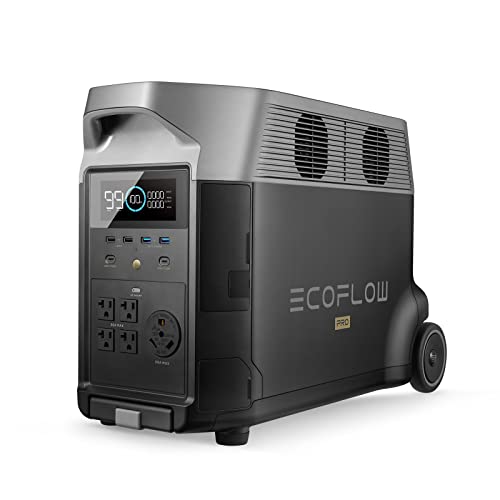
EF ECOFLOW Portable Power Station 3600Wh DELTA Pro, 120V AC Outlets x 5, 3600W, 2.7H Fast Charge, Lifepo4 Power Station, Solar Generator for Home Use, Power Outage, Camping, RV, Emergencies : Patio, Lawn & Garden
<strong>Fully recharge the lifepo4 battery in 1.8 hrs with 240V outlets(3000W), 2.7 hrs with 1800W wall outlets or solar charged in 2.8 hours with 4*400W solar panels</strong> thanks to the industry-l
Check Price on AmazonFAQ: common questions about going solar in New Hampshire
How much solar do I need to offset my bill?
- Most New Hampshire homes use roughly 7,500–10,000 kWh/year, though it varies with heating source and EV adoption (EIA). A well‑sited 7–9 kW array can offset most of that, depending on your rate and consumption patterns.
What roof orientation and tilt are best?
- South‑facing at 30–40° tilt maximizes annual production. East/west roofs still perform well, usually with less than 15% energy penalty. Shading is the top performance killer—ask for a shade analysis.
Do panels work in winter and during snow?
- Yes. Cold boosts module efficiency; sunny winter days deliver solid output. Snow can temporarily cover panels, but steeper tilts and dark glass help shedding. Many homeowners simply wait for melt; others use soft tools from the ground for heavy storms. Avoid climbing on icy roofs.
Will solar increase my home’s value?
- Multiple appraisals and academic studies have found owned solar tends to increase home value in line with annual bill savings and system age. Value realization depends on documentation, warranties, and local buyer awareness.
Should I buy, loan, lease, or sign a PPA?
- Cash or low‑interest loans typically yield the best lifetime ROI and give you the tax credit. Leases/PPAs can offer low upfront costs and maintenance simplicity but may deliver lower long‑term savings. Compare 20–25‑year totals.
What maintenance is required?
- Little to none beyond occasional visual checks. Inverters may need replacement once in 12–20 years depending on type. Most modules carry 25‑year performance warranties.
Can I add batteries later?
- Usually yes. Many systems are designed “storage‑ready,” making future battery integration straightforward. Batteries installed later still qualify for the 30% federal credit (standalone storage eligibility began in 2023).
How accurate are production estimates?
- Good installers provide PVWatts‑based models using your roof geometry and shading. Ask them to include conservative system loss assumptions and a snow‑loss factor appropriate for your area.
What about EV charging and heat pumps?
- Electrification raises household load but can be paired with a slightly larger array. EVs often add 2,000–3,000 kWh/year per vehicle; cold‑climate heat pumps vary widely (insulation and design matter). Your installer can right‑size for future load.
Where is New Hampshire solar policy heading?
- New England markets continue to refine net metering, interconnection, and storage participation in grid services. Watch for expanded demand response and time‑varying rates that improve battery value. State rebate funding historically cycles; REC markets may adjust with RPS target updates.
What this means for New Hampshire homeowners
- High electricity rates make solar’s avoided‑cost value compelling. Even with modest state incentives, the 30% federal credit plus net metering often yields a sub‑10‑year payback.
- Equipment choices matter on small, shaded, or snow‑prone roofs—consider high‑efficiency modules and microinverters, and design for winter.
- Pick experienced installers who will navigate municipal permits, HOA expectations, utility interconnection, and, if desired, REC registration.
Curious how incentives and pricing compare just over the border? See our neighboring state deep dives: Solar in Massachusetts: Costs, Incentives & Top Installers (2026), Solar in Maine: Costs, Incentives & Top Installers (2026), and Solar in Connecticut: Costs, Incentives & Top Installers (2026).
Recommended Products
Solar Electricity Handbook - 2023 Edition: A simple, practical guide to solar energy – designing and installing solar photovoltaic systems: Boxwell, Michael
Solar Electricity Handbook - 2023 Edition: <strong>A simple, practical guide to solar energy – designing and installing solar photovoltaic systems</strong> [Boxwell, Michael] on Amazon.com. *FREE* shi
Sense Energy Monitor with Solar – Track Electricity Usage and Solar Production in Real Time
KNOW WHAT’S ON: Track how much electricity you’re using, what time your kids got home, or when someone leaves the basement light on. Sense <strong>identifies patterns in your energy use to help your f
EF ECOFLOW Portable Power Station 3600Wh DELTA Pro, 120V AC Outlets x 5, 3600W, 2.7H Fast Charge, Lifepo4 Power Station, Solar Generator for Home Use, Power Outage, Camping, RV, Emergencies : Patio, Lawn & Garden
<strong>Fully recharge the lifepo4 battery in 1.8 hrs with 240V outlets(3000W), 2.7 hrs with 1800W wall outlets or solar charged in 2.8 hours with 4*400W solar panels</strong> thanks to the industry-l