
Tesla Solar in New Hampshire: Panels, Roof & Pricing Guide (2026)

New Hampshire homeowners pay some of the highest residential electricity rates in the U.S. — the U.S. Energy Information Administration (EIA) reported average New Hampshire residential prices around the mid‑20¢/kWh range in 2023, well above the national average. That price pressure is why interest in Tesla Solar in New Hampshire has surged. With the 30% federal Clean Energy Credit (Investment Tax Credit, ITC) in place through 2032 and solid solar resource in the Granite State (roughly 1,150–1,300 kWh per kW per year per NREL PVWatts for south-facing arrays in central NH), the math increasingly favors rooftop solar, with or without battery storage.
Below, we break down Tesla’s product lineup, current pricing ranges in New Hampshire, incentives, ordering timelines, reviews from local owners, and how Tesla stacks up against local installers — with concrete numbers you can use to budget your project.
Tesla Solar products available in New Hampshire
Tesla sells three core offerings in New Hampshire: Tesla Solar Panels, the Tesla Solar Roof, and Powerwall home batteries (often bundled with solar). While the company’s branding emphasizes a seamless ecosystem — panels or roof, Tesla Inverter, Gateway, and Powerwall in one app — each component can be selected à la carte.
Solar Electricity Handbook - 2023 Edition: A simple, practical guide to solar energy – designing and installing solar photovoltaic systems: Boxwell, Michael
Solar Electricity Handbook - 2023 Edition: <strong>A simple, practical guide to solar energy – designing and installing solar photovoltaic systems</strong> [Boxwell, Michael] on Amazon.com. *FREE* shi
Check Price on AmazonTesla Solar Panels
- Module type: High‑efficiency monocrystalline panels, typically rated in the ~400–440 W range with panel efficiencies around 19–21.5%. Tesla sources modules to its spec and pairs them with its Tesla Inverter and monitoring.
- Aesthetics: All‑black laminate, low‑profile mounting. Snow sheds readily from slick glass — a perk for winter but a consideration for installing snow guards over walkways.
- Inverter: Tesla’s string inverter with module‑level rapid shutdown devices (to meet code). Systems can be AC‑coupled to Powerwall 2 or DC‑coupled with Powerwall 3’s integrated solar inverter.
- Monitoring and controls: The Tesla app provides real‑time production, consumption, and (if installed) battery state of charge.

Enphase ENPHASE IQ8PLUS-72-2-US IQ8+ ...
View on AmazonPractical note: If your roof has complex shading or many small planes, microinverters or DC optimizers can outperform standard string designs. For non‑Tesla alternatives, high‑performance module‑level solutions like Enphase IQ8 microinverters or SolarEdge HD‑Wave with optimizers are often recommended by independent installers for shade‑tolerant production.
Tesla Solar Roof
- What it is: A complete roof replacement using tempered glass tiles — some solar, some non‑solar — so the array is visually indistinguishable from a premium shingle roof.
- When it fits: Best for homeowners who already need a new roof and value integrated aesthetics. The Solar Roof’s cost strongly depends on roof complexity (valleys, dormers, hips) and total roof area.
- Production density: Fewer watts per square foot than a dedicated panel array due to spacing and non‑solar tiles, which can matter on small roofs with high energy needs.
Powerwall (bundles and standalone)
- Role: Home battery storage for backup power, solar self‑consumption, and time‑of‑use shifting where applicable. In storms or ice‑outs, Powerwall can keep critical loads running.
- Models: Powerwall 2 (AC‑coupled) remains common; Powerwall 3 adds an integrated solar inverter for DC‑coupled systems and higher power capability. Both carry a 10‑year warranty.
- Typical sizing: 1–2 units for most homes; larger homes or well pumps may require 2–3 for whole‑home backup. See our detailed local analysis: Tesla Powerwall in New Hampshire: Cost, Availability & Is It Worth It?.
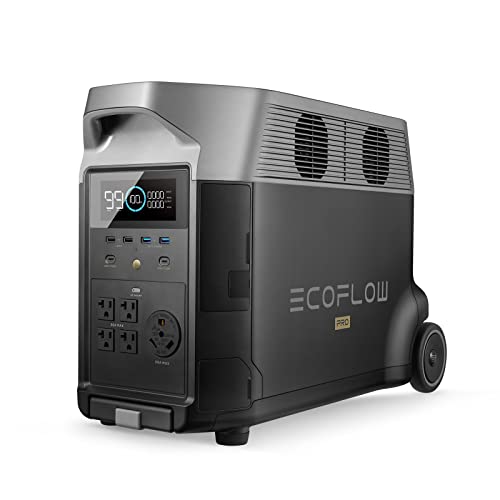
EF ECOFLOW Portable Power Station 3600Wh DELTA Pro, 120V AC Outlets x 5, 3600W, 2.7H Fast Charge, Lifepo4 Power Station, Solar Generator for Home Use, Power Outage, Camping, RV, Emergencies : Patio, Lawn & Garden
<strong>Fully recharge the lifepo4 battery in 1.8 hrs with 240V outlets(3000W), 2.7 hrs with 1800W wall outlets or solar charged in 2.8 hours with 4*400W solar panels</strong> thanks to the industry-l
Check Price on AmazonFor portable or supplemental backup where a whole‑home battery isn’t in budget, high‑capacity portable power stations like the EcoFlow DELTA Pro can bridge shorter outages for refrigerators, devices, and small loads.
Tesla Solar in New Hampshire pricing: panels vs. Solar Roof
Actual quotes hinge on roof size/complexity, electrical upgrades, and interconnection, but recent New Hampshire quotes and Tesla’s national pricing suggest the following ballparks before incentives:
- Tesla Solar Panels: Roughly $2.20–$3.00 per watt (W) before incentives in New Hampshire, reflecting New England labor and permitting. A 7.6 kW system would likely price around $16,700–$22,800 before incentives; after the 30% federal credit, net $11,700–$16,000. Many homes land in the 7–10 kW range.
- Powerwall adders: Installed cost per Powerwall commonly falls around $10,000–$13,000 before incentives in the region; with the 30% credit on storage, net ~$7,000–$9,100 per unit. Additional batteries are typically cheaper per unit than the first.
- Tesla Solar Roof: Highly variable due to roof replacement. For an average 2,000–2,400 sq ft New Hampshire home with a moderately complex roof, total project quotes often span $35,000–$70,000+ before incentives, depending on how many tiles are solar vs. non‑solar and any needed electrical work. The Solar Roof can be competitive if you already must replace a worn roof; otherwise, panels remain the lower‑cost path per installed watt.
How to compare fairly:
- If your asphalt roof has 10–12 years left, panels on the existing roof generally minimize cost per kWh.
- If your roof is at end of life, price “new architectural shingle roof + panel system” versus “Solar Roof.” The breakeven sometimes favors Solar Roof on highly complex roofs or where aesthetics carry premium value.
For broader cost ranges beyond Tesla, see statewide benchmarks and incentives at Solar in New Hampshire: Costs, Incentives & Top Installers (2026).
How to order Tesla Solar in New Hampshire: timeline and steps
Tesla’s process is standardized and mostly app‑driven:
- Online design and pre‑quote
- Enter your address and recent electric bills. Tesla models your usage and proposes system sizes with estimated production (sourced from irradiance datasets similar to NREL PVWatts) and savings.
- Virtual and on‑site assessment
- A remote design is followed by a site survey. For New Hampshire homes, surveyors pay particular attention to roof condition for snow loads, rafter spacing, attic access, and electrical panel location. If your roof needs work, Tesla may require replacement or structural reinforcement prior to install.
- Final design, contracts, and financing
- You’ll receive a final design, price, and contract. Financing options include cash, solar loans, or third‑party loans. Verify whether any lender fees affect the effective price per watt.
- Permitting and interconnection
- Tesla handles permits and utility interconnection applications with Eversource NH, Unitil, or Liberty. New Hampshire net metering rules set crediting terms for your exported kWh; final interconnection approval is required before activation.
- Installation
- Panel installs typically take 1–2 days; Solar Roofs can take 1–2 weeks depending on complexity. Winter weather can extend schedules; many New Hampshire installs ramp from late spring to fall to avoid snow and ice.
- Inspection and permission to operate (PTO)
- After town inspection and utility meter work, your system receives PTO and begins net metering.
Typical timelines: 6–12 weeks from contract to PTO for panel systems is common, assuming smooth permitting and no major electrical upgrades. Solar Roofs or service‑panel upgrades can extend timelines.
New Hampshire solar incentives that apply to Tesla installations
30% Federal Clean Energy Credit (ITC): Applies to solar and standalone battery storage through 2032 under the Inflation Reduction Act. It covers eligible equipment and labor. The credit can carry forward if it exceeds your tax liability (consult a tax professional or IRS guidance).
New Hampshire Residential Solar Rebate (program status varies): The NH Public Utilities Commission (PUC) periodically funds a residential rebate for small PV systems. Historically, awards have been a flat per‑watt amount with a dollar cap (for example, on the order of $0.20/W up to around $1,000 when funded), but availability opens and closes based on the state’s Renewable Energy Fund. Check current status before counting it into your payback.
Net metering: New Hampshire allows net metering for residential systems, crediting exported solar generation on your bill. Credit values and terms depend on your utility tariff; energy supply is credited near the default service rate, while fixed charges are typically not offset. The exact credit makeup can differ among Eversource, Unitil, and Liberty — ask Tesla to model your utility’s current tariff.
Property tax exemption (municipal option): New Hampshire law allows municipalities to exempt the added value of solar from property taxes; many towns have adopted it. Verify with your local assessor’s office.
No sales tax: New Hampshire’s lack of a general sales tax reduces upfront cost compared with many states.
Owners may also be eligible to sell Renewable Energy Certificates (RECs) through aggregators. REC values for small residential PV in New England are modest and variable; if available, they can shave a bit more off payback but shouldn’t make or break your project economics.
For a deeper look at incentive stacking and current program status, see Solar in New Hampshire: Costs, Incentives & Top Installers (2026).
Tesla Solar reviews from New Hampshire customers: what owners report
Themes we consistently hear from New England Tesla Solar owners (and that align with national reviews):
What owners like
- Competitive pricing: Tesla’s standardized designs often undercut local quotes by $0.20–$0.60/W, especially on simple roofs.
- Clean aesthetics: All‑black panels with low‑profile mounting look cohesive; Solar Roof is the premium aesthetic option.
- App integration: The Tesla app brings production, consumption, and Powerwall controls into one interface that’s easy to use.
- Reliable hardware: Panels and Powerwall are generally stable once commissioned; winter outages highlight the value of battery backup.
What owners flag as challenges
- Communication and scheduling: Tesla relies on centralized support and subcontracted crews. Some homeowners report slow responses or rescheduling, especially during winter or rebate rushes.
- Roof prerequisites: Tesla will decline installs on roofs it deems near end‑of‑life or structurally inadequate — good for long‑term quality, but it can add cost and time.
- Snow management: Smooth glass sheds snow rapidly, which can create roof‑edge snow slides. Adding snow retention above doors/walkways is a best practice.
If you prefer white‑glove local support, some New Hampshire installers offer more hand‑holding, detailed shade studies, and products like high‑efficiency n‑type modules (e.g., REC Alpha Pure‑R or Qcells Q.TRON) that perform well in cold, low‑light winters — typically at a higher $/W.
Tesla vs. local New Hampshire installers: pros, cons, and price comparison
Price
- Tesla: Often ~$2.20–$3.00/W before incentives in NH for straightforward roofs.
- Local installers: Commonly ~$3.00–$4.50/W in New England, depending on equipment brand (premium modules or microinverters) and service level.
Service model
- Tesla: Streamlined, app‑centric, with standardized equipment and designs. Faster quotes, potentially longer queues in peak season.
- Local installers: More site‑specific engineering, local permitting relationships, and often quicker in‑person communication.
Equipment flexibility
- Tesla: Tesla panels + Tesla Inverter + Powerwall are the default stack. Limited customization beyond system size.
- Local installers: Wider menu — microinverters, DC optimizers, specialty racking, and snow‑specific hardware. This can improve production on complex roofs but adds cost.
Winterization and roof specifics
- Tesla and local crews both meet code for snow and wind loads, but locals may spec additional snow guards and tailored conduit runs for steep metal or slate roofs common in parts of NH.
Batteries
- Tesla: Powerwall integrates tightly and is widely supported. See our state‑specific guidance: Tesla Powerwall in New Hampshire: Cost, Availability & Is It Worth It?.
- Local: Broader battery choices (e.g., Enphase or LG). Evaluate warranty, usable capacity, and continuous power, not just nameplate kWh.
Tesla Solar warranty and what it covers in New Hampshire
- Panels: 25‑year performance warranty (typical 80–85% output at year 25; check your datasheet) and limited product warranty. Tesla also offers a workmanship warranty (often 10 years) covering roof penetrations and labor.
- Inverter and monitoring: Typically 10–12 years on the inverter hardware; confirm your specific contract.
- Solar Roof: 25‑year roof tile warranty and weatherization coverage, plus a power warranty for the solar tiles. Project‑specific documents govern details.
- Powerwall: 10‑year warranty tied to energy throughput and capacity retention.
As with any installer, the legally binding terms are in your contract and warranty booklets — read them closely and keep digital copies.
By the numbers: Tesla Solar in New Hampshire
- Solar resource: ~1,150–1,300 kWh per kW per year for well‑sited arrays in central NH (NREL PVWatts assumptions: fixed‑tilt, south‑facing, minimal shading).
- Example system output: An 8 kW system could generate ~9,200–10,400 kWh/year.
- Bill impact: At ~26¢/kWh, that offsets roughly $2,400–$2,700/year before fixed charges and net metering nuances (EIA state averages; your tariff may vary).
- Payback: With a post‑ITC net cost around $12,000–$18,000 for typical Tesla panel systems, simple payback often pencils to ~5–8 years, depending on roof, shading, and rate assumptions.
- Emissions: Displacing grid power in New England avoids roughly 0.3–0.6 kg CO₂e per kWh on average, per ISO‑NE and EPA eGRID data — around 3–6 metric tons CO₂e/year for an 8 kW system.
FAQ: common questions about Tesla Solar in New Hampshire
Does Tesla operate statewide?
- Tesla services most population centers and many rural areas, but very remote addresses or complex roofs may be referred to partners or declined. Enter your address in Tesla’s tool to confirm.
How does snow affect production and maintenance?
- Winter reduces production due to shorter days and snow cover. Panels generally self‑clear after sunny periods. Many owners add snow guards over doors and walkways. Annual output estimates from NREL PVWatts already reflect seasonal variations.
Is battery storage worth it in New Hampshire?
- If you experience outages from nor’easters or ice storms, Powerwall provides silent, automatic backup. Financially, without strong time‑of‑use price swings, storage is primarily a resilience investment. Thanks to the 30% federal credit on standalone storage, many owners add one unit for critical loads.
Can I install EV charging with Tesla Solar?
- Yes. Tesla’s Wall Connector integrates smoothly, and most solar‑ready electrical panels can support a 48‑amp circuit. Smart load management via a device like the Span Smart Panel can help avoid costly service upgrades.
What roof types does Tesla support?
- Asphalt shingle is straightforward. Metal standing seam is installable with the right clamps. Slate and cedar shake are often excluded or require specialty approaches (more common with local installers). Solar Roof replaces the roof entirely.
What if I already replaced my roof recently?
- Panels remain the value leader. If your roof is new and simple, Tesla’s panel pricing is hard to beat on a $/kWh basis.
Will net metering eliminate my entire bill?
- Not usually. Fixed customer charges and minimum bills remain. Well‑sized systems can zero out most volumetric energy charges over the year.
How long does equipment last?
- Panels often produce for 30+ years with gradual degradation. Inverters typically need replacement once over a system’s life (year 12–18 range common). Powerwall is warrantied for 10 years and may continue providing useful storage beyond that with reduced capacity.
Where can I learn more about statewide incentives and installers?
- We keep an updated overview here: Solar in New Hampshire: Costs, Incentives & Top Installers (2026).
Practical takeaways for New Hampshire homeowners
- If your roof is in good condition and energy use is average, Tesla panels sized 7–10 kW will likely deliver the best payback under current EIA‑reported electricity prices. Add Powerwall if you value resilience.
- If you need a new roof and care deeply about aesthetics, price a Solar Roof against “new architectural shingles + panels” and include structural or electrical upgrades in both quotes.
- Ask Tesla (or any installer) to model your utility’s specific net metering tariff and provide an NREL PVWatts‑backed production estimate you can audit.
- Budget for small winter extras — snow guards and a conduit path that stays clear of ice dams — to minimize maintenance and safety issues.
With high retail rates, a stable 30% federal credit, and solid solar resource, Tesla Solar in New Hampshire is financially compelling on many homes — and increasingly a resilience upgrade when paired with Powerwall in storm‑prone winters.
Recommended Products
Solar Electricity Handbook - 2023 Edition: A simple, practical guide to solar energy – designing and installing solar photovoltaic systems: Boxwell, Michael
Solar Electricity Handbook - 2023 Edition: <strong>A simple, practical guide to solar energy – designing and installing solar photovoltaic systems</strong> [Boxwell, Michael] on Amazon.com. *FREE* shi
Enphase ENPHASE IQ8PLUS-72-2-US IQ8+ ...
Enphase · 240v · Solar · Hoymiles · Iq8 See more · Eligible for Free Shipping · Free Shipping by Amazon · Get FREE Shipping on eligible orders shipped by Amazon · Delivery Day · Get It by Tomorrow · D
EF ECOFLOW Portable Power Station 3600Wh DELTA Pro, 120V AC Outlets x 5, 3600W, 2.7H Fast Charge, Lifepo4 Power Station, Solar Generator for Home Use, Power Outage, Camping, RV, Emergencies : Patio, Lawn & Garden
<strong>Fully recharge the lifepo4 battery in 1.8 hrs with 240V outlets(3000W), 2.7 hrs with 1800W wall outlets or solar charged in 2.8 hours with 4*400W solar panels</strong> thanks to the industry-l