
Tesla Powerwall in Georgia: Cost, Availability & Is It Worth It?

Georgia homeowners are taking a hard look at battery storage as storms intensify and utility rate options diversify. The 30% federal clean energy tax credit now applies to standalone batteries 3 kWh and larger (per the Inflation Reduction Act; U.S. Treasury guidance, 2023), and Tesla’s Powerwall 3 has raised performance benchmarks with higher continuous power and simpler solar integration. For many, a Tesla Powerwall in Georgia is about resilience first — but with the right utility tariff, it can also trim bills by shifting solar and grid power to cheaper hours.
Below, we unpack specs, pricing, incentives, rate structures, installers, and alternatives — and model when a Powerwall pencils out in the Peach State.
By the Numbers: Tesla Powerwall in Georgia
- Usable energy: ~13.5 kWh per unit (Tesla spec)
- Continuous backup power: up to 11.5 kW (Powerwall 3; Tesla spec)
- Round-trip efficiency: ~90% (AC-coupled) to mid-90% (DC-coupled with PV), per NREL lab characterizations
- Warranty: 10 years, 70% capacity retention (Tesla limited warranty)
- Typical installed price in Georgia (before incentives): $11,000–$14,000 for the first unit; $7,000–$9,500 for each additional unit (market estimates)
- Net cost after 30% federal tax credit: ~$7,700–$9,800 for first unit (if you have tax liability)
- Typical backup duration for “critical loads” (fridge, lights, Wi-Fi, gas furnace blower, a few outlets): 10–20 hours per Powerwall, depending on usage
Tesla Powerwall overview: specs, capacity, and how it works
Tesla’s Powerwall is a rechargeable lithium-ion home battery that stores electricity from rooftop solar or the grid, then discharges during outages or expensive peak hours.

The Homeowner's Guide to Renewable Energy - Revised & Updated Edition: Achieving Energy Independence through Solar, Wind, Biomass and Hydropower: Chiras, Dan
After beginning with the all important discussion about energy efficiency and conservation, <strong>Dan guides you through everything you need to choose which renewable options to integrate into your
Check Price on AmazonKey technical features (Powerwall 3 unless noted):
- Energy and power: Approximately 13.5 kWh usable capacity per unit with up to 11.5 kW continuous output — enough to start and run many 240V loads during an outage (A/C tonnage and well pumps may require multiple units).
- Inverter integration: Powerwall 3 integrates a hybrid inverter, allowing direct DC-coupling to solar strings. That reduces conversion losses compared with AC-coupled architectures and simplifies rooftop system design.
- Efficiency: Round-trip efficiency (how much energy you get out for what you put in) typically runs ~90% for AC-coupled batteries and can climb into the mid-90% range when DC-coupled with PV, according to National Renewable Energy Laboratory (NREL) testing across market products.
- Backup and safety: Autotransfer occurs in milliseconds during an outage to keep critical circuits powered. The unit includes thermal management and UL 9540A-tested safety features.
- Software: Tesla’s app manages time-based control, storm watch (pre-charging ahead of forecast events), and real-time monitoring. Capacity factor for daily cycling depends on your chosen operating mode (backup reserve vs. self-consumption).
- Warranty: 10 years to 70% of original capacity under residential use. Energy throughput/cycle terms apply; read the Tesla limited warranty for exact conditions.
How it works day to day:
- With solar: The battery soaks up midday solar that would otherwise export at low value and discharges in the evening when rates are higher. DC-coupled designs reduce losses from solar-to-battery-to-load.
- Without solar: The unit charges off-peak (if your utility offers lower nighttime rates) and discharges during peak pricing, while keeping a configurable reserve for outages.
Powerwall pricing in Georgia including installation costs
Georgia installed prices for a single Powerwall (turnkey: equipment + labor + permitting + commissioning) typically fall in the $11,000–$14,000 range. Several factors drive the spread:
- Site complexity: Main service panel condition, need for a dedicated backup subpanel/“critical loads” panel, trenching/conduit runs, or service upgrades (common cost adders of $1,500–$3,500).
- Mounting location: Outdoor vs. garage, wall vs. floor mount, ventilation/clearance requirements.
- Interconnection and permitting: Vary by Authority Having Jurisdiction (AHJ) across metro Atlanta, Savannah, Augusta, and county offices; fees are usually modest ($100–$500) but timelines vary.
- Installer channel: Direct-from-Tesla installs sometimes price lower on equipment; certified local installers may bundle with solar at competitive rates.
Cost stacking example (illustrative):
- Powerwall 3 + Backup Gateway + balance-of-system: ~$9,500–$10,500
- Labor, materials, permitting: ~$1,800–$3,000
- Total before incentives: ~$11,300–$13,500
- Less 30% federal tax credit (subject to tax liability): net ~$7,900–$9,450
Additional units are typically cheaper (shared labor and controls), often adding $7,000–$9,500 before incentives per unit.
For a deeper overview of hardware, installation steps, and alternatives, see our broader guide: Tesla Powerwall: Complete Buyer's Guide — Cost, Installation & Alternatives.
Georgia battery storage incentives: state rebates, SGIP, utility programs
- Federal Investment Tax Credit (ITC): The 30% residential clean energy credit applies to standalone batteries ≥3 kWh and to solar-plus-storage (U.S. Treasury/IRS guidance, effective 2023). There is no cap; value depends on your tax liability. The credit currently runs through 2032 under the Inflation Reduction Act.
- State-level incentives: Georgia does not offer a statewide battery rebate or personal tax credit for residential storage as of late 2024. Historic state credits for clean energy property have sunsetted for residential applications.
- SGIP: California’s Self-Generation Incentive Program (SGIP) is not available in Georgia. It’s commonly cited in battery discussions, but it’s a California-only program.
- Utility/EMC programs: Georgia Power does not currently offer a direct battery rebate. Some Electric Membership Corporations (EMCs) offer low-interest financing or pilot time-of-use (TOU) and demand-based tariffs where batteries can save money via peak shaving. Details vary across EMCs like Cobb EMC, Jackson EMC, and GreyStone Power; check your cooperative’s current offerings.
- Sales/property tax: Georgia does not have a universal residential sales tax exemption for batteries. Property tax treatment varies locally; most assessors do not add significant value for behind-the-meter batteries, but confirm with your county.
Bottom line: In Georgia, the 30% federal credit is the primary incentive for home batteries. The economic case often hinges on your specific rate plan and how your utility values exported solar.
How the Powerwall pairs with solar in Georgia: backup vs. self-consumption
Pairing a Tesla Powerwall with rooftop solar in Georgia delivers two main benefits:
Resilience: Storm-related outages in the Southeast can be frequent and seasonal. A single Powerwall can cover critical loads for 10–20 hours, while two units can often run central air for at least part of the day, depending on tonnage and duty cycle. Tesla’s Storm Watch can pre-charge ahead of severe weather alerts to maximize backup.
Self-consumption and export value: Georgia’s largest investor-owned utility has limited retail netting for new solar customers and often compensates exports closer to “avoided cost” (wholesale-like) rates — commonly far below retail. A battery stores excess midday solar and displaces evening grid purchases at full retail, improving your solar payback.
Illustrative self-consumption math:
- Without a battery, a typical Georgia home might self-consume ~30–50% of rooftop solar, exporting the rest at lower value.
- With a battery, self-consumption can rise to 70–90%, depending on system size and load profile.
- If you shift 3,000 kWh/year from low export compensation ($0.04/kWh) to avoided retail purchases ($0.13/kWh), you’ve improved value by ~$270/year. Larger systems can shift 4,000–5,000 kWh for $360–$450/year in added value.
Considering solar? See local pricing and incentives: Solar in Georgia: Costs, Incentives & Top Installers (2026).
Georgia utility rate structures and how Powerwall saves with time-of-use
Your tariff drives the battery’s bill savings. Georgia offers several structures, including:
- Flat or seasonal energy rates: A single $/kWh with possible seasonal changes. Savings from batteries are modest here unless combined with solar self-consumption.
- Time-of-Use (TOU) energy rates: Higher $/kWh during late afternoon/evening peaks (especially summer), lower at night and weekends. Batteries charge off-peak and discharge on-peak.
- Demand-based “Smart Usage”/peak tariffs: A monthly demand charge ($/kW) based on your highest 30–60 minute power draw during peak windows. Batteries can shave that peak, yielding substantial savings for some homes.
Georgia Power examples (verify current tariffs with the utility/PSC, as rates and eligibility change):
- TOU plans commonly set summer weekday peak windows (e.g., 2–7 p.m.) with energy prices 2–3x higher than off-peak.
- “Smart Usage” or demand-based options layer a demand charge during those windows; customers who electrify (EV charging, heat pumps) can benefit from battery peak shaving.
Simple payback modeling (illustrative):
- Arbitrage only (TOU): Assume a $0.12/kWh on-peak vs. off-peak differential; one Powerwall discharges 10.8 kWh usable per day (80% depth of discharge, accounting for losses) for 250 days/year. Annual savings ≈ 10.8 × 250 × $0.12 = $324.
- Add demand-charge shaving: If a battery trims 2–3 kW from your monthly peak and the demand charge is $8–$12/kW in summer months, potential annualized savings could add ~$150–$400 depending on your usage.
- Add improved solar self-consumption: Another ~$200–$450/year for many rooftop systems under avoided-cost export.
Stacked, a typical Georgia homeowner might see $500–$1,000/year in bill reductions when combining solar, TOU/demand management, and battery storage. That’s highly site- and tariff-dependent. If outages are frequent where you live, the resilience value may be decisive even if pure bill savings produce a longer payback.
Tip: If you can switch to a TOU or demand-based plan and you own an EV or use significant summer A/C, the Powerwall has more levers to save.
Powerwall availability and certified installers in Georgia
- Availability: Powerwall 3 is broadly available in Georgia via Tesla’s online ordering and through Tesla Certified Installers. Typical lead times range from 2–8 weeks for standalone installs; solar-plus-storage timelines often track local permit/interconnection queues (4–12 weeks typical).
- Site surveys: Expect a virtual or onsite survey to assess panel capacity, backup loads, and mounting location. Many homes use a critical-loads subpanel to reserve battery power for essentials.
- Interconnection: If paired with solar, you’ll submit an interconnection application with your utility (Georgia Power or your EMC). Review whether you qualify for any favored export rates or monthly netting programs (availability has changed over time and may be capped by enrollment).
- Whole-home vs. partial backup: Whole-home backup often requires 2–3 Powerwalls in air-conditioned Georgia homes. Partial-backup designs typically cover refrigeration, lighting, electronics, garage door, gas furnace blower, and select outlets.
Alternatives to Powerwall available in Georgia: Enphase, LG, Generac
Several strong competitors are sold and serviced in Georgia. Your best fit depends on whether you already have microinverters, your desired backup power, and budget.
Enphase IQ Battery 5P/10T/10P
- Capacity: Modular 5–10 kWh units; stackable.
- Strengths: Tight integration with Enphase IQ8 microinverters; excellent app; high round-trip efficiency; robust backup transfer.
- Consider if: Your roof already uses Enphase microinverters or you prefer a highly modular design.
LG Energy Solution RESU Prime 10H/16H
- Capacity: 9.6–16 kWh; pairs with compatible hybrid inverters (SolarEdge, SMA, others).
- Strengths: Compact footprint; strong warranty support; proven cell chemistry.
- Consider if: You want a DC-coupled system with a preferred string inverter brand.
Generac PWRcell
- Capacity: Configurable from ~9 to 18 kWh per cabinet with notable surge capability for motor loads.
- Strengths: High-power backup with modular expansion; often competitive on cost when bundled with Generac ecosystem.
- Consider if: You have heavy 240V loads to cover during outages.
Value and selection notes
- Powerwall 3 stands out for high continuous power (11.5 kW) and integrated hybrid inverter, simplifying solar-plus-storage design.
- Enphase is compelling with existing IQ8 solar, minimizing retrofit friction.
- Generac’s surge power can be attractive for well pumps and larger A/C compressors.
Based on these efficiency ratings and integration advantages, the Enphase IQ Battery 10P represents strong value for homes with existing Enphase microinverters. For new solar installs seeking high specific power and simple whole-home backup, the Tesla Powerwall 3 remains a top-tier choice in Georgia. If you need higher surge for deep-well pumps, a Generac PWRcell configuration may be your most cost-effective path to motor-start performance.
Is a Powerwall worth it in Georgia?
What tips the scales toward “yes”:
- You can enroll in a TOU or demand-based rate with a meaningful spread between peak and off-peak pricing.
- You have rooftop solar and are currently compensated at avoided-cost for exports (battery shifts energy to high-value self-consumption).
- You experience several outages per year where seamless backup has real value (medical equipment, work-from-home, sump/well pumps, refrigerated medications).
- You plan to electrify (EV + heat pump) and want to control your peak demand while future-proofing.
What points to “maybe” or “no”:
- You’re on a flat rate with little or no peak premium and don’t have solar.
- You have very infrequent outages and value resilience less.
- Your main panel requires an expensive service upgrade that erodes ROI.
Financial framing:
- Net upfront cost after the 30% ITC for a first Powerwall is commonly ~$8,000–$9,500.
- Many Georgia homes can stack $500–$1,000/year in savings with the right tariff and solar pairing. On that basis, a simple payback might land in the 9–15 year range — often longer if arbitrage spreads are small, faster if you avoid demand charges or improve solar value substantially. The non-financial value of backup often clinches the decision.
Practical tips for Georgia homes
- Sizing: A single Powerwall is ideal for critical loads. For central A/C backup (especially 3–5 ton systems common in Georgia), plan for 2–3 units depending on SEER rating and soft-start capability.
- Heat pumps and resistance heat: Backup for electric resistance heat is energy-intensive; consider keeping a gas furnace blower on battery and using heat pump sparingly during outages.
- Main panel readiness: Older 100A services may need upgrades for whole-home backup; budget accordingly.
- Load control: Smart thermostats and soft-starts on A/C compressors can reduce peak draw and extend backup duration.
- Weatherization: Air sealing and attic insulation reduce cooling loads, stretching battery runtime.

Emporia Gen 2 Smart Home Energy Monitor with 16 50A Circuit Level Sensors | Real Time Electricity Monitor/Meter | Solar/Net Metering - Amazon.com
View on Amazon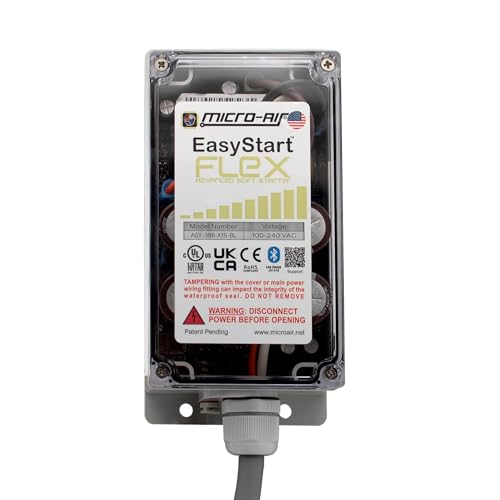
MICRO-AIR EasyStart 368 Bluetooth Soft Start Kit for Home Air Conditioner, RV & Commercial Use, Works with Generators, Reduces Power Surge, Efficient Start-Up - Up to 2-3.5 Tons(ASY-368-X48 BlueTooth) : Automotive
View on AmazonFAQ: common questions about Tesla Powerwall in Georgia
Q: How many Powerwalls do I need to back up my Georgia home? A: One unit usually covers essentials. Two units can handle larger 240V loads or partial whole-home backup; three are typical for full-house backup with central A/C. Your installer will measure peak kW and advise.
Q: Will a Powerwall run my air conditioner in an outage? A: Often yes with 2+ units, especially if your A/C has a soft-start and high SEER/variable-speed compressor. Continuous power and surge requirements dictate sizing.
Q: Can I add a Powerwall to my existing solar? A: Yes. Powerwall 3 integrates its own hybrid inverter for new solar and can work with existing systems via AC coupling or partial reconfiguration. Your installer will choose the best topology.
Q: Do Georgia utilities allow batteries to backfeed the grid for credits? A: Policies vary. Some allow export while on TOU; others meter battery discharge separately or restrict export. Most savings come from self-consumption and peak shaving. Confirm your utility’s interconnection and metering rules before purchase.
Q: What about degradation? A: Expect capacity to decline gradually (warranty to 70% at year 10). Smart operating modes and moderate temperatures help longevity.
Q: Is financing available? A: Many installers and EMCs offer low-interest financing. We recommend comparing interest rates to expected bill savings and tax-credit timing.
Q: How long is installation? A: Typical timeline is 1 day on site after permits are in hand. End-to-end: 2–8 weeks standalone; 4–12 weeks with solar.
Where this is heading
- Higher-power batteries: Powerwall 3’s 11.5 kW continuous output has shifted market expectations. Expect more whole-home-capable systems in the 10–15 kW class.
- Smarter tariffs and VPPs: As Georgia adds solar and storage, utilities may pilot virtual power plants (VPPs) that pay homeowners for flexible capacity. These programs, already active in other states, can materially improve ROI.
- Heat pump and EV synergy: Batteries buffer peak loads from electrification, making TOU/demand tariffs more manageable while enabling resilient, efficient homes.
If you’re early in the process, get a site assessment that includes: (1) your interval usage data, (2) your utility’s current TOU/demand options, and (3) outage history. Then size the battery to your actual peak and backup priorities. In Georgia’s policy landscape today, the Powerwall’s best case is solar-paired, on a tariff with a real peak spread — delivering resilience you can measure and savings you can see.
Helpful next reads:
Recommended Products
The Homeowner's Guide to Renewable Energy - Revised & Updated Edition: Achieving Energy Independence through Solar, Wind, Biomass and Hydropower: Chiras, Dan
After beginning with the all important discussion about energy efficiency and conservation, <strong>Dan guides you through everything you need to choose which renewable options to integrate into your
MICRO-AIR EasyStart 368 Bluetooth Soft Start Kit for Home Air Conditioner, RV & Commercial Use, Works with Generators, Reduces Power Surge, Efficient Start-Up - Up to 2-3.5 Tons(ASY-368-X48 BlueTooth) : Automotive
COMPATIBILITY WITH GENERATORS: ... power-limited locations. This Easy Start flex home ac soft starter is <strong>compatible with 2-stage compressors and heat pump units</strong>, making it a versatile
Emporia Gen 2 Smart Home Energy Monitor with 16 50A Circuit Level Sensors | Real Time Electricity Monitor/Meter | Solar/Net Metering - Amazon.com
See how much electricity your home is using anywhere, anytime. ... <strong>Add individual 50A sensors to your Vue to monitor up to 16 individual circuits</strong> — providing accurate energy use for t