
Tesla Powerwall in West Virginia: Cost, Availability & Is It Worth It?

Home batteries have moved from niche to mainstream after the federal Investment Tax Credit (ITC) was expanded in 2023 to cover standalone storage at 30% of cost. For West Virginia homeowners, a Tesla Powerwall can deliver storm-proof backup and bill savings when paired with solar — even as average residential electricity rates hover around 13¢/kWh (EIA, 2024). This guide breaks down Tesla Powerwall in West Virginia: specs, pricing, incentives, utility rates, installer availability, alternatives, and whether it pencils out for your home.
Tesla Powerwall overview: specs, capacity, and how it works
Tesla’s Powerwall is a lithium-based home battery system that stores electricity from the grid or a rooftop solar array for later use. It automatically provides backup power during outages and can be configured to shift consumption to off-peak times if you’re on a time-of-use (TOU) plan.
The Homeowner's Guide to Renewable Energy - Revised & Updated Edition: Achieving Energy Independence through Solar, Wind, Biomass and Hydropower: Chiras, Dan
After beginning with the all important discussion about energy efficiency and conservation, <strong>Dan guides you through everything you need to choose which renewable options to integrate into your
Check Price on AmazonKey terms to know:
- Usable capacity: The amount of energy the battery can actually deliver, measured in kilowatt-hours (kWh).
- Continuous power: The sustained output the battery can provide, measured in kilowatts (kW), affecting what appliances you can run simultaneously.
- Round-trip efficiency: The percentage of energy you get back after storing and retrieving it (losses are due to heat and conversion), typically 90–95% for modern systems.
- Depth of discharge (DoD): How much of the battery’s capacity can be used without degrading it; Powerwall is designed for daily cycling at high DoD.
What’s in a Powerwall system:
- Battery pack and onboard battery management system (BMS)
- Inverter/charger (integrated with Powerwall 3)
- Gateway (islanding switch and system controller for safe disconnection from the grid during outages)
Current models and representative specs (Tesla product literature, 2024–2025):
- Powerwall 3: 13.5 kWh usable energy per unit; up to roughly 11 kW of on-grid power capability; integrated solar inverter that can accept substantial PV input; stackable for higher capacity and power. Designed for whole-home backup with higher surge capability for large loads like well pumps or AC.
- Powerwall 2 (still in service with many installers): 13.5 kWh usable; about 5 kW continuous power (higher short-duration surge); pairs with a separate solar inverter.
What that means in practice:
- One 13.5 kWh unit can keep essentials (refrigerator, lights, Wi‑Fi, phone charging, gas furnace blower) running for 12–24 hours depending on load.
- Two to three units support partial or whole-home backup for longer storms, or allow for heavier loads (e.g., central AC, well pumps, sump pumps) with fewer compromises.
Powerwall pricing in West Virginia including installation costs
Installed pricing varies by home complexity (panel upgrades, trenching, wall reinforcement), distance to installer, and whether you buy direct from Tesla or a certified local installer.
As of 2026, typical West Virginia pricing we see advertised or reported by installers:
- Single Powerwall 3 installed: $10,000–$13,500
- Two units installed: $18,000–$24,000 (multi-unit discounts are common)
- Three units installed: $26,000–$33,000
Line items that move the price needle:
- Main panel upgrades or new subpanel for “essential loads”: $1,000–$3,000
- Long conduit runs, wall repairs, or detached garage placement: $500–$2,000
- Whole-home backup transfer equipment vs. essential-loads subpanel: $500–$1,500
The 30% federal ITC applies to the entire installed cost — hardware, labor, and supporting electrical work — which can reduce net cost by several thousand dollars. For example, a $12,000 installed single-unit system nets to $8,400 after the 30% ITC, before any local taxes or fees.
Note: West Virginia’s 6% state sales tax may apply; some installers roll it into quotes. Always request an itemized estimate.
West Virginia battery storage incentives: state rebates, SGIP, utility programs
- Federal Investment Tax Credit (ITC): 30% for residential storage, including standalone batteries (no solar required), enacted under the Inflation Reduction Act and effective for projects placed in service through 2032, with step-downs later. The credit can be claimed on IRS Form 5695. Batteries must meet minimum capacity requirements; Powerwall qualifies.
- State rebates: As of early 2026, West Virginia does not offer a statewide residential battery rebate or tax credit. There is no SGIP-equivalent program (SGIP is a California program administered by the CPUC).
- Utility programs: West Virginia’s major utilities — Appalachian Power (AEP) and Mon Power/Potomac Edison (FirstEnergy) — have offered optional TOU rates, but we have not seen ongoing, published rebates specifically for behind-the-meter batteries. Periodic pilot “bring your own device” demand response programs may emerge; check current offerings directly with your utility.
- Property tax: We are not aware of a statewide residential property tax exemption specifically for home batteries. Confirm with your county assessor regarding any local assessments.
Regulatory context: West Virginia maintains net metering for qualifying customer-generators under Public Service Commission rules, which supports the economics of pairing batteries with solar by maximizing self-consumption and resilience. Always review your utility’s latest tariff and interconnection rules before proceeding.
By the numbers: Powerwall in a typical West Virginia home
- Average WV residential electricity price: ~13¢/kWh (EIA, 2024)
- Typical WV household consumption: 25–35 kWh/day (varies with heating source and home size)
- Powerwall usable capacity: 13.5 kWh per unit
- Practical backup duration (one unit, essentials only): ~12–24 hours
- Round-trip efficiency: ~90–95% (manufacturer specs and field data)
- Federal tax credit: 30% of installed cost through 2032
How the Powerwall pairs with solar in West Virginia: backup vs. self-consumption
A Powerwall can be installed with or without solar. However, in West Virginia, pairing with rooftop solar yields the most resilience value:
- Backup: During grid outages, solar paired with Powerwall continues generating and charging the battery while safely islanded from the grid. Without a battery, most grid-tied PV systems shut down during outages for safety.
- Self-consumption: Powerwall stores midday solar surplus and powers the home at night, increasing your solar self-use. This matters even with retail net metering because it improves resilience and guards against potential future tariff changes.
- Curtailment protection: On sunny spring days, a battery helps avoid clipping and curtailment by soaking up excess PV when household loads are low.
System design notes:
- Essential loads vs. whole-home backup: Many WV homes benefit from an essentials subpanel (fridge, lights, outlets, internet, furnace blower, sump/well pump) to maximize hours of coverage per battery. Whole-home backup often requires 2–3 units.
- Winter performance: Batteries self-heat to maintain safe operation in cold weather but will use some stored energy to do so. Indoor locations (basement/utility room) reduce losses and improve longevity.
If you’re still sizing your PV system, see our state market overview for current pricing and top local installers: Solar in West Virginia: Costs, Incentives & Top Installers (2026).
West Virginia utility rate structures and how Powerwall saves with time-of-use
Powerwall savings depend on the spread between on-peak and off-peak rates. In West Virginia, base residential rates are relatively modest, and TOU enrollment is typically optional.
- Time-of-use (TOU): Some WV utilities offer TOU tariffs where on-peak energy prices are higher during weekday afternoons/evenings, with lower off-peak prices overnight and weekends. When the peak-to-off-peak difference is meaningful (for example, a 3–6¢/kWh spread), programming Powerwall to charge off-peak and discharge on-peak can yield consistent savings after accounting for round-trip losses.
- Bill impact math: Suppose off-peak is 11¢/kWh and on-peak is 16¢/kWh (a 5¢ spread). With ~90% round-trip efficiency, arbitraging 10 kWh/day saves about 10 kWh × $0.05 × 0.90 = $0.45/day, or ~$165/year. Larger spreads or demand-related charges increase savings; smaller spreads reduce them.
- Outages and resilience value: Appalachian storms and rural circuits can see multi-hour outages, especially during severe weather. While resilience is hard to monetize, homeowners often value refrigerators not defrosting, sump pumps staying on, and remote work continuity. Some insurers offer small premium credits for backup systems — worth asking your provider.
Net metering in WV supports solar economics, but TOU plus storage adds flexibility and a hedge against future tariff changes. Always verify your specific utility’s latest TOU availability, on-peak windows, and enrollment requirements before counting on arbitrage savings.
Powerwall availability and certified installers in West Virginia
Tesla sells Powerwall through two channels:
- Tesla Direct: Online ordering with site assessment and installation by Tesla or a subcontracted crew in areas they serve.
- Certified Installers: Local or regional electrical/solar contractors approved by Tesla.
In West Virginia, availability is generally good, but installer density is lower than in neighboring states. Many installs are fulfilled by regional firms based in Ohio, Pennsylvania, or Virginia with WV licenses. Practical steps:
- Use Tesla’s “Find an Installer” tool and request at least two quotes. Ask for load calculations and outage-run-time estimates based on your actual circuits.
- Verify NABCEP certification for solar-plus-storage projects, and West Virginia electrical licensing.
- Clarify whether your design is whole-home or essential-loads, and whether service upgrades are included in the quote.
If you live near the state line, it can help to compare pricing from adjacent markets, such as Tesla Powerwall in Pennsylvania or Tesla Powerwall in Ohio, where larger installer networks may offer competitive bids that still serve WV addresses.
Tesla Powerwall pricing vs. value: when it’s “worth it” in West Virginia
Worth-it scenarios:
- You experience regular outages or have critical loads (medical devices, sump/well pumps, home office) where downtime is costly.
- You’re installing or expanding solar and want resilience plus higher self-consumption.
- Your utility offers TOU with a material peak spread, and you’re comfortable programming charge/discharge windows.
Lower-return scenarios:
- No solar, very infrequent outages, flat residential rates with little or no TOU spread. In this case, the value is primarily resilience, not payback.
Rule of thumb payback:
- Pure TOU arbitrage in WV typically produces modest savings given average rate levels. Resilience often tips the decision. If you capture even $150–$250/year from TOU plus avoid a few hundred dollars of food spoilage or sump pump risk every few years, the qualitative value can be compelling even if strict payback exceeds 10 years.
Alternatives to Powerwall available in West Virginia: Enphase, LG, Generac
West Virginia installers commonly offer several strong competitors. All use lithium-iron-phosphate (LFP) or nickel-manganese-cobalt (NMC) chemistries; LFP generally provides longer cycle life and improved thermal stability.
Enphase IQ Battery (5P/10/10T)
- Capacity: 5–10 kWh per unit; stackable
- Chemistry: LFP
- Strengths: Tight integration with Enphase microinverters, modularity, strong monitoring app, UL 9540A safety pedigree
- Consider if: Your solar uses Enphase microinverters or you value high modularity and LFP chemistry
LG RESU Prime 16H / LG ESS Home 8–16
- Capacity: ~16 kWh per cabinet (configurations vary)
- Chemistry: NMC (RESU Prime) or LFP in newer ESS lines
- Strengths: High energy density, established brand, robust installer network
- Consider if: You need larger blocks of capacity and a compatible hybrid inverter
Generac PWRcell
- Capacity: Modular 9–18 kWh per cabinet
- Chemistry: NMC
- Strengths: High power output per cabinet, whole-home solutions, strong dealer network from standby generator market
- Consider if: You want a cohesive ecosystem with Generac backup products
FranklinWH aPower + aGate
- Capacity: 13.6 kWh per unit; stackable
- Chemistry: LFP
- Strengths: High surge capability for large motors, flexible load control via aGate
- Consider if: You have heavy motor loads (well/sump pumps, HVAC) and prefer LFP
How Powerwall compares:
- Pros: Strong app and automation, excellent ecosystem with solar EV charging/load control integrations, widespread service network, high power capability in Powerwall 3, proven reliability at scale.
- Cons: Price can be higher than some LFP competitors on a per-kWh basis; supply can fluctuate; closed ecosystem limits third-party inverter choices (not a concern with PW3’s integrated inverter, but relevant for retrofit scenarios).
Ask installers to quote at least two brands for an apples-to-apples comparison on installed $/kWh, continuous kW, and warranty (years/cycles/throughput limits). For many WV homes, value optimization is about the right combination of capacity and power rather than a single-brand must-have.
Practical buying tips and recommended add-ons
- Load assessment first: Use an energy monitor for two to four weeks to identify peak loads and right-size your battery stack. A device like the Emporia Vue Smart Home Energy Monitor offers circuit-level data that often reduces over-sizing.
- Smart panel or load control: If you want whole-home backup without oversizing batteries, a smart panel such as Span Smart Panel or a load management system can dynamically shed non-essential circuits during outages.
- Portable backup complement: For extended rural outages, some homeowners pair a home battery with a quiet inverter generator or a high-capacity portable power station like the EcoFlow DELTA Pro to selectively recharge essentials.
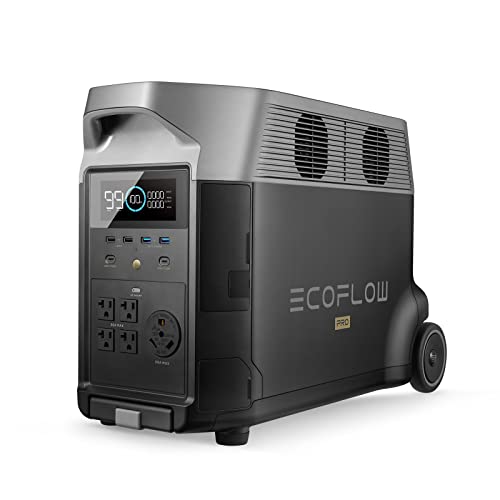
EF ECOFLOW Portable Power Station 3600Wh DELTA Pro, 120V AC Outlets x 5, 3600W, 2.7H Fast Charge, Lifepo4 Power Station, Solar Generator for Home Use, Power Outage, Camping, RV, Emergencies : Patio, Lawn & Garden
<strong>Fully recharge the lifepo4 battery in 1.8 hrs with 240V outlets(3000W), 2.7 hrs with 1800W wall outlets or solar charged in 2.8 hours with 4*400W solar panels</strong> thanks to the industry-l
Check Price on Amazon
Emporia Gen 2 Smart Home Energy Monitor with 16 50A Circuit Level Sensors | Real Time Electricity Monitor/Meter | Solar/Net Metering - Amazon.com
View on AmazonInstallation, permitting, and interconnection in West Virginia
- Permitting: Local building/electrical permits are typically required. In rural counties, timelines can be fast; in municipalities, expect standard inspections.
- Fire and clearance codes: Batteries must meet clearance and mounting specs; garages and basements are common locations. Outdoor-rated enclosures are used where appropriate (NEMA 3R/IP ratings).
- Interconnection: If adding solar, you’ll file an interconnection application with your utility. Net-metering customers receive a bi-directional meter; storage that exports to the grid may have additional metering requirements depending on the inverter configuration and utility rules.
Ask your installer for a single-line diagram and load calculations. These documents not only speed permitting but also help you understand system limits during outages.
FAQ: common questions about Tesla Powerwall in West Virginia
Does Powerwall qualify for incentives in WV? Yes. The 30% federal ITC applies to standalone or solar-coupled batteries. West Virginia currently has no statewide storage rebate.
How many Powerwalls do I need? One unit (13.5 kWh) covers essentials for many homes. If you want central AC, well/sump pumps, or multi-day storms coverage, plan for two to three units.
Can Powerwall back up a well pump or sump pump? Often yes, especially with Powerwall 3’s higher power output. Provide pump horsepower and starting current to your installer to verify surge capability.
Will Powerwall work without solar? Yes. It can charge from the grid and provide backup. With TOU, it can also arbitrage peak vs. off-peak pricing. Pairing with solar extends outage runtime and improves overall value.
Is West Virginia’s net metering compatible with batteries? Yes. Batteries typically operate behind the meter, increasing self-consumption. Export rules depend on inverter configuration. Your installer will set non-export or export-permitted modes per utility requirements.
What maintenance is required? Very little. The system is sealed and monitored via app/over-the-air updates. Keep vents clear and follow any manufacturer inspection guidance.
How do WV winters affect performance? Powerwall can operate in cold temperatures and self-heats as needed, but cold reduces available capacity and efficiency slightly. Indoor installation helps.
What’s the warranty? Tesla offers a 10-year limited warranty with performance guarantees that vary by model and usage mode. Always review the latest warranty document for cycle and throughput terms.
What this means for West Virginia homeowners
- If outages are your pain point, the resilience value is immediate. A single Powerwall can keep essentials running; two or more can feel like normal grid service for many homes.
- For pure bill savings, expect modest returns unless your TOU spread is significant. The combination of solar + battery + net metering provides the strongest overall case.
- Supply and installer availability are improving, but quotes can vary widely. Solicit multiple bids and insist on itemized scope, load modeling, and clear commissioning plans.
Looking ahead
Grid modernization, more frequent severe weather, and the 30% ITC are pushing storage adoption nationwide. National labs project steady improvements in battery cycle life and costs through the decade, while utilities continue piloting tariffs that reward flexible load and storage. For West Virginia homeowners, that means today’s Powerwall can deliver resilience now, with the option to stack more capacity later as needs evolve — and the economics will likely improve if utilities expand TOU or resilience credits.
Resources cited in this guide include U.S. EIA state price data (2024), Tesla public product specifications (2024–2025), and West Virginia PSC net metering rules as context for solar-plus-storage operation. Always consult your utility’s current tariff and a licensed installer for the latest requirements and site-specific design.
Recommended Products
The Homeowner's Guide to Renewable Energy - Revised & Updated Edition: Achieving Energy Independence through Solar, Wind, Biomass and Hydropower: Chiras, Dan
After beginning with the all important discussion about energy efficiency and conservation, <strong>Dan guides you through everything you need to choose which renewable options to integrate into your
Emporia Gen 2 Smart Home Energy Monitor with 16 50A Circuit Level Sensors | Real Time Electricity Monitor/Meter | Solar/Net Metering - Amazon.com
See how much electricity your home is using anywhere, anytime. ... <strong>Add individual 50A sensors to your Vue to monitor up to 16 individual circuits</strong> — providing accurate energy use for t
EF ECOFLOW Portable Power Station 3600Wh DELTA Pro, 120V AC Outlets x 5, 3600W, 2.7H Fast Charge, Lifepo4 Power Station, Solar Generator for Home Use, Power Outage, Camping, RV, Emergencies : Patio, Lawn & Garden
<strong>Fully recharge the lifepo4 battery in 1.8 hrs with 240V outlets(3000W), 2.7 hrs with 1800W wall outlets or solar charged in 2.8 hours with 4*400W solar panels</strong> thanks to the industry-l