
Tesla Powerwall in Tennessee: Cost, Availability & Is It Worth It?

Tennessee homeowners are asking whether a Tesla Powerwall in Tennessee pencils out—especially after more frequent severe-weather outages and a 30% federal tax credit for standalone batteries took effect in 2023 under the Inflation Reduction Act. With a single unit storing 13.5 kWh and delivering whole‑home backup when paired correctly, the Powerwall is increasingly competitive in the Southeast’s flat-rate and emerging time-of-use markets. Here’s a data-backed guide to costs, incentives, and practical performance in the Volunteer State.
By the numbers: Tennessee + Powerwall
- 13.5 kWh usable energy per Powerwall (Tesla specs)
- Up to 11.5 kW continuous output for Powerwall 3; 5 kW for Powerwall 2 (Tesla specifications, 2024–2025)
- Round-trip efficiency: ~90% AC-coupled; up to ~97% PV-to-battery when DC-coupled with Powerwall 3 (Tesla)
- 10-year warranty with at least 70% capacity retention (Tesla limited warranty)
- Typical installed cost in Tennessee: $11,000–$14,000 for one unit before incentives; $7,700–$9,800 after the 30% federal tax credit
- U.S. average outage duration including major events: ~5.5 hours (EIA, 2022); storm events in the Southeast often exceed a day for some customers
The Grid: The Fraying Wires Between Americans and Our Energy Future: Bakke, Gretchen
Cultural anthropologist Gretchen Bakke <strong>unveils the many facets of America's energy infrastructure, its most dynamic moments and its most stable ones, and its essential role in personal an
Check Price on AmazonHow the Tesla Powerwall works: specs and capabilities
Tesla Powerwall is a lithium-ion home battery system that stores grid or solar energy and powers your home during outages or peak-rate periods. Two current variants are common in Tennessee installs:
- Powerwall 2 (AC-coupled): 13.5 kWh usable capacity; 5 kW continuous output (7 kW peak), typically paired behind an existing solar inverter or used standalone. Approx. 90% round-trip efficiency due to AC conversion.
- Powerwall 3 (hybrid): 13.5 kWh usable; up to 11.5 kW continuous output with an integrated solar inverter. Because it’s DC-coupled to new PV, PV→battery→home efficiency can approach ~97% (Tesla datasheet), improving energy yield from your array.
Key features
- Whole-home or essential-loads backup: With properly sized systems and automatic transfer through the Tesla Backup Gateway, the battery can run critical circuits or, with multiple units, an entire home.
- Seamless outage protection: Sub-second switchover to keep lights and Wi-Fi on. No manual transfer switch needed.
- Intelligent controls: Time-Based Control uses rate schedules and weather forecasts to charge/discharge for lowest cost and best backup readiness.
- Safety: UL 9540 certified battery system with integrated thermal management; NEMA 3R enclosure for indoor/outdoor installation. Operating temperature: about -4°F to 122°F (Tesla).
What one unit powers
- Essentials for 24–36 hours: fridge (~1–2 kWh/day), lights/Wi‑Fi (~0.5–1.5 kWh/day), a gas furnace blower or small sump pump (~1–3 kWh/day), device charging. Average Tennessee home uses ~30 kWh/day (EIA regional averages), so whole-home backup typically requires 2–3 units, especially if you want to run central air.
Tesla Powerwall in Tennessee: pricing and total installed cost
Installed pricing varies by site conditions and whether you pair the battery with new solar. Based on quotes we track across the Southeast and national installer surveys (NREL installer data and industry quotes, 2024–2025):
Typical single‑unit costs before incentives
- Hardware (Powerwall 3 or 2): $8,500–$9,500
- Backup Gateway and BOS (balance of system): $700–$1,200
- Labor, permitting, commissioning: $2,000–$3,500 (often lower in TN than coastal markets)
- Common adders: main panel upgrade ($1,500–$3,500), long wire runs/trenching ($300–$1,500), critical loads sub‑panel ($500–$1,500)
Result: $11,000–$14,000 all‑in for one unit in much of Tennessee, with 2‑unit systems commonly $19,000–$24,000 before incentives. If you’re adding new solar and choose Powerwall 3, the integrated inverter can offset some separate inverter costs (typically $1,000–$2,000 saved, depending on array size).
Federal tax credit impact
- 30% Residential Clean Energy Credit (26 U.S.C. §25D) applies to batteries ≥3 kWh, even without solar, for systems placed in service 2023–2032. That takes a $12,500 project to $8,750 net. Credits step down beginning in 2033 under current law.
Sales tax note
- Tennessee generally applies state and local sales taxes to equipment; installed labor is often not taxed. Confirm treatment with your installer and tax advisor.
Compare with nearby states If you’re benchmarking quotes across the Southeast, we track market pricing here:
- See our Tennessee-neighbor pricing context in Tesla Powerwall in Georgia: Cost, Availability & Is It Worth It?
- For another TVA-adjacent market, compare Tesla Powerwall in Alabama
- For Atlantic pricing and policies, review Tesla Powerwall in North Carolina
Tennessee battery storage incentives: what exists—and what doesn’t
- Federal 30% credit: Available statewide for standalone or solar‑paired batteries ≥3 kWh.
- No statewide battery rebate: As of 2026, Tennessee offers no residential battery rebate like California’s SGIP. The California SGIP is not available in Tennessee.
- Utility/LPC programs: Tennessee Valley Authority (TVA) supplies power wholesale to ~153 local power companies (LPCs). Some LPCs pilot time-of-use (TOU) or demand-based rates and resiliency initiatives, but we have not seen recurring, public-facing battery rebates for homeowners. Check your LPC (e.g., Nashville Electric Service, Knoxville Utilities Board, EPB Chattanooga, MLGW) for any current pilots or interconnection requirements.
- Property tax: We are not aware of a statewide residential property-tax exemption specific to battery systems. Local treatment can vary—ask your county assessor when pairing with solar.
Sources to watch for updates: TVA EnergyRight program pages, LPC tariff filings, and the DSIRE database maintained by N.C. State University.
Solar + Powerwall in Tennessee: backup vs. self‑consumption
Tennessee does not mandate net metering. Many TVA‑served LPCs compensate excess solar at an avoided‑cost rate (often in the 2–5¢/kWh range) rather than retail (commonly 11–13¢/kWh). That difference makes a battery valuable for self‑consumption:
- Without a battery: Midday solar exports earn a few cents, then you buy back power in the evening at ~11–13¢/kWh.
- With a battery: You store midday solar and use it from 5–10 pm, effectively “earning” the full retail rate you avoid paying.
Simple value example
- Assume evening retail rate = 12.5¢/kWh; export credit = 3.5¢/kWh; battery round‑trip efficiency = 90%.
- Each kWh you store instead of exporting nets roughly (12.5 – 3.5) × 0.90 ≈ 8.1¢/kWh of value.
- If your Powerwall cycles 8 kWh/day for self-consumption, that’s about $0.65/day ≈ $240/year. With higher retail rates or TOU peaks, the value rises.
Backup value is situational but real. The U.S. Energy Information Administration reports average outage durations of ~5.5 hours including major events (2022). Tennessee’s severe storms, tornadoes, and ice events can push individual‑customer outages to 12–48 hours. One or two Powerwalls can keep essentials running without refueling, which many homeowners weigh heavily even when pure bill savings are modest.
Tennessee utility rate structures: where a Powerwall saves with TOU or demand charges
While many Tennessee homes remain on flat volumetric rates, a growing number of LPCs offer optional time‑of‑use or include residential demand components. The Powerwall’s Time‑Based Control can arbitrage both.
Time-of-use arbitrage example
- Hypothetical retail TOU: off‑peak 9¢/kWh, on‑peak 23¢/kWh (weekday 2–7 pm).
- Arbitrage spread: 14¢/kWh. Discharging 8 kWh during peak saves ~$1.12/day, or ~$410/year. With 10 kWh/day, savings approach ~$510/year.
Demand charge shaving
- Some LPCs pilot residential demand charges (e.g., $6–$10 per kW based on the month’s highest 15–60 minute peak). If a Powerwall caps your peak by 3 kW, you could save $18–$30/month ($216–$360/year). Actual savings depend on your load profile and how your utility measures peak.
Efficiency and cycling limits
- AC‑coupled systems lose ~10% round‑trip; Powerwall 3’s DC coupling with new solar reduces losses. The 10‑year warranty is energy‑throughput based by use case but effectively supports daily cycling for solar self‑consumption and backup in residential use (Tesla warranty documentation).
Availability and certified installers in Tennessee
Availability
- Powerwall 3 supply has improved since late‑2024. In Tennessee’s major metros—Nashville, Knoxville, Chattanooga, Memphis—lead times of 4–12 weeks from contract to commissioning are common, driven more by permitting and utility approvals than hardware.
Installers
- You can buy direct from Tesla or through Tesla Certified Installers. Look for NABCEP-certified contractors and confirm they have recent interconnections with your LPC. Ask for:
- One‑line diagram and load calculations (can your HVAC start on battery?)
- Interconnection status: export vs. non‑export settings, any required external disconnect
- Whole‑home vs. essential‑loads backup design and transfer equipment
- Panel upgrade needs and code compliance (NEC 2020/2023 AFCI/GFCI requirements)
Timeline
- Site survey: 1–2 weeks
- Utility interconnection review (solar+storage): 2–6 weeks (varies by LPC)
- Installation: 1–2 days per unit plus any main panel work
- Commissioning and inspections: 1–2 weeks
Alternatives to Powerwall available in Tennessee
Depending on your roof, inverter brand, and budget, these contenders are common statewide:
- Enphase IQ Battery 5P: 5 kWh modules with high power density (up to 7.68 kW peak per 10 kWh stack) and tight integration with Enphase microinverters. Strong choice for microinverter retrofits and partial‑home backup. 15‑year limited warranty/6,000 cycles (Enphase).
- LG Energy Solution RESU Prime (10H/16H): 9.6–16 kWh nominal, DC‑coupled with compatible inverters (SolarEdge, SMA). Solid efficiency and 10‑year warranty; good for larger solar arrays needing DC coupling.
- Generac PWRcell: Modular 9–18 kWh DC‑coupled cabinets with 3.4–9 kW continuous output (model dependent). Pairs well for whole‑home backup when stacked; 10‑year warranty.
- SolarEdge Home Battery (10 kWh): Tight DC‑coupling with SolarEdge inverters; good round‑trip efficiency and app experience if you already have SolarEdge.
When to pick each
- Choose Powerwall 3 if you want high output per battery, whole‑home potential with fewer units, and integrated solar inverter on new PV.
- Choose Enphase 5P if you’re on Enphase microinverters or want modular increments and a long warranty.
- Choose DC‑coupled options (LG/Generac/SolarEdge) for maximum PV‑to‑battery efficiency on new builds with compatible inverters.
Affiliate picks to consider
- If you need flexible backup circuit control, a smart load center like the Span Smart Panel can prioritize essential loads and often avoids a costly main‑panel upgrade.
- Monitoring helps reveal peak loads. The Sense Energy Monitor or an all‑in‑one Emporia Energy Monitor can surface saving opportunities before you size your battery.
Is Tesla Powerwall in Tennessee worth it?
Worth depends on why you’re buying:
- Resilience-first households: If you’ve experienced day‑long outages, the Powerwall’s value is high. Two units can carry essentials and many HVAC systems through overnight peaks, with no fuel or noise.
- Solar owners without retail net metering: Batteries capture more of your solar value. Assuming a 7–10¢/kWh spread between avoided retail and export credit, daily cycling contributes a few hundred dollars in annual bill savings, plus backup value.
- TOU/demand rate customers: With spreads of 10–15¢/kWh or demand charges of $6–$10/kW, software‑driven arbitrage and peak shaving can materially improve ROI.
For strictly financial payback on flat rates and no outages, a Powerwall may have a 10–15+ year simple payback without stacking additional values (demand response, high TOU spreads). Many Tennessee buyers justify the investment on resilience plus moderate bill savings.
FAQ: Tesla Powerwall in Tennessee
- Does the 30% tax credit apply without solar? Yes. Since 2023, standalone batteries ≥3 kWh qualify under the federal Residential Clean Energy Credit through 2032.
- Is California’s SGIP available in Tennessee? No. SGIP is a California‑only program.
- How many Powerwalls do I need? One unit (13.5 kWh) covers essentials. Two to three are typical for whole‑home backup, central AC, or well pumps. Powerwall 3’s higher output reduces the number of units needed for large loads.
- Can a Powerwall run central air? Often yes, especially with Powerwall 3 and soft‑start or variable‑speed HVAC. Your installer should check compressor LRA and design for inrush current.
- What if my utility forbids export? The system can be configured as non‑export. You still gain backup and self‑consumption value; interconnection steps are simpler.
- Will it work in Tennessee heat and cold? Yes. It’s rated for about -4°F to 122°F but performs best in shaded or conditioned spaces (garages, covered exterior walls).
- How loud is it? Near‑silent in normal operation; cooling fans are comparable to a quiet appliance.
- How long does it last? The warranty is 10 years; many systems are expected to remain useful well beyond, with reduced capacity. Degradation depends on cycling and temperature.
- Maintenance? Minimal. Firmware updates are automatic via the Tesla app. Keep vents clear and follow installer guidance.
- Insurance/HOA issues? Most insurers accept UL‑listed residential batteries; notify your carrier. HOAs rarely restrict wall‑mounted equipment behind the fence line, but get written approval if required.
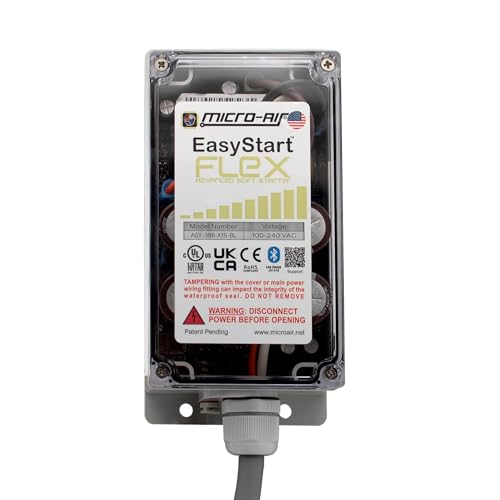
MICRO-AIR EasyStart 368 Bluetooth Soft Start Kit for Home Air Conditioner, RV & Commercial Use, Works with Generators, Reduces Power Surge, Efficient Start-Up - Up to 2-3.5 Tons(ASY-368-X48 BlueTooth) : Automotive
View on AmazonPractical steps for Tennessee homeowners
- Gather a year of bills and your peak loads. Identify HVAC tonnage and electric water heating—big drivers of battery sizing.
- Ask your LPC about TOU or demand options and solar export credit. Value streams set the ROI.
- Solicit at least two quotes that model essential‑loads vs. whole‑home backup with Powerwall 3 output assumptions. Request savings modeling under your actual tariff.
- If adding solar, compare DC‑coupled (Powerwall 3/compatible) vs. AC‑coupled designs for efficiency and cost.
- Plan for resilience: decide in advance which circuits you want powered, and consider a smart panel if you need dynamic load control.

Emporia Gen 2 Smart Home Energy Monitor with 16 50A Circuit Level Sensors | Real Time Electricity Monitor/Meter | Solar/Net Metering - Amazon.com
View on AmazonWhere the market is heading
- More TOU in the Valley: TVA’s wholesale time‑varying rates are spurring gradual retail TOU adoption. That trend increases battery arbitrage value.
- Smarter load management: Pairing batteries with controllable loads (heat pumps, water heaters, EV chargers) will unlock deeper savings via tariff‑aware scheduling.
- Falling soft costs: As local installers gain experience with LPC interconnections, Tennessee’s permitting and design timelines are shortening, improving installed cost trends.
If you want to cross‑shop regional pricing and incentives, our Southeast guides for Georgia, Alabama, and North Carolina provide useful reference points.
Recommended Products
The Grid: The Fraying Wires Between Americans and Our Energy Future: Bakke, Gretchen
Cultural anthropologist Gretchen Bakke <strong>unveils the many facets of America's energy infrastructure, its most dynamic moments and its most stable ones, and its essential role in personal an
Emporia Gen 2 Smart Home Energy Monitor with 16 50A Circuit Level Sensors | Real Time Electricity Monitor/Meter | Solar/Net Metering - Amazon.com
See how much electricity your home is using anywhere, anytime. ... <strong>Add individual 50A sensors to your Vue to monitor up to 16 individual circuits</strong> — providing accurate energy use for t
MICRO-AIR EasyStart 368 Bluetooth Soft Start Kit for Home Air Conditioner, RV & Commercial Use, Works with Generators, Reduces Power Surge, Efficient Start-Up - Up to 2-3.5 Tons(ASY-368-X48 BlueTooth) : Automotive
COMPATIBILITY WITH GENERATORS: ... power-limited locations. This Easy Start flex home ac soft starter is <strong>compatible with 2-stage compressors and heat pump units</strong>, making it a versatile