
Tesla Powerwall in Idaho: Cost, Availability & Is It Worth It?
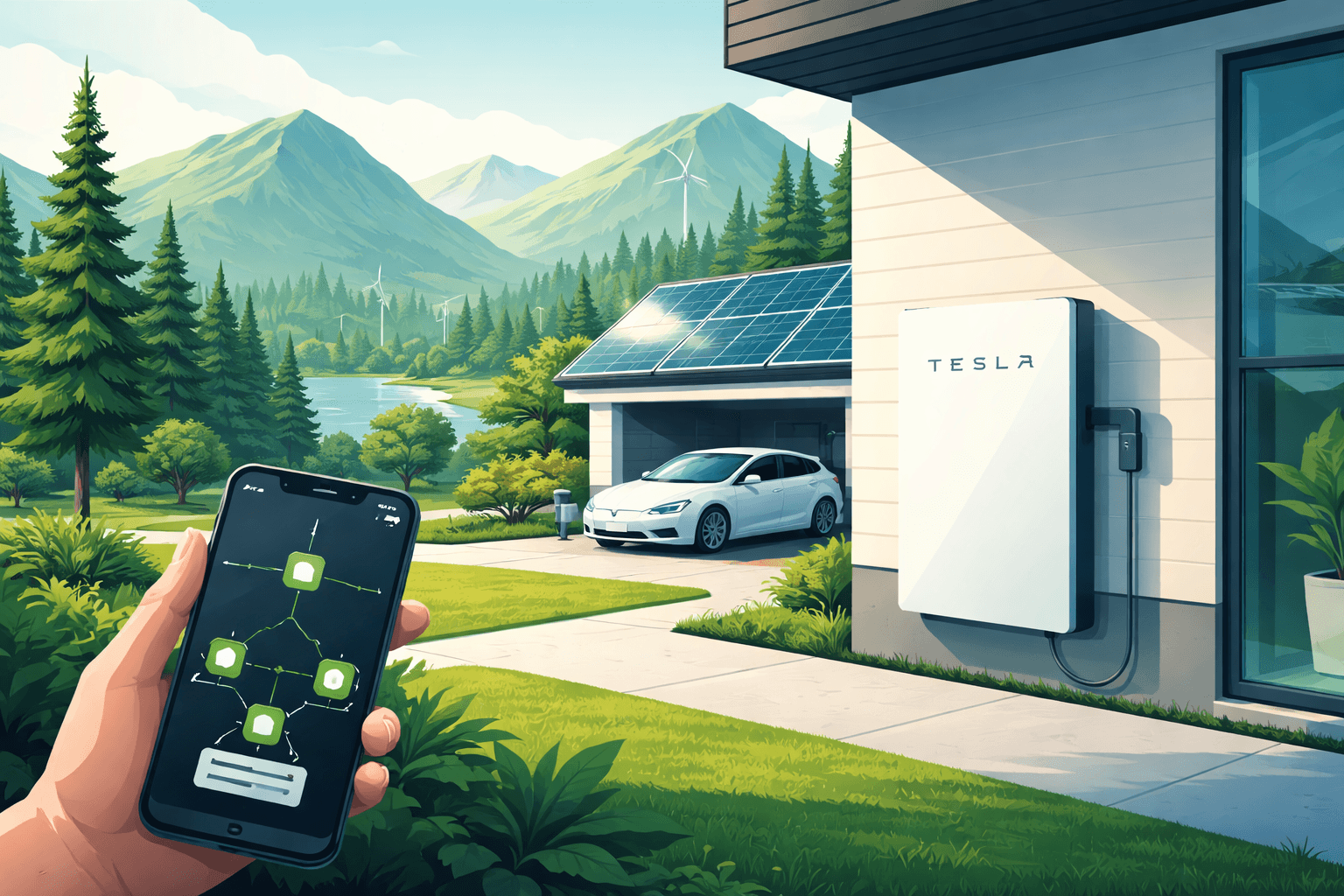
Idaho homeowners are asking about Tesla Powerwall in Idaho for two reasons: economics and resilience. With Idaho’s shift from traditional net metering to utility “export credit” rates that pay just a few cents per kWh for daytime solar exports, the value of storing your own energy has gone up. Meanwhile, winter storms and summer heat waves still cause outages, even in a state with relatively low average electricity prices. Tesla reported a record 14.7 GWh of energy storage deployments in 2023 (Tesla 2023 Impact Report), and residential batteries are a growing slice of that pie.
This guide explains Powerwall specs and how it works, what a realistic installed price looks like in Idaho, which incentives apply (and which don’t), how batteries pair with rooftop solar under Idaho’s current utility rules, and the top alternatives if Tesla isn’t the best fit for your home.
How Tesla Powerwall works: capacity, power, and what’s inside
A home battery does two core jobs: it stores electricity (measured in kilowatt-hours, kWh) and delivers power (measured in kilowatts, kW). Capacity tells you how long the battery can run your loads; power tells you how many and which loads you can run at once.
Solar Electricity Handbook - 2023 Edition: A simple, practical guide to solar energy – designing and installing solar photovoltaic systems: Boxwell, Michael
Solar Electricity Handbook - 2023 Edition: <strong>A simple, practical guide to solar energy – designing and installing solar photovoltaic systems</strong> [Boxwell, Michael] on Amazon.com. *FREE* shi
Check Price on Amazon- Usable energy capacity: 13.5 kWh per unit (Powerwall 2/Plus and Powerwall 3)
- Output power: Powerwall 2 provides up to 5 kW continuous (7 kW peak for 10 seconds). Powerwall 3 increases power output and integrates a solar inverter, enabling more whole‑home backup capability based on Tesla’s product literature.
- Chemistry: Lithium‑ion. Tesla has increasingly used lithium iron phosphate (LFP) in stationary storage for thermal stability and long cycle life.
- Round‑trip efficiency: Around 90% (Tesla PW2 published figure). This is the percentage of energy you get back after charging and discharging.
- Warranty: 10 years, typically guaranteeing at least 70% of original capacity at year 10 subject to cycling limits.
- Operating temperature: Broad range suitable for Idaho winters; an integrated heater helps maintain performance in cold weather. Indoor or garage placement is recommended for cold‑climate efficiency.
How it works day to day:
- Self‑consumption: During sunny hours, your solar charges the battery first; in the evening, the battery powers your home, reducing grid imports when rates or export credits are unfavorable.
- Backup: If the grid goes down, Powerwall isolates (“islands”) your home and powers critical circuits or, with enough capacity and proper design, supports whole‑home loads. Transfer happens in milliseconds, so most electronics don’t notice.
- Time‑of‑use shifting: If your utility has time‑varying prices, Powerwall can charge off‑peak and discharge during peaks to arbitrage the rate difference.
For a deeper dive into hardware differences (Powerwall 2 vs. Plus vs. 3), control modes, and wiring options, see our Tesla Powerwall: Complete Buyer's Guide — Cost, Installation & Alternatives.
Powerwall pricing in Idaho: equipment and installation
Installed price depends on site conditions (main panel capacity, trenching needs, distance to service equipment), battery count, and whether you bundle with solar. Based on installer quotes and national benchmarks from NREL’s 2023–2024 U.S. Energy Storage Cost Benchmark, here’s what Idaho homeowners typically see in 2026:
- Single Powerwall (13.5 kWh): $11,000–$15,000 before incentives
- Each additional Powerwall: $7,000–$9,000 before incentives (lower incremental labor and balance‑of‑system costs)
- Main panel upgrade (if needed): $1,500–$3,500
- Critical‑loads subpanel or smart‑load control: $800–$2,000
Idaho’s labor rates are generally lower than West Coast metros, which helps keep installation costs toward the lower end of national ranges. Buying Powerwall with a new solar system can reduce soft costs because the crew is already on site and the permit covers both. Remember the federal 30% tax credit (details below) applies to the installed battery cost, not just the hardware.
What size is right?
- Light backup (refrigerator, lights, internet, gas furnace blower): 1 Powerwall
- Most homes wanting overnight backup and EV charging moderation: 2 Powerwalls
- All‑electric homes with heat pumps or well pumps seeking whole‑home backup: 2–3 Powerwalls, depending on load management
Idaho battery storage incentives: federal credit, state deduction, and utility programs
Here’s the current incentive landscape for Tesla Powerwall in Idaho. Policies evolve, so confirm details with your tax advisor and installer.
- Federal Residential Clean Energy Credit (ITC): 30% through 2032 for residential energy storage ≥3 kWh, whether standalone or paired with solar (IRS Notice 2023‑17; U.S. DOE guidance). A 13.5 kWh Powerwall fully qualifies. Credit applies to equipment and installation.
- Idaho Residential Alternative Energy Device Deduction: Idaho allows an income tax deduction (not a credit) for qualifying renewable energy devices (Idaho Code §63‑3029I). It’s 40% of eligible costs in year 1 and 20% in each of the next three years, capped at $5,000 per year and $20,000 total. Batteries explicitly included? The statute focuses on generation equipment (solar, wind, geothermal). Many Idaho homeowners have successfully claimed the deduction when the battery is installed as part of a solar energy system and wired as a component of that system. Standalone batteries may not qualify. Consult the Idaho State Tax Commission or a tax professional.
- SGIP: California’s Self‑Generation Incentive Program does not apply in Idaho.
- Utility rebates and demand response: As of 2026, Idaho does not have a statewide residential battery rebate. Some utilities periodically pilot demand response programs that pay bill credits for allowing limited control of your battery during peak events. Check Idaho Power and regional co‑ops for current offerings before you buy.
Stacking incentives example (illustrative): A $13,500 installed Powerwall paired with solar could receive a $4,050 federal credit. If eligible, the Idaho deduction could reduce your state taxable income by up to $5,000 in year 1 (40% of cost, subject to the cap) and $3,375 in each of the next three years, providing additional tax savings depending on your marginal rate.
Pairing Powerwall with solar in Idaho: backup vs. self‑consumption
Idaho’s biggest shift for solar owners has been the move away from retail net metering to “export credit” rates for excess generation. For Idaho Power customers, the credit varies by season and time of day and is generally much lower than the retail rate of electricity. That means storing your midday solar and using it in the evening can be worth more than exporting it.
- Backup value: Batteries keep essential circuits running during outages. Idaho’s average outage duration is typically below the U.S. average (EIA reliability data), but winter storms, wildfire smoke seasons, and summer heat events still cause service interruptions. A single 13.5 kWh Powerwall can typically support a refrigerator (1–2 kWh/day), lights and devices (1–3 kWh/day), internet, and a gas furnace blower for a day or more. Larger electric loads (heat pumps, well pumps, EV charging) require more capacity or careful load management.
- Self‑consumption value: If your export credit is ~3–5¢/kWh and your retail rate is ~10–12¢/kWh, every kWh you shift from export to evening self‑use can be worth 5–9¢. Accounting for ~10% battery losses, the net spread still adds up across thousands of kWh per year.
- PV integration: Powerwall 3 integrates a solar inverter, which can lower balance‑of‑system costs for new installs. If you already have solar with a string inverter or Enphase microinverters, Powerwall 2/Plus works as an AC‑coupled battery.
If you’re early in your solar research, our local guide covers pricing, incentives, and top installers: Solar in Idaho: Costs, Incentives & Top Installers (2026).
Idaho rate structures: time‑of‑use, export credits, and how a battery saves
Idaho’s residential rates are among the lowest in the U.S. (EIA), but rate design matters as much as price for battery economics.
- Flat vs. time‑of‑use (TOU): Some Idaho utilities offer optional TOU plans, with higher summer peak prices (often late afternoon/early evening on weekdays) and cheaper off‑peak nights/weekends. A battery arbitrages this spread by charging off‑peak (or from solar) and discharging during peaks. In markets with a 4–8¢/kWh peak spread, a single Powerwall shifting 3–6 kWh/day during summer can save $10–$25/month just from TOU arbitrage, on top of solar self‑consumption gains.
- Export credit rates: Idaho Power moved new solar customers to an Export Credit Rate (ECR) calculated by season and time block. ECRs are materially lower than retail rates, which increases the value of batteries configured for self‑consumption. Check your latest tariff—rates update periodically through Idaho’s PUC process.
- Demand charges: A few electric co‑ops in the region have residential demand or coincident peak charges. Batteries can reduce the single highest 15–60 minute peak in a billing cycle, materially lowering bills. If your co‑op uses demand billing, ask your installer to enable “peak shaving.”
Key point: In Idaho, batteries rarely “pay for themselves” on arbitrage alone given low retail prices. But when you blend export credit avoidance, TOU arbitrage (if available), and the backup value homeowners increasingly prioritize, the numbers can work—especially with the 30% federal credit.
Availability and certified installers in Idaho
Powerwall availability in Idaho has improved markedly since 2023. As of 2026:
- Purchase channels: You can order directly from Tesla (often bundled with solar) or through Tesla Certified Installers across Boise, Meridian, Nampa, Idaho Falls, Pocatello, and Coeur d’Alene.
- Lead times: 4–12 weeks is common, shorter outside peak summer. Permitting timelines vary by jurisdiction; your installer will coordinate with the utility for interconnection and, if applicable, export metering.
- Site conditions: Idaho garages are ideal for cold‑weather performance. Outdoor wall mounting is possible, but installers may recommend enclosures or south/sun‑protected walls to reduce winter heater usage.
For buying process tips, wiring diagrams, and common change orders to avoid, bookmark our Tesla Powerwall: Complete Buyer's Guide — Cost, Installation & Alternatives.
Alternatives to Powerwall in Idaho: Enphase, LG, Generac
Several batteries compete head‑to‑head with Powerwall on features, price, and installer base.

EF ECOFLOW Smart Home Panel 2, the Center of the Whole
View on AmazonEnphase IQ Battery 5P/10/10T
- Best with Enphase microinverter solar arrays and for modular expansion.
- Chemistry: LFP. The 5P packs ~5 kWh each with ~3.8 kW continuous output; multiple units aggregate capacity and power.
- Strengths: High round‑trip efficiency in DC‑coupled configurations, strong cold‑weather performance, excellent app and module‑level visibility.
- Consider if you already have Enphase microinverters or want granular backup design for critical loads. Based on performance and flexibility, the Enphase IQ Battery 5P represents strong value for residential retrofits.
LG Energy Solution RESU Prime (10H/16H)
- DC‑coupled with compatible inverters (e.g., SolarEdge). 10–16 kWh usable per battery, with up to ~7 kW peak depending on model and inverter.
- Strengths: High energy density, strong warranty, broad installer familiarity.
- Consider if you have or plan a SolarEdge‑based system and prioritize compact footprint.
Generac PWRcell
- Modular packs (typically 9–18 kWh) with a dedicated hybrid inverter.
- Strengths: Flexible sizing, can support large motor loads with proper design.
- Consider if you want tight integration with an automatic transfer switch or already have Generac ecosystem gear.
Complementary gear that improves battery value:
- Smart load panels: Products like the Span Smart Panel let you dynamically prioritize circuits during an outage, effectively making one battery feel like two by shedding non‑essentials.
- Home energy monitors: A low‑cost Emporia Vue Energy Monitor helps right‑size your battery by revealing real‑world peak loads and daily kWh usage before you buy.
By the Numbers: Tesla Powerwall in Idaho
- 13.5 kWh: Usable energy per Powerwall
- ~5 kW: Continuous output per Powerwall 2; higher for Powerwall 3 (integrated inverter)
- 10 years: Warranty term (≥70% capacity typical)
- $11,000–$15,000: Typical installed cost for the first Powerwall in Idaho before incentives
- 30%: Federal tax credit for residential storage through 2032
- Up to $20,000: Maximum Idaho state deduction amount (spread across four years, with annual caps)
- ~3–5¢/kWh: Typical export credit value range vs. ~10–12¢/kWh retail rates (illustrative; check your tariff)
What this means for Idaho homeowners
- If you already have or plan to install solar, a battery materially boosts savings under export credit regimes by prioritizing self‑consumption.
- If you experience even a few outages per year—or you work from home—the resilience and seamless backup often justify the investment once the 30% federal credit is applied.
- If your utility offers TOU pricing or demand charges, batteries can cut peaks and shift usage to cheap hours for additional savings.
- If you have an all‑electric home or a big well pump, plan on two or more batteries or invest in smart load control so essential circuits stay powered during outages.
Is Tesla Powerwall in Idaho worth it?
Financially, expect a blended payback often in the 9–14 year range when paired with solar—driven by export credit avoidance, potential TOU arbitrage, and the 30% federal tax credit. Homes on flat, low Idaho rates and without export credits may see longer paybacks if backup is the sole driver. Non‑financial benefits—quiet, automatic backup; protection against food spoilage; maintaining home office and medical devices—tip the scales for many buyers.
Compared with alternatives, Tesla’s strengths are installer availability, mature software, storm‑watch features, and integrated solar options (especially with Powerwall 3). Enphase is a close competitor if you have microinverters, while LG and Generac shine in certain DC‑coupled designs.
FAQ: Tesla Powerwall in Idaho
How many Powerwalls do I need? Most Idaho single‑family homes choose 1–2 for critical loads; all‑electric homes with large HVAC or well pumps often choose 2–3. A load study using a home energy monitor helps size correctly.
Can a Powerwall run my well pump or air conditioner? Yes, with proper sizing. Motor starting currents (lock‑rotor amps) can be high; Powerwall 3’s higher power output and smart panels that stagger loads help. Discuss nameplate ratings with your installer.
What happens in winter? Batteries lose some efficiency in cold. Powerwall includes an internal heater and operates in Idaho winters, but indoor/garage placement reduces heater use and preserves capacity.
Does Idaho’s state incentive cover standalone batteries? The Idaho deduction is written around renewable generation equipment. Many homeowners claim it when the battery is installed as part of a solar system. Standalone eligibility is uncertain—confirm with a tax professional.
Do I still get net metering with a battery? New Idaho Power solar customers are typically on an export credit rate, not 1:1 net metering. A battery helps by storing solar for evening use instead of exporting at a low credit.
How long does installation take? Electrical work is typically 1–2 days per battery. Permitting and interconnection add 2–10 weeks depending on jurisdiction and season.
Can I go off‑grid with Powerwall? Technically possible with enough batteries and solar, but most Idaho homeowners choose grid‑tied systems for reliability and cost. Off‑grid requires careful winter energy planning.
What maintenance is required? Very little. Keep the unit clear of debris, ensure ventilation, and update firmware automatically via the app.
Will a battery increase my home value? Studies on solar show a resale premium; data on batteries is emerging. Buyers increasingly value backup and lower bills, especially in remote or outage‑prone areas.
Is a gas generator cheaper? Upfront, yes. But generators require fuel, regular maintenance, and produce noise and emissions. Many Idaho homeowners pair a smaller generator with a battery for extended outages.
Outlook: storage is becoming standard with Idaho solar
As export credit rates and time‑varying tariffs spread, batteries are moving from “nice to have” to standard equipment on new solar installs in Idaho. Federal incentives are stable through 2032, Powerwall lead times are down, and alternatives are competitive. Expect utilities to expand demand response pilots that pay homeowners for flexible capacity—further improving economics for those who enroll.
If you’re comparing bids, ask installers to model three cases: solar‑only, solar + one battery, and solar + two batteries, using your actual tariff and Idaho export credit assumptions. That apples‑to‑apples view, plus a look at outage history on your feeder, will make the “is it worth it?” decision straightforward.

Emporia Gen 2 Smart Home Energy Monitor with 16 50A Circuit Level Sensors | Real Time Electricity Monitor/Meter | Solar/Net Metering - Amazon.com
View on AmazonRecommended Products
Solar Electricity Handbook - 2023 Edition: A simple, practical guide to solar energy – designing and installing solar photovoltaic systems: Boxwell, Michael
Solar Electricity Handbook - 2023 Edition: <strong>A simple, practical guide to solar energy – designing and installing solar photovoltaic systems</strong> [Boxwell, Michael] on Amazon.com. *FREE* shi
Emporia Gen 2 Smart Home Energy Monitor with 16 50A Circuit Level Sensors | Real Time Electricity Monitor/Meter | Solar/Net Metering - Amazon.com
See how much electricity your home is using anywhere, anytime. ... <strong>Add individual 50A sensors to your Vue to monitor up to 16 individual circuits</strong> — providing accurate energy use for t
EF ECOFLOW Smart Home Panel 2, the Center of the Whole
Alternatively connect <strong>3 x EcoFlow DELTA Pro 3 units with 6 x Extra Batteries for energy storage up to 36kWh</strong>. It's not just for longer backup but lets you to control and run every