
Tesla Powerwall in Montana: Cost, Availability & Is It Worth It?

Montana’s long winters and big skies make resilience the top reason homeowners consider a Tesla Powerwall. With the 30% federal clean energy tax credit now available for standalone storage, interest in “solar plus storage” has surged. This guide breaks down Tesla Powerwall in Montana — specs, pricing, incentives, utility rates, installers, and alternatives — so you can decide if it’s worth it for your home.
Tesla Powerwall in Montana: Specs and how it works
A home battery stores electricity for use when the sun isn’t shining or the grid goes down. Tesla’s Powerwall line has become the default option for residential storage because of its integrated software, whole‑home backup capability, and strong warranty.
The Homeowner's Guide to Renewable Energy - Revised & Updated Edition: Achieving Energy Independence through Solar, Wind, Biomass and Hydropower: Chiras, Dan
After beginning with the all important discussion about energy efficiency and conservation, <strong>Dan guides you through everything you need to choose which renewable options to integrate into your
Check Price on AmazonKey specs (Tesla product datasheets, 2024–2025):
- Usable energy: 13.5 kWh per unit (both Powerwall 2 and Powerwall 3)
- Power output: up to 5 kW continuous (Powerwall 2); up to 11.5 kW continuous (Powerwall 3)
- Round‑trip efficiency: ~90%
- Operating temperature: about −20°C to 50°C (‑4°F to 122°F); internal thermal management keeps the battery within range
- Warranty: 10 years, typically to 70% of original capacity under residential use
- Scalability: multiple units can be stacked to increase energy and power
How it works:
- AC‑coupled (Powerwall 2) or DC‑coupled with an integrated solar inverter (Powerwall 3). Either way, the system talks to your solar and the grid.
- When the grid fails, the Tesla Gateway/Powerwall 3 automatically “islands” the home in milliseconds to keep essential circuits powered.
- Software modes prioritize different goals: backup reserve, self‑consumption (store your solar to use later), or time‑based control (charge during off‑peak, discharge during peak).
Montana climate note: Powerwall’s active heating helps in sub‑zero weather, but efficiency and available power can dip in extreme cold as energy is used for thermal management. If your battery is garage‑mounted, consider insulation or an interior wall to reduce winter heating overhead.
By the numbers: Montana snapshot
- 13.5 kWh: Energy stored by one Powerwall — roughly half a typical U.S. home’s daily use
- 5–11.5 kW: Continuous power (Powerwall 2 vs. Powerwall 3)
- 1–2 days: Backup for “essentials only” with one Powerwall in winter; 2–3+ days with two units and good solar
- ~$11,000–$16,000: Typical installed cost for one Powerwall in Montana before incentives
- 30%: Federal tax credit on installed cost (Internal Revenue Code §25D)
- ~12¢/kWh: Average residential retail rate in Montana in 2024 (U.S. EIA)
- 1,300–1,450 kWh/kW‑yr: Typical fixed‑tilt solar yield in Billings/Missoula region (NREL PVWatts)
Powerwall pricing in Montana, including installation costs
Based on installer quotes we’ve seen across the Northern Rockies and Tesla’s national pricing trends, here’s a realistic Montana range:
- Hardware (Powerwall 2 or 3, gateway/integrated controls): $8,400–$9,800 per unit
- Balance‑of‑system and labor: $2,500–$6,000 (panel work, conduit, permits, commissioning)
- Service panel upgrade (if needed): $1,000–$3,000
- Whole‑home transfer equipment or smart load management (optional): $500–$2,000
Total typical installed costs before incentives:
- Single Powerwall: $11,000–$16,000
- Two Powerwalls: $19,000–$28,000
- Three Powerwalls: $28,000–$40,000
Montana labor rates are generally lower than coastal markets, but rural travel time and winter construction windows can add cost. If you pair a Powerwall with a new solar array, installers often discount the battery because mobilization and permitting are combined.
What the 30% federal tax credit covers: The Residential Clean Energy Credit applies to standalone storage ≥3 kWh installed after Jan. 1, 2023. In practice, homeowners can claim 30% of the total invoice — hardware, labor, electrical upgrades integral to the installation, and permitting.
Montana battery storage incentives: state rebates, SGIP, utility programs
- State rebates: As of 2026, Montana does not offer a statewide cash rebate specifically for residential batteries. Always verify on DSIRE (Database of State Incentives for Renewables & Efficiency) or with your installer, as local programs can change.
- Loans: Montana’s Alternative Energy Revolving Loan Program (AERLP), administered by the Montana Department of Environmental Quality, historically offers low‑interest financing (often in the 3–5% range) up to about $40,000 for residential renewable energy projects, including storage when paired with renewables. Check current terms with DEQ.
- Property tax: Montana provides property tax incentives for qualifying renewable energy systems; eligibility for batteries can depend on pairing and local assessor interpretation. If the battery is charged primarily from on‑site solar, it is more likely to be considered part of the renewable system. Confirm with your county assessor.
- Utility programs: No statewide battery rebate. Some electric cooperatives run pilot demand response or peak‑shaving programs. Ask your provider (e.g., Flathead Electric Cooperative, Missoula Electric Cooperative, Yellowstone Valley Electric Cooperative) if they have battery pilots, peak alerts, or demand rate options that pair well with storage.
- SGIP: California’s Self‑Generation Incentive Program (SGIP) is not available in Montana; we reference it because it’s the best‑known U.S. battery rebate. For details on how SGIP works in a different market, see our overview of Tesla Powerwall in California: Cost, Availability & Is It Worth It?.
How the Powerwall pairs with solar in Montana: backup vs. self‑consumption
Montana’s electricity is relatively affordable, so most homeowners prioritize resilience and self‑reliance over pure bill arbitrage. A Powerwall can serve both:
- Backup power: When grid outages happen — often due to winter storms or wildfire‑related disruptions — Powerwall keeps essential circuits online. One unit can usually run a gas furnace blower, refrigerator, lighting, internet, and a well pump intermittently. Two or more units are recommended for whole‑home comfort (heat pumps, electric ranges, dryers).
- Self‑consumption: Your solar charges the battery midday; you use that stored energy in the evening and overnight. This reduces exports to the grid and helps ride through days of intermittent winter sun.
Solar output reality check: NREL’s PVWatts shows a 7 kW fixed‑tilt array in Billings produces roughly 9,000–10,500 kWh per year, with summer months over‑producing and winter months producing much less. This makes storage particularly valuable from October to March to smooth short days and frequent clouds/snow.
Sizing tips for Montana homes:
- Essentials‑only backup: 1 Powerwall (13.5 kWh) + a critical loads subpanel
- Whole‑home backup for mixed gas/electric: 2 Powerwalls
- All‑electric homes with heat pumps: 2–3 Powerwalls, plus smart load management to avoid high simultaneous loads
If your primary decision factor is cold‑weather performance and snow loads, you may find our northern‑climate notes in Tesla Powerwall in Minnesota: Cost, Availability & Is It Worth It? helpful.
Affiliate pick: For high‑latitude solar arrays, high‑efficiency modules like REC Alpha Pure solar panels can boost winter output and shorten battery charge times.
Montana utility rate structures and how Powerwall saves with time‑of‑use or demand charges
- Average residential rate: About 12 cents/kWh in 2024 (U.S. Energy Information Administration). That’s below the national average, so bill savings from time‑shifting energy are modest compared to coastal states.
- Time‑of‑use (TOU): As of 2026, most Montana residential customers do not face mandatory TOU. Some utilities have voluntary TOU pilots; savings depend on the spread between on‑peak and off‑peak prices. If the spread is small (<4–5¢/kWh), TOU arbitrage alone won’t justify a battery.
- Demand charges: Several Montana electric cooperatives have residential demand charges that bill the highest 15–60 minute kW peak in a month (often during evening hours). A Powerwall can cap (“clip”) those peaks. Example: If a co‑op charges $8/kW and your monthly peak drops from 7 kW to 3 kW with battery control, that’s ~$32/month saved, or ~$380/year. Your actual result depends on loads (e.g., well pump, electric range) and how the battery is configured.
- Net metering: Montana’s investor‑owned utilities historically offered retail net metering for systems up to 50 kW, though program details evolve through Montana PSC proceedings. Storage helps you self‑consume more of your solar, reducing exposure to any future export compensation changes.

Emporia Gen 2 Smart Home Energy Monitor with 16 50A Circuit Level Sensors | Real Time Electricity Monitor/Meter | Solar/Net Metering - Amazon.com
View on AmazonIf you’re comparing across nearby markets with similar rate profiles, our analysis for Tesla Powerwall in Idaho: Cost, Availability & Is It Worth It? offers a useful regional benchmark.
Powerwall availability and certified installers in Montana
- Availability: Powerwall 2 and Powerwall 3 are available statewide through Tesla’s direct channel and a network of certified installers. Lead times are typically 6–10 weeks, faster when combined with new solar.
- Installers: You’ll find certified providers in Billings, Bozeman, Missoula, Kalispell, Great Falls, and across many co‑op territories. Ask for: proof of Tesla certification, UL 9540/9540A familiarity, and at least 10–20 completed storage projects in cold climates.
- Permitting/interconnection: Expect local electrical and building permits plus utility interconnection approval. In many Montana jurisdictions this process takes 2–6 weeks, but co‑ops with manual meter change‑outs can extend timelines.
- Site best practices: Keep equipment off uninsulated exterior walls where winter temperatures are extreme; plan clear snow‑free paths for service access; ensure adequate ventilation for the Powerwall’s thermal management.
Alternatives to Tesla Powerwall available in Montana
Tesla is strong on whole‑home backup and software, but there are other good choices:
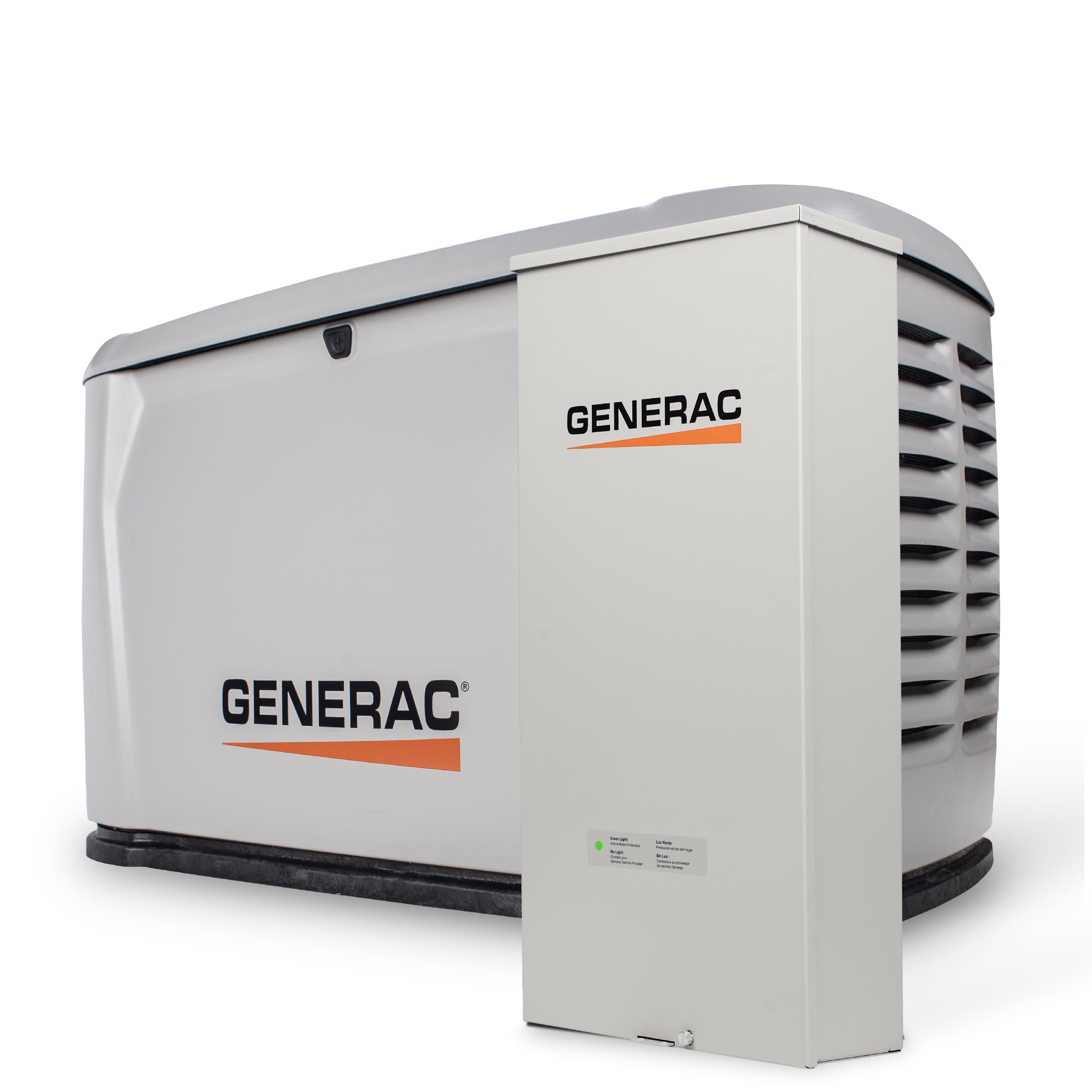
Generac Guardian 18kW Home Standby Generator with 200 Amp Transfer Switch - Automatic Whole House Backup Power for Storms, Emergencies, and Outages, WiFi Enabled, Runs on Natural Gas or Liquid Propane : Patio, Lawn & Garden
Amazon.com : Generac Guardian 18kW Home Standby Generator with 200 Amp Transfer Switch - <strong>Automatic Whole House Backup Power for Storms, Emergencies, and Outages, WiFi Enabled, Runs on Natural
Check Price on AmazonEnphase IQ Battery 5P (AC‑coupled): 5 kWh per unit, 3.84 kW continuous, stackable. Strong microinverter ecosystem, robust cold‑weather performance, and excellent monitoring. Particularly good if you already have Enphase microinverters. Based on these efficiency and modularity benefits, the Enphase IQ Battery 5P represents strong value for phased residential upgrades.
LG Energy Solution RESU Prime (DC‑coupled): 10H (9.6 kWh) and 16H (16 kWh) variants. Pairs well with certain string inverters; high energy density, reliable brand.
Generac PWRcell (DC‑coupled): Modular 9–18 kWh; good for whole‑home systems when designed with Generac inverters. Watch for firmware updates and ensure an installer experienced with UL 9540A system design.
Backup generators: Propane/natural gas standby units (e.g., 14–18 kW) provide long‑duration backup for lower upfront cost but ongoing fuel, noise, and emissions. Batteries are silent, instant, and support daily self‑consumption. A hybrid approach (smaller battery + generator) can work for remote ranches.
Smart load management: Products like Span Smart Panel or similar load controllers can prioritize critical circuits during outages, stretching battery runtime. In many Montana homes, smart load control plus two smaller batteries can outperform one big unit.
How alternatives compare in Montana conditions:
- Cold weather: Enphase and Tesla both actively manage temperature; ensure indoor or semi‑conditioned placement when possible.
- Whole‑home backup: Tesla Powerwall 3’s higher continuous power is advantageous for large loads, but multiple Enphase units can match power with more modularity.
- Retrofits: AC‑coupled (Tesla PW2, Enphase) is usually simpler and cheaper for existing solar; DC‑coupled (PW3, Generac, LG Prime with compatible inverters) can be more efficient and cost‑effective for new builds.
Is a Tesla Powerwall worth it in Montana?
- Most worth it if: You value reliable backup power; you live on a co‑op with a residential demand charge; or you’re adding solar and want to maximize self‑consumption and resilience.
- Borderline on pure bill savings: With ~12¢/kWh rates and limited TOU spreads, arbitrage alone rarely pencils out. Pairing with solar and/or on a demand tariff changes the math.
- Payback drivers: Federal 30% credit, any low‑interest AERLP loan, demand‑charge reductions, outage frequency and avoided generator costs, and the intangible value of keeping heat, lights, and internet on during storms.
For mountain and high‑elevation installation nuances — snow, roof access, and backup sizing — also see Tesla Powerwall in Colorado: Cost, Availability & Is It Worth It?.
FAQ: common questions about Tesla Powerwall in Montana
How many Powerwalls do I need for whole‑home backup? Most mixed‑fuel homes do well with two. All‑electric homes or those with big well pumps, electric ranges, or hot tubs may need three and smart load control.
Can a Powerwall run my well pump and furnace? Yes, typically. Sizing depends on pump horsepower and furnace blower amperage. Powerwall 3’s higher continuous output helps with motor starts; otherwise, two PW2 units work well.
What’s the lifespan? The 10‑year warranty covers capacity retention (typically 70%). Real‑world batteries often last longer with reduced capacity. Daily cycling vs. standby affects degradation.
How does cold affect performance? The battery self‑heats to stay within optimal range, which uses some stored energy. Indoor or semi‑conditioned placement reduces winter efficiency losses.
Do I still get the 30% tax credit without solar? Yes. Since 2023, standalone batteries ≥3 kWh qualify under the federal Residential Clean Energy Credit.
Will a Powerwall work off‑grid at a remote cabin? It can, but you’ll need compatible solar/inverter equipment and likely multiple batteries. Off‑grid design is specialized — work with an installer experienced in islanded systems.
Does Montana have net metering changes that affect batteries? Policies evolve through the Montana PSC and individual utility filings. Batteries help reduce exports and hedge against potential future changes in export compensation.
How long will one Powerwall last in an outage? With essentials only (fridge, lights, internet, gas furnace blower), one unit can stretch 12–30 hours depending on usage and temperature. Solar recharging extends this.
Are there maintenance requirements? Minimal. Keep clearances for ventilation, ensure firmware updates (via the app), and schedule a visual/electrical check every 2–3 years.
Should I choose Powerwall 2 or Powerwall 3? For new solar, Powerwall 3’s integrated inverter and higher power are strong advantages. For retrofits to existing solar, Powerwall 2 is often simpler and more economical.
Affiliate note: For new solar‑plus‑storage builds, high‑efficiency microinverters paired with an AC battery like the Enphase IQ Battery 5P can deliver excellent cold‑weather reliability and granular monitoring at competitive cost.
What this means for Montana homeowners
- Resilience first: If you’ve had outages or live at the grid edge, the resilience benefit is immediate and tangible.
- Stack incentives smartly: Combine the 30% federal credit with AERLP low‑interest financing and any co‑op peak‑shaving programs.
- Design matters: Right‑size the battery count, place equipment out of deep cold, and consider smart load management to stretch runtime.
- Get multiple quotes: Ask at least two certified installers for Powerwall 2 vs. Powerwall 3 options, line‑item costs, and a winter‑biased load analysis.
Where it’s heading: Storage costs have trended down, and software for peak management is improving quickly. As more Montana co‑ops adopt demand‑based rates and as winter resilience becomes paramount, batteries like Tesla Powerwall are likely to become as common as the solar arrays they support.
Recommended Products
The Homeowner's Guide to Renewable Energy - Revised & Updated Edition: Achieving Energy Independence through Solar, Wind, Biomass and Hydropower: Chiras, Dan
After beginning with the all important discussion about energy efficiency and conservation, <strong>Dan guides you through everything you need to choose which renewable options to integrate into your
Emporia Gen 2 Smart Home Energy Monitor with 16 50A Circuit Level Sensors | Real Time Electricity Monitor/Meter | Solar/Net Metering - Amazon.com
See how much electricity your home is using anywhere, anytime. ... <strong>Add individual 50A sensors to your Vue to monitor up to 16 individual circuits</strong> — providing accurate energy use for t
Generac Guardian 18kW Home Standby Generator with 200 Amp Transfer Switch - Automatic Whole House Backup Power for Storms, Emergencies, and Outages, WiFi Enabled, Runs on Natural Gas or Liquid Propane : Patio, Lawn & Garden
Amazon.com : Generac Guardian 18kW Home Standby Generator with 200 Amp Transfer Switch - <strong>Automatic Whole House Backup Power for Storms, Emergencies, and Outages, WiFi Enabled, Runs on Natural