
Tesla Powerwall in Utah: Cost, Availability & Is It Worth It?

Utah homeowners are increasingly asking whether a Tesla Powerwall in Utah pencils out—especially as Rocky Mountain Power’s export credit for excess solar sits around the mid–single digits cents per kWh while retail rates are roughly double that. With the federal 30% tax credit now covering standalone batteries, and a growing utility battery program in Utah, the economics for storage have shifted from “nice-to-have” backup to a practical way to keep more of your solar and cut peak bills.
Below, we unpack Powerwall specs, pricing, incentives, and real-world savings strategies in Utah.
Tesla Powerwall overview: specs, capacity, and how it works
Tesla’s current residential lineup centers on Powerwall 3 (integrated solar-ready battery) and the widely deployed Powerwall 2 (AC-coupled). Either way, a Powerwall is a lithium-ion battery that stores electricity—either from your solar array or the grid—and automatically powers your home during outages or expensive peak periods.
The Grid: The Fraying Wires Between Americans and Our Energy Future: Bakke, Gretchen
Cultural anthropologist Gretchen Bakke <strong>unveils the many facets of America's energy infrastructure, its most dynamic moments and its most stable ones, and its essential role in personal an
Check Price on AmazonKey specifications (manufacturer data):
- Usable energy capacity: 13.5 kWh per unit (both Powerwall 2 and 3)
- Power output: up to 11.5 kW continuous for Powerwall 3 (solar-ready); about 5 kW continuous for Powerwall 2
- Round-trip efficiency: ~90% for AC-coupled (Powerwall 2); higher system efficiency when DC-coupled with Powerwall 3
- Stackability: up to 10 units for large homes or extended backup
- Operating temperature: approximately −4°F to 122°F; liquid thermal management maintains performance in Utah’s winters
- Warranty: 10 years with a performance guarantee (commonly 70% capacity retention at year 10, subject to use mode)
How it works in everyday terms:
- With solar: During sunny hours, your PV array first powers your loads, then fills the battery, and only then exports surplus to the grid. After sunset, the Powerwall supplies the home, minimizing pricey grid imports—this is “self-consumption.”
- For backup: During a grid outage, Tesla’s Backup Gateway isolates your home (“islanding”) in under a second and the battery keeps critical loads running. Powerwall 3’s higher power output means it can support more whole-home circuits, though large resistive loads (electric ranges, AC compressors, EV fast charging) still require careful planning.
By the numbers: Utah context
- Average Utah home uses about 730–760 kWh/month (roughly 24–25 kWh/day), per the U.S. Energy Information Administration. A single Powerwall’s 13.5 kWh can cover about half a typical day’s use—or a full day of essentials.
- Rocky Mountain Power’s export credit rate (ECR) for new solar customers is in the mid–single digits cents per kWh, while retail energy is typically around 10–13¢/kWh. That spread makes storing your own solar in a Powerwall more valuable than exporting it.
- Residential solar-plus-storage installed costs in national benchmarks have ranged near $1,000–$1,300 per kWh for batteries (NREL U.S. Solar + Storage Cost Benchmarks, recent editions). Utah’s labor and permitting costs are often on the lower end of that range.
Powerwall pricing in Utah including installation costs
Installed cost in Utah varies with panel upgrades, wiring distance, and whether you bundle with new solar. Based on recent installer quotes and national benchmarks:
- Single Powerwall (retrofit): $12,000–$16,000 before incentives
- Additional Powerwalls in the same project: $8,500–$11,000 each (marginal cost falls because the gateway and permitting are already in place)
- With new solar: Some installers discount the battery when paired with a PV system and Powerwall 3’s integrated inverter can reduce BOS (balance-of-system) costs.
What drives the price spread in Utah:
- Electrical service upgrades: Homes with older 100-amp panels may need a main panel upgrade, which can add $1,500–$3,000.
- Location and mounting: Detached garages, long conduit runs, or outdoor-rated enclosures in snow zones add cost.
- Permitting/interconnection: Cities along the Wasatch Front typically turn permits in 2–3 weeks, but complexity (e.g., whole-home backup, generator integration) can add time and labor.
Pro tip: Get at least two quotes—one for AC-coupled Powerwall 2 and one for DC-coupled Powerwall 3 if you’re installing new solar. For homes under ~8 kW of PV, Powerwall 3’s integrated design can be cost-effective. For retrofits, AC-coupled is often simpler.
Utah battery storage incentives: state rebates, SGIP, utility programs
- Federal Investment Tax Credit (ITC): The 30% Residential Clean Energy Credit applies to standalone batteries ≥3 kWh and to solar-plus-storage. In Utah, most homeowners with tax liability can claim it. Check IRS Form 5695 or a tax professional.
- Utah state incentives: Utah’s long-running state solar tax credit has stepped down over time and is primarily targeted at solar generation. As of 2024–2025, Utah does not offer a statewide, storage-specific consumer rebate akin to California’s SGIP.
- Utility programs: Rocky Mountain Power’s Wattsmart Battery program in Utah offers customers incentives to enroll their home battery for grid support (a “bring-your-own-device” demand response model). Program details evolve, but generally include an upfront enrollment incentive based on the battery’s power capacity and ongoing annual credits when the utility dispatches your battery during grid events. Events are typically on hot summer afternoons and early evenings and may occur dozens of times per year. Eligible devices commonly include Tesla Powerwall alongside Enphase, SolarEdge, Generac, and others. Always review Rocky Mountain Power’s current participation terms and incentive tables before you buy.
What about SGIP? California’s Self-Generation Incentive Program (SGIP) does not apply in Utah. Utah homeowners should focus on the 30% federal credit and Wattsmart enrollment economics.
How the Powerwall pairs with solar in Utah: backup vs. self-consumption
With Utah’s relatively low export credit for solar, most homeowners set Powerwall to maximize self-consumption and time-based control:
- Self-Powered mode: Prioritizes running your home on solar and battery. You’ll import less at night, which is valuable when exports earn much less than imports cost.
- Time-Based Control (TBC): If you’re on a time-of-use (TOU) plan or facing predictable evening peaks, TBC learns your usage and solar profile and shifts battery discharge into high-rate windows.
- Backup Reserve: You can set, for example, a 20% reserve so the battery always holds enough energy for outages, while still cycling the remaining capacity daily.
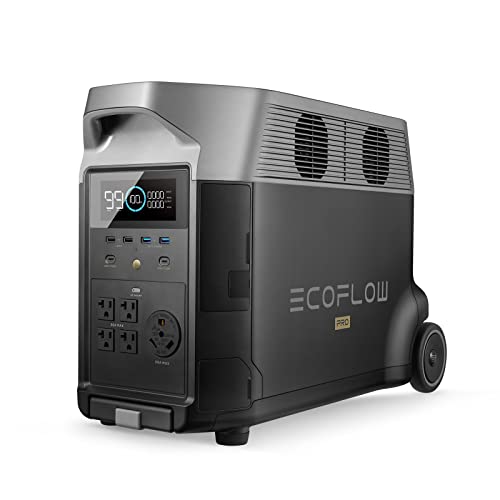
EF ECOFLOW Portable Power Station 3600Wh DELTA Pro, 120V AC Outlets x 5, 3600W, 2.7H Fast Charge, Lifepo4 Power Station, Solar Generator for Home Use, Power Outage, Camping, RV, Emergencies : Patio, Lawn & Garden
<strong>Fully recharge the lifepo4 battery in 1.8 hrs with 240V outlets(3000W), 2.7 hrs with 1800W wall outlets or solar charged in 2.8 hours with 4*400W solar panels</strong> thanks to the industry-l
Check Price on AmazonUtah-specific design tips:
- Winter solar production is lower and cold derating can briefly limit charge/discharge rates. Place the Powerwall in a conditioned or semi-conditioned space (insulated garage or mechanical room) for best performance.
- Gas furnaces only need a few hundred watts to run blowers and controls; a single Powerwall can keep heat circulating during an outage, a major comfort factor in Utah winters.
- Well pumps and large AC compressors have high surge currents; whole-home backup in larger Utah homes often benefits from two or more Powerwalls or load management via a smart panel.
Utah utility rate structures and how Powerwall saves with time-of-use
Rocky Mountain Power’s standard residential tariff is typically a flat volumetric rate, but optional time-of-use offerings and seasonal differentials exist in some areas. Where TOU is available, peak pricing usually lands in late afternoon to early evening—right when solar tapers off.
How Powerwall captures value under different structures:
- Flat rate + low solar export credit: Store midday solar and use it at night. Each kWh you self-consume avoids paying retail and avoids exporting at the lower ECR—effectively a spread often in the range of 4–8¢/kWh.
- TOU rates: Shift discharge into the on-peak window. If the on/off-peak spread is, say, 6–10¢/kWh, daily cycling can materially cut bills.
- Demand response (Wattsmart): Enroll to collect upfront and annual incentives, allowing the utility to discharge your battery during grid events. Tesla’s app coordinates with the program so you maintain a backup reserve.
Note: Rate riders, TOU availability, and export credits are set by the Utah Public Service Commission and Rocky Mountain Power and are adjusted periodically. Review your latest tariff sheet before modeling savings.
Powerwall availability and certified installers in Utah
- Availability: Powerwall supply improved through 2024–2025. Typical lead time in Utah is 4–10 weeks from contract to commissioning, depending on permitting and utility approvals.
- Who can install: Choose Tesla direct or a Tesla Certified Installer. Along the Wasatch Front and in St. George, there are multiple certified firms offering both retrofit and new solar-plus-storage.
- Interconnection: If paired with solar and exporting, you’ll apply for interconnection with Rocky Mountain Power. If the system is configured non-export (storage only), interconnection may be simpler, but permits and inspections still apply.
- Site considerations: Wall-mounting is common. Outdoor installations must meet clearance, shading, and snow-shed requirements. Discuss seismic anchoring and snow/ice exposure with your installer.
If you’re comparing pricing and programs in nearby states, our guides for Tesla Powerwall in Nevada: Cost, Availability & Is It Worth It?, Tesla Powerwall in Arizona: Cost, Availability & Is It Worth It?, and Tesla Powerwall in Colorado: Cost, Availability & Is It Worth It? provide regional context on incentives and TOU rates.
Alternatives to Powerwall available in Utah: Enphase, LG, Generac
Utah installers commonly quote these competitors alongside Tesla. Which is best depends on your solar inverter, outage priorities, and budget.
- Enphase IQ Battery 5P/10T: Modular (5–10 kWh blocks) with high power per kWh and tight integration if your PV uses Enphase microinverters. Excellent for partial-home backup with fast switchover. If you’re designing an all-Enphase system, the Enphase IQ Battery 5P offers strong performance and easy expansion for Utah homes.
- LG Energy Solution RESU Prime 10H/16H: 10–16 kWh options, solid 10-year warranty, AC- or DC-coupled via compatible inverters. Popular where roof space is limited and efficiency is a priority.
- Generac PWRcell: Highly modular (typically 9–18 kWh) with strong whole-home power output when fully built out, and robust load management accessories. Works well for homes with large 240V loads.
- Sonnen eco/ecoLinx: Premium German-engineered systems with advanced home automation integration; costlier but feature-rich for energy management.
Compatibility with Utah’s Wattsmart program varies by brand and model. If program enrollment is part of your ROI, verify that your chosen battery is on Rocky Mountain Power’s eligible device list before purchase.
Is a Tesla Powerwall in Utah worth it?
Homeowners who get the best value typically fit one or more of these profiles:
- You have (or plan) solar and want to maximize self-consumption because export credits are low.
- You experience outages that threaten food, work-from-home uptime, medical devices, or winter heating comfort.
- You can enroll in the utility’s battery program for incentives and still keep a meaningful backup reserve.
- You’re on (or can switch to) a TOU plan where the on/off-peak spread makes daily cycling pay back.
Simple payback math:
- Start with your installed, post-ITC net cost (for example, $14,000 before incentives becomes ~$9,800 after 30% federal credit).
- Add utility enrollment incentives (upfront/ongoing) if you’ll participate.
- Estimate annual savings from self-consumption and TOU arbitrage. In Utah, many homeowners see 1,000–2,000 kWh/year shifted to higher-value self-use; at a 6–10¢/kWh spread, that’s $60–$200/year in bill savings, plus the resilience value and any utility payments. Two batteries or higher TOU spreads push this higher.
Resilience value is subjective but real—avoiding a frozen home, keeping a sump pump running, or preserving a freezer full of elk meat can be worth more than bill savings.
Practical buying tips for Utah homes
- Right-size your system: For partial-home backup, one Powerwall often suffices. For whole-home backup—especially with AC, well pumps, or electric ranges—plan on two or more, or add a smart load panel to shed non-essentials.
- Consider a smart panel: A device like the SPAN Smart Panel can dynamically manage circuits during outages, stretching limited battery capacity.
- Pair with high-efficiency modules: In winter, every watt counts along the Wasatch Front. High-output panels like Qcells Q.TRON or equivalent Tier 1 modules help refill batteries on short days.
- Add monitoring: A whole-home energy monitor such as the Emporia Vue 2 can reveal load patterns that unlock smarter battery settings and faster ROI.
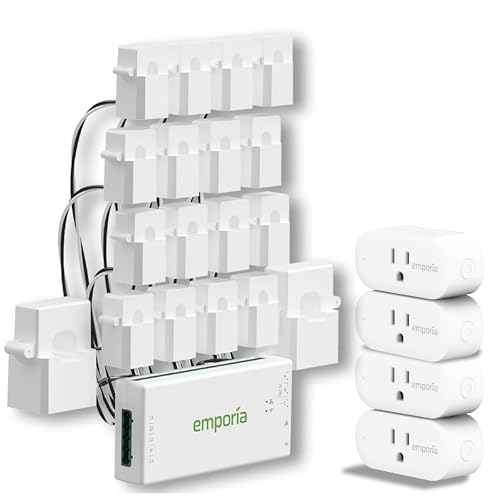
Emporia Energy Monitor with 16 Sensors + 4 Smart Plugs Super Bundle - Whole Home Electricity Usage Tracking & Real-Time Control - Supports Solar Net Metering - Works with iOS, Android, Alexa - Amazon.com
View on AmazonFAQ: common questions about Tesla Powerwall in Utah
How many Powerwalls do I need for my Utah home? Most single-family homes can back up essentials with one Powerwall. For larger homes or whole-home backup (AC, well pump, electric range), two or more are common. Your installer will calculate surge and continuous loads to size appropriately.
Will a Powerwall run my furnace in winter? Yes—gas furnaces typically need a few hundred watts for the blower and controls. A Powerwall can keep heat circulating during outages. All-electric heat or heat pumps require more careful sizing.
What’s the warranty in real terms? Tesla’s warranty is 10 years with a capacity retention guarantee (commonly 70% at year 10) and mode-specific cycling terms. Expect daily cycling in self-consumption/TBC modes to be covered.
Can I add a Powerwall to an existing solar array in Utah? Yes. Powerwall 2 is AC-coupled and commonly used for retrofits. If you’re building new solar, Powerwall 3’s integrated inverter can reduce equipment count and cost.
How does cold weather affect performance in Utah? Lithium batteries limit charge/discharge at very low temperatures, but Powerwall’s liquid thermal management helps. Installing in a garage or utility room improves winter performance.
Is the California SGIP rebate available in Utah? No. Utah residents can use the 30% federal tax credit and may be eligible for Rocky Mountain Power’s Wattsmart Battery incentives.
How long will a Powerwall last in an outage? A single 13.5 kWh unit backing up essentials (fridge, lights, Wi‑Fi, furnace blower) often lasts 12–24 hours, longer if the sun is shining to recharge. High-draw appliances shorten runtime.
Do I need internet for it to work during an outage? No—backup operation works without internet. Internet improves monitoring and utility program coordination but isn’t required to keep the lights on.
Can I go off-grid with Powerwalls in Utah? Powerwall can support off-grid configurations, but true off-grid requires careful solar and battery sizing, load management, and often a backup generator to cover extended cloudy periods—especially in Utah winters.
Where the market is heading in Utah
- More batteries, smarter dispatch: Utility programs like Wattsmart will increasingly tap customer batteries as “virtual power plants,” with better compensation for flexibility during extreme heat and cold snaps.
- Faster permitting: Utah AHJs are adopting streamlined solar-plus-storage permitting, trimming soft costs and wait times.
- Falling hardware costs: As Powerwall 3 scales and competitors respond, $/kWh installed prices are likely to keep easing, improving ROI for daily cycling.
For homeowners on the Wasatch Front, Cache Valley, and Washington County, the combination of a 30% federal credit, a modest but improving utility battery program, and Utah’s low export credit creates a solid case for a Tesla Powerwall—especially when paired with solar and smart load management.
Recommended Products
The Grid: The Fraying Wires Between Americans and Our Energy Future: Bakke, Gretchen
Cultural anthropologist Gretchen Bakke <strong>unveils the many facets of America's energy infrastructure, its most dynamic moments and its most stable ones, and its essential role in personal an
Emporia Energy Monitor with 16 Sensors + 4 Smart Plugs Super Bundle - Whole Home Electricity Usage Tracking & Real-Time Control - Supports Solar Net Metering - Works with iOS, Android, Alexa - Amazon.com
Comprehensive Whole-Home Monitoring: Includes the Emporia Vue Energy Monitor with 16 sensors to <strong>track usage from your main panel and up to 16 individual circuits</strong>.
EF ECOFLOW Portable Power Station 3600Wh DELTA Pro, 120V AC Outlets x 5, 3600W, 2.7H Fast Charge, Lifepo4 Power Station, Solar Generator for Home Use, Power Outage, Camping, RV, Emergencies : Patio, Lawn & Garden
<strong>Fully recharge the lifepo4 battery in 1.8 hrs with 240V outlets(3000W), 2.7 hrs with 1800W wall outlets or solar charged in 2.8 hours with 4*400W solar panels</strong> thanks to the industry-l