
Tesla Solar in Idaho: Panels, Roof & Pricing Guide (2026)

Idaho homeowners are running the numbers on Tesla Solar in Idaho for a reason: the federal 30% tax credit remains in place for 2026, Idaho’s state income-tax deduction for renewables can further cut costs, and battery storage now qualifies for its own federal credit. With average residential electricity around the low–mid teens cents/kWh (U.S. Energy Information Administration, 2025), a well-sized system can offset most daytime load and hedge against summer peaks and winter outages.
This guide breaks down products, pricing, the ordering timeline, incentives, real owner feedback, and how Tesla stacks up against local Idaho installers.
Tesla Solar in Idaho: Products at a glance
Tesla sells three core offerings in Idaho:
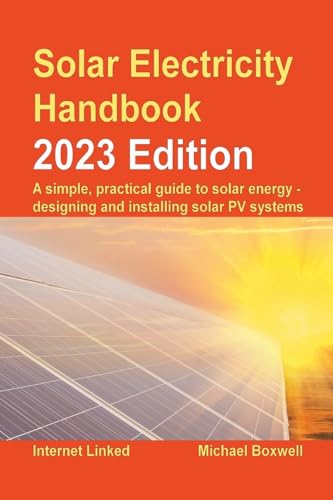
Solar Electricity Handbook - 2023 Edition: A simple, practical guide to solar energy – designing and installing solar photovoltaic systems: Boxwell, Michael
Solar Electricity Handbook - 2023 Edition: <strong>A simple, practical guide to solar energy – designing and installing solar photovoltaic systems</strong> [Boxwell, Michael] on Amazon.com. *FREE* shi
Check Price on Amazon- Tesla Solar Panels (roof-mounted modules with Tesla’s integrated string inverter and monitoring)
- Tesla Solar Roof (building-integrated photovoltaic shingles replacing your roof)
- Powerwall 3 battery (optional bundle for backup and self-consumption)
What that means in practice:
- Panels: Conventional high-efficiency monocrystalline modules with low-profile racking. Expect black-on-black aesthetics, module-level rapid shutdown for safety, and production monitoring in the Tesla app.
- Solar Roof: Photovoltaic glass tiles interspersed with non-generating tiles, installed as a full roof replacement. Prioritizes aesthetics but typically costs more per watt than panels.
- Powerwall 3: 13.5 kWh usable storage with an integrated solar inverter, 11.5 kW continuous output (Tesla specs), and whole-home backup configurations when paired with a Backup Gateway. In Idaho’s evolving export-credit landscape, batteries help shift solar to evening use.
Context from national data: U.S. residential solar installed costs have fallen more than 60% since 2010 (NREL, 2024). Idaho’s solar resource—about 4.5–5.0 peak sun-hours per day in much of the state (NREL PVWatts)—supports annual production of roughly 1,400–1,600 kWh per kWdc of rooftop capacity, depending on tilt, azimuth, shading, and snow cover.
If you’re evaluating a battery bundle specifically, see our deeper dive on pricing and sizing at Tesla Powerwall in Idaho: Cost, Availability & Is It Worth It?.
Tesla Solar pricing in Idaho: panels vs. Solar Roof
Pricing varies with roof complexity, main panel upgrades, and permitting fees, but Idaho homeowners typically see quotes in these ranges (before incentives):
- Tesla Solar Panels: about $2.25–$2.85 per watt (W) for straightforward asphalt-shingle roofs
- Tesla Solar Roof: often equivalent to $6.50–$10.00/W when you convert roof-and-solar into a per-watt basis, or $45,000–$90,000+ for a mid-sized home depending on total roof area, complexity, and percent of active (PV) tiles
Illustrative examples (pre-incentive):
- 7 kW Tesla Solar Panels: $15,750–$19,950
- 10 kW Tesla Solar Panels: $22,500–$28,500
- Tesla Solar Roof for a 2,200 sq. ft. complex roof: commonly $60,000–$95,000 (roof + PV). If you already need a roof replacement, the incremental cost over a premium roof narrows.
After incentives (rough math):
- Federal Residential Clean Energy Credit: 30% of installed cost for panels, Solar Roof’s PV components, and Powerwall (IRS guidance under the Inflation Reduction Act)
- Idaho’s state income-tax deduction: Up to 40% of system cost in year one and 20% in each of the next three years, capped at $5,000 per year and $20,000 total deductible (DSIRE; Idaho statute). Because it’s a deduction (not a credit), your benefit equals the deduction multiplied by your Idaho income tax rate.
Rule of thumb: Many Tesla panel systems in Idaho land near net costs of $1.40–$2.00/W after stacking the 30% federal credit and the value of Idaho’s deduction, though your exact outcome depends on roof complexity and your tax situation.
Payback and LCOE: With Idaho’s moderate electricity prices, simple payback for panels typically falls around 8–12 years for well-sited arrays, assuming modest utility escalation and self-consumption prioritized over exports. The levelized cost of energy (LCOE)—total lifetime costs divided by lifetime kWh—often pencils out below utility rates when you assume a 25-year life, typical inverter replacement once in that period, and a capacity factor in the 15–18% range.
How to order Tesla Solar in Idaho: timeline, site assessment, and installation
Tesla’s process is standardized nationwide, with some utility-specific steps in Idaho.
- Online estimate and design proposal
- You’ll enter your address, average monthly kWh, and roof details. Tesla’s software suggests a system size based on your annual kWh and roof area. Aim to right-size to your annual load, especially under export-credit (net billing) rules.
- Virtual or in-person site assessment
- Engineers validate roof condition, main service panel capacity, shading, and structural loads. Idaho’s snow loads can be significant; roof structure and racking anchorage are engineered to local codes. Expect requests for photos, past utility bills, and panelboard labels.
- Final design, permitting, and utility interconnection
- Tesla submits plans to your local jurisdiction and utility (Idaho Power, Avista, or Rocky Mountain Power, depending on where you live). Expect 2–6 weeks for permits and interconnection queueing, but timelines vary by county and utility workload.
- Installation
- Typical panel installs: 1–2 days. Solar Roof: often 1–2 weeks depending on complexity. Powerwall adds hours to a day for mounting, wiring, and commissioning.
- Inspections and Permission to Operate (PTO)
- City/county inspection is followed by utility meter swap and PTO. In Idaho, this step commonly takes 1–4 weeks after installation, but it can be longer during peak season.
End-to-end timeline: 4–12 weeks for panels, 8–16+ weeks for Solar Roof. Winter weather can extend lead times.
Practical tip: If you plan to add an EV or heat pump in the next year, tell Tesla now. Right-sizing the system and main service panel at the outset avoids rework.
Idaho solar incentives that apply to Tesla installations
30% Federal Residential Clean Energy Credit: Applies to Tesla Solar Panels, the PV portion of a Solar Roof, and Powerwall. Standalone batteries also qualify at 30% as of 2023.
Idaho Residential Alternative Energy Tax Deduction: Deduct 40% of project cost (labor and equipment) in year one and 20% in each of the next three years, up to $5,000 per year and $20,000 total deductible (DSIRE; Idaho State Tax Commission guidance). The tax value depends on your Idaho income-tax liability. Consult a tax professional.
Utility export credits (replacing traditional net metering for some customers): Idaho Power, for example, uses an export credit methodology that compensates exported kWh below retail rates, sometimes seasonally or time-of-day differentiated (Idaho Public Utilities Commission dockets). Avista and Rocky Mountain Power structures differ. This pushes more value to self-consumption and batteries.
For a broader look at state incentives, installer options, and system-sizing best practices, see our statewide snapshot: Solar in Idaho: Costs, Incentives & Top Installers (2026).
Tesla Solar reviews from Idaho customers: what owners actually report
Public feedback from Idaho owners and regional forums tends to cluster around these themes:
What owners like
- Competitive panel pricing and clean aesthetics compared to mixed-hardware arrays.
- Seamless app experience: monitoring, battery controls (Backup Reserve, Time-Based Control), and outage performance data in one place.
- Predictable process: standardized designs and fewer surprise change orders when roof conditions are straightforward.
Where owners see challenges
- Scheduling windows can be broad in peak season; weather and utility queues add variability.
- Complex roofs: dormers, tile/metal, and heavy snow-load considerations can prompt adders or extended timelines.
- Export-credit economics: New Idaho Power customers report that low export rates make batteries or load shifting more important than they expected.
Reported performance
- Capacity factors in southern Idaho commonly 15–18% for unshaded, south-facing arrays. Winter snow can briefly suppress output; spring and summer recoveries are strong.
If your home has unusual roof geometry or you need specialized reroofing, getting a local bid in parallel can help benchmark timelines and workmanship assumptions.
Tesla vs. local Idaho installers: pros, cons, and price comparison
Tesla advantages
- Pricing power: In Idaho, Tesla’s per-watt price for standard roofs is often among the lowest for Tier-1 panels.
- Integrated ecosystem: Panels, inverter, battery, EV charging, and monitoring in one app reduces vendor fragmentation.
- Bankable warranties and broad service network.
Local installer advantages
- Custom engineering: For tricky roofs, snow retention detailing, or ground mounts, a local EPC may deliver more tailored designs.
- Equipment flexibility: Choice of premium panels, microinverters, optimizers, snow guards, and specialized racking rated for high psf loads.
- Service relationship: Proximity can help with same-week troubleshooting.
Typical price spread (panels, before incentives)
- Tesla: ~$2.25–$2.85/W
- Local installers: commonly ~$2.70–$3.40/W for comparable Tier-1 modules, with wider swings for microinverters, snow-load racking upgrades, or electrical service work.
What to compare across bids
- Production estimate methodology (NREL PVWatts inputs, shading losses, snow-loss assumptions)
- Inverter topology (string inverter with rapid shutdown vs. microinverters) and monitoring granularity
- Roof attachment method and snow-load ratings (psf)
- Export-credit assumptions for your utility tariff and how battery dispatch is modeled
- Warranty terms and service response times
Pro tip: Ask each bidder for their modeled self-consumption percentage with and without a battery, plus the export rate they assumed. In Idaho’s net-billing environment, these inputs drive payback.
Tesla Solar warranty and what it covers in Idaho
Tesla Solar Panels
- Performance warranty: 25 years, typically guaranteeing a maximum degradation rate (e.g., around 0.5%/year) and roughly 80–85% of nameplate output at year 25 per Tesla’s current datasheets.
- Equipment and workmanship: Commonly 10 years on workmanship and roof penetrations; Tesla’s inverter carries a manufacturer warranty (often 12.5 years for Tesla’s current inverter models).
Tesla Solar Roof
- Product and weatherization warranties up to 25 years on tiles and water-shedding performance, plus a 25-year power warranty for the PV portion (per Tesla Roof documentation).
Powerwall 3
- 10-year warranty to a specified end-of-warranty capacity (Tesla typically warrants at least 70% remaining capacity for residential use), with unlimited cycles when connected to solar in typical self-consumption/backup modes.
Always review your exact agreement; Tesla’s warranty booklets detail site-specific terms and any exclusions (e.g., improper maintenance, non-Tesla modifications).
By the Numbers: Tesla Solar in Idaho
- Solar resource: ~4.5–5.0 peak sun-hours/day (NREL PVWatts for southern Idaho)
- Annual production: 1 kWdc ≈ 1,400–1,600 kWh/year for good sites
- Typical home system: 7–10 kWdc for households using ~9,000–12,000 kWh/year (EIA consumption norms; your usage may vary)
- Panel pricing: ~$2.25–$2.85/W before incentives; often $1.40–$2.00/W net after stacking federal/state benefits
- Battery: Powerwall 3 at 13.5 kWh usable; single unit can back up essentials, multiple units for whole-home loads
- Export compensation: Below retail rates for many Idaho Power customers; design for high self-consumption
Practical recommendations for Idaho homes
- Size for self-consumption first: Under export-credit tariffs, a slightly smaller array with high daytime usage alignment often beats an oversized array that exports cheap kWh.
- Consider a battery if you have frequent winter outages, TOU rates now or anticipated, or a heat pump/EV you can time-shift to solar hours. Pairing with Powerwall also qualifies the battery for the 30% federal credit.
- Use smart load controls: NREL and utility pilots show that load shifting can raise self-consumption by 15–30% in some homes. Tools like a whole-home energy monitor can automate this. Based on those findings, the Sense Home Energy Monitor is a practical add-on to prioritize daytime loads and trim payback.
- If you drive an EV, schedule charging for mid-day solar peaks. A flexible 240V charger such as the ChargePoint Home Flex lets you dial amps and align charging with your array’s output.
- Steep metal roofs in snow country benefit from snow retention hardware to prevent sudden slides around arrays. If your installer doesn’t include it by default, a dedicated system like Roof Snow Guards can protect eaves, walkways, and landscaping.

ChargePoint HomeFlex Level 2 EV Charger J1772 - Fast Smart Battery Power Charging at Home for Electric Automobile Vehicles - NEMA 14-50 Plug for Electric Car : Automotive
View on Amazon
Sense Energy Monitor with Solar – Track Electricity Usage and Solar Production in Real Time
View on AmazonFAQ: common questions about Tesla Solar in Idaho
Is Tesla Solar available statewide?
- Tesla serves major metros and many rural areas, including Boise, Meridian, Nampa, Idaho Falls, Pocatello, and Coeur d’Alene. Remote locations may see longer lead times.
Do I need a new roof before installing panels?
- If your roof is near end-of-life (typically 20–25 years for asphalt shingles), reroof first. Tesla requires adequate remaining lifespan and structural integrity for warranty coverage. Solar Roof is best considered when you already need a full roof replacement and value aesthetics.
How does winter affect output?
- Cold weather actually boosts panel efficiency, but snow cover blocks light. In southern Idaho, snow losses are typically episodic; arrays usually rebound quickly once snow slides or melts. Installers can model snow losses using local weather files.
What happens to excess power?
- Under Idaho’s export-credit structures, excess daytime kWh are credited below retail value in many territories (e.g., Idaho Power). Shifting loads to daytime or storing in a battery increases value versus exporting.
Can I install Powerwall without solar?
- Yes. Powerwall qualifies for the 30% federal credit even as a standalone battery (IRS guidance). However, pairing with solar maximizes charging from clean generation and increases bill savings.
How big should my system be?
- Start with your last 12 months of kWh. In Idaho’s net-billing context, designs near 90–110% of annual usage, if allowed by your utility, are common targets. Your utility may cap system size to a percentage of historical load.
What maintenance is required?
- Periodic visual checks, debris clearing, and occasional rinsing during dry, dusty periods. Tesla’s equipment has no moving parts; Powerwall is sealed. Keep vents clear and avoid storing flammables nearby.
What permits do I need?
- Tesla handles building/electrical permits and interconnection. You’ll need a utility meter swap before PTO.
Will solar increase my home value?
- Multiple appraisals and studies find solar adds value, particularly for owned (not leased) systems. Market effects vary by region and utility policies.
Where this is heading in Idaho
- More storage, smarter controls: As export credits remain below retail, batteries and automated load shifting (EVs, heat pumps, water heaters) will do more of the economic heavy lifting. Expect more time-of-use and demand-based rate designs from Idaho utilities.
- Standardization continues: Tesla’s integrated inverter-plus-battery architecture simplifies installs and can lower soft costs—NREL identifies permitting, customer acquisition, and interconnection as key cost drivers ripe for reduction.
- Performance transparency: With better app analytics and utility data sharing, homeowners will increasingly optimize dispatch to shave evening peaks and monetize any future grid services programs.
If your priority is the lowest $/W and a streamlined experience, Tesla Panels plus an optional Powerwall is hard to beat. If you want a premium aesthetic or must replace your roof anyway, Solar Roof earns a look—just run the math carefully. For deeper details on batteries and Idaho-specific sizing, revisit our guide to Tesla Powerwall in Idaho: Cost, Availability & Is It Worth It?, and compare quotes with statewide context here: Solar in Idaho: Costs, Incentives & Top Installers (2026).
Recommended Products
Solar Electricity Handbook - 2023 Edition: A simple, practical guide to solar energy – designing and installing solar photovoltaic systems: Boxwell, Michael
Solar Electricity Handbook - 2023 Edition: <strong>A simple, practical guide to solar energy – designing and installing solar photovoltaic systems</strong> [Boxwell, Michael] on Amazon.com. *FREE* shi
Sense Energy Monitor with Solar – Track Electricity Usage and Solar Production in Real Time
KNOW WHAT’S ON: Track how much electricity you’re using, what time your kids got home, or when someone leaves the basement light on. Sense <strong>identifies patterns in your energy use to help your f
ChargePoint HomeFlex Level 2 EV Charger J1772 - Fast Smart Battery Power Charging at Home for Electric Automobile Vehicles - NEMA 14-50 Plug for Electric Car : Automotive
Home Flex Hardwired offers the fastest charge at up to 50A. NEMA 6-50 and 14-50 versions <strong>provide up to 40A and work with existing 240V wall outlets</strong>. Yes! Choose from our list of prefe