
Tesla Powerwall in Indiana: Cost, Availability & Is It Worth It?
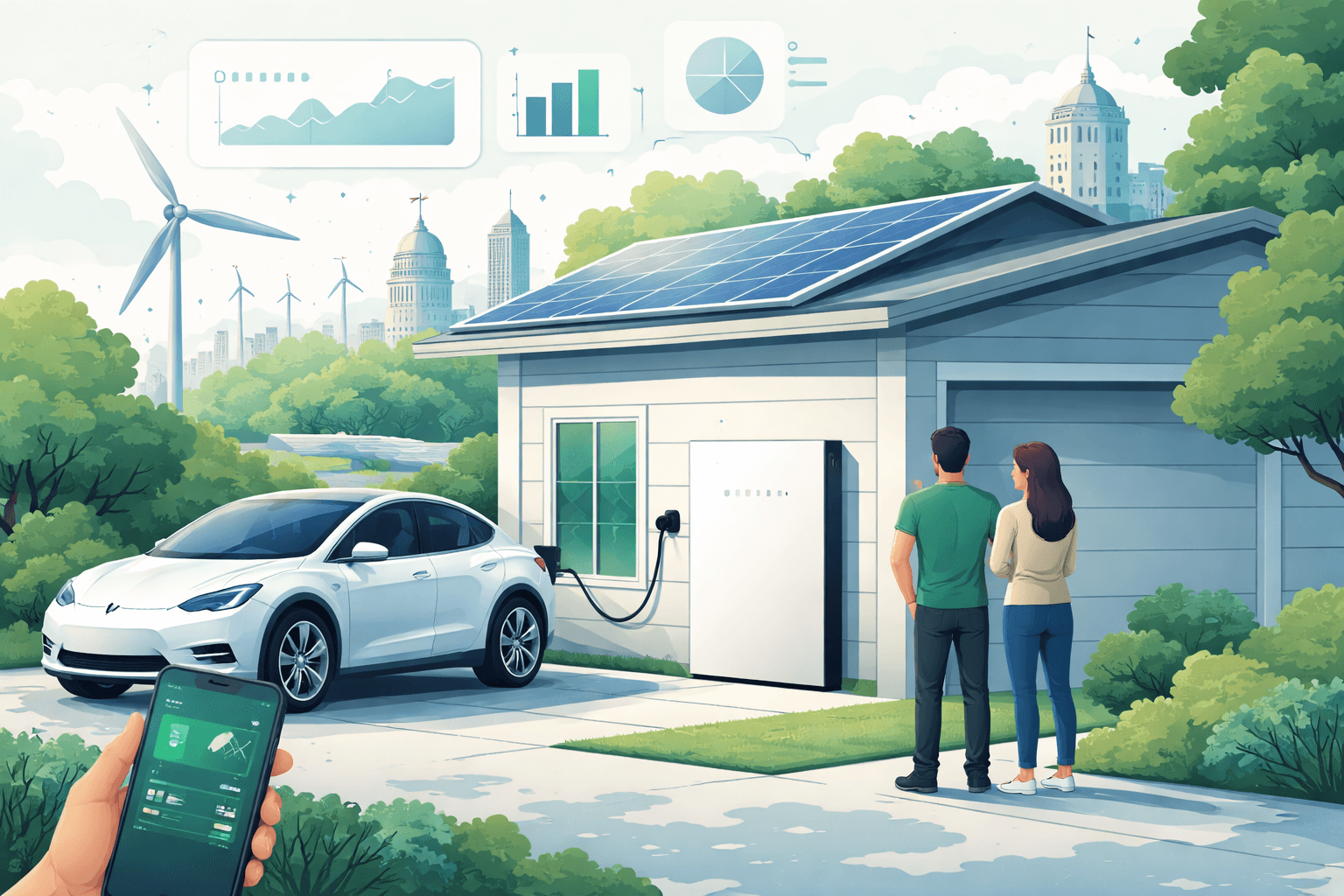
Indiana households are seeing more volatility in both weather and electricity pricing, and that’s pushing interest in home batteries. The Tesla Powerwall in Indiana promises three things: seamless backup power, better use of your solar generation, and bill savings under time-based rates. With residential electricity averaging about 14–15¢/kWh in 2024 (U.S. EIA), and Indiana’s post-net-metering export credits paying far less than retail, the economics for storage are improving—especially when you stack the 30% federal clean energy tax credit now available for standalone batteries (Inflation Reduction Act, 2023).
Below, we break down specs, pricing, incentives, rate structures, installer availability, and alternatives—so you can decide whether a Powerwall fits your home and budget.
By the numbers
- 13.5 kWh: Usable storage capacity per Tesla Powerwall 2 or Powerwall 3 (Tesla)
- 11.5 kW: Continuous backup power from Powerwall 3 with integrated inverter; 5 kW for Powerwall 2 (Tesla)
- 30%: Federal Investment Tax Credit (ITC) for standalone storage, including batteries installed without solar (U.S. Treasury/IRS guidance under the Inflation Reduction Act)
- ~14–15¢/kWh: Average residential electricity price in Indiana in 2024 (U.S. EIA)
- ~5–8¢/kWh: Typical export credit range under Indiana’s Excess Distributed Generation (EDG) rules, tied to 1.25× wholesale with instantaneous netting (Indiana Utility Regulatory Commission)
- 10 years: Tesla warranty to 70% of original capacity (Tesla)
The Grid: The Fraying Wires Between Americans and Our Energy Future: Bakke, Gretchen
Cultural anthropologist Gretchen Bakke <strong>unveils the many facets of America's energy infrastructure, its most dynamic moments and its most stable ones, and its essential role in personal an
Check Price on AmazonTesla Powerwall in Indiana: specs, capacity, and how it works
A home battery like the Tesla Powerwall stores electricity—either from your solar panels or the grid—and discharges it later to power your home. Two primary versions are available today:
- Powerwall 3 (newest): 13.5 kWh usable energy, up to 11.5 kW continuous power, and an integrated solar inverter (DC-coupled) that can accept up to roughly 20 kW of PV input. It’s designed for whole-home backup with higher surge capability than earlier models.
- Powerwall 2: 13.5 kWh usable energy, 5 kW continuous (7 kW peak) power. AC-coupled—pairs well with existing solar inverters. Often used for partial-home backup or stacked to reach whole-home capabilities.
Key features for Indiana homes:
- Backup power: Transfers automatically during outages. One unit can cover lights, refrigeration, Wi‑Fi, and a furnace blower; whole-home backup typically requires 1–3 units depending on HVAC, well pumps, and EV charging.
- Time-based control: Charges when prices are low and discharges during expensive periods if your utility offers time-of-use (TOU) or critical-peak pricing.
- Self-consumption: Stores surplus daytime solar to use in the evening—valuable under Indiana’s EDG rules where export credits are below retail.
- Outdoor/indoor installation: NEMA 3R enclosure; operating range approximately −4°F to 122°F. Thermal management protects the battery, but extreme cold can temporarily reduce power output. Garages and basements are common sites in Indiana.
For a deeper technical overview and compatibility notes, see our broader Tesla Powerwall: Complete Buyer’s Guide — Cost, Installation & Alternatives.
Powerwall pricing in Indiana, including installation costs
Installed costs vary by site conditions (service panel upgrades, trenching, backup loads, and whether you need a main panel replacement or smart load center). Based on marketplace data and installer quotes in the Midwest:
- Equipment: $8,500–$9,500 per Powerwall 3 or Powerwall 2
- Balance of system and labor: $2,000–$4,000 per site (can be higher if main panel or service upgrades are needed)
- Typical single-unit turnkey price in Indiana: $11,000–$14,000 before incentives
- Two units (common for whole-home backup): $19,000–$24,000 before incentives
Price benchmarks: EnergySage’s 2024 Market Intel reports typical residential battery projects in the U.S. in the ~$1,100–$1,400 per kWh installed range, which aligns with the Indiana ranges above when accounting for site work.
After the 30% federal ITC, a single-unit net cost often falls near $7,700–$9,800, and a two-unit system near $13,300–$16,800 (actual tax credit value depends on your tax liability—consult a tax professional).
Tip: If you plan to electrify heating or add an EV later, sizing to at least two units up front can avoid a second mobilization and upgrade costs later.
Indiana battery storage incentives: what’s available now
- Federal Investment Tax Credit (ITC): 30% of eligible project costs for batteries installed 2023–2032 under the Inflation Reduction Act, including standalone storage. IRS guidance clarifies residential storage qualifies; commercial projects may access bonus credits for domestic content or energy communities.
- State rebates: Indiana does not currently offer a statewide battery rebate like California’s SGIP. Budget at the federal level, not state.
- Utility programs: Most Indiana investor-owned utilities do not have direct residential battery rebates at this time. Some co-ops and municipals may pilot demand response or offer bring-your-own-battery incentives—ask your local utility’s DER or demand response program office.
- Property tax: Indiana provides a property tax deduction/exemption for certain renewable energy systems. Batteries integrated with a solar energy system may qualify depending on local interpretation; confirm with your county assessor and installer.
- Sales tax: No statewide sales tax exemption for residential batteries as of 2026; factor in the 7% state sales tax where applicable.
Bottom line: The 30% federal ITC is the main incentive that moves the economics today. Local utility programs can add value if available, but they’re not guaranteed.
How the Powerwall pairs with solar in Indiana: backup vs. self-consumption
Indiana ended traditional retail net metering for new residential solar in 2022 and replaced it with EDG (Excess Distributed Generation) credits tied to wholesale prices and instantaneous netting. In practice, that means your exported kWh are typically credited at roughly 5–8¢ instead of the 14–15¢ you pay for electricity, and instantaneous netting reduces how much is credited.
A Powerwall lets you avoid exports by storing that midday surplus and using it later. Consider a typical 7 kW array producing ~9,000 kWh/year in central Indiana:
- Without a battery: Suppose 35% of production is exported (3,150 kWh). At a 6.5¢/kWh export credit, that’s ~$205 in credits.
- With a battery: If you store and self-consume even half of those exports (1,575 kWh), you offset retail usage at 14.5¢/kWh, worth ~$228—plus you still export some and receive EDG credits. Net improvement in annual value can range $150–$350 for many homes, depending on load shape and rates.
Add backup value: If your home experiences a few outages per year—especially during severe storms—keeping essentials on (sump pump, furnace fan, refrigeration) can prevent damage or losses worth hundreds of dollars. While hard to quantify, many Indiana homeowners assign meaningful value to resilience.
If you’re still evaluating solar economics, our state overview covers pricing, incentives, and installer selection: Solar in Indiana: Costs, Incentives & Top Installers (2026).
Indiana utility rate structures and how Powerwall saves with time-of-use
Savings from a battery are maximized when there’s a significant difference between on-peak and off-peak prices (time-of-use), or when demand charges apply. Indiana’s picture today:
- Flat rates: Many residential customers still pay a flat volumetric rate around 14–15¢/kWh (EIA). Under flat rates, a battery’s bill savings come mainly from increasing solar self-consumption and providing backup power.
- Time-of-use (TOU): Optional TOU tariffs exist for some investor-owned utilities.
- Duke Energy Indiana offers optional TOU service for residential customers where on-peak rates are higher during late afternoon/early evening and lower overnight. The spread is often in the 4–8¢/kWh range, seasonally adjusted (see Duke tariff resources).
- AES Indiana also offers optional TOU or EV-focused time-varying rates. Customers can charge a battery off-peak and discharge during peaks to shave the most expensive hours.
- NIPSCO and some co-ops/municipals have pilot TOU or seasonal rates—check your tariff.
- Demand charges: A few municipal or cooperative utilities apply residential demand charges or critical peak pricing; batteries can reduce the highest 15–60 minute demand window each month, lowering those fees.
Illustrative TOU arbitrage: If on-peak is 18¢ and off-peak is 10¢, cycling 5 kWh/day from off-peak to on-peak could save ~40¢/day, or ~$12/month, plus additional self-consumption gains. Over a year, TOU savings might add $150–$300 on top of self-consumption benefits for qualifying customers.
Always confirm your specific rate schedule and interconnection rules with your utility or the Indiana Utility Regulatory Commission (IURC). If you’re on flat rates today, ask whether an optional TOU or EV rate is available—it can materially improve battery payback.
Powerwall availability and certified installers in Indiana
- Direct from Tesla: Many Indiana ZIP codes can purchase Powerwall directly through Tesla’s Energy site, often bundled with Powerwall 3 and integrated backup hardware. Lead times are typically 4–10 weeks for permits and utility approvals, followed by a 1–2 day installation.
- Certified installers: Multiple Indiana-based solar/EPC firms are Tesla Certified Installers and can supply Powerwall 2 or 3. They’re also your first call for service panel upgrades, critical loads subpanels, and generator integration if needed.
- Site readiness: Homes with 100A service and older panels may need upgrades or a smart load panel to enable whole-home backup without nuisance trips. Consider a smart load center to prioritize circuits dynamically.
If you’re still sourcing bids, shortlist companies with several dozen storage installs in Indiana and ask for references with similar HVAC and well/EV loads. Our guide to Solar in Indiana: Costs, Incentives & Top Installers (2026) is a good starting point for vetting local providers.
Monitored load control can stretch a single battery further. Based on real-world performance and app support, the Span Smart Panel integrates well with whole-home backup, letting you shed high-draw loads automatically during outages.
Alternatives to Tesla Powerwall in Indiana: Enphase, LG, Generac
Several strong competitors are widely available in Indiana. Consider equipment, warranty, surge power, and install flexibility.
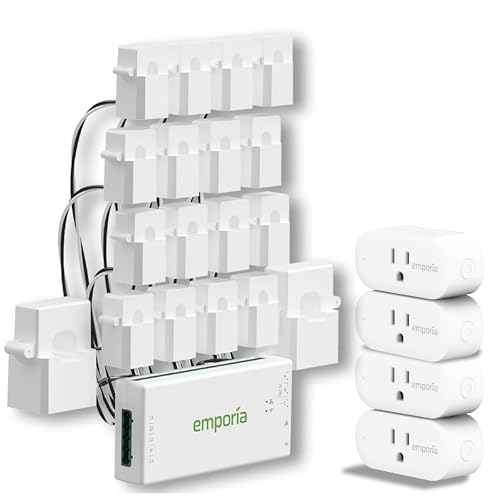
Emporia Energy Monitor with 16 Sensors + 4 Smart Plugs Super Bundle - Whole Home Electricity Usage Tracking & Real-Time Control - Supports Solar Net Metering - Works with iOS, Android, Alexa - Amazon.com
View on AmazonEnphase IQ Battery 5P/10/15
- Modular 5 kWh blocks; common sizes are 10 or 15 kWh
- High power density; great for whole-home backup with multiple units and excellent solar integration if you have Enphase microinverters
- 15-year limited warranty option in some markets; strong app and monitoring
- Installed cost often comparable to Tesla on a per-kWh basis
- If you already have Enphase microinverters, the Enphase IQ Battery 10/15 is a compelling, deeply integrated option
LG ESS Home 8 / Home 10
- 7.5–9.6 kWh class systems with integrated inverters
- Solid reliability track record, backed by LG Energy Solution
- Good fit for partial-home backup or smaller homes
Generac PWRcell
- Modular cabinet: typically 9–18 kWh usable with DC-coupled PV
- Strong surge capability; integrates with Generac’s ecosystem
- Offers hybridization options with a generator, though generator fuel/maintenance adds cost and emissions
What about portable or whole-home generators? They’re cheaper upfront for long-duration outages but require fuel, maintenance, and produce noise/emissions. Many Indiana homeowners pair one or two batteries with a smaller, cleaner generator for extended winter storms. If you go this route, a soft-start kit on your AC or heat pump helps reduce LRA (locked rotor amps) so the battery can handle short surges more comfortably.
For energy management and data-driven optimization, we like the Emporia Vue Energy Monitor. Paired with a battery, it reveals which circuits drive peaks—useful for dialing in TOU and backup settings.
Is a Powerwall worth it in Indiana?
The value case typically looks like this:
- Strong fit
- Homes adding solar under EDG rules who want to maximize self-consumption
- Customers on optional TOU or critical-peak rates
- Homes with outage sensitivity (sump pumps, medical equipment, home offices)
- Moderate fit
- Flat-rate customers seeking resilience who rarely export much solar energy; ROI leans more on backup value than bill savings
- Challenging fit
- Very low-consumption homes without solar or time-based rates; savings may be limited unless outages are frequent and severe
A simple payback for one battery can land in the 9–14 year range when combining bill savings and resilience value, depending on rates, solar system size, and how often you cycle the battery. Two batteries for whole-home backup may extend payback but significantly improve comfort and capability.
FAQ: common questions about Tesla Powerwall in Indiana
Q: How many Powerwalls do I need to back up my Indiana home?
- One unit (13.5 kWh) typically backs up essential loads: fridge, lights, internet, gas furnace blower, and a sump pump. For central AC, well pumps, electric ranges, and EV charging, plan on two or more units or use a smart panel to shed loads.
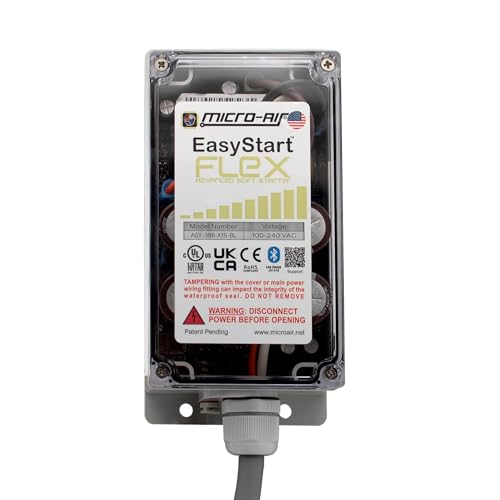
MICRO-AIR EasyStart 368 Bluetooth Soft Start Kit for Home Air Conditioner, RV & Commercial Use, Works with Generators, Reduces Power Surge, Efficient Start-Up - Up to 2-3.5 Tons(ASY-368-X48 BlueTooth) : Automotive
View on AmazonQ: Can a Powerwall run my air conditioner or heat pump?
- Often yes, especially with Powerwall 3’s higher continuous power, but it depends on tonnage and starting current. A soft-start device can help. Many installers recommend two units for reliable whole-home HVAC coverage.
Q: What’s the warranty and expected life?
- Tesla’s warranty is 10 years with at least 70% capacity retention. Field data and lab studies suggest lithium-iron-phosphate systems can deliver thousands of cycles; daily cycling over a decade is feasible with proper thermal management.
Q: How does winter cold in Indiana affect performance?
- The battery will preheat cells to protect itself; extremely cold snaps can reduce power output temporarily. Install in a garage or insulated space where practical.
Q: How long will installation take?
- Site assessment and permitting/interconnection: typically 4–10 weeks, depending on jurisdiction and utility queue. Physical installation: 1–2 days.
Q: Do I need solar to get the 30% tax credit?
- No. Since 2023, standalone residential batteries qualify for the 30% federal ITC.
Q: How does Indiana’s EDG policy impact battery value?
- EDG credits exported energy at a wholesale-linked price with instantaneous netting, usually below retail. A battery lets you self-consume more of your solar, improving savings.
Q: Can I combine a battery with a generator?
- Yes. Many Indiana homes integrate a battery with a smaller generator for extended outages. Use a compatible automatic transfer switch and coordinate controls so the generator doesn’t backfeed the battery unexpectedly.
Q: What permits and inspections are required?
- Electrical permit and utility interconnection approval are standard. Installers must follow NEC Article 706 and UL 9540/9540A listing requirements. Local fire codes may dictate setbacks and labeling.
Practical steps for Indiana homeowners
- Get three bids: Include at least one Tesla Certified Installer and one Enphase or LG alternative for an apples-to-apples comparison.
- Share interval data: Ask your utility for 15-minute interval usage data to size the system correctly and estimate TOU savings.
- Decide on backup scope: Essential-loads subpanel vs. whole-home backup. Add a smart panel if you want dynamic control.
- Verify rate options: Flat vs. TOU, any demand charges, and EDG export terms for your specific utility.
- Plan for electrification: If you’ll add an EV or heat pump, size now to avoid rework later.
Where this is heading: As more Indiana utilities roll out time-varying and EV rates, and as severe weather risks persist, batteries will capture greater bill savings and resilience value. Hardware and installation costs have trended down since 2020, and Powerwall 3’s higher power output enables whole-home backup with fewer units—improving the economics for many Hoosier homes.
Further reading: For product details and alternatives, visit our Tesla Powerwall Buyer’s Guide, and for local context on pricing and installers, see Solar in Indiana: Costs, Incentives & Top Installers (2026).
Recommended Products
The Grid: The Fraying Wires Between Americans and Our Energy Future: Bakke, Gretchen
Cultural anthropologist Gretchen Bakke <strong>unveils the many facets of America's energy infrastructure, its most dynamic moments and its most stable ones, and its essential role in personal an
Emporia Energy Monitor with 16 Sensors + 4 Smart Plugs Super Bundle - Whole Home Electricity Usage Tracking & Real-Time Control - Supports Solar Net Metering - Works with iOS, Android, Alexa - Amazon.com
Comprehensive Whole-Home Monitoring: Includes the Emporia Vue Energy Monitor with 16 sensors to <strong>track usage from your main panel and up to 16 individual circuits</strong>.
MICRO-AIR EasyStart 368 Bluetooth Soft Start Kit for Home Air Conditioner, RV & Commercial Use, Works with Generators, Reduces Power Surge, Efficient Start-Up - Up to 2-3.5 Tons(ASY-368-X48 BlueTooth) : Automotive
COMPATIBILITY WITH GENERATORS: ... power-limited locations. This Easy Start flex home ac soft starter is <strong>compatible with 2-stage compressors and heat pump units</strong>, making it a versatile