
Tesla Solar in Indiana: Panels, Roof & Pricing Guide (2026)

Indiana homeowners are paying about 14–16¢/kWh for electricity in 2025–2026, according to U.S. EIA monthly data, and bills have trended higher than inflation for most of the past decade. That’s why interest in Tesla Solar in Indiana has accelerated—particularly as the 30% federal clean energy tax credit runs through 2032 and batteries like Powerwall can boost self-consumption under Indiana’s post–net metering rules.
Below is a data-forward guide to Tesla’s panels, Solar Roof, and Powerwall bundles in Indiana—what they cost, how to order, incentives, real owner feedback, and how Tesla stacks up against local installers.
By the numbers: Tesla Solar in Indiana
- Typical system size: 6–12 kW for single-family homes (NREL PVWatts)
- Expected output in central Indiana: ~1,200–1,350 kWh per kW per year (NREL PVWatts, south-facing, minimal shade)
- Electric rates: ~14–16¢/kWh residential (EIA Electric Power Monthly, 2024–2025)
- Excess solar credits: Indiana’s EDG credit is 1.25× wholesale—often ~3–6¢/kWh vs retail rates ~14–16¢ (Indiana SEA 309; IURC EDG tariffs)
- Federal tax credit: 30% of installed cost through 2032 (Inflation Reduction Act)
- Typical Tesla panel pricing in Indiana (before incentives): ~$2.40–$3.10 per watt installed
- Typical Tesla Powerwall 3 installed price (before incentives): ~$12,000–$15,000 per unit; eligible for 30% tax credit when paired with solar or as standalone storage (IRA)
Solar Electricity Handbook - 2023 Edition: A simple, practical guide to solar energy – designing and installing solar photovoltaic systems: Boxwell, Michael
Solar Electricity Handbook - 2023 Edition: <strong>A simple, practical guide to solar energy – designing and installing solar photovoltaic systems</strong> [Boxwell, Michael] on Amazon.com. *FREE* shi
Check Price on Amazon1) Tesla Solar products available in Indiana: panels, Solar Roof, and Powerwall bundles
Tesla sells three core offerings in Indiana:
- Tesla Solar Panels: Black, monocrystalline modules typically in the 420–440 W range with ~20–22% module efficiency (per Tesla module datasheets). Systems pair with a Tesla Inverter and the Tesla app for monitoring. These systems are roof-mounted on standard racking.
- Tesla Solar Roof: Building-integrated PV glass tiles that replace your roofing material and generate electricity. Best when you already need a roof replacement or are building new—otherwise, a panel system is usually more cost-effective.
- Powerwall (latest generation): A residential battery with ~13.5 kWh usable capacity per unit and higher peak power than Powerwall 2, plus an integrated solar inverter in Powerwall 3. It supports time-based control, backup power, and self-consumption—key under Indiana’s reduced export credits.
Why consider a Powerwall with Tesla Solar in Indiana? Because the EDG export credit for excess solar (typically 3–6¢/kWh) is far lower than the retail price you pay to buy it back (often ~14–16¢/kWh). Storing mid-day surplus and using it in the evening can add meaningful savings beyond what exports alone provide.
If you want a deep dive on storage economics and specs, see our dedicated Indiana battery guide: Tesla Powerwall in Indiana: Cost, Availability & Is It Worth It?.
2) Tesla Solar pricing in Indiana: panels vs. Solar Roof cost comparison
Pricing varies by roof complexity, shading, and interconnection needs, but these are realistic 2026 ranges from Indiana projects and Tesla’s online quotes.
Tesla Solar Panels: ~$2.40–$3.10/W before incentives
- 6 kW system: ~$14,400–$18,600 pre-ITC; net ~$10,080–$13,020 after 30% federal credit
- 10 kW system: ~$24,000–$31,000 pre-ITC; net ~$16,800–$21,700 after 30%
Tesla Solar Roof: Highly variable, usually premium-priced when the roof area is large or complex
- Typical all-in price (roof + PV): $50,000–$100,000+ before incentives for homes needing a full tear-off and new decking/underlayment
- Effective cost per watt can exceed $5.50–$9.00/W when you allocate total project cost to power capacity; Solar Roof is most cost-competitive when you already must replace the roof and can “credit” avoided re-roof costs
Powerwall (per unit, installed): ~$12,000–$15,000 pre-ITC; net ~$8,400–$10,500 after 30% ITC
- Many Indiana homes pair 1–2 Powerwalls with a 6–12 kW array
Savings and payback depend on your self-consumption. With Indiana’s EDG credit well below retail, homes without a battery often see 7–12 year simple paybacks; with one or two batteries, some households can shorten payback by 1–3 years by shifting more solar to evening loads and avoiding exports—especially if their utility offers optional time-of-use (TOU) rates.
3) How to order Tesla Solar in Indiana: timeline, site assessment, and installation
Tesla’s ordering process is standardized but your local permitting and utility can affect the schedule.
- Online design and quote (1–3 days): You’ll enter your address and recent utility bills. Tesla uses aerial imagery, LIDAR, and your usage profile to size the system and generate a proposal. A virtual site assessment may follow to confirm roof condition, main panel capacity, and shaded areas.
- Contract and permitting (2–6 weeks): After you approve the design, Tesla submits permit drawings to your local Authority Having Jurisdiction (AHJ) and interconnection paperwork to your utility (Duke Energy Indiana, AES Indiana, CenterPoint, NIPSCO, etc.).
- Installation (1–2 days for panels; 2–4 days for Solar Roof; add 0.5–1 day per Powerwall): Tesla crews or certified subcontractors complete the install. Roof complexity and service upgrades can add time.
- Inspection and Permission to Operate—PTO (2–8 weeks): City/county inspectors and the utility must approve the system. Only then can you energize solar exports and qualify for EDG credits. Batteries can operate for backup immediately after municipal sign-off, but solar export waits for PTO.
Total timeline: 6–12 weeks is common in Indiana, though some AHJs/utilities move faster and others take longer. Weather and roofing upgrades (especially for Solar Roof) can extend schedules.
4) Indiana solar incentives that apply to Tesla installations
- Federal Clean Energy Credit (ITC): 30% of total installed cost for solar and batteries through 2032 (then steps down). Applies to Tesla panels, Solar Roof, and Powerwall (standalone or paired), subject to IRS eligibility and your tax liability.
- Property tax exemption: Indiana’s Renewable Energy Property Tax Exemption allows 100% exemption of the added assessed value of a qualifying PV system (Indiana Code IC 6-1.1-12-35.5). Your property taxes shouldn’t increase due to the solar equipment value.
- EDG export credits (post–net metering): For investor-owned utilities, Indiana replaced net metering with EDG credits at 1.25× wholesale. These credits are typically far below retail rates and use “instantaneous netting,” meaning exports and imports are not offset over a billing period but on the spot. Check your utility’s EDG tariff via the Indiana Utility Regulatory Commission (IURC).
- Local/utility rebates: As of 2026, broad statewide rebates are uncommon, but some municipal utilities or electric co-ops occasionally offer small incentives. Availability changes; confirm with your local utility.
For a deeper look at statewide costs and policies, see: Solar in Indiana: Costs, Incentives & Top Installers (2026).
5) Tesla Solar reviews from Indiana customers: what owners actually report
From public customer reviews in the Midwest and Indiana-focused homeowner forums (2024–2026), consistent themes emerge:
What owners like
- Price transparency: The online configurator provides upfront pricing, which often undercuts local quotes for panels of similar wattage.
- Clean aesthetics and app: All-black panels and tidy conduit runs (where feasible) score points; the Tesla app offers intuitive solar, battery, and backup controls.
- One-vendor simplicity: Single brand for panels/inverter/monitoring/battery can streamline support and future service.
What owners flag as challenges
- Communication during permitting: Some report gaps between design, permitting, and install updates; response times can vary during peak seasons.
- Subcontractor quality varies: In markets where Tesla uses partners, experiences can hinge on the local crew’s workmanship and schedule.
- Interconnection delays: Utility PTO timelines can be longer than expected; this is utility-dependent rather than Tesla-specific.
Performance notes specific to Indiana
- Winter output dips: Cloud cover and lower sun angles reduce production; NREL PVWatts projects roughly 60–70% lower output in December vs. June for south-facing arrays in central Indiana. Snow typically slides off steep, smooth panels faster than on asphalt shingles, but short-term snow cover will pause generation.
- Hail/wind: Tesla panels meet UL safety standards and are mounted to withstand typical Midwestern wind/snow loads when installed to code. Check your project’s stamped engineering for local design wind speed and exposure category.
6) Tesla vs. local Indiana installers: pros, cons, and price comparison
How Tesla stacks up in Indiana:

Enphase ENPHASE IQ8PLUS-72-2-US IQ8+ ...
View on AmazonTesla advantages
- Pricing: For standard roof-mounted panels, Tesla frequently lands at the lower end of the market on a $/W basis thanks to scale and standardized hardware.
- Integrated storage: Powerwall 3’s integrated solar/backup architecture simplifies design and can lower BOS (balance-of-system) costs.
- Streamlined software: One app for solar and storage with robust backup modes and grid services readiness.
Local installer advantages
- Equipment flexibility: Many Indiana installers offer high-efficiency modules (e.g., 430–450 W) from multiple brands, microinverters like Enphase IQ8, or optimizers from SolarEdge—useful if you want specific hardware.
- Hands-on service: On-site sales/engineering, local AHJ/utility relationships, and faster post-install service can be strong value-adds.
- Roofing integration: For complex roofs, local firms that also roof can be cost-competitive versus Solar Roof and may deliver quicker timelines.
Price ranges you’ll see
- Local panel installs in Indiana often quote ~$2.60–$3.40/W (before incentives), though small systems or premium hardware can be higher. Tesla’s typical $2.40–$3.10/W often undercuts this. That said, top-tier local firms sometimes match or beat Tesla when running promotions or using value modules.
If you’re comparing installers, line up apples-to-apples details: module wattage and brand, inverter type, racking/wire management, monitoring, workmanship warranty, and who handles service. Our statewide roundup highlights leading options and what they charge: Solar in Indiana: Costs, Incentives & Top Installers (2026).
Affiliate picks that fit Indiana homes
- For smart load control that stretches a smaller battery further, the Span Smart Panel pairs well with Tesla storage by shedding non-essential loads during outages.
- If you opt for a local installer and want per-panel optimization, Enphase IQ8 Microinverters deliver high uptime and rapid shutdown compliance, with strong performance on complex roofs.
- For premium high-efficiency modules on limited roof space, Qcells Q.TRON 430W panels are a solid value with strong bankability.
7) Tesla Solar warranty and what it covers in Indiana
Always confirm your final contract documents, but Tesla’s U.S. warranty terms commonly include:
- Panels: 25-year performance warranty with guaranteed output degradation limits, plus a product warranty (term varies by panel generation; many are 12–25 years product coverage). Review the module’s specific datasheet in your contract.
- Tesla Inverter: Typically 12.5-year limited warranty.
- Powerwall: 10-year warranty, generally with at least 70% energy retention at year 10 for residential use. Charging throughput and operating modes are detailed in the warranty booklet.
- Workmanship/roof penetrations: A separate workmanship warranty covers installation quality and roof penetrations for a defined term; verify the duration for Indiana projects.
- Solar Roof: Distinct warranties apply to glass tiles (material and weatherization), power production, and installation. Terms vary by generation and roof complexity.
Two takeaways for Indiana homeowners:
- Ask for the exact module model number, inverter spec, and warranty PDFs with your final planset.
- Verify who services the system (Tesla direct or a certified partner) and response times for warranty claims in your county.
8) FAQ: common questions about Tesla Solar in Indiana
Does Indiana still offer net metering?
- Not for new customers of investor-owned utilities. Traditional 1:1 net metering ended for new interconnections after July 1, 2022, under Senate Enrolled Act 309. New systems receive EDG credits at 1.25× wholesale with instantaneous netting. Municipal utilities and electric co-ops may have different rules; check locally and review IURC filings.
Will a battery help under Indiana’s EDG rules?
- Usually, yes. A Powerwall can shift mid-day solar to evening usage, reducing low-value exports. In households with evening peaks (cooking, EV charging, HVAC), batteries can materially improve economics and resilience. See our detailed battery economics here: Tesla Powerwall in Indiana: Cost, Availability & Is It Worth It?.
How much solar do I need?
- Start with your annual consumption (kWh on your bills). In much of Indiana, each 1 kW of south-facing PV will produce ~1,200–1,350 kWh/year. A 9 kW system might cover ~10,800–12,150 kWh/year. Adjust for shading, azimuth, and desired self-consumption with storage (NREL PVWatts is a good estimator).
What roof types work with Tesla panels and Solar Roof?
- Panels: Asphalt shingle, standing seam metal, and many tile roofs are feasible. Complex slate/clay tile may need reroof overlays or special mounts.
- Solar Roof: Best for full tear-offs or new construction. Complex geometries, dormers, and multiple planes add time and cost.
How does snow and hail affect Tesla Solar in Indiana?
- Panels are rated for snow/wind loads used in Midwest design and certified to UL 61730. Short-lived snow cover reduces output; panels typically shed snow faster than shingles as the sun warms dark glass. Hail ratings meet national standards; consult your module datasheet and homeowner’s insurance.
Can my HOA block solar?
- Indiana law adopted in 2022 generally limits outright HOA bans but allows reasonable design guidelines (placement, visibility, etc.). You’ll still need HOA approval where covenants apply, so start that process early and bring stamped plans.
What’s the real payback for Tesla Solar in Indiana?
- At ~$2.40–$3.10/W, a 9–10 kW system often pencils out to 7–12 years simple payback without storage, depending on shade and EDG exposure. Adding 1–2 Powerwalls can shorten payback where evening self-consumption is high or when TOU rates are available, while also providing outage backup.
What’s the difference between Tesla Powerwall 2 and 3 in practice?
- Powerwall 3 integrates the solar inverter and supports higher continuous/peak power than Powerwall 2, simplifying whole-home backup for many homes and potentially lowering BOS costs. Both offer ~13.5 kWh usable capacity per unit and 10-year warranties; exact specs and stacking options depend on your site.
How do I evaluate a Tesla quote vs. local quotes?
- Normalize: $/W, module wattage/brand, inverter type, battery capacity, monitoring, roof work, and warranties. Confirm who handles service and expected response times.
Practical steps for Indiana homeowners
- Get three quotes: One from Tesla, one from a high-volume local installer, and one from a premium local installer using top-tier components. Use identical system sizes for fair comparison.
- Model self-consumption: With EDG credits low, design around daytime loads and consider at least one battery if your evening usage is significant.
- Check your main electrical panel: Homes with 100 A services or crowded panels may need upgrades. Tesla (or your installer) should include these in the scope.
- Confirm interconnection details: Ask your utility about EDG tariff, any TOU options, meter change fees, and PTO timelines.
- Protect the roof: Ensure the contract covers roof penetrations and includes a workmanship warranty from a party that services your county.
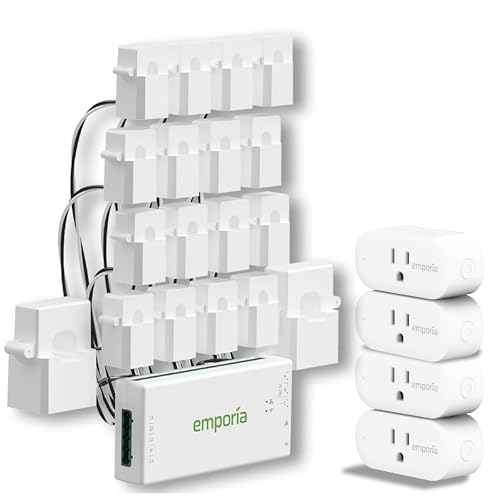
Emporia Energy Monitor with 16 Sensors + 4 Smart Plugs Super Bundle - Whole Home Electricity Usage Tracking & Real-Time Control - Supports Solar Net Metering - Works with iOS, Android, Alexa - Amazon.com
View on AmazonWhere the market is heading
- Storage-first solar: Indiana’s EDG structure strongly encourages batteries to maximize self-consumption. Expect more bundled pricing and demand response programs that may add value streams.
- Soft-cost competition: As hardware costs plateau, Indiana installers (including Tesla) will compete on permitting speed, interconnection know-how, and service responsiveness.
- Grid services: As utilities pilot virtual power plant (VPP) programs in the Midwest, Powerwall fleets could be compensated for peak shaving—another nudge toward storage pairing.
If you’re early in your research, our statewide guide to pricing, incentives, and local providers is a helpful companion: Solar in Indiana: Costs, Incentives & Top Installers (2026).
Recommended Products
Solar Electricity Handbook - 2023 Edition: A simple, practical guide to solar energy – designing and installing solar photovoltaic systems: Boxwell, Michael
Solar Electricity Handbook - 2023 Edition: <strong>A simple, practical guide to solar energy – designing and installing solar photovoltaic systems</strong> [Boxwell, Michael] on Amazon.com. *FREE* shi
Emporia Energy Monitor with 16 Sensors + 4 Smart Plugs Super Bundle - Whole Home Electricity Usage Tracking & Real-Time Control - Supports Solar Net Metering - Works with iOS, Android, Alexa - Amazon.com
Comprehensive Whole-Home Monitoring: Includes the Emporia Vue Energy Monitor with 16 sensors to <strong>track usage from your main panel and up to 16 individual circuits</strong>.
Enphase ENPHASE IQ8PLUS-72-2-US IQ8+ ...
Enphase · 240v · Solar · Hoymiles · Iq8 See more · Eligible for Free Shipping · Free Shipping by Amazon · Get FREE Shipping on eligible orders shipped by Amazon · Delivery Day · Get It by Tomorrow · D