
Tesla Powerwall in Wisconsin: Cost, Availability & Is It Worth It?
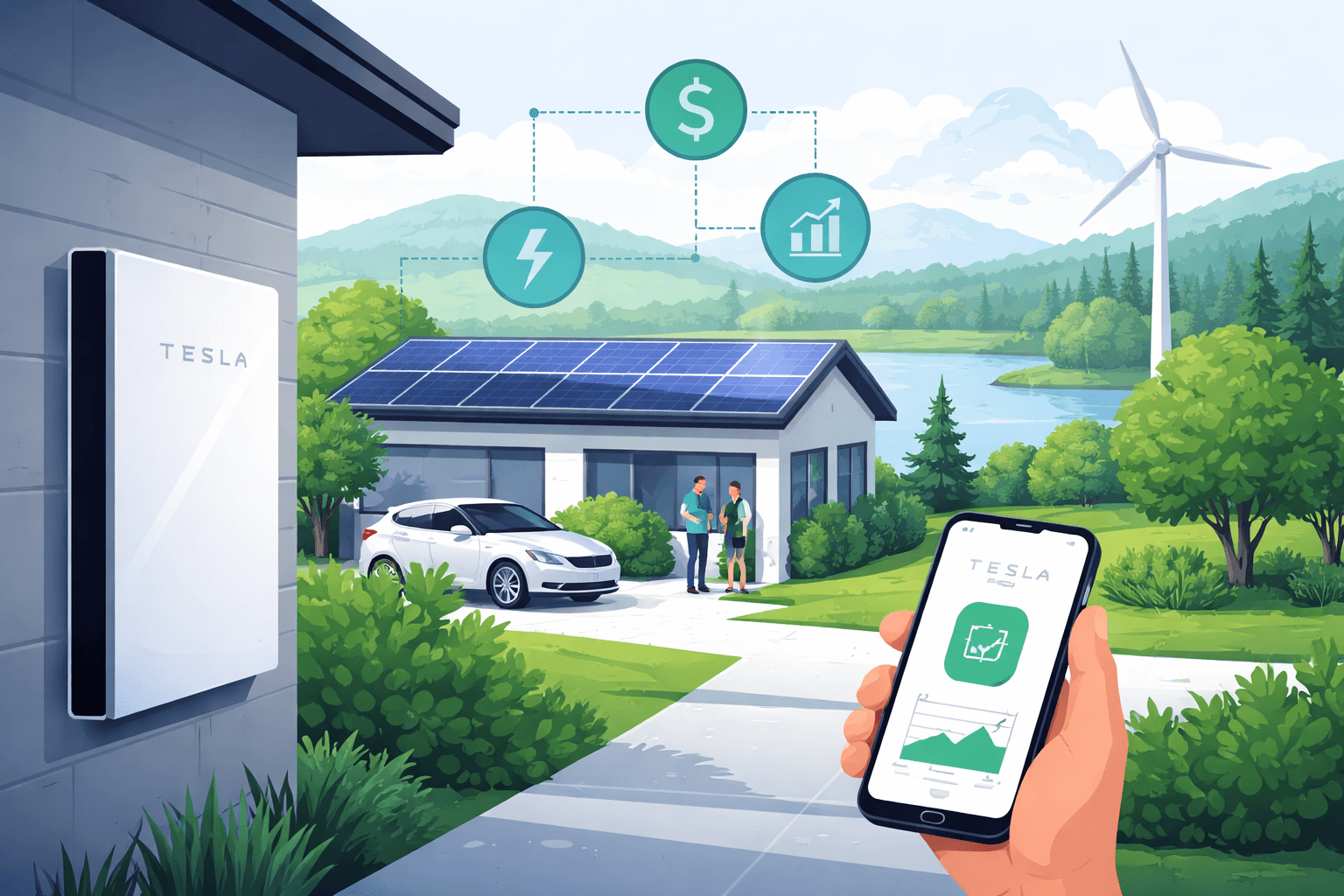
Wisconsin homeowners are asking about Tesla Powerwall in Wisconsin for two reasons: reliability and rates. Residential electricity prices in the state averaged roughly 16–18¢/kWh in 2024, according to the U.S. Energy Information Administration (EIA), and several utilities are expanding time-of-use (TOU) options that charge more during peak hours. At the same time, the Inflation Reduction Act now grants a 30% federal tax credit for stand‑alone batteries, making 2026 a strong window to evaluate a home battery.
Below, we break down Powerwall specs, current pricing in Wisconsin, incentives, how savings pencil out under local rate structures, and credible alternatives.
Tesla Powerwall overview: specs, capacity, and how it works
Tesla’s latest generation Powerwall is designed to provide whole‑home or critical‑load backup, time‑shifting to dodge peak rates, and solar self‑consumption. Key points (specs from Tesla’s published materials):

The Homeowner's Guide to Renewable Energy - Revised & Updated Edition: Achieving Energy Independence through Solar, Wind, Biomass and Hydropower: Chiras, Dan
After beginning with the all important discussion about energy efficiency and conservation, <strong>Dan guides you through everything you need to choose which renewable options to integrate into your
Check Price on Amazon- Usable energy: 13.5 kWh per unit
- Power output: up to ~11.5 kW continuous (Powerwall 3); earlier Powerwall 2 provides ~5 kW continuous
- Round‑trip efficiency: ~90% (DC-to-AC, including conversion losses)
- Warranty: 10 years, typically to 70% of initial capacity
- Operating temperature: about −4°F to 122°F, with onboard thermal management suitable for Wisconsin winters
- Enclosure: outdoor‑rated; typically mounted on a garage wall or pad near the main service panel
How it works
- With solar: Powerwall stores surplus midday solar and discharges in the evening. Powerwall 3 can accept direct PV input with its integrated hybrid inverter, reducing the need for a separate solar inverter in new builds. Existing systems can also integrate through AC coupling.
- Without solar: Thanks to the IRA, stand‑alone batteries qualify for the 30% tax credit. The unit charges off the grid during off‑peak hours and discharges during peak periods or outages.
- During outages: The Tesla Backup Gateway isolates your home from the grid (islanding) in milliseconds and maintains backed‑up circuits. Multiple Powerwalls can be stacked for higher energy and power.
By the Numbers
- 13.5 kWh covers roughly one day of key loads for a typical efficient home, or several hours of whole‑home usage depending on HVAC and appliances (EIA pegs average U.S. residential usage near 29–30 kWh/day).
- One Powerwall 3 can start and run many common loads simultaneously thanks to higher power output; large central AC or well pumps may require careful load planning.
- Two units (27 kWh) often strike a balance for larger homes or for multi‑day storm resilience when paired with rooftop solar.
Powerwall pricing in Wisconsin including installation costs
Installed costs vary with electrical complexity (subpanels, service upgrades), mounting location, and whether you add solar at the same time. Based on Midwest installer quotes and Tesla’s direct pricing trends in 2024–2026:
Typical single‑unit project
- Hardware (Powerwall 3 or Powerwall 2 + Gateway): $9,000–$11,000
- Balance of system and labor: $2,500–$5,000 (conduit runs, permits, commissioning)
- Possible electrical upgrades (service panel, trenching): $0–$3,000
- Before incentives: $12,000–$18,000 per unit is a common range in Wisconsin
- After 30% federal ITC: roughly $8,400–$12,600 net for a straightforward install
Multi‑unit projects
- Additional Powerwalls are cheaper per unit because the gateway and permitting are already in place. Second and third batteries often price $8,000–$10,000 each before the ITC.
What drives price in Wisconsin
- Cold‑climate placement: Outdoor mounting is fine, but installers may add cold‑weather considerations (heaters, setbacks), slightly increasing labor.
- Electrical service age: Older homes may need panel upgrades to meet current code and interconnection requirements.
- Distance to main service: Long conduit runs or detached garages add cost.
Wisconsin battery storage incentives: state rebates, SGIP, utility programs
- Federal Investment Tax Credit (ITC): A 30% tax credit applies to stand‑alone storage and solar‑paired batteries, regardless of whether your system includes solar. This provision began in 2023 under the Inflation Reduction Act (IRS Form 5695; consult a tax professional).
- Wisconsin state incentives: Wisconsin does not offer a statewide battery rebate similar to California’s SGIP. Focus on Energy has historically provided incentives for residential solar and has piloted or explored battery‑related offerings on a limited basis. Availability, amounts, and eligibility change by program year; check current Focus on Energy program materials or ask your installer.
- Utility programs: Some Wisconsin utilities periodically run battery pilots offering enrollment incentives or bill credits in exchange for limited control during peak events. These programs are often capped and first‑come, first‑served. Ask your utility about current offerings.
- Property and sales tax: Wisconsin’s clean energy tax treatment primarily applies to solar equipment. Storage eligibility can be nuanced; verify with your local assessor and installer.
What’s not available
- SGIP: California’s Self‑Generation Incentive Program does not apply in Wisconsin.
How the Powerwall pairs with solar in Wisconsin: backup vs. self‑consumption
Solar resource
- In Madison or Milwaukee, a 1 kW south‑facing rooftop PV system typically produces about 1,200–1,400 kWh per year according to NREL’s PVWatts, implying a capacity factor of roughly 14–16%. Production dips in winter but is strong in late spring through early fall.
Backup vs. bill savings
- Backup: In outage‑prone areas or on rural feeders, most homeowners prioritize critical‑load backup—refrigeration, lighting, internet, furnace blower, sump pump, and some outlets. A single Powerwall can cover these for many hours; adding a second unit extends runtime and supports heavier loads.
- Self‑consumption and TOU arbitrage: Where net metering is limited or TOU is in place, Powerwall stores midday solar to serve evening loads when rates are higher.
System design tips for Wisconsin homes
- Critical loads subpanel: Group essential circuits to preserve battery runtime during winter storms.
- Cold‑weather placement: Garages and basements are common; follow NEC and manufacturer clearance rules.
- Solar inverter pairing: Existing microinverter systems integrate well via AC coupling; new builds might leverage Powerwall 3’s direct PV input to reduce component count.
Wisconsin utility rate structures and how Powerwall saves with time‑of‑use
Rate design matters as much as equipment. Wisconsin’s investor‑owned utilities (e.g., We Energies, Alliant Energy, Madison Gas and Electric, Xcel Energy’s Northern States Power—WI, Wisconsin Public Service) and many municipal/co‑op providers offer:

ChargePoint HomeFlex Level 2 EV Charger J1772 - Fast Smart Battery Power Charging at Home for Electric Automobile Vehicles - NEMA 14-50 Plug for Electric Car : Automotive
View on Amazon- Flat residential rates: A single cents‑per‑kWh price all day. Savings from a Powerwall come primarily from backup value and solar self‑consumption (if export credits are lower than retail prices).
- Optional TOU rates: Off‑peak prices are lower while on‑peak prices are higher. Published Wisconsin TOU tariffs typically show on‑peak rates that can be roughly 1.5–2.5× off‑peak rates, depending on season and utility.
- Seasonal variations: Some utilities raise on‑peak prices during summer afternoons; winter peaks may be shorter.
- Demand charges: Less common for residential customers, but present at some co‑ops or special tariffs. Batteries can clip short‑duration peaks effectively.
How a Powerwall can reduce bills under TOU
- Peak shaving: Charge off‑peak, discharge on‑peak. If the on‑/off‑peak spread averages, for example, 8–12¢/kWh, shifting 8–10 kWh daily could save $240–$440 per year per battery (not counting round‑trip losses).
- Solar time‑shift: Store midday export and consume it later if export credits are below retail. This increases solar self‑consumption and shields value if net metering transitions toward net billing.
What about net metering in Wisconsin?
- Policies vary by utility—caps, system size limits, credit rates, and true‑up rules differ. Many utilities historically net up to 20 kW for residential PV, though export credit structures are evolving. Batteries help retain more of your solar value as tariffs change. Your installer will model your specific utility’s rules.
For a nuanced look at TOU savings dynamics and battery sizing in neighboring states, see our detailed guides for the Upper Midwest, including Tesla Powerwall in Minnesota: Cost, Availability & Is It Worth It?, Tesla Powerwall in Michigan: Cost, Availability & Is It Worth It?, and Tesla Powerwall in Illinois: Cost, Availability & Is It Worth It?.
Powerwall availability and certified installers in Wisconsin
- Availability: After supply tightness in 2021–2023, Powerwall lead times generally improved in 2024–2026. In Wisconsin, many Tesla Certified Installers can schedule site visits within a few weeks and complete projects in 1–3 months, subject to permitting and utility interconnection timelines.
- Permitting and code: Residential battery installs follow the National Electrical Code (NEC—Article 706 for energy storage) and NFPA 855 siting guidance, plus local building/fire requirements. Some jurisdictions specify setbacks from sleeping areas or limit interior garage placement without fire‑rated construction.
- Interconnection: Utilities will review one‑line diagrams and may require meter upgrades. Expect 2–8 weeks for approvals depending on the utility and season.
- Who can install: Tesla’s network includes both solar‑plus‑storage specialists and electrical contractors trained on Powerwall commissioning. Ask for recent Wisconsin references and confirm they’ve handled your specific utility before.
Alternatives to Powerwall available in Wisconsin: Enphase, LG, Generac
The best battery is the one that fits your loads, roof, and utility tariff. In Wisconsin’s cold climate and evolving rates, these options compete credibly with Tesla:
- Enphase IQ Battery 5P/10/3T family
- Modular 5 kWh blocks (IQ 5P); stack to 10–30 kWh+; strong for AC‑coupled retrofits and microinverter PV systems.
- Notable for granular monitoring and rapid service support. Continuous power per 5 kWh module is typically in the ~3–4 kW range; multiple modules raise output.
- LG Energy Solution (RESU Prime / LG ESS Home)
- 10–16 kWh class, wall‑mounted DC batteries that pair with compatible hybrid inverters; solid cold‑weather performance specs and a 10‑year warranty.
- Generac PWRcell
- Cabinet‑style, modular 9–18 kWh systems with integrated inverter; expandable to larger capacities; popular with installers who also service standby generators.
- FranklinWH aPower + aGate
- 13.6 kWh modules with high surge capability and a smart load controller; strong value proposition for homes with large motor loads.
When a generator still makes sense
- For rural customers with frequent multi‑day winter outages and limited solar resource, a clean, right‑sized battery may be paired with (or replaced by) a propane/natural‑gas standby generator. Batteries respond instantly, are quiet, and reduce operational emissions; generators extend runtime for extreme events. Many Wisconsin homes choose a hybrid approach.
Product picks
- For data‑driven savings, an energy monitor such as the Emporia Vue Energy Monitor can pinpoint loads that drain battery runtime.
- If you’re designing a new solar‑plus‑storage system, integrated solutions like the SolarEdge Home Hub Inverter can simplify wiring and optimize backup performance.
- For electrified homes with EVs, a Level 2 charger that supports load sharing—like the ChargePoint Home Flex—helps coordinate charging with battery and TOU schedules.
FAQ: common questions about Tesla Powerwall in Wisconsin
How much does a Tesla Powerwall cost in Wisconsin in 2026?
- Most homeowners see $12,000–$18,000 before incentives for one unit installed, depending on electrical work and site conditions. The 30% federal ITC brings many projects to roughly $8,400–$12,600 net. Multi‑battery projects have lower per‑unit costs.
Will a Powerwall work in Wisconsin winters?
- Yes. Tesla lists an operating range down to about −4°F with active thermal management. In very cold snaps, the battery may allocate some energy to heating itself. Many Wisconsin installs choose garage or basement locations to reduce exposure.
How many Powerwalls do I need?
- For critical‑load backup: 1–2 units (13.5–27 kWh) is common. For near whole‑home backup or homes with large well pumps, geothermal, or central AC, plan on 2–3 units and careful load management.
Can Powerwall back up my entire house, including a 4–5 ton AC?
- Sometimes, but it depends on starting current and continuous draw. Powerwall 3’s higher continuous output improves odds, but installers often recommend soft‑start kits or smart load controllers. A critical‑loads subpanel is the best practice for maximizing uptime.
What’s the lifespan?
- Tesla warrants 10 years to a percentage of original capacity (commonly 70%). Field data from lithium‑ion batteries shows that calendar aging and cycle counts both matter; typical residential use suggests functional lifespans beyond the warranty for many users.
What maintenance is required?
- Minimal. Keep clearances for airflow, update firmware (automatic via the Tesla app), and avoid sustained operation at very high or very low temperatures.
Is my existing solar system compatible?
- Nearly always. Powerwall can AC‑couple to microinverter or string‑inverter systems. New builds may use Powerwall 3’s integrated PV inputs to reduce hardware.
How much will I save with TOU rates?
- Savings depend on your on/off‑peak spread and how much energy you can shift. With an 8–12¢/kWh spread and 8–10 kWh shifted daily, a single battery could save $240–$440 per year, plus outage resilience benefits. Your installer can run a utility‑specific model.
Will I still get net metering with a battery?
- Net metering and export credit rules vary by Wisconsin utility and are evolving. Batteries help you consume more of your own solar and reduce exposure to less‑favorable export rates.
What about safety and code compliance?
- Residential lithium‑ion systems are designed to meet UL 9540 and UL 9540A safety testing. Installers follow NEC and NFPA 855 siting requirements. Ensure your contractor is licensed and familiar with your jurisdiction’s rules.
How long will a Powerwall keep my fridge and furnace blower running?
- As a rule of thumb, a fridge might use ~1–2 kWh/day, a furnace blower ~0.5–1.5 kWh/day when cycling, and lighting/electronics another few kWh. One 13.5 kWh unit can often cover essential loads for a day or more; actual runtime depends on behavior and temperature.
Practical implications for Wisconsin homeowners
- If outages are your top pain point, prioritize a critical‑loads design. A single Powerwall can eliminate generator noise and fuel logistics for short outages.
- If you have or plan TOU rates, ask your installer for a 12‑month bill analysis and a battery dispatch model using your actual interval data.
- For new solar, compare Powerwall 3’s integrated approach to hybrid inverter alternatives. Keep winter performance and serviceability in focus.
Where this is heading in Wisconsin
- More TOU and dynamic rates: As Midwest grid operators (MISO) integrate more wind and solar, expect sharper evening peaks and growing utility interest in managed batteries. That improves the value of flexible storage.
- Evolving export credits: Utilities across the Upper Midwest are moving from retail net metering toward net billing or time‑based export rates. Batteries increase self‑consumption and hedge policy risk.
- Falling soft costs: As local inspectors, utilities, and installers gain experience with NFPA 855 and NEC storage provisions, permitting and interconnection timelines should continue to shorten.
Bottom line: With the 30% federal tax credit, improving TOU options, and enhanced Powerwall power output, Tesla Powerwall in Wisconsin makes strategic sense for homeowners seeking resilience and bill control—especially when paired with well‑designed rooftop solar and smart load management.

Emporia Gen 2 Smart Home Energy Monitor with 16 50A Circuit Level Sensors | Real Time Electricity Monitor/Meter | Solar/Net Metering - Amazon.com
View on AmazonRecommended Products
The Homeowner's Guide to Renewable Energy - Revised & Updated Edition: Achieving Energy Independence through Solar, Wind, Biomass and Hydropower: Chiras, Dan
After beginning with the all important discussion about energy efficiency and conservation, <strong>Dan guides you through everything you need to choose which renewable options to integrate into your
Emporia Gen 2 Smart Home Energy Monitor with 16 50A Circuit Level Sensors | Real Time Electricity Monitor/Meter | Solar/Net Metering - Amazon.com
See how much electricity your home is using anywhere, anytime. ... <strong>Add individual 50A sensors to your Vue to monitor up to 16 individual circuits</strong> — providing accurate energy use for t
ChargePoint HomeFlex Level 2 EV Charger J1772 - Fast Smart Battery Power Charging at Home for Electric Automobile Vehicles - NEMA 14-50 Plug for Electric Car : Automotive
Home Flex Hardwired offers the fastest charge at up to 50A. NEMA 6-50 and 14-50 versions <strong>provide up to 40A and work with existing 240V wall outlets</strong>. Yes! Choose from our list of prefe