
Tesla Powerwall in Illinois: Cost, Availability & Is It Worth It?

Illinois homeowners are increasingly asking whether a Tesla Powerwall in Illinois makes sense as storms intensify and utility rates evolve. The 30% federal clean energy tax credit now applies to standalone batteries, and ComEd and Ameren offer dynamic pricing options that can reward load shifting. The decision hinges on costs, incentives, and how you value backup power.
Tesla Powerwall in Illinois: specs and how it works
Tesla’s current residential battery is the Powerwall 3, designed for whole‑home backup and solar self‑consumption.
- Usable energy: 13.5 kWh per unit (the amount you can actually store and discharge)
- Power output: up to ~11.5 kW continuous (sufficient to run most homes and start large loads with proper design)
- Round‑trip efficiency: ~90% (energy lost between charging and discharging)
- Operating temperature: roughly −4°F to 122°F (−20°C to 50°C)
- Modular scalability: stack multiple units (e.g., 2–3 Powerwalls for longer outages or larger homes)
- Transfer time: sub‑second switchover to backup when the grid goes down
- Warranty: 10 years with 70% capacity retention; solar‑coupled use typically carries unlimited cycle terms within Tesla’s warranty conditions
How it works
- Grid‑tied: The battery charges from your solar array or the grid, then discharges when your home needs it—during outages, expensive on‑peak periods, or after sunset.
- With solar: Powerwall 3 can act as the solar inverter and battery in one enclosure. During grid outages, it isolates your home (islanding) to keep critical loads energized.
- Backup vs. bill savings: You can configure it for whole‑home backup or essential circuits only. For savings, it time‑shifts energy from off‑peak to on‑peak periods and increases self‑consumption of rooftop solar.
For a full feature comparison across Powerwall generations and alternatives, see our broader guide: Tesla Powerwall: Complete Buyer's Guide — Cost, Installation & Alternatives.
Powerwall pricing in Illinois, including installation costs
Installed cost varies by home layout, service panel condition, trenching/wiring needs, and whether you pair the battery with new solar.
- Typical installed price (first unit): $11,000–$16,000 before incentives in Illinois, based on 2024–2025 market quotes across the Midwest and national marketplace data (EnergySage reports most home batteries fall in the $12,000–$16,000 range before incentives).
- Additional units: $7,000–$9,000 each installed, depending on complexity and whether the original labor and balance‑of‑system components (conduit, disconnects) can be shared.
- Permit and interconnection fees: $150–$800, varying by municipality. Chicago and some suburbs can be on the higher end and may require load calculations and a separate disconnect.
What drives cost up or down
- New vs. existing solar: Adding a Powerwall to a new solar installation can reduce hardware duplication and labor time.
- Service upgrades: Older homes (e.g., 100‑amp service) may need a main panel upgrade or load management device, adding $1,000–$3,500.
- Cold‑weather siting: Garages are common in Illinois, but installers may add insulation or cold‑weather charging protection to meet manufacturer specs and code.
The 30% federal Investment Tax Credit (ITC) applies to standalone storage starting with 2023 tax years, thanks to the Inflation Reduction Act (U.S. Treasury/IRS guidance, 2023). That effectively reduces the net cost of a $14,000 install to $9,800, before any state or utility incentives.
Illinois battery storage incentives: what exists—and what doesn’t
- Federal ITC: 30% for standalone or solar‑coupled batteries (no minimum solar requirement). This is the main incentive available today.
- Illinois Shines (Adjustable Block Program): Incentivizes solar production via Renewable Energy Credits (RECs) administered by the Illinois Power Agency. As of late 2024, Illinois Shines does not pay RECs for batteries alone; storage can be paired with solar, but incentives primarily reward solar generation.
- Illinois Solar for All: Targets low‑income customers for solar incentives. Battery incentives are not broadly available as of 2024, though community resilience projects may incorporate storage.
- State battery rebates: Unlike California’s SGIP, Illinois does not have a statewide residential battery rebate as of 2024. If you see “SGIP” listed for Illinois, that’s incorrect—SGIP is California‑only.
- Utility pilots and bill credits: ComEd and Ameren periodically run demand response or peak event programs. As of 2024, these focus on smart thermostats and load control; battery‑specific programs are limited. Check your utility for 2025–2026 pilot updates.
- IRA Home Energy Rebates (HOMES and HEERA): Federally funded, state‑administered efficiency/electrification rebates. As of late 2024, Illinois had not launched consumer‑facing rebates; timeline and eligibility for batteries remain evolving under the Illinois Department of Commerce & Economic Opportunity (DCEO).
Where to verify: Illinois Power Agency (IPA) program updates, the Illinois Commerce Commission (ICC), and your utility’s tariff library. Incentives can change year to year as budgets reset.
How the Powerwall pairs with solar in Illinois: backup vs. self‑consumption
Pairing the Tesla Powerwall in Illinois with rooftop solar creates two distinct value streams:
- Resilience
- Outages: The U.S. average outage duration with major events was roughly 5–6 hours in recent years (EIA). Severe Midwest thunderstorms and ice events can produce multi‑day outages in pockets. One 13.5 kWh Powerwall can often run essentials—refrigeration, lighting, Wi‑Fi, a sump pump, and a furnace blower—for 10–20 hours, depending on load. Two units extend that to a day or two of typical essentials.
- Whole‑home vs. critical loads: Whole‑home backup may require multiple Powerwalls to cover simultaneous large loads (e.g., AC, electric oven, EV charging). Many Illinois homes choose an “essential loads subpanel” to control costs while preserving resilience.
- Bill savings
- Net metering dynamics: Illinois offers retail‑rate net metering for many residential systems (up to 40 kW), but tariff details can shift as utilities hit program caps or move to “net billing” that credits exported solar at supply‑only rates. A battery increases self‑consumption, reducing exposure if export credits decline.
- Evening peak shifting: Store midday solar and discharge during late‑afternoon/evening peaks when electricity is most expensive under Time‑of‑Use or real‑time pricing.
For a deeper dive on rooftop solar economics and installer options, see: Solar in Illinois: Costs, Incentives & Top Installers (2026).
Illinois utility rate structures and how Powerwall saves with time‑of‑use
Illinois is unusual in that both major investor‑owned utilities offer optional dynamic pricing:

Smart Power Anniversary Edition: Climate Change, the Smart Grid, and the Future of Electric Utilities: Fox-Penner, Peter, Rogers, James E., Esty, Dan, Dobbeni, Daniel, Rive, Lyon
Smart Power Anniversary Edition: Climate Change, the Smart Grid, and the Future of Electric Utilities [Fox-Penner, Peter, Rogers, James E., Esty, Dan, Dobbeni, Daniel, Rive, Lyon] on Amazon.com. *FREE
Check Price on AmazonComEd
- Hourly Pricing: Based on wholesale prices, which can swing from a few cents per kWh to very high prices during rare grid stress events. Batteries can arbitrage by charging when prices are low and discharging when prices spike.
- Time‑of‑Day/Time‑of‑Use: Fixed off‑peak and on‑peak periods with a predictable differential. Details change by tariff and season; check the latest ComEd RTOU or Time‑of‑Day programs.
Ameren Illinois
- Power Smart Pricing (real‑time) and Time‑of‑Day options with off‑peak and peak windows. Batteries can shave the top of your demand during expensive blocks.
What arbitrage looks like
- Example with TOU: If off‑peak energy is $0.11/kWh and on‑peak is $0.22/kWh, every kWh shifted saves ~$0.11. A Powerwall discharging 10 kWh on a typical weekday could save ~$1.10/day. Accounting for 90% efficiency, savings net to ~$1.00/day. Over 300 high‑priced days, that’s ~$300/year.
- Real‑time pricing upside: Savings can be larger if you avoid occasional high‑price events (e.g., summer peaks), but results vary and require automation and care not to deplete the battery before a potential outage.
Demand charges?
- Most Illinois residential customers do not face demand charges, but some municipal and cooperative utilities use them. If your utility bills a residential demand fee (based on your monthly peak kW), a battery configured for “peak shaving” can reduce that peak and improve ROI.
Practical tip: Program the Powerwall’s backup reserve (say 20–30%) so bill‑savings strategies do not leave you exposed before a storm. Weather‑adaptive controls can raise the reserve automatically when severe weather is forecast.
Powerwall availability and certified installers in Illinois
- Availability: Powerwall 3 is broadly available in Illinois through Tesla and Tesla‑certified installers. Supply constraints seen in 2021–2022 have eased in most markets.
- Coverage: Installers operate throughout Chicagoland, Rockford, Peoria, Bloomington‑Normal, Springfield, the Metro East, and across much of central and southern Illinois.
- Lead times: 2–8 weeks from contract to install is common, longer if a service upgrade or complex permitting is needed.
- What to ask installers:
- Load audit: Will they measure your actual appliance loads and model outage scenarios?
- Panel work: Do you need a main panel or service upgrade? Can they use a whole‑home backup gateway vs. a dedicated critical‑loads panel?
- Cold‑weather plan: Where will the battery be sited to ensure safe charging below freezing?
Get at least two quotes and compare whole‑system designs, not just per‑kWh battery pricing. If you’re adding solar at the same time, our state market overview can help shortlist firms: Solar in Illinois: Costs, Incentives & Top Installers (2026).
Alternatives to Tesla Powerwall available in Illinois
Several UL‑listed, NEC‑compliant residential storage systems are widely available in Illinois. The best choice depends on your home’s loads, desired backup duration, and whether you prefer AC‑coupled (easier retrofits) or DC‑coupled (often higher solar‑to‑battery efficiency) designs.
- Enphase IQ Battery 5P/10T/10FP
- Modular 5 kWh blocks with high surge capability; excellent integration with Enphase microinverters; strong monitoring. A fit for homes prioritizing modularity and high reliability.
- LG Energy Solution RESU Prime (10H/16H)
- 10–16 kWh units with solid performance and established manufacturing. Pair with compatible inverters (e.g., SolarEdge) for DC‑coupled efficiency.
- Generac PWRcell
- Cabinet‑based, scalable 9–18 kWh systems with strong whole‑home backup capabilities. Confirm the latest inverter revisions and any recall remediation.
- SolarEdge Home Battery (10 kWh)
- Tight DC‑coupled integration if you already have or plan a SolarEdge PV inverter; good round‑trip efficiency.
- FranklinWH aPower + aGate
- 13.6 kWh per unit with robust backup controller (aGate) and high surge support; AC‑coupled for straightforward retrofits.
What to compare
- Usable kWh and continuous/peak kW
- Round‑trip efficiency and warranty throughput/cycle terms
- Integration with your existing or planned solar inverter
- UL 9540A test status and installation flexibility under local code (especially in garages or basements)
Based on efficiency, surge performance, and monitoring, the Enphase IQ Battery 5P represents strong value for modular residential installations, especially if you already have Enphase microinverters. For DC‑coupled new builds, the SolarEdge Home Battery 10 kWh is a compelling match with SolarEdge HD‑Wave inverters. If whole‑home backup and high surge are priorities, the FranklinWH aPower + aGate combo is increasingly popular with Midwest installers.
By the numbers: Tesla Powerwall in Illinois
- 13.5 kWh usable per Powerwall 3 (Tesla specs)
- ~11.5 kW continuous output; sub‑second backup transfer
- ~90% round‑trip efficiency
- 10‑year warranty to 70% capacity
- Installed price: ~$11,000–$16,000 for the first unit (pre‑incentive)
- 30% federal ITC applies to standalone storage (IRA, IRS 2023 guidance)
- U.S. outage duration with major events: ~5–6 hours average in recent years (EIA)
- Typical TOU arbitrage savings in Illinois: ~$200–$500/year per battery under moderate price spreads; more if participating in real‑time pricing and avoiding rare price spikes (utility program‑dependent)
Is a Tesla Powerwall in Illinois worth it?
When it pencils out
- You value backup power: If you experience sump‑pump risks, medical equipment needs, or frequent storms, resilience alone can justify the spend.
- You use TOU or real‑time pricing: Batteries can create predictable bill savings by shifting energy away from peak windows.
- You’re pairing with new solar: Lower balance‑of‑system costs and solar‑charged operation maximize value; eligibility for unlimited cycle warranty terms is strongest when solar‑coupled.
When it’s a tougher sell
- Flat residential rates: If you pay the same price all day and have robust retail net metering, bill savings are modest.
- Very low consumption homes: If your essentials draw only 200–300 watts most of the day, a smaller battery—or no battery—might suffice, unless outages are your primary concern.
Back‑of‑the‑envelope ROI
- Assume $13,500 installed, 30% ITC → $9,450 net cost.
- Annual savings: $350 (TOU arbitrage + minor solar self‑consumption gains).
- Simple payback: ~27 years on bill savings alone—too long. However, when you ascribe resilience value (e.g., avoided basement flood from a down sump pump, protected food/medicine, work‑from‑home uptime), many households consider the battery “worth it” despite a long payback on energy arbitrage.
Installation and permitting notes for Illinois homes
- Location: Garages and basements are common; follow clearance and ventilation rules in the installation manual and local code. Avoid direct exposure to sub‑freezing airflow that can limit charging.
- Chicago code: Expect thorough permitting and inspection; installers should be familiar with local amendments to the National Electrical Code (NEC).
- Critical loads panel: Many homes add a subpanel to prioritize circuits (fridge, sump pump, furnace blower, key lighting, Wi‑Fi, select receptacles). Electric ranges, central AC, and EV charging may be excluded unless you deploy multiple batteries.
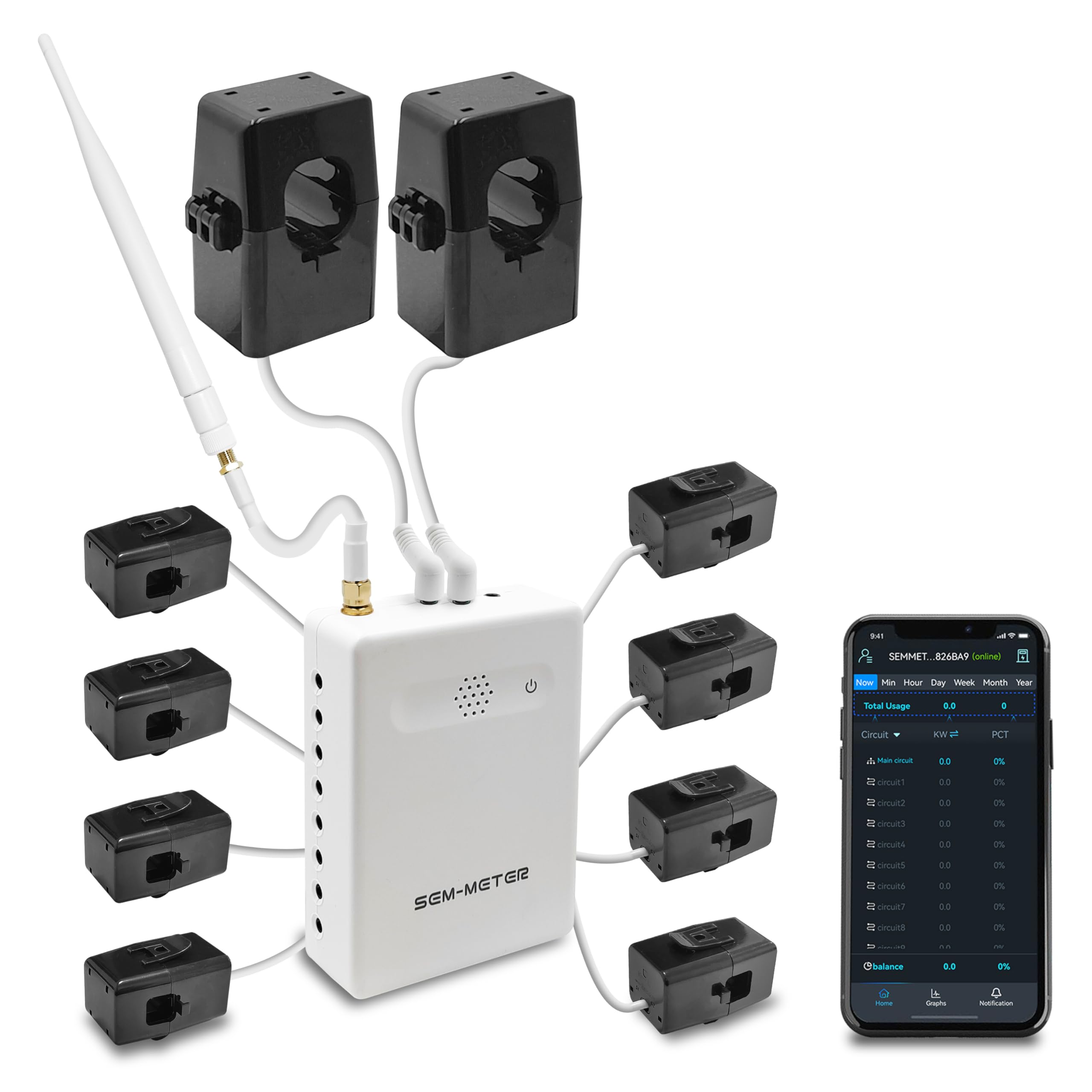
Smart Home Energy Monitor with 8 50A Circuit Level Sensors | Vue - Real Time Electricity Monitor/Meter | Solar/Net Metering - Amazon.com
View on AmazonFAQ: common questions about Tesla Powerwall in Illinois
How much does a Powerwall cost in Illinois?
- Expect $11,000–$16,000 installed for the first unit before incentives; $7,000–$9,000 for each additional unit. The 30% federal ITC applies.
How many Powerwalls do I need?
- One unit (13.5 kWh) covers essentials for many homes. Two units improve whole‑home coverage, large motor starts, and outage duration. A load audit helps size correctly.
Does the Powerwall work in Illinois winters?
- Yes, within its temperature specs. It can discharge at low temperatures but may limit charging when it’s very cold. Proper siting and, if necessary, conditioned space mitigate this.
Will it run my sump pump and furnace?
- Yes, if sized correctly. A typical 1/2 hp sump pump draws ~700 W running (~1–2 kW at start). A gas furnace blower is usually 300–800 W. Your installer should verify start currents and set priorities.
What about central AC?
- Many 3–5 ton AC units can run on a single Powerwall 3 thanks to higher continuous power and surge support, but runtime will be limited. Two or more units are recommended for comfortable summer backup.
Do I get net metering and battery credits?
- Net metering is a solar policy; batteries don’t earn separate export credits. Illinois offers retail net metering for many systems up to 40 kW, but details vary by utility and may evolve. Batteries help increase self‑consumption if net metering terms decline.
Can I enroll the Powerwall in a Virtual Power Plant (VPP) in Illinois?
- Tesla runs VPPs in several markets (e.g., California, Texas). As of 2024, VPP options in Illinois are limited. Watch for 2025–2026 pilots from ComEd/Ameren or municipal utilities.
How long does installation take?
- Site visit to PTO (permission to operate) commonly takes 2–8 weeks. Supply chain and permitting can extend timelines.
What maintenance is required?
- Minimal. Keep the area clear, ensure firmware updates via Wi‑Fi, and review settings seasonally. The app allows you to adjust backup reserve and TOU schedules.
Will adding a battery affect home insurance or appraisal?
- Many insurers accept listed, permitted systems without premium changes; notify your carrier. Appraisal impacts vary; studies (e.g., from Lawrence Berkeley National Laboratory for solar) suggest energy improvements can add value, though battery‑specific data remain nascent.
Can I add a Powerwall to my existing solar?
- Yes. Powerwall can be AC‑coupled to most PV systems. Your installer will check inverter compatibility and interconnection rules.
What else should I buy with a Powerwall?
- Consider a high‑efficiency heat pump water heater and smart load controls to stretch backup hours. For EV owners, a Wi‑Fi enabled Level 2 charger like the JuiceBox 40 can schedule charging to off‑peak times and coordinate with solar production. If you want portable resilience for camping or work sites, a compact unit like the EcoFlow Delta 2 complements a whole‑home battery. For panels, high‑efficiency modules such as REC Alpha Pure help maximize roof output.
Practical next steps
- Get two quotes: Compare Tesla direct and an experienced local installer for design and price.
- Choose your tariff: If comfortable with variability, hourly pricing can supercharge battery value. If you prefer predictability, TOU may still yield meaningful savings.
- Right‑size backup: List the circuits you truly need during an outage; you may find one battery goes further than expected when paired with smart load management.
- Track incentives: Federal ITC is locked in, but keep an eye on Illinois utility pilots and IRA rebate rollouts.
The bottom line: A Tesla Powerwall in Illinois isn’t a slam‑dunk on bill savings alone under flat rates, but it shines for resilience and pairs well with dynamic pricing and rooftop solar. For many households, the combination of backup security, time‑shifting, and federal incentives makes it worth serious consideration—especially if a sump pump, home office, or medical equipment raises the stakes when the lights go out.
Related reading: Tesla Powerwall: Complete Buyer's Guide — Cost, Installation & Alternatives | Solar in Illinois: Costs, Incentives & Top Installers (2026)

JuiceBox 40 Smart Electric Vehicle (EV) Charging Station with WiFi - 40 amp Level 2 EVSE, 25-Foot Cable, UL & Energy Star Certified, Indoor/Outdoor Use (Hardwired Install, Gray) : Automotive
View on AmazonRecommended Products
Smart Power Anniversary Edition: Climate Change, the Smart Grid, and the Future of Electric Utilities: Fox-Penner, Peter, Rogers, James E., Esty, Dan, Dobbeni, Daniel, Rive, Lyon
Smart Power Anniversary Edition: Climate Change, the Smart Grid, and the Future of Electric Utilities [Fox-Penner, Peter, Rogers, James E., Esty, Dan, Dobbeni, Daniel, Rive, Lyon] on Amazon.com. *FREE
JuiceBox 40 Smart Electric Vehicle (EV) Charging Station with WiFi - 40 amp Level 2 EVSE, 25-Foot Cable, UL & Energy Star Certified, Indoor/Outdoor Use (Hardwired Install, Gray) : Automotive
Buy JuiceBox 40 Smart Electric Vehicle (EV) Charging Station with WiFi - 40 amp Level 2 EVSE, 25-Foot Cable, UL & Energy Star Certified, Indoor/Outdoor Use (Hardwired Install, Gray): Charging Stat
Smart Home Energy Monitor with 8 50A Circuit Level Sensors | Vue - Real Time Electricity Monitor/Meter | Solar/Net Metering - Amazon.com
Lightweight commercial 3-phase option available as a separate bundle. APPLICATION MONITORING WITHOUT GUISEWORK <strong>Up to sixteen (16) 50A sensors to accurately monitor your air conditioner, oven,