
Tesla Powerwall in Kansas: Cost, Availability & Is It Worth It?
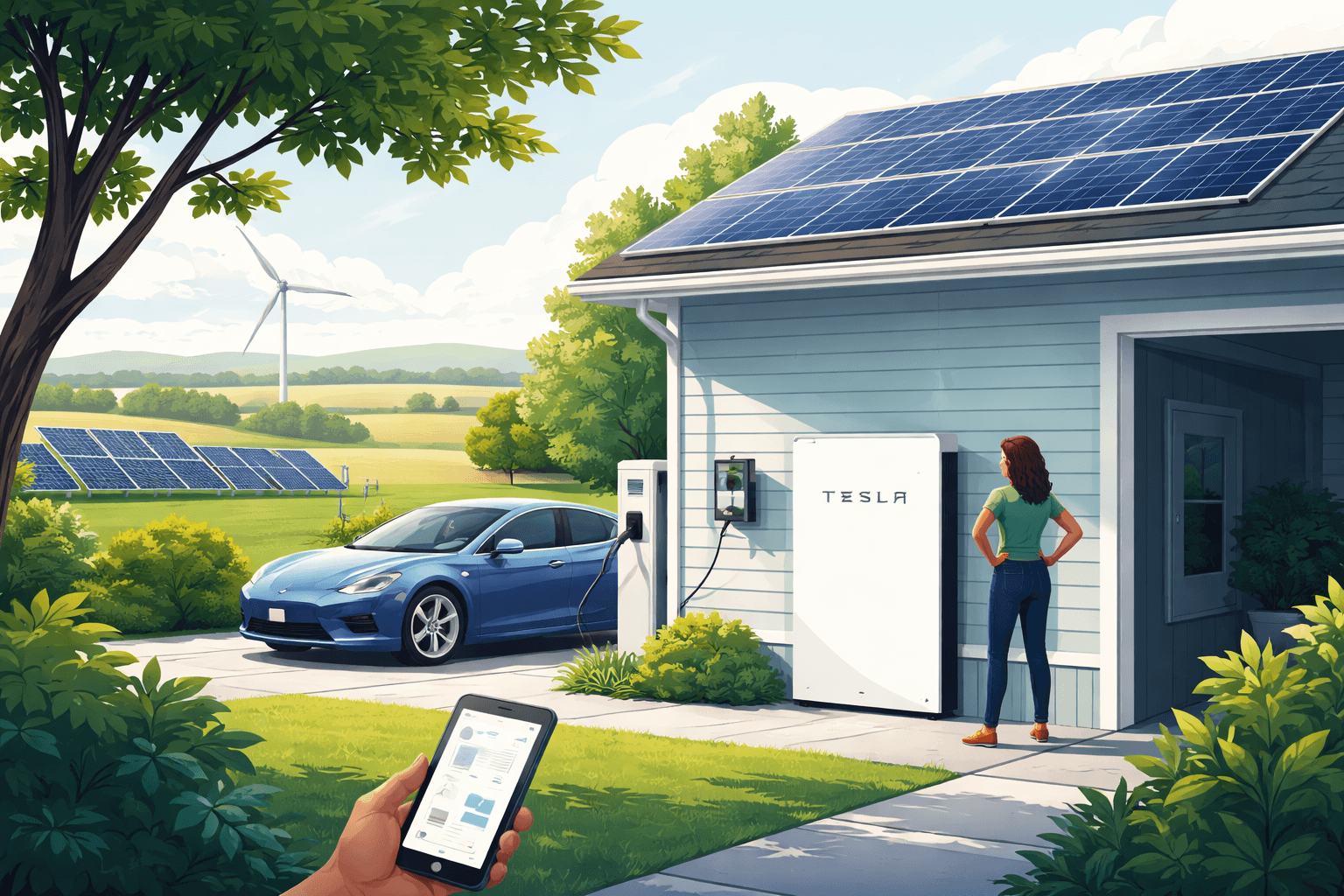
Home battery storage is moving from early adopters to the mainstream. SEIA/Wood Mackenzie reported the U.S. added a record 7–8 GWh of energy storage in 2023 across all segments, with residential systems a fast-growing share. For Kansans facing severe weather and increasingly dynamic electricity rates, the Tesla Powerwall in Kansas is drawing interest for both resilience and bill control. This guide explains specs, pricing, incentives, how the Powerwall works with solar, and whether it pencils out in the Sunflower State.
By the numbers: Tesla Powerwall in Kansas
- 13.5 kWh usable capacity per Powerwall (Tesla specs); up to 10 units can be stacked for larger homes
- ~11 kW burst/backup power and high on-grid continuous output (model-dependent; Powerwall 3 supports whole-home loads for many homes)
- 90% round-trip efficiency (Tesla); 10-year warranty to 70% capacity
- Typical Kansas installed price: $12,000–$15,000 for one unit before incentives; $8,400–$10,500 after the 30% federal tax credit
- Kansas residential electricity price: roughly 13–15¢/kWh in recent EIA data, below the U.S. average
- U.S. customers experienced about 5–8 hours of outages on average annually in recent EIA reliability reporting; severe storms can drive higher local totals in the Plains
Sources referenced in this guide: Tesla product specifications; U.S. Energy Information Administration (EIA) for prices and reliability; NREL’s U.S. Battery Storage Cost Benchmark; EnergySage Marketplace data for installer quotes; SEIA/Wood Mackenzie storage market reports.
What is a Tesla Powerwall? Specs, capacity, and how it works
A Tesla Powerwall is a wall-mounted lithium-ion home battery designed to store electricity and provide power when the grid goes down or when rates are highest. It can charge from rooftop solar or, since 2023 under the federal tax rules, from the grid as a standalone battery.
The Grid: The Fraying Wires Between Americans and Our Energy Future: Bakke, Gretchen
Cultural anthropologist Gretchen Bakke <strong>unveils the many facets of America's energy infrastructure, its most dynamic moments and its most stable ones, and its essential role in personal an
Check Price on AmazonKey technical features
- Energy: 13.5 kWh usable per unit. That’s roughly enough to run a typical efficient home overnight with careful load management or to power essential circuits (fridge, lights, Wi‑Fi, a well pump) for a day or two, depending on usage.
- Power: High instantaneous output suitable for starting motors; the latest Powerwall 3 supports whole-home backup for many homes without a separate inverter thanks to its integrated solar-and-storage architecture. Earlier models (Powerwall 2/Powerwall+) often back up essential loads via a critical loads panel.
- Chemistry and safety: Tesla uses advanced lithium-ion cells with robust battery management and thermal controls. The system is outdoor-rated (NEMA 3R) and designed for Kansas heat/cold ranges when installed per code.
- Efficiency: About 90% round-trip efficiency means you get back ~9 kWh of electricity for every 10 kWh stored, accounting for conversion losses.
- Warranty: 10 years with an energy retention guarantee (commonly 70% of original usable capacity at year 10) and generous cycling terms for solar self-consumption and backup use.
How it works
- Solar-charged: During the day, rooftop PV charges the battery first (if you choose), then serves house loads and exports excess to the grid.
- Grid-charged: On time-of-use (TOU) tariffs or with demand charges, the Powerwall can charge during off-peak hours and discharge during peaks to reduce bills.
- Backup: When the grid fails, a Tesla Backup Gateway safely isolates (“islands”) your home and the Powerwall delivers power in milliseconds—typically fast enough to keep computers and lights from dropping.
Powerwall pricing in Kansas, including installation costs
Installed prices vary with your home’s electrical complexity, trenching needs, main panel upgrades, and whether you’re pairing with new solar or retrofitting. Based on recent installer quotes and cost benchmarks:
- Typical range for one Powerwall in Kansas: $12,000–$15,000 installed before incentives
- Two units: $20,000–$28,000 before incentives (some economies of scale on labor)
- Permitting, critical loads panel, and main service upgrades can add $1,000–$3,000
- Adders: Long conduit runs, attic work, detached garages, and whole‑home backup switching can add cost
Cost context
- NREL’s residential battery benchmarks and EnergySage marketplace data often land in the $1,100–$1,400 per kWh installed range nationally, which aligns with $15,000–$19,000 for a 13.5 kWh unit. Tesla’s direct pricing and strong installer competition in the Midwest often bring Kansas toward the lower end of that spread.
- After the 30% federal Investment Tax Credit (ITC), a $13,500 install nets to $9,450. Batteries paired with existing or new solar—and standalone batteries installed in 2023 or later—can be ITC-eligible if requirements are met.
Planning tip: For a deeper breakdown of line-item costs, system design decisions (critical loads vs. whole home), and whether to buy direct from Tesla or via a local EPC, see our detailed Tesla Powerwall: Complete Buyer's Guide — Cost, Installation & Alternatives.
Kansas battery storage incentives: state rebates, SGIP, utility programs
- Federal ITC (30%): Available to Kansas homeowners for both solar-paired and standalone batteries placed in service in 2023 or later, subject to IRS rules. Consult a tax professional.
- State-level rebates or tax credits: Kansas currently does not offer a dedicated statewide battery rebate or personal state tax credit for residential storage. Some local jurisdictions may offer limited incentives; check city/county energy offices.
- Sales/property tax: Kansas does not have a universal statewide sales tax exemption for residential solar/batteries. Property tax treatment for residential-scale equipment can vary; discuss with your assessor and installer.
- SGIP: California’s Self-Generation Incentive Program (SGIP) does not apply in Kansas.
- Utility programs: As of early 2026, most Kansas utilities do not offer direct battery rebates, but a few run demand response pilots or offer TOU tariffs that improve battery economics. Contact your utility (e.g., Evergy Kansas Central/Metro, Midwest Energy, local municipal or cooperative) about any active battery pilots or demand response enrollments that may provide bill credits for allowing limited utility control of your battery.
Helpful cross-reference: If you’re weighing solar plus storage together, see our guide to Solar in Kansas: Costs, Incentives & Top Installers (2026) for net metering context and installer recommendations.
How the Powerwall pairs with solar in Kansas: backup vs. self-consumption
Storage can add value to solar in two principal ways:
- Resilience/backup
- What you get: Automatic backup for critical circuits (fridge, lights, outlets, Wi‑Fi, sump/well pump, garage door). With multiple Powerwalls and/or load management, many Kansas homes can support “whole-home” backup for extended outages, especially in shoulder seasons.
- Runtime: A single 13.5 kWh unit can often support 12–24 hours of essential loads. With solar recharging during daylight, multi-day outages are more manageable, weather permitting.
- Why Kansas: Severe convective storms, high winds, ice events, and tornado-linked disruptions can cause localized outages. Even if annual outage hours are modest on average, the impact of a single long outage can be costly—food loss, flooded basements (sump pump), and medical equipment risks.
- Daytime self-consumption and export control
- Net metering in Kansas exists but compensation for exports can be limited or valued below retail for newer interconnections and at annual true-up. Batteries help you “store to self-use,” raising your self-consumption ratio from ~30–40% (typical without storage) to 60–80% or more.
- Effect: Less surplus sold at a discount to the utility; more solar used behind the meter. This improves the effective value of each kWh your array produces.
Design choices
- Critical loads panel vs. whole-home backup. Whole-home requires higher battery power and careful load shedding (HVAC, ovens, EV charging). A smart panel or load controller can stretch the usefulness of one or two Powerwalls.
- Solar inverter compatibility. Powerwall 3 integrates solar and storage, simplifying new installs. Retrofitting to an existing array (string inverter or microinverters) usually uses a Powerwall 2/Powerwall+ configuration with a Tesla Backup Gateway.
Kansas utility rate structures: time-of-use, demand charges, and where the Powerwall saves
Kansas residential customers see a mix of standard flat rates, optional time-of-use (TOU) rates from larger IOUs, and in some co-ops, residential demand charges. The potential savings pathways:
- TOU arbitrage: Charge when energy is cheap, discharge during peak windows. The value depends on the on/off-peak price spread and how many peak hours your home can offset. A 10–15¢/kWh spread and daily 10 kWh discharge could yield roughly $1–$1.50/day ($365–$550/year), before battery efficiency and degradation—more if peak spreads are larger in summer.
- Demand charge reduction (select co-ops/municipals): If your utility bills a residential demand charge based on the month’s highest 15-minute kW peak, a Powerwall can cap (“clip”) those spikes—like A/C and dryer running together—lowering billed demand. Savings vary by demand rate and your usage profile.
- Export value optimization: Where excess solar exports are credited below retail, storing mid-day surplus to use later effectively raises the value of those kWh.
Realistic expectations
- With Kansas’ generally moderate retail rates relative to coastal states, pure bill-arbitrage paybacks are typically longer. The strongest financial cases layer benefits: TOU arbitrage + export value improvement + resilience. If your home has a well or sump pump, or you work from home, the resilience premium can be decisive.
Action checklist
- Ask your utility for current TOU schedules, peak windows, and any residential demand charges. Evergy and some co-ops offer optional TOU tariffs in parts of Kansas.
- Have your installer model your interval data (if available) to quantify potential arbitrage and peak shaving savings before you buy.
Powerwall availability and certified installers in Kansas
Availability
- Tesla sells Powerwalls direct and through Tesla Energy Certified Installers. Lead times in the Midwest have improved; most Kansas homeowners can complete site assessment, permitting, utility interconnection, and installation in 6–12 weeks, though complex projects may take longer.
- Powerwall 3 is rolling out broadly with integrated solar capability. If you’re retrofitting an existing PV system, your installer will determine whether a Powerwall 2/Powerwall+ or Powerwall 3 architecture best integrates with your inverter(s).
Installers
- Kansas has a healthy mix of regional EPCs and national providers serving Wichita, Topeka, Manhattan, Lawrence, and the KC metro suburbs. Prioritize firms with multiple Powerwall installs, strong interconnection experience with your utility, and in-house service.
- Ask for: NEC/IFC code familiarity, load calculation for backup design, permitting support, utility paperwork, and post-install monitoring support.
What to expect at site survey
- Assess main service panel capacity, meter location, grounding, and clearances
- Identify backup loads and locate the Tesla Backup Gateway
- Discuss optional smart panel/load control to right-size the system
Alternatives to Tesla Powerwall available in Kansas
Powerwall is popular for its software, integration, and service network. Alternatives can fit certain homes better on price, power, or modularity.
Enphase IQ Battery 5P/10P
- Modular 5 kWh blocks, typically paired as 10–20 kWh for homes
- High continuous power (up to 7.68 kW for 10 kWh), excellent microinverter integration, strong app/monitoring
- Especially attractive if you already have Enphase microinverters
- Affiliate pick: Based on power density and modularity, the Enphase IQ Battery 5P represents strong value for Kansas homes planning phased storage expansion.
LG Energy Solution RESU Prime (10H/16H)
- 9.6–16 kWh capacities with reputable LG cells
- Solid performance for essential-load backup; widely supported by third-party inverters
Generac PWRcell
- Cabinet-based system scales from ~9 to 18 kWh with 3–6 battery modules
- Pairs well with Generac ecosystem and whole-home backup designs
- For homes prioritizing outage resilience, the Generac PWRcell is a credible alternative with robust installer availability in the Midwest.
FranklinWH aPower + aGate
- 13.6 kWh per unit with high surge capability and integrated load management
Smart panels and load management
- Products like Span Smart Panel or utility-integrated load controllers can sequence heavy loads (HVAC, water heater, EV charging) to make a single battery feel larger, reducing the need to buy multiple units.
Pricing for alternatives is broadly similar on a per-kWh installed basis in Kansas. Decide based on whole-home vs. essential-load goals, inverter compatibility, installer expertise, and software ecosystem you prefer.
Is a Tesla Powerwall worth it in Kansas?
Short answer: It depends on your priorities.
Strong cases
- You value outage resilience for medical needs, sump/well pumps, home office, or frequent storm-related blinks
- Your utility offers TOU or residential demand charges with enough spread to make arbitrage meaningful
- You have or plan solar and face below-retail export credits; you prefer to consume more of your own generation
Marginal cases
- Flat residential rates with small off-peak/peak spreads and few outages
- Very low annual usage where solar alone covers most daytime demand
Illustrative payback thought exercise (not a quote)
- One Powerwall, net $9,500 after ITC
- Annual bill savings: $350–$700 from TOU arbitrage + export value improvement on a typical Kansas solar home
- Simple payback: 14–27 years from bill savings alone; faster when including resilience value you place on avoiding a flooded basement or lost work time during outages
Talk to your installer about modeling real interval data and valuing resilience for your household.
FAQ: Tesla Powerwall in Kansas
How many Powerwalls do I need?
- One unit (13.5 kWh) is common for essential-load backup in efficient homes. Two to three units are typical for larger homes, well pumps + AC, or near-whole-home backup. Model your peak kW needs and desired runtime.
Can a Powerwall back up my central AC or heat pump?
- Often yes, especially with Powerwall 3’s higher power output, but compressor inrush currents and total house load matter. A smart panel or soft-start kit may be recommended. Your installer should perform load calculations.
How long will a Powerwall last during an outage?
- With essential loads (fridge ~150 W avg, lights/phones/Wi‑Fi ~200–300 W, sump ~500 W intermittent), one Powerwall can last 12–24 hours. Running central HVAC, electric ovens, or EV charging shortens runtime dramatically.
Does the Powerwall qualify for the 30% federal tax credit in Kansas?
- Yes. Since 2023, standalone batteries and solar-paired systems may qualify for the 30% ITC if IRS requirements are met. Keep receipts and consult your tax advisor.
Is Powerwall 3 available in Kansas?
- Yes, rolling availability through Tesla and certified installers. Powerwall 3 integrates solar and storage, which can simplify new builds. Retrofitting existing PV may use Powerwall 2/Powerwall+ depending on inverter setup.
Can I install a Powerwall without solar?
- Yes. In Kansas, standalone batteries can charge from the grid, qualify for the ITC (per 2023+ rules), and operate for TOU arbitrage and backup.
How does interconnection work in Kansas?
- Your installer submits plans to your utility (e.g., Evergy, municipal, or co-op). For solar+storage, you’ll receive an interconnection agreement and, where applicable, a net metering arrangement. Inspection and permission to operate (PTO) follow local permitting and utility approval.
What about fire code and placement?
- Install per NEC and local fire code clearances. Most units mount on a garage wall or exterior wall under eaves. Avoid sleeping areas and ensure 3 ft working clearance where required.
What maintenance is required?
- Minimal. The app provides health and firmware updates. Keep vents clear, protect from direct sprinkler spray, and monitor for any error alerts.
Will my insurance or property taxes go up?
- Insurance: Inform your carrier; changes are typically minimal. Property taxes: Kansas lacks a clear statewide exemption for residential batteries; local assessment practices vary. Ask your assessor.
How does the app work?
- Tesla’s app lets you set modes: Backup Reserve, Time-Based Control (TOU), Self-Powered, and Storm Watch. It automatically adjusts behavior before forecast severe weather.
Practical next steps for Kansas homeowners
- Gather a recent 12-month history of electricity usage (and interval data if available)
- Ask your utility about TOU options, demand charges, net metering/export rates, and any battery pilots
- Get at least two quotes: one for a single Powerwall + critical loads, and one for whole-home backup (with smart panel) to compare value
- Consider alternatives like Enphase or Generac if they better match your inverter ecosystem or whole-home goals

Emporia Vue 3 Home Energy Monitor - Smart Home Automation Module and Real Time Electricity Usage Monitor, Power Consumption Meter, Solar and Net Metering for UL Certified Safe Energy Monitoring - Amazon.com
View on AmazonFor a deeper dive into equipment tradeoffs and line-item costs, don’t miss our Tesla Powerwall: Complete Buyer's Guide — Cost, Installation & Alternatives. If you’re pairing with PV, our Solar in Kansas: Costs, Incentives & Top Installers (2026) can help you select a vetted installer and understand interconnection nuances.
Where the market is heading
- More TOU and flexible rates: As advanced metering spreads, expect more Kansas utilities to pilot TOU or demand-based residential rates, improving storage economics.
- Smarter load control: Pairing batteries with intelligent panels and appliance-level control increases effective resilience without stacking more batteries.
- Falling costs, rising performance: NREL tracking shows steady declines in balance-of-system costs; higher-power batteries like Powerwall 3 expand whole-home options without oversized systems.
- Virtual power plants (VPPs): Utility enrollments that pay homeowners for allowing limited, event-based dispatch could emerge in Kansas, as seen in other states—creating new revenue streams for battery owners.
Bottom line: In Kansas, the Tesla Powerwall delivers its clearest value as a resilience tool that can also trim bills under TOU or demand-based tariffs and boost the value of your solar. With robust software, a 10-year warranty, and broad installer support, it’s a strong contender—especially for homes impacted by storms or with rate plans that reward flexible energy use.
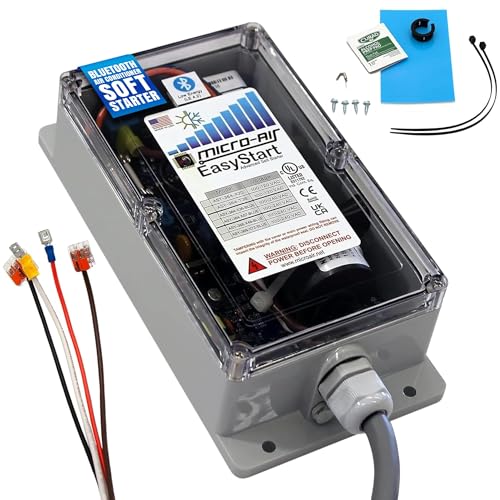
MICRO-AIR EasyStart 368 Advanced Soft Start Kit for Home Air Conditioner, RV & Commercial Use, Works with Generators, Reduces Power Surge, Efficient Start-Up - Up to 6 Tons : Automotive
View on AmazonRecommended Products
The Grid: The Fraying Wires Between Americans and Our Energy Future: Bakke, Gretchen
Cultural anthropologist Gretchen Bakke <strong>unveils the many facets of America's energy infrastructure, its most dynamic moments and its most stable ones, and its essential role in personal an
Emporia Vue 3 Home Energy Monitor - Smart Home Automation Module and Real Time Electricity Usage Monitor, Power Consumption Meter, Solar and Net Metering for UL Certified Safe Energy Monitoring - Amazon.com
Eyedro Home Energy Monitor – Real-Time Electricity Usage Monitor with Solar Net Metering – Whole House Power Consumption Monitor – WiFi/Ethernet Smart Energy Meter with Reports & History, 2 Sensor
MICRO-AIR EasyStart 368 Advanced Soft Start Kit for Home Air Conditioner, RV & Commercial Use, Works with Generators, Reduces Power Surge, Efficient Start-Up - Up to 6 Tons : Automotive
QUIET AND SMART PROTECTION: This soft starter for air conditioner <strong>reduces startup noise and prevents light flickering</strong>, creating a quieter, more comfortable environment. The intelligen