
Tesla Powerwall in Washington: Cost, Availability & Is It Worth It?
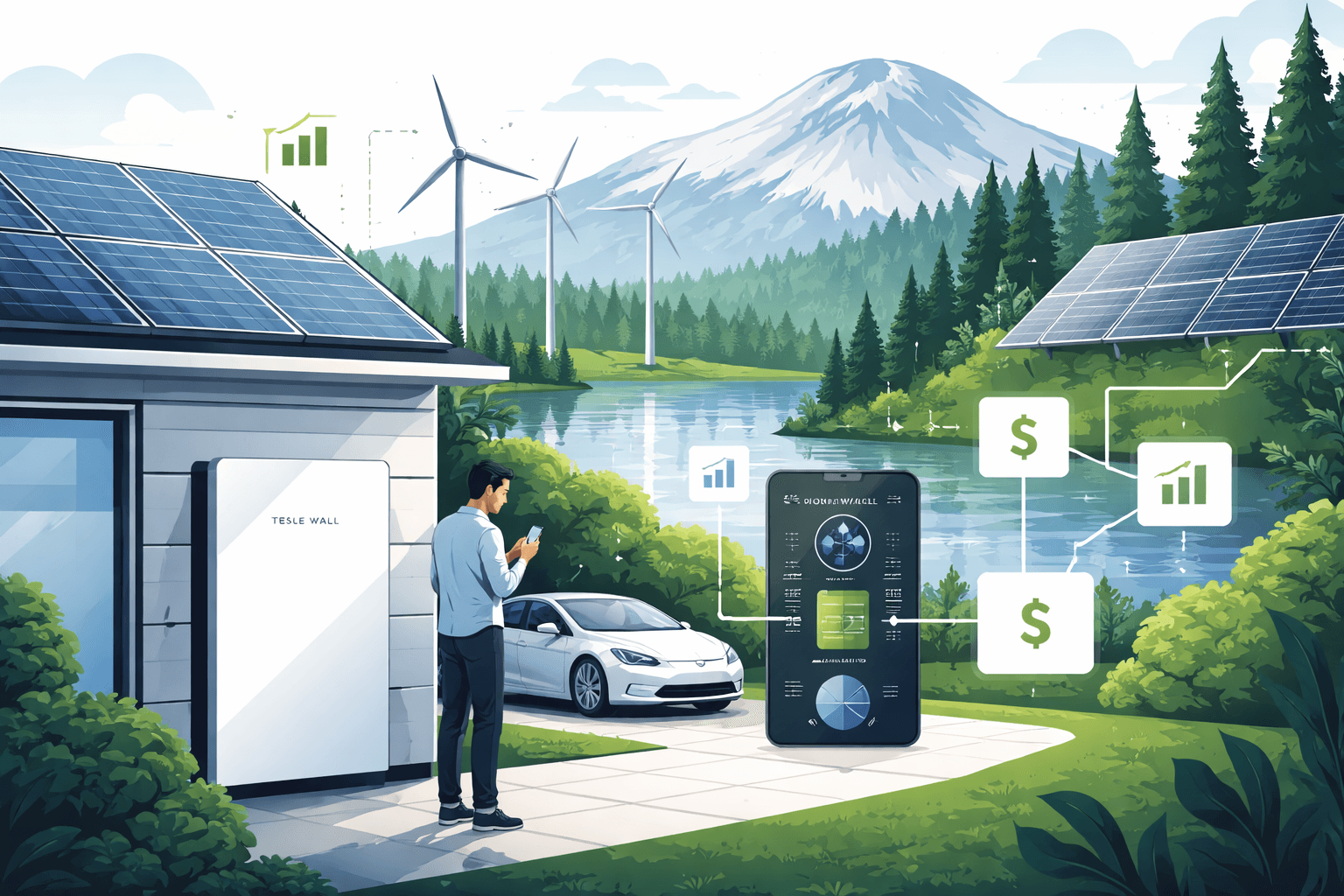
Washington households are asking about the Tesla Powerwall in Washington for a simple reason: grid reliability and storms are top of mind, while solar adoption keeps climbing. Washington’s average residential electricity price sits around 11–13 cents/kWh (U.S. Energy Information Administration), among the lowest in the country—great for bills, but it changes the battery value proposition. For most homes in the state, a Powerwall’s primary value is resilient backup and optimizing solar self-consumption rather than big time-of-use arbitrage. Here’s a data-driven guide to costs, incentives, how it pairs with solar, and whether it pencils out.
Tesla Powerwall overview: specs, capacity, and how it works
Tesla’s Powerwall is a lithium-ion home battery designed to store solar energy or grid electricity and power your home during outages or when rates are higher. As of 2024–2025, most new installations in the U.S. are the Powerwall 3. Key specifications (Tesla datasheet):

The Homeowner's Guide to Renewable Energy - Revised & Updated Edition: Achieving Energy Independence through Solar, Wind, Biomass and Hydropower: Chiras, Dan
After beginning with the all important discussion about energy efficiency and conservation, <strong>Dan guides you through everything you need to choose which renewable options to integrate into your
Check Price on Amazon- Usable energy capacity: 13.5 kWh per unit
- Power output: up to 11.5 kW continuous (Powerwall 3, on-grid), enabling whole-home or large-load backup when appropriately sized
- Inverter: Powerwall 3 integrates a solar inverter, which can lower balance-of-system cost for new solar-plus-storage projects
- Scalability: stack multiple units (e.g., 2–4+ Powerwalls) for more capacity and power
- Transfer and backup: millisecond-level switchover; islanding for solar production during outages when installed with compatible hardware
- Warranty: 10 years with a minimum 70% capacity retention under typical residential use
- Operating environment: roughly −4°F to 122°F; outdoor-rated enclosure, but indoor garage/basement spaces reduce thermal stress in Washington’s climate
How it works in practice:
- With solar: daytime PV charges the Powerwall after meeting household loads; the battery discharges in the evening or during outages. If your utility offers retail-rate net metering, you can choose whether to store or export based on economics and preferences.
- Without solar: the Powerwall can charge from the grid, then provide backup power or shift consumption from peak to off-peak if you’re on a time-of-use (TOU) plan.
Powerwall pricing in Washington including installation costs
Installed cost depends on roof/electrical complexity, permit fees, and whether you’re pairing with new solar. Based on installer quotes we track and Tesla’s listed pricing in 2024–2025:
- Hardware (Powerwall 3): about $8,700 per unit (Tesla MSRP)
- Balance-of-system and supporting hardware: $1,500–$2,500
- Installation labor and electrical upgrades: $2,000–$5,000 (service panel upgrades and long conduit runs push costs higher)
- Permits/inspection: $200–$800 depending on jurisdiction
Typical total in Washington:
- Single Powerwall (retrofit): $12,500–$16,000 before incentives
- Two Powerwalls: $21,000–$28,000 before incentives (some economies of scale on labor)
Federal incentive:
- The 30% Residential Clean Energy Credit (Internal Revenue Code §25D) applies to standalone batteries ≥3 kWh as well as solar-plus-storage, reducing net cost by roughly 30% if you have sufficient tax liability. On a $14,000 install, that’s about $4,200 off.
After the 30% credit, many Washington homeowners see net costs around $8,750–$11,200 for a single Powerwall, and $14,700–$19,600 for two.
Washington battery storage incentives: state rebates, SGIP, utility programs
State-level incentives: Washington does not offer a statewide battery rebate akin to California’s Self-Generation Incentive Program (SGIP). SGIP is California-only. If you’re comparing policies across state lines, see our guide to incentives in California: Tesla Powerwall in California: Cost, Availability & Is It Worth It?.
Sales tax treatment: Washington has a sales and use tax exemption for certain renewable energy “machinery and equipment,” including residential solar. Whether a battery qualifies can depend on how it’s installed and charged (e.g., batteries installed concurrently with solar and primarily charged by PV may be treated differently than standalone batteries). Consult your installer and the Washington Department of Revenue for current guidance.
Utility pilot programs: Several Washington utilities have tested residential battery pilots or virtual power plant enrollments that offer bill credits or one-time incentives in exchange for allowing limited utility control or event-based dispatch. Availability is limited and changes year to year. Check with your utility—Puget Sound Energy (PSE), Seattle City Light, Snohomish PUD, Tacoma Power, and Avista—for the latest pilot offerings and interconnection rules.
Net metering: Washington’s net metering law (RCW 80.60) requires utilities to offer net metering up to system sizes of 100 kW. A 2019 update raised the overall utility cap to 4% of 1996 peak demand. Annual true-up policies vary by utility. A battery can help you avoid expiring credits at the annual reset by consuming more of your own solar before export.
Federal incentive: The 30% Residential Clean Energy Credit remains the single biggest incentive for most Washington installations.
If you’re just over the border, Oregon currently offers a state-level Solar + Storage Rebate Program that can materially improve the math. Compare regional policies here: Tesla Powerwall in Oregon: Cost, Availability & Is It Worth It?.
How the Powerwall pairs with solar in Washington: backup vs. self-consumption
Solar potential: Contrary to its rainy reputation, western Washington still produces solid annual solar output. NREL’s PVWatts model suggests many Seattle-area homes see roughly 950–1,200 kWh per kW of DC solar annually depending on tilt, shade, and microclimate. That means a 7 kW array could generate about 6,700–8,400 kWh per year—often half or more of a typical home’s annual use.
What the battery changes:
- Backup-first configuration: For many households, especially those on flat electric rates, the Powerwall is configured to prioritize backup reserve (e.g., hold 20–50% in reserve for outages) while still soaking up excess midday solar. When storms hit, it keeps the lights, internet, refrigerator, and selected critical loads running.
- Self-consumption: If your utility’s net metering credits expire annually or you’d like to minimize exports, the battery lets you store midday solar and use it in the evening. In shoulder months with modest loads, this can push your self-consumption rate above 70–90% on sunny days.
- Whole-home vs. critical loads: A single Powerwall (13.5 kWh, up to 11.5 kW) can back up essentials and many heat pump systems, but sustained whole-home backup—especially with electric resistance heating, large well pumps, or EV charging—often benefits from two units. Your installer can model expected outage runtime by season.
Example day in western Washington (spring, 6 kW PV + 1 Powerwall):
- Daytime: PV meets 2–3 kW of home load and charges the battery at 1–2 kW
- Evening: battery discharges 6–10 kWh to cover cooking, lighting, and entertainment loads
- Overnight: battery holds a 30% reserve for morning and potential outages
Washington utility rate structures and how Powerwall saves with time-of-use
Flat rates are common: Many Washington utilities use simple cents-per-kWh rates without residential demand charges. With flat pricing around 11–13 cents/kWh, arbitrage savings from daily charge/discharge are limited compared to states with large TOU spreads.
TOU pilots and optional plans: Some utilities have piloted or introduced optional TOU rates with modest off-peak vs. peak differentials. If your peak/off-peak spread is 5 cents/kWh and you shift 10 kWh per day with a Powerwall, the gross arbitrage is about $0.50/day (~$182/year). Bigger spreads increase savings, but Washington’s are typically modest.
Demand charges: Rare for residential accounts in Washington, more common for small commercial. Batteries can shave peaks for commercial customers on demand tariffs, but this guide focuses on homes.
Net metering interactions: Where retail-rate net metering is available with year-round credit rollover, exporting excess solar is often comparable in value to storing it—unless credits expire at the annual true-up or you have frequent outages. Batteries shine when credits would otherwise be forfeited or when TOU spreads are meaningful.
Always verify your specific utility’s current tariffs. Rate design in the region is evolving as utilities test demand response, dynamic pricing, and electrification rates for heat pumps and EVs.
Powerwall availability and certified installers in Washington
Availability: Tesla sells and installs Powerwalls directly in much of Washington, and there are multiple Tesla Certified Installers across the state (Seattle-Tacoma, Spokane, Bellingham, Yakima, and the Tri-Cities). Lead times vary from 4–10 weeks depending on workload, permitting, and electrical upgrades.
What to look for in an installer:
- Experience with the 2020–2023 National Electrical Code and Washington State amendments (energy storage sections) and local fire code requirements (e.g., UL 9540A listing, setback distances from egress)
- Clear load analysis: modeling which circuits to back up, expected outage runtimes by season, and any service panel upgrades required (often to 200A for whole-home backup)
- Interconnection support: net metering paperwork, single-line diagrams, and as-builts for your utility and AHJ
- Monitoring and commissioning: confirm app configuration (backup reserve levels, TOU profiles) and post-install support
Pro tip: If you are in neighboring states, compare market availability and incentives regionally to decide where to purchase or if you’re moving. Our Idaho and Oregon guides can help you benchmark pricing against Washington. For example, see Tesla Powerwall in Idaho: Cost, Availability & Is It Worth It?.
Alternatives to Powerwall available in Washington: Enphase, LG, Generac
Washington installers commonly offer several strong alternatives. Pricing is often in the same ballpark once you account for inverter and labor.
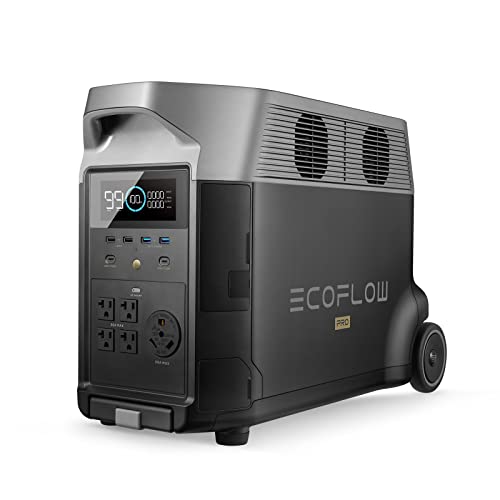
EF ECOFLOW Portable Power Station 3600Wh DELTA Pro, 120V AC Outlets x 5, 3600W, 2.7H Fast Charge, Lifepo4 Power Station, Solar Generator for Home Use, Power Outage, Camping, RV, Emergencies : Patio, Lawn & Garden
<strong>Fully recharge the lifepo4 battery in 1.8 hrs with 240V outlets(3000W), 2.7 hrs with 1800W wall outlets or solar charged in 2.8 hours with 4*400W solar panels</strong> thanks to the industry-l
Check Price on AmazonEnphase IQ Battery 5P/10/3T
- Modular lithium-iron-phosphate (LFP) chemistry, excellent for cycle life and thermal stability
- IQ Battery 5P: 5 kWh usable, up to 3.84 kW continuous, stackable; pairs seamlessly with Enphase microinverters and supports whole-home or partial backup
- Pros: tight integration with Enphase solar; granular monitoring; serviceable modules
- Consider if: you already have or plan Enphase microinverters; you want scalable LFP chemistry
- Based on these efficiency and integration benefits, the Enphase IQ Battery 5P represents strong value for microinverter-based residential systems.
LG Energy Solution RESU Prime (10H/16H)
- 9.6–16 kWh usable; ~5–7 kW power depending on inverter pairing
- Pros: proven LG cell manufacturing; compact footprint
- Consider if: you want larger single-enclosure capacity with third-party hybrid inverters like SolarEdge
- For homes needing 15–20 kWh in a single unit, the LG RESU Prime 16H is a competitive option.
Generac PWRcell
- Modular packs (9–18 kWh) with hybrid inverter; 3–6 kWh modules let you right-size
- Pros: strong backup performance, whole-home configurations with smart load management
- Consider if: you want deep integration with an automatic transfer switch and optional generator
- Pairing a battery with a smart load center like the SPAN Smart Panel can extend runtime by shedding noncritical loads automatically during outages.
What about portable power stations? For condos or renters without solar or panel access, high-capacity LFP portable stations (e.g., 2–4 kWh) can keep fridges, routers, and lights running during short outages and recharge from a standard outlet. They’re not a substitute for a wired home battery but can be a practical resilience add-on.
By the Numbers: Tesla Powerwall in Washington
- 13.5 kWh: usable storage per Powerwall unit (Tesla)
- Up to 11.5 kW: continuous output for Powerwall 3 (Tesla)
- 10 years: warranty to at least 70% capacity (Tesla)
- $12,500–$16,000: typical installed cost for one unit in Washington before incentives; 30% federal credit available
- 11–13 cents/kWh: typical residential electricity price in Washington (EIA), among the lowest in the U.S.
- ~950–1,200 kWh/kW-year: typical annual PV output range in Seattle metro (NREL PVWatts), site dependent
- 2–4+ units: common sizing for whole-home backup with heat pumps or well pumps
Practical implications for Washington homeowners
- Best use case: resilience. If you experience multi-hour outages from windstorms or live in rural areas with longer restoration times, the Powerwall’s backup value is tangible.
- Solar-plus-storage vs. solar-only: Because retail rates are low, many homes prioritize a right-sized solar array first. Add a Powerwall if you need backup, have annual net metering credits that expire, or join a utility pilot offering compensation.
- Electrification synergy: If you’ve added a cold-climate heat pump, induction range, or EV, a battery plus a smart load panel helps ride through outages. Consider whole-home energy monitoring to optimize.
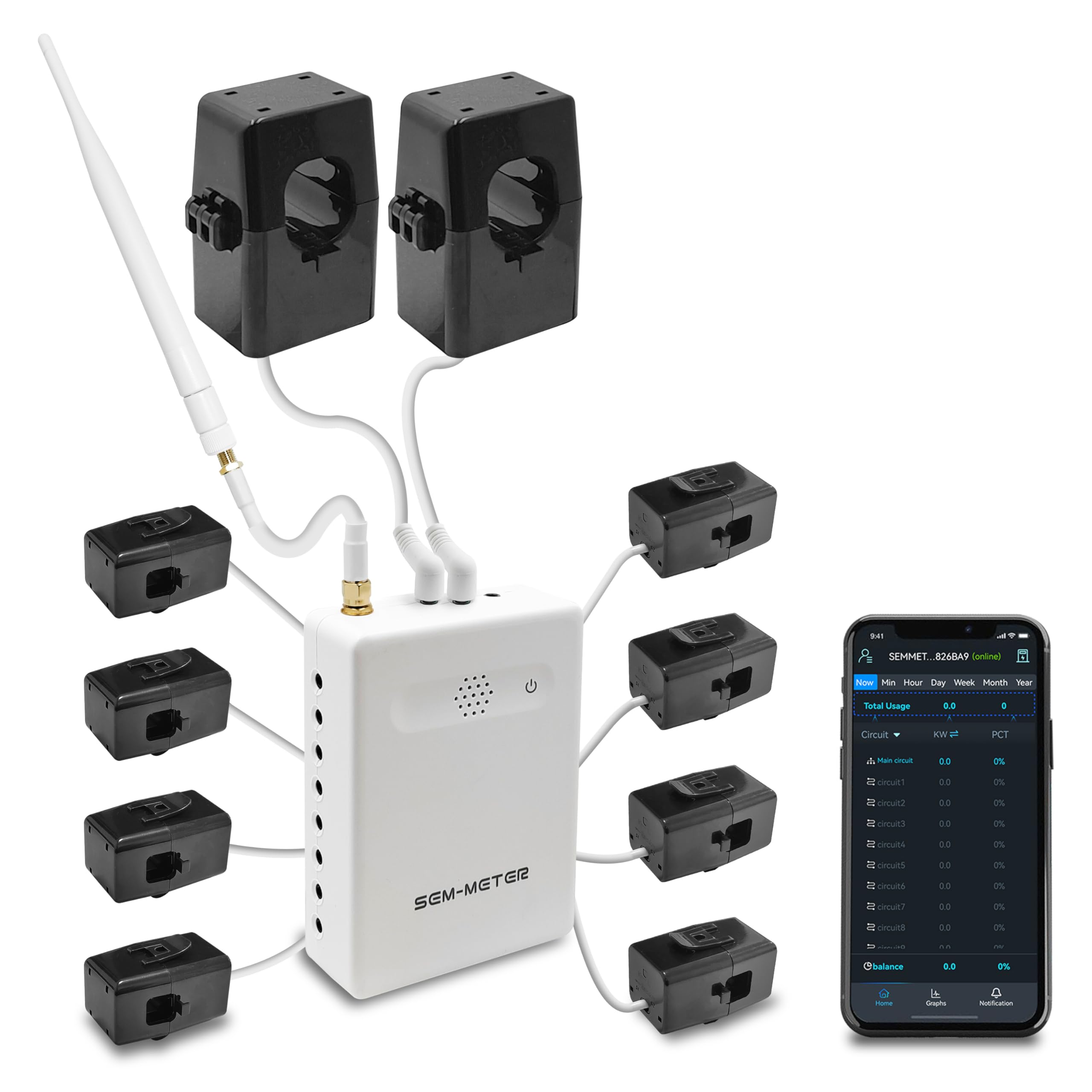
Smart Home Energy Monitor with 8 50A Circuit Level Sensors | Vue - Real Time Electricity Monitor/Meter | Solar/Net Metering - Amazon.com
View on AmazonFAQ: common questions about Tesla Powerwall in Washington
Q: How many Powerwalls do I need? A: Start with your critical loads and outage expectations. A single unit (13.5 kWh, up to 11.5 kW) typically supports lights, refrigeration, networking, gas furnace blower, and small appliances for 12–24 hours depending on use. For heat pumps, well pumps, or multi-day resilience, two units provide both higher surge power and deeper runtime.
Q: Will a Powerwall work without solar? A: Yes. It can charge from the grid and provide backup or TOU shifting. If you plan to add solar later, Powerwall 3’s integrated inverter can lower incremental cost for a future PV install.
Q: Can it back up my whole home? A: Often, with appropriate sizing and a smart load center. Whole-home backup depends on peak loads. Two or more Powerwalls are common for homes with central air-source heat pumps, electric ranges, or EV charging. Load management (e.g., shedding dryers or EV charging during an outage) dramatically improves runtime.
Q: How does it interact with Washington’s net metering? A: Batteries don’t earn extra credits by themselves. If your utility offers retail-rate net metering with annual true-up, you’ll choose whether to export solar or store it. Batteries help avoid expiring credits and keep your solar producing during outages (islanding) when paired properly.
Q: What’s the maintenance? A: Minimal. Keep the unit clear of debris and ensure firmware stays updated via the Tesla app. Avoid extreme heat exposure and consult your installer about optimal backup reserve settings for winter storms.
Q: What about permitting and fire code? A: Washington AHJs generally follow recent National Electrical Code and International Fire Code provisions for residential energy storage. Many require indoor installations to be in garages or utility spaces with setbacks from egress doors and living areas. Your installer will design to UL 9540/9540A compliance and local amendments.
Q: Is the Powerwall eligible for Washington sales tax exemptions? A: Solar equipment often is; batteries can be more nuanced. When installed with solar and primarily charged by PV, some jurisdictions treat the battery as integral to the system. Always have your installer confirm current Department of Revenue guidance in writing.
Q: What’s the typical payback? A: In Washington, most batteries don’t “pay back” on bill savings alone due to low rates and modest TOU spreads. The value is largely resilience plus any utility pilot compensation. If you place a high value on avoiding food spoilage, frozen pipes, or lost work time during outages—and you can use the 30% federal credit—a Powerwall can be worth it even without a short financial payback.
Is a Tesla Powerwall in Washington worth it?
- Yes, for resilience-first households: If you face recurring outages or run critical home office/medical equipment, a Powerwall provides silent, automatic backup without fuel logistics. Pairing with solar keeps you operating through prolonged outages as long as there’s daylight.
- Maybe, for TOU arbitrage: If your utility offers a meaningful TOU spread or a battery pilot, a Powerwall can add steady savings—but in Washington the spread is often small compared to California and the Southwest.
- Consider alternatives based on your solar equipment: Enphase and SolarEdge ecosystems integrate smoothly with their respective batteries and can be price-competitive once you factor inverter needs. In Enphase-centric homes, the Enphase IQ Battery 5P is a strong contender; for larger single-unit capacity, the LG RESU Prime 16H performs well. Adding a smart panel like SPAN Smart Panel can reduce the number of batteries needed by automatically shedding heavy loads.
Where it’s heading: Residential storage deployments continue to climb in the U.S. as costs inch down, supply chains stabilize, and utilities seek flexible demand. In Washington, expect gradual expansion of TOU options, more demand response pilots, and tighter integration between batteries, EVs, and heat pumps. For now, Washington homeowners should evaluate storage primarily as resilience infrastructure—with solar optimization and possible pilot revenues as secondary benefits.
Recommended Products
The Homeowner's Guide to Renewable Energy - Revised & Updated Edition: Achieving Energy Independence through Solar, Wind, Biomass and Hydropower: Chiras, Dan
After beginning with the all important discussion about energy efficiency and conservation, <strong>Dan guides you through everything you need to choose which renewable options to integrate into your
EF ECOFLOW Portable Power Station 3600Wh DELTA Pro, 120V AC Outlets x 5, 3600W, 2.7H Fast Charge, Lifepo4 Power Station, Solar Generator for Home Use, Power Outage, Camping, RV, Emergencies : Patio, Lawn & Garden
<strong>Fully recharge the lifepo4 battery in 1.8 hrs with 240V outlets(3000W), 2.7 hrs with 1800W wall outlets or solar charged in 2.8 hours with 4*400W solar panels</strong> thanks to the industry-l
Smart Home Energy Monitor with 8 50A Circuit Level Sensors | Vue - Real Time Electricity Monitor/Meter | Solar/Net Metering - Amazon.com
Lightweight commercial 3-phase option available as a separate bundle. APPLICATION MONITORING WITHOUT GUISEWORK <strong>Up to sixteen (16) 50A sensors to accurately monitor your air conditioner, oven,