
Tesla Solar in Florida: Panels, Roof & Pricing Guide (2026)
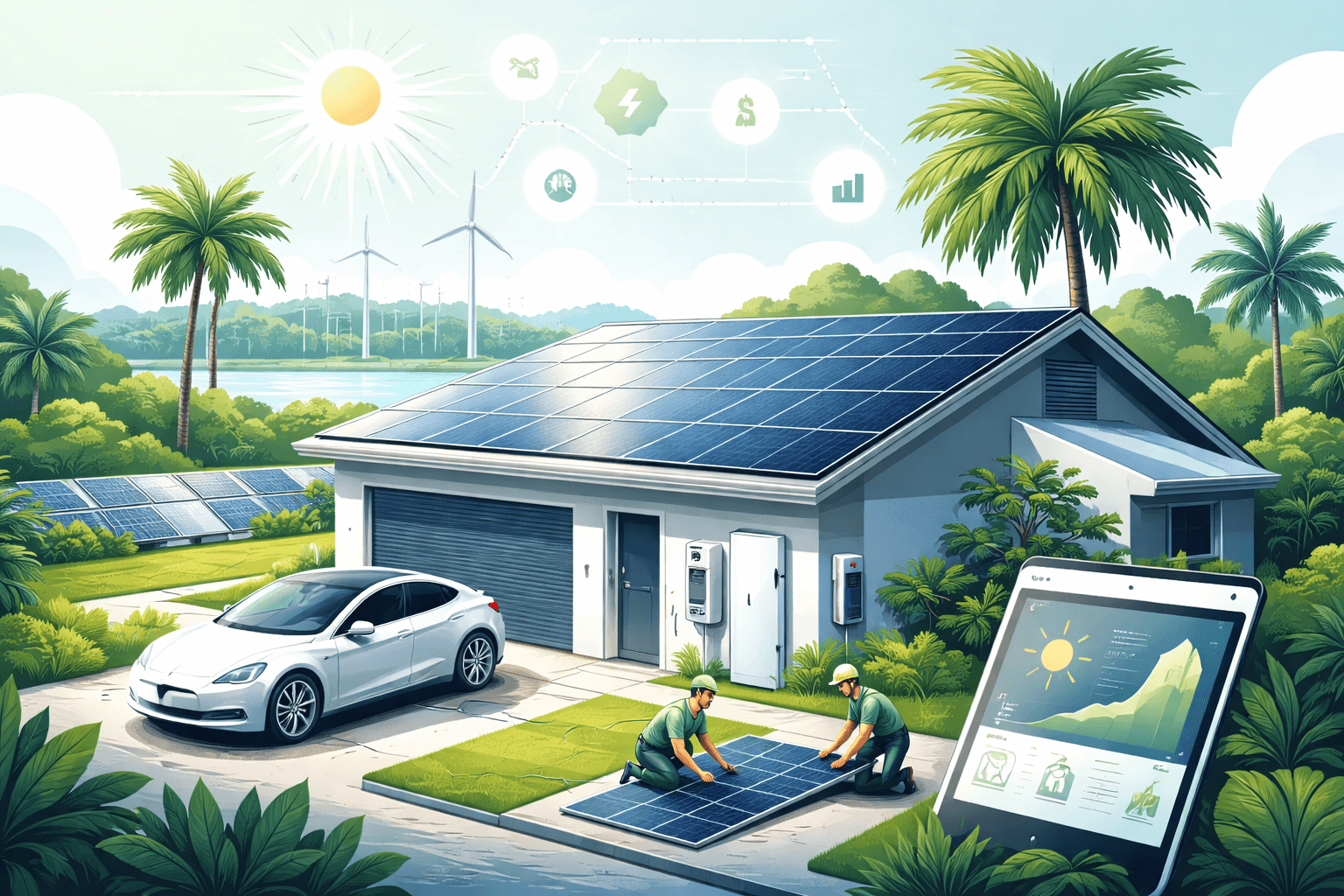
Florida added more than 3 GW of new solar in 2024, ranking among the top three U.S. states for cumulative capacity, according to SEIA. For homeowners, the mix of high sunshine, rising electricity prices (Florida residential rates averaged ~15¢/kWh in 2024 per EIA), and storm-driven outages makes Tesla Solar in Florida a compelling option—especially when paired with a home battery for backup.
This 2026 guide breaks down Tesla’s solar panels and Solar Roof, current pricing in Florida, how installation works, the incentives that apply, and how Tesla compares to local installers.
By the way, for a deeper look at statewide costs and incentives across all brands, see our Florida market explainer: Solar in Florida: Costs, Incentives & Top Installers (2026).
By the numbers: Florida solar potential and payback
- Solar resource: Most Florida rooftops see 1,500–1,700 kWh per kWdc of annual production (NREL PVWatts), roughly a capacity factor of 17–20% for residential systems.
- Bills: The average Florida home uses ~1,000–1,200 kWh/month (EIA), skewed higher in summer for air conditioning.
- Savings: At 15¢/kWh, every 1 kWdc of rooftop PV avoids ~$225–$255/year in energy costs before net metering effects; a 7 kW system often offsets 70–100% of typical homes depending on load shape and roof orientation.
- Incentives: The 30% federal Investment Tax Credit (ITC) applies through 2032 for solar and batteries (if charged by solar). Florida adds a sales tax exemption for solar equipment and a 100% property tax exclusion on the added home value (DSIRE).
Solar Electricity Handbook - 2023 Edition: A simple, practical guide to solar energy – designing and installing solar photovoltaic systems: Boxwell, Michael
Solar Electricity Handbook - 2023 Edition: <strong>A simple, practical guide to solar energy – designing and installing solar photovoltaic systems</strong> [Boxwell, Michael] on Amazon.com. *FREE* shi
Check Price on AmazonTesla Solar products available in Florida: panels, Solar Roof, and Powerwall bundles
Tesla sells two primary solar options in Florida:
Tesla solar panels (rack-mounted on your existing roof)
- Typical module wattage today is in the 400–440 W range with nameplate efficiencies ≈20–22%. Tesla pairs modules with its own Tesla Solar Inverter and integrated monitoring in the Tesla app. Systems are usually sized 4–15 kWdc for residences.
- Aesthetics focus on low-profile black modules, concealed edge trim, and tidy conduit runs where feasible.
Tesla Solar Roof (building-integrated PV shingles)
- Replaces your roof with a mix of active solar tiles and non-solar tiles. Power output and composition vary by design; the system is custom-engineered to roof geometry and energy needs.
- Best suited when you already need a roof replacement or want a fully integrated look.
Powerwall battery bundles
- Most Florida buyers consider at least one Powerwall for storm resilience. Powerwall offers 13.5 kWh usable capacity and high surge capability suitable for air-conditioners and well pumps when properly sized. Powerwall 3 integrates a solar inverter, potentially lowering balance-of-system costs.
- The Tesla app manages solar, storage, and grid flows, enabling modes like Self-Powered, Time-Based Control (for time-of-use rates), and Storm Watch.
Florida-specific considerations:
- High-wind zones and the Florida Building Code drive mounting hardware choices, attachment spacing, and inspections. Tesla’s designs and permits reflect local wind uplift requirements; final engineering depends on jurisdiction and roof structure.
- Tile roofs are common in parts of Florida. Tesla panels can be mounted on tile using flashing or replacement mounts; Solar Roof is an alternative when a full re-roof is desired.
- For outages, solar alone will shut down for safety. Solar plus Powerwall can island your home so PV keeps producing during daylight while the battery buffers loads.
For a dedicated look at costs and sizing for backup, see: Tesla Powerwall in Florida: Cost, Availability & Is It Worth It?
Tesla Solar pricing in Florida: panels vs. Solar Roof cost comparison
Pricing varies with roof complexity, electrical upgrades, permitting, and utility requirements. Still, several benchmarks help set expectations.
Panels (roof-mounted):
- Price range (before incentives): roughly $2.30–$2.85 per watt (W) in much of Florida for straightforward roofs, according to 2024–2025 marketplace data and installer quotes. Complex roofs or long conductor runs trend higher.
- Example budgets:
- 7 kW system: $16,100–$19,950 before incentives; about $11,270–$13,965 after the 30% ITC (excludes any utility fees or main panel upgrades).
- 10 kW system: $23,000–$28,500 before incentives; about $16,100–$19,950 after ITC.
Powerwall adders:
- Per-unit installed cost in Florida typically lands around $9,000–$12,000 depending on site and whether Powerwall 3 replaces a stand-alone solar inverter. Multi-battery installs have some economies of scale.
- Example: 10 kW solar + one Powerwall could price in the $32,000–$38,000 range before ITC; net ~$22,400–$26,600 after the 30% credit (batteries qualify if charged by solar).
Solar Roof:
- The Solar Roof’s cost includes an entire re-roof, so it’s best compared against “new roof + panels.” Pricing depends on roof area, pitch, and proportion of active tiles.
- Broad ranges seen in Florida:
- Roofing component: $20–$35 per square foot for the non-solar portion can be a starting point; complex geometry increases cost.
- Solar component: Often equates to $5–$8/W of active capacity when mapped back to PV output.
- Example scenario (for illustration, actual quotes vary): A 2,000 sq ft roof with a 9 kW Solar Roof could run $55,000–$80,000 before ITC; $38,500–$56,000 after ITC. If your existing shingles are due for replacement, compare that to “architectural shingles re-roof + 9 kW panels,” which might total $35,000–$55,000 after ITC depending on roofing bid.
What drives costs up or down in Florida:
- Roof type and complexity (hip roofs, dormers, tile vs. shingle)
- Main service panel upgrades and interconnection requirements
- Permit fees and wind load engineering
- Distance to meter and attic accessibility for wiring
How to order Tesla Solar in Florida: timeline, site assessment, and installation
Tesla uses a mostly digital process with local crews or certified partners handling on-the-ground work.
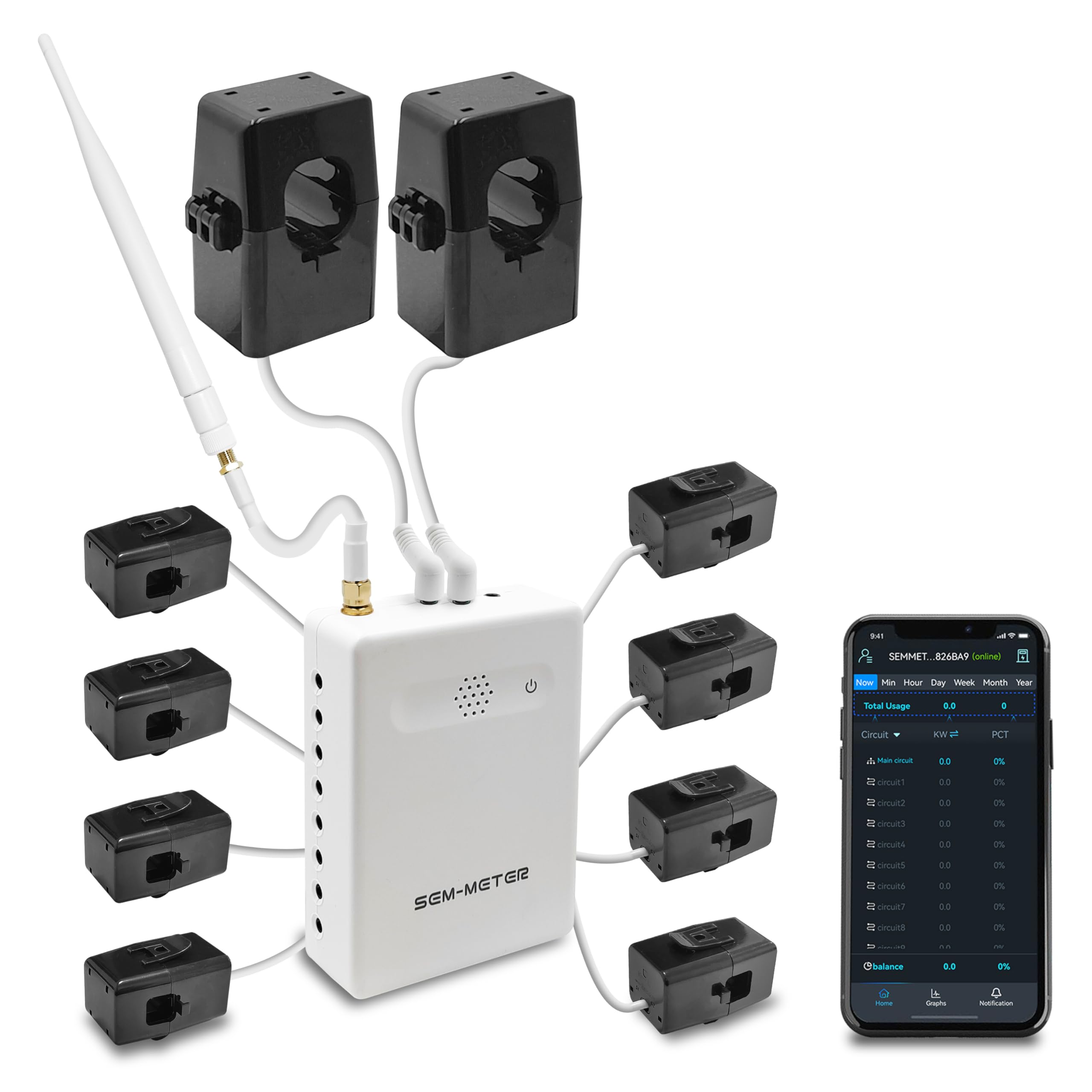
Smart Home Energy Monitor with 8 50A Circuit Level Sensors | Vue - Real Time Electricity Monitor/Meter | Solar/Net Metering - Amazon.com
View on AmazonStep-by-step:
- Online design and deposit
- Enter your address and utility bill data to get an initial size and energy estimate. A small deposit reserves a site assessment; amounts and refundability can change, so check Tesla’s order page.
- Remote/onsite assessment and final design
- Tesla reviews roof geometry (satellite + drone/photos), shading, electrical layout, and structural considerations. You’ll receive a proposed system size, layout, and all-in price. For Solar Roof, expect more detailed structural and roof analyses.
- Permitting and utility interconnection
- Tesla prepares stamped plans meeting Florida Building Code and wind requirements. Timelines vary by jurisdiction. Investor-owned utilities (FPL, Duke Energy Florida, TECO) process interconnection applications after permit approval; municipal/co-op utilities have their own timelines.
- Installation day(s)
- Panel installs often complete in 1–2 days. Solar Roof takes longer—several days to weeks—because it is a full re-roof plus electrical.
- Inspections and Permission to Operate (PTO)
- City/county inspections precede utility meter swap and PTO. In many Florida markets, PTO occurs 2–6 weeks after installation, but storm seasons and workload can extend this.
Typical total duration
- Panels: 4–10 weeks from contract to PTO in straightforward cases
- Solar Roof: 8–16+ weeks depending on complexity and crew scheduling
Pro tip: Use an energy monitor during the pre-install period to refine system sizing and post-install savings. Based on ease of use and price, the Emporia Vue 2 is a strong value for tracking whole-home and circuit-level usage before you lock in final system size.
Florida solar incentives that apply to Tesla installations
Florida couples generous federal benefits with state-level tax exemptions and net metering.
Federal Investment Tax Credit (ITC) — 30%
- Applies to solar, storage, and necessary electrical upgrades. Batteries must be charged by solar to claim the credit. Valid through 2032 under the Inflation Reduction Act (IRS guidance).
Florida sales tax exemption — 100%
- Solar energy systems and certain components are exempt from Florida’s 6% state sales tax (see DSIRE Florida for eligible technologies and components).
Florida property tax exclusion — 100% of added value
- The added value from a solar system is excluded from property tax assessments for residential properties.
Net metering (investor-owned utilities and many munis/co-ops)
- Florida’s net metering rules allow excess solar to offset usage at the retail rate each month; annual true-ups typically credit any net surplus at the utility’s avoided-cost rate. Rules are set by the Florida Public Service Commission; details vary by utility.
Financing
- Traditional solar loans are widely available. PACE financing is active in many Florida counties for qualifying improvements, including solar and batteries. Review terms carefully—PACE places a lien on the property.
To see how these stack with non-Tesla options, compare statewide offerings here: Solar in Florida: Costs, Incentives & Top Installers (2026)
Tesla Solar reviews from Florida customers: what owners actually report
While individual experiences vary, feedback patterns in Florida tend to align around a few themes:
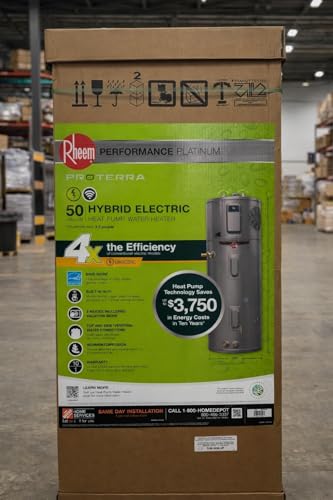
Rheem 50 Gal. Smart High Efficiency Hybrid Heat Pump Water Heater with 10-Year Warranty : Everything Else
View on AmazonWhat owners like
- Production vs. estimates: Florida’s high irradiance often means systems meet or outperform annual kWh projections from PVWatts when arrays face south/southwest with minimal shade.
- App and ecosystem: The Tesla app provides real-time solar, battery, and grid data in one place. For Powerwall users, automated Storm Watch and seamless backup add tangible value during hurricane season.
- Clean aesthetics and low-profile racking: The black panel look and tidy conduit runs matter in HOA communities.
- Competitive pricing: On straightforward roofs, quotes frequently fall on the lower end of the local marketplace range.
Pain points to watch
- Scheduling and communication: Some homeowners report delays aligning crews, inspectors, and utilities—especially around peak storm season. Response times can lag vs. smaller local firms with dedicated PMs.
- Change orders: Main panel upgrades, attic access constraints, or tile roof complexities can add cost after initial estimates. A thorough pre-site evaluation helps reduce surprises.
- Solar Roof complexity: The most satisfied Solar Roof customers are those already planning a re-roof and prioritizing integrated aesthetics over lowest $/W.
Performance expectations
- A 10 kWdc system in central/south Florida commonly generates 15,000–17,000 kWh/year (NREL PVWatts), offsetting a large share of a typical home’s load. Systems with Powerwall can keep solar producing during daytime outages, recharging the battery while the grid is down.
Load-shifting tip: Consider pairing solar with a heat pump water heater. NREL studies show heat pump water heaters can cut water heating energy use by 50–70%, and scheduling them to run mid-day soaks up solar. The Rheem ProTerra 50-gal is a popular, efficient model for Florida homes.
Tesla vs. local Florida installers: pros, cons, and price comparison
Choosing between Tesla and a local EPC (engineer-procure-construct) installer comes down to priorities.
Where Tesla shines
- Price on simple roofs: Tesla’s standardized approach and supply chain often yield lower $/W for straightforward shingle roofs.
- Ecosystem integration: Tesla panels + Tesla Inverter + Powerwall in a single app with proven controls.
- Long-term brand stability: Hardware and app support from a nationally scaled provider.
Where local installers excel
- Customization: More panel brands (including premium high-efficiency modules), microinverters, ground mounts, and complex roof layouts.
- Hands-on project management: A dedicated local PM can streamline permit/inspection cycles, which is useful in jurisdictions with intricate wind uplift requirements.
- Service proximity: Faster on-site warranty service or troubleshooting.
Price ranges you’ll see in Florida (before incentives)
- Tesla panels: ~$2.30–$2.85/W for simple roofs.
- Local installers: ~$2.50–$3.25/W depending on equipment (e.g., premium modules, microinverters) and complexity. Some quotes beat Tesla on price; shop multiple bids.
If you want advanced load management for partial-home backup, a smart panel like the SPAN Smart Panel can prioritize critical circuits and stretch one Powerwall farther—an especially practical add-on for Florida’s AC-heavy homes.
Tesla Solar warranty and what it covers in Florida
Always verify final terms in your Tesla agreement, but current Tesla warranties generally include:
Panels
- 25-year performance warranty (typical guarantee that modules will produce a stated percentage—often around 80–85%—of nameplate power at year 25)
- Product/workmanship warranty commonly 10–12 years (varies by module supplier and Tesla’s terms at time of install)
Tesla Solar Inverter
- Limited warranty of 12.5 years (per Tesla’s published inverter documents)
Powerwall
- 10-year warranty with energy throughput terms and performance guarantees suited to daily cycling for solar self-consumption.
Roof penetrations/workmanship
- Workmanship and roof penetration leak coverage, commonly 10 years for panel systems; confirm in contract.
Solar Roof
- Roofing and weatherization warranty plus a power production warranty on active tiles, typically 25 years; workmanship terms apply. Solar Roof has distinct coverage from panel systems—review Tesla’s Solar Roof warranty booklet.
Monitoring and support
- The Tesla app provides lifetime monitoring access. Hardware failures covered under warranty are serviced by Tesla or certified partners; response times vary by region.
FAQ: common questions about Tesla Solar in Florida
How well does Tesla Solar handle hurricanes and high winds?
- Systems are engineered to Florida Building Code wind loads using permitted, stamped plans. Panel mounts use specified attachment spacing and hardware for uplift resistance. While no system is hurricane-proof, compliant designs significantly reduce risk. Roof condition and decking integrity are key.
Can HOA rules block my solar installation?
- Florida’s Solar Rights law (Fla. Stat. § 163.04) prohibits HOAs from banning solar. They may request reasonable placement modifications that do not materially degrade performance. Tesla provides array layout drawings for HOA approvals.
Will my solar work during a grid outage?
- Solar without a battery shuts down when the grid fails (anti-islanding safety). With Powerwall and a compatible backup configuration, your home can island and keep critical loads running. Solar will recharge the battery during daylight.
What’s the typical payback in Florida?
- With 30% ITC and retail net metering, many homeowners see simple paybacks of 7–11 years for panel systems, depending on $/W, roof orientation, and rate structure. Batteries add resilience but lengthen payback; they may still pencil out when you value outage protection.
Are tile roofs a problem?
- No, but they add complexity. Tesla uses tile hooks or replacement mounts for panels; this increases labor and sometimes cost. Solar Roof is an option if you want to re-roof for a cleaner look.
What about insurance?
- Most homeowners policies cover rooftop solar; inform your insurer after PTO. If installing Solar Roof, confirm replacement-cost coverage and any documentation needed.
How does net metering work with FPL, Duke, and TECO?
- You earn bill credits for exported power, typically at the full retail rate monthly. Annual excess may be compensated at a lower avoided-cost rate. Check your utility’s latest tariff for exact terms and system size caps.
How big a system do I need?
- Start with your last 12 months of kWh usage. In much of Florida, each 1 kWdc produces ~1,500–1,700 kWh/year. Divide your target annual offset by that figure to estimate system size, then adjust for roof orientation and shading.
What if I plan to buy an EV?
- Add 2,500–3,500 kWh/year (≈7–10 kWh/day) per 10,000–12,000 miles of driving for a typical EV. Many Florida homes go from 7 kW to 9–10 kW systems after adding an EV. A circuit-level monitor like the Emporia Vue 2 helps validate your charging load and right-size your array.
Practical next steps for Florida homeowners
- Gather 12 months of bills and roof photos. Note roof age and type.
- Get at least two bids: one from Tesla and one from a strong local installer. Request line-item pricing for panels, inverter, racking, monitoring, electrical upgrades, and battery adders.
- Ask both bidders for PVWatts-based production estimates using your exact azimuths and tilt; verify shade assumptions.
- Confirm your HOA process and your utility’s current net metering tariff and interconnection timeline.
- If outage resilience is a priority, model one vs. two Powerwalls and consider smart load management to stretch backup runtime.
Florida’s abundant sunshine, stable incentives, and growing installer ecosystem make 2026 an excellent window to go solar. Tesla’s streamlined pricing and integrated Powerwall experience are hard to beat on straightforward projects, while local installers can deliver tailored designs for complex roofs and premium equipment preferences. Either route, Florida homeowners can expect meaningful bill savings, higher energy resilience, and lower emissions for decades.
Recommended Products
Solar Electricity Handbook - 2023 Edition: A simple, practical guide to solar energy – designing and installing solar photovoltaic systems: Boxwell, Michael
Solar Electricity Handbook - 2023 Edition: <strong>A simple, practical guide to solar energy – designing and installing solar photovoltaic systems</strong> [Boxwell, Michael] on Amazon.com. *FREE* shi
Smart Home Energy Monitor with 8 50A Circuit Level Sensors | Vue - Real Time Electricity Monitor/Meter | Solar/Net Metering - Amazon.com
Lightweight commercial 3-phase option available as a separate bundle. APPLICATION MONITORING WITHOUT GUISEWORK <strong>Up to sixteen (16) 50A sensors to accurately monitor your air conditioner, oven,
Rheem 50 Gal. Smart High Efficiency Hybrid Heat Pump Water Heater with 10-Year Warranty : Everything Else
Highlights <strong>Provides an estimated energy cost savings of $375 per year compared to a 50 Gal</strong>. electric conventional water heater Pays for itself in energy cost savings thanks to an amaz