
Tesla Solar in Virginia: Panels, Roof & Pricing Guide (2026)
Virginia added more than 1.7 GW of new solar capacity in 2023–2024, driven largely by utility-scale projects, while residential systems kept climbing as equipment costs fell 10–15% from 2021 benchmarks, according to SEIA/NREL tracking. If you’re evaluating Tesla Solar in Virginia in 2026, the combination of the 30% federal tax credit, retail-rate net metering, and relatively low soft costs is making paybacks of 7–12 years increasingly common—especially when paired with a Powerwall for backup.
This guide details Tesla Solar products available in Virginia, real pricing ranges, how the order-to-activation timeline works, state incentives, homeowner reviews, and how Tesla stacks up against local installers.
What Tesla Solar products are available in Virginia?
Tesla sells three core offerings in the state: Tesla Solar Panels, the Tesla Solar Roof, and Powerwall battery storage. All can be ordered online with standardized designs and fixed-per-watt pricing via Tesla’s configurator.
Tesla Solar Panels
- All-black monocrystalline modules, typically 425–440 W each, with module efficiencies in the ~20–21% range (based on Tesla’s current datasheets). Panels mount on conventional racking and tie into a Tesla Inverter.
- Aesthetics-forward: low-profile mounting, hidden clamps, and skirt options aim for a “flush” look.
- Monitoring via the Tesla app, with per-system and per-string visibility, plus outage notifications.
Tesla Inverter
- String inverter designed to integrate with Tesla panels and Powerwall, with rapid-shutdown and arc-fault protection to meet NEC requirements. Weighted efficiencies around 97–98% are standard for modern string inverters.
- 12.5-year limited warranty (typical Tesla Inverter warranty term).
Powerwall (Powerwall 2 and Powerwall 3 in market)
- Usable capacity: ~13.5 kWh per unit. Powerwall 3 integrates a solar inverter and is designed for higher-power whole-home backup with simplified installation. Powerwall 2 pairs with the Tesla Inverter.
- 10-year limited warranty with capacity-retention and energy-throughput terms.
- Stronger value where grid reliability is an issue, or where homeowners want to self-consume more solar.
Tesla Solar Roof
- Integrated glass solar tiles replace conventional shingles, producing electricity while acting as the primary weatherproof roof surface.
- Best suited for new roofs or major roof replacements, as the system cost is the roof plus generation equipment.
Virginia homeowners typically choose Tesla Solar Panels + Powerwall for the best $/W value. Solar Roof is viable when a roof replacement is already in scope and design/aesthetics are top priorities.
By the numbers: Virginia solar performance and economics
- Solar resource: 4.5–5.0 kWh/m²/day average in much of Virginia (NREL). A 1 kW DC array in Richmond typically produces about 1,300–1,450 kWh/year (PVWatts).
- Right-sized residential system: 6–10 kW DC for many homes. An 8 kW array may generate ~10,500–11,500 kWh/year depending on tilt, azimuth, and shading.
- Retail electricity price: 13–15¢/kWh typical residential range in 2025 per EIA state data, varying by utility and rider charges.
- Potential annual bill reduction: $1,100–$1,700 for a ~7–9 kW system that offsets most usage at current rates.
- Federal tax credit (ITC): 30% under the Inflation Reduction Act through 2032, for solar and batteries that meet eligibility rules (U.S. Treasury/IRS guidance).
Solar Electricity Handbook - 2023 Edition: A simple, practical guide to solar energy – designing and installing solar photovoltaic systems: Boxwell, Michael
Solar Electricity Handbook - 2023 Edition: <strong>A simple, practical guide to solar energy – designing and installing solar photovoltaic systems</strong> [Boxwell, Michael] on Amazon.com. *FREE* shi
Check Price on AmazonTesla Solar pricing in Virginia (2026): panels vs. Solar Roof
Installed costs vary by roof complexity, main panel upgrades, and distance to interconnection, but recent Virginia quotes show the following working ranges:
Tesla Solar Panels
- Typical all-in price: $2.25–$2.95 per watt (before incentives). For a 7 kW system, that’s about $15,750–$20,650 pre-ITC; net ~$11,025–$14,455 after the 30% tax credit.
- NREL’s residential benchmark for 2024 placed typical U.S. costs in the high-$2s/W, and Virginia soft costs tend to be close to or slightly under the national median due to mature contractor networks.
Tesla Solar Roof
- Project-dependent. For an average 2,000–2,500 sq ft home with a straightforward roof and ~8–10 kW of solar tile capacity, total project costs commonly land in the $55,000–$90,000 range before incentives. Complex roofs or larger homes can push totals above $100,000.
- The ITC applies to the solar-generating components. Non-solar roof areas are not eligible.
Powerwall (add-on)
- Equipment and installation for one Powerwall typically prices in the $10,000–$13,500 range before the ITC; net ~$7,000–$9,450 after the 30% credit if installed with or after solar per current IRS guidance. Multi-battery systems can achieve better per-unit labor efficiency.
Why the spread? Roof pitch and facets, electrical service upgrades, trenching for detached garages, HOA requirements, and local permit fees all move the needle. Tesla’s online quote and a post-survey final design will narrow your exact price.
If you’re early in research and want a wider market view of going solar in the Commonwealth, our state overview on pricing and options is a helpful companion: Solar in Virginia: Costs, Incentives & Top Installers (2026).
How to order Tesla Solar in Virginia: timeline from quote to PTO
Tesla’s process is heavily standardized and app-driven. Typical milestones:
- Online design and reservation (1–3 days)
- Enter your address and recent electric usage. Tesla proposes a system size targeted to offset a set share of annual consumption, generally capped at 100% under Virginia net-metering rules.
- You’ll see an estimated price and production based on satellite imagery and typical panel layouts. Place a refundable order fee to begin.
- Remote/onsite assessment and final design (1–3 weeks)
- Tesla conducts a detailed roof and electrical assessment (often with drone imagery and photo documentation). Complex roofs may require an onsite visit.
- You’ll receive a final design, including panel count, inverter location, and a single-line diagram. Sign-off is required to proceed to permitting.
- Permitting and utility interconnection (3–8 weeks)
- Tesla submits permit packages to your locality and an interconnection application to your utility (Dominion Energy, Appalachian Power, or your cooperative).
- Timelines vary by jurisdiction. Most Virginia localities process residential solar permits in 2–4 weeks; utility interconnection review often parallels this.
- Installation (1–3 days for panels; longer for Solar Roof)
- Crews install racking, panels, wiring, inverter, and any Powerwalls. A typical 7–10 kW system is done in 1–2 days; complex roofs or battery-heavy systems can take longer.
- Inspection, meter swap, and permission to operate (PTO) (1–4 weeks)
- Local inspectors sign off, utilities conduct a meter change and final checks, then issue PTO. Tesla guides activation in the app.
End-to-end, most Virginia panel projects reach PTO in 6–12 weeks; Solar Roofs more commonly run 10–16+ weeks due to roofing scope. Seasonal backlogs or panel-upgrade requirements (e.g., a 200 A main panel upgrade) can extend timelines.
Virginia solar incentives that apply to Tesla installations
30% Federal Investment Tax Credit (ITC)
- Applies to residential solar and to battery storage that meets eligibility rules. The credit is claimed on your federal tax return. Unused credit can roll forward, subject to IRS rules.
Virginia net metering (Dominion Energy, Appalachian Power, many co-ops)
- Residential systems up to 25 kW may net meter. Credits are generally at the retail rate and roll forward month-to-month; excess at the end of the annual period may be reconciled (often at an avoided-cost rate). Program rules and crediting for co-ops can differ; confirm with your utility and the Virginia SCC.
Property tax treatment
- Virginia classifies certain residential solar equipment as tax-exempt or eligible for local-option exemptions under Va. Code § 58.1-3660 and related statutes. Many counties and cities provide a 100% property tax exemption for certified residential solar equipment; verify with your local assessor.
SRECs (Solar Renewable Energy Certificates)
- Virginia systems in PJM can register and generate 1 SREC per MWh produced. Market prices in Virginia have traded in the low single digits to low double digits in recent years, per PJM GATS and broker data—useful but not a primary driver of payback.
Utility/Local rebates
- Periodic utility pilots or locality-specific rebates pop up but are not common statewide in 2026. Always ask Tesla or your local installer about current promos.
For a broader incentive snapshot and how they stack with local pricing, see our state explainer: Solar in Virginia: Costs, Incentives & Top Installers (2026).
Tesla Solar reviews from Virginia customers: what owners actually report
Themes we hear repeatedly from Virginia homeowners and see reflected in national review data and state-level forums:
Competitive pricing, standardized designs
- Many owners cite lower per-watt quotes compared to local bids, especially on simple roofs. Tesla’s economies of scale and standardization reduce soft costs (design, sales, permitting).
Clean aesthetics and easy monitoring
- The all-black modules and low-profile hardware get high marks. The Tesla app’s simplicity and stable monitoring are commonly praised.
Communication and scheduling can be uneven
- The most frequent complaints center on communication gaps between remote design teams, subcontracted installers, and utility coordination—especially around inspection dates and meter swaps. These issues tend to surface more during peak season.
Install quality usually solid; punch lists do happen
- Most Virginia projects pass inspection on the first or second visit. Some owners report punch-list items (conduit paint/mount touch-ups, labeling) resolved within 1–3 weeks.
Battery owners value outage resilience
- Those pairing with Powerwall frequently highlight seamless backup. Sizing is key: one Powerwall can handle lighting, fridge, and small loads; whole-home backup or large HVAC often needs 2–3 units.
For deeper storage-specific details and current availability, check our dedicated guide: Tesla Powerwall in Virginia: Cost, Availability & Is It Worth It?
Tesla vs. local Virginia installers: pros, cons, and price comparison
Price
- Tesla: Commonly $2.25–$2.95/W pre-ITC on straightforward jobs in Virginia.
- Local EPCs: Many reputable Virginia installers bid $2.60–$3.40/W for comparable Tier-1 modules and string or microinverter designs. Complex roofs may erase Tesla’s price edge.
Service model
- Tesla: Streamlined app-based process, limited customization, standardized hardware, potential subcontracting. Strong fit for typical gable/hip roofs without major shading.
- Local installers: More customization—module brands (e.g., REC, Qcells), microinverters (Enphase), optimizers (SolarEdge), and nuanced design to manage dormers, trees, or unusual roof planes. Often tighter post-install service relationships.
Hardware ecosystem
- Tesla: Tesla panels + Tesla Inverter + Powerwall. Microinverters are not part of the standard package. If you prefer module-level power electronics for shade mitigation, a local installer may offer Enphase or SolarEdge-based designs.
- Local: Greater choice in panels, inverters, and accessories (EV chargers, critical-load panels).
Which to choose?
- If your roof is simple, you want a clean aesthetic, and the best national-scale pricing, Tesla is hard to beat.
- If you need custom shading strategies, want microinverters, have complex roofing, or prioritize a local service relationship, consider shortlisting two local EPCs for head-to-head quotes.
Tesla Solar warranty in Virginia: what it covers
Solar panels
- Performance warranty: Commonly 25 years, with a guaranteed output percentage in year 25 (typical industry value is ~85% of nameplate, per Tesla module specs). Check your final datasheet and agreement.
- Product/defect warranty: Typically 12–25 years depending on the specific panel generation used on your project.
Tesla Inverter
- Limited warranty often 12.5 years.
Workmanship
- Tesla provides a workmanship/installation warranty (lengths vary by component and contract—10 years has been common for roof penetrations and mounting; confirm your order agreement).
Powerwall
- 10-year limited warranty, with capacity retention and energy throughput terms. Powerwall 3 integrates a solar inverter and has specific coverage language; review the product’s warranty document.
Tesla Solar Roof
- Product and weatherization warranties up to 25 years for the glass tiles. The power production warranty for solar tiles is also long-term; confirm guaranteed output terms in your contract.
As always, the signed order agreement governs. Ask for the exact warranty PDFs during design so you can compare apples-to-apples with local installers.
FAQ: common questions about Tesla Solar in Virginia
How much does Tesla Solar cost in Virginia in 2026?
- Panels: Roughly $2.25–$2.95/W before incentives. A 7 kW system might net $11–$14.5k after the 30% ITC.
- Powerwall: ~$7–$9.5k net after ITC when installed with solar.
- Solar Roof: Very project-specific; commonly $55–$90k+ before incentives for a typical Virginia home, depending on roof complexity and solar tile capacity.
What’s the payback period?
- Many homeowners see 7–12 years. Example: a 7 kW system at $2.50/W costs $17,500 before ITC, ~$12,250 after. If it produces ~9,500 kWh/year, and your blended rate is 14¢/kWh, that’s ~$1,330/year in avoided purchases—about 9 years simple payback, before escalations.
Does Dominion Energy offer net metering at the retail rate?
- Yes, residential systems up to 25 kW generally receive retail-rate crediting with monthly rollovers, subject to program caps and rules set by the Virginia State Corporation Commission. Annual excess reconciliation may be at avoided-cost. Always confirm current terms with Dominion.
Can I install a system larger than my annual usage?
- Virginia rules typically limit net-metered systems to the size needed to meet, but not exceed, 100% of your expected annual consumption. Your installer will size accordingly.
Do I need a Powerwall for net metering or to run during an outage?
- You do not need a battery for net metering. However, grid-tied solar without a battery shuts down during outages for safety. A Powerwall enables backup operation of selected loads (or whole-home if sized appropriately).
What maintenance is required?
- Minimal. Panels are solid-state with no moving parts. Keep them free of heavy debris; rain handles most cleaning. The system is monitored via the Tesla app—if performance drifts, contact support.
Can HOA rules stop me from installing solar?
- Virginia law limits HOA restrictions that would effectively prohibit solar, though HOAs can set reasonable aesthetic guidelines. Provide your HOA the design packet early to streamline approvals.
How does Solar Roof compare if my current shingles are near end-of-life?
- If you must re-roof anyway, Solar Roof can offset part of that sunk roofing cost. Strictly on $/W, standard panels win; Solar Roof is typically chosen for integrated aesthetics and long roof life.
What about performance loss over time?
- High-quality panels degrade at ~0.4–0.6%/year on average (NREL field data). Tesla’s performance warranty specifies a guaranteed output in year 25 for your modules/tiles.
Practical add-ons and product picks
- Home energy monitoring helps size batteries and track load patterns. Based on feature-to-cost value, the Emporia Vue Home Energy Monitor is a strong, budget-friendly pick.
- If you’re electrifying transportation, pairing solar with a flexible Level 2 charger like the ChargePoint Home Flex EV Charger can help shift charging to sunny hours.
- For heavy electrification (heat pumps, EVs, induction), a smart load center such as the SPAN Smart Panel can optimize circuits for Powerwall backup and future upgrades.
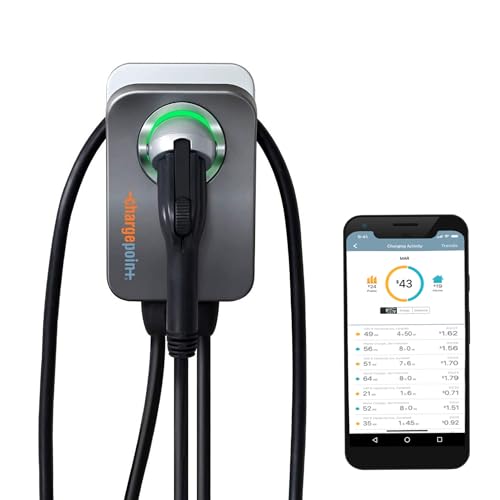
ChargePoint HomeFlex Level 2 EV Charger J1772
View on Amazon
Emporia Gen 2 Smart Home Energy Monitor with 16 50A Circuit Level Sensors | Real Time Electricity Monitor/Meter | Solar/Net Metering - Amazon.com
View on AmazonWhere Tesla Solar in Virginia is heading
Three macro trends should keep Virginia a favorable market:
- Equipment costs: NREL’s residential cost benchmarks have trended down 5–10% since 2021; manufacturing overcapacity in modules and inverters could sustain competitive pricing in 2026.
- Policy stability: The 30% ITC runs through 2032, and Virginia’s net metering framework for residential customers remains intact, though program caps and utility tariff changes warrant periodic checks.
- Electrification: Rising EV adoption and heat pump incentives increase household electricity demand, making right-sized solar-plus-storage packages more compelling.
If you’re comparing bids, request line-item pricing (modules, inverter, racking, labor, electrical upgrades), a shade analysis, and a 25-year production estimate from every bidder—including Tesla. A like-for-like comparison on price per watt, warranty depth, and modeled kWh/year is the clearest path to a confident decision in 2026.
Recommended Products
Solar Electricity Handbook - 2023 Edition: A simple, practical guide to solar energy – designing and installing solar photovoltaic systems: Boxwell, Michael
Solar Electricity Handbook - 2023 Edition: <strong>A simple, practical guide to solar energy – designing and installing solar photovoltaic systems</strong> [Boxwell, Michael] on Amazon.com. *FREE* shi
Emporia Gen 2 Smart Home Energy Monitor with 16 50A Circuit Level Sensors | Real Time Electricity Monitor/Meter | Solar/Net Metering - Amazon.com
See how much electricity your home is using anywhere, anytime. ... <strong>Add individual 50A sensors to your Vue to monitor up to 16 individual circuits</strong> — providing accurate energy use for t
ChargePoint HomeFlex Level 2 EV Charger J1772
Discover the latest in EV charging technology. Explore a diverse selection of smart, efficient, and compatible charging solutions for your electric vehicle.