
Tesla Powerwall in Florida: Cost, Availability & Is It Worth It?
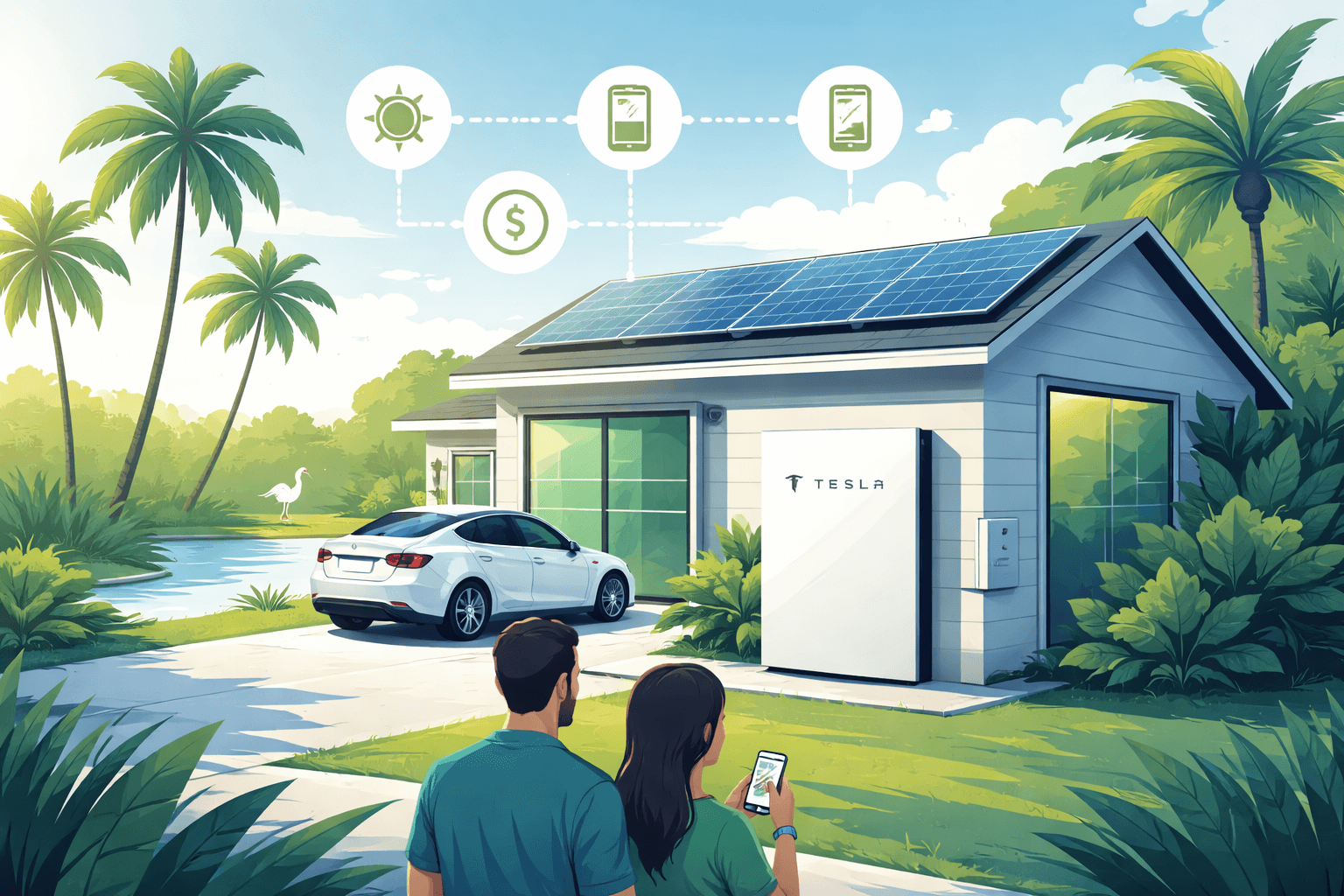
Florida’s grid weathered 2.7 million customer outages during Hurricane Ian in 2022, according to federal energy situation reports, and major storms routinely knock out power for days in coastal counties. That context is why interest in Tesla Powerwall in Florida has surged alongside rooftop solar adoption. With a 30% federal tax credit now available for standalone batteries, and Florida’s sales and property tax exemptions for solar equipment, the calculus for home energy storage is changing fast.
Below, we break down Powerwall specs, installed pricing in Florida, incentives, utility rate dynamics, installer availability, top alternatives, and the most common homeowner questions—so you can decide if a Powerwall pencils out for resilience, savings, or both.
By the Numbers: Tesla Powerwall and Florida context
- 13.5 kWh: Usable energy per Tesla Powerwall unit (Tesla product specifications)
- Up to ~11.5 kW: On-grid continuous power output for Powerwall 3, enabling more whole‑home backup options (Tesla)
- 30%: Federal residential clean energy tax credit on installed battery systems ≥3 kWh (U.S. Treasury/IRS, Inflation Reduction Act)
- 0%: Florida state sales tax on qualifying solar energy systems and equipment; many local surtaxes also exempt (Florida Department of Revenue)
- 100%: Property tax exemption on the added assessed value of residential renewable energy systems (Florida statute; DSIRE)
- Top 3: Florida’s rank for total installed solar capacity in the U.S. (SEIA). Net metering remains in place under Florida PSC rules for most IOUs.
- 2.7 million: Florida customers who lost power during Hurricane Ian (DOE CESER situation reports)
Tesla Powerwall in Florida: specs, capacity, and how it works
A Tesla Powerwall is a rechargeable lithium-ion home battery that stores electricity from rooftop solar or the grid and automatically powers your home during outages. It can also shift energy use from high‑price hours to low‑price hours when your utility offers time‑of‑use (TOU) rates.

Power from the Sun - 2nd Edition: A Practical Guide to Solar Electricity - Revised 2nd Edition: Chiras, Dan
Dan Chiras Ph.D. ... The Homeowner's Guide to Renewable Energy: Achieving Energy Independence from Wind, Solar, Biomass and Hydropower (Mother Earth News Wiser Living Series, 3) ... Solar Electri
Check Price on AmazonKey specifications
- Usable capacity: 13.5 kWh per unit (Powerwall 2 and 3)
- Power output: Powerwall 2 delivers up to 5 kW continuous; Powerwall 3 is rated around 11.5 kW continuous on‑grid, enabling larger backup loads (Tesla published specs)
- Stackability: Multiple units can be combined to increase both energy (kWh) and power (kW)
- Chemistry: Lithium‑ion (nickel‑manganese‑cobalt variant for PW2; Tesla does not publicly detail cell chemistry for every production run, but the control and safety systems are integrated into the enclosure)
- Operating mode: AC‑coupled (PW2) or integrated DC‑coupled solar inverter (PW3), which can reduce system complexity and cost when installing new PV
- Backup switchover: Sub‑second via Tesla Backup Gateway; critical loads or whole‑home configurations are available
How it works
- With solar: During the day, rooftop PV first serves your home; excess charges the Powerwall; remaining surplus exports to the grid. At night or during outages, the Powerwall discharges to run loads. Powerwall 3’s integrated solar inverter can connect PV strings directly, potentially lowering hardware costs for new solar installs.
- Without solar: You can charge from the grid, but savings typically require TOU rates or demand response payments. The 30% federal credit still applies to standalone batteries ≥3 kWh.
- Storm Watch: When severe weather is forecast, Tesla’s software can pre‑charge the battery to maximize backup resilience—particularly relevant during Florida’s hurricane season.
Powerwall pricing in Florida, including installation costs
Installed costs in Florida depend on site specifics (panel upgrades, trenching, wall reinforcement, hurricane‑rated mounting), the number of units, and whether you’re bundling with new solar. Based on recent market quotes, installer surveys, and national average benchmarks reported by marketplaces like EnergySage and cost ranges cited by NREL industry tracking:
- Single Powerwall (turnkey, retrofit): $11,500–$15,500 before incentives
- Two Powerwalls (turnkey, retrofit): $19,000–$27,000 before incentives
- New solar + Powerwall 3 bundle: can reduce balance‑of‑system costs relative to separate inverter + battery, frequently shaving $1,000–$2,000 per system compared to pairing a Powerwall 2 with a standalone solar inverter (varies by design)
Federal tax credit (30%) is applied to the entire installed cost, including labor and required electrical work. Example scenarios:
- One unit at $13,500 installed → $9,450 net after 30% ITC
- Two units at $22,500 installed → $15,750 net after 30% ITC
If your main service panel needs upgrades (common in older Florida homes) or you pursue whole‑home backup with large HVAC loads, expect $1,500–$4,000 of additional electrical work. Coastal installations may also require hurricane‑rated anchoring and corrosion‑resistant hardware.
For a deeper overview of national pricing, installation steps, and ownership tips, see our broader Tesla guide: Tesla Powerwall: Complete Buyer’s Guide — Cost, Installation & Alternatives.
Florida battery storage incentives: what’s available (and what isn’t)
Statewide rebates: None currently. Unlike California’s SGIP (not available in Florida), there is no state‑administered residential battery rebate in Florida as of early 2026.
Federal investment tax credit (ITC):
- 30% of total installed cost for residential batteries ≥3 kWh, whether paired with solar or standalone (IRS guidance under the Inflation Reduction Act)
Florida sales tax exemption:
- Sales and use tax exemption for “solar energy systems and components” applies statewide; local surtaxes are typically exempt as well. Batteries installed as part of a qualifying solar energy system generally qualify. Confirm line‑item tax treatment with your installer and consult the Florida Department of Revenue.
Florida property tax exemption:
- Added assessed value from a residential renewable energy system is excluded from property taxes (residential typically 100% exempt; non‑residential commonly 80% under current statute). DSIRE and Florida statute reference these abatements. Your county property appraiser’s office can confirm details.
Utility pilots and demand response:
- Florida utilities periodically run demand response or battery control pilots that pay bill credits if you allow limited dispatch during peak events. Availability changes and caps fill quickly. Check current offerings with your provider (e.g., Duke Energy Florida, Tampa Electric, municipal utilities like OUC or JEA). Program terms can materially improve payback if you’re comfortable with utility‑coordinated dispatch windows.
Bottom line: In Florida, the 30% federal credit plus the state’s sales/property tax advantages typically form the core savings stack. Utility programs, when available, are an upside.
How the Powerwall pairs with solar in Florida: backup vs. self‑consumption
Florida’s net metering rules (Florida PSC) allow most residential solar customers to receive retail bill credits for energy exported, with year‑end true‑ups at an avoided‑cost rate for net annual surplus. Under robust net metering, batteries are rarely needed to “protect” solar value from low export rates. Instead, the primary reasons Florida homeowners add storage are:
- Resilience: Keep critical loads (refrigerator, lights, outlets, internet, small mini‑split or variable‑speed central AC) running during multi‑day hurricane outages.
- Load management: Smooth short AC compressor surges, avoid nuisance breaker trips, and keep solar generation usable during mid‑day grid outages (PV without storage typically shuts down for lineworker safety).
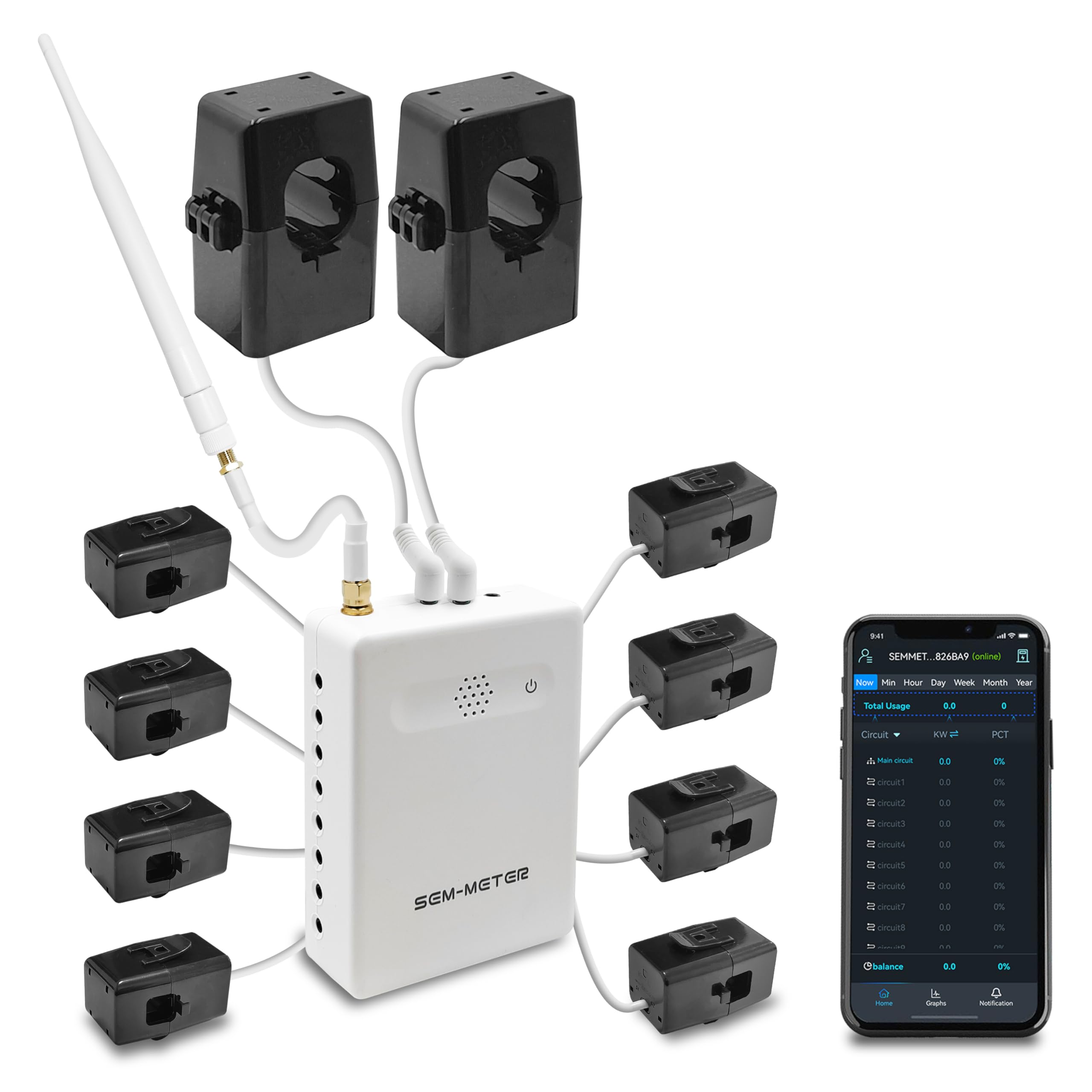
Smart Home Energy Monitor with 8 50A Circuit Level Sensors | Vue - Real Time Electricity Monitor/Meter | Solar/Net Metering - Amazon.com
View on AmazonSizing guidance for common Florida scenarios
- Essentials only: 1 Powerwall (13.5 kWh, PW3 high power output) can cover lights, fridge, outlets, modem/router, and small window/mini‑split AC for an overnight outage. Daily kWh budget: ~8–12 kWh to retain margin.
- Central AC or heat pump: Many Florida homes have 2.5–4‑ton systems drawing 2.5–5 kW continuous with higher start surges. One Powerwall 3 can often run a high‑efficiency variable‑speed system, but two units are recommended for comfortable headroom and longer runtime—especially in summer.
- Whole‑home: Two to three Powerwalls commonly enable whole‑home backup for average usage homes, but high‑load appliances (electric resistance water heating, EV fast charging, pool pumps on long duty cycles) can drain capacity rapidly. A critical loads subpanel remains the most cost‑effective design for many households.
Runtime rule of thumb: A typical Florida home uses ~25–35 kWh/day. One 13.5 kWh battery can cover 8–18 hours of essentials or 3–6 hours of whole‑home operation without solar recharge. With solar, you can “island” and recharge daily when the sun shines; cloud bands during storms will reduce charge rates, so oversizing storage for multi‑day resilience can be prudent along the coasts.
Florida utility rate structures and how Powerwall saves with time‑of‑use
- Net metering: With retail net metering, arbitrage savings from storing midday solar to use in the evening are modest because exported solar already earns near‑retail value. Your battery’s economic value comes mainly from resilience, plus any utility incentives.
- Time‑of‑use (TOU): Some Florida utilities offer optional TOU tariffs with higher on‑peak evening rates and cheaper off‑peak rates. A Powerwall can charge off‑peak and discharge on‑peak to reduce bills. National modeling by NREL and utility pilot data suggest PV+storage under strong TOU spreads can cut bills by 10–20% relative to flat rates, but actual savings depend on your utility’s price differential, seasonality, and your load profile (AC dominates summer peaks in Florida).
- Demand charges: A few utilities and co‑ops offer residential demand rates. Batteries can clip short, high‑kW peaks from AC or EV charging to lower demand fees.
Practical approach
- If you have retail net metering and a flat residential rate, treat a Powerwall primarily as an insurance policy with comfort benefits and modest bill optimization.
- If your utility offers TOU with a strong on‑peak spread (e.g., 2x off‑peak), program “Time‑Based Control” in the Tesla app to charge off‑peak and discharge on‑peak. Combine with pre‑cooling to reduce AC run time during peak windows.
Powerwall availability and certified installers in Florida
Tesla sells Powerwall 3 directly and through Tesla Certified Installers across Florida’s metro areas (Miami–Dade, Broward, Palm Beach, Tampa Bay, Orlando, Jacksonville, Southwest Florida, Space Coast, Panhandle). Lead times vary by season:
- Typical: 4–10 weeks from signed contract to commissioning (permitting, utility interconnection, and any service upgrades dominate the timeline)
- Hurricane season surge: Expect longer queues and limited inventory ahead of peak season
Site and code considerations for Florida homes
- Wind loads and corrosion: Hardware, fasteners, and enclosures must meet local wind‑load requirements and be suitable for coastal environments (NEMA 3R outdoor‑rated enclosures are standard; stainless or coated hardware reduces corrosion risk)
- Mounting location: Garage walls, shaded exterior walls, and protected side yards are common; maintain required clearances and avoid direct sun exposure to improve thermal performance
- Electrical service upgrades: Upgrading to a 200A service or adding load management (e.g., smart panel) may be necessary for whole‑home backup
Looking for vetted solar installers and pricing context? See our state snapshot: Solar in Florida: Costs, Incentives & Top Installers (2026).
Alternatives to Tesla Powerwall in Florida: Enphase, LG, Generac
Several strong battery systems compete on performance, warranty, and integration. The right fit depends on your PV inverter, desired backup power, and budget.
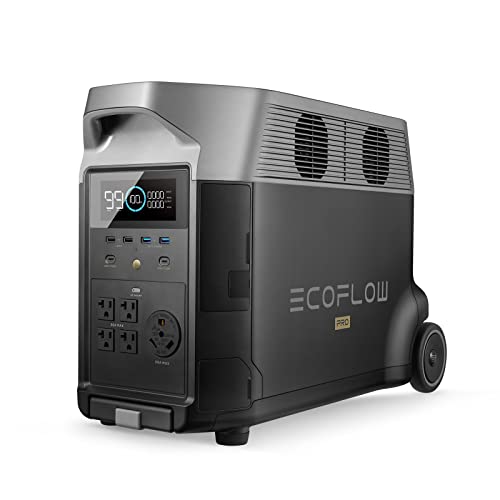
EF ECOFLOW Portable Power Station 3600Wh DELTA Pro, 120V AC Outlets x 5, 3600W, 2.7H Fast Charge, Lifepo4 Power Station, Solar Generator for Home Use, Power Outage, Camping, RV, Emergencies : Patio, Lawn & Garden
<strong>Fully recharge the lifepo4 battery in 1.8 hrs with 240V outlets(3000W), 2.7 hrs with 1800W wall outlets or solar charged in 2.8 hours with 4*400W solar panels</strong> thanks to the industry-l
Check Price on AmazonEnphase IQ Battery 5P/10T/3T (AC‑coupled)
- Usable capacity: 5–10 kWh per module (stackable)
- Power: IQ Battery 5P offers ~3.84 kW continuous, higher burst power for motor starts
- Strengths: Excellent microinverter integration for existing Enphase PV systems; modular expansion; robust software
- Consider if: You already have Enphase microinverters or want granular module‑level monitoring
LG Energy Solution RESU Prime 10H/16H (DC‑coupled with compatible hybrid inverters)
- Usable capacity: 9.6–16 kWh
- Power: Up to ~7 kW continuous, ~11 kW peak (model dependent)
- Strengths: High energy density; strong brand; 10‑year warranty
- Consider if: You’re pairing with a hybrid inverter (e.g., SolarEdge) and want higher single‑battery capacity
Generac PWRcell (DC‑coupled, modular cabinet)
- Usable capacity: ~9–18 kWh (stackable), 4.5–9 kW continuous
- Strengths: Highly modular packs; good for whole‑home configurations with Generac ecosystem
- Consider if: You like an integrated transfer and load management approach from a single vendor
Warranty norms across top brands are 10 years with guaranteed end‑of‑warranty capacity (often 60–70% of nameplate) and defined energy throughput for certain use cases. Always compare:
- Usable kWh and continuous kW per dollar installed
- Surge/peak power for AC motor starts
- Software features (storm pre‑charge, TOU optimization, remote diagnostics)
- Inverter compatibility (AC‑coupled vs DC‑coupled)
Based on current efficiency ratings and field reliability, the Enphase IQ Battery 5P represents strong value for Florida homes already using Enphase microinverters, and a smart load management panel like Span can stretch a single battery further by dynamically shedding non‑essential loads during outages. For portable, hurricane‑season preparedness beyond fixed storage, a high‑capacity unit such as the EcoFlow DELTA Pro can be a complementary option for refrigerators and medical devices.
For a side‑by‑side of Powerwall vs competitors and ownership tips, see our comprehensive guide: Tesla Powerwall: Complete Buyer’s Guide — Cost, Installation & Alternatives.
Is a Tesla Powerwall worth it in Florida?
Storage value stacks differ by household, but three drivers stand out in the Sunshine State:
- Resilience premium: If you’ve experienced multi‑day hurricane outages, the comfort and safety value of backup power can outweigh pure payback math. Tesla’s Storm Watch and islanding with solar are particularly useful during storm season.
- Net metering still intact: With retail net metering, the battery’s bill‑savings case is modest unless you have TOU, demand charges, or a utility incentive. Expect most of the financial return to come from avoided outage costs and quality‑of‑life benefits.
- Solar + PW3 integration: For new solar buyers, Powerwall 3’s integrated inverter can reduce hardware count and simplify design—improving installed cost and efficiency relative to separate inverters.
Households prioritizing whole‑home AC during prolonged outages should budget for two or more units or adopt smart load management to keep runtime practical in Florida’s humidity and heat.
FAQ: Common questions about Tesla Powerwall in Florida
How many Powerwalls do I need to run central air in Florida?
- Many variable‑speed 2.5–4‑ton systems draw 2.5–5 kW continuously with short start surges. One Powerwall 3 can often start and run a high‑efficiency unit, but two units provide better comfort and runtime. Consider a critical loads panel and pre‑cooling before storms.
What’s the warranty on a Powerwall?
- Tesla offers a 10‑year warranty with a promised percentage of original capacity remaining at the end of term (commonly 70%). Throughput and operating‑mode conditions vary by model and use case; review Tesla’s current limited warranty before purchase.
Will Powerwall work if the grid is down but the sun is shining?
- Yes. With a properly configured system, Powerwall can “island,” allowing your solar to operate and recharge the battery while safely isolating from the grid. Output is limited by available solar and battery capacity.
Does Florida’s net metering affect battery savings?
- Yes. With retail net metering, exported solar already receives high credit, so a battery adds limited additional bill savings. The main value is resilience, plus any TOU or demand response benefits if available.
Is SGIP available in Florida?
- No. California’s Self‑Generation Incentive Program (SGIP) does not apply in Florida.
How long does installation take in Florida?
- From contract to energized, 4–10 weeks is typical, driven by permitting, utility approval, and any electrical upgrades. Expect longer timelines during hurricane season.
Can a Powerwall be installed outdoors in coastal areas?
- Yes, enclosures are outdoor‑rated (NEMA 3R), but installers will prefer shaded, protected locations and corrosion‑resistant hardware. In coastal zones, ask for hurricane‑rated mounting and verify local wind‑load compliance.
What about insurance and appraisal?
- Florida exempts the added assessed value for residential renewable energy systems from property taxes. Insurance impacts vary by carrier; some may view storage as a resilience upgrade. Ask your insurer for any premium changes or documentation they require.
How does Powerwall compare to a standby generator for Florida storms?
- Batteries are silent, instant, and can recharge daily from solar; fuel isn’t required. Generators can deliver long‑duration whole‑home backup with inexpensive fuel but require maintenance, ventilation, and noise management. Many coastal homes choose solar + battery for day‑to‑day outages and add a small generator for extended cloudy stretches.
Practical next steps for Florida homeowners
- Get a site‑specific quote with and without solar; request options for one vs. two Powerwalls and a critical‑loads panel
- Ask your utility about TOU, demand response pilots, and battery control programs
- Confirm sales‑tax exemption line items and property‑tax treatment on your proposal
- Consider smart load management to right‑size storage
- Time projects ahead of hurricane season to avoid installation backlogs
If you’re also evaluating rooftop PV economics, start here: Solar in Florida: Costs, Incentives & Top Installers (2026).
Recommended Products
Power from the Sun - 2nd Edition: A Practical Guide to Solar Electricity - Revised 2nd Edition: Chiras, Dan
Dan Chiras Ph.D. ... The Homeowner's Guide to Renewable Energy: Achieving Energy Independence from Wind, Solar, Biomass and Hydropower (Mother Earth News Wiser Living Series, 3) ... Solar Electri
EF ECOFLOW Portable Power Station 3600Wh DELTA Pro, 120V AC Outlets x 5, 3600W, 2.7H Fast Charge, Lifepo4 Power Station, Solar Generator for Home Use, Power Outage, Camping, RV, Emergencies : Patio, Lawn & Garden
<strong>Fully recharge the lifepo4 battery in 1.8 hrs with 240V outlets(3000W), 2.7 hrs with 1800W wall outlets or solar charged in 2.8 hours with 4*400W solar panels</strong> thanks to the industry-l
Smart Home Energy Monitor with 8 50A Circuit Level Sensors | Vue - Real Time Electricity Monitor/Meter | Solar/Net Metering - Amazon.com
Lightweight commercial 3-phase option available as a separate bundle. APPLICATION MONITORING WITHOUT GUISEWORK <strong>Up to sixteen (16) 50A sensors to accurately monitor your air conditioner, oven,