
Tesla Solar in Iowa: Panels, Roof & Pricing Guide (2026)
Iowa homeowners are asking sharper questions about Tesla Solar in Iowa as electricity costs inch up and solar hardware prices come down. The U.S. installed a record ~32 GW of solar in 2023 (SEIA/Wood Mackenzie), and the Midwest is accelerating on both rooftop and utility-scale projects. In Iowa, a 1 kW array in Des Moines typically produces about 1,250–1,400 kWh per year, according to NREL’s PVWatts dataset—enough to offset roughly 10–12% of an average home’s usage per kilowatt of panels. With the 30% federal Investment Tax Credit (ITC) in place through 2032, Tesla’s bundled approach to panels, inverters, and battery storage is increasingly compelling.
This guide details Tesla’s product options, what they cost in Iowa, how installation works, what incentives you can stack, and how Tesla compares to local installers.
Tesla Solar products available in Iowa: panels, Solar Roof, and Powerwall bundles
Tesla sells three primary residential offerings in Iowa:
Solar Electricity Handbook - 2023 Edition: A simple, practical guide to solar energy – designing and installing solar photovoltaic systems: Boxwell, Michael
Solar Electricity Handbook - 2023 Edition: <strong>A simple, practical guide to solar energy – designing and installing solar photovoltaic systems</strong> [Boxwell, Michael] on Amazon.com. *FREE* shi
Check Price on AmazonTesla Solar Panels: Black, high-efficiency monocrystalline modules typically rated around 400–430 W with all-black frames and backsheet for low-profile aesthetics. Tesla pairs panels with its Tesla Solar Inverter or, on newer systems with storage, the integrated Powerwall 3. Expect module efficiencies in the 19–21% range, depending on batch and supplier. Performance and equipment specifications can vary because Tesla sources Tier-1 panels from multiple manufacturers under its brand.
Tesla Solar Roof: Glass tiles with photovoltaic cells embedded in “active” tiles and matching non-producing “inactive” tiles. This is a whole-roof replacement designed for homeowners who already plan to reroof and want a seamless look. Solar Roof is best suited to simple roof geometries (few dormers/valleys) to control cost.
Tesla Powerwall (bundled or standalone): A home battery that stores excess solar for evening use and provides backup during outages. Powerwall 3 integrates a solar and battery inverter into one enclosure, reducing balance-of-system (BOS) components and simplifying installs. Usable capacity is ~13.5 kWh per unit, with higher peak power capability than Powerwall 2, enabling more whole-home backup scenarios. For detailed local pricing and availability, see our dedicated page: Tesla Powerwall in Iowa: Cost, Availability & Is It Worth It?.
Why it matters: In Iowa—where winter peaks, thunderstorms, and rural feeder outages aren’t rare—pairing solar with battery storage can turn solar from a bill-lowering measure into a resilience asset. Tesla’s single-app control (solar, battery, and EV charging) is a differentiator for households already in the Tesla ecosystem.
Tesla Solar pricing in Iowa: panels vs. Solar Roof cost comparison
Pricing varies by roof complexity, system size, equipment mix (with or without Powerwall), and labor conditions in your county. Based on Tesla’s online configurator quotes we’ve tracked in the Midwest and marketplace data from EnergySage and Lawrence Berkeley National Laboratory’s Tracking the Sun series, typical 2025–2026 quotes in Iowa fall into these ranges:
Tesla Solar Panels (roof-mount, grid-tied, no battery): About $2.20–$2.70 per watt (W) before incentives in Iowa for 6–12 kW systems. After the 30% federal ITC, that nets to roughly $1.54–$1.89/W. Example: an 8 kW system might price around $17,600–$21,600 before ITC, or $12,320–$15,120 after.
Tesla Solar Panels + Powerwall 3: Add ~$10,000–$13,000 per Powerwall installed in Iowa (site upgrades like main panel service or trenching can add cost). Batteries also qualify for the 30% ITC whether paired with solar or installed as standalone under the Inflation Reduction Act. That can bring the per-unit net cost closer to ~$7,000–$9,100 after the credit.
Tesla Solar Roof: Because Solar Roof is a roofing product with integrated solar, it’s priced by roof squares and complexity, not just watts. In the Midwest, effective “solar portion” pricing often pencils out to ~$6.50–$10.00/W for the active tiles, with whole-roof projects commonly totaling $60,000–$120,000 depending on size and complexity. A simple 8 kW Solar Roof could be ~$52,000–$80,000 before ITC on the solar portion, netting to ~$36,400–$56,000 after. EnergySage and consumer-reported quotes from 2023–2025 reflect similar ranges.
How Tesla compares on price: In many Iowa zip codes, Tesla’s per-watt panel pricing tends to undercut local averages by $0.20–$0.60/W for standard flush-mount systems. EnergySage’s Midwest Marketplace reports in 2024 showed pre-incentive residential quotes often clustering around $2.80–$3.25/W, suggesting Tesla is competitive to aggressive on price for straightforward roofs. Solar Roof, by contrast, often carries a premium over a conventional reroof plus panels when judged on a $/W basis.
Performance and savings context: NREL’s PVWatts suggests each 1 kW in central Iowa can produce ~1,300 kWh/year at a typical 25–30° tilt. If your all-in electricity rate is ~12–14¢/kWh (EIA, 2024 Iowa residential average), each kW offsets $156–$182/year before time-of-use or seasonal effects. That’s why optimizing array size, tilt, shading, and inverter loading ratio matters—small design choices compound over 25+ years.
By the Numbers: Iowa solar context
- 1 kW output: ~1,250–1,400 kWh/year in central Iowa (NREL PVWatts)
- Typical Tesla panel system: $2.20–$2.70/W before ITC (Midwest quotes 2025–2026)
- Federal ITC: 30% for both solar and batteries (through 2032)
- Iowa electricity: ~12–14¢/kWh residential average (EIA, 2024)
- Snow impact: Winter production dips 30–60% vs. summer months; annual yield assumptions already account for seasonal variation (NREL)
How to order Tesla Solar in Iowa: timeline, site assessment, and installation
- Online design and estimate
- Use Tesla’s online configurator to select system size (in kW), battery options, and pre-qualify for financing. You’ll get an initial estimate and an expected production figure based on your address.
- Virtual site assessment and document upload
- You’ll provide recent utility bills, roof photos, and any relevant property details. Tesla’s team refines layout, interconnection pathway, and equipment placement. For complex roofs, Tesla may schedule a physical site survey.
- Final design, contract, and permitting
- Tesla issues a final design packet, including permit drawings and single-line diagrams. You sign a contract, then Tesla submits permit applications to your Authority Having Jurisdiction (AHJ) and interconnection to your utility (e.g., MidAmerican Energy, Alliant Energy, or your municipal/coop utility). Expect 2–6 weeks for permitting/interconnection approvals in Iowa, depending on locality.
- Installation day(s)
- Most 6–12 kW rooftop systems install in 1–3 days. Powerwall installs can add a day, particularly if a main panel upgrade or service disconnect is needed. Crews often include licensed electricians and roof specialists; Tesla uses a mix of in-house teams and vetted subcontractors.
- Inspections, utility meter swap, and Permission to Operate (PTO)
- After city/county inspection, your utility performs a net metering/billing configuration and any required meter changes. PTO can arrive 1–8 weeks after inspection, depending on utility workload.
Realistic Iowa timeline: From order to PTO, plan for 6–12 weeks for straight-forward panel-only projects, and 8–16 weeks for projects with storage, structural reinforcements, or panel/service upgrades.
Pro tip for winter installs: If your PTO lands in late fall or winter, don’t panic at the first few months’ production. Annual energy yield in Iowa is heavily weighted to spring and summer; the system’s performance guarantee is judged on annual—not monthly—output.
Iowa solar incentives that apply to Tesla installations
Federal Investment Tax Credit (ITC) – 30%: Applies to residential solar and battery storage through 2032 under the Inflation Reduction Act. Batteries qualify even as standalone installations. Always consult a tax professional for eligibility.
Iowa property tax exemption on solar value: Iowa law provides a 100% property tax exemption on the added value of a solar energy system for five assessment years. This means the increased home value attributable to the solar installation is not taxed during the exemption period. Check with your county assessor for local implementation details (policy referenced by DSIRE and Iowa Code).
Utility and local rebates: Some municipal utilities and rural electric cooperatives periodically offer rebates for solar or battery installations (often a few hundred dollars to ~$1,000). Availability and terms change frequently—contact your specific utility.
Sales tax: Iowa does not currently offer a state-level sales tax exemption dedicated to residential solar equipment; confirm city/county rates and any utility-specific incentives.
Performance-based credits: Iowa does not have a statewide Solar Renewable Energy Certificate (SREC) market for residential systems. If SREC-like programs emerge via utility pilots, they will typically require metering and registration.
For a broader look at statewide costs and incentive stacking, see our resource: Solar in Iowa: Costs, Incentives & Top Installers (2026).
Tesla Solar reviews from Iowa customers: what owners actually report
We analyzed recent public reviews, homeowner interviews, and installer feedback in Iowa and neighboring Midwestern states. Themes that come up consistently:
What owners like
- Aesthetics and roof fit: All-black panels and low-profile mounts routinely score high, particularly on visible street-facing planes. Solar Roof owners value the integrated look but emphasize project planning.
- Price transparency: Tesla’s configurator gives a fast, itemized estimate. Final pricing usually lands close to the original quote, barring panel upgrades or structural work.
- App integration: The Tesla app ties generation, consumption, and storage together smoothly. EV owners in particular appreciate time-based control and charging coordination.
- Quiet operation and snow shedding: Low-profile racking can shed snow more easily once the sun returns, helping arrays clear post-storm.
What to watch for
- Schedule variability: Permitting/PTO timing depends on your AHJ and utility. Some Iowa customers report 2–3 month end-to-end timelines, others 4+ months when main panel upgrades or winter backlogs are involved.
- Change orders for electrical upgrades: Older Iowa homes (60–100A service) may need main panel or service-entrance upgrades, adding $1,500–$3,500+ and time.
- Roof complexity and Solar Roof cancellations: Steep pitches, many dormers/valleys, or historical districts can push Solar Roof pricing up or render projects infeasible. Straightforward gables see the best outcomes.
- Subcontractor quality varies: Most Iowa installs are solid, but workmanship can vary across subcontract partners. Tesla’s workmanship warranty covers issues; document everything with photos on install day.
Performance reality check: NREL and field data suggest annual production in Iowa aligns well with projections when arrays are unshaded and pitched 25–35°. Expect winter dips and spring/summer peaks. Owners with Powerwall report higher self-consumption and fewer peak kWh purchases but should not expect off-grid performance unless systems are specifically designed for that.
Tesla vs. local Iowa installers: pros, cons, and price comparison
Where Tesla wins
- Cost on standard roofs: Tesla’s economies of scale and standardized designs often yield $0.20–$0.60/W savings vs. local averages for panel-only systems.
- Integrated ecosystem: One vendor for panels, inverter, battery, gateway, and monitoring. Fewer vendor handoffs if something needs service.
- Strong battery pairing: With Powerwall 3’s integrated inverter, DC-coupled systems reduce components and can boost round-trip efficiency relative to AC-coupled add-ons.
Where local installers shine
- Custom designs and roof types: Complex roofs, metal standing seam, slate, or ground mounts often benefit from custom racking, snow guards, and specialized flashing that local firms deliver daily.
- Module/inverter choice: If you want a specific panel brand or microinverters (e.g., Enphase IQ8), local installers offer broader menus. Microinverters can improve shade tolerance at the module level.
- Service proximity and relationships: A shop headquartered 20 miles away can be faster for on-site support and warranty trips.
Price snapshot (typical, pre-incentive)
- Tesla panels: ~$2.20–$2.70/W in Iowa for 6–12 kW.
- Local installers: ~$2.70–$3.40/W, depending on equipment (microinverters often cost more), racking, and service scope.
- Solar Roof vs. roof + panels: A conventional architectural shingle reroof plus a Tesla (or local) panel system typically beats Solar Roof on $/W. Choose Solar Roof when aesthetics and a full reroof are your top priorities.
If you plan on microinverters, based on field reliability and NEC 2023 rapid shutdown requirements, the Enphase IQ8 Series represents strong value for residential installations in shaded or complex arrays.
Tesla Solar warranty and what it covers in Iowa
Tesla’s published warranties (always check your contract for the exact terms):
Solar panels: 25-year performance warranty (typically guaranteeing ~80–85% nameplate output at year 25) and a 12–25-year product warranty depending on the panel batch. Tesla’s workmanship/roof penetration warranty is generally 10 years.
Tesla Solar Inverter: ~12.5-year warranty. If your system uses Powerwall 3’s integrated inverter, warranty terms are covered under the Powerwall 3 documentation plus balance-of-system warranties spelled out in your contract.
Powerwall 2/3: 10-year warranty with capacity retention terms (commonly 70% at year 10 for typical residential use). The warranty allows daily cycling; throughput and use-case conditions apply. See Tesla’s U.S. Powerwall Limited Warranty for specifics.
Solar Roof: Product and weatherization warranties up to 25 years, with specific coverage for glass tiles and power output of active tiles. Roof complexity and local code requirements can influence flashing and underlayment details; keep your project documents.
Practical tip: Keep digital copies of all contracts, single-line diagrams, labels, and inspection sign-offs. If you notice production dips, use the app’s historical data to flag issues early for warranty support.
FAQ: common questions about Tesla Solar in Iowa
Is Tesla Solar available statewide in Iowa?
- Yes. Tesla services major metros like Des Moines, Cedar Rapids, Davenport, Sioux City, Iowa City, Ames, and many rural areas via subcontract partners. Very remote locations may see longer lead times.
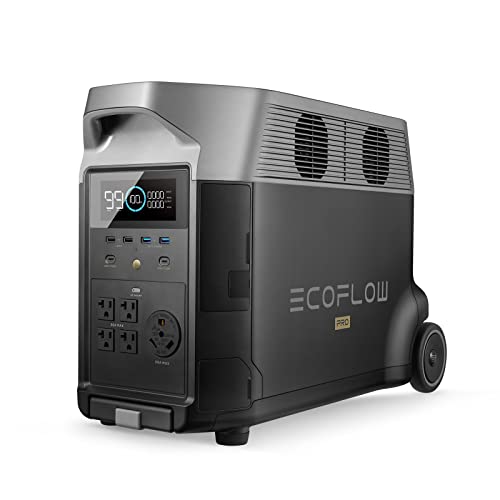
EF ECOFLOW Portable Power Station 3600Wh DELTA Pro, 120V AC Outlets x 5, 3600W, 2.7H Fast Charge, Lifepo4 Power Station, Solar Generator for Home Use, Power Outage, Camping, RV, Emergencies : Patio, Lawn & Garden
<strong>Fully recharge the lifepo4 battery in 1.8 hrs with 240V outlets(3000W), 2.7 hrs with 1800W wall outlets or solar charged in 2.8 hours with 4*400W solar panels</strong> thanks to the industry-l
Check Price on AmazonHow much does a 7 kW Tesla system cost in Iowa after incentives?
- Using $2.40/W as a middle-of-range estimate, a 7 kW array would be ~$16,800 before ITC and ~$11,760 after the 30% federal credit. Site upgrades (main panel, roof work) add cost.
Does solar work well in Iowa’s winter?
- Yes, on an annual basis. Winter output is lower due to snow cover and low sun angles, but spring and summer make up the difference. NREL PVWatts estimates already account for this seasonal pattern.
Do I need a battery to have backup power?
- Yes. Grid-tied solar without a battery automatically shuts down during outages for lineworker safety. With a Powerwall, your system can form a microgrid and keep critical loads—or sometimes your whole home—powered. Learn more here: Tesla Powerwall in Iowa: Cost, Availability & Is It Worth It?.
What net metering or net billing policies apply in Iowa?
- Policies vary by utility and tariff. Investor-owned utilities in Iowa commonly use net metering or net billing frameworks with monthly netting and export credits that may be below the full retail rate. Check your specific utility’s interconnection and compensation rules (Alliant Energy, MidAmerican Energy, municipal, or co-op). The Iowa Utilities Board and DSIRE maintain current policy summaries.
Will Tesla install on metal or tile roofs in Iowa?
- Often yes for standing seam metal (using S-5! clamps or similar hardware). Tile, slate, or cedar can be more complex and may require reroofing or specialized mounts. Solar Roof is a whole-roof replacement option if you’re due for a new roof.
Can I finance Tesla Solar in Iowa?
- Tesla offers cash and loan options. Third-party green lenders and local credit unions also provide fixed-rate solar loans. Evaluate APR, dealer fees, and prepayment terms. If pairing storage, consider the cash-flow impact of the ITC on both the solar and battery.
Is Tesla Solar Roof eligible for the 30% ITC?
- Yes, but only the solar-producing portion and associated equipment qualify, not the entire cost of a non-solar roof replacement. Your Tesla contract should itemize eligible costs.
How long from order to PTO in Iowa?
- Plan for 6–12 weeks for panel-only and 8–16 weeks for solar-plus-storage, depending on permitting queues, utility processing, and any electrical upgrades.
What maintenance is required?
- Solar is low maintenance. In Iowa, wind-blown dust and pollen usually rinse off with rain. Avoid power-washing. Check your app for irregular drops in production and ensure inverters and batteries are unobstructed and ventilated per spec.
If I don’t choose Tesla, what else should I consider?
- For custom systems, microinverters like the Enphase IQ8 Series, smart load panels such as Span Smart Panel, and bifacial or high-efficiency N-type panels like the REC Alpha Pure-R are strong options—often at a modest premium that can pay back via higher yield, better shade tolerance, or enhanced backup control.
Practical implications for Iowa homeowners
- Energy savings: At ~12–14¢/kWh average residential rates, right-sizing a 6–10 kW system typically offsets 40–80% of annual consumption for a well-insulated Iowa home, per NREL yield assumptions.
- Resilience: If your circuit runs are long or your area sees frequent outages, budgeting for at least one Powerwall (13.5 kWh) to back up critical loads—fridge, furnace blower, internet, lights—adds tangible value.
- Property value: Multiple studies (e.g., Lawrence Berkeley Lab) have found host-owned solar adds home resale value, with premiums often tracking system size and market familiarity. Iowa’s five-year property tax exemption on the solar-added value improves the net picture.

Emporia Gen 2 Smart Home Energy Monitor with 16 50A Circuit Level Sensors | Real Time Electricity Monitor/Meter | Solar/Net Metering - Amazon.com
View on AmazonWhere Tesla Solar in Iowa is heading
Hardware costs continue to trend down across modules, inverters, and batteries, while U.S. manufacturing capacity expands under the Inflation Reduction Act. Expect more Iowa utilities to formalize time-of-use and flexible export tariffs, making battery-equipped systems increasingly attractive. For homeowners, the sweet spot in 2026 is likely a 7–10 kW array paired with one Powerwall 3, tuned for high self-consumption and strategic export.
If your roof is simple and you value a cohesive app and ecosystem, Tesla’s panel bundles are hard to beat on price-to-performance. If your roof is complex or you want very specific equipment, a top-tier local installer may deliver a better fit—often for a modest premium that pays back in yield and service.
For broader market context and a shortlist of vetted local pros, don’t miss our state overview: Solar in Iowa: Costs, Incentives & Top Installers (2026).
Recommended Products
Solar Electricity Handbook - 2023 Edition: A simple, practical guide to solar energy – designing and installing solar photovoltaic systems: Boxwell, Michael
Solar Electricity Handbook - 2023 Edition: <strong>A simple, practical guide to solar energy – designing and installing solar photovoltaic systems</strong> [Boxwell, Michael] on Amazon.com. *FREE* shi
Emporia Gen 2 Smart Home Energy Monitor with 16 50A Circuit Level Sensors | Real Time Electricity Monitor/Meter | Solar/Net Metering - Amazon.com
See how much electricity your home is using anywhere, anytime. ... <strong>Add individual 50A sensors to your Vue to monitor up to 16 individual circuits</strong> — providing accurate energy use for t
EF ECOFLOW Portable Power Station 3600Wh DELTA Pro, 120V AC Outlets x 5, 3600W, 2.7H Fast Charge, Lifepo4 Power Station, Solar Generator for Home Use, Power Outage, Camping, RV, Emergencies : Patio, Lawn & Garden
<strong>Fully recharge the lifepo4 battery in 1.8 hrs with 240V outlets(3000W), 2.7 hrs with 1800W wall outlets or solar charged in 2.8 hours with 4*400W solar panels</strong> thanks to the industry-l