
Tesla Solar in Illinois: Panels, Roof & Pricing Guide (2026)
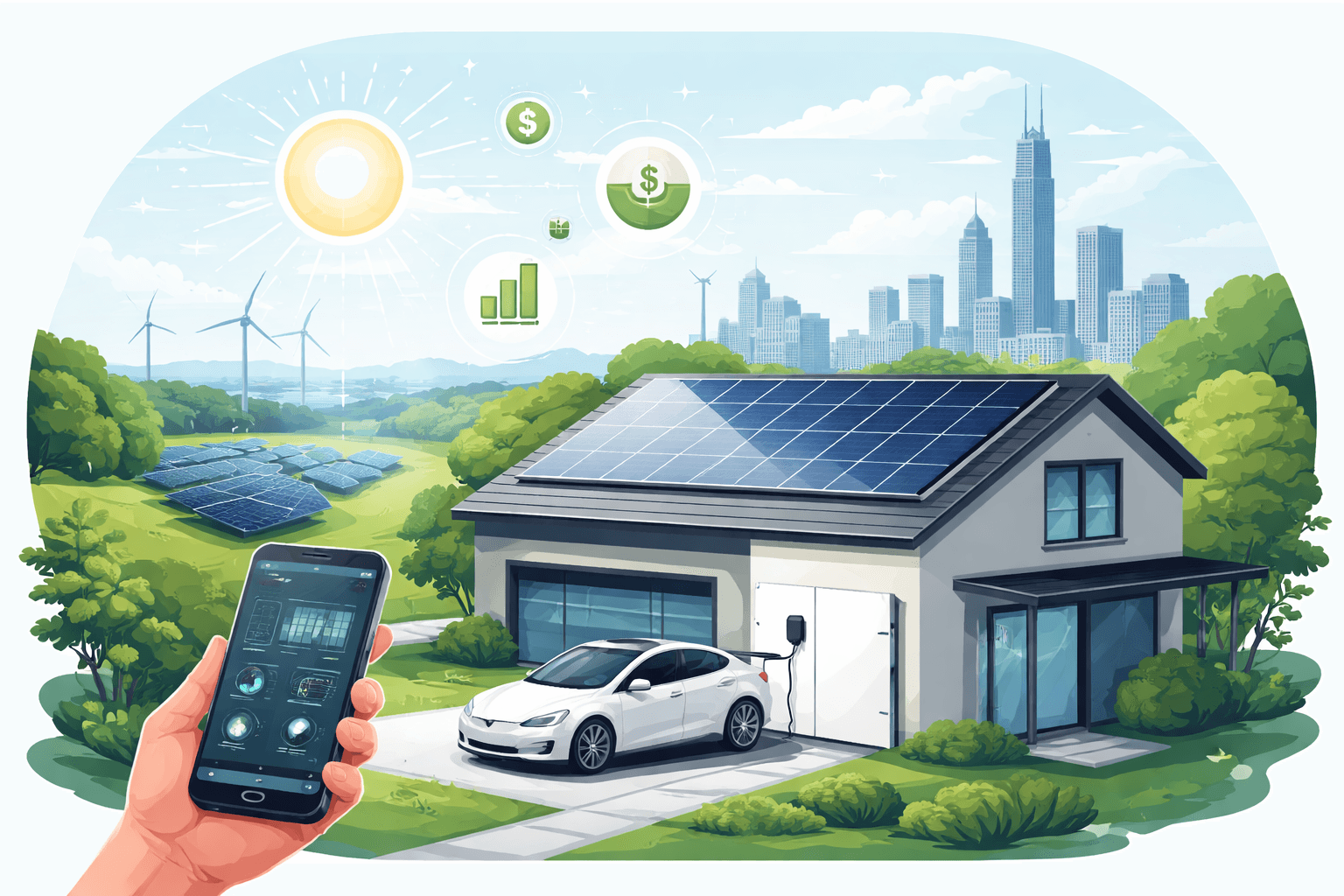
Illinois households are paying more attention to rooftop solar as electricity costs trend upward and state incentives remain strong. If you’re comparing Tesla Solar in Illinois, here’s what to know in 2026 about products, pricing, incentives, installation timelines, and how Tesla stacks up against local installers.
According to SEIA/Wood Mackenzie, U.S. homeowners added roughly 6–7 GWdc of residential solar in 2023, setting a record year; Illinois’ growth has been accelerated by the Illinois Shines incentive (the state’s solar renewable energy credit program) and the 30% federal clean energy tax credit under the Inflation Reduction Act. That backdrop makes Tesla Solar in Illinois especially compelling for homeowners seeking a turnkey, app-driven system with optional whole‑home backup.
Tesla Solar in Illinois: Products Available
Tesla sells three core offerings in Illinois:

The Homeowner's Guide to Renewable Energy - Revised & Updated Edition: Achieving Energy Independence through Solar, Wind, Biomass and Hydropower: Chiras, Dan
After beginning with the all important discussion about energy efficiency and conservation, <strong>Dan guides you through everything you need to choose which renewable options to integrate into your
Check Price on Amazon- Tesla Solar Panels: Sleek, all‑black modules typically in the 400–425 W range depending on batch and availability. Tesla’s current systems use a string inverter (or an integrated inverter when paired with Powerwall 3), low‑profile mounting, and neat cable management for a minimal aesthetic.
- Tesla Solar Roof: A building‑integrated photovoltaic (BIPV) roof that replaces your shingles with active PV tiles and non‑active glass tiles to match. Best for full roof replacements or new construction.
- Tesla Powerwall (optional): A 13.5 kWh home battery designed for backup and self‑consumption. Powerwall 3 integrates the solar and battery inverter, simplifies installation, and provides high continuous power output per unit. Tesla publishes a 10‑year warranty with throughput and performance guarantees.
What’s actually available? As of late 2024, Tesla actively books panel and Powerwall projects in Illinois. Solar Roof availability can vary by crew capacity and roof complexity; homeowners with multi‑faceted roofs, dormers, or slate/metal tear‑offs should expect more design review and potentially longer timelines.
If you’re primarily interested in backup power or time‑of‑use optimization, see our state‑specific guide to pricing and availability: Tesla Powerwall in Illinois: Cost, Availability & Is It Worth It?.
Tesla Solar Pricing in Illinois: Panels vs. Solar Roof
Most Illinois homeowners comparing Tesla look at two very different price profiles:
- Solar panels on an existing roof (typical suburban home): Frequently the lowest‑cost way to add PV.
- Solar Roof (full roof replacement with integrated PV): A combined roofing + solar project with a premium aesthetic and higher total price, but potentially competitive if you already need a new roof.
Panel system pricing
- Illinois marketplace quotes for standard residential solar typically land in the $2.70–$3.40/Watt (DC) installed range before incentives, based on NREL’s 2023 cost benchmarks and Midwest installer quotes. Tesla’s online pricing has often been competitive in this band due to standardized hardware and direct sales.
- Example: A 7.5 kW system at $3.00/W is ~$22,500 before incentives. With the 30% federal tax credit, net cost drops to ~$15,750 before any Illinois incentives.
Solar Roof pricing
- Solar Roof is priced differently because it’s both a roofing system and a generator. Total project cost depends on roof complexity, roof area, and target system size (kW).
- For a 2,000–2,500 sq ft Illinois home with moderate complexity, Solar Roof quotes often pencil in the mid‑five figures to low six figures before incentives. If your asphalt roof is at end‑of‑life, the “roof you were going to buy anyway” value can narrow the gap vs. panels‑only + separate reroof. Expect Tesla to provide a line‑item breakout comparing Solar Roof vs. shingles + PV.
Powerwall adders
- Installed Powerwall pricing in Illinois commonly adds ~$10,000–$13,500 per unit before incentives, depending on main panel upgrades, critical‑load vs. whole‑home backup, and whether you choose Powerwall 3 (with integrated inverter) or a separate inverter + Powerwall 2 architecture.
- Two Powerwalls (27 kWh usable) are typical for all‑electric homes or larger HVAC loads; one unit is often enough for gas‑heated homes seeking essential‑loads backup.
For a deeper dive into battery‑specific costs and configurations, head to our dedicated page: Tesla Powerwall in Illinois: Cost, Availability & Is It Worth It?.
How to Order Tesla Solar in Illinois: Timeline, Site Assessment, and Installation
Tesla’s process is designed to be digital‑first, with most steps tracked in the Tesla app.
- Online design and price: Enter your address, average bill, and roof photos to get a preliminary design. Tesla uses satellite imagery and LIDAR roof data where available to size your system.
- Site assessment: After you place a refundable order deposit, Tesla will validate roof conditions, shading, rafters, and main service panel capacity. Some homes may need a main panel upgrade (MPU) or structural reinforcements.
- Final design and agreement: Expect a stamped design set, inverter/battery placement plan, and interconnection application to your utility (ComEd, Ameren Illinois, or municipal/co‑op where applicable).
- Permits and utility approval: Local AHJ permitting usually takes 2–6 weeks in Chicagoland and 2–8 weeks elsewhere, depending on backlog. Interconnection review can add 1–4 weeks.
- Installation: One to three days on site for panels; Solar Roof may run 1–3 weeks based on complexity. Powerwall adds about a day.
- Inspections and PTO: City/county inspection plus utility Permission to Operate (PTO). This step commonly adds 1–3 weeks after install.
End‑to‑end timeline: 6–12 weeks for panels + optional Powerwall is common when permitting and utility queues are light; Solar Roof projects often run longer. Seasonal demand spikes and supply chain timing can extend timelines.
Illinois Solar Incentives That Apply to Tesla Installations
In addition to the 30% federal residential clean energy tax credit (IRS Section 25D, available through 2032 under the Inflation Reduction Act), Illinois offers incentives that can materially improve the payback for Tesla Solar.
- Illinois Shines (Adjustable Block Program): Administered by the Illinois Power Agency (IPA), Illinois Shines compensates solar production by purchasing your system’s renewable energy credits (RECs). Homeowners don’t apply directly—the incentive is captured by an “Approved Vendor” and used to reduce your upfront price. The value depends on system size, category, and the current program block. This program has been the main driver of Illinois rooftop solar growth.
- Net metering: Illinois statute requires investor‑owned utilities to offer net metering. Credits and rollover rules vary by utility and enrollment date; customers who interconnect before their utility reaches statutory caps typically receive retail‑rate credits for the supply portion of their bill. Check your utility’s current tariff and whether a smart inverter setting (volt/VAR curve) is required for interconnection.
- Property tax treatment: Illinois’ special assessment for solar (35 ILCS 200/10‑5 et seq.) limits assessed value impacts for qualifying PV installations, helping keep property taxes predictable.
- Sales tax: Illinois has provided sales tax exemptions for certain renewable energy equipment categories; confirm eligibility on your Tesla agreement and invoice.
If you’re early in research mode and want a statewide snapshot of costs, incentives, and top installers beyond Tesla, see our overview: Solar in Illinois: Costs, Incentives & Top Installers (2026).
Tesla Solar Reviews from Illinois Customers: What Owners Actually Report
Themes we see consistently in Illinois owner feedback (sourced from public review platforms, installer forums, and utility interconnection anecdotes):
What owners like
- Clean aesthetic: Low‑profile arrays and hidden conduit runs are a frequent highlight.
- App experience: The Tesla app offers real‑time production/consumption data, simple Powerwall modes (Backup‑Only, Self‑Powered, Time‑Based Control), and remote updates.
- Competitive pricing and standardized hardware: Especially for simple roofs with minimal upgrades, Tesla’s quotes often land near marketplace lows.
What owners flag as challenges
- Scheduling communication: High national demand can create longer lead times between design approval and install, especially in peak summer.
- Change orders: Main panel upgrades, roof repairs, or array downsizing after structural review can adjust timelines and price.
- Service follow‑through: Post‑install service tickets may take time to schedule; third‑party subcontractors handle some field work.
Takeaway: Homeowners with straightforward roofs and flexible schedules tend to report the smoothest experiences. Complex roofs, older electrical infrastructure, or HOA requirements warrant extra time in design and expectation‑setting.
Tesla vs. Local Illinois Installers: Pros, Cons, and Price Comparison
Choosing Tesla isn’t an all‑or‑nothing decision. Many Illinois markets feature excellent local EPCs (engineering, procurement, and construction firms) that install Tesla Powerwall, Enphase, or other Tier‑1 equipment.
Where Tesla often wins
- Price and simplicity for standard roofs: Streamlined BOM, online quoting, volume purchasing.
- Aesthetic and app ecosystem: Particularly if you already own Tesla EVs or Powerwall.
- Powerwall 3 integration: Fewer boxes on the wall vs. separate PV and battery inverters.
Where local installers often win
- Custom roof work: Tile/slate, complex dormers, or integrated snow‑management hardware.
- Faster service response: Shorter truck rolls for diagnostics and maintenance.
- Equipment optionality: Ability to choose module brands, microinverters (e.g., Enphase IQ8), optimizers, or hybrid inverters tailored to shading and roof planes.
Price comparison snapshot
- Panels: Many Illinois homeowners see Tesla quotes and reputable local quotes clustering between ~$2.70 and $3.40/W before incentives. Local bids can be higher on small systems or complex roofs, and lower in competitive suburban markets.
- Solar Roof: Fewer direct local equivalents. If you need a new roof and prioritize integrated aesthetics, compare Solar Roof against premium shingles + conventional PV from local firms.
- Batteries: Powerwall pricing is similar between Tesla direct and Tesla‑certified local installers; differences hinge on scope (main panel upgrades, whole‑home backup) and crew availability.
Practical tip: Solicit at least two local quotes and Tesla’s online design for an apples‑to‑apples comparison on system size (kW), expected first‑year production (kWh), and warranty terms.
Tesla Solar Warranty and What It Covers in Illinois
Tesla’s published warranties as of 2024 include:
- Solar panels
- Product warranty: Typically 10–12 years on workmanship and materials (varies by panel model batch).
- Performance warranty: Power output guaranteed to a specified percentage at year 25 (commonly in the low‑to‑mid‑80% range). Review your exact datasheet.
- Inverters
- 10–12 years on Tesla‑branded string inverters; Powerwall 3’s integrated inverter follows the battery’s coverage specifics.
- Solar Roof
- Roofing: Limited warranty often stated at 25 years against defects in the glass tiles; weatherization/waterproofing coverage defined separately in the agreement.
- Power output: 25‑year performance warranty for the active PV tiles.
- Powerwall
- 10‑year limited warranty with energy throughput and capacity retention terms (commonly 70% end‑of‑warranty capacity for typical residential use cases).
Always verify the version of Tesla’s warranty booklet attached to your purchase agreement; terms can vary by product generation and interconnection date.
By the Numbers: Tesla Solar in Illinois
- 30%: Federal Clean Energy Tax Credit (IRA) available through 2032 for residential solar and batteries.
- 13.5 kWh: Usable energy capacity per Tesla Powerwall unit; many homes install one to two units.
- 6–12 weeks: Typical timeline for panels + Powerwall from contract to PTO when queues are light; Solar Roof often longer.
- $2.70–$3.40/W: Common installed price band for residential panels in Illinois before incentives, based on NREL cost benchmarks and Midwest quotes.
- 25 years: Typical panel and Solar Roof performance warranty period.
FAQ: Common Questions About Tesla Solar in Illinois
Is Tesla Solar available statewide?
- Tesla services most population centers (Chicagoland, Rockford corridor, Bloomington‑Normal, Peoria, Champaign‑Urbana, and Metro East). Rural availability depends on crew coverage and subcontractor capacity.
How big should my system be?
- Size to your annual usage (kWh), roof orientation, shading, and net metering rules. Many Illinois homes land between 6–10 kW. Tesla’s design tool and a local energy audit can refine the target.
Do I need a new roof?
- Not for panels if your roof has 10–15 years of life left. If your shingles are near end‑of‑life, consider reroofing before panels—or evaluate Solar Roof if you want integrated PV.
Can I get whole‑home backup with one Powerwall?
- It depends on peak loads and service size. Many gas‑heated homes can run essentials on one Powerwall; all‑electric homes or large AC compressors often need two. A load audit determines the right number.
Will net metering change in Illinois?
- Net metering is established by state law, but credit rates and thresholds differ by utility and may evolve. Interconnecting earlier can lock in more favorable terms in some utility territories—confirm with your utility’s current tariff.
How long is the payback?
- With the 30% federal credit plus Illinois Shines, simple payback for panels in Illinois often falls in the 7–12 year range depending on usage, rate escalation, and roof complexity. Batteries extend payback unless you highly value backup power.
Does Tesla handle Illinois Shines for me?
- Yes. As the Approved Vendor or via a partner, Tesla will enroll your system and apply the REC incentive to reduce your contract price. You’ll see program details in your agreement.
What maintenance is required?
- Little to none beyond keeping modules clear of debris. The Tesla app flags faults; most issues are addressed via remote diagnostics, with on‑site service as needed.
Practical Recommendations for Illinois Homes
- If you plan to electrify space or water heating within 2–3 years, size your array slightly larger now. Heat pumps and EV charging materially increase annual kWh.
- Consider a battery if you experience frequent outages or have medical/IT loads. Otherwise, prioritize panels first for best ROI and add Powerwall later.
- Smart load control can stretch your solar further. Based on energy‑savings data in Midwest climates, a demand‑flexible Level 2 EV charger like the ChargePoint Home Flex helps align EV charging with solar production. Pairing PV with a heat pump water heater—such as the Rheem 120V Plug‑in Hybrid Water Heater—can shave peak demand and use midday solar. For real‑time visibility, a whole‑home monitor like the Sense Energy Monitor can identify vampire loads and shift usage.

Sense Energy Monitor with Solar – Track Electricity Usage and Solar Production in Real Time
View on Amazon
ChargePoint HomeFlex Level 2 EV Charger J1772 - Fast Smart Battery Power Charging at Home for Electric Automobile Vehicles - NEMA 14-50 Plug for Electric Car : Automotive
View on AmazonWhere the Market Is Heading
- Equipment integration: Powerwall 3’s integrated inverter reduces wall‑mounted equipment and speeds installs; expect more hybrid inverters and smart panels in Illinois homes.
- Grid services: As Illinois utilities modernize distribution systems, batteries may be able to enroll in demand response programs that pay homeowners for capacity and grid support.
- Soft‑cost reduction: Digital permitting and standardized interconnection are shortening PTO timelines in many jurisdictions, improving the homeowner experience.
Illinois remains one of the Midwest’s most attractive residential solar markets thanks to state‑level REC incentives stacked with the federal credit. If you value a unified ecosystem, competitive pricing, and a polished app, Tesla Solar in Illinois is worth a serious look—just gather at least one local quote for comparison and confirm your net metering terms before you sign.
Recommended Products
The Homeowner's Guide to Renewable Energy - Revised & Updated Edition: Achieving Energy Independence through Solar, Wind, Biomass and Hydropower: Chiras, Dan
After beginning with the all important discussion about energy efficiency and conservation, <strong>Dan guides you through everything you need to choose which renewable options to integrate into your
ChargePoint HomeFlex Level 2 EV Charger J1772 - Fast Smart Battery Power Charging at Home for Electric Automobile Vehicles - NEMA 14-50 Plug for Electric Car : Automotive
Home Flex Hardwired offers the fastest charge at up to 50A. NEMA 6-50 and 14-50 versions <strong>provide up to 40A and work with existing 240V wall outlets</strong>. Yes! Choose from our list of prefe
Sense Energy Monitor with Solar – Track Electricity Usage and Solar Production in Real Time
KNOW WHAT’S ON: Track how much electricity you’re using, what time your kids got home, or when someone leaves the basement light on. Sense <strong>identifies patterns in your energy use to help your f