
Tesla Solar in Kansas: Panels, Roof & Pricing Guide (2026)
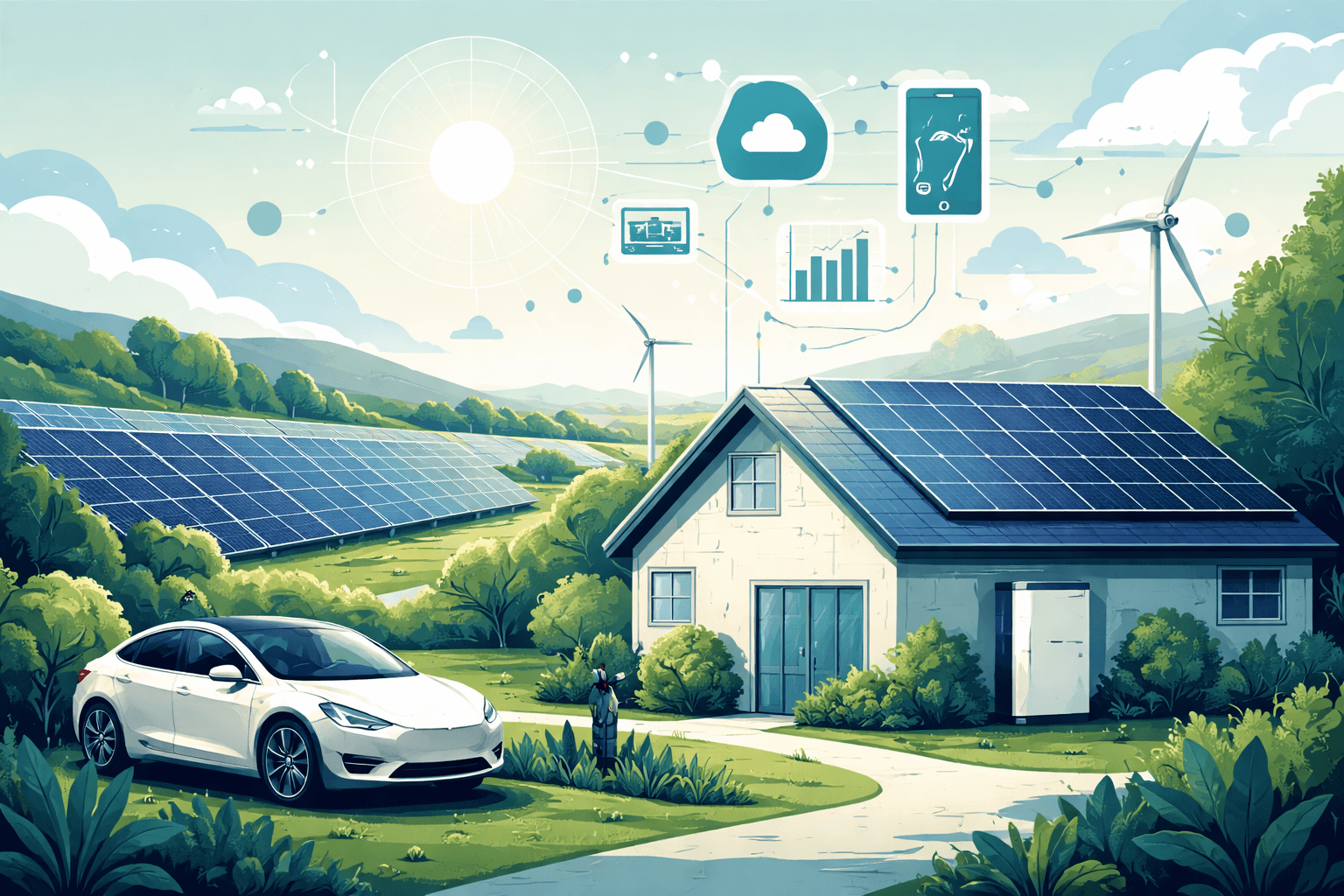
Kansas homeowners installed more rooftop solar in 2025 than any prior year, as falling hardware prices and a steady 30% federal tax credit narrowed payback to roughly 7–12 years for many households. With that backdrop, interest in Tesla Solar in Kansas is surging—especially among buyers who want a clean aesthetic, straightforward online ordering, and the option to bundle a Powerwall for backup.
This guide breaks down what Tesla offers in Kansas, what systems cost, how installation works, which incentives apply, and how Tesla stacks up against local installers.
By the Numbers: Tesla Solar in Kansas (2026)
- Typical Tesla panel pricing in Kansas: $2.30–$2.85 per watt before incentives (estimate based on Tesla configurator ranges and recent market quotes; see LBNL “Tracking the Sun 2024” and EnergySage market medians for context)
- Example 7 kW Tesla system: $16,100–$20,000 before incentives; $11,270–$14,000 after 30% federal tax credit
- Solar Roof typical all-in: $55,000–$95,000+ depending on roof size/complexity and system size
- Powerwall 3 installed in Kansas: $10,500–$13,500 per unit (hardware + installation, typical)
- Kansas solar resource: ~4.8–5.2 peak sun hours/day (NREL long-term averages), supporting 17–19% annual capacity factor
- Electricity price baseline: ~13–15¢/kWh for Kansas residential customers in 2025 (U.S. EIA state averages)
- Estimated 7 kW annual production: 9,300–10,500 kWh, worth ~$1,250–$1,575/year at 13–15¢/kWh (before any net-metering adjustments)
Solar Electricity Handbook - 2023 Edition: A simple, practical guide to solar energy – designing and installing solar photovoltaic systems: Boxwell, Michael
Solar Electricity Handbook - 2023 Edition: <strong>A simple, practical guide to solar energy – designing and installing solar photovoltaic systems</strong> [Boxwell, Michael] on Amazon.com. *FREE* shi
Check Price on Amazon1) Tesla Solar products available in Kansas: panels, Solar Roof, and Powerwall bundles
Tesla sells three main components to Kansas homeowners:
Tesla solar panels: Low-profile, black modules paired with the Tesla Inverter and Tesla gateway. Systems are typically 4–15 kW for single-family homes. Tesla leans on standardized racking and designs to streamline permitting and installation. Expect a clean look (black frames, concealed edge hardware) and a single app for monitoring.
Tesla Solar Roof: Integrated photovoltaic shingles that replace your roofing material and generate electricity. Good fit when your roof needs replacement and you value an all-in-one aesthetic. Solar Roof quotes include both roofing and PV electrical scope; non-solar “glass” tiles and PV tiles are interspersed across your roof based on your design and energy target.
Powerwall: A 13.5 kWh (usable) home battery for backup and self-consumption. Newer installations in 2026 commonly use Powerwall 3, which integrates the battery and a hybrid inverter for simpler installation and higher continuous power output. Powerwall can back up essential loads or whole-home circuits depending on your service size and number of units.
If you’re prioritizing resilience for Kansas thunderstorms, ice events, or summer peak outages, the panel+Powerwall bundle is the most popular path; see our dedicated overview for local pricing and availability: Tesla Powerwall in Kansas: Cost, Availability & Is It Worth It?
2) Tesla Solar pricing in Kansas: panels vs. Solar Roof cost comparison
Pricing varies by roof complexity, service upgrades, ground vs. roof mount, and interconnection fees. Still, recent quotes and configurator ranges offer a solid Kansas baseline.
Tesla solar panels: $2.30–$2.85/W before incentives in Kansas is common for 7–12 kW systems. Smaller systems may price slightly higher per watt due to fixed costs. At $2.55/W, a 7 kW array would run about $17,850 before incentives and roughly $12,495 after the 30% federal tax credit (ITC).
Tesla Solar Roof: Project totals typically fall between $55,000 and $95,000+ in Kansas, depending on roof size (square footage, facets, penetrations), pitch, required structural work, and the PV capacity embedded in the roof. Homeowners replacing an aging roof sometimes find Solar Roof’s “all-in” premium narrows when you net out what you would have spent on a premium reroof plus a conventional PV system.
Powerwall adders: Expect $10,500–$13,500 per Powerwall fully installed in Kansas, with per-unit costs falling when bundling multiple units. Batteries paired with solar generally qualify for the 30% ITC under current federal guidance when charged by the PV system.
These estimates align with national market medians tracked by Lawrence Berkeley National Laboratory and private marketplaces showing residential installed prices in the $2.70–$3.40/W band in 2024–2025, with Tesla often undercutting the median via standardized designs.
For state-wide context on non-Tesla pricing, incentives, and installer options, see our companion overview: Solar in Kansas: Costs, Incentives & Top Installers (2026)
3) How to order Tesla Solar in Kansas: timeline, site assessment, and installation
Tesla’s process is heavily digital and usually faster than traditional design-bid-build. Typical steps:
Online design and order fee: You’ll enter your address, average bill, and roof details to see a recommended system size. Tesla charges a nonrefundable order fee (historically ~$250). You can adjust system size before permitting.
Remote and/or on-site assessment: Tesla uses aerial imagery and remote shading analysis (derived from NREL/USGS irradiance layers and roof geometry) to create a permit-ready design. Complex roofs, structural questions, or main panel upgrades may trigger an on-site visit.
Permitting and utility interconnection: Tesla submits building/electrical permits to your local authority having jurisdiction (AHJ) and applies to your utility for interconnection/net metering. In Kansas, permitting plus interconnection review commonly takes 4–10 weeks, depending on the county and utility queue.
Installation day(s): Most 7–10 kW rooftop projects install in 1–2 days; add 0.5–1 day per Powerwall. Solar Roof projects take longer (often 1–3 weeks) due to tear-off, dry-in, tile installation, wiring, and inspections.
Inspection and PTO: Your AHJ final inspection comes first, followed by the utility’s meter swap and Permission to Operate (PTO). Expect 2–6 weeks post-install for many Kansas utilities.
App activation and monitoring: Once the gateway is online, you’ll see real-time power flows and historical production in the Tesla app. If you opted for Powerwall, you can set backup reserve levels and time-based control.
End-to-end timeline in Kansas: About 8–16 weeks for most panel-only systems; Solar Roof can stretch to several months depending on season, backlog, and roof complexity.
4) Kansas solar incentives that apply to Tesla installations
Federal Investment Tax Credit (ITC): 30% for residential solar and battery systems through 2032 under the Inflation Reduction Act. The credit applies to Tesla panels, Solar Roof’s PV portion, and Powerwall when charged by solar. Consult a tax professional for eligibility and carryforward rules.
Net metering: Kansas statutes require investor-owned utilities to offer net metering with size caps for residential systems (commonly up to 15 kW). For customers who interconnect after mid-2014, many Kansas tariffs credit monthly net excess at the utility’s “average cost of energy” (often called avoided cost), not the full retail rate. Program rules and available rate options can vary by utility and are periodically updated by the Kansas Corporation Commission (KCC). Check your specific tariff before finalizing system size.
Property tax treatment: Kansas law provides a property tax exemption for qualifying renewable energy equipment. In practice, many residential PV systems can apply so the added value of the solar array is not included in property tax assessments. Implementation details are county-specific—work with your installer and county appraiser to confirm documentation and timelines.
Sales tax: As of 2026, Kansas does not offer a statewide sales tax exemption for residential solar equipment. Expect normal state and local sales tax to apply to materials.
Local rebates: Some municipal utilities and electric co-ops may offer limited-time rebates or pilot programs. These change frequently—ask your installer and check your utility website.
Note: Incentive rules evolve. Source documents include Kansas Corporation Commission dockets/tariffs, utility net metering riders, DSIRE incentive summaries, and federal IRS guidance.
5) Tesla Solar reviews from Kansas customers: what owners actually report
Feedback from Kansas buyers, plus broader owner reports aggregated by consumer forums and installer review platforms, tend to cluster around a few themes:
What owners like
- Competitive, often lower-than-average pricing per watt for standard roofs
- Clean look and single-vendor ecosystem (panels, inverter, app, optional Powerwall)
- Smooth online process, fewer in-person sales calls
- Powerwall performance in thunderstorms and summer peak outages; seamless switchover
Common pain points
- Communication gaps during permitting and utility approval; status updates can lag
- Schedule slips when utility or AHJ backlogs lengthen; rescheduling after weather delays
- Subcontractor quality variance in some markets; roof penetrations and conduit aesthetics depend on crew
- Solar Roof timelines and change orders on complex roofs; expect longer lead times
Overall, Kansas buyers with simple, south- or west-facing roofs and standard service panels report the most seamless experiences and the sharpest pricing. Homes requiring main service upgrades, ground mounts, or complex rooflines benefit from proactive expectation-setting and, in some cases, quotes from local installers with custom solutions.
6) Tesla vs. local Kansas installers: pros, cons, and price comparison
Tesla
- Pros: Streamlined online design; often lower $/W; cohesive hardware ecosystem; strong brand and app experience
- Cons: Less customization (e.g., module brand, racking style, premium aesthetic details); communication can feel centralized; Solar Roof lead times
Local installers
- Pros: Custom array designs for complex roofs and ground mounts; hardware choice (e.g., premium high-efficiency modules, microinverters); potentially faster issue resolution; familiarity with local permitting quirks
- Cons: Often higher $/W (e.g., $2.60–$3.40/W) for similar system sizes; wider variance in quality between companies
Kansas price reality in 2026
- A 7 kW Tesla quote at $2.55/W: ~$17,850 before ITC ($12,495 after)
- A 7 kW local premium system (e.g., high-efficiency modules + microinverters) at $3.05/W: ~$21,350 before ITC ($14,945 after)
Which is better depends on your priorities. If you want the lowest-cost, standard system and like the Tesla app, Tesla is tough to beat. If you want microinverters for module-level redundancy, ultra-high-efficiency panels, flush conduit routing, or a complex roof solution, a top-tier local firm can be worth the premium. For a broader view of reputable regional firms and current market pricing, visit our state guide: Solar in Kansas: Costs, Incentives & Top Installers (2026)
Affiliate note: If you prioritize module-level optimization on complex rooftops, high-performing microinverters such as the Enphase IQ8 Series remain a benchmark for reliability and rapid-shutdown compliance. For Tesla buyers, a whole-home energy monitor like Sense Home Energy Monitor can help you shift loads to daylight hours and improve your payback.
7) Tesla Solar warranty and what it covers in Kansas
Panels: 25-year performance warranty and product warranty. Tesla’s performance guarantee typically warrants at least ~85% of nameplate output at year 25 (annual degradation around 0.5%–0.6%); check your specific datasheet for exact terms.
Tesla Inverter: 12.5-year limited warranty covering defects, with remote diagnostics and service procedures outlined in your agreement.
Solar Roof: 25-year power output warranty for the PV tiles and a roof/weatherization warranty term (often 25 years) against leaks in properly installed sections. Non-PV tiles are covered under a materials/workmanship warranty per contract.
Powerwall: 10-year warranty with an end-of-warranty energy retention target (commonly 70% of initial capacity for residential use, subject to usage profile and terms). Throughput conditions apply if used for certain applications.
Workmanship: Tesla and its certified installers provide an installation workmanship warranty; term details are in your contract and can vary by scope (e.g., roof penetrations).
Always review your final proposal and warranty booklets—terms can change and differ slightly by product version (e.g., Powerwall 2 vs. Powerwall 3).
8) FAQ: common questions about Tesla Solar in Kansas
How big should my system be in Kansas?
- Many Kansas homes land between 6–10 kW. Use a year of bills to target 80–110% of your annual consumption, adjusted for roof shading and your utility’s net metering credit rules. NREL’s PVWatts or your Tesla quote can model production using local irradiance.
What about hail, wind, and snow loads?
- Tesla panels are tempered glass modules tested to international standards (IEC 61215) that include hail impact tests (typically 25 mm ice at ~23 m/s). Racking and modules are engineered to local wind/snow loads noted in your permit set. Solar Roof tiles carry high wind and hail ratings (e.g., UL 2218 Class 3/4 hail). If you live in hail-prone counties, ask about module glass thickness, mounting standoff, and insurance riders.
Will I get full retail credit for exports in Kansas?
- Often not for systems interconnected after mid-2014. Many Kansas IOU tariffs credit monthly net excess at the utility’s average energy cost rather than full retail. Rate design is utility- and date-specific, and the KCC periodically updates dockets. Confirm your exact credit rate and any time-of-use options with your utility before you finalize system size.
How long does installation take?
- Simple rooftop arrays: 1–2 days on-site, then 2–6 weeks to PTO. Solar Roofs: typically 1–3 weeks on-site plus inspections and PTO. End-to-end from order to PTO is commonly 8–16 weeks for panels and longer for Solar Roof.
Do I need a new main service panel?
- If your home has a 100 A service or a crowded 200 A panel, Tesla may recommend a main panel upgrade or a load management solution to meet code (NEC 120% rule or supply-side tap alternatives). This can add cost but improves safety and future electrification readiness.
Is a Powerwall worth it in Kansas?
- For backup: If your area experiences storm-related outages, a single Powerwall can keep essentials (fridge, lights, network, a few outlets) running for 12–24 hours, longer with daytime solar. For bill savings: Value depends on your rate plan and net-metering credit; batteries shine with time-of-use rates or low export credits. Dive deeper here: Tesla Powerwall in Kansas: Cost, Availability & Is It Worth It?
What’s the payback period?
- With $2.30–$2.85/W pre-ITC pricing, 4.8–5.2 peak sun hours/day, and electricity at ~13–15¢/kWh, many Kansas homes see simple paybacks of 7–12 years for panel-only systems. Batteries lengthen payback unless your outage risk or rate design adds clear value.
Will Tesla install ground mounts in Kansas?
- Tesla primarily focuses on rooftop systems. If you require a ground mount, a local installer may be a better fit and can still interconnect under the same utility programs.
Can I pair Tesla Solar with non-Tesla tech?
- Yes. Most buyers use Tesla’s inverter and app, but you can still electrify other loads. Popular add-ons include a smart thermostat for pre-cooling and demand shifting (e.g., Ecobee Smart Thermostat Premium) and a Level 2 charger to soak up midday solar (e.g., Emporia Level 2 EV Charger).
Practical tips for Kansas buyers
- Ask Tesla to model production with at least three years of local weather data and include a shade report; Kansas trees leaf out aggressively in spring and can reduce output versus winter imagery.
- If your utility credits exports at avoided cost, slightly undersizing the system (e.g., 80–95% of annual load) can improve economics by minimizing low-value exports.
- For hail-prone zones, discuss module impact ratings, standoff height, and your home insurance coverage for solar. Some carriers require a rider; others include PV as part of the dwelling.
- If your roof is 12–15 years old or older, compare a Tesla panel system plus reroof versus a Tesla Solar Roof quote to see which pencils out best when you account for timing and warranties.
Where the market is heading
Hardware learning curves and scale continue to push costs down: global module prices fell sharply in 2024 as polysilicon oversupply eased, and U.S. installed costs trended lower in LBNL’s most recent datasets. In Kansas, the dominant variables for payback in 2026–2028 will be utility rate design, export credit rules, and whether utilities move further toward time-of-use and grid services. Tesla’s integrated ecosystem—panels, inverter, Powerwall, and app—is well-positioned for those changes, enabling load shifting and backup without rework.
For a full picture of statewide incentives, installer options, and market pricing beyond Tesla, keep this Kansas roundup bookmarked: Solar in Kansas: Costs, Incentives & Top Installers (2026)

Sense Energy Monitor with Solar – Track Electricity Usage and Solar Production in Real Time
View on Amazon
EMPORIA Level 2 EV Charger w/ J1772 Charger, 48 amp ...
View on AmazonRecommended Products
Solar Electricity Handbook - 2023 Edition: A simple, practical guide to solar energy – designing and installing solar photovoltaic systems: Boxwell, Michael
Solar Electricity Handbook - 2023 Edition: <strong>A simple, practical guide to solar energy – designing and installing solar photovoltaic systems</strong> [Boxwell, Michael] on Amazon.com. *FREE* shi
Sense Energy Monitor with Solar – Track Electricity Usage and Solar Production in Real Time
KNOW WHAT’S ON: Track how much electricity you’re using, what time your kids got home, or when someone leaves the basement light on. Sense <strong>identifies patterns in your energy use to help your f
EMPORIA Level 2 EV Charger w/ J1772 Charger, 48 amp ...
Explore a wide selection of hardwired Level 2 EV charging stations. Features include 25-foot cables, app control, and weather-resistant construction.