
Tesla Solar in Michigan: Panels, Roof & Pricing Guide (2026)
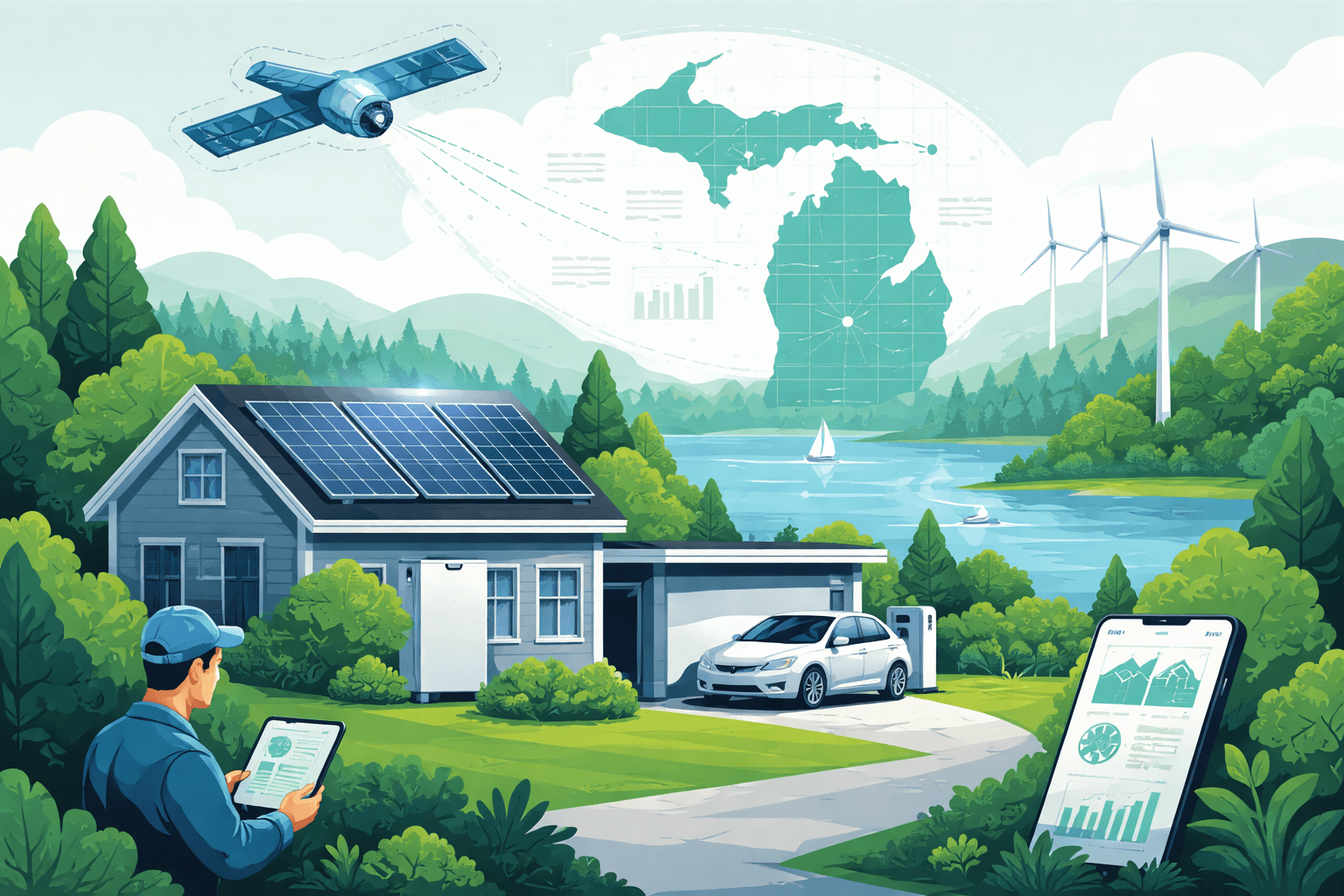
Michigan homeowners are asking about Tesla Solar in Michigan for good reason: electricity rates have climbed to roughly 17–19¢/kWh in recent years (EIA), and the state has some of the longest outage durations in the country during major weather events. Pair that with a 30% federal tax credit and falling installed costs, and the 2026 case for Tesla panels, Solar Roof, and Powerwall looks stronger than ever.
Below, we break down products, pricing, incentives, installation timelines, and real owner feedback—grounded in current data and Michigan-specific rules.
By the numbers: Michigan + Tesla Solar
- Solar resource: 1 kW of well-sited rooftop PV in southeast Michigan typically produces ~1,150–1,350 kWh/year (NREL PVWatts), a capacity factor of ~14–17%
- Typical system size: 6–10 kW for a detached home (MI average usage ~650–800 kWh/month)
- Installed price ranges (pre-ITC): Tesla panels often quote around $2.40–$2.80/W; broader Michigan market commonly $3.00–$3.60/W (NREL cost benchmarks + 2025–2026 quotes)
- Federal tax credit: 30% Investment Tax Credit (ITC) for solar and batteries (U.S. Treasury/IRS guidance under the Inflation Reduction Act)
- Storage: Tesla Powerwall usable energy ~13.5 kWh; designed to back up key loads or whole-home depending on service size and configuration
- Payback period: 8–12 years for Tesla panels in Michigan is common, depending on roof, interconnection tariff, and usage pattern; Solar Roof ROI depends heavily on whether a roof replacement is already needed

Electrify: An Optimist's Playbook for Our Clean Energy Future
In Electrify, <strong>Griffith lays out a detailed blueprint—optimistic but feasible—for fighting climate change while creating millions of new jobs and a healthier environment</strong>. Griffith’s pl
Check Price on AmazonTesla Solar products available in Michigan
Tesla solar panels (standard rooftop arrays)
Tesla’s panel systems in Michigan use high-efficiency monocrystalline modules paired with the Tesla Solar Inverter or an integrated Powerwall 3 inverter. Key characteristics:
- Power density and efficiency: Modern Tesla-branded or partner modules typically 19%–21.5% efficiency; black-on-black aesthetics
- Inverter: Tesla Solar Inverter offers high conversion efficiency (around 97%+ typical for modern string inverters) and integrated rapid-shutdown compliance
- Design approach: String-based design with module-level safety; Powerwall 3 can function as a hybrid inverter for solar + storage
- Monitoring: Tesla app shows real-time and historical production, consumption, and battery status
Best for: Most Michigan roofs with simple geometry and good south, southeast, or southwest exposure. Systems commonly sized 6–10 kW for typical homes; larger homes may require 10–15 kW.
Tesla Solar Roof (integrated solar shingles)
Tesla’s Solar Roof replaces your shingles with glass-encased solar tiles plus non-solar tiles on less sunny roof planes. Considerations in Michigan:
- Aesthetics: Integrated look with no conventional panels
- Complexity: Output depends on roof geometry; valleys, dormers, and multiple planes can add cost and lower energy density
- Cold weather and snow: Solar Roof sheds snow quickly due to smooth glass tiles—great for winter production resuming after storms but can cause snow “avalanching” off steeper roofs; snow guards may be recommended
Best for: Homeowners already planning a premium roof replacement who value aesthetics and are comfortable with longer timelines and higher upfront cost than standard panels.
Tesla Powerwall (battery + backup)
With Michigan’s frequent storm-related outages and growing time-of-use rates, storage is increasingly compelling:
- Backup: Powerwall (13.5 kWh usable) can back up critical loads for many hours; multiple units support larger loads or whole-home backup
- Time-of-use and self-consumption: Charge from excess solar mid-day and use power during peak periods (common with DTE and Consumers Energy TOU tariffs)
- Interconnection: Batteries often simplify backup planning under the state’s Distributed Generation (DG) framework by boosting self-consumption and limiting exports
If you’re specifically weighing storage economics and sizing, see our deep dive: Tesla Powerwall in Michigan: Cost, Availability & Is It Worth It?
Tesla Solar pricing in Michigan: panels vs. Solar Roof
Pricing always depends on roof complexity, service upgrades, and permitting, but 2025–2026 Michigan quotes we’ve seen plus national cost benchmarks from NREL point to the following ballparks (pre-ITC):
- Tesla panels: About $2.40–$2.80 per watt before incentives in many Michigan zip codes
- Broader MI market (multiple installers): Often $3.00–$3.60 per watt before incentives
- Tesla Solar Roof: Project-dependent, but frequently comes in higher on a $/W basis than panels due to roof replacement. All-in project costs commonly land in the $35,000–$70,000+ range for average homes, varying with pitch, facets, and system kW
Example math for a 7 kW panel system:
- Pre-ITC system price: $16,800–$19,600 (Tesla panel range above)
- 30% ITC: −$5,040 to −$5,880
- Net after ITC: ~$11,800–$13,700
- Annual production: ~8,400–9,200 kWh (NREL PVWatts estimate for a good roof in much of lower Michigan)
- Bill impact: At 17–19¢/kWh retail, gross savings could be $1,430–$1,750 in a near net-zero scenario; under Michigan’s DG inflow/outflow tariffs, actual savings depend on your self-consumption share vs. exports (more self-use = faster payback)
Where Solar Roof can pencil:
- If your current roof is near end-of-life, compare Solar Roof’s premium to the combined cost of a high-end new roof plus a conventional panel system
- A simpler roof with large, sunny planes improves Solar Roof energy density and economics
How to order Tesla Solar in Michigan: timeline, site assessment, installation
Ordering Tesla Solar in Michigan is designed to be mostly digital, but a successful project hinges on accurate design and local permitting.
- Instant design and estimate
- Enter address and recent electric bills on Tesla’s site; satellite imagery generates a first-pass layout and size recommendation
- You can adjust system size based on usage growth (EV, heat pump) or aesthetic preferences
- Remote site assessment and documentation
- Photos of your electrical panel, roof, and shading help Tesla validate the design
- Structural or electrical service upgrades (e.g., 100A to 200A) are flagged at this stage
- Permitting and utility interconnection
- Michigan municipalities typically turn residential solar permits in 2–4 weeks; some approve sooner
- Distributed Generation (DG) interconnection applications go to your utility (DTE, Consumers Energy, municipal or co-op). Approval for systems under 20 kW is often 2–4 weeks after a complete application, though seasonal backlogs happen
- Installation day(s)
- Standard panel systems install in 1–2 days; Powerwall add-ons can add another day
- Solar Roof projects can take longer due to full roof replacement—often a week or more
- Inspections, PTO, and activation
- City inspection and utility Permission to Operate (PTO) can add 1–3 weeks
- Winter scheduling: Michigan’s heavy snow season can push exterior work to thaw windows; aim to sign in late winter/early spring to hit the first big solar months
Pro tip: Michigan’s winter performance losses from snow cover are real, but NREL field studies in northern states place typical annual snow losses at a modest single-digit percentage when arrays are pitched and unshaded. Production quickly rebounds on sunny, cold days that are great for PV efficiency.
Michigan solar incentives that apply to Tesla installations
- 30% federal ITC: Covers solar, storage (standalone or paired), and required electrical work. No cap; applies to Tesla panels, Solar Roof’s solar portion, and Powerwall
- Michigan’s Distributed Generation (DG) program: Michigan replaced retail net metering with DG inflow/outflow tariffs administered by utilities and overseen by the Michigan Public Service Commission (MPSC). Exports are credited at roughly the “power supply” portion of your rate, typically lower than full retail. Translation: designs that maximize on-site use (EV charging, water heating, daytime HVAC) increase project value
- Time-of-use (TOU) rates: DTE and Consumers Energy offer TOU schedules with higher late-afternoon/early-evening prices. Pairing solar with Powerwall can arbitrage rates and enhance outage protection
- Sales and property tax: Michigan does not currently offer a statewide residential income tax credit for solar. Property tax treatment of solar equipment can vary—consult your local assessor and review DSIRE and MPSC guidance during the quote process
- Financing: Many Michigan homeowners use low-interest clean-energy loans through local credit unions; programs like Michigan Saves have supported energy upgrades across the state—ask your installer which loan products they support
For a broader look at market prices and policy details beyond Tesla, see our state overview: Solar in Michigan: Costs, Incentives & Top Installers (2026)
Tesla Solar reviews from Michigan customers: what owners report
What we hear most often from Michigan Tesla Solar owners mirrors national patterns reported in consumer surveys and public forums:
What owners like
- Competitive pricing and clean aesthetics: Tesla’s panel quotes are often 10–20% below local averages, and the all-black look is a frequent plus
- App and ecosystem: Unified app experience for solar, Powerwall, and EVs; seamless monitoring and firmware updates
- Reliable storage: Powerwall’s backup performance during wind and ice storms earns high marks, especially on TOU rates
What owners flag as challenges
- Communication and scheduling: National scale can bring slower support queues and reschedule risks—especially around winter weather windows
- Solar Roof timelines: More complex jobs see longer design-permit-install cycles; plan accordingly if you have a target completion date
- Service after install: Warranty support exists, but response times can vary by region and season
Michigan-specific notes
- Snow management: Some owners add snow guards—especially on Solar Roofs with steep pitches above walkways
- Shading and trees: Mature trees are common; thoughtful array placement and realistic production estimates matter more here than in the Sun Belt
Tesla vs. local Michigan installers: pros, cons, and price comparison
Tesla’s proposition in Michigan is strongest on price for straightforward roofs. Local installers can shine on complex roofs, custom equipment choices, and hands-on support.
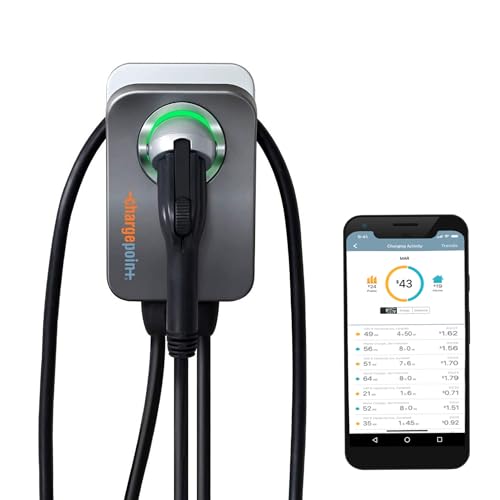
ChargePoint HomeFlex Level 2 EV Charger J1772
View on AmazonTesla advantages
- Price scale: Tesla often undercuts statewide averages by leveraging standardized designs and supply chain scale
- Ecosystem integration: Smooth pairing with Powerwall and the Tesla app; good fit for Tesla EV owners
- Availability: Broad coverage across metro Detroit, Ann Arbor, Lansing, Grand Rapids, and many surrounding communities
Local installer advantages
- Equipment flexibility: Want microinverters on every panel, a specific panel brand, or a different battery? Local EPCs can tailor systems
- Design nuance: Tricky roof geometry, heavy shading, or metal/cedar roofs may benefit from custom racking and module-level power electronics
- Service reputation: Some Michigan EPCs offer faster post-install support and on-site diagnostics
Typical price comparison (pre-ITC, 2026 quotes)
- Tesla panels: ~$2.40–$2.80/W
- Michigan installers (varied equipment): ~$3.00–$3.60/W
If you prefer module-level power electronics for granular shading tolerance and panel-level monitoring, it’s smart to price an alternative alongside Tesla—systems like a Microinverter-Based PV Kit can offer strong value with 25-year electronics warranties. And if you plan to charge an EV at home, a load-aware ENERGY STAR Level 2 EV Charger can increase your solar self-consumption and improve payback under DG tariffs.
Tesla Solar warranty and what it covers in Michigan
- Panels and power production: 25-year performance warranty, typically guaranteeing 80–85% of nameplate output at year 25 (exact terms depend on module generation)
- Workmanship/roof penetration: Limited installation warranty (often 10 years) covering workmanship and roof penetrations performed by Tesla or its installation partners
- Inverter: Tesla Solar Inverter limited warranty commonly 12.5 years; Powerwall electronics/battery warranty 10 years with stated end-of-warranty capacity (Tesla has historically specified ~70% after 10 years—check your agreement)
- Solar Roof: 25-year weatherization and production warranties on solar tiles; separate workmanship coverage. Non-solar tiles carry their own material warranties
Always review the specific warranty documents in your Tesla order agreement; terms can vary by product generation and date of install.
FAQ: common questions about Tesla Solar in Michigan
Is Tesla Solar in Michigan available statewide?
- Tesla actively installs across most of the Lower Peninsula. Availability in smaller municipal/co-op territories and the Upper Peninsula can vary—enter your address on Tesla’s site to confirm
How does Michigan’s DG program affect my savings vs. net metering?
- Under DG inflow/outflow, exports earn the utility’s power-supply rate (often 25–40% below full retail). Designs that boost on-site use—EV charging, smart electric water heating, or a battery—improve economics. A Smart Load Controller that precools/preheats or times water heating can help you capture more of your solar generation
What’s the typical payback for Tesla Solar in Michigan?
- For panels: 8–12 years is common with good roof exposure and typical usage, accelerating if you self-consume more energy or face higher TOU peaks. Solar Roof payback depends largely on whether you’re offsetting a premium roof replacement
Do Tesla panels work in winter and under snow?
- Yes. Cold, sunny days boost panel efficiency; snow temporarily reduces output until it slides off or melts. Annual snow losses for pitched, unobstructed arrays in northern states are often in the single digits (NREL field studies)
Will my HOA allow Tesla Solar?
- Michigan does not have a universal solar rights law like some states. Many HOAs approve well-sited arrays; Tesla’s low-profile, black hardware helps. Review your CC&Rs early and share the design packet
Do I need a new electrical service for Powerwall?
- Many homes do not, but older 60–100A services or crowded panels sometimes require upgrades. Tesla identifies this during the remote assessment; upgrades add cost but are ITC-eligible when required for solar/battery
How big a system do I need?
- Start with last 12 months of kWh usage. In much of Michigan, a 1 kWdc array yields ~1,200–1,300 kWh/year. A 7 kW system might target ~8,400–9,100 kWh/year on a good roof. The optimal size also depends on your DG tariff and how much you can self-consume
Can I finance Tesla Solar?
- Yes. Tesla offers cash and third-party loan options; many Michigan credit unions and lenders (including programs associated with Michigan Saves) offer solar loans. Compare interest rates and fees carefully
Where can I learn more about pairing Powerwall with Tesla Solar in Michigan?
- We cover costs, backup sizing, and rate arbitrage scenarios here: Tesla Powerwall in Michigan: Cost, Availability & Is It Worth It?
Practical tips for Michigan buyers
- Roof-first mindset: If your roof is >15 years old or shows wear, consider replacing it first; it’s less costly than removing/reinstalling solar later. If aesthetics and timing align, Solar Roof can be evaluated alongside a premium shingle or metal roof bid
- Aim for self-consumption: Program your EV charging and appliances to daytime where possible; batteries and smart controls reduce low-value exports under DG tariffs
- Compare two quotes: Price Tesla against at least one reputable Michigan EPC. For complex roofs or heavy shading, a module-level design using a Home Energy Monitor + Microinverters Bundle can perform better and provide panel-level diagnostics

Emporia Gen 2 Smart Home Energy Monitor with 16 50A Circuit Level Sensors | Real Time Electricity Monitor/Meter | Solar/Net Metering - Amazon.com
View on AmazonWhere the market is heading
NREL’s cost benchmarks show steady declines in residential solar soft costs via standardization—exactly Tesla’s playbook. At the same time, Michigan utilities are leaning further into time-of-use and grid-hardening investments after years of severe storm outages. Expect three trends to shape Tesla Solar in Michigan through 2026:
- More storage: As TOU spreads and outages remain a concern, Powerwall attachment rates will rise
- Faster permitting: Adoption of standardized solar permitting (where implemented) can cut weeks off timelines and lower soft costs
- Smarter load control: EVs, heat pumps, and water heaters controlled around solar production will boost self-consumption, especially under DG tariffs
If your roof is viable and you expect to stay in your home 7–10+ years, Tesla Solar in Michigan is worth a close look—particularly if you value the Tesla ecosystem and can schedule around winter installation windows. For policy details and non-Tesla installer options, bookmark our state guide: Solar in Michigan: Costs, Incentives & Top Installers (2026).
Recommended Products
Electrify: An Optimist's Playbook for Our Clean Energy Future
In Electrify, <strong>Griffith lays out a detailed blueprint—optimistic but feasible—for fighting climate change while creating millions of new jobs and a healthier environment</strong>. Griffith’s pl
Emporia Gen 2 Smart Home Energy Monitor with 16 50A Circuit Level Sensors | Real Time Electricity Monitor/Meter | Solar/Net Metering - Amazon.com
See how much electricity your home is using anywhere, anytime. ... <strong>Add individual 50A sensors to your Vue to monitor up to 16 individual circuits</strong> — providing accurate energy use for t
ChargePoint HomeFlex Level 2 EV Charger J1772
Discover the latest in EV charging technology. Explore a diverse selection of smart, efficient, and compatible charging solutions for your electric vehicle.