
Tesla Solar in Pennsylvania: Panels, Roof & Pricing Guide (2026)
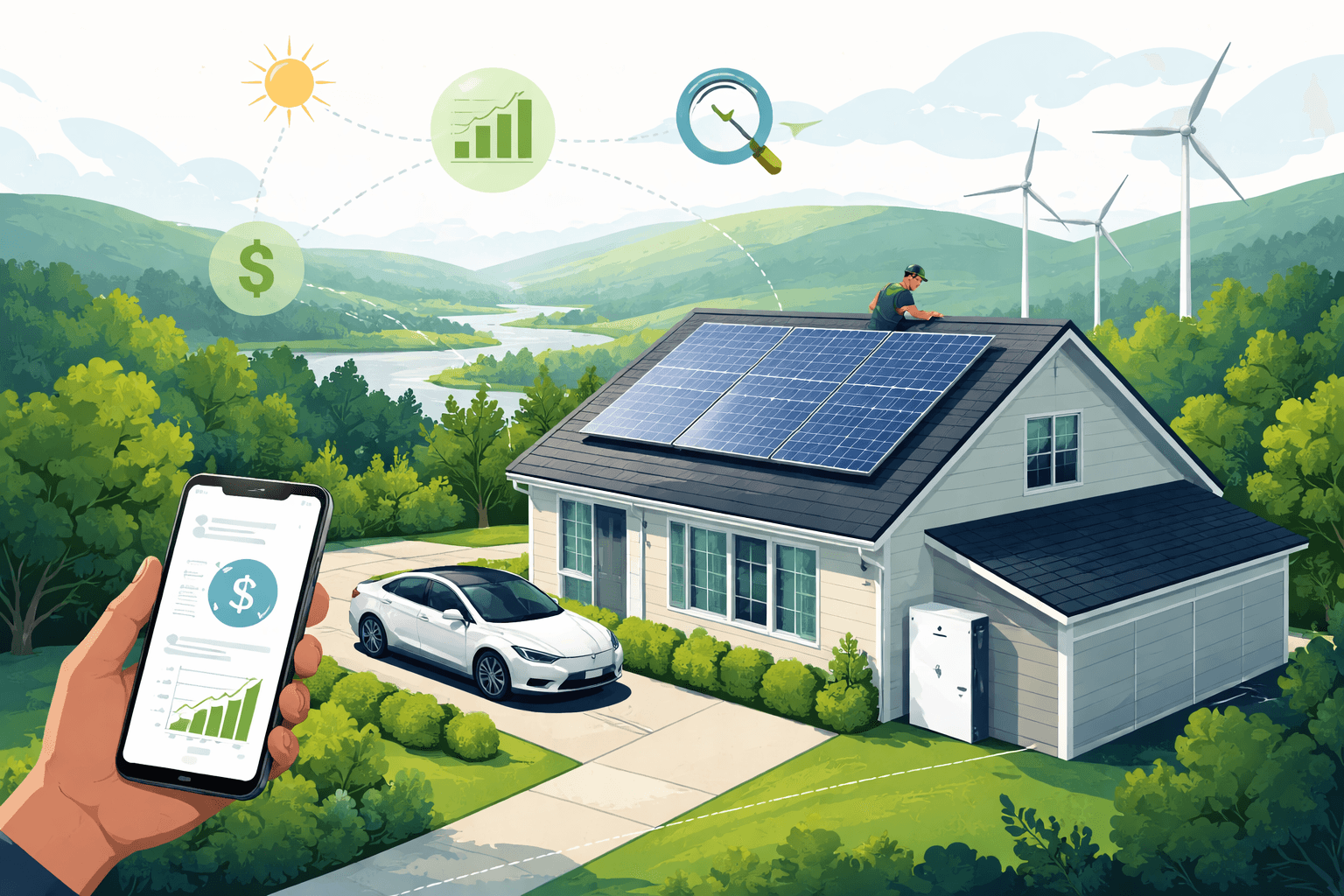
Pennsylvania homeowners are taking a fresh look at Tesla Solar as retail electricity rates hover around 17–18¢/kWh (EIA, 2024) and the 30% federal clean energy tax credit remains in place through 2032. With Tesla’s online pricing, bundled Powerwall options, and a strong mobile app, “Tesla Solar in Pennsylvania” has become a top search for households seeking predictable bills and blackout protection.
This 2026 guide breaks down what Tesla offers in the Commonwealth—costs for panels vs. Solar Roof, installation timelines, incentives (including SRECs and net metering), real owner feedback, and how Tesla stacks up against local installers.
By the numbers: Pennsylvania solar context
- Installed solar capacity: ~1.7–2.0 GW as of 2024 (SEIA 2024), mid-pack among U.S. states
- Typical residential use: ~10,000–11,000 kWh/year (EIA, 2024)
- Solar production in PA: 1 kWdc produces roughly 1,200–1,350 kWh/year depending on location and tilt (NREL PVWatts)
- Example 7 kW system output: ~8,400–9,450 kWh/year
- Savings potential: At 17–18¢/kWh, that’s ~$1,400–$1,700 in first‑year bill reduction before any rate escalations
- 30% federal tax credit: Applies to Tesla solar panels, Solar Roof PV portion, and Powerwall (IRA, 2022)
Solar Electricity Handbook - 2023 Edition: A simple, practical guide to solar energy – designing and installing solar photovoltaic systems: Boxwell, Michael
Solar Electricity Handbook - 2023 Edition: <strong>A simple, practical guide to solar energy – designing and installing solar photovoltaic systems</strong> [Boxwell, Michael] on Amazon.com. *FREE* shi
Check Price on Amazon1) Tesla Solar products available in Pennsylvania: panels, Solar Roof, and Powerwall bundles
Tesla sells two primary solar offerings in Pennsylvania:

EF ECOFLOW Smart Home Panel 2, the Center of the Whole
Alternatively connect <strong>3 x EcoFlow DELTA Pro 3 units with 6 x Extra Batteries for energy storage up to 36kWh</strong>. It's not just for longer backup but lets you to control and run every
Check Price on AmazonTesla Solar Panels
- Standard black monocrystalline modules on low‑profile mounting.
- Paired with the Tesla Solar Inverter and Tesla app monitoring.
- Typical residential sizes: ~4–12 kWdc.
Tesla Solar Roof
- Building-integrated photovoltaic (BIPV) glass tiles that replace your roofing material.
- Includes a mix of active PV tiles and visually matched non‑PV tiles to cover the whole roof.
- Best fit when you need a roof replacement and want an integrated look.
Tesla Powerwall (battery storage)
- 13.5 kWh usable capacity per unit; stackable for more backup and time-of-use savings.
- Integrated inverter and faster backup transfer with the latest generation.
- Eligible for the 30% federal credit as standalone or paired with solar.
In Pennsylvania, most buyers choose Tesla Solar Panels with one or two Powerwalls for resilience. Solar Roof makes sense when the existing roof is at end-of-life or for new construction where “one-and-done” roofing plus solar has design value. For deeper battery details, see our state-specific coverage: Tesla Powerwall in Pennsylvania: Cost, Availability & Is It Worth It?.
2) Tesla Solar pricing in Pennsylvania: panels vs. Solar Roof cost comparison
Pricing varies by roof complexity, system size, and local permitting/utility fees. Using recent quotes and market ranges in the Mid‑Atlantic, here’s what most homeowners can expect in 2026.
Tesla Solar Panels (Pennsylvania)
- Typical turnkey price: ~$2.60–$3.20 per watt (before incentives)
- Example 7 kW system: $18,200–$22,400 before incentives
- 30% federal credit: lowers net cost to ~$12,740–$15,680
- Add Powerwall: +$9,000–$11,000 per unit installed before credit; net ~$6,300–$7,700 after 30%
What drives the price up or down?
- Roof facets and pitch (more complexity = more labor)
- Main service panel upgrades (often needed for battery backup)
- Long conduit runs and attic work in older PA homes
- Interconnection fees and utility meter upgrades
Tesla Solar Roof (Pennsylvania)
- Because Solar Roof replaces your roof, Tesla prices it as an integrated roof + solar package.
- For a typical 2,000–2,400 sq ft Pennsylvania home with moderate roof complexity and ~8–10 kW PV output:
- Total Solar Roof project often lands around $55,000–$85,000 before incentives
- The 30% federal credit applies to the PV portion; Tesla itemizes this on your design
- Net costs can vary widely depending on how much of the spend is PV vs. non‑PV tiles
When is Solar Roof financially competitive?
- If you already need a roof replacement in the next 1–3 years
- If HOA or historic‑district aesthetics strongly favor integrated solar
For many PA homes with good existing roofs, conventional Tesla panels are the cost‑optimal path to kWh savings. If you’re comparing solar quotes beyond Tesla, our statewide roundup has recent cost data and vetted installers: Solar in Pennsylvania: Costs, Incentives & Top Installers (2026).
3) How to order Tesla Solar in Pennsylvania: timeline, site assessment, and installation
Tesla’s ordering is mostly online and app‑driven. A typical PA homeowner journey looks like this:
Online design and estimate
- Enter your address and monthly bill; Tesla generates a preliminary system size.
- You can tweak size in 0.5–1.0 kW increments to hit a target bill offset.
Virtual and/or on‑site assessment
- Tesla reviews roof measurements (imagery + LiDAR where available) and checks for shading and structural flags.
- When needed, an on‑site visit confirms attic access, main panel capacity, and roof condition.
Final proposal and contract
- You’ll receive a detailed layout, equipment list, price, and production estimate (kWh/year based on NREL weather data).
Permitting and utility interconnection
- City/township permitting in PA typically takes 2–6 weeks depending on the Authority Having Jurisdiction (AHJ).
- Utility interconnection approval (e.g., PECO, PPL, Duquesne Light, FirstEnergy utilities) often takes 1–4 weeks after permit issuance.
Installation and inspection
- One to three days on site for panels; Solar Roof can take longer (a week or more) depending on complexity.
- Final inspection and Permission to Operate (PTO) usually arrive 1–3 weeks post‑install.
Total timeline
- Panels: ~6–12 weeks from order to PTO in many PA municipalities
- Solar Roof: Allow ~10–16+ weeks due to roofing scope
Note: Winter weather and end‑of‑year permit backlogs can extend timelines.
4) Pennsylvania solar incentives that apply to Tesla installations
Pennsylvania has a straightforward incentive stack that works cleanly with Tesla.
30% Federal Clean Energy Tax Credit (ITC)
- Applies to Tesla panels, Solar Roof (PV portion), Powerwall, and associated balance-of-system costs.
- Subject to tax liability; consult a tax professional.
Net Metering (Pennsylvania PUC)
- Most PA utilities credit excess solar generation at the full retail rate.
- Monthly excess rolls forward; an annual “true‑up” compensates remaining credits, typically at a supply‑rate proxy set by the utility.
- Residential system size cap: up to 50 kW nameplate capacity.
Pennsylvania SRECs (Solar Renewable Energy Credits)
- You earn 1 SREC for every 1,000 kWh your system produces.
- SRECs can be sold via brokers or exchanges (e.g., PJM GATS registries; market pricing varies).
- In recent years, PA SRECs have generally traded in the ~$25–$45 range per MWh; revenue is variable and not guaranteed (market data: SREC brokers and PJM updates).
Local incentives
- Some municipalities and utilities periodically offer application fee waivers, expedited permitting, or small rebates. Check your city and utility program pages when you apply.
For a 7 kW Tesla system producing ~9,000 kWh/year, SRECs could add roughly $225–$400/year at the pricing range above—helpful but not the core of payback in PA. The heavy lifters remain the 30% ITC and long‑term bill reduction from net metering.
5) Tesla Solar reviews from Pennsylvania customers: what owners actually report
Themes we see in Pennsylvania owner feedback (drawn from customer forums, Tesla community posts, and review aggregators like SolarReviews and Google reviews):
What owners like
- Clean aesthetics and low‑profile racking, especially on simpler gable roofs
- Transparent online pricing and fewer in‑home sales calls
- A single app for solar + Powerwall with granular production/consumption data
- Production estimates generally track actuals when shading is modest and tilt is near 30–35°
Where owners see friction
- Scheduling gaps between permit approval, installation, and PTO—especially near year‑end or winter
- Communication lags during busy seasons; customers sometimes rely on the app for updates more than a human PM
- Solar Roof backlogs in certain counties and longer on‑site durations compared to panels
Performance notes from PA climate
- Snow: Performance dips during snow cover, but dark glass and steeper pitches shed quickly during sunny thaw cycles. Owners in Erie and the Northern Tier report shorter winter days as the bigger limiter vs. cold temperatures (which actually improve panel efficiency).
- Summer humidity: Slightly reduces panel efficiency, but long, sunny days more than compensate.
6) Tesla vs. local Pennsylvania installers: pros, cons, and price comparison
Tesla advantages
- Streamlined online quoting and frequently competitive $/W pricing
- Strong ecosystem if you want Powerwall and EV integration
- Nationwide warranty backing and app experience

Sense Flex/Solar Add-on Sensors : Patio, Lawn & Garden
View on AmazonLocal installer advantages
- More module/inverter choices (REC, Qcells, Maxeon; Enphase/SolarEdge) to optimize for shade, efficiency, or warranties
- Often faster service dispatch and post‑install support in your county
- Familiarity with municipal inspectors and HOA nuances, which can speed approvals
Price snapshot (2026)
- Tesla panels: ~$2.60–$3.20/W in PA
- Local EPCs: commonly ~$2.80–$3.60/W for premium modules or microinverters; value‑tier offerings can be competitive with Tesla
How to choose
- If lowest friction and integration with Powerwall matter most, Tesla is a strong baseline quote.
- If your roof has complex shading or you want module-level shutdown with optimizers/microinverters, a local installer spec’ing equipment like REC Alpha Pure‑R 410W and Enphase IQ8 Microinverters can maximize performance.
- If you’re unsure about load patterns, adding a home energy monitor such as the Sense Energy Monitor before sizing solar helps right‑size your array and battery.
For broader market pricing and reputable EPCs by region, see: Solar in Pennsylvania: Costs, Incentives & Top Installers (2026).
7) Tesla Solar warranty and what it covers in Pennsylvania
Warranty terms can evolve; always review Tesla’s current documents in your contract. As of late‑2024/2025 materials, typical coverages include:
Tesla solar panels
- Performance: 25 years with a guaranteed output curve (panel production degrades slowly; exact percentages in your data sheet)
- Product: Commonly 12–25 years depending on panel generation
Tesla Solar Inverter
- Product warranty: often ~12.5 years
Powerwall
- 10‑year warranty with an energy throughput/retention clause; designed for daily cycling in solar self‑consumption and backup
Workmanship/roof penetrations
- A separate workmanship or roof mounting warranty (commonly ~10 years) covering leaks due to penetrations
If you’re comparing against premium third‑party modules, note some panels (e.g., Maxeon) carry 40‑year performance warranties. Local installers may also offer extended workmanship coverage. Warranty isn’t everything, but it’s part of total value.
8) FAQ: common questions about Tesla Solar in Pennsylvania
What system size do I need in PA?
- A quick rule: Annual kWh use ÷ 1,250 gives a reasonable first‑pass system size in kWdc for much of PA. For 10,500 kWh/year, that’s ~8.4 kWdc. Tesla’s proposal will refine this with NREL weather and your roof geometry.
Is Tesla available statewide?
- Tesla operates across most metro and suburban regions, coordinating with local partners where needed. Rural installs depend on crew availability and roof complexity.
How does winter affect production?
- Shorter days and snow reduce output. Year‑round performance estimates already account for seasonal patterns, and Pennsylvania’s spring–summer generation usually carries the annual total.
Can I get net metering with Tesla?
- Yes. Tesla submits your interconnection for net metering with your utility. You’ll see monthly credits for excess production and an annual true‑up per Pennsylvania PUC rules.
What if my roof needs work?
- For panels, Tesla (or a partner roofer) can replace sections of the roof during install. If your roof is near end‑of‑life, compare the economics of standard re‑roof + panels versus Solar Roof.
How long from order to PTO?
- Panels: often 6–12 weeks; Solar Roof: 10–16+ weeks. Weather and permitting calendars can shift timelines.
Can I add Powerwall later?
- Yes. Many PA homeowners start with solar and add one or more Powerwalls within 12–24 months as budgets and usage evolve. Explore current costs: Tesla Powerwall in Pennsylvania: Cost, Availability & Is It Worth It?.
How do SRECs work in Pennsylvania?
- Your system registers in the PJM GATS tracking platform via a broker or self‑registration. You earn 1 SREC per 1,000 kWh generated and can sell periodically; prices fluctuate.
What maintenance is required?
- Minimal. Rain handles most cleaning. In pollen season, light rinsing can help. Avoid roof access in icy conditions; production boosts from winter snow clearing rarely justify safety risks.
What if I want non‑Tesla gear?
- Local installers can spec high‑efficiency modules such as Qcells Q.TRON 415W or pair arrays with Enphase IQ Battery 10T. These can outperform in shade but may cost more upfront.
Where this is heading in Pennsylvania
The IEA and IRENA both project distributed solar plus storage to grow rapidly through 2030 as grids modernize and extreme weather drives resilience investments. In Pennsylvania, steady electric rates near 17–18¢/kWh, solid net metering, and the 30% federal credit keep the math favorable—especially when a right‑sized Tesla system offsets 60–100% of household load and a Powerwall reduces outage worry. Expect smoother permitting (more AHJs adopting solar‑ready checklists), gradual SREC market adjustments, and widening battery adoption as prices continue to ease.
If you’re shopping, pull a Tesla online quote, compare it to two local bids with equipment lists and production models (NREL PVWatts assumptions disclosed), and confirm interconnection timelines with your utility. The best deal isn’t just the lowest $/W—it’s the system that delivers reliable kWh at the lowest lifetime cost, with a warranty and service model you trust.
Recommended Products
Solar Electricity Handbook - 2023 Edition: A simple, practical guide to solar energy – designing and installing solar photovoltaic systems: Boxwell, Michael
Solar Electricity Handbook - 2023 Edition: <strong>A simple, practical guide to solar energy – designing and installing solar photovoltaic systems</strong> [Boxwell, Michael] on Amazon.com. *FREE* shi
Sense Flex/Solar Add-on Sensors : Patio, Lawn & Garden
We make it easier for people to ... future. ... Flex sensors <strong>enable tracking of 400A split-service panels, monitoring of your standby generator, dedicated circuit monitoring, or solar monitori
EF ECOFLOW Smart Home Panel 2, the Center of the Whole
Alternatively connect <strong>3 x EcoFlow DELTA Pro 3 units with 6 x Extra Batteries for energy storage up to 36kWh</strong>. It's not just for longer backup but lets you to control and run every