
Tesla Solar in New Mexico: Panels, Roof & Pricing Guide (2026)

New Mexico’s solar resource is elite—NREL’s solar maps put much of the state at 6.0–7.0 peak sun hours per day, among the highest in the U.S. That abundance of sunlight, combined with a 30% federal tax credit and a 10% state tax credit, makes Tesla Solar in New Mexico one of the strongest value propositions for homeowners in 2026. For a typical 7 kW Tesla system, NREL’s PVWatts indicates annual output on the order of 10,500–12,500 kWh depending on roof tilt and orientation—enough to offset most households’ electricity use.
This guide details Tesla’s products available in New Mexico, current pricing for panels and the Solar Roof, how the ordering and installation process works, incentives you can stack, real owner feedback, and how Tesla compares with local installers.
Tesla Solar products available in New Mexico
Tesla sells three core products in New Mexico: solar panels, the Tesla Solar Roof, and Powerwall battery storage. Availability is statewide, with faster scheduling in population centers (Albuquerque, Santa Fe, Las Cruces) and variable lead times in rural areas where Tesla relies on partner installers.

The Homeowner's Guide to Renewable Energy - Revised & Updated Edition: Achieving Energy Independence through Solar, Wind, Biomass and Hydropower: Chiras, Dan
After beginning with the all important discussion about energy efficiency and conservation, <strong>Dan guides you through everything you need to choose which renewable options to integrate into your
Check Price on Amazon- Tesla solar panels (roof-mounted): Black-on-black monocrystalline modules in the ~420–440 W range with concealed mounting hardware for a low-profile look. Systems are paired with a Tesla inverter (or integrated Powerwall 3 inverter) and managed in the Tesla app. Panel efficiency typically falls around 19–21%, comparable to other Tier 1 brands.
- Tesla Solar Roof: Building-integrated PV shingles that replace your existing roofing material. Solar Roof bundles active (power-generating) and inactive tiles to match your home’s power needs and roof geometry. It’s a roofing and solar project in one.
- Tesla Powerwall: A 13.5 kWh home battery designed for self-consumption, time-of-use shifting, and backup power. The current Powerwall architecture integrates the solar inverter (Powerwall 3) to simplify installation and reduce equipment count. Multiple units can be stacked for larger homes or extended outages.
If backup power is a priority, Tesla typically proposes at least one Powerwall with any solar system; homes with well pumps, large HVAC loads, or medical equipment often benefit from two units. For deeper details on sizing and local pricing, see our companion guide: Tesla Powerwall in New Mexico: Cost, Availability & Is It Worth It?.
Tesla Solar pricing in New Mexico: panels vs. Solar Roof
Real-world quotes vary by roof complexity, main panel upgrades, and distance to interconnection points. Based on recent New Mexico quotes we’ve reviewed and national datasets from LBNL, SEIA, and NREL, here’s what to expect in 2026:
Tesla solar panels (roof-mounted)
- Typical New Mexico price before incentives: $2.50–$3.10 per watt (W)
- After the 30% federal tax credit: effective $1.75–$2.17/W
- New Mexico’s 10% state tax credit can reduce out-of-pocket further (capped at $6,000 per project)
Illustrative examples (hardware + standard install, before credits):
- 4 kW system: $10,000–$12,400 (produces ~6,000–7,000 kWh/year)
- 7 kW system: $17,500–$21,700 (produces ~10,500–12,500 kWh/year)
- 10 kW system: $25,000–$31,000 (produces ~15,000–18,000 kWh/year)
Stacking incentives on a 7 kW system priced at $19,600:
- Federal Investment Tax Credit (ITC) 30%: −$5,880
- New Mexico Solar Market Development Tax Credit (10%, cap $6,000): −$1,960
- Net effective cost: ~$11,760 (tax situation varies; consult a tax professional)
At average New Mexico residential rates of roughly 12–15¢/kWh (EIA data ranges by utility and tariff), avoiding 11,000 kWh/year is worth about $1,320–$1,650 annually at today’s prices, before considering time-of-use optimization with a battery. Simple paybacks commonly pencil in the 7–11 year range depending on roof, rate plan, and system size.
Tesla Solar Roof
Solar Roof combines a new roof with integrated PV. Pricing is heavily dependent on roof size and complexity (hip ridges, dormers, skylights). In New Mexico we see many mid-size, moderate-complexity roofs price in these bands:
- Typical Solar Roof project, before incentives: $50,000–$80,000
- Projects with extensive ridge lines or multiple planes: $80,000–$120,000+
Because Solar Roof is both roofing and solar, it’s most economical when you already need a roof replacement within the next few years. The federal 30% ITC applies to the solar-generating components and associated installation; Tesla’s proposal breaks this out. The New Mexico 10% state credit can also apply, up to $6,000, provided the project meets program requirements and the annual statewide cap hasn’t been reached.
Powerwall adders
- Typical installed price per Powerwall in New Mexico: often $9,000–$13,000 per unit in multi-component projects, depending on electrical scope, main panel upgrades, and permitting. The 30% ITC applies to storage paired with solar (and to standalone batteries ≥3 kWh).
For an in-depth battery cost breakdown and whether it pencils out for your utility and rate plan, see: Tesla Powerwall in New Mexico: Cost, Availability & Is It Worth It?
How to order Tesla Solar in New Mexico: timeline, site assessment, and installation
Tesla’s process is streamlined and largely app-driven. Expect these steps:
- Online design and estimate
- Enter your address and past 12 months of usage in Tesla’s configurator. You’ll see a recommended system size, estimated production (based on NREL data and your roof geometry), and preliminary pricing.
- Place a small, refundable order deposit to proceed (Tesla confirms eligibility and schedule).
- Remote and on-site assessment
- Tesla validates your roof condition, racking layout, and main service panel capacity using aerial imagery and, if needed, an in-person site visit.
- If your roof needs replacement, Tesla will quote either a third-party re-roof (for panel projects) or propose a Solar Roof.
- Final design, permits, and utility interconnection
- Tesla submits engineered plans to your Authority Having Jurisdiction (AHJ) and your utility (PNM, El Paso Electric, Xcel/SPS, or a co-op) for interconnection approval.
- Permitting times vary by county/city; common New Mexico ranges are 2–6 weeks. Interconnection review often runs in parallel.
- Installation day(s)
- Panel systems usually install in 1–2 days; Solar Roofs take longer (often 1–2 weeks) because it’s a full re-roof.
- If adding Powerwall, electricians set the backup gateway, battery, and perform any main panel or service upgrades.
- Inspection and Permission to Operate (PTO)
- City/county inspection is typically within 1–2 weeks after install.
- Utility meter swap or PTO usually follows in 2–6 weeks, depending on the utility’s backlog.
End-to-end, most panel projects complete in 6–12 weeks; Solar Roof can run 10–16+ weeks, especially if roofing schedules, inspections, or utility queues are constrained.
New Mexico solar incentives that apply to Tesla installations
- Federal Investment Tax Credit (ITC) 30%: Available through 2032 under the Inflation Reduction Act for residential solar and batteries ≥3 kWh. Applies to equipment and installation. If your tax liability is smaller than the credit, you can carry forward to future years (consult a tax professional).
- New Mexico Solar Market Development Tax Credit: 10% of the qualified system cost, capped at $6,000 per project. Applies to residential PV and thermal systems. The program has an annual statewide cap; apply promptly after install to secure your spot.
- Net metering/export credits: New Mexico utilities offer net metering or bill credits for exports. Details vary by utility (credit rate, monthly rollover, annual true-up). With high sun and favorable geometry, many Tesla systems offset 80–100% of annual usage. Batteries can increase self-consumption and hedge against any export rate changes.
- Property and sales taxes: New Mexico uses a Gross Receipts Tax (GRT) rather than a traditional sales tax; PV equipment is generally not exempt statewide, though local jurisdictions vary. Property tax treatment for solar can depend on local assessors—ask your installer how they handle valuation and documentation in your county.
- Local and utility programs: Time-of-use (TOU) rates and demand charges may create added value for Powerwall. Some co-ops and municipal utilities periodically offer solar or battery rebates—check your utility’s current programs.
For current rebate amounts, utility-specific net metering rules, and top-rated local installers if you’re comparing quotes, see our state roundup: Solar in New Mexico: Costs, Incentives & Top Installers (2026).
Tesla Solar reviews from New Mexico customers: what owners actually report
We track customer feedback from New Mexico homeowners as well as broader U.S. owner reviews. Themes are consistent:
What owners like
- Competitive pricing: Many buyers report Tesla bids $0.20–$0.50/W below multiple local quotes on comparable equipment, especially for standard pitched roofs.
- Clean aesthetics and app: Low-profile black panels and integrated hardware are a frequent highlight. The Tesla app’s energy flow, historical charts, and outage performance are well-rated.
- Seamless solar + battery integration: Powerwall 3’s integrated inverter simplifies the system and can reduce equipment count and line losses.
Where owners want more
- Scheduling transparency: Permit and utility queues can be long, particularly in spring–summer. Some customers wish the app shared more granular updates during the waiting periods.
- Subcontractor variability: In rural New Mexico, Tesla leans on partner installers. Work quality is generally good, but communication styles vary by partner.
- Post-install service times: Support tickets can take time to resolve. Homeowners with complex roofs or intermittent production issues sometimes report longer follow-ups.
Performance reports
- Production in New Mexico is strong. Multiple owners share first-year outputs meeting or exceeding Tesla’s projections (which are based on NREL weather files) when arrays are south-facing at 15–30° tilt.
- For flat or low-slope roofs, tilted racking can recover 5–15% annual energy compared with flush mounting, per NREL modeling—owners who opted for tilts often see closer alignment with estimates.
Tesla vs. local New Mexico installers: pros, cons, and price comparison
Price comparison (panels, before incentives)
- Tesla: ~$2.50–$3.10/W standard roof scopes
- Local installers: commonly ~$2.90–$3.60/W for similar Tier 1 modules, with microinverters or string inverters depending on roof complexity
Pros of choosing Tesla
- Price leverage and scale: National purchasing often yields lower equipment costs.
- Integrated ecosystem: Panels/Solar Roof, inverter, Powerwall, EV charging, and a single app experience.
- Strong warranties and brand durability.
Pros of choosing a local installer
- Customized design for complex roofs, shade, and specialty mounting (e.g., carports, some ground mounts that Tesla typically does not offer).
- Often faster site visits and more direct communication with the same project manager/crew.
- Equipment choice flexibility (e.g., microinverters for heavy shade, premium modules, or hybrid inverters from brands you prefer).
Which is right for you?
- Standard, unshaded roof + interest in battery backup and the Tesla app: Tesla often wins on price and simplicity.
- Complex geometry, heavy shade, flat roof with parapets, or desire for non-Tesla gear: A top local EPC may deliver better optimization even at a higher price per watt.
We recommend two to three competing quotes to benchmark. If you choose Tesla, ask them to model shade impacts and confirm stringing plans; if you choose a local installer, ask for NREL-based production estimates and a clear line-item warranty statement.
Tesla Solar warranty and what it covers in New Mexico
Tesla publishes standard U.S. warranties that apply in New Mexico:
- Solar panels: 25-year performance warranty (typical degradation ~0.5%/year after the first year) and product warranty on workmanship and materials (commonly 12–15 years for the inverter and power electronics—Tesla lists specifics in your contract).
- Solar Roof: 25-year power output warranty on active tiles and a weatherization/materials warranty for the roof assembly. Roof workmanship coverage is specified in your agreement.
- Powerwall: 10-year warranty with guaranteed energy retention (commonly 70% at 10 years for residential cycling). Unlimited cycles for solar self-consumption use cases; see Tesla’s terms for backup-only vs. TOU use.
In New Mexico, warranty service is handled by Tesla’s service network and authorized partners. Keep your system connected to Wi‑Fi for remote diagnostics and over-the-air firmware updates.
By the Numbers: Tesla Solar in New Mexico
- 6.0–7.0: Typical peak sun hours per day across much of New Mexico (NREL)
- 10,500–12,500 kWh: Annual output range for a well-sited 7 kW Tesla array (PVWatts)
- $2.50–$3.10/W: Recent Tesla panel pricing band in NM before incentives
- ~7–11 years: Common simple payback for rooftop solar with current incentives and rates
- 4–6 metric tons: Annual CO₂ emissions avoided by a 7–10 kW system in NM, using EPA eGRID emissions factors for regional grids
Practical add-ons and smart home integrations
- Smart panel for backup optimization: If you’re adding Powerwall, a load control panel like the SPAN Smart Panel can help prioritize essential circuits and avoid upsizing batteries—useful for wells and HVAC.
- Energy monitoring: A whole-home monitor such as the Emporia Vue 2 provides circuit-level data that pairs well with the Tesla app’s solar and battery insights, helping you right-size your system.
- EV charging: A 48-amp Level 2 charger like the ChargePoint Home Flex lets you align charging with solar production or off-peak TOU windows, reducing operating costs.

ChargePoint HomeFlex Level 2 EV Charger J1772 - Fast Smart Battery Power Charging at Home for Electric Automobile Vehicles - NEMA 14-50 Plug for Electric Car : Automotive
View on Amazon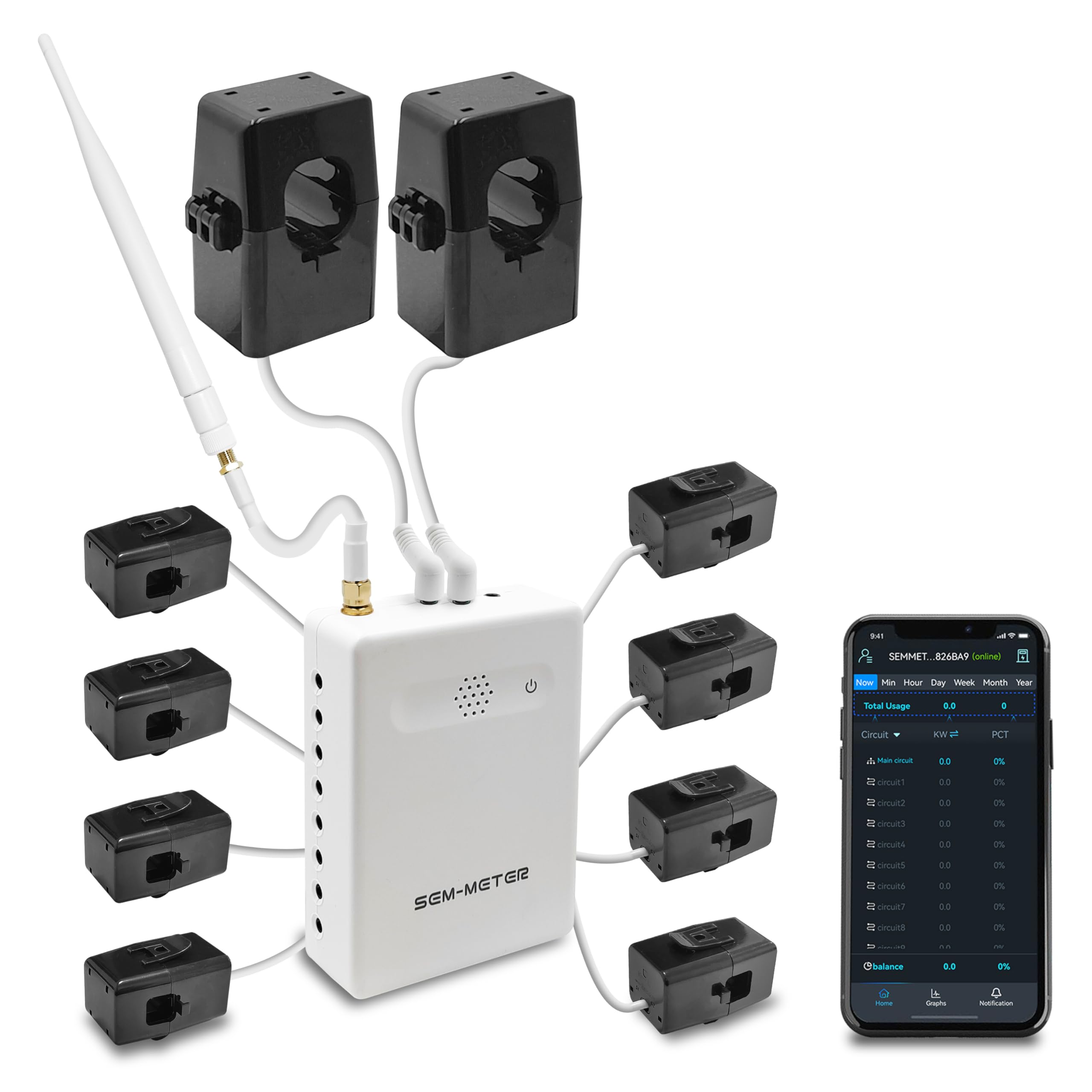
Smart Home Energy Monitor with 8 50A Circuit Level Sensors | Vue - Real Time Electricity Monitor/Meter | Solar/Net Metering - Amazon.com
View on AmazonFAQ: common questions about Tesla Solar in New Mexico
Is Tesla Solar available statewide?
- Yes, Tesla serves most of New Mexico. Urban and suburban areas have faster scheduling. Rural projects may be fulfilled by authorized partners with variable lead times.
Does Tesla install ground mounts in New Mexico?
- Generally no; Tesla focuses on rooftop systems and Solar Roof. If you need a ground mount or carport, get quotes from local EPCs that specialize in those structures.
How does net metering work here?
- Most investor-owned utilities and many co-ops in New Mexico offer net metering or bill credits for exported kWh. Credit rates and annual true-up policies differ. Batteries can increase self-consumption and hedge against any export changes—ask your installer to model scenarios for your utility and rate plan.
Is my HOA allowed to block solar?
- New Mexico’s Solar Rights framework limits unreasonable restrictions on solar collectors. HOAs can guide placement for aesthetics and safety but cannot effectively prohibit a system that meets code. Provide your HOA with Tesla’s engineered drawings early to streamline approval.
What roof conditions does Tesla require?
- For panel projects, Tesla typically requires a roof with at least 10–15 years of remaining life. If your shingles are aged or damaged, Tesla will recommend re-roofing (often with a preferred roofer) or propose a Solar Roof if you want an integrated solution.
Can Tesla do flat roofs?
- Yes, many flat or low-slope roofs can use tilt legs to optimize angle and drainage clearances, subject to structural sign-off and local wind/snow load requirements.
What about three-phase service on rural properties?
- Tesla’s residential inverter architecture is designed for split-phase 120/240 V service. Three-phase sites may need a different design approach; discuss with Tesla and your utility early.
How accurate are Tesla’s production estimates?
- Tesla uses NREL Typical Meteorological Year (TMY) weather files and accounts for losses (temperature, inverter, soiling, shading if assessed). In New Mexico, first-year production commonly lands within ±10% of estimates when roof geometry and shading match the plan set.
How long will the whole process take?
- Panel systems: 6–12 weeks is common from order to PTO. Solar Roof: 10–16+ weeks due to roofing scope and inspections.
What’s the payback period in New Mexico?
- With the 30% federal ITC, 10% state credit (cap $6,000), high sun, and electricity rates around 12–15¢/kWh, simple payback often lands 7–11 years. Batteries add resilience and TOU optimization but extend payback; many buyers justify Powerwall primarily on backup value.
Where can I learn more about statewide costs and incentives?
- Start here for current numbers and utility-by-utility notes: Solar in New Mexico: Costs, Incentives & Top Installers (2026)
Where Tesla Solar in New Mexico is headed
- More storage, tighter integration: As TOU and demand charges expand, Powerwall-equipped systems that can shift solar to evenings will gain value. Expect higher attach rates and smarter app automations.
- Streamlined permitting and interconnection: New Mexico AHJs and utilities are gradually adopting solar-friendly workflows (online permitting, standardized interconnection), which should compress timelines.
- Continued cost declines: Module prices fell globally through 2024–2025 per IEA and IRENA tracking; New Mexico homeowners should continue to see competitive quotes in 2026, even as labor remains tight.
For sun-rich New Mexico, Tesla’s combination of cost, aesthetics, and an all-in-one app-backed experience makes rooftop solar a strong bet—especially when you can stack the federal ITC with the state’s 10% credit and optimize usage with storage on TOU plans.
Recommended Products
The Homeowner's Guide to Renewable Energy - Revised & Updated Edition: Achieving Energy Independence through Solar, Wind, Biomass and Hydropower: Chiras, Dan
After beginning with the all important discussion about energy efficiency and conservation, <strong>Dan guides you through everything you need to choose which renewable options to integrate into your
Smart Home Energy Monitor with 8 50A Circuit Level Sensors | Vue - Real Time Electricity Monitor/Meter | Solar/Net Metering - Amazon.com
Lightweight commercial 3-phase option available as a separate bundle. APPLICATION MONITORING WITHOUT GUISEWORK <strong>Up to sixteen (16) 50A sensors to accurately monitor your air conditioner, oven,
ChargePoint HomeFlex Level 2 EV Charger J1772 - Fast Smart Battery Power Charging at Home for Electric Automobile Vehicles - NEMA 14-50 Plug for Electric Car : Automotive
Home Flex Hardwired offers the fastest charge at up to 50A. NEMA 6-50 and 14-50 versions <strong>provide up to 40A and work with existing 240V wall outlets</strong>. Yes! Choose from our list of prefe