
Tesla Solar in New Jersey: Panels, Roof & Pricing Guide (2026)
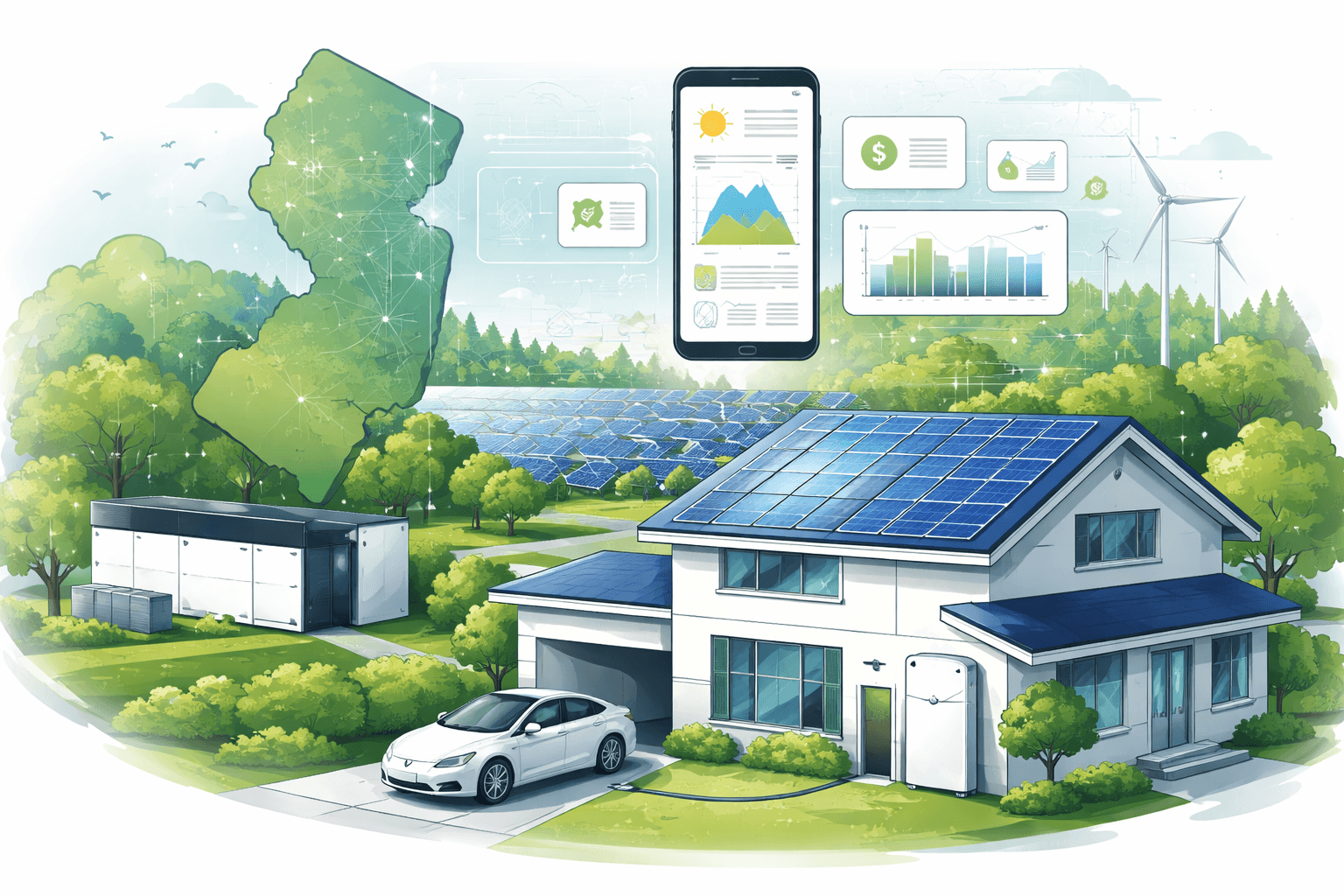
New Jersey added more than 400 MW of new solar capacity in 2024, lifting the state above 4.5 GW total installed solar, according to SEIA/Wood Mackenzie. That growth, plus stable retail net metering and a 15‑year SREC‑II incentive, makes Tesla Solar in New Jersey one of the most compelling ways for homeowners to cut bills and carbon in 2026. Below, we break down Tesla’s products, New Jersey pricing, incentives, installation timelines, and what Garden State owners actually report.
Tesla Solar products available in New Jersey
Tesla sells three core products nationwide, all available in New Jersey through Tesla or Tesla‑certified installers:
Solar Electricity Handbook - 2023 Edition: A simple, practical guide to solar energy – designing and installing solar photovoltaic systems: Boxwell, Michael
Solar Electricity Handbook - 2023 Edition: <strong>A simple, practical guide to solar energy – designing and installing solar photovoltaic systems</strong> [Boxwell, Michael] on Amazon.com. *FREE* shi
Check Price on AmazonTesla Solar Panels
- What they are: Conventional glass‑on‑glass or glass‑backsheet modules paired with a Tesla Solar Inverter and Tesla Gateway. Recent Tesla‑branded panels are in the ~400–430 W range with module efficiencies around 20% (varies by batch and supplier). The Tesla Inverter comes in 3.8 kW, 7.6 kW, and 11.4 kW sizes.
- Best for: Most homes with a roof in good condition that don’t need a full roof replacement.
Tesla Solar Roof
- What it is: Building‑integrated photovoltaics (BIPV) — roof shingles that generate power plus non‑generating “dummy” tiles to complete the roof. Includes integrated flashings and underlayment.
- Best for: Homes that already need a full roof replacement and place a premium on aesthetics and weatherization. If your existing roof has 10+ years of life left, the Solar Roof’s premium often won’t pencil out versus panels.
Tesla Powerwall (optional add‑on)
- What it is: A whole‑home battery that stores excess solar and provides backup. Powerwall 3 (launched 2023) integrates a solar inverter for simpler installs; Powerwall 2 pairs with separate inverters. Capacity is 13.5 kWh per unit; Powerwall 3 delivers up to 11.5 kW of on‑grid continuous power (Tesla spec), enough to run large loads during outages when paired and configured correctly.
- Best for: Homes facing frequent outages, time‑of‑use or demand charges (less common in NJ), or owners who want resilience and higher self‑consumption.
Tip: If your roof has complex geometry, shading, or multiple orientations, ask Tesla about module‑level power electronics (MLPE) such as DC optimizers or microinverters for shade mitigation. Tesla’s standard configuration uses a string inverter; some sites benefit from MLPE to protect output under partial shade.
By the numbers: Tesla Solar in New Jersey
- 4.5+ GW: Total installed solar capacity in New Jersey as of 2024 (SEIA/Wood Mackenzie)
- ~7–9%: Share of New Jersey’s annual in‑state electricity generation from solar in recent years (EIA)
- 1,200–1,350 kWh per kW per year: Typical NJ production for a south‑facing array at 30–35° tilt (NREL PVWatts), meaning an 8 kW system can produce ~9,600–10,800 kWh/year
- 30%: Federal Investment Tax Credit (ITC) for solar and batteries through at least 2032 (U.S. Treasury/IRS)
- ~$2.50–$3.25 per watt: Typical pre‑incentive residential installed price range in New Jersey (EnergySage marketplace data; LBNL Tracking the Sun trends) — Tesla often quotes near the low end due to standardization
Tesla Solar pricing in New Jersey: panels vs. Solar Roof cost comparison
Pre‑incentive installed prices vary by roof complexity, labor market conditions, equipment choices, and interconnection requirements. In New Jersey’s competitive market, recent quotes typically land in these ranges:
Tesla Solar Panels (before incentives):
- $2.30–$2.90 per watt for standard homes without unusual roofing or electrical work
- Example: 8 kW system → $18,400–$23,200 before incentives; $12,880–$16,240 after 30% ITC; further reduced by NJ SREC‑II income (details below)
Tesla Solar Roof (before incentives):
- $40,000–$70,000+ for an average home when replacing the full roof, depending on roof size/complexity and target solar capacity; larger, complex roofs can exceed $90,000
- Example: 9 kW Solar Roof on a 2,000–2,500 sq ft home with moderate complexity → $55,000–$80,000 before incentives; $38,500–$56,000 after 30% ITC
Powerwall add‑on (optional):
- Equipment pricing from Tesla has commonly ranged ~$8,700 per Powerwall before installation; typical fully installed costs in NJ land around $10,000–$13,000 per unit pre‑ITC, depending on electrical work
- After 30% ITC (standalone storage also qualifies), that’s ~$7,000–$9,100 per unit
What drives cost up or down in New Jersey
- Roof complexity: Multiple planes, dormers, skylights, and steep pitches add labor and material time.
- Main panel upgrades: Older homes may need a service upgrade to 200 A, adding $1,500–$3,500.
- Interconnection/location: Utility fees and meter upgrades vary by PSE&G, JCP&L, or Atlantic City Electric territory.
- Equipment choices: Premium aesthetics (Solar Roof), MLPE for shade, snow guards, critter guards, and EV‑charging integration can add cost but may improve performance and longevity.
Panels vs. Solar Roof — the break‑even lens
- If your asphalt roof is <5 years old and in good shape, conventional panels almost always deliver a faster payback.
- If your roof needs replacing within ~5 years, compare “panels + reroof” versus Solar Roof. In NJ, an asphalt reroof can add $12,000–$25,000+ depending on size/complexity; when you add that to a panel quote, the Solar Roof premium often narrows but typically still costs more for the same kW.
How to order Tesla Solar in New Jersey: timeline, site assessment, and installation
Ordering
- Start online with your address and recent electric bills; Tesla models system size and estimated savings.
- You’ll see a preliminary design and price. A small order fee may apply to move forward.
Site assessment
- Virtual or in‑person assessment confirms roof dimensions, shading, structural conditions, and electrical service.
- If adjustments are needed (e.g., fewer panels due to setbacks, or a main panel upgrade), Tesla revises the design and price.
Permitting and utility approvals
- Permitting: New Jersey municipalities typically turn solar permits in 1–4 weeks, but complex projects and busy offices can stretch longer.
- Interconnection: Utilities generally review net‑metering applications within weeks, though transformer upgrades can add time. NREL reports end‑to‑end permitting/interconnection cycles of 4–12+ weeks are common nationally; New Jersey falls within that range for most residential jobs.
Installation
- Once permits and utility pre‑approvals clear, installation is usually 1–2 days for panels, longer for Solar Roofs or multi‑Powerwall setups.
Inspection and permission to operate (PTO)
- Municipal inspection typically occurs within a week or two post‑install.
- Utility PTO — the green light to turn on — often arrives 2–6 weeks after passing inspection, depending on utility workload.
From order to PTO, most New Jersey Tesla panel projects complete in 6–12 weeks, though roof complexity, seasonal backlogs, and supply chain hiccups can extend timelines.
New Jersey solar incentives that apply to Tesla installations
30% Federal ITC (solar + storage): Available for systems placed in service through 2032 under the Inflation Reduction Act. The credit applies to equipment and labor for both solar and standalone batteries.
Retail net metering: New Jersey offers monthly netting at the retail rate for most residential systems, with annual true‑up. Excess credits roll over within the annual period. This is a major driver of savings compared with states that have moved to export‑only rates.
SREC‑II (SuSI/ADI program): The BPU’s Successor Solar Incentive (SuSI) program includes the Administratively Determined Incentive (ADI) for residential net‑metered systems. As of 2024, typical residential rooftop projects earned a fixed incentive around $85–$90 per MWh ($0.085–$0.09/kWh) for 15 years, paid via SREC‑II certificates (NJ Board of Public Utilities). One SREC represents 1,000 kWh of production. A 9 kW NJ system producing ~11,000 kWh/year could thus generate ~$935–$990 per year in SREC‑II value for 15 years, on top of bill savings. Program values are periodically reviewed — check the current ADI block rate before you sign.
Sales tax exemption: Solar energy equipment is exempt from New Jersey’s 6.625% sales tax (NJ Division of Taxation), effectively lowering installed cost.
Property tax exemption: The added value from a home solar system is excluded from property tax assessments (NJ statutes), a meaningful benefit given New Jersey’s property tax rates.
Battery incentives: As of late 2024, New Jersey did not have a statewide residential battery rebate, but the 30% federal ITC applies to Powerwall when charged primarily by solar. Check your utility for any evolving demand response or “bring‑your‑own‑battery” pilots.
For more state‑specific program details and installer comparisons, see Solar in New Jersey: Costs, Incentives & Top Installers (2026).
Solar in New Jersey: Costs, Incentives & Top Installers (2026)
Tesla Solar reviews from New Jersey customers: what owners actually report
Themes that surface repeatedly in New Jersey owner feedback, community forums, and installer comparisons:
Competitive pricing and simple ordering: Tesla’s quotes often land at or below marketplace averages thanks to standardized designs and bulk purchasing. Many NJ owners cite price as the deciding factor.
Production meets or beats estimates when design is sound: With New Jersey’s strong solar resource for the Northeast, owners commonly report annual production in line with NREL PVWatts estimates (1,200–1,350 kWh/kW‑year for good orientation). Arrays with shading or complex roof faces may benefit from MLPE to avoid mismatch losses.
Schedule variability: Straightforward panel installs often proceed quickly; Solar Roof projects and jobs requiring service upgrades can see longer timelines due to roofing crews, inspections, and supply scheduling.
Service and communication: Experiences vary. Some owners praise the smooth app‑based updates; others report delays reaching support for post‑install issues. Tesla relies on a mix of in‑house and partner crews in NJ — ask who will perform your install and how service tickets are handled.
Aesthetics: Low‑profile racking and all‑black modules score well on curb appeal. Solar Roof owners value the integrated look but note higher upfront costs and a more involved roofing process.
Performance example using PVWatts (NREL): An 8 kW array in Newark, facing due south at 30° tilt, with average losses, is modeled around 10,000 kWh/year. At a retail rate of $0.18–$0.22/kWh, that offsets ~$1,800–$2,200 annually before SREC‑II income.
Tesla vs. local New Jersey installers: pros, cons, and price comparison
Where Tesla excels
- Pricing power: Standardized hardware and designs often produce quotes near the low end of NJ’s price range.
- Ecosystem integration: One app for solar, Powerwall, and EV charging; native backup configuration with Powerwall.
- Brand and financing: Familiar brand, straightforward financing options, and a transferable warranty.
Where local installers shine
- Custom design and on‑site service: Detailed shade analysis, customized layouts, and hardware options (e.g., premium high‑efficiency modules or Enphase microinverters) that can outperform in complex shading.
- Faster change orders and repairs: Smaller teams can be more nimble on permitting quirks or post‑install tweaks.
- Long‑term relationship: Local presence can help with service continuity and roof warranty coordination.
Price comparison snapshot (typical ranges before incentives)
- Tesla Solar Panels: ~$2.30–$2.90/W in NJ for standard sites
- Reputable local installers: ~$2.50–$3.50/W, with the higher end reflecting premium modules, MLPE, or complex roofs
Which to choose?
- Favor Tesla if your roof is simple, shading is minimal, and you want the lowest price with clean aesthetics and tight Powerwall integration.
- Consider locals if you have heavy shading, a complicated roof, a preferred module brand, or you want hands‑on support and more equipment choice.
Shopping tip: Get at least two quotes. The spread between low and high bids in the same zip code can exceed $0.75/W, according to Lawrence Berkeley National Laboratory’s Tracking the Sun data.
Tesla Solar warranty and what it covers in New Jersey
Tesla’s warranties are nationwide; they apply the same in New Jersey. Always review the current warranty document attached to your contract, as terms can be updated.
Solar panels
- Performance warranty: Typically guarantees ~85% of nameplate output at 25 years (equivalent to ~0.5–0.6% annual degradation). Exact figure depends on the module batch.
- Product warranty: 12–25 years against defects (varies by module supplier when Tesla sources third‑party panels).
- Inverter warranty: Tesla Solar Inverter is commonly 12.5 years.
- Workmanship/roof penetrations: Often 10 years for installation workmanship and roof leak coverage around penetrations (review your agreement).
Solar Roof
- Weatherization and tile warranty: Commonly 25 years on tiles and weatherization; 25‑year power warranty on generating tiles. Balance‑of‑system and workmanship terms are typically 10 years.
Powerwall
- Battery warranty: 10 years with throughput and capacity retention terms (Powerwall 2 and 3 differ slightly). Designed to retain most of its 13.5 kWh usable capacity under typical residential cycling.
Transferability: Tesla warranties are generally transferable to a new homeowner at sale, a plus for resale value.
Practical add‑ons and gear that pair well in New Jersey
- For real‑time monitoring and bill optimization, a dedicated home energy monitor helps validate production and usage. Based on accuracy and app features, the Sense Home Energy Monitor is a strong value companion to Tesla systems.
- If shading is a concern on your property, high‑efficiency, low‑degradation modules like REC Alpha Pure-R 410 W or microinverter‑based systems such as Enphase IQ8 microinverters are worth comparing in alternate quotes for complex roofs.

Sense Energy Monitor with Solar – Track Electricity Usage and Solar Production in Real Time
View on AmazonFAQ: common questions about Tesla Solar in New Jersey
Does Tesla operate everywhere in New Jersey?
- Yes. Availability spans PSE&G, JCP&L, and Atlantic City Electric territories. Lead times can vary by utility and municipality.
How big should my system be?
- Start with your 12‑month kWh usage and target ~90–110% annual offset (NJ net metering allows annual true‑up). A typical 2,000–2,500 sq ft home uses 8,000–12,000 kWh/year; that’s often 7–10 kW of solar depending on roof and orientation.
What if my roof is old?
- If your roof has <5–7 years of life left, replace it before or with solar. Compare the cost of “reroof + panels” versus Solar Roof for a fair apples‑to‑apples.
Is snow a problem for Tesla Solar in New Jersey?
- Snow reduces winter production until it slides off, but annual impact is modest. Panels warm in sun and usually shed snow quickly when temperatures rise. Snow guards are available for steep roofs above entryways.
Can I back up my whole house with one Powerwall?
- A single Powerwall (13.5 kWh, up to 11.5 kW on Powerwall 3) can back up essential loads. Whole‑home backup with large HVAC or well pumps often needs two or more units. Your installer will conduct a load assessment.
Will I still get SRECs with Tesla?
- Yes. Tesla or your installer will register your system with the NJ BPU/REC administrator so you can receive SREC‑II (ADI) certificates for 15 years. You can sell them through an aggregator or utility‑approved platform.
What happens during an outage?
- If you have Powerwall, the system isolates (islands) from the grid and powers backed‑up loads. Without Powerwall, your solar system must shut down during outages for safety, even on sunny days.
Is Tesla Solar Roof worth it in NJ?
- Financially, Solar Roof makes the most sense if you already need a new roof and place high value on aesthetics. If your existing roof is in good condition, panels typically deliver a faster payback.
How long does it take to break even?
- With retail net metering, SREC‑II income, and the 30% ITC, many New Jersey panel systems see simple paybacks in 6–10 years depending on usage, rates, and roof complexity. Solar Roof usually takes longer due to higher upfront cost.
Will Tesla handle permits and HOA paperwork?
- Yes. Tesla or its certified partner manages permits, interconnection, HOA applications, and inspections.
What about hail, wind, and coastal weather?
- Tesla’s panels and Solar Roof components are certified to UL standards for wind uplift and hail impact. New Jersey installs are engineered to local code (often 120–140 mph wind ratings). Always confirm the exact ratings on your spec sheet.
What this means for New Jersey homeowners
- Strong policy stack: Retail net metering + 30% ITC + 15 years of SREC‑II is a rare trifecta that materially shortens paybacks.
- Competitive bids: New Jersey’s mature solar market and Tesla’s standardized approach keep pricing sharp; always get at least one local comparison quote, particularly for shaded or complex roofs.
- Resilience option: If outages or EV charging are priorities, Powerwall 3’s higher on‑grid power and integrated inverter reduce balance‑of‑system complexity and can improve backup performance.
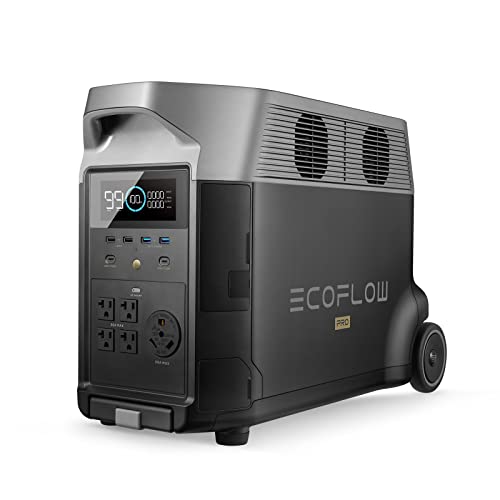
EF ECOFLOW Portable Power Station 3600Wh DELTA Pro, 120V AC Outlets x 5, 3600W, 2.7H Fast Charge, Lifepo4 Power Station, Solar Generator for Home Use, Power Outage, Camping, RV, Emergencies : Patio, Lawn & Garden
<strong>Fully recharge the lifepo4 battery in 1.8 hrs with 240V outlets(3000W), 2.7 hrs with 1800W wall outlets or solar charged in 2.8 hours with 4*400W solar panels</strong> thanks to the industry-l
Check Price on AmazonWhere Tesla Solar in New Jersey is heading
Expect incremental hardware efficiency gains, broader availability of Powerwall 3, and continued stability in the 30% ITC through 2032. The NJ BPU’s SuSI/ADI program is designed to support steady rooftop growth; track ADI block values as they refresh. On the soft‑cost side, New Jersey’s municipalities are gradually digitizing permits, which NREL finds can trim weeks off timelines. With retail net metering intact and electricity prices historically above the U.S. average, the economics of Tesla Solar in New Jersey remain strong — especially for well‑sited, straightforward panel installs that capitalize on SREC‑II for 15 years.
Recommended Products
Solar Electricity Handbook - 2023 Edition: A simple, practical guide to solar energy – designing and installing solar photovoltaic systems: Boxwell, Michael
Solar Electricity Handbook - 2023 Edition: <strong>A simple, practical guide to solar energy – designing and installing solar photovoltaic systems</strong> [Boxwell, Michael] on Amazon.com. *FREE* shi
Sense Energy Monitor with Solar – Track Electricity Usage and Solar Production in Real Time
KNOW WHAT’S ON: Track how much electricity you’re using, what time your kids got home, or when someone leaves the basement light on. Sense <strong>identifies patterns in your energy use to help your f
EF ECOFLOW Portable Power Station 3600Wh DELTA Pro, 120V AC Outlets x 5, 3600W, 2.7H Fast Charge, Lifepo4 Power Station, Solar Generator for Home Use, Power Outage, Camping, RV, Emergencies : Patio, Lawn & Garden
<strong>Fully recharge the lifepo4 battery in 1.8 hrs with 240V outlets(3000W), 2.7 hrs with 1800W wall outlets or solar charged in 2.8 hours with 4*400W solar panels</strong> thanks to the industry-l