
Buildings That Incorporate Sustainability: Key Features, Technologies, and Impact
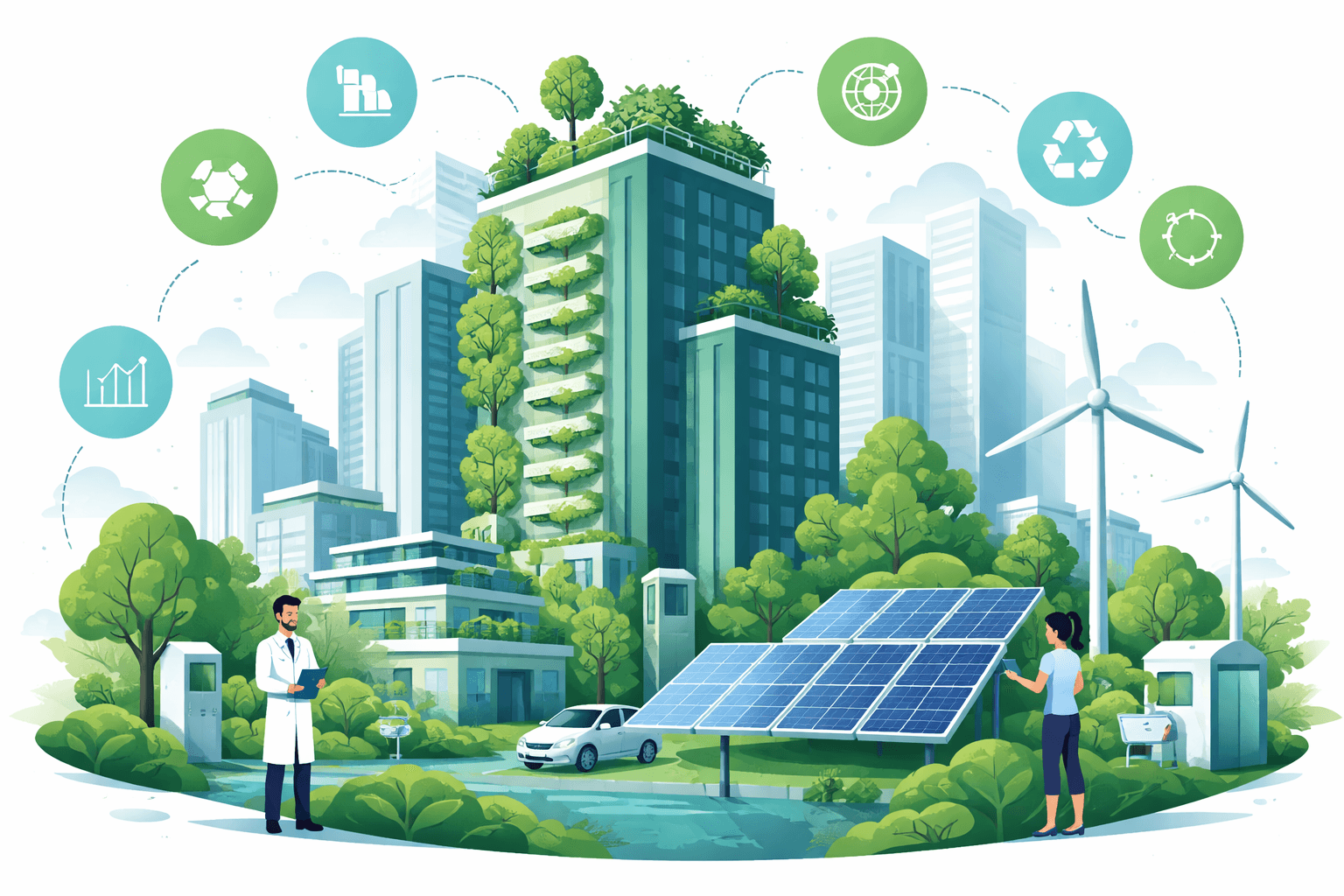
Buildings are responsible for about 37% of global energy- and process-related CO2 emissions when upstream power is included, and roughly 30% of final energy demand (GlobalABC/UNEP 2023; IEA 2023). As the world adds the equivalent of New York City’s entire floor area every month through 2060 (GlobalABC 2017), buildings that incorporate sustainability are no longer niche—they are central to climate, health, and economic strategy.
This guide explains the design philosophies, enabling technologies, performance standards, and real-world economics behind sustainable buildings, with data-forward clarity you can use.
By the numbers: why sustainable buildings matter
- 37%: Share of global energy and process CO2 tied to buildings and construction (GlobalABC/UNEP 2023)
- 30%: Global share of final energy demand from building operations (IEA 2023)
- 10%: Share of global emissions from building materials and construction (embodied carbon) (GlobalABC/UNEP 2023)
- 10–30%: Typical energy savings from well-executed retrofits; simple paybacks often 3–7 years (U.S. DOE Better Buildings)
- 75–90%: Space-heating energy reduction in certified Passive House projects vs. conventional baselines (Passive House Institute)
- 50–60%: Annual stormwater runoff reduction potential from extensive green roofs (U.S. EPA)
- 61–100%: Improvement in cognitive function scores in higher-ventilated “green” indoor environments (Harvard T.H. Chan School of Public Health, COGfx studies)
Types and design philosophies of buildings that incorporate sustainability
Passive design and bioclimatic architecture
Passive design leverages climate and site—sun, wind, thermal mass—to reduce mechanical heating and cooling. Strategies include optimized building orientation, high-insulation and airtight envelopes, external shading, night flushing, and natural ventilation. Bioclimatic design tailors these moves to local conditions (e.g., deep overhangs in hot-dry climates; thermal mass in diurnal-swing regions). Done well, passive strategies can cut HVAC loads 30–50% before any equipment upgrades (U.S. DOE).
Passive House (Passivhaus)
A rigorous approach to passive performance. Core targets include very low heating demand (≤15 kWh/m²·yr), airtightness (≤0.6 air changes per hour at 50 Pa), and minimized thermal bridges. Verified projects routinely show 75–90% less space-heating demand and 60% or more lower overall energy use compared to typical code buildings (Passive House Institute).
Net‑zero and net‑positive (energy and carbon)
- Net‑zero operational energy: Annual on-site or procured renewable generation equals operational energy use.
- Net‑zero operational carbon: Operational emissions are zeroed via on/off-site renewables and verified accounting.
- Whole‑life/net‑zero carbon: Also tackles embodied carbon from materials, construction, and end-of-life, often via low‑carbon materials, reuse, and offsets aligned with credible protocols. Without action, embodied carbon can represent up to half of a high‑performance building’s total emissions over coming decades as grids decarbonize (Architecture 2030; GlobalABC).
Regenerative design
Goes beyond “do less harm” to produce net-positive outcomes for ecosystems and communities—restoring habitat, harvesting more energy and water than used, and enhancing local biodiversity. Living Building Challenge projects exemplify this philosophy.
Adaptive reuse and deep retrofit
Reusing buildings often yields the lowest carbon outcome because it avoids most of the embodied emissions of new construction. Deep retrofits pair envelope upgrades, electrification, and controls to achieve 40–60% energy reductions in existing assets (U.S. DOE, LBNL).
Green roofs and living façades
Vegetated roofs and façades manage stormwater, cut heat island effects, improve insulation, and support urban biodiversity. Extensive green roofs can reduce annual stormwater runoff 50–60% and lower summertime roof surface temperatures by 15–30°C (U.S. EPA). Living façades provide shading and evaporative cooling while improving air quality.
Core technologies, materials, and systems that enable sustainability
High‑performance envelope
The envelope—walls, windows, roof, and airtightness—is the first lever. Key elements:
- Insulation/U‑values: Lower U‑values mean less heat transfer. Continuous exterior insulation reduces thermal bridging.
- High‑performance glazing: Double or triple-pane low‑e windows with warm-edge spacers; solar heat gain tuned by orientation/climate.
- Airtightness: Meticulous sealing and blower-door testing minimize infiltration, stabilizing comfort and reducing loads.
- Thermal-bridge mitigation: Thermally broken balconies, insulated slab edges, and careful detailing at frames. DOE field studies show envelope and window upgrades can deliver 10–25% whole-building energy savings in commercial buildings, and 15–30% in homes, before HVAC right‑sizing.
HVAC optimization and electrification
- Heat pumps: Air‑source and ground‑source heat pumps transfer heat rather than generate it, achieving coefficients of performance (COP) of ~3 or higher—about three units of heat per unit of electricity (IEA). Modern cold‑climate units operate efficiently below −20°C.
- Energy recovery ventilation (ERV/HRV): Recovers heat and, in ERVs, moisture, improving indoor air quality (IAQ) while limiting energy penalties from fresh air.
- Right‑sizing and advanced controls: Variable-speed compressors, demand-controlled ventilation (CO2-based), and smart thermostats cut runtimes and peaks.
- Electrification: Replacing gas boilers and furnaces with heat pumps reduces on-site combustion emissions and positions buildings to benefit from grid decarbonization.

ecobee Smart Thermostat Premium with Smart Sensor and Air Quality Monitor - Programmable Wifi Thermostat - Works with Siri, Alexa, Google Assistant - Amazon.com
View on AmazonFor practical device- and integration guidance on controls and connected equipment, see Smart Home Technology for Sustainability: High‑Impact Upgrades, Integration, and Real‑World Guidance (/sustainability-policy/smart-home-technology-for-sustainability-upgrades-integration-guide).
On‑site renewables and storage
- Rooftop and façade solar PV: In many markets, onsite PV can provide 20–50% or more of a building’s annual electricity, depending on load profile and roof area. Capacity factor—how much a system generates relative to its rated maximum over time—typically ranges 15–22% for rooftops, varying by location and tilt (NREL).
- Solar thermal: Efficient for domestic hot water preheating.
- Batteries and thermal storage: Shift solar generation to evening peaks; thermal storage (e.g., chilled water, phase-change) reduces peak cooling demand. For a plain-language overview of technology options, see Renewable Energy Sources: A Clear Guide to Solar, Wind & More (/renewable-energy/renewable-energy-sources-guide).
Water efficiency and reuse
- High-efficiency fixtures: EPA WaterSense-labeled devices typically use 20% less water than federal baselines.
- Cooling tower optimization: Conductivity controls and hybrid wet-dry operation can cut water use 10–20%.
- Rainwater and greywater systems: Building-scale reuse can trim potable demand 25–50% where codes allow (U.S. EPA; WEF).
- Leak detection: Submetering and sensors reduce losses and inform maintenance.
Low‑embodied‑carbon materials and circular strategies
- Cement and concrete: Lower-clinker cements (e.g., LC3), supplementary cementitious materials (SCMs) like slag and fly ash, and performance‑based specs reduce embodied emissions 20–50% while maintaining strength.
- Mass timber (CLT, glulam): Displaces carbon‑intensive steel/concrete in mid‑rise structures; requires careful fire and moisture design.
- High‑recycled‑content steel and aluminum: Cuts primary production emissions significantly.
- Environmental Product Declarations (EPDs) and LCA: Compare products on verified cradle‑to‑gate impacts. A deep dive into specific material choices is here: Sustainable Materials for Construction: Practical Guide to Low‑Carbon, Durable, and Cost‑Effective Building Materials (/sustainability-policy/sustainable-materials-for-construction-guide).
Build Beyond Zero: New Ideas for Carbon-Smart Architecture: King, Bruce, Magwood, Chris
In Build Beyond Zero, carbon pioneers Bruce King and Chris Magwood <strong>re-envision buildings as one of our most practical and affordable climate solutions instead of leading drivers of climate cha
Check Price on AmazonStandards, metrics, and performance measurement
Major certification systems
- LEED (U.S. Green Building Council): Holistic framework across energy, water, materials, site, and indoor environment. Over 100,000 commercial certifications globally (USGBC).
- BREEAM (BRE): Widely used assessment with 560,000+ certifications and millions registered (BRE). Recognizes design, construction, and in‑use performance.
- WELL (IWBI): Focuses on health and well‑being—air, water, nourishment, light, movement, thermal comfort, sound, materials, mind, and community. Over 4 billion square feet enrolled globally (IWBI).
- Passive House: Performance-based envelope, airtightness, and energy use targets for ultra‑low energy buildings.
Net‑zero carbon targets and disclosures
Frameworks increasingly distinguish:
- Operational carbon (Scope 1 & 2) vs. whole‑life carbon (including embodied Scope 3).
- Absolute targets (e.g., kgCO2e/m²·yr) tied to science-based pathways vs. intensity-only metrics. Owners are adopting science‑based targets and reporting via CDP, GRESB, and local laws (e.g., building performance standards) as grids decarbonize.
Life‑cycle assessment (LCA) for buildings
LCA evaluates cradle‑to‑grave impacts. Common standards: ISO 14040/44 and EN 15978. Designers model products using EPDs and tally building‑level impacts across A1–A5 (product/construction), B (use), C (end-of-life), and sometimes D (beyond system boundaries—recycling/energy recovery).
Post‑occupancy performance and continuous commissioning
- Energy Use Intensity (EUI): Annual energy per area (kBtu/ft²·yr or kWh/m²·yr). Lower is better; track against climate‑adjusted targets.
- Peak demand (kW): Drives utility bills and grid strain; managed by controls, storage, and envelope.
- IAQ metrics: CO2 (ppm), PM2.5 (µg/m³), VOCs; correlate with occupant well‑being.
- Thermal comfort: PMV/PPD indices validate comfort across seasons. Lawrence Berkeley National Laboratory finds retro‑commissioning yields median 16% whole-building energy savings with paybacks near one year in many facilities.

Airthings 2960 View Plus - Battery Powered Radon & Air Quality Monitor (PM, CO2, VOC, Humidity, Temp, Pressure): Amazon.com: Industrial & Scientific
View on AmazonBenefits, costs, and real‑world implementation
Environmental, economic, and social impacts
- Emissions reduction: Combining an efficient envelope with heat pumps and on‑site solar can cut operational emissions 50–90% depending on grid mix (IEA; NREL modeling). Low‑carbon materials further reduce whole‑life impacts by 20–50%.
- Water and urban ecosystems: Green roofs/façades attenuate stormwater and heat, supporting pollinators and urban cooling.
- Operating costs: Portfolio data show energy savings of 10–30% are typical with controls, lighting, and HVAC optimization; deeper savings come from electrification and envelope upgrades (DOE Better Buildings). Many owners also see maintenance savings from equipment right‑sizing and longer lifespans.
- Asset value and marketability: Reports from the World Green Building Council and real asset studies indicate rent and occupancy premiums for certified buildings, along with lower cap rates in some markets.
- Health and productivity: Better ventilation, filtration (MERV 13+), daylighting, and acoustics are linked to fewer sick days and higher cognitive performance (Harvard COGfx).
Costs and ROI
- New construction: The “green premium” has narrowed to roughly 0–5% for many LEED/Passive/zero‑energy-ready designs when integrated early; in some markets, cost parity is achievable (World Green Building Council, USGBC case studies).
- Retrofits: Lighting and controls often pay back in 1–3 years; heat pumps and envelope measures 5–12 years depending on climate, incentives, and fuel prices. Portfolio‑level average simple paybacks of 3–7 years are common for 20% savings (DOE Better Buildings).
- Lifecycle view: Net present value (NPV) is typically positive when energy price escalation, avoided carbon costs, and maintenance are included. Adding modest on‑site PV often improves cash flow by shaving peak demand.
Retrofit strategies: a practical sequence
- Audit, benchmark, and meter: Establish EUI and end‑use breakdowns; install submeters and set a measurement-and-verification plan.
- Fix the envelope: Air sealing, weatherization, and targeted insulation; high‑performance glazing where feasible.
- Optimize loads: LED lighting, daylighting controls, plug load management, and setpoint/sequence tuning.
- Electrify HVAC and water heating: Right‑size heat pumps, add ERV/HRV, upgrade distribution.
- Add renewables and storage: Rooftop PV first; consider thermal storage to flatten peaks.
- Continuous commissioning: Use analytics and fault detection to sustain savings. For step‑by‑step renovation tactics and typical returns, see Energy‑Efficient Green Renovations: Practical Solutions to Cut Bills, Reduce Carbon, and Boost Home Value (/sustainability-policy/energy-efficient-green-renovations-practical-guide).
Financing and incentives
- Capital planning: Bundle quick‑payback measures with longer‑payback upgrades; use energy performance contracts (EPCs) or energy‑as‑a‑service.
- Incentives: Tax deductions/credits, utility rebates, low‑interest loans, and green bonds can materially improve project economics. For a focused walkthrough, see Green Building Tax Incentives: How to Maximize Savings for Homes and Commercial Projects (/sustainability-policy/green-building-tax-incentives-maximize-savings).
- Risk management: Consider price hedging benefits from lower and flatter energy demand, resilience value from storage, and regulatory compliance with building performance standards.
Exemplar case studies
- Bullitt Center (Seattle, USA): A Living Building Challenge office with a high‑performance envelope, 244 kW rooftop PV array, rainwater harvesting, and composting toilets. Achieves net‑positive energy in favorable years and showcases deep-load reduction with daylighting and operable windows (project documentation).
- The Edge (Amsterdam, NL): BREEAM Outstanding office often cited for advanced controls and an integrated façade. Achieved one of the highest BREEAM scores recorded (98+%) and uses roughly 70% less energy than conventional offices, enabled by daylighting, smart systems, and an efficient envelope (BRE case materials).
- Empire State Building Retrofit (New York, USA): Comprehensive retrofit—window refurbishments, insulation, chiller plant upgrades, and controls—reduced energy use by about 38% with a payback near four years, proving the business case at landmark scale (project reports by Johnson Controls/RMI).
- BedZED (London, UK): Early eco‑district demonstrating passive solar design, CHP, and on‑site renewables; monitoring showed large reductions in space heating (≈80% vs. UK average) and water use (≈50%) alongside strong community engagement (Bioregional).
Practical implications for owners, designers, and policymakers
- Developers and designers: Set performance targets (EUI, airtightness, kgCO2e/m²) at concept stage; run iterative energy and LCA models; prioritize passive measures, then electrify and add renewables. Align specifications with verifiable EPDs and commissioning requirements.
- Owners and facility managers: Invest in metering and analytics; schedule periodic re‑commissioning; train operators on intent-based sequences. Prioritize occupant health with ventilation, filtration, and IAQ monitoring.
- Tenants: Negotiate green leases with submetering, shared savings for efficiency upgrades, and IAQ transparency.
- Policymakers and lenders: Adopt performance standards and disclosure, update codes for electrification and embodied carbon, and expand incentive programs targeting deep retrofits in existing stock.
For homeowners and small-building owners exploring upgrades with tangible returns and rebates, see Sustainable Home Improvements: Tech‑Forward Upgrades with ROI & Incentives (/ai-technology/sustainable-home-improvements-tech-forward-upgrades-roi-incentives).
Where sustainable buildings are heading next
- Grid‑interactive efficient buildings (GEBs): Buildings that flex demand in response to grid signals—controlling HVAC setpoints, EV charging, and thermal storage—will support renewable integration and reduce costs (U.S. DOE). Expect more dynamic tariffs, automated demand response, and building‑to‑grid APIs.
- Materials transformation: Rapid adoption of low‑carbon cement blends, mass timber in appropriate use cases, and procurement policies requiring EPDs will drive embodied-carbon cuts across portfolios.
- Health as a design driver: IAQ sensors, enhanced filtration, and outdoor‑air strategies are becoming standard, supported by WELL and updated ventilation guidance.
- AI‑assisted operations: Fault detection and diagnostics, predictive maintenance, and occupancy-aware controls are lowering energy and improving comfort with minimal staff burden.
- Policy momentum: Building performance standards, lifecycle carbon reporting, and appliance/equipment efficiency baselines are accelerating globally, raising the floor and rewarding leaders.
Buildings that incorporate sustainability are already proving they can deliver lower emissions, lower costs, healthier spaces, and greater resilience. With maturing standards, better data, and falling costs for electrification and on‑site renewables, the next decade will shift the market from early adopters to mainstream performers—one high‑impact project at a time.
Recommended Products
Build Beyond Zero: New Ideas for Carbon-Smart Architecture: King, Bruce, Magwood, Chris
In Build Beyond Zero, carbon pioneers Bruce King and Chris Magwood <strong>re-envision buildings as one of our most practical and affordable climate solutions instead of leading drivers of climate cha
Airthings 2960 View Plus - Battery Powered Radon & Air Quality Monitor (PM, CO2, VOC, Humidity, Temp, Pressure): Amazon.com: Industrial & Scientific
ALWAYS-ON AIR QUALITY SENSORS: ... monitor <strong>measuring radon gas, PM2.5 (air pollution detector), carbon dioxide (CO2), VOCs (airborne such as kitchen gases, fumes and cleaning products), humidi
ecobee Smart Thermostat Premium with Smart Sensor and Air Quality Monitor - Programmable Wifi Thermostat - Works with Siri, Alexa, Google Assistant - Amazon.com
ecobee Smart Thermostat Premium with Smart Sensor and Air Quality Monitor - Programmable Wifi Thermostat - <strong>Works with Siri, Alexa, Google Assistant</strong> - Amazon.com
More in Sustainability Policy
- How to Create a Green Building: Practical Strategies for Sustainable Design, Construction, and Operation
- Green Building Certification Guide: What It Means, How It Works, and Which Standard Fits Your Project
- Practical Ways to Live Sustainably: Everyday Actions, Priorities, and Measurable Impact
- Green Building Materials: Guide to Sustainable Choices & Suppliers