
Practical Ways to Live Sustainably: Everyday Actions, Priorities, and Measurable Impact
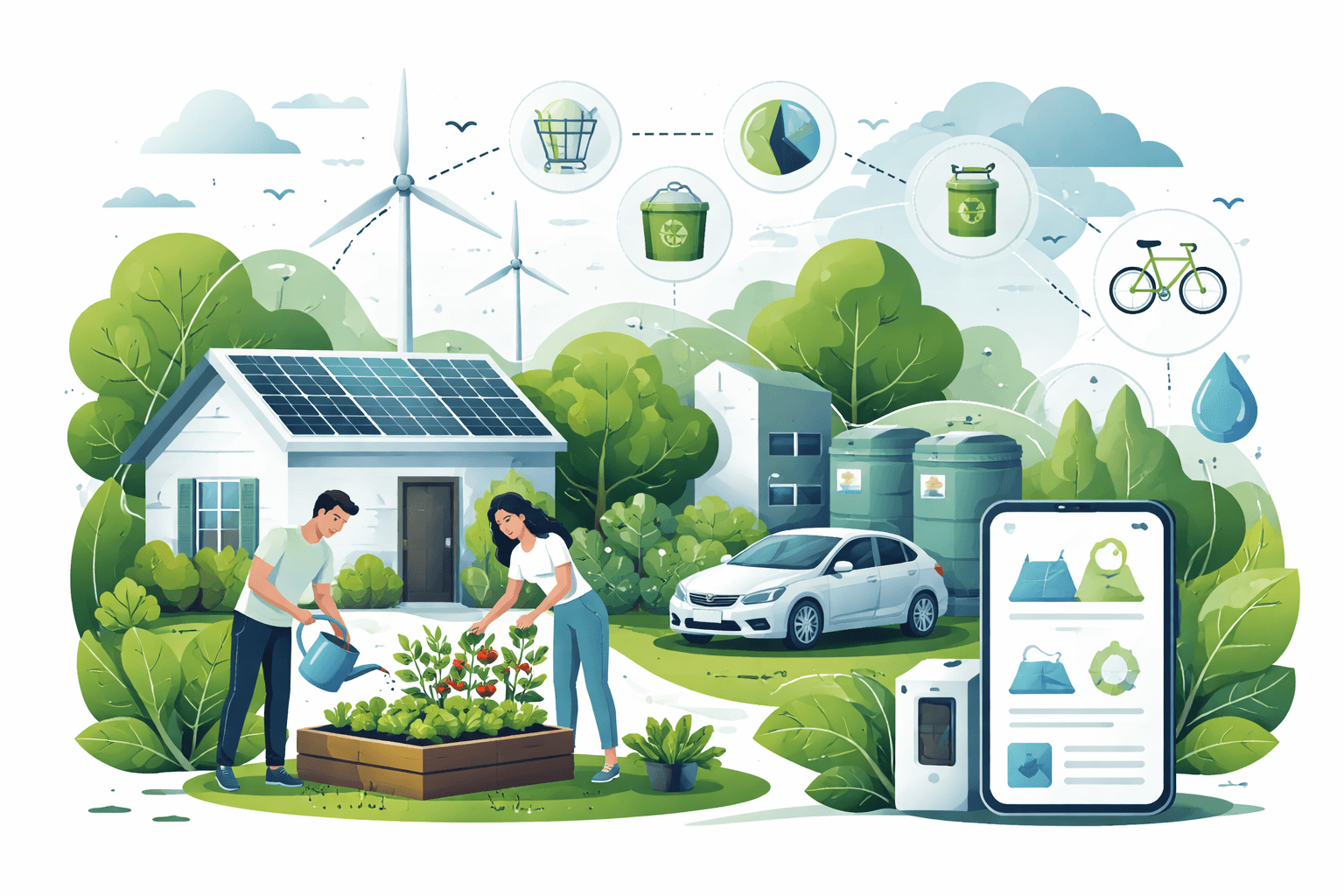
Living more sustainably isn’t abstract—it’s measurable. Buildings account for roughly 30% of global final energy use and about 26% of energy-related CO₂ emissions from operations (IEA/GlobalABC, 2023). Transport contributes about 23% (IEA, 2024). Food systems add roughly 31% of total greenhouse gases when you include production, land-use change, and supply chains (FAO, 2021). This guide distills the most impactful ways to live sustainably—energy, transport, food, waste, water, and purchasing—into concrete, budget-aware actions, plus a system for prioritizing and tracking progress.
By the numbers: the sustainability opportunity
- 30%: Share of global final energy used by buildings; the sector (including materials) is responsible for up to 37% of energy- and process-related CO₂ (GlobalABC/IEA, 2023)
- 23%: Share of energy-related CO₂ from transport (IEA, 2024)
- 31%: Share of global GHGs from food systems (FAO, 2021)
- 8–10%: Global emissions from food waste (IPCC, 2019)
- 50–70%: Lower life‑cycle GHGs of battery-electric cars versus gasoline, depending on grid mix (ICCT, 2022)
- 60 kg vs ~1 kg CO₂e: Average emissions per kg of beef vs peas (Poore & Nemecek, Science, 2018)
- 75%: Electricity savings from LEDs vs incandescent bulbs (U.S. DOE)
- ~18%: Typical share of home energy used for water heating (U.S. EIA/DOE)

How Bad Are Bananas: Mike Berners-Lee
From a text message to a war, from a Valentine's rose to a flight or even having a child, How Bad are Bananas? gives us the carbon answers we need and provides plenty of revelations. By talking t
Check Price on AmazonWays to live sustainably: domain-by-domain actions
Below, each domain offers low-, medium-, and higher-effort options. Choose the tier that fits your situation and step up over time.
Home energy: efficiency first, clean power next
Low effort, low cost
- Swap all bulbs to LEDs. LEDs use about 75% less electricity and last 15–25x longer than incandescents (U.S. DOE).
- Seal obvious air leaks. Caulk and weatherstrip around windows/doors; this can cut heating/cooling losses and deliver 5–15% energy savings in many homes (U.S. DOE Weatherization studies).
- Use smart power strips and set device sleep modes. Electronics and chargers can add 5–10% to electricity bills via standby loads.
- Adjust thermostats. 1 °C (≈2 °F) setback can reduce heating energy ~5–10% in many climates (IEA, DOE).

ecobee Smart Thermostat Premium with Smart Sensor and Air Quality Monitor - Programmable Wifi Thermostat - Works with Siri, Alexa, Google Assistant - Amazon.com
ecobee Smart Thermostat Premium with Smart Sensor and Air Quality Monitor - Programmable Wifi Thermostat - <strong>Works with Siri, Alexa, Google Assistant</strong> - Amazon.com
Check Price on AmazonMedium effort, moderate cost
- Add attic insulation or improve wall insulation where accessible. Air sealing + insulation commonly saves 10–20% on heating/cooling energy (U.S. DOE WAP evaluations).
- Install a smart thermostat and schedule HVAC. Learning thermostats can trim 8–10% of HVAC energy.
- Replace the worst appliance first. An old fridge or dehumidifier can be a large constant load; ENERGY STAR models save 10–40% depending on category.
- Upgrade to induction cooking. Induction is 2–3x more efficient than gas on delivered heat and improves indoor air quality.
- Consider community solar or a green electricity tariff if rooftop solar isn’t an option.
Higher effort, higher impact
- Electrify space and water heating with heat pumps. Modern heat pumps deliver 2–4x the heat per unit of electricity compared to resistance heaters and can lower CO₂ 20–60% depending on your grid (NREL, CLASP). Heat pump water heaters can cut water-heating energy ~50%.
- Install rooftop solar where feasible. 2023 added over 400 GW of new solar PV globally, continuing cost declines (IEA, 2024). Typical home systems can offset 60–100% of annual electricity use depending on size and location.
- Tighten the envelope: deep retrofit with air sealing, high‑R insulation, and high‑performance windows to reduce load before sizing HVAC.
- Integrate smart controls and load shifting. Preheat/precool and run high-load devices during off‑peak or sunny hours to cut costs and emissions. For integration guidance, see Smart Home Technology for Sustainability: High‑Impact Upgrades, Integration, and Real‑World Guidance (/sustainability-policy/smart-home-technology-for-sustainability-upgrades-integration-guide).
For homeowners planning bigger upgrades, see Energy‑Efficient Green Renovations: Practical Solutions to Cut Bills, Reduce Carbon, and Boost Home Value (/sustainability-policy/energy-efficient-green-renovations-practical-guide).
Transportation: fewer car miles, cleaner miles
Low effort, low cost
- Combine trips, telework 1–2 days/week if possible, and shift short trips to walking or cycling. Replacing even one 3–5 mile car trip per day with cycling can cut hundreds of kg CO₂/year (Brand et al., 2021, Transport Research).
- Use public transit where available; off‑peak or discounted passes reduce cost and congestion.
- Keep tires properly inflated; reduces fuel use by up to ~3%.
Medium effort, moderate cost
- Carshare instead of owning a second vehicle; right‑sizing saves thousands per year and emissions from manufacturing.
- Choose efficient vehicles. If buying a combustion car, prioritize top‑tier fuel economy; the difference between vehicle classes can double fuel use and emissions.
- Adopt e‑bikes or e‑scooters for mid‑distance commuting; life‑cycle emissions are a fraction of cars’.
Higher effort, higher impact
- Switch to a battery electric vehicle (BEV) or plug‑in hybrid (PHEV). Lifecycle GHGs are typically 50–70% lower than gasoline vehicles and drop further as grids decarbonize (ICCT, 2022). Charge off‑peak or during high‑renewables periods when possible.
- Relocate closer to work/school or near high‑frequency transit if feasible. Location choice is one of the strongest levers for long‑term transport emissions.
- Advocate for safe bike lanes, bus rapid transit, and reliable rail—system changes that multiply individual choices.
Food: plant‑forward, low waste, seasonal
Low effort, low cost
- Make two plant‑based meals per day your default. Shifting to plant‑rich patterns can reduce diet‑related emissions 20–50% depending on baseline (Global assessments, incl. Poore & Nemecek 2018).
- Buy what you’ll eat; plan meals and freeze leftovers. Food waste drives 8–10% of global emissions (IPCC).
- Choose seasonal, local produce when it’s fresh and competitively priced; this can reduce transport energy and support regional farms.
Medium effort, moderate cost
- Swap high‑impact meats (beef, lamb) for lower‑impact proteins (poultry, fish from sustainable stocks, legumes, tofu) most of the week.
- Join a CSA or farm box to pre‑commit to seasonal produce and cut packaging.
- Improve cooking energy efficiency: lids on pots, pressure cookers, batch cooking.
Higher effort, higher impact
- Adopt a predominantly plant‑based diet. Beef averages ~60 kg CO₂e/kg vs peas ~1 kg (Poore & Nemecek, Science, 2018). Even partial shifts deliver large gains.
- Grow some of your own food using water‑wise, low‑input methods and compost to close the loop.
Waste and materials: reduce, reuse, recycle, compost
Low effort, low cost
- Refuse single‑use items; carry a bottle, mug, utensils, and a tote.
- Set up clear at‑home sorting for recycling and a small compost bin if services exist.
- Opt for products with minimal or recyclable packaging.
Medium effort, moderate cost
- Buy durable goods once; repair before replacing. High‑quality, repairable items often have lower life‑cycle impact.
- Transition to refill systems for cleaners and personal care.
- Set up backyard composting or join a community drop‑off; composting diverts methane‑prone organics from landfills.
Higher effort, higher impact
- Embrace the circular economy: buy refurbished electronics, rent or share seldom‑used tools/equipment, and support businesses with take‑back programs.
- Conduct a household waste audit and set a monthly reduction target (e.g., halve landfill trash in 6 months).
Water: use less, heat less, waste less
Low effort, low cost
- Fix leaks. A dripping faucet or running toilet can waste thousands of gallons per year; the EPA estimates households can save ~10% on bills by fixing leaks.
- Install faucet aerators and low‑flow showerheads; each person can save ~2,000–2,700 gallons/year.
- Wash clothes cold; modern detergents clean effectively in cold water and reduce both water‑heating energy and fabric wear.
Medium effort, moderate cost
- Replace the oldest toilets with WaterSense models (≈1.28 gpf or less); swap to efficient clothes washers and dishwashers.
- Landscape for your climate; outdoor use can exceed 30% of household water. Native, drought‑tolerant plants can cut irrigation 50–75% (EPA WaterSense).
Higher effort, higher impact
- Heat pump water heater to cut energy; insulate hot‑water pipes to reduce wait time and wasted water.
- Install rain barrels or cisterns for irrigation where allowed; consider greywater reuse for landscaping under local codes.
Mindful purchasing: buy less, buy better, buy low‑carbon
Low effort, low cost
- Pause before buying. A 24‑hour rule for non‑essentials curbs impulse purchases and emissions embodied in products.
- Choose used, refurbished, or peer‑to‑peer marketplaces first.
- When buying new, look for durability, repairability, and credible eco‑labels.
Medium effort, moderate cost
- Shift to services over goods (e.g., streaming vs physical media, tool libraries vs ownership).
- Consolidate deliveries and avoid fast shipping to reduce transport emissions.
- For electronics, keep phones/laptops longer; production drives most of their footprint. Battery replacements and repairs extend life at a fraction of the impact.
Higher effort, higher impact
- Assess the big‑ticket items with life‑cycle thinking: furniture, appliances, renovation materials. Choose lower‑carbon materials (e.g., FSC‑certified wood, recycled content steel/aluminum) and proven efficiency.
- Align banking and investments with sustainability; the emissions financed by financial institutions can dwarf personal direct emissions—moving to funds and banks with strong climate policies leverages larger change.
For practical everyday behaviors across the home, see Everyday Sustainable Living: Practical Tips to Save Money, Reduce Waste, and Lower Your Carbon Footprint (/sustainability-policy/everyday-sustainable-living-tips-save-money-reduce-waste-lower-carbon-footprint).
How to prioritize: a stepwise adoption plan
The most effective ways to live sustainably focus on the biggest sources: home energy, transport, and food. Use this phased approach to avoid overwhelm.
Step 1 — Baseline and pick top levers
- Gather last 12 months of utility data: electricity (kWh), gas (therms or m³), heating oil/propane (gallons), water (gallons or m³), and transport fuel (gallons or liters) or annual mileage.
- Identify top three levers. For most households: HVAC and water heating; car miles; meat‑heavy meals.
Step 2 — Low‑cost/high‑impact swaps (0–3 months)
- LEDs, leak fixes, thermostat schedules, power strips, cold‑water washing.
- Replace two car trips/week with active or public transport.
- Make weekdays plant‑forward and cut food waste by half via meal planning.
Step 3 — Medium upgrades (3–18 months)
- Insulation/air sealing; smart thermostat; replace the worst appliance.
- E‑bike for commutes under 10 miles; carshare the second car.
- High‑efficiency washer/dishwasher/toilets; landscape changes.
Step 4 — High‑impact transitions (1–5 years)
- Heat pumps for space and water; rooftop solar or community solar; induction cooking.
- Purchase an efficient BEV/PHEV when your current car reaches end‑of‑life.
- Deep dietary shift toward plant‑based staples; establish composting.
Renter vs homeowner options
- Renters: Focus on portable and reversible changes—LEDs, smart plugs, window insulation kits, thermal curtains, faucet aerators, induction hotplate, efficient showerheads, and community solar/green tariffs. Negotiate with landlords for upgrades that cut bills (e.g., split costs for weatherstripping or a smart thermostat if compatible).
- Homeowners: Layer building‑shell upgrades before sizing HVAC; consider on‑bill financing or energy‑efficient mortgages to spread costs. Align equipment replacement with end‑of‑life to avoid stranded assets.
Tailoring by household type
- Families: Big appliances and HVAC control matter. Set water‑heater temp to 120 °F/49 °C, run full loads, and establish a weekly plant‑based family meal plan. Carpooling for activities compounds savings.
- Students: Housing and transport dominate. Live close to campus or transit, avoid car ownership if feasible, buy used textbooks/electronics, and share appliances.
- Single households: Consider smaller living spaces, carsharing, and batch cooking to reduce waste; group purchases with neighbors (bulk staples, tool libraries) to capture scale benefits.
Tools and metrics: measure what you manage
Tracking turns good intentions into verified impact—and reveals cost savings.

Emporia Gen 2 Smart Home Energy Monitor with 16 50A Circuit Level Sensors | Real Time Electricity Monitor/Meter | Solar/Net Metering - Amazon.com
View on Amazon- Carbon footprint calculators: Try reputable tools from universities and agencies (e.g., UC Berkeley CoolClimate Network, EPA Household Carbon Footprint Calculator) to estimate baseline and scenario impacts. For a practical overview of footprint reduction strategies, see How to Reduce Your Carbon Footprint: Practical Steps for Every Household (/sustainability-policy/how-to-reduce-your-carbon-footprint-practical-steps).
- Energy: Use utility portals or smart meters to download monthly kWh and therms. Track weather‑normalized intensity (kWh per degree‑day) or simply compare year‑over‑year after upgrades.
- Water: Log gallons/m³ per month and per person; aim for steady declines after leak fixes and fixture upgrades.
- Transport: Track annual miles, fuel use, and mode share (% of trips by walking/bike/transit). Apps or a simple spreadsheet suffice.
- Food waste: Do a one‑week waste audit by weight or volume. Set a reduction target (e.g., −50% in 3 months) and measure again.
- Money: Tally bill savings versus upgrade costs to estimate payback. Typical ranges: LEDs and aerators (months), air sealing/insulation (1–3 years), heat pump water heater (3–7 years), rooftop solar (6–10 years), BEV total cost of ownership parity (3–7 years depending on incentives and fuel prices). Actuals vary by region and usage.
Set targets that are specific, time‑bound, and realistic, for example:
- Cut home electricity use 15% within 12 months via LEDs, smart scheduling, and fridge replacement.
- Reduce gasoline purchases by 40% this year by teleworking twice weekly and replacing short trips with cycling.
- Shift to 80% plant‑based meals at home and halve food waste in 6 months.
Interpretation matters: a single LED seems small, but a houseful can save hundreds of kWh/year. Small actions compound, especially when applied consistently and combined with bigger moves at natural replacement points.
Community and systems actions that amplify your impact
Individual choices are powerful, but system changes unlock scale.
- Join or start local initiatives: community solar co‑ops, composting programs, tool libraries, and buy‑nothing groups reduce costs and barriers. For models that work and how to launch them, see Community Initiatives for Sustainability: What Works, How to Start, and How to Scale (/sustainability-policy/community-initiatives-for-sustainability-guide).
- Policy engagement: support building performance standards, clean electricity targets, better transit and bike infrastructure, and waste diversion mandates. These policies shift markets and access for everyone.
- Incentives and financing: tap national/local rebates, tax credits, low‑interest loans, and on‑bill financing for heat pumps, insulation, EVs, e‑bikes, and solar. Employer benefits (commuter subsidies, telework support) and utility programs (demand‑response, efficiency kits) further reduce costs.
- Procurement power: favor businesses with science‑based targets, transparent supply chains, and circular practices. Demand low‑carbon materials and repairability.
- Overcoming barriers:
- Time: bundle actions (e.g., LED swap + aerators in one weekend; meal plan while checking transit schedules).
- Upfront cost: prioritize highest payback first; use incentives and financing; consider group purchases.
- Access: community solutions (carshare, community solar, shared compost) fill gaps where individual options aren’t available.
- Split incentives: for renters/landlords, share energy audit results and propose cost‑sharing where both benefit from lower bills and improved comfort.
What this means for households, businesses, and policymakers
- Households: Focus on the top three—HVAC/water heating, car miles, and diet—then layer in waste, water, and purchasing habits. Verify progress with bills and simple logs.
- Businesses: Enable sustainable employee commutes, electrify fleets, and retrofit buildings. Offer repair/refill options and take‑back programs.
- Policymakers: Pair clear, long‑term targets with stable incentives and equitable access—especially for renters and low‑income households—to accelerate adoption while protecting consumers.
What’s next: cleaner grids, smarter homes, healthier cities
Rapid declines in renewable energy costs and accelerating EV adoption are making low‑carbon choices cheaper and more convenient each year. As grids decarbonize and buildings become smarter and better insulated, heat pumps, induction stoves, and EVs deliver greater emissions cuts over their lifetimes. Cities investing in safe active transport and reliable transit make low‑car living realistic for more people, while food systems are evolving with plant‑forward options and reduced waste. The most effective ways to live sustainably today—efficiency first, electrify and clean the supply, shift modes, and waste less—will only grow in impact as the system around us improves. Start with the low‑cost wins, plan your medium upgrades, and time major transitions with equipment replacement. The data show it works—for your budget, your comfort, and the climate.
Recommended Products
How Bad Are Bananas: Mike Berners-Lee
From a text message to a war, from a Valentine's rose to a flight or even having a child, How Bad are Bananas? gives us the carbon answers we need and provides plenty of revelations. By talking t
ecobee Smart Thermostat Premium with Smart Sensor and Air Quality Monitor - Programmable Wifi Thermostat - Works with Siri, Alexa, Google Assistant - Amazon.com
ecobee Smart Thermostat Premium with Smart Sensor and Air Quality Monitor - Programmable Wifi Thermostat - <strong>Works with Siri, Alexa, Google Assistant</strong> - Amazon.com
Emporia Gen 2 Smart Home Energy Monitor with 16 50A Circuit Level Sensors | Real Time Electricity Monitor/Meter | Solar/Net Metering - Amazon.com
See how much electricity your home is using anywhere, anytime. ... <strong>Add individual 50A sensors to your Vue to monitor up to 16 individual circuits</strong> — providing accurate energy use for t
More in Sustainability Policy
- How to Live Sustainably: Practical, High‑Impact Actions for Everyday Life
- Everyday Sustainability: Practical, High-Impact Steps to Reduce Your Environmental Footprint
- How to Promote Sustainability at Work: Practical Strategies, Metrics, and Engagement
- Tech-Driven Sustainable Living: A Practical Guide to Lower Your Footprint