
Green Building Materials: Guide to Sustainable Choices & Suppliers
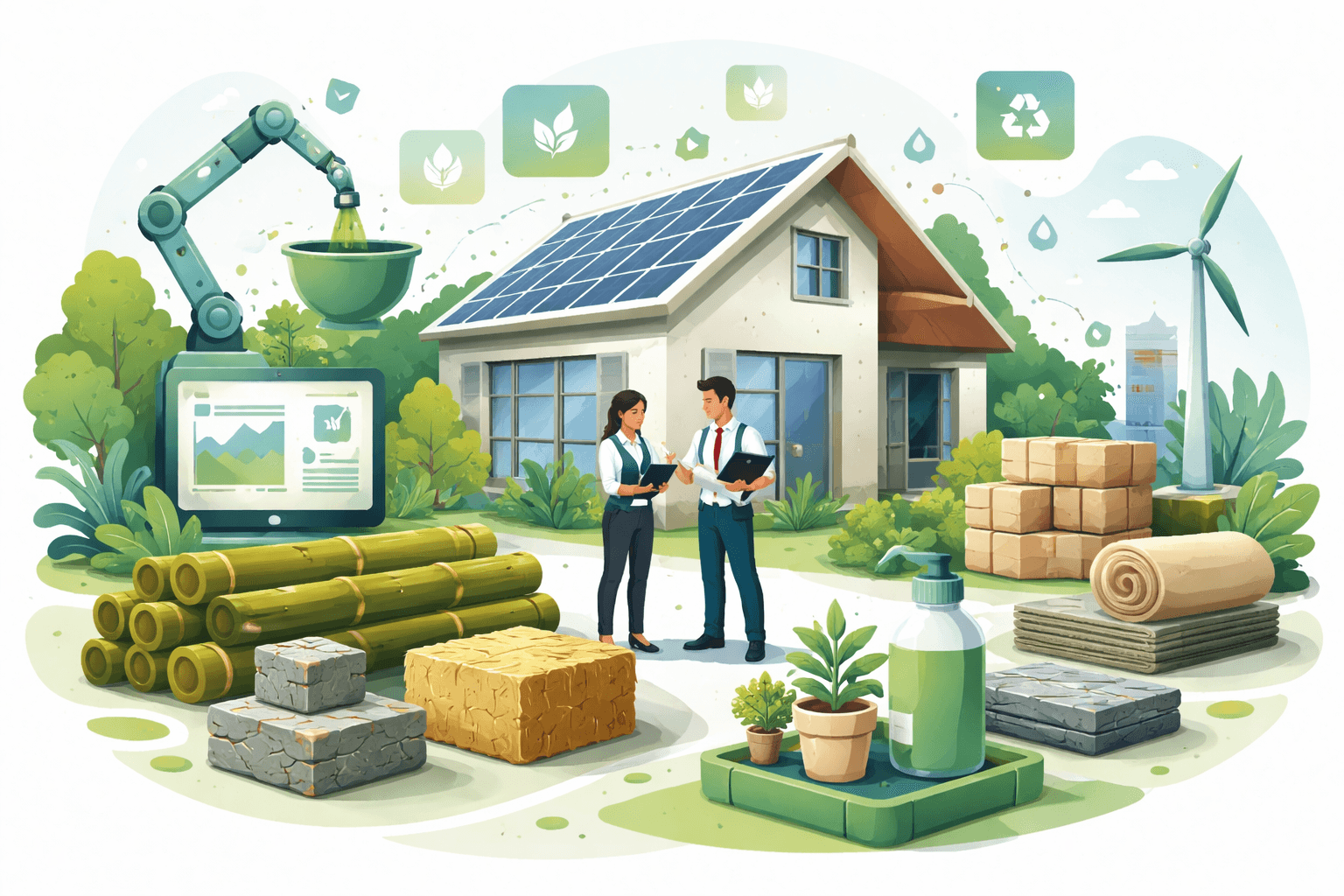
Green building materials are moving from niche to norm. Buildings account for roughly 37% of global energy- and process-related CO2 emissions (GlobalABC/IEA 2023), and materials alone can represent 10–20% of a building’s life‑cycle emissions today—and a much larger share as grids decarbonize (Carbon Leadership Forum; Architecture 2030). This guide explains what counts as “green,” how to evaluate products with data (EPDs, certifications, life‑cycle cost), where sustainable materials deliver the biggest benefits, and how to find reliable suppliers.
Along the way, we’ll use the term green building materials in its precise, measurable sense: products that reduce embodied carbon, harmful emissions, and resource use while improving performance, durability, and occupant health.
What are green building materials? Definitions, sustainability metrics, and why they matter
Green building materials are products designed and documented to lower environmental and health impacts across their life cycle—from raw material extraction (A1) through manufacturing (A2–A3), transport (A4), installation (A5), use (B stages), and end‑of‑life (C stages), as defined in EN 15804 and ISO 14044 life‑cycle assessment (LCA) standards.
Build Beyond Zero: New Ideas for Carbon-Smart Architecture: King, Bruce, Magwood, Chris
In Build Beyond Zero, carbon pioneers Bruce King and Chris Magwood <strong>re-envision buildings as one of our most practical and affordable climate solutions instead of leading drivers of climate cha
Check Price on AmazonCore metrics and terms:
- Embodied carbon: greenhouse gas emissions from materials and construction, typically reported as GWP (global warming potential) in kg CO2e per declared unit (e.g., per m² of insulation). Tracked in Environmental Product Declarations (EPDs) per ISO 14025/EN 15804.
- Recycled content: post‑consumer and pre‑consumer recycled fractions (ISO 14021). Higher post‑consumer content generally yields better impact.
- Biogenic carbon: carbon stored in bio‑based materials (e.g., wood, straw, cellulose). EPDs must report biogenic flows transparently.
- VOC emissions: volatile organic compounds impacting indoor air quality (IAQ). Look for third‑party emissions testing (e.g., GREENGUARD Gold, FloorScore).
- Durability and service life: performance over time (ASTM/ISO methods). Longer life reduces replacement impacts.
Why it matters now:
- The IEA estimates that rapid electrification and renewables are shrinking operational emissions; embodied carbon becomes a larger slice of total building impact with each code cycle.
- Health stakes are high: the U.S. EPA notes people spend ~90% of time indoors, with some pollutant levels 2–5x outdoor concentrations; low‑emitting materials measurably improve IAQ.
- Supply chains have matured: more than 100,000 construction products now carry EPDs (industry estimates compiled by the Carbon Leadership Forum and national EPD program operators), enabling apples‑to‑apples comparisons.
For foundational strategies on healthy, low‑impact products and assemblies, see our Eco‑Friendly Building Materials Guide: Choosing Low-Impact, Healthy Materials for Construction (/sustainability-policy/eco-friendly-building-materials-guide).
Environmental and economic benefits: embodied carbon, lifecycle cost, and health impacts
- Carbon: Substituting lower‑carbon materials (e.g., mass timber for portions of structure, cement with SCMs like fly ash or slag, recycled steel) can cut embodied emissions 20–50% in typical projects, and more than 60% in optimized designs (Carbon Leadership Forum meta‑analyses; peer‑reviewed case studies on mass timber and low‑carbon concrete).
- Cost: Life‑cycle cost analysis (LCCA) often favors durable, low‑maintenance finishes and high‑R insulation. DOE casework shows envelope upgrades (insulation + air sealing + high‑performance windows) deliver 15–35% energy savings, with 3–10 year paybacks depending on climate and utility rates.
- Health: Low‑VOC paints, adhesives, and composite wood products reduce formaldehyde and solvent exposure—key drivers of headaches, respiratory irritation, and lost productivity (EPA/NIOSH). Studies of low‑emitting schools and offices show fewer occupant complaints and improved cognitive scores in enhanced IAQ conditions.
Common green materials by use case
Insulation
- Cellulose (recycled newsprint): High recycled content (>80%), low embodied carbon (often near‑zero or net‑negative when biogenic carbon is credited in EPDs). Good for walls and attics; blown or dense‑pack.
- Wood fiber boards: Vapor‑open, good hygrothermal performance, moderate R‑value per inch; strong for exterior continuous insulation and retrofit facades.
- Mineral wool: Fire‑resistant, high recycled content in some brands; good acoustic and thermal performance; check EPDs for GWP ranges.
- Cork and hemp batts: Renewable, low‑toxicity options; check third‑party testing for R‑value stability and fire ratings.
Key metric: thermal resistance (R‑value per inch), density, EPD GWP (A1–A3), and blowing agents for foams (HFOs have much lower GWP than legacy HFCs).
Framing and structural systems
- FSC‑certified wood and engineered timber (CLT, glulam, LVL): Stores carbon biogenically; can reduce embodied GWP 20–60% versus concrete/steel baselines when appropriately designed (University of British Columbia, Carbon Leadership Forum). Verify sustainable forestry through FSC or PEFC.
- High‑recycled‑content steel: Strong recyclability; EAF (electric arc furnace) steel using high scrap content has materially lower GWP than basic oxygen furnace routes—especially on clean grids.
- Low‑carbon concrete: Use SCMs (fly ash, slag, calcined clays/LC3), optimized mixes, and performance‑based specs to reduce cement clinker content by 20–50% while meeting strength and durability.
Cladding and exterior finishes
- Fiber‑cement with lower clinker and EPD transparency; recycled‑content metal siding; FSC wood siding with non‑toxic finishes; brick with documented lower firing energy. Factor in durability and maintenance intervals.
Flooring
- Solid or engineered FSC wood with low‑emitting finishes; cork; linoleum (bio‑based, durable); recycled‑content rubber. For resilient flooring, look for FloorScore or equivalent IAQ certifications and EPDs.
Interior finishes and adhesives
- Low‑ or zero‑VOC paints and coatings; formaldehyde‑free composite woods (NAF or ULEF resins); low‑odor adhesives and sealants meeting SCAQMD 1168 or similar.

ECOS Paints 00817292026997 WoodShield Pre Conditioner Wood Stain, 1 Quart, Clear - Amazon.com
View on Amazon
Airthings 2960 View Plus - Battery Powered Radon & Air Quality Monitor (PM, CO2, VOC, Humidity, Temp, Pressure): Amazon.com: Industrial & Scientific
View on AmazonStructural alternatives and assemblies
- Structural insulated panels (SIPs) with low‑GWP foams; straw‑bale or straw‑panel assemblies; light‑gauge steel framing with EPD‑verified coil; hybrid mass‑timber + concrete floor systems to optimize acoustics and carbon.
For practical design integration, see Designing Green Homes: Practical Strategies for Sustainable, Healthy, Cost‑Effective Living (/sustainability-policy/designing-green-homes-practical-strategies).
How to evaluate materials: certifications, EPDs, LEED/BREEAM credits, durability, and end‑of‑life
Evidence beats claims. Prioritize products with transparent, third‑party documentation:
- EPDs (ISO 14025/EN 15804): Provide product category rules (PCR), declared unit, system boundaries, and impact categories. Focus on GWP (A1–A3 for product stage; include A4–A5 if known) and durability assumptions. Compare like‑for‑like within the same PCR.
- Health Product Declarations (HPDs): Ingredient disclosure and hazard screening—useful for material health goals and LEED v4.1 MR Option 1.
- Declare labels and Cradle to Cradle Certified: Streamlined transparency and circularity metrics; look for Red List–free where feasible.
- IAQ certifications: GREENGUARD Gold, FloorScore, CARB Phase 2/TSCA Title VI for composite wood.
- Forestry: FSC (Forest Stewardship Council) or PEFC for wood fiber.
- Regional and recycled: Proof of post‑consumer content; mill certificates for steel; take‑back or EPR programs for carpet, ceiling tiles, and packaging.
Rating systems alignment:
- LEED v4.1 Materials & Resources: EPDs (MRc Environmental Product Declarations), sourced raw materials (FSC), material ingredients (HPD/Declare/C2C), and construction waste management.
- BREEAM Mat 01 and Mat 03: Life‑cycle impacts documented via EPDs and responsible sourcing credits.
Durability and maintenance:
- Request documented service life (years), abrasion resistance (e.g., Taber), moisture resistance, and warranty terms. Lower maintenance intervals often beat cheaper upfront options in LCCA.
End‑of‑life and circularity:
- Prefer mechanical fasteners over permanent adhesives for design for disassembly (DfD).
- Verify recyclability logistics: Is there a regional take‑back? What contamination limits apply? Reuse markets for doors, fixtures, and brick can reduce both cost and carbon.
Explore assemblies and policy levers in How to Create a Green Building: Practical Strategies for Sustainable Design, Construction, and Operation (/sustainability-policy/how-to-create-a-green-building-practical-strategies).
By the Numbers
- 37%: Share of global energy- and process‑related CO2 from buildings and construction (GlobalABC/IEA 2023).
- 20–60%: Typical embodied carbon reduction potential from mass timber substitution, optimized concrete, and recycled steel strategies (Carbon Leadership Forum).
- 15–35%: Energy savings from envelope upgrades in residential/commercial retrofits (DOE/NREL syntheses).
- 2–5x: Indoor pollutant concentrations versus outdoors for some contaminants; low‑emitting materials reduce occupant exposure (EPA).
- 3–10 years: Common payback window for high‑performance envelopes in heating‑dominated climates at current U.S./EU energy prices (DOE/NREL LCCA examples).
Cost comparison and lifecycle analysis: upfront vs long‑term savings
Upfront prices vary by region and market cycles. Use LCCA to compare total cost over a 20–30 year analysis period, discounting future cash flows and including maintenance and replacement.
Illustrative examples (order‑of‑magnitude; confirm with local pricing):
- Insulation: Dense‑pack cellulose may price within ±10% of fiberglass batts but often delivers better air‑void fill and acoustic performance; added labor can be offset by higher R‑value per cavity. Typical payback: 3–7 years depending on climate zone and fuel prices.
- Low‑carbon concrete: Performance‑based mixes often cost within 0–5% of conventional in mature markets; large pours can negotiate parity, while specifying SCM ranges early avoids premium rush costs. Avoid over‑conservative cement contents.
- FSC wood vs. conventional: Material adder of 0–5% in many North American and EU markets when specified early; cost neutral at project level when paired with value engineering and reduced finishes.
- Flooring: Commercial‑grade linoleum frequently outlasts vinyl in high‑traffic spaces, reducing replacement cycles by one or more over 20 years; LCCA favors linoleum if cleaning and finish cycles are optimized.
- Paints: Zero‑VOC options are now price‑competitive; fewer occupant complaints can reduce schedule delays on occupied retrofits—a soft‑cost benefit.
Sample LCCA (simplified):
- Option A (baseline batt insulation + standard window): $18,000 materials/labor; annual energy cost $2,400; repaint/repair every 7 years. 20‑year NPV cost: ~$64,000 (at 3% discount, local utility rates).
- Option B (cellulose + exterior continuous wood fiber + low‑e windows): $26,000 upfront; annual energy $1,700; repaint/repair every 10 years. 20‑year NPV cost: ~$59,000. Result: Option B is ~$5,000 cheaper over 20 years while providing better comfort and resilience, with a simple payback of ~11 years and lower embodied GWP per EPDs.
For more upgrade economics and incentives, see Green Building Tax Incentives: How to Maximize Savings for Homes and Commercial Projects (/sustainability-policy/green-building-tax-incentives-maximize-savings) and Energy‑Efficient Green Renovations: Practical Solutions to Cut Bills, Reduce Carbon, and Boost Home Value (/sustainability-policy/energy-efficient-green-renovations-practical-guide).
Specifying for your project: climate, building type, and performance goals
Match materials to context:
- Climate: In cold climates, prioritize continuous exterior insulation, high‑R roofs, and vapor‑smart assemblies to avoid condensation. In hot‑humid zones, reduce solar gain (cool roofs, shading), use moisture‑tolerant materials (mineral wool, cementitious sidings), and specify low‑permeance interior finishes to limit inward vapor drives.
- Building type: Schools and healthcare demand rigorous IAQ—choose GREENGUARD Gold or equivalent; for multifamily, emphasize acoustic resilience (mineral wool, cork, rubber underlayments). Industrial buildings benefit from polished concrete with low‑GWP mixes and durable sealers.
- Performance goals: If targeting LEED/BREEAM, map credits to submittals early (EPDs, HPDs, FSC). For net‑zero buildings, reduce thermal bridging (thermally broken clips, insulated studs), and consider mass timber or hybrid structures to cut embodied carbon.
- Constructability and maintenance: Favor systems your contractor executes well; a “good” system poorly installed is not green. Ask suppliers for mockups, installation training, and QA/QC checklists.
- Fire, moisture, and pest resistance: Verify ratings (ASTM E84/E119 for fire; ASTM E96 for vapor transmission; termite treatments for bio‑based materials where relevant).
Finding suppliers and contractors: sourcing strategies and marketplaces
- Start with documentation: Shortlist only products with current EPDs and emissions certifications. Request sample submittals before bidding.
- Regional sourcing: Shorter A4 transport distances reduce GWP and lead time risk. Many materials earn LEED regional priority when sourced within 100–500 miles (check local thresholds).
- Certified wood: Work with FSC chain‑of‑custody suppliers; specify percentages (e.g., 95% of wood by cost to be FSC Mix or FSC 100%).
- Concrete: Engage ready‑mix producers early; ask for cement reduction with SCMs, optimized aggregates, and performance specs rather than prescriptive cement content.
- Steel: Request mill certificates with recycled content and EAF route disclosure.
- Take‑back programs: Carpet, ceiling tiles, and some insulation manufacturers offer verified recycling or producer responsibility schemes—confirm logistics before specifying.
Data‑informed buying saves money. Across trades, comparing quotes from 3–5 qualified suppliers typically cuts total installed cost by 10–20% while improving schedule certainty. Prepare a consistent spec packet (see checklist below) and request line‑item EPD data to make an apples‑to‑apples decision.
CTA: Ready to price your project? Share your bill of quantities and target certifications to receive multiple quotes from pre‑vetted suppliers in your region. Comparing side‑by‑side bids with EPDs and IAQ certifications can trim 10–20% off costs and slash embodied carbon.
Case studies, spec sheets, and buyer checklist
Case studies
- Mass timber office, Pacific Northwest (mid‑rise, hybrid CLT + concrete cores): Substituting 60% of the superstructure with engineered timber cut embodied structural GWP by ~35% against a concrete baseline, while maintaining cost parity by reducing finish materials and accelerating the schedule (regional CLT supplier; results consistent with CLF benchmarks). IAQ improved via low‑VOC finishes and exposed wood surfaces.
- Affordable multifamily retrofit, Northeast U.S.: Dense‑pack cellulose + exterior mineral wool panels reduced heating energy 28% (weather‑normalized utility data over two winters). Low‑VOC paints and ULEF composite cabinetry cut occupant IAQ complaints by ~40% (property management logs) with no material cost premium versus prior specifications.
- School modernization, Western Europe: Performance‑based low‑carbon concrete mixes (−35% cement clinker) and recycled steel achieved a 25% embodied carbon reduction at bid with no schedule penalty; BREEAM Mat 01 credits awarded for verified EPDs across eight product categories.
What to request in a spec sheet (per product)
- Product identification: Model/series, declared unit (e.g., kg, m² at stated thickness), manufacturing location.
- EPD details: Program operator, PCR reference, publication date, GWP (A1–A3) and if available A4–A5, biogenic carbon reporting, data quality.
- Material health: HPD/Declare/Cradle to Cradle level; VOC emission certificate (GREENGUARD Gold/FloorScore/EN 16516), formaldehyde compliance (TSCA Title VI/CARB).
- Performance: R‑value or U‑factor (where relevant), compressive/tensile strength, density, fire ratings, moisture/vapor properties.
- Circularity: Recycled/biobased content, take‑back programs, recyclability, disassembly methods (mechanical fasteners vs adhesives).
- Durability: Expected service life, abrasion resistance, UV/weathering, maintenance intervals, warranty.
- Logistics: Lead times, minimum order quantities, transport mode and distance (for A4 estimates).
Buyer checklist
- Define goals: Carbon reduction target (e.g., −30% vs baseline), IAQ standard, certifications (LEED, BREEAM), budget, schedule.
- Build a baseline: Model a conventional spec for comparison, then iterate with lower‑carbon alternates.
- Shortlist with documents: Only consider materials with current EPDs and emissions labels.
- Run LCCA: Compare 20–30 year costs, not just upfront.
- Engage suppliers early: Performance‑based concrete, timber sourcing, and long‑lead items require preconstruction coordination.
- Verify installation: Require mockups and QA/QC; a great spec needs great workmanship.
- Plan end‑of‑life: Use DfD principles and identify local reuse/recycling outlets in advance.
FAQ
Q: What’s the single most impactful green building material choice?
A: Structure and envelope. Optimizing structure (mass timber, recycled steel, low‑carbon concrete) and adding high‑R, airtight, and moisture‑smart envelopes usually delivers the largest carbon and energy gains.
Q: Are bamboo and cork always sustainable?
A: They can be—both are rapidly renewable—but sustainability depends on adhesives, finishes, and supply chain practices. Look for verified EPDs and third‑party IAQ certifications, and consider transport distances.
Q: Do EPDs guarantee a product is “good”?
A: No—EPDs provide data, not judgments. Compare EPDs within the same product category and declared unit. Then weigh health, durability, and cost.
Q: What’s the difference between HPD and EPD?
A: EPDs quantify environmental impacts (e.g., GWP), while HPDs disclose chemical ingredients and hazards. Many projects require both.
Q: Will green materials blow my budget?
A: Not if you use performance specs, early supplier engagement, and LCCA. Many low‑carbon swaps are cost‑neutral at bid, and envelope upgrades typically pay back in 3–10 years through reduced energy.
Q: Where should homeowners start?
A: Focus on low‑VOC paints/sealants and better insulation and air‑sealing. They’re widely available, affordable, and deliver immediate IAQ and comfort benefits.
What this means for you
- Homeowners: Prioritize low‑VOC finishes and insulation upgrades first, then durable flooring and certified wood. Use EPDs/IAQ labels to verify claims, and get multiple bids.
- Developers/Owners: Set embodied carbon reduction targets in RFPs, require EPDs/HPDs, and engage concrete/timber/steel suppliers during design development.
- Policymakers: Adopt Buy Clean–style procurement with EPD thresholds and support EPR/take‑back infrastructure.
CTA: Planning a project? Submit a single spec package and request 3–5 competitive quotes tied to EPDs and IAQ certifications. Projects that competitively source sustainable materials typically save 10–20% on installed costs and lock in measurable carbon reductions.
For deeper dives on assemblies, incentives, and healthy product selection, explore:
- Sustainable Materials for Construction: Practical Guide to Low‑Carbon, Durable, and Cost‑Effective Building Materials (/sustainability-policy/sustainable-materials-for-construction-guide)
- How to Create a Green Building: Practical Strategies for Sustainable Design, Construction, and Operation (/sustainability-policy/how-to-create-a-green-building-practical-strategies)
- Energy‑Efficient Green Renovations: Practical Solutions to Cut Bills, Reduce Carbon, and Boost Home Value (/sustainability-policy/energy-efficient-green-renovations-practical-guide)
Recommended Products
Build Beyond Zero: New Ideas for Carbon-Smart Architecture: King, Bruce, Magwood, Chris
In Build Beyond Zero, carbon pioneers Bruce King and Chris Magwood <strong>re-envision buildings as one of our most practical and affordable climate solutions instead of leading drivers of climate cha
Airthings 2960 View Plus - Battery Powered Radon & Air Quality Monitor (PM, CO2, VOC, Humidity, Temp, Pressure): Amazon.com: Industrial & Scientific
ALWAYS-ON AIR QUALITY SENSORS: ... monitor <strong>measuring radon gas, PM2.5 (air pollution detector), carbon dioxide (CO2), VOCs (airborne such as kitchen gases, fumes and cleaning products), humidi
ECOS Paints 00817292026997 WoodShield Pre Conditioner Wood Stain, 1 Quart, Clear - Amazon.com
Application notes, Material Safety ... certifications and claims include the following: Zero VOC - <strong>Conforms to CDPH 01350 (VOC emissions test taken at 14 days).</strong>...
More in Sustainability Policy
- Eco-Friendly Building Materials Guide: Choosing Low-Impact, Healthy Materials for Construction
- Sustainable Materials for Construction: Practical Guide to Low‑Carbon, Durable, and Cost‑Effective Building Materials
- How to Create a Green Building: Practical Strategies for Sustainable Design, Construction, and Operation
- Green Building Certification Guide: What It Means, How It Works, and Which Standard Fits Your Project