
Eco-Friendly Building Materials Guide: Choosing Low-Impact, Healthy Materials for Construction
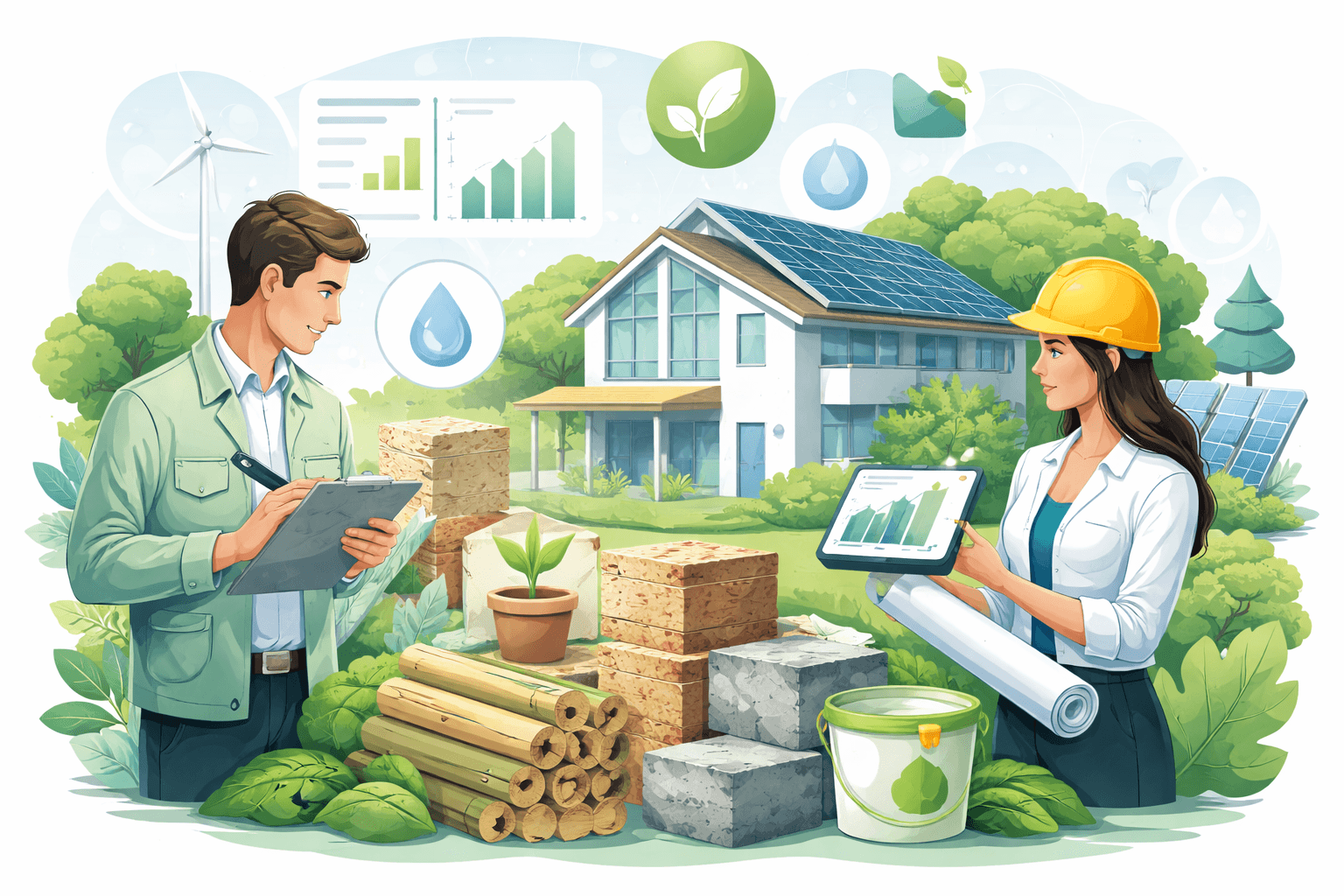
Opening with the why: Buildings accounted for 37% of global energy-related CO2 emissions in 2022—30% from operations and roughly 10% from building materials and construction (embodied carbon), according to the Global Alliance for Buildings and Construction (GlobalABC) and IEA. That makes what we build with as consequential as how we power it. This eco-friendly building materials guide focuses on the practical, data-backed choices designers, builders, and homeowners can make to cut embodied carbon, protect occupant health, and improve long-term durability and costs.
Why eco-friendly building materials matter
- Embodied carbon and resource impacts: Cement, steel, aluminum, and glass are among the most carbon-intensive materials. Cement alone emits around 2.3–2.6 gigatonnes of CO2 annually (roughly 6–7% of global energy-related emissions, IEA). For new buildings delivered this decade, upfront embodied carbon can represent 40–70% of total life-cycle emissions before 2050 because operational emissions fall as grids decarbonize (Architecture 2030; Carbon Leadership Forum).
- Occupant health and indoor air quality (IAQ): People spend 90% of their time indoors. The U.S. EPA notes indoor pollutant levels can be 2–5× higher than outdoors, driven by off‑gassing from paints, adhesives, flooring, and composite wood. Choosing low‑toxicity materials reduces VOCs, formaldehyde, and plasticizers linked to headaches, asthma, and other health effects (EPA; WHO).
- Durability and total cost of ownership: Materials with longer service life, low maintenance, and repairability reduce both costs and environmental impacts over decades. Durable finishes and assemblies also resist moisture, UV, and mechanical wear—key drivers of premature replacement.
- Biodiversity and resource depletion: Responsibly harvested bio‑based materials (FSC‑certified wood, cork, natural fiber insulation) support regenerative forestry and agriculture, while recycled content reduces extraction pressure.
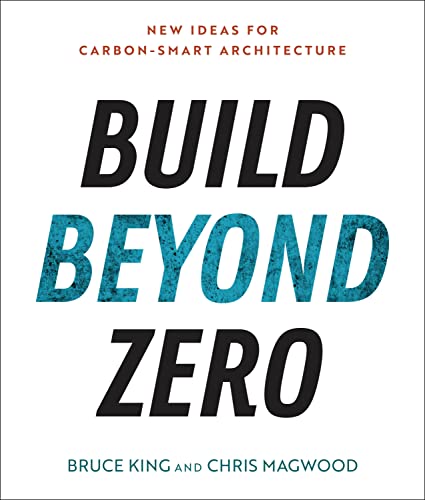
Build Beyond Zero: New Ideas for Carbon-Smart Architecture: King, Bruce, Magwood, Chris
In Build Beyond Zero, carbon pioneers Bruce King and Chris Magwood <strong>re-envision buildings as one of our most practical and affordable climate solutions instead of leading drivers of climate cha
Check Price on AmazonFor homeowners and project teams, material choices influence permitting, schedule, insurance, and valuation. Mass timber can shorten construction timelines and reduce site disruption; low‑carbon concrete can meet performance specs with fewer emissions; low‑VOC interiors support wellness certifications and tenant demand.
By the numbers
- 37%: Share of global energy-related CO2 from buildings in 2022 (GlobalABC/IEA). Roughly 10% is from materials and construction.
- ~0.6–0.9 tCO2 per ton: Typical process emissions for Portland cement production (IEA). Cement is the main driver of concrete’s embodied carbon.
- 1.8–2.1 tCO2 per ton: Primary steel via blast furnace–basic oxygen furnace; 0.3–0.5 tCO2 per ton via electric arc furnace with high scrap and low‑carbon power (World Steel Association; IEA).
- Up to 30–50%: Typical embodied carbon reduction in concrete achievable with supplementary cementitious materials (SCMs) and performance‑based specifications (Carbon Leadership Forum case studies).
- 2–5×: Indoor pollutant levels vs. outdoors in typical buildings (U.S. EPA).
Eco-friendly building materials guide: selection criteria and how to measure
Selecting materials is easier when you define clear criteria and use standardized data.
- Embodied carbon (global warming potential, GWP): Measured as kgCO2e per functional unit using life cycle assessment (LCA) frameworks (ISO 14040/44) and reported in Environmental Product Declarations (EPDs) compliant with ISO 14025/EN 15804. Prioritize products with third‑party‑verified EPDs and compare module A1–A3 (cradle‑to‑gate) and, when available, A4–A5 (transport, installation) and B–C (use and end‑of‑life).
- Operational energy interactions: Materials affect building performance via insulation values (R‑value), airtightness, thermal mass, and solar reflectance. A low‑carbon wall that underperforms thermally may raise operational emissions. Balance embodied and operational impacts with whole‑building LCA.
- Toxicity and IAQ: Look for low‑VOC certifications (UL GREENGUARD Gold; GreenSeal), Health Product Declarations (HPDs) that disclose ingredients, and Declare labels (International Living Future Institute) that screen for “Red List” chemicals. For composite wood, verify compliance with CARB Phase 2 and U.S. EPA TSCA Title VI formaldehyde limits; for interior finishes, reference CDPH Standard Method v1.2 (01350) and SCAQMD Rule 1168 for adhesives/sealants.
- Renewability and recycled content: Prefer bio‑based, rapidly renewable inputs (FSC wood, bamboo, cork), and high recycled content (steel, aluminum, glass, cellulose insulation) where performance and durability are maintained.
- Circularity and end‑of‑life: Favor designs for disassembly, mechanical fasteners over adhesives, modular dimensions, and materials that are recyclable or reusable.
- Durability and maintenance: Verify expected service life, resistance to moisture, UV, pests, and mechanical damage. Choose finishes that can be spot‑repaired and cleaned without harsh solvents.
- Local availability and logistics: Transportation can add 5–20% to product GWP depending on distance and mode; locally available, high‑volume materials (aggregates, masonry) often minimize A4 emissions.
- Cost and incentives: Compare first cost and life‑cycle cost. Many low‑carbon substitutions (e.g., SCMs in concrete) are cost‑neutral to cost‑saving; others (mass timber, hempcrete) may carry premiums but can offset through schedule gains or envelope performance. Explore incentives and green building provisions that reward lower embodied carbon.
Tools to use now
- Product EPDs: From program operators such as UL, ASTM, and NSF. Compare products that perform the same function.
- Carbon calculators and databases: EC3 (Building Transparency), One Click LCA, Athena Impact Estimator, Tally LCA. For coefficients, see the ICE (Inventory of Carbon & Energy) database and Carbon Leadership Forum guidance.
- Specifications: Write performance‑based specs (e.g., compressive strength plus maximum GWP intensity) rather than prescriptive recipes.
Recommended material families: pros, cons, and use cases
Natural materials
Timber (sustainably harvested)
- Pros: Stores biogenic carbon during service life; low embodied carbon relative to concrete/steel; versatile structural and finish uses. FSC certification supports responsible forestry.
- Cons: Moisture management and detailing are critical; potential biodeterioration and termites in some climates; end‑of‑life fate affects net carbon benefits.
- Use cases: Framing, decking, cladding, flooring, interior finishes.
Bamboo (engineered products)
- Pros: Rapidly renewable (harvestable in 3–5 years); strong in tension/compression when engineered into laminated products.
- Cons: Often imported; adhesives/resins can add VOCs; variable quality control.
- Use cases: Flooring, paneling, casework, veneers; emerging structural elements in engineered forms.
Straw bale
- Pros: High insulation (approx. R‑1.5 to R‑2.5 per inch); agricultural by‑product; low embodied carbon when sourced locally.
- Cons: Requires careful moisture design and robust plaster skins; code acceptance varies.
- Use cases: Thick, high‑R walls in low‑rise buildings.
Hempcrete (hemp shiv + lime binder)
- Pros: Vapor‑open, hygroscopic; good insulation plus thermal mass; carbon‑storing via plant growth and lime carbonation; low toxicity.
- Cons: Not structural; needs frame; slower drying; availability varies.
- Use cases: Infill wall systems, retrofits for moisture buffering and comfort.
Rammed earth (stabilized or unstabilized)
- Pros: Extremely durable; high thermal mass; minimal finishes needed; can use on‑site soils.
- Cons: Low insulation; stabilization (with cement or lime) raises embodied carbon; best in arid/moderate climates; skilled labor required.
- Use cases: Walls where mass and durability are prioritized.
Low‑carbon engineered options
Cross‑laminated timber (CLT) and mass timber
- Pros: Significant embodied carbon reductions versus steel/concrete structures in many cases; rapid erection; good seismic performance; predictable fire resistance via charring; biophilic interiors.
- Cons: Material premiums and supply constraints in some regions; acoustics and vibration require careful detailing; moisture protection during construction is essential.
- Use cases: Mid‑ and high‑rise structures (with 2021 IBC allowing tall mass timber up to 18 stories in some types), schools, offices.
Low‑carbon concrete
- Strategies: Replace Portland cement with SCMs (fly ash, slag, calcined clay/LC3), use optimized aggregate gradation, reduce over‑design, use carbon mineralization curing, and specify performance‑based mixes.
- Impact: Typical 20–50% GWP reduction is achievable; deep reductions (50–70%+) with high‑SCM or geopolymer mixes where performance allows. Cement is ~85–95% of concrete’s cradle‑to‑gate GWP; cutting cement content yields the largest gains.
- Considerations: Verify setting time, early strength, sulfate resistance, and cold‑weather performance; ensure EPD coverage and batch plant capabilities.
Steel with high recycled content
- Pros: Structural steel via electric arc furnace (EAF) using scrap can be 60–80% lower GWP than primary steel; infinite recyclability.
- Cons: Quality and section availability vary by mill; GWP depends on grid carbon intensity.
- Strategies: Specify minimum recycled content, mill EPDs, and, where feasible, procure from EAF mills with lower‑carbon electricity.
Recycled and reclaimed materials
Reclaimed wood, brick, and architectural salvage
- Pros: Avoids new extraction; unique aesthetics; can significantly cut embodied carbon.
- Cons: Requires grading for structural use; potential contaminants (lead paint, nails); limited quantities.
- Use cases: Non‑structural finishes, feature walls, flooring, beams with re‑grading.
Recycled aggregates and supplementary fines
- Pros: Recycled concrete aggregate (RCA) reduces virgin extraction; glass pozzolans can displace cement; asphalt shingles can be recycled into pavement.
- Cons: Variable quality; may affect workability and strength; local standards apply.
Low‑toxicity finishes and insulations
- Paints, coatings, adhesives
- Choose zero‑ or low‑VOC products certified to UL GREENGUARD Gold or GreenSeal; confirm VOC content and emissions. Check SCAQMD Rule 1168 for adhesives/sealants.

Airthings 2960 View Plus - Battery Powered Radon & Air Quality Monitor (PM, CO2, VOC, Humidity, Temp, Pressure): Amazon.com: Industrial & Scientific
ALWAYS-ON AIR QUALITY SENSORS: ... monitor <strong>measuring radon gas, PM2.5 (air pollution detector), carbon dioxide (CO2), VOCs (airborne such as kitchen gases, fumes and cleaning products), humidi
Check Price on AmazonFlooring
- Linoleum (bio‑based), cork, bamboo, polished concrete, or FSC wood with low‑VOC finishes are strong options. If using vinyl (PVC), seek low‑phthalate, FloorScore‑certified products and EPDs.
Insulation
- Cellulose (recycled newsprint) and wood fiber: low embodied carbon, good moisture buffering.
- Mineral wool/fiberglass: stable, fire‑resistant; choose no‑added‑formaldehyde binders.
- Sheep’s wool and cork: bio‑based, naturally fire‑resistant (cork), strong IAQ profile.
- Foams (EPS, XPS, PIR, spray polyurethane): high R per inch and air sealing, but higher embodied carbon; specify low‑GWP blowing agents (HFOs) and use judiciously, especially below grade or where moisture is high.
Practical implementation: sourcing, codes, installation, and costs
- Sourcing and certifications
- Wood: FSC (Forest Stewardship Council) or PEFC chain‑of‑custody for responsible forestry.
- Health transparency: Declare labels (ILFI) and Health Product Declarations (HPD) for ingredient disclosure; prefer products without Red List chemicals.
- Environmental data: Product‑specific, third‑party‑verified EPDs to compare GWP.
- Additional labels: Cradle to Cradle Certified, UL GREENGUARD Gold, GreenSeal, FloorScore. Align with LEED/BREEAM/ILFI criteria if targeting certifications.

Orion® 910 Pinless Wood Moisture Meter Kit by Wagner ...
View on AmazonCodes and structural compatibility
- Coordinate early with structural and enclosure engineers when using mass timber, hempcrete, straw bale, or rammed earth. Verify fire ratings, seismic design, acoustic performance, and vapor control. Mass timber design should address char depth, connection protection, and moisture management during construction.
- For wall assemblies, confirm dew‑point control, vapor permeance, and drying pathways suitable to climate zone per ASHRAE 160 and local codes.
Installation and maintenance
- Moisture is the enemy: robust water‑resistive barriers, capillary breaks, ventilated cladding, and balanced vapor control extend material life.
- Detailing: Prefer mechanical fasteners to enable future disassembly; select finishes that can be repaired in place.
- Commissioning: Verify indoor air quality with flush‑out or IAQ testing when using new interior finishes.
Supply chain and cost trade‑offs
- Early procurement for mass timber, engineered bamboo, or specialty low‑carbon mixes can reduce risk and cost.
- Many low‑carbon substitutions are budget‑neutral (e.g., 25–40% slag or fly ash in concrete, EAF steel), while others may carry premiums offset by schedule compression (prefabricated timber) or operating savings (better envelope insulation).
- For retrofits, focus on high‑impact envelope and IAQ upgrades first; interior material swaps can piggyback on scheduled maintenance to minimize waste.
For homeowners planning remodels or deep energy retrofits, see these related resources for envelope strategies, healthy interiors, and incentives:
- Energy-Efficient Green Renovations: Practical Solutions to Cut Bills, Reduce Carbon, and Boost Home Value (/sustainability-policy/energy-efficient-green-renovations-practical-guide)
- Designing Green Homes: Practical Strategies for Sustainable, Healthy, Cost-Effective Living (/sustainability-policy/designing-green-homes-practical-strategies)
- Sustainable Materials for Construction: Practical Guide to Low‑Carbon, Durable, and Cost‑Effective Building Materials (/sustainability-policy/sustainable-materials-for-construction-guide)
- Buildings That Incorporate Sustainability: Key Features, Technologies, and Impact (/sustainability-policy/buildings-that-incorporate-sustainability)
Decision-making aids you can use today
Quick selection checklist
- Define performance and health goals
- Target GWP intensity per assembly or per square meter; set VOC and formaldehyde limits; establish service life requirements.
- Screen by data transparency
- Require third‑party EPDs and HPDs/Declare labels for shortlisted products.
- Compare like with like
- Evaluate products that meet the same functional performance (e.g., equal R‑value, strength). Use cradle‑to‑gate GWP (A1–A3) for initial screening and include transport (A4) if shipping distances vary widely.
- Prefer low‑carbon substitutions first
- Concrete: maximize SCMs or LC3; consider carbon‑cured or geopolymer where appropriate.
- Structure: consider mass timber or high‑recycled EAF steel.
- Insulation: prioritize cellulose, wood fiber, mineral wool; use foams strategically with low‑GWP blowing agents.
- Check IAQ and toxicity
- Low‑VOC certifications; avoid Red List chemicals where feasible; confirm CARB/EPA formaldehyde compliance.
- Verify constructability and maintenance
- Confirm local installer experience, code acceptance, and availability of repair kits/parts.
- Plan for circularity
- Favor mechanical connections, modular dimensions, and materials with established reuse/recycling pathways.
Simple life-cycle comparisons (illustrative)
Concrete slab (per cubic meter)
- Conventional mix: 300–350 kgCO2e
- 40% slag blend, performance‑based spec: 180–220 kgCO2e (≈35–45% reduction)
- Geopolymer (fly ash/slag‑based), suitable application: 100–180 kgCO2e (≈50–70% reduction)
Structural frame (per kg of material, location dependent)
- Primary steel (BF‑BOF): ~1.9–2.1 kgCO2e/kg
- EAF steel with high scrap + low‑carbon power: ~0.3–0.6 kgCO2e/kg
- Sawn softwood (cradle‑to‑gate, excluding biogenic storage credit): ~0.1–0.3 kgCO2e/kg; with biogenic storage accounting, net cradle‑to-site can be near zero or negative during service life, depending on methodology
Interior flooring (per m², cradle‑to‑gate)
- Luxury vinyl tile (LVT): ~8–15 kgCO2e
- Linoleum: ~3–7 kgCO2e
- FSC wood with low‑VOC finish: ~4–8 kgCO2e
Values vary by manufacturer, region, electricity mix, and product thickness; use product‑specific EPDs and whole‑building LCA tools for final decisions.
Short case study snapshots
Mass timber office
- A mid‑rise office replacing a conventional steel/concrete frame with CLT and glulam achieved a 25–40% reduction in structural embodied carbon and cut the structural erection schedule by several weeks (Carbon Leadership Forum and Skanska case studies).
Low‑carbon concrete parking deck
- A parking structure specified 50% slag in decks and 25% fly ash in columns with performance‑based criteria, reducing cement use and achieving a 30–45% GWP reduction while meeting strength and durability targets.
Healthy materials school retrofit
- A K‑12 retrofit swapped high‑emitting flooring and paints for GREENGUARD Gold products, added cellulose insulation, and improved ventilation. Post‑occupancy testing showed VOC reductions exceeding CDPH 01350 thresholds and reported reductions in occupant complaints.
Directories and tools
- Databases: EC3 (material EPD comparisons), mindful MATERIALS (curated product library), ILFI Declare database (transparency/Red List), FSC certificate database (responsible wood).
- LCA tools: Athena Impact Estimator, One Click LCA, Tally LCA plugin for BIM.
- Reuse networks: Build Reuse member directory, local architectural salvage and Habitat ReStore outlets.
Practical implications for project teams
- Designers: Bake embodied carbon targets into early design. Use EC3 or One Click LCA to set maximum GWP thresholds by assembly and specify EPDs as submittals. Coordinate structure–envelope trade‑offs (e.g., mass timber plus high‑performance, vapor‑open wall).
- Contractors: Engage suppliers early on SCM availability, mill EPDs, and low‑GWP blowing agents. Mock‑up IAQ protection plans; stage sequencing to minimize weather exposure for timber.
- Owners: Require transparent environmental and health data; evaluate operating plus embodied impacts in capital planning; consider resale and tenant preferences for healthy spaces.
- Policymakers: Support buy‑clean standards, EPD reporting, and incentives for low‑carbon mixes and high‑recycled content materials.
Where this is heading
Material decarbonization is accelerating. The cement sector is scaling calcined clay cements (LC3), carbon‑cured concretes, and early CCUS pilots; IEA’s Net Zero scenario calls for cement emissions intensity to fall ~35% by 2030 via clinker substitution, efficiency, and near‑zero power. Steelmakers are expanding EAF capacity and piloting hydrogen‑based direct reduction. Mass timber codes now enable timber towers in more jurisdictions, and bio‑based insulation markets are growing. On the health front, ingredient transparency and stricter VOC/formaldehyde limits are steadily moving the market. The next competitive advantage belongs to teams that can deliver low‑carbon, low‑tox, long‑lasting buildings with verifiable data.
If you’re mapping specific assemblies or planning a retrofit, these related explainers can guide envelope choices, healthy interior products, and incentives:
- Energy-Efficient Green Renovations: Practical Solutions to Cut Bills, Reduce Carbon, and Boost Home Value (/sustainability-policy/energy-efficient-green-renovations-practical-guide)
- Designing Green Homes: Practical Strategies for Sustainable, Healthy, Cost-Effective Living (/sustainability-policy/designing-green-homes-practical-strategies)
- Sustainable Materials for Construction: Practical Guide to Low‑Carbon, Durable, and Cost‑Effective Building Materials (/sustainability-policy/sustainable-materials-for-construction-guide)
Recommended Products
Build Beyond Zero: New Ideas for Carbon-Smart Architecture: King, Bruce, Magwood, Chris
In Build Beyond Zero, carbon pioneers Bruce King and Chris Magwood <strong>re-envision buildings as one of our most practical and affordable climate solutions instead of leading drivers of climate cha
Airthings 2960 View Plus - Battery Powered Radon & Air Quality Monitor (PM, CO2, VOC, Humidity, Temp, Pressure): Amazon.com: Industrial & Scientific
ALWAYS-ON AIR QUALITY SENSORS: ... monitor <strong>measuring radon gas, PM2.5 (air pollution detector), carbon dioxide (CO2), VOCs (airborne such as kitchen gases, fumes and cleaning products), humidi
Orion® 910 Pinless Wood Moisture Meter Kit by Wagner ...
Prevent costly water damage with professional-grade moisture meters. Detect hidden moisture in walls, floors, and more with advanced, non-invasive technology.
More in Sustainability Policy
- Sustainable Materials for Construction: Practical Guide to Low‑Carbon, Durable, and Cost‑Effective Building Materials
- Green Building Materials: Guide to Sustainable Choices & Suppliers
- Buildings That Incorporate Sustainability: Key Features, Technologies, and Impact
- How to Create a Green Building: Practical Strategies for Sustainable Design, Construction, and Operation