
Heat Pump vs Furnace: Which Heating System Is Better for Your Home?
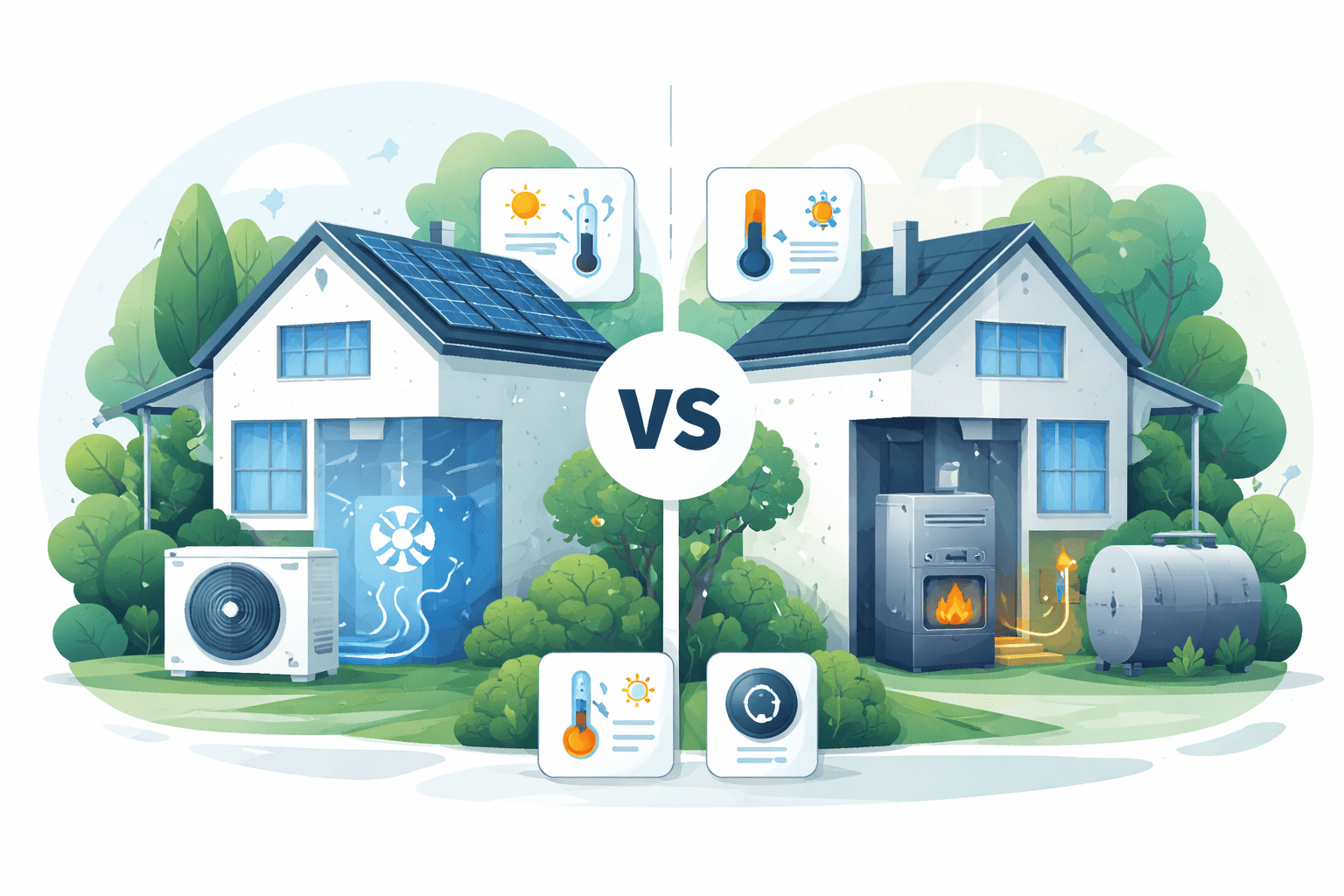
A heat pump vs furnace comparison isn’t just academic—heating is the largest energy use in most U.S. homes, and the choice you make can swing your utility bills and emissions for 10–20 years. In 2022, U.S. heat pump shipments surpassed gas furnaces for the first time (Air-Conditioning, Heating, and Refrigeration Institute), reflecting better cold‑weather performance and strong incentives. This guide uses data from DOE, EPA, EIA, NEEP, and NREL to compare costs, efficiency, comfort, and climate fit—and help you decide which system really suits your home.
Heat pump vs furnace comparison: core differences
Heat pumps and furnaces both keep a home warm, but they operate on fundamentally different physics and energy sources.

Residential Energy: Cost Savings and Comfort for Existing Buildings: Krigger, John T, Dorsi, Chris
Residential Energy: Cost Savings and Comfort for Existing Buildings [Krigger, John T, Dorsi, Chris] on Amazon.com. *FREE* shipping on qualifying offers. Residential Energy: Cost Savings and Comfort fo
Check Price on Amazon- How a heat pump works: A vapor‑compression cycle moves heat from outside to inside using electricity—like an air conditioner running in reverse. Modern “air‑source” heat pumps use inverter-driven compressors and variable-speed fans to modulate output. Heating efficiency is measured by HSPF2 (seasonal) and COP, the coefficient of performance. COP of 3 means 1 kWh of electricity delivers 3 kWh of heat.
- How a furnace works: Furnaces burn a fuel—usually natural gas, propane, or oil—to make heat. Efficiency is rated as AFUE (Annual Fuel Utilization Efficiency). A 96% AFUE furnace delivers 96% of the fuel’s energy as heat to the home, with ~4% lost up the flue.
- Energy sources: Heat pumps run on electricity; furnaces run on fuels. Electric resistance “strip heat” is sometimes paired with heat pumps as backup. Dual‑fuel systems combine a heat pump with a gas furnace, switching based on outdoor temperature or energy prices.
Key implication: Because a heat pump moves heat instead of creating it, it can deliver 200–400% “efficiency” (COP 2–4), while even the best condensing gas furnaces top out around 98.5% AFUE.
Cost and efficiency by climate and home type
Heating economics hinge on three variables: upfront cost, operating cost, and how well a system maintains efficiency in your climate.
Upfront costs
Costs vary by size, brand, and ductwork condition. Typical installed price ranges (U.S., 2024 dollars; sources: DOE consumer reports, contractor surveys, utility rebate data):
- Ducted air‑source heat pump (inverter, high efficiency): $8,000–$18,000
- Ductless mini‑split heat pump (per indoor zone): $3,000–$7,000
- Cold‑climate rated ducted heat pump: $10,000–$20,000
- High‑efficiency gas furnace (95–98% AFUE): $3,500–$7,500
- New or major ductwork modifications: +$2,000–$5,000
Note: If you also need a new air conditioner, a heat pump can replace both heating and cooling. The incremental cost to choose a heat pump over a comparable AC is often modest, improving the value case.
Incentives: Many utilities and state programs offer rebates for high‑efficiency heat pumps, and federal tax credits under IRS 25C provide up to 30% (capped at $2,000) for qualifying heat pumps (ENERGY STAR guidance). Gas furnace incentives vary by state and utility.
Operating costs: a simple way to compare
To compare apples to apples, convert energy prices to cost per million BTU (MMBtu) of heat delivered to the home.
- Heat pump cost per MMBtu ≈ Electricity price ($/kWh) × 293.1 ÷ Seasonal COP
- Gas furnace cost per MMBtu ≈ Gas price ($/therm) ÷ AFUE × 10
Using recent U.S. average residential prices (EIA 2023–2024): electricity ~$0.16/kWh and natural gas ~$1.25/therm with a 95% AFUE furnace:
- Heat pump at COP 3.0: 0.16 × 293.1 ÷ 3.0 ≈ $15.6/MMBtu
- Gas furnace: 1.25 ÷ 0.95 × 10 ≈ $13.2/MMBtu
So at national-average prices, a 95% gas furnace can be slightly cheaper than a COP‑3 heat pump. But the picture flips quickly with different local rates or higher seasonal COPs. Three location snapshots:
- Pacific Northwest (cheap hydro power): $0.10/kWh electricity, $1.50/therm gas, COP 3.0 → Heat pump ≈ $9.8/MMBtu vs gas ≈ $15.8/MMBtu (heat pump cheaper by ~38%).
- Southeast (mild winters): $0.13/kWh, $1.25/therm, COP 3.2 → Heat pump ≈ $11.9/MMBtu vs gas ≈ $13.2/MMBtu (heat pump cheaper by ~10%).
- Northeast (higher rates, colder): $0.24/kWh, $2.20/therm, COP 2.6 → Heat pump ≈ $27.0/MMBtu vs gas ≈ $23.2/MMBtu (gas cheaper by ~15%). Time‑of‑use rates or smarter controls can narrow this gap.
Rule of thumb: Break‑even electricity price ≈ Gas price ($/therm) × COP × 0.0341 ÷ AFUE. Example: $1.50/therm gas, COP 3.0, AFUE 0.95 → break‑even ≈ $0.161/kWh.
Efficiency in real weather
- Heat pumps: Seasonal efficiency depends on outdoor temperature. COP is typically 3–4 at 47°F, 2–3 around freezing, and 1.5–2.2 near 5°F for cold‑climate inverter models (manufacturer and NEEP listings). New vapor‑injection compressors maintain output even below 0°F; many cold‑climate units retain 70–100% of rated capacity at 5°F (NEEP Cold Climate Heat Pump Specification).
- Furnaces: Seasonal efficiency is stable; a 95–98% AFUE unit remains efficient regardless of outdoor temperature. However, duct losses can erode delivered efficiency by 10–30% if ducts run in attics or crawlspaces (DOE Building America).
Home type matters: Ductless mini‑splits avoid duct losses and enable zoning, often improving real‑world efficiency. Leaky or undersized ducts can undermine either technology.
For a whole‑home view of envelope upgrades (air sealing, insulation, windows) that cut heating load 20–40% and improve comfort, see Designing Energy‑Efficient Homes: Practical Strategies for Low‑Carbon, High‑Comfort Living (/sustainability-policy/designing-energy-efficient-homes-practical-strategies).
Comfort, performance, maintenance, lifespan, and noise
Comfort and performance
- Supply air temperature: Furnaces deliver hotter air (typically 120–140°F), leading to short, intense blasts of heat. Heat pumps deliver gentler, steadier warmth (90–115°F supply) with longer run times—often perceived as more even comfort and less stratification.
- Cold‑weather operation: Modern cold‑climate heat pumps can heat effectively down to -5° to -15°F, with some models rated to -22°F (manufacturer data; NEEP). In very cold snaps, the system may rely more on built‑in electric resistance backup (expensive) unless sized appropriately. Dual‑fuel configurations can switch to gas below a set “balance point.”
- Defrost cycles: In humid, freezing weather, outdoor coils frost over and must defrost intermittently, temporarily reducing output and producing a whoosh sound. Good controls minimize comfort impact.
- Zoning: Ductless multi‑zone heat pumps allow room‑by‑room setpoints. Zoning with furnaces requires dampers and careful duct design to avoid noise and pressure issues.
Maintenance and reliability
- Heat pumps: Similar to central AC—clean/replace filters, keep outdoor coils clear, wash coils annually, check refrigerant charge, and clear condensate drains. Expect one professional service visit per year.
- Furnaces: Annual safety and efficiency check recommended—inspect heat exchanger, burners, flue/venting, combustion air, and CO levels. Filters and blowers require the same care as heat pumps.
Both systems rely on indoor blowers and controls; neither operates during a power outage without backup power. If resilience is a priority, right‑size electrical service and consider a small generator or load‑shifting strategies. Smarter controls can help optimize runtime around peak prices; see Smart Home Energy Saving: A Practical Guide to Cut Bills with Tech (/sustainability-policy/smart-home-energy-saving-practical-guide).
Lifespan
- Heat pumps: 12–15 years typical for air‑source units; many ductless systems reach 15–20 years with good maintenance (DOE/Energy Star).
- Furnaces: 15–20 years is common, with high‑quality condensing models often lasting longer if maintained.
Noise
- Outdoor units (heat pumps): 45–60 dB(A) at 3–5 feet for modern variable‑speed condensers—similar to a conversation in a quiet room. Placement matters; avoid bedrooms and neighbor setbacks.
- Indoor units: Ductless wall cassettes can be as low as 20–30 dB(A) at low fan speeds (manufacturer specs). Furnace indoor blower noise varies by fan speed and duct static pressure, typically 50–70 dB(A) during high-fire operation. Proper duct design reduces noise for both.
Safety
- Heat pumps: No on‑site combustion; no carbon monoxide (CO) risk.
- Furnaces: Combustion appliances must be properly vented and maintained to avoid CO and backdraft hazards; install CO detectors.

Kidde Carbon Monoxide Detector, Plug In Wall with 9-Volt Battery Backup, Digital LED Display - Carbon Monoxide Detectors - Amazon.com
View on AmazonEnvironmental impact and electrification benefits
- Direct emissions: Burning natural gas emits ~117 lb CO2 per MMBtu of fuel (EPA). At 95% AFUE, that’s ~123 lb CO2 per MMBtu of heat delivered, not counting methane leakage. Upstream methane can raise lifecycle emissions 15–30% depending on leakage rates (EPA/IEA analyses).
- Grid emissions: U.S. average grid intensity is roughly 0.85 lb CO2 per kWh (0.387 kg/kWh) based on EPA eGRID 2022. A heat pump with COP 3 therefore emits about 83 lb CO2 per MMBtu of delivered heat (0.85 × 293.1 ÷ 3), roughly 30–40% lower than a high‑efficiency gas furnace on the average U.S. grid. In cleaner grids (e.g., the Northwest), reductions exceed 60%. In very cold weather when COP drops to ~1.5, short‑term emissions can approach or exceed gas, but over a season most regions still see reductions as the grid decarbonizes.
- Refrigerants: Legacy R‑410A has high global warming potential. The U.S. AIM Act is phasing down HFCs; manufacturers are transitioning to mildly flammable A2L refrigerants like R‑32 or R‑454B with much lower climate impact (EPA SNAP rules). Proper installation and end‑of‑life recovery are important regardless.
- Load flexibility: Heat pumps can preheat and modulate, enabling demand response to integrate renewables and cut peak emissions (NREL, DOE Grid‑Interactive Efficient Buildings). Gas furnaces can’t provide similar grid services.
Bottom line: If your electricity is moderately clean today—or will be over the next 10–15 years—heat pumps deliver meaningful lifecycle emissions cuts and align with city and state electrification goals.
By the numbers
- 95–98.5%: AFUE range for modern condensing gas furnaces (DOE)
- 3.0–5.0: Typical COP at 47°F for inverter heat pumps; 1.5–2.5 at 5°F for cold‑climate models (NEEP/manufacturer data)
- 70–100%: Capacity retained by many cold‑climate heat pumps at 5°F (NEEP specification listings)
- 10–30%: Potential duct losses if ducts run in unconditioned spaces (DOE Building America)
- 117 lb CO2/MMBtu: Direct emissions from burning natural gas (EPA)
- 0.85 lb CO2/kWh: Approximate U.S. grid average (EPA eGRID 2022); falling as wind/solar grow (IEA/DOE)
50%: Share of U.S. households with AC—if you’re replacing AC, a heat pump often costs only modestly more but handles both heating and cooling (EIA Residential Energy Consumption Survey)
How to choose: scenarios where each shines
When a heat pump is usually the better fit
- You’re replacing an aging AC anyway. The incremental cost to choose a heat pump instead of a straight AC is typically small, while you gain efficient heating.
- Mild to moderate winters (mid‑Atlantic, Southeast, Pacific Coast). Seasonal COPs of 3–4 make operating costs very competitive with gas and far below oil or propane.
- No existing gas line or costly gas extension. Avoiding meter fees, venting, and combustion safety checks narrows the upfront gap.
- Ductless opportunity. Homes without ducts can gain zoned comfort and high seasonal efficiency with mini‑splits.
- You value lower emissions and future‑proofing. As the grid gets cleaner, your heating gets cleaner automatically. Heat pumps also integrate well with rooftop solar and demand response.
When a furnace or dual‑fuel system may make sense
- Extreme cold with very high electricity prices and limited incentives. In some Northeast markets with ~$0.24/kWh electricity and low gas prices, a 95–98% AFUE furnace can have lower operating costs. A dual‑fuel system can switch to gas during the coldest hours.
- Existing, newer high‑efficiency furnace and you only need cooling. If your furnace is recent and in good shape, adding a central AC or a modest heat pump used mainly for shoulder seasons can be pragmatic.
- Power constraints. If your electrical panel is undersized and a service upgrade is expensive, sticking with gas (or using a smaller cold‑climate heat pump plus dual fuel) can defer electrical work.
Fuel oil or propane homes
- Heat pumps almost always beat oil or propane on both cost and emissions at today’s prices. Even in colder climates, a cold‑climate heat pump sized for most of the load can slash oil/propane use, using strip heat or a small backup furnace only on the coldest days (NEEP field studies).
For broader home upgrade context and incentives that can sweeten the payback, see Sustainable Home Improvements: Tech‑Forward Upgrades with ROI & Incentives (/ai-technology/sustainable-home-improvements-tech-forward-upgrades-roi-incentives).
What to discuss with your contractor
Insist on data‑driven design and commissioning. Ask for:

ecobee Smart Thermostat Premium with Smart Sensor and Air Quality Monitor - Programmable Wifi Thermostat - Works with Siri, Alexa, Google Assistant - Amazon.com
View on Amazon- Manual J load calculation and Manual S equipment selection (ACC A). Avoid rule‑of‑thumb sizing.
- For heat pumps: Cold‑climate certification (if relevant), HSPF2 and capacity at 5°F and 17°F, minimum capacity (turn‑down ratio) for shoulder-season efficiency, and anticipated seasonal COP. Clarify the heating balance point and whether backup heat is locked out above certain temps.
- For furnaces: Verified AFUE, two‑stage or modulating burner for comfort, and compatibility with existing venting.
- Duct design (Manual D), measured static pressure, and duct leakage testing. Poor ducts will erase efficiency gains.
- Controls: Thermostat compatibility with inverter heat pumps, outdoor sensor for dual fuel, and programming for time‑of‑use rates or utility demand response.
- Refrigerant and code compliance: A2L‑ready installation (R‑32/R‑454B), proper ventilation clearances, and permits.
- Commissioning report: Airflow, refrigerant charge, and combustion analysis (for furnaces).
- Noise and placement plan: Outdoor clearances, neighbor setbacks, and vibration isolation.
Practical implications for bills, comfort, and carbon
- Bills: Run the break‑even math with your actual rates. If electricity is under ~$0.16/kWh or gas is above ~$1.50/therm, a heat pump with seasonal COP ~3 will likely cost less to run than a 95% furnace.
- Comfort: If you dislike hot‑cold swings, inverter heat pumps offer steady comfort and excellent humidity control in summer. Furnaces give hotter supply air; some prefer that feel in very cold climates.
- Carbon: On the average U.S. grid, a COP‑3 heat pump cuts delivered‑heat emissions ~30–40% vs a high‑efficiency gas furnace and more as the grid decarbonizes.
- Risk and resilience: Both systems need electricity to operate. Pair either with improved envelope and smart controls to ride out cold snaps and price spikes more comfortably. For control strategies that trim peaks and off‑peak preheating, see Smart Home Energy Saving: A Practical Guide to Cut Bills with Tech (/sustainability-policy/smart-home-energy-saving-practical-guide).
Where heating is heading
Three trends are reshaping the heating landscape:
- Cold‑climate performance keeps improving. Variable‑speed compressors with vapor injection and smarter defrost cycles are expanding the viable range for all‑electric heating, even in sub‑zero climates (NREL, NEEP).
- The grid is decarbonizing. Wind and solar additions are cutting grid CO2 intensity; the IEA reports renewable capacity growth repeatedly breaking records. Each year, the emissions benefit of heat pumps improves.
- Policy and refrigerants are changing. The U.S. HFC phasedown is pushing adoption of lower‑GWP refrigerants. Building codes and incentives increasingly favor high‑efficiency electric heating, while utilities roll out demand response and time‑varying rates that heat pumps can exploit.
If you’re choosing today, make the decision with local rates, climate, and your home’s envelope in mind—and insist on right‑sizing and quality installation. In many regions, a modern air‑source heat pump provides the best total value: competitive operating costs, year‑round comfort, and a cleaner path forward as the grid gets greener. In the coldest markets with high electricity prices, a high‑efficiency furnace or a well‑tuned dual‑fuel setup can still be the most cost‑effective bridge.
Recommended Products
Residential Energy: Cost Savings and Comfort for Existing Buildings: Krigger, John T, Dorsi, Chris
Residential Energy: Cost Savings and Comfort for Existing Buildings [Krigger, John T, Dorsi, Chris] on Amazon.com. *FREE* shipping on qualifying offers. Residential Energy: Cost Savings and Comfort fo
ecobee Smart Thermostat Premium with Smart Sensor and Air Quality Monitor - Programmable Wifi Thermostat - Works with Siri, Alexa, Google Assistant - Amazon.com
ecobee Smart Thermostat Premium with Smart Sensor and Air Quality Monitor - Programmable Wifi Thermostat - <strong>Works with Siri, Alexa, Google Assistant</strong> - Amazon.com
Kidde Carbon Monoxide Detector, Plug In Wall with 9-Volt Battery Backup, Digital LED Display - Carbon Monoxide Detectors - Amazon.com
The Kidde Carbon Monoxide Detector, Plug In Wall with 9-Volt Battery Backup, Digital LED Display <strong>uses electrochemical sensor technology to detect poisonous CO gas in your home and alert you by