
Sustainable Home Improvements: Tech-Forward Upgrades with ROI & Incentives
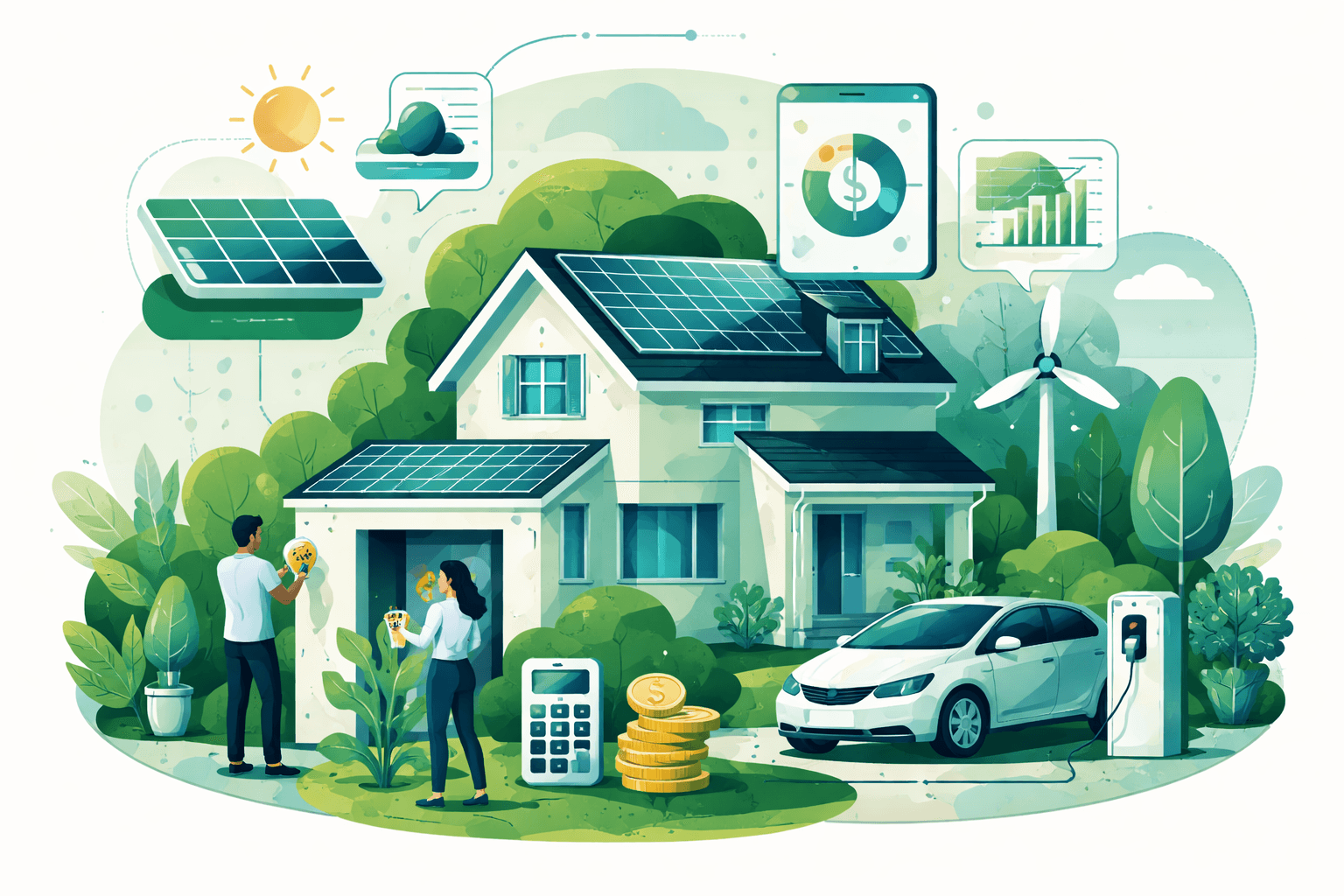
Homes are now one of the fastest, lowest-cost places to cut energy bills and carbon. The IEA estimates buildings account for roughly 30% of global final energy use and about 26% of energy-related CO₂ emissions. In the U.S., household energy use averages ~10,500 kWh of electricity and 61–70 MMBtu of fuel per year, according to EIA. Done right, sustainable home improvements can trim total energy use 20–40%, boost comfort, and raise property value—often with double‑digit returns and strong incentives.
This guide maps the highest-impact, tech-forward upgrades, how to prioritize them, what they cost, how much they save, and the incentives and financing that make the math work.
Why upgrade? The case for sustainable, tech-driven home improvements
- Energy savings and bill stability: Weatherization and smart electrification typically reduce whole‑home energy 20–40% (ACEEE, DOE). Smart thermostats alone can cut HVAC energy ~8% on average (ENERGY STAR). LEDs use at least 75% less energy than incandescent bulbs (DOE).
- Comfort and health: Heat pumps provide even, dehumidified cooling and steady winter heat; induction cooking and improved ventilation reduce indoor air pollutants linked to asthma (EPA, peer-reviewed IAQ studies).
- Property value: Multiple appraisals show energy upgrades and solar add resale value; Lawrence Berkeley National Laboratory found PV adds ~$4 per watt to home value on average.
- Emissions reduction: Electrifying with heat pumps and adding rooftop solar can reduce a typical home’s operational emissions 40–90% depending on grid mix (RMI, NREL). EPA eGRID puts the U.S. average grid at ~0.4 kg CO₂/kWh and falling, so each avoided kWh or self‑generated solar kWh matters more over time.
- Resilience: Batteries and EVs paired with solar keep critical loads on during outages; variable-speed heat pumps maintain comfort across temperature swings.

Electrify: An Optimist's Playbook for Our Clean Energy Future
In Electrify, <strong>Griffith lays out a detailed blueprint—optimistic but feasible—for fighting climate change while creating millions of new jobs and a healthier environment</strong>. Griffith’s pl
Check Price on AmazonStart with an energy audit: how to assess and prioritize
Before buying equipment, diagnose. A quality energy audit finds the cheapest kilowatt‑hours to save and prevents buying oversized systems.
What to expect from an audit:
- Blower door test: Depressurizes the home to quantify air leakage (ACH50). Air sealing can cut infiltration 10–40%.
- Infrared thermography: Visualizes insulation gaps, thermal bridges, and duct leaks.
- Duct leakage and static pressure tests: Identify losses and design problems that undermine HVAC performance.
- Load calculation: ACCA Manual J to size equipment, plus Manual S (equipment selection) and Manual D (duct design) where applicable.
- Prioritized measures with savings-to-investment ratio (SIR) and estimated payback.
Typical costs and incentives:
- Basic audit: $200–$400; comprehensive with blower door/IR: $300–$700; HERS rating: $300–$800. Many utilities subsidize 50–100%.
- Federal tax credit: Up to $150 for a home energy audit under the Energy Efficient Home Improvement Credit (IRC 25C).
How to use the report:
- Fix envelope leaks and insulation gaps first. Load-reduction measures unlock smaller, cheaper HVAC and smaller solar arrays.
- Plan electrification as a system: panel capacity, circuits, and service upgrades where needed; coordinate timelines to stack incentives.
Sustainable Home Improvements: high-impact tech upgrades
Heat pumps for space heating and cooling
What they do: Move heat instead of making it, delivering 2–4 units of heat per unit of electricity (coefficient of performance, COP 2–4). Cold-climate models maintain capacity well below freezing.
- Typical installed cost: $8,000–$18,000 for central air‑source systems; $4,000–$12,000 for ductless mini-splits per multi‑zone setup; ground‑source (geothermal) is higher but extremely efficient.
- Energy savings: 20–50% vs. electric resistance; 25–50% vs. oil/propane; variable vs. efficient gas depends on climate and rates but often saves overall when combined with weatherization.
- Emissions: RMI analysis shows heat pumps reduce emissions in nearly all U.S. homes today, with larger reductions as the grid decarbonizes.
- Ratings to compare: SEER2 (cooling efficiency), HSPF2 (heating), capacity at 5°F/17°F for cold climates, and ENERGY STAR Most Efficient listings.
Practical tips:
- Demand a Manual J load calc; oversizing kills comfort and efficiency.
- Choose variable-speed (inverter-driven) models; they modulate to match loads and dehumidify better.
- For cold regions, consult the Northeast Energy Efficiency Partnerships (NEEP) cold‑climate database and ensure adequate electrical panel capacity.
Product pick: For cold climates, variable-speed systems with high low-temp capacity such as Mitsubishi Hyper‑Heat or Fujitsu Airstage XLTH consistently score well in utility field data.
Heat pump water heaters (HPWH)
- What they do: Extract heat from air to heat water at ~3–4x the efficiency of standard electric tanks (Uniform Energy Factor, UEF ~3–4).
- Typical cost: $1,500–$3,500 installed; 120V “plug‑in” models avoid panel upgrades.
- Savings: ~$200–$600/year depending on usage and rates (DOE field studies).
Product pick: The Rheem ProTerra 120V offers high UEF with simpler installation in many U.S. homes.
Rooftop solar (PV) and home batteries
Costs and output:
- Residential PV: Recent NREL and SEIA/Wood Mackenzie benchmarks put typical installed prices around $2.75–$3.75/W before incentives, depending on market. A 7 kW system may cost ~$19,000 at $2.70/W and produce ~9,000–11,000 kWh/year based on location.
- Batteries: 10–15 kWh systems typically cost $9,000–$16,000 before incentives. Useful for backup and time‑of‑use (TOU) bill management; economics improve in TOU/solar export‑limited markets.
Incentives:
- The Residential Clean Energy Credit (IRC 25D) gives 30% off for solar, battery storage (>=3 kWh), and associated equipment through 2032, stepping down afterward. Learn how it works in our guide: Federal Solar Tax Credit 2026: What Homeowners Need to Know.
- Many states add net metering or performance‑based incentives.
Performance and maintenance:
- Expect 25‑year panel performance warranties and 10–12 years on inverters (longer for some microinverters); monitor output to catch issues early. See: Solar Panel Maintenance Tips: Maximize Output & Lifespan.
Product picks:
- High-efficiency modules like Maxeon 6 AC or REC Alpha Pure paired with Enphase IQ8 microinverters minimize shade losses and boost uptime.
- For storage, Tesla Powerwall 3 or Enphase IQ Battery 10T are proven, UL‑listed options; compare usable capacity, power, and warranty cycles in our Solar Battery Buying Guide: Choose the Best Home Battery in 2026.
EV charging at home
- Level 2 chargers (240V) deliver 25–40 miles of range per hour and cost ~$700–$1,500 for hardware plus $500–$2,000 for installation, depending on panel and wiring.
- Fuel savings: At 3 mi/kWh and $0.15/kWh, driving costs
$0.05/mi, vs. a 30 mpg gas car at $3.50/gal ($0.12/mi). Annual savings can approach $700–$900 at 12,000 miles/year (DOE AFDC). - Incentives: Some utilities offer charger rebates and TOU rates; federal 30C tax credit applies in limited census tracts (rural/low‑income delineations under IRA).
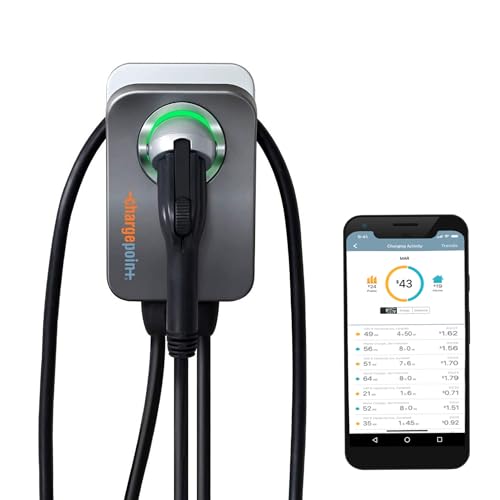
ChargePoint HomeFlex Level 2 EV Charger J1772
View on AmazonSmart HVAC, controls, and LEDs
- Smart thermostats: ~8% average HVAC savings (ENERGY STAR), higher with proper scheduling, geofencing, and occupancy features. ecobee Smart Thermostat Premium and Nest Learning Thermostat are reliable, rebate‑eligible options.
- Zoning and variable-speed air handlers: Improve comfort and reduce cycling.
- LEDs and controls: LEDs cut lighting energy 75%+; occupancy/vacancy sensors and daylight dimming drive additional 10–30% lighting savings.
- Whole‑home energy monitors (Sense, Emporia): Provide device‑level insights that often find 5–15% “behavioral” savings.

ecobee Smart Thermostat Premium with Smart Sensor and Air Quality Monitor - Programmable Wifi Thermostat - Works with Siri, Alexa, Google Assistant - Amazon.com
View on AmazonFor deeper integration and automation ideas, see: Smart Home Technology for Sustainability: High‑Impact Upgrades, Integration, and Real‑World Guidance.
Building envelope and low‑tech complements that supercharge tech systems
Load reduction first makes every other upgrade smaller and cheaper.
- Air sealing: Often the fastest payback. Target top plates, attic hatches, rim joists, and duct leaks. EPA notes weatherization can save 10–20% on heating and cooling.
- Insulation: Aim for DOE‑recommended R‑values (e.g., R‑49 to R‑60 attics in many climates). Dense‑pack walls, attic cellulose, and continuous exterior insulation reduce thermal bridges.
- Windows and doors: ENERGY STAR certified units with low U‑factor (<=0.25–0.30) and climate‑appropriate SHGC. In many cases, air sealing and storms/low‑e inserts outperform full replacements per dollar.
- Ducts: Seal with mastic and insulate to R‑8 in attics; duct leakage commonly wastes 10–30% of airflow.
- Ventilation: Balanced ventilation via HRVs/ERVs maintains indoor air quality in tight homes while recovering 60–80% of heat.
- Induction cooking: Not a major energy saver, but improves indoor air quality and pairs well with electrification.
Interaction with tech systems:
- Right‑sizing: After air sealing/insulation, a Manual J often shows smaller heating/cooling loads—leading to smaller, cheaper heat pumps and better comfort.
- Solar resizing: Load reduction can shrink PV system size 10–30% for the same net energy outcome, improving ROI.
For design and material choices that reduce embodied and operational carbon, see: Energy-Efficient Green Renovations: Practical Solutions to Cut Bills, Reduce Carbon, and Boost Home Value.
By the numbers: savings, costs, carbon
- Lighting: LEDs use ≥75% less energy and last up to 25x longer than incandescents (DOE). Typical payback: <1 year in high‑use fixtures.
- Smart thermostats: ~8% heating/cooling savings (ENERGY STAR). Payback: 1–3 years.
- Air sealing + attic insulation: 10–25% HVAC savings (EPA/DOE). Payback: 2–6 years.
- Heat pump water heaters: UEF ~3–4; $200–$600/year saved. Payback: 3–7 years before incentives; faster with rebates.
- Space-conditioning heat pumps: 20–50% savings vs. resistance/oil. Emissions: reductions in nearly all U.S. regions today (RMI), higher as the grid cleans up.
- Solar PV: $2.75–$3.75/W installed; 7 kW yields ~9,000–11,000 kWh/year. Payback: ~6–10 years in many markets pre‑battery, with 30% federal credit.
- Home batteries: Backup + TOU arbitrage; economics improve where export is limited or TOU spreads are large (>20–25¢/kWh).
- EV charging: ~$700–$1,500 hardware, $500–$2,000 install. Fuel cost ~40–70% lower per mile than gas (DOE AFDC).
Carbon context:
- Electricity: ~0.4 kg CO₂/kWh U.S. average (EPA eGRID), falling each year.
- Natural gas: ~5.3 kg CO₂ per therm at combustion (EPA). Methane leakage adds upstream emissions.
- Each 1,000 kWh offset by rooftop solar avoids ~0.4 metric tons CO₂e on the average U.S. grid; higher in coal‑heavy regions.
Costs, payback, ROI: sample packages and math
Think in packages that align with your budget, local rates, and climate.
- Starter efficiency package ($2,000–$5,000 net of typical rebates)
- Measures: Audit, air sealing, attic insulation top‑off, LED retrofit, smart thermostat.
- Savings: 10–25% of whole‑home energy; $200–$600/year typical.
- Payback: 2–5 years; SIR often >1.5. Comfort improves immediately.
- Core electrification package ($12,000–$25,000 net after incentives)
- Measures: Variable‑speed heat pump for space conditioning, HPWH, panel/circuit upgrades as needed, Level 2 EVSE.
- Savings: $800–$1,800/year depending on prior fuels and rates; emissions down 30–60% on today’s grid.
- Payback: 5–9 years in many markets; IRR often 8–15% when stacking rebates and low‑interest financing.
- Net‑zero pathway ($30,000–$55,000 net after 30% solar/battery credits and efficiency rebates)
- Measures: Add ~7–10 kW solar, 10–15 kWh battery, deeper envelope upgrades (windows/insulation/ERV).
- Savings: $1,500–$3,500/year; resiliency benefits during outages.
- Payback: 7–12 years; long‑run IRR ~8–12% depending on TOU, net metering, and escalation assumptions (2–4%/yr energy price growth modeled).
Lifecycle emissions example (typical 2,000 ft² home, mixed climate):
- Baseline: 90% AFUE gas furnace + SEER 14 AC: ~6–8 tons CO₂e/yr.
- Heat pump (HSPF2 9.5, SEER2 18) + HPWH: ~3–5 tons CO₂e/yr on current grid; with 7 kW PV: ~1–2 tons CO₂e/yr. As grid carbon falls ~3–6%/yr in many regions (IEA/EIA trends), heat pump pathway improves annually.
Quick ROI math example:
- Net project cost: $12,000 after incentives. Annual savings: $1,800. Simple payback: 6.7 years. If savings escalate 2%/yr and discount rate is 5%, NPV over 15 years ≈ $6,000–$7,000; IRR ~12–14% (illustrative).
Incentives, rebates, and financing: where to find and how to stack
Federal tax credits
- Energy Efficient Home Improvement Credit (25C): 30% off qualified upgrades each year, capped at $3,200 annually. Includes up to $2,000 for heat pumps or HPWHs, plus up to $1,200 combined for insulation/air sealing, windows (max $600), exterior doors (max $500), and $150 for an energy audit. Electrical panels can qualify when installed with other eligible measures.
- Residential Clean Energy Credit (25D): 30% credit for solar, battery storage (≥3 kWh), geothermal heat pumps, small wind, and fuel cells. Valid through 2032 (step‑downs after).
- EV charging (30C): 30% credit up to $1,000 for home EVSE applies only in eligible census tracts (rural/low‑income) beginning 2023; check eligibility.
State and utility rebates
- HOMES & High‑Efficiency Electric Home Rebates (HEEHRA): State‑run IRA programs offering point‑of‑sale rebates for efficiency and electrification. Potentially up to $8,000 for heat pumps, $1,750 for HPWHs, $1,600 for insulation/air sealing, and support for panel/wiring—income‑based and rolling out by state in 2024–2026.
- Utility programs: Heat pump and HPWH rebates ($300–$2,000+ common), smart thermostat and insulation rebates, and performance incentives for weatherization.
How to find programs
- Database of State Incentives for Renewables & Efficiency (DSIRE) lists federal, state, and local offers.
- State energy offices and local utilities publish program details and approved contractor lists.
- Rewiring America’s calculator estimates IRA benefits by ZIP code and income.
Financing options
- Low‑interest green loans: Credit unions and state green banks often offer 3–7% APR terms.
- On‑bill repayment/tariffs: Pay via your utility bill; in some programs the obligation runs with the meter (PAYS model).
- Mortgages/HELOCs: FHA/VA Energy Efficient Mortgages, Fannie Mae HomeStyle Energy; HELOCs are flexible for multi‑measure projects.
- PACE (where enabled): Property‑assessed clean energy ties repayment to property taxes; ensure resale and consumer protections.
Pro tips for stacking
- Sequence projects to stay under annual 25C caps (e.g., claim $3,200 this year for heat pump + insulation, then next year for windows/doors).
- Capture 25D for solar/battery in the tax year of installation; consider ITC basis and any utility rebates that may affect it.
- Keep itemized invoices and AHRI certificates where required; ask contractors to separate labor and materials if programs need it.
For solar incentives and claiming logistics, see: Federal Solar Tax Credit 2026: What Homeowners Need to Know.
Choosing installers and products: a practical checklist
Credentials and standards
- Energy audits: BPI (Building Performance Institute) or RESNET HERS Rater.
- HVAC: ACCA‑aligned Manual J/S/D; NATE‑certified technicians; AHRI‑matched equipment; ask for commissioning checklists (airflow, refrigerant charge, static pressure).
- Solar/storage: NABCEP PV Installation Professional; equipment to UL 61730 (modules), UL 1741 SA/IEEE 1547 (inverters), and UL 9540 (batteries/ESS).
- Windows/doors: NFRC‑rated products with documented U‑factor and SHGC; ENERGY STAR certification where applicable.
Bidding and design
- Get at least three quotes with the same scope and specs; compare equipment models, ratings (SEER2/HSPF2/UEF), duct or line‑set work, and controls.
- Require load calculations and duct design, not rule‑of‑thumb tonnage.
- For solar: Shade analysis (e.g., Solmetric/SolarPathfinder), module layout, expected annual kWh (PVWatts‑based), and interconnection plan.
Warranties and service
- Heat pumps: 10–12 years on compressors common; labor warranties vary.
- Solar: 25‑year panel performance, 10–25 years product warranties; inverters 10–12 years (microinverters often 20–25 years); workmanship warranty from installer.
- Batteries: 10‑year warranties specifying cycles and end‑of‑warranty capacity.
Product recommendations by type
- Heat pump (cold climate): High low‑temp capacity inverter models like Mitsubishi Hyper‑Heat or Fujitsu Airstage XLTH.
- HPWH: Rheem ProTerra 120V, AO Smith Voltex with UEF ≥3.5.
- Smart thermostat: ecobee Smart Thermostat Premium with occupancy sensing and open‑ADR utility integration.
- Solar: High‑efficiency modules (≥21%) and microinverters like Enphase IQ8.
- Battery: Tesla Powerwall 3 or Enphase IQ Battery 10T depending on desired power output and ecosystem.
Consumer protections
- Verify licenses, insurance, permits, and inspections.
- Check installer bankability (years in business, service department, references).
- Avoid high‑pressure sales and teaser loan rates with dealer fees; ask for APR and total payments in writing.
Post‑installation: monitoring, maintenance, smart integration, verification
Monitoring and automation
- HVAC: Use thermostat data to track runtime, temperature setpoints, and humidity; fine‑tune schedules and fan speeds.
- Energy: Whole‑home monitors (Sense, Emporia) and utility Green Button data help verify savings.
- Solar/storage: App dashboards track daily/annual kWh, battery charge/discharge, TOU optimization, and outage events. See our Solar Panel Maintenance Tips: Maximize Output & Lifespan for O&M best practices.
- Smart home: Tie HVAC, blinds, fans, and lighting to occupancy and TOU signals for another 5–10% savings potential. Explore options in Smart Home Technology for Sustainability: High‑Impact Upgrades, Integration, and Real‑World Guidance.
Maintenance basics
- Heat pumps: Change filters every 1–3 months; clean outdoor coils seasonally; verify condensate drains; annual professional check recommended.
- HPWH: Clean air filter quarterly; check condensate handling; adjust modes seasonally (heat pump only vs. hybrid).
- Solar: Keep modules free of heavy debris and check for shading changes; most arrays need little cleaning in rainy climates.
- Envelope: Reassess air sealing and weatherstripping every few years; inspect attic vents and insulation after contractor work.
Measuring performance
- Compare normalized energy use (kWh/HDD and kWh/CDD) year‑over‑year to validate HVAC savings.
- Use billing data to compute realized payback and IRR; adjust automation and setpoints accordingly.
- If expected savings don’t materialize, request commissioning reports and verify equipment settings; duct adjustments and firmware updates often resolve shortfalls.
Practical implications for homeowners, builders, and policymakers
- Homeowners: Sequence upgrades—audit → envelope → right‑sized heat pumps/HPWH → solar/battery. Stack 25C and 25D credits with utility rebates and low‑interest financing to keep payback windows attractive.
- Builders/remodelers: Design for electrification readiness (200A panels or load management, 240V outlets, dedicated circuits) and balanced ventilation; specify high‑efficiency, variable‑speed equipment and document commissioning.
- Policymakers/utilities: Scale point‑of‑sale rebates and performance‑based incentives; support quality installation (BPI/ACCA/NABCEP) and data‑driven M&V to ensure persistent savings.
Where this is heading
- Efficiency standards are tightening (SEER2/HSPF2, U‑factors), and heat pump performance is improving—especially cold‑climate capacity and refrigerants with lower global warming potential.
- Grid decarbonization is accelerating (IRENA, IEA), improving the emissions benefits of electrification annually.
- Bidirectional EVs will increasingly serve as home backup (V2H) and grid resources, reshaping battery economics.
- Smart tariffs and automation will reward flexible loads, making connected homes that pre‑heat/pre‑cool and self‑consume solar the new normal.
Sustainable home improvements aren’t just greener—they’re increasingly the financially obvious path to a more comfortable, resilient, and valuable home. Start with the audit, prioritize load reduction, then electrify and generate. With today’s incentives and technology, the numbers add up.
Recommended Products
Electrify: An Optimist's Playbook for Our Clean Energy Future
In Electrify, <strong>Griffith lays out a detailed blueprint—optimistic but feasible—for fighting climate change while creating millions of new jobs and a healthier environment</strong>. Griffith’s pl
ecobee Smart Thermostat Premium with Smart Sensor and Air Quality Monitor - Programmable Wifi Thermostat - Works with Siri, Alexa, Google Assistant - Amazon.com
ecobee Smart Thermostat Premium with Smart Sensor and Air Quality Monitor - Programmable Wifi Thermostat - <strong>Works with Siri, Alexa, Google Assistant</strong> - Amazon.com
ChargePoint HomeFlex Level 2 EV Charger J1772
Discover the latest in EV charging technology. Explore a diverse selection of smart, efficient, and compatible charging solutions for your electric vehicle.
More in AI & Technology
- Smart Home Technology for Sustainability: High‑Impact Upgrades, Integration, and Real‑World Guidance
- Energy-Efficient Green Renovations: Practical Solutions to Cut Bills, Reduce Carbon, and Boost Home Value
- How to Make Your Home More Energy Efficient: Practical Steps & Savings
- Smart Home Energy Saving: A Practical Guide to Cut Bills with Tech