
Smart Home Energy Saving: A Practical Guide to Cut Bills with Tech
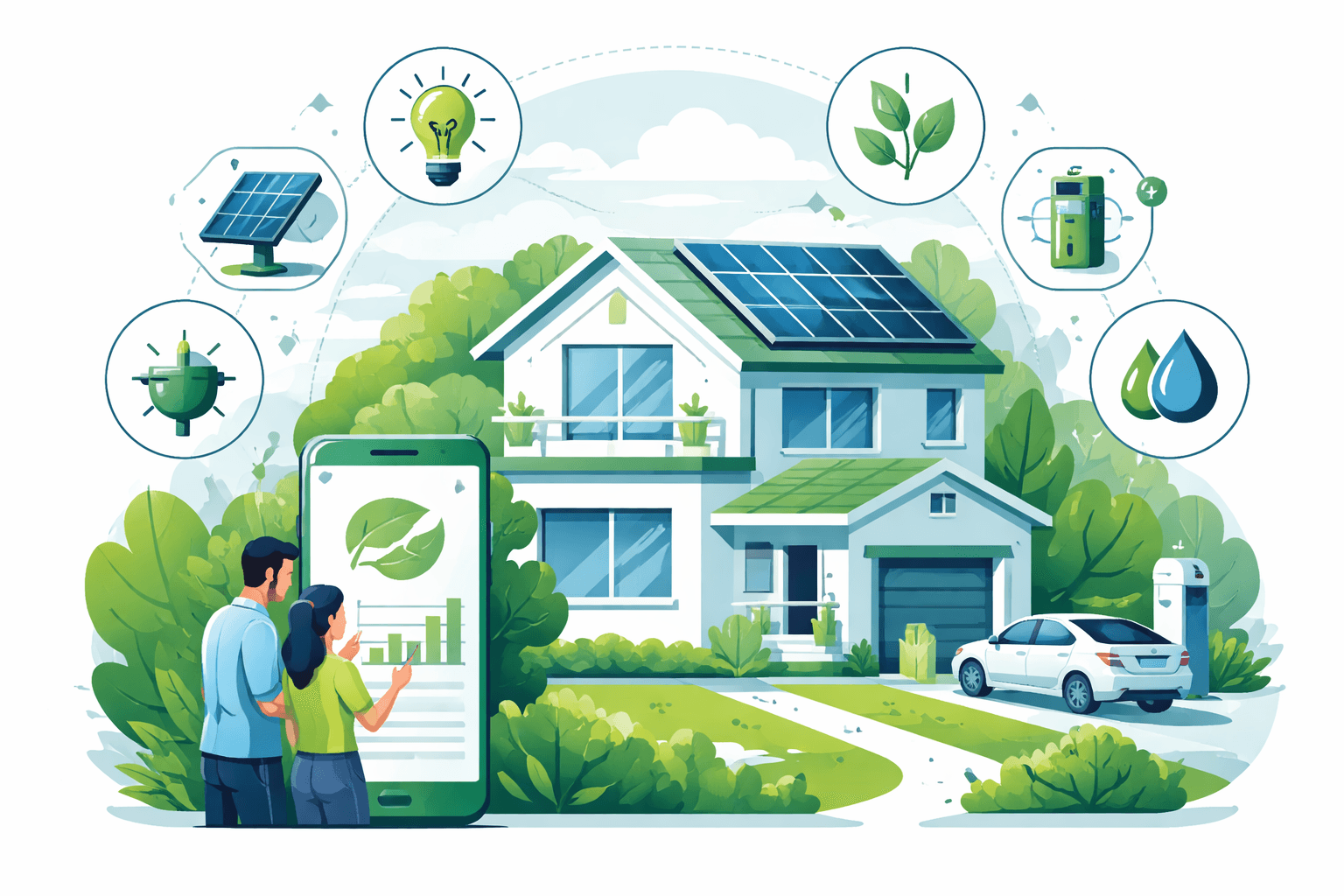
Smart home energy saving isn’t just a gadget trend; it’s one of the fastest, most cost‑effective ways to cut household energy bills and emissions. U.S. households used about 10,500–11,000 kWh of electricity in 2023 (EIA) at ~$0.16/kWh on average—roughly $1,600–$1,750 per year—plus additional spending for natural gas or heating fuels. Buildings account for around 30% of global final energy use and about 26% of energy‑related CO2 emissions (IEA). Smart controls regularly deliver 10–20% reductions in electricity use with paybacks under two years, according to multiple utility pilots and ACEEE reviews of feedback and automation programs.
Why smart home energy saving matters
- Where home energy goes (typical U.S., EIA RECS 2020):
- Space heating: ~40% of household energy (varies widely by climate and fuel)
- Water heating: ~18–20%
- Appliances and electronics: ~15%
- Air conditioning: ~6–10% (higher in hot climates)
- Lighting: ~4–6%

The Home Energy Diet: How to Save Money by Making Your House Energy-Smart (Mother Earth News Wiser Living Series, 6): Scheckel, Paul
The Home Energy Diet answers all these questions and more, while helping readers take control of their personal energy use and costs so they can save money, live more comfortably, and help the environ
Check Price on AmazonWhy smart controls work:
- They reduce runtime of heating/cooling by matching operation to occupancy and schedules.
- They cut “always‑on” or standby loads (LBNL estimates 5–10% of household electricity is standby).
- They shift flexible loads to cheaper times (time‑of‑use rates), lowering costs and grid emissions.
- They surface waste with real‑time feedback; ACEEE finds energy feedback typically saves 4–12% of electricity use.
Emissions impact: Every kWh avoided avoids roughly 0.35–0.45 kg CO2e on a typical U.S. grid mix (EPA eGRID varies by region). Cutting 1,000 kWh/year saves ~350–450 kg CO2e—equivalent to avoiding ~900–1,100 miles of driving in an average gasoline car.
For a deeper look at platforms and integration patterns, see our overview of smart systems and incentives in Smart Home Technology for Sustainability: High‑Impact Upgrades, Integration, and Real‑World Guidance (/sustainability-policy/smart-home-technology-for-sustainability-upgrades-integration-guide).
By the numbers: quick wins and typical savings
- Smart thermostat: 8–15% savings on heating/cooling energy (Nest field data; ENERGY STAR), $100–$180/year for many homes
- LED bulbs: ~75% less energy than incandescents (DOE); replacing 15–20 bulbs can save up to 800–1,100 kWh/year if you still have legacy bulbs
- Smart plugs/power strips: reclaim 20–50% of standby, ~30–150 kWh/year per targeted device cluster
- Home energy monitor (HEM): 4–12% cut in electricity use (ACEEE meta‑analyses)
- Smart EV charging: 20–50% lower charging costs by shifting to off‑peak; $150–$350/year if driving ~10,000 miles
- Demand response: $25–$150/year in bill credits for thermostats/EV chargers in many utility programs
Smart home energy saving: core devices that reduce use
Smart thermostats
- What they do: Automate temperature setbacks, use occupancy sensors and geofencing, and pre‑heat/cool when power is cheaper. They also integrate with demand response (DR) events.
- Savings: Nest’s large‑scale field data reports 10–12% heating and ~15% cooling savings; ENERGY STAR cites ~8% typical HVAC cost reductions across studies. Savings are higher in extreme climates and with consistent occupancy.
- Cost and incentives: $130–$250 upfront. Utility rebates of $50–$100 are common; some programs provide devices at low or no cost.

ecobee Smart Thermostat Premium with Smart Sensor and Air Quality Monitor - Programmable Wifi Thermostat - Works with Siri, Alexa, Google Assistant - Amazon.com
ecobee Smart Thermostat Premium with Smart Sensor and Air Quality Monitor - Programmable Wifi Thermostat - <strong>Works with Siri, Alexa, Google Assistant</strong> - Amazon.com
Check Price on AmazonSmart plugs and advanced power strips
- What they do: Schedule or kill power to devices in standby—TVs, gaming consoles, printers, office gear, dehumidifiers.
- Savings: LBNL estimates standby at 5–10% of household electricity. Taming just a few clusters (entertainment center, office) can save 100–300 kWh/year.
- Cost: $10–$25 per plug; $25–$60 for smart power strips. Look for energy monitoring and Matter/Thread support where possible.
High‑efficiency LED lighting with smart controls
- What they do: LEDs cut wattage by ~75% vs. incandescents and ~35–50% vs. halogens. Adding motion sensors, dimming, and daylight automation reduces unnecessary burn time.
- Savings: Replacing 20 legacy 60W bulbs used 3 hours/day with 9W LEDs saves ~1,100 kWh/year—about $175/year at $0.16/kWh. If you already have LEDs, the incremental savings come from better controls.
- Cost: $2–$5 per bulb (multipacks often <$2). Occupancy or daylight sensors add $15–$40 per room/fixture.
Smart appliances
- What they do: Use load‑shifting modes, eco cycles, and connectivity for DR. Heat pump dryers use a refrigerant cycle instead of resistance heat.
- Savings: ENERGY STAR heat pump dryers use at least 28% less energy than conventional electric models. Connected dishwashers and washers can coordinate with off‑peak periods.
- Cost: Higher upfront, better chosen at replacement time. Look for ENERGY STAR Most Efficient labels.
Home energy monitors (HEM)
- What they do: Clamp‑on current transformers (CTs) measure whole‑home and circuit‑level use in real time. Some use machine learning to identify device signatures.
- Savings: Feedback and alerts deliver 4–12% average reductions (ACEEE), often by revealing HVAC runaways, always‑on loads, or failing appliances.
- Cost: $150–$350 for whole‑home CT systems; $70–$150 for smart panels/circuit add‑ons.

Emporia Vue 3 Home Energy Monitor - Smart Home Automation Module and Real Time Electricity Usage Monitor, Power Consumption Meter, Solar and Net Metering for UL Certified Safe Energy Monitoring - Amazon.com
View on AmazonSmart EV chargers (Level 2)
- What they do: Schedule charging for off‑peak times, modulate current to match solar output, and participate in utility managed‑charging programs.
- Savings: With 10,000 miles/year at ~0.30 kWh/mile (~3,000 kWh), shifting from $0.28/kWh peak to $0.16/kWh off‑peak saves ~$360/year.
- Cost: $400–$800 for a Wi‑Fi 40–48A unit; installation varies ($300–$1,200) depending on panel capacity and wiring.
How to prioritize upgrades: cost, payback, and biggest wins
Think in tiers—start with low‑cost, high‑impact measures, then add automation for the big loads you control.
Tier 1 (low cost, fast payback):
- LEDs and basic sensors (payback often <6 months if replacing incandescents)
- Smart plugs for entertainment/office clusters (6–18 months)
- Thermostat optimization using existing programmable models (free if you own one)
Tier 2 (moderate cost, strong ROI):
- Smart thermostat upgrade (1–2 years typical)
- Home energy monitor (1–3 years depending on findings and follow‑through)
- Smart power strips for AV/PC and dehumidifiers (1–2 years)
Tier 3 (strategic, rate‑dependent):
- Smart EV charger (payback driven by time‑of‑use differential—often <2 years)
- Smart appliances at replacement time (lifecycle savings)
- Panel‑level controls/smart panels if you plan solar/EV/battery integration
For a room‑by‑room playbook that pairs behavior and tech, see How to Make Your Home More Energy Efficient: Practical Steps & Savings (/sustainability-policy/how-to-make-your-home-more-energy-efficient-practical-steps-savings).
Example ROI snapshots
- Smart thermostat: $180 device – $75 rebate = $105 net. If HVAC electricity and gas total ~$1,200/year and savings are 10%, that’s ~$120/year; payback ~11 months.
- Smart plug on entertainment center: $20 plug. If it eliminates 35 kWh/month of standby and idle (~$6/month), payback ~3–4 months.
- Home energy monitor: $200 device. If it drives a 6% reduction on a $1,700 annual electricity bill, savings ~$102/year; payback ~2 years.
- Smart EV charger: $600 device, $500 install; total $1,100. If off‑peak charging saves $300/year, payback ~3.7 years—often faster with utility rebates.
Setup and automation best practices
- Calibrate schedules by occupancy:
- Weekday vs. weekend HVAC schedules; tighter setbacks when nobody’s home.
- Geofencing to trigger “away” mode when all phones leave the home.
- Use occupancy and contact sensors:
- Turn off lights/fans when rooms are empty; pause HVAC if windows/doors stay open for 5+ minutes.
- Layer temperature strategies:
- Seasonal setpoints: 68°F heating, 78°F cooling as starting points; adjust for comfort and humidity.
- Pre‑cool/pre‑heat during off‑peak periods or before DR events to ride through peaks.
- Target “always‑on” loads:
- Measure your baseline (the lowest overnight kW). Use smart plugs or timers on dehumidifiers, standby AV gear, and garage fridges/freezers if appropriate.
- Water heating control:
- For electric tanks, use smart controllers or timers to heat primarily off‑peak. Heat pump water heaters offer 50–70% savings and can be scheduled.
- Demand response (DR):
- Enroll eligible thermostats/chargers. Typical incentives are $25–$100 per season for allowing occasional curtailment.
- Time‑of‑use (TOU) optimization:
- Shift laundry, dishwashing, water heating boost cycles, and EV charging to off‑peak. Automate via device schedules.
- Data hygiene:
- Name devices clearly, group by room, and review weekly energy reports to catch drift (e.g., a new “always‑on” spike).
Monitoring, metrics, and tracking savings
- Establish a baseline:
- Record 30 days of usage before big changes if possible. Note HDD/CDD to normalize HVAC loads by weather.
- Track kWh and cost:
- kWh measures energy; your rate plan and TOU windows determine cost. Monitor both. Use your utility portal plus your HEM app.
- Watch demand (kW) if billed for it:
- Some utilities or larger services bill for peak kW. Stagger EV, cooking, and water heating to avoid coincident peaks.
- Identify always‑on load:
- Many homes sit at 150–400 W 24/7. Each 100 W trimmed saves
876 kWh/year ($140/year at $0.16/kWh).
- Many homes sit at 150–400 W 24/7. Each 100 W trimmed saves
- Verify persistence:
- Re‑check monthly. Savings erode if schedules slip or new devices add standby.
For homes exploring automated analysis, see AI Tools for Energy Efficiency: Practical Guide to Technologies, Benefits, and Real‑World Implementation (/sustainability-policy/ai-tools-for-energy-efficiency-practical-guide).
Case studies: realistic device‑level and whole‑home savings
1) One‑bedroom apartment (electric only)
- Baseline: 400 kWh/month; $0.18/kWh; ~$72/month.
- Measures:
- Replace 12 legacy bulbs with 9W LEDs: saves
360 kWh/year ($65/year). - Smart plug + strip for TV/console/router cluster: trims 20 W standby and 1.5 h/day idle (~130 kWh/year, $23/year).
- Smart thermostat for window/mini‑split AC or smart AC controller: reduce cooling use by ~10% across summer (150 kWh, $27/year).
- Replace 12 legacy bulbs with 9W LEDs: saves
- Result: ~640 kWh/year saved (~13%); ~$115/year; total hardware ~$120–$180. Payback ~1–1.5 years.
2) 2,400‑sq‑ft detached home, mixed climate, gas heat + central AC, EV owner
- Baseline: 11,500 kWh/year electricity at $0.16/kWh; gas for heating/water.
- Measures:
- Smart thermostat: 15% cooling reduction (AC
1,500 kWh/year) = 225 kWh ($36). Modest gas savings from better heat setbacks add ~$50. - Home energy monitor: 7% whole‑home electricity savings identified via dehumidifier scheduling, garage freezer retirement, and lighting control = ~805 kWh ($129).
- Smart EV charger: Shift 3,000 kWh/year from $0.26/kWh to $0.14/kWh = $360 savings.
- DR enrollment (thermostat + EV): $90 in credits.
- Smart thermostat: 15% cooling reduction (AC
- Result: ~$615/year savings. Hardware: HEM $200, thermostat $180 (after rebate), EVSE $700 + $500 install = $1,580 total. Simple payback ~2.6 years; faster if charger rebate applies.
3) Solar‑curious household with TOU
- Baseline: 9,500 kWh/year, TOU spread 12¢ off‑peak / 32¢ peak.
- Measures:
- Smart dishwasher/washer timers, water heater control, and pre‑cooling shift 1,300 kWh from peak to off‑peak, cutting costs by ~$260/year.
- Add 6 kW of rooftop solar producing ~8,500 kWh/year (NREL PVWatts mid‑U.S.). Smart controls align loads midday to self‑consume an extra 1,000 kWh otherwise exported at a low credit, improving bill savings by ~$100–$180/year depending on export rates.
- Result: Load shifting + solar coordination reduces bills substantially; adding a battery can arbitrage peak rates for additional savings if spreads stay wide.
Buying guide — recommended products and specs
What to look for by category:
- Thermostats:
- Sensors: room/remote sensors with occupancy detection; geofencing.
- Integrations: utility DR support, open standards (Matter/Thread where available), voice assistants.
- Data: runtime reports, humidity control, adaptive recovery.
- Smart plugs/strips:
- Energy monitoring, scheduling, auto‑off, and overload protection.
- Network: Matter/Thread or reliable Wi‑Fi; UL certification.
- Lighting:
- ENERGY STAR LEDs; warm‑dimming or high CRI (>90) for quality; occupancy/daylight sensors.
- Home energy monitors:
- Whole‑home CTs rated for your service (200A/400A), optional 50–100A circuit CTs, solar/EV sub‑circuit support, breaker‑level visibility if using a smart panel.
- Data: 1‑second or sub‑second sampling, device detection, exportable data.
- EV chargers:
- 240V Level 2, 40–48A (9.6–11.5 kW), Wi‑Fi, scheduling, load sharing, utility integrations; NEMA 14‑50 plug or hardwired; UL and NEC‑compliant.
- Smart appliances:
- ENERGY STAR Most Efficient where available; eco modes, delay start for TOU; for dryers, heat pump technology.
Top picks by category (practical, data‑driven value):
- Thermostat: Based on robust occupancy sensing, adaptive control, and utility integrations, the Ecobee Smart Thermostat Premium represents strong value for households aiming for 8–15% HVAC savings.
- Home energy monitor: For circuit‑level visibility and actionable alerts, the Emporia Vue 2 offers excellent cost‑per‑circuit coverage and frequent utility integrations that support DR and TOU planning.
- EV charger: For flexible amperage (up to 50A), scheduling, and broad utility program support, the ChargePoint Home Flex is a proven Level 2 option for managed charging and off‑peak optimization.
Note: Device ecosystems evolve quickly—favor open standards (Matter/Thread), utility compatibility (OpenADR or program‑certified devices), and strong warranty/support.
Scaling up: solar, batteries, and EVs working together
Once you’ve captured the easy wins, coordinating on‑site generation and storage multiplies savings and resilience.
- Solar + smart loads:
- Run dishwashers, washers, and water heaters midday to consume your own PV when export credits are low. Smart EVSEs can follow solar production curves to charge with surplus.
- Battery storage and TOU:
- A 10–13.5 kWh battery can charge off‑peak or midday solar and discharge during peak periods, reducing peak imports and enabling whole‑home backup. Smart controls prioritize critical loads and maintain reserve for outages.
- EV as a flexible asset:
- Managed charging is available today; vehicle‑to‑home (V2H) and vehicle‑to‑grid (V2G) are emerging. Where supported, EVs can provide backup power or participate in grid services for credits.
- Incentives and policy:
- The U.S. Residential Clean Energy Credit provides a 30% tax credit for qualified solar and standalone storage. Many utilities add rebates for smart thermostats, EVSEs, heat pump water heaters, and DR participation. Rate optimization (TOU/EV plans) can be as impactful as new hardware.
If you’re considering storage, our Home Solar Battery Storage: Complete Buyer’s Guide & Cost Calculator (/renewable-energy/home-solar-battery-storage-buyers-guide-cost-calculator) explains sizing, chemistry, and economics. Technical DIY‑inclined readers planning storage integration can also explore our practical primer in DIY Solar Battery Installation: Choosing, Sizing & Safely Integrating Home Energy Storage (/sustainability-policy/diy-solar-battery-installation-choosing-sizing-safely-integrating).
Practical checklist to get started this month
- Replace remaining incandescents/halogens with ENERGY STAR LEDs and add occupancy sensors to bathrooms, closets, and hallways.
- Install a smart thermostat and enroll in a utility DR program if available.
- Add smart plugs to the entertainment center and home office; schedule full off overnight.
- Set up a home energy monitor; label circuits and track your always‑on baseline.
- Move laundry, dishwashing, and EV charging to off‑peak windows.
- Review monthly reports; aim to trim 100 W from your always‑on baseline and cut peak imports by 20%.
Smart home energy saving is about sequence and persistence: start small, automate the big loads, and let data drive the next upgrade. With today’s devices, most households can capture double‑digit percentage reductions in energy use and bill costs—often within the first year—while building a platform for deeper savings with solar, storage, and electrified appliances.
Recommended Products
The Home Energy Diet: How to Save Money by Making Your House Energy-Smart (Mother Earth News Wiser Living Series, 6): Scheckel, Paul
The Home Energy Diet answers all these questions and more, while helping readers take control of their personal energy use and costs so they can save money, live more comfortably, and help the environ
ecobee Smart Thermostat Premium with Smart Sensor and Air Quality Monitor - Programmable Wifi Thermostat - Works with Siri, Alexa, Google Assistant - Amazon.com
ecobee Smart Thermostat Premium with Smart Sensor and Air Quality Monitor - Programmable Wifi Thermostat - <strong>Works with Siri, Alexa, Google Assistant</strong> - Amazon.com
Emporia Vue 3 Home Energy Monitor - Smart Home Automation Module and Real Time Electricity Usage Monitor, Power Consumption Meter, Solar and Net Metering for UL Certified Safe Energy Monitoring - Amazon.com
Eyedro Home Energy Monitor – Real-Time Electricity Usage Monitor with Solar Net Metering – Whole House Power Consumption Monitor – WiFi/Ethernet Smart Energy Meter with Reports & History, 2 Sensor
More in Sustainability Policy
- Sustainable Home Improvements: Tech-Forward Upgrades with ROI & Incentives
- Smart Home Technology for Sustainability: High‑Impact Upgrades, Integration, and Real‑World Guidance
- How to Make Your Home More Energy Efficient: Practical Steps & Savings
- Green Living: Practical, Data-Backed Guide to a Low-Carbon Home