
Designing Energy‑Efficient Homes: Practical Strategies for Low‑Carbon, High‑Comfort Living
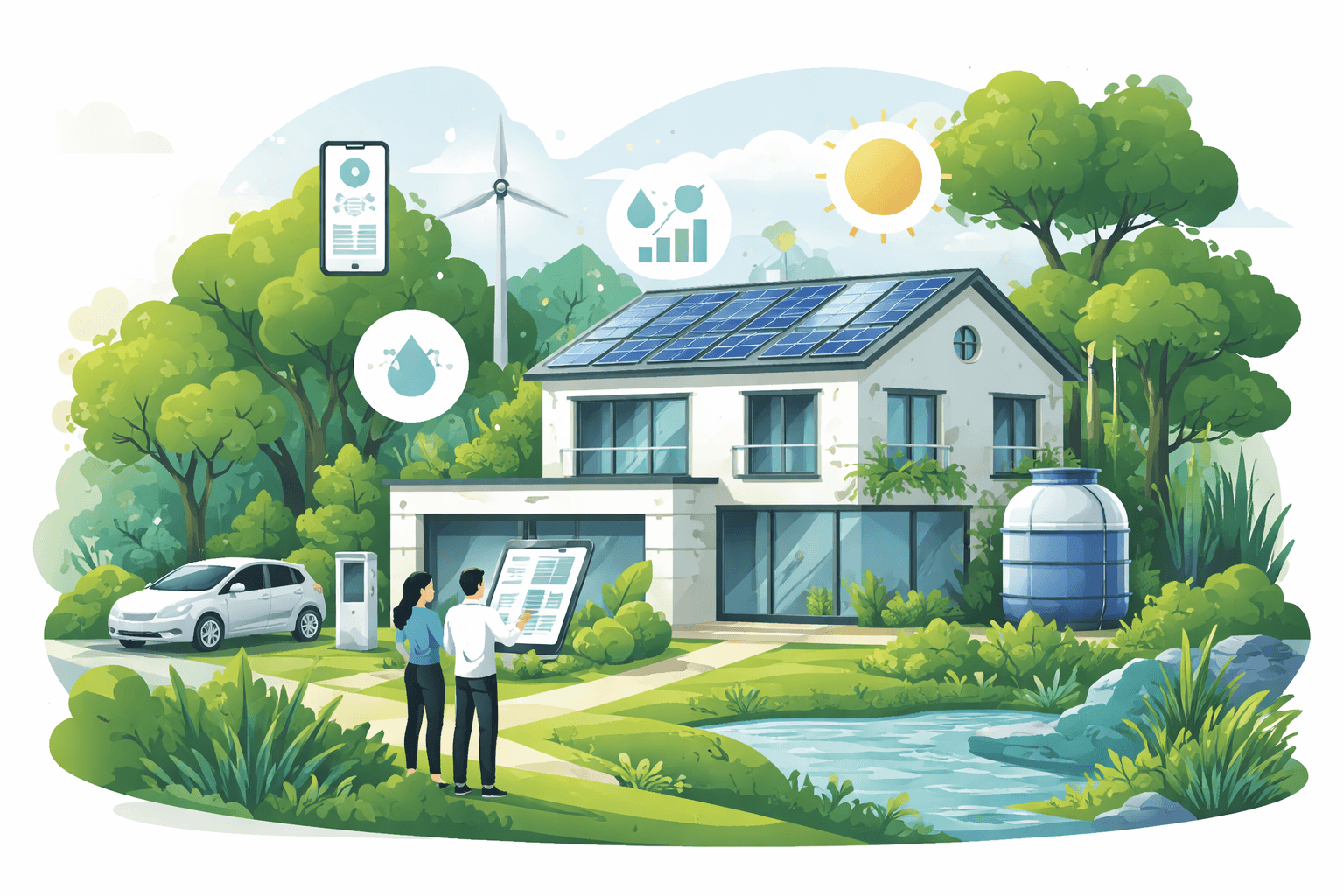
Designing energy efficient homes is one of the fastest, most durable ways to cut carbon and utility bills while improving indoor comfort and health. Buildings account for roughly 30% of global final energy use and 26% of energy‑related CO₂ emissions (IEA, 2023). Thoughtful design can reduce a home’s heating and cooling needs by 50–90% relative to typical construction when passive strategies, a high‑performance envelope, and right‑sized electric systems work together (Passive House Institute; PHIUS; U.S. DOE). For a broader perspective on whole‑home sustainability decisions, see our primer on Designing Green Homes: Practical Strategies for Sustainable, Healthy, Cost‑Effective Living.
Core passive‑design principles (climate‑specific and outcome‑driven)
Passive design reduces energy demand before you spend on equipment. The goal is to control heat, light, and air with the building’s form and fabric so mechanical systems do less work.

Pretty Good House: A Guide to Creating Better Homes: Maines, Michael, Kolbert, Daniel, Mottram, Emily, Briley, Christopher
<strong>Dan Kolbert is a seasoned carpenter and contractor who served as the moderator for the original building science discussion group where the "Pretty Good House" idea originated</stron
Check Price on AmazonOrientation and glazing
- Heating‑dominated/cold climates: Favor south‑facing glazing (north hemisphere) for solar gain; target 40–60% of total window area on the south facade with modest east/west glazing to limit morning/afternoon losses. Combine with low‑U, moderate‑to‑high solar heat gain coefficient (SHGC 0.40–0.55) on south windows to harvest winter sun while controlling nighttime losses. Aim for annual heating demand ≤15 kWh/m² (4.8 kBtu/ft²) if targeting Passive House levels.
- Cooling‑dominated/hot climates: Minimize east/west glazing (hardest to shade) and specify low‑SHGC glass (≤0.25–0.30) to block solar heat. North‑facing daylight works well without heat gain. Orient roof area to optimize PV production if solar is planned.
Daylighting
- Use higher visible transmittance (VT) glass (≥0.50 where feasible), light shelves, and clerestories to deliver useful daylight without glare. Target Spatial Daylight Autonomy (sDA300/50%) ≥50% of regularly occupied floor area or a practical proxy: provide daylight to key living spaces with window head heights ≥7 ft, VT‑balanced glazing, and matte interior finishes.
Shading
- Fixed overhangs sized for latitude can block high summer sun while admitting low winter sun. In hot climates, combine with vertical fins or exterior shades on east/west faces. Dynamic shading (operable exterior blinds) can reduce cooling loads 10–25% (LBNL research on solar control).
Thermal mass
- In diurnal‑swing climates (hot‑dry, mountain West, Mediterranean), expose interior mass (concrete slab, masonry, or phase‑change materials) to smooth peak temperatures. Pair mass with night‑flush ventilation for passive cooling. Avoid large exposed mass in persistently humid climates where it may remain cool and condense moisture without careful control.
Natural ventilation
- Cross‑ventilation with operable windows on opposing facades can deliver 2–4 air changes per hour in mild seasons. Stack ventilation via high/low openings or ventilated stairwells can augment airflow. In humid climates, prioritize mechanical ventilation with recovery to control latent (moisture) loads and maintain indoor humidity 40–60% RH.
Targets that matter across climates:
- Overheating control: keep hours above 26°C (79°F) to ≤2–5% of occupied time (Passive House summertime comfort criterion is ≤10% at 25°C; many designers aim tighter).
- Peak load minimization: aim to cut peak heating/cooling loads by 30–60% vs. code baseline through orientation, shading, and envelope improvements; this downsizes HVAC and saves capital.
For retrofit contexts, passive moves still matter: strategic shading, air‑sealing, window upgrades, and attic insulation often deliver the best returns. See our guide to Energy‑Efficient Green Renovations: Practical Solutions to Cut Bills, Reduce Carbon, and Boost Home Value.
High‑performance building envelope strategies
A tight, well‑insulated, thermal‑bridge‑free envelope is the backbone of an efficient home. It cuts heating/cooling loads, reduces drafts and condensation risks, and creates steady comfort.

FLIR C5 Compact Thermal Imaging Camera with Wifi: ...
View on AmazonInsulation levels (typical U.S. IECC 2021/2024 context; adjust to your climate)
- Attics/roofs: R‑49 to R‑60 in cold/mixed climates; R‑38 to R‑49 in warm climates. Compact roofs need continuous exterior insulation to avoid condensation.
- Walls: R‑20 cavity plus R‑5 to R‑10 continuous exterior insulation in cold/mixed climates; R‑13 to R‑15 with R‑3 to R‑6 exterior in warm climates. Continuous insulation reduces thermal bridging through studs.
- Floors/slabs: R‑10 to R‑20 at slab edge in cold climates; R‑5 to R‑10 in mixed; minimal but beneficial in warm climates if comfort is a priority.
Airtightness and continuous air‑sealing
- Air leakage can represent 20–40% of heating energy in cold climates (LBNL). Set design targets, then verify.
- Targets: ≤1.5 ACH50 for high‑performance; ≤0.6 ACH50 for Passive House. Many codes now require ≤3–5 ACH50.
- Strategies: define a continuous air barrier in drawings; tape/seal sheathing seams, top/bottom plates, rim joists, penetrations, and around windows/doors. Use airtight electrical boxes and gaskets.
Thermal‑bridge reduction
- Thermal bridges can add 5–30% to heating demand (IEA Annex 24 and later studies). Use exterior continuous insulation, thermally broken balcony connectors, insulated headers, and advanced framing (24 in. o.c., two‑stud corners) to reduce psi‑values at joints.
High‑performance windows and placement
- Selection: Look for NFRC‑rated units. Cold climates: U‑factor 0.17–0.25 (triple‑pane) with warm‑edge spacers; SHGC 0.35–0.55 on south elevation. Warm climates: U‑factor ≤0.28; SHGC ≤0.25–0.30; spectrally selective low‑e coatings for glare control.
- Installation: Align window in plane with insulation; tape/flashing to air/water barriers; use sill pans; backer rod and sealant for air‑tight interior perimeter.
- Placement: Concentrate glass where it delivers value (views/daylight on north/south) and minimize where it drives loads (east/west in hot climates).
Moisture management
- Pair airtightness with controlled ventilation and a robust water/air/vapor control layer strategy based on climate (e.g., Class II vapor retarder on interior in cold climates; vapor‑open exterior layers; rainscreens to allow drainage and drying).
Verification and QC tools
- Blower door testing: conduct at mid‑construction (before drywall) and at completion. Track ACH50 and locate leaks with smoke or anemometers.
- Infrared (IR) imaging: scan under induced pressure at a 10–20°F (6–11°C) temperature delta to reveal missing insulation or air leaks.
- Window and insulation performance: confirm U‑factors/R‑values with product data, and spot‑check installation quality via site inspections and IR.
When done well, envelope upgrades alone can cut heating/cooling energy by 20–50% versus typical code homes (U.S. DOE; EPA ENERGY STAR notes ~15% savings from air‑sealing plus insulation upgrades on average, with higher savings in leaky/cold homes).
Efficient mechanical and electrical systems and controls
After the envelope slashes demand, specify efficient, right‑sized equipment. Oversized systems short‑cycle and waste energy; undersized systems hurt comfort.

Panasonic Intelli-Balance 100 Energy Recovery Ventilator (ERV), 30-100 CFM, Standard Plug-In, Cold Climate, FV-10VEC2 - Amazon.com
Energy Recovery Ventilator (ERV): <strong>Remove moist, stale air and supply fresh, clean air in your home while balancing air pressure</strong>; Cold Climate Model is recommended for areas where temp
Check Price on AmazonHeat‑pump HVAC (air‑source or ground‑source)
- Right‑sizing: Use ACCA Manual J (or PHPP/WUFI Passive for Passive House) to calculate loads. High‑performance homes often need 1–2 tons (12–24 kBtu/h) total for a 1,500–2,000 ft² house, far less than rule‑of‑thumb sizing.
- Performance: Modern cold‑climate air‑source heat pumps achieve seasonal COP 2.5–3.5 and maintain capacity below −5°F (−21°C). Compared to electric resistance, that’s ~60–70% less heating energy; vs. older gas furnaces, 20–50% less primary energy and lower CO₂ where grids are decarbonizing (IEA; U.S. DOE).
- Distribution: Ducted, ductless (mini‑split), or hybrid approaches. Keep ducts inside the thermal envelope; seal to ≤4% leakage or test with a duct blaster.
Ventilation with heat/energy recovery (HRV/ERV)
- Fresh air without energy penalty: HRVs/ERVs recover 60–90% of sensible heat; ERVs also exchange moisture to control humidity. Continuous low‑flow balanced ventilation improves IAQ and reduces infiltration losses.
- Sizing: 0.3–0.5 air changes per hour or per ASHRAE 62.2. Commission to verify flow rates and balance.
Water heating
- Heat pump water heaters (HPWH) use ~60–70% less electricity than standard electric tanks (U.S. DOE/Energy Star). Place in semi‑conditioned spaces for beneficial dehumidification in humid climates.
Lighting and appliances
- LEDs cut lighting energy 75% vs. incandescent and ~50% vs. halogen; long lifespans reduce maintenance (U.S. DOE). Choose ENERGY STAR refrigerators/dishwashers/washers; modern fridges use ~15% less energy than non‑certified models.
Smart controls and occupant behavior
- Smart thermostats can save ~8–15% on space conditioning through optimized schedules, set‑backs, and adaptive control (studies by Nest and utility pilots). Advanced heat pump controls with weather compensation and variable speed deliver additional savings.
- Load shifting: Smart water heaters, EV chargers, and battery inverters can respond to time‑of‑use (TOU) rates, lowering bills and grid stress.
Maintenance tradeoffs
- Heat pumps and ERVs/HRVs need filter changes and periodic service; set reminders. HRV core cleaning annually; HPWH condensate management. The added maintenance is modest compared to the energy and comfort gains.
For deeper guidance on connected devices and automation that reinforce efficiency, explore Smart Home Technology for Sustainability: High‑Impact Upgrades, Integration, and Real‑World Guidance.
Renewable integration and grid interaction
Rooftop PV sizing
- Start with annual consumption after efficiency: PV size (kWdc) ≈ annual kWh ÷ local production factor (kWh/kW‑yr). Typical U.S. production factors range from 1,200–1,800 kWh/kW‑yr; a 7 kW system in a 1,500 kWh/kW‑yr location produces ~10,500 kWh/yr.
- Design priorities: minimize shading, tilt within ±15° of latitude if fixed, prioritize south‑ or west‑southwest‑facing arrays under TOU rates that reward late‑afternoon generation.
Battery storage basics
- Typical residential batteries are 10–20 kWh with 5–10 kW inverters; round‑trip efficiency ~85–92%. One 13–15 kWh battery can back up lighting, refrigeration, communications, and a small minisplit for several hours to a day, depending on load.
- Use cases: backup during outages, TOU arbitrage, self‑consumption in jurisdictions with reduced net metering, and demand charge management for small multifamily.
Net metering and TOU impacts
- Classic net metering credits 1:1 for exports; many regions are transitioning to time‑varying export values. TOU rates reward shifting consumption to off‑peak and generation to on‑peak windows. Batteries become more valuable where export credits are low and peak prices are high.
Carbon and resilience tradeoffs
- PV+battery can reduce site electricity emissions 50–100% depending on grid mix; prioritize envelope and heat pumps first for the largest, most certain reductions per dollar. Where outages are frequent, design critical loads panels and consider a second battery or a small generator as backup to protect heat pumps in extreme weather.
Materials, lifecycle impact, incentives, and certifications
Low‑carbon materials and lifecycle assessment (LCA)
- Embodied carbon matters: Cement and concrete account for ~7–8% of global CO₂ (IEA). Specify low‑carbon concrete mixes (supplementary cementitious materials like fly ash/slag), high‑recycled‑content steel, and bio‑based materials (FSC‑certified timber, cellulose insulation, wood fiberboard, cork).
- Use Environmental Product Declarations (EPDs) to compare products and conduct whole‑building LCA (A1–A5 at minimum). Emerging targets for new residential buildings in many programs fall around 300–500 kgCO₂e/m² (A1–A5) depending on typology and region (LETI/RIBA guidance). For renovations, prioritize “reuse first” to avoid new embodied emissions.
Cost vs. performance prioritization
- Highest ROI typically comes from: air‑sealing, attic insulation, duct sealing/relocation, right‑sized heat pumps, and LED/controls. Windows and exterior insulation deliver strong comfort and load reductions but may have longer paybacks in mild climates; they’re often essential to hit Passive House/Net Zero targets.
- Decision rule: Reduce demand (passive/envelope) → electrify efficiently (heat pumps/HPWH/induction) → add PV/storage if economics and carbon goals align.
Incentives and rebates
- Many countries and utilities offer tax credits, rebates, or low‑interest financing for heat pumps, HPWHs, insulation, air sealing, and PV. In the U.S., the Inflation Reduction Act provides a 30% federal tax credit for residential solar and batteries and annual credits for heat pumps and efficiency upgrades (subject to caps), plus state and utility rebates rolling out. See our overview: Green Building Tax Incentives: How to Maximize Savings for Homes and Commercial Projects.
Certifications and performance standards
- Passive House (PHI): heating demand ≤15 kWh/m²·yr, primary energy renewable (PER) limits, airtightness ≤0.6 ACH50. PHIUS: climate‑specific targets and cost‑optimal modeling.
- DOE Zero Energy Ready Home (ZERH): high‑performance envelope, efficient systems, and PV‑ready; pairs well with ENERGY STAR for Homes.
- ENERGY STAR: proven, prescriptive and performance paths for envelope, HVAC, ducts, and IAQ; typically ~10–20% better than code baselines.
- HERS Index: a score of 100 approximates a code‑built home; lower is better. HERS 0 aligns with net‑zero energy (on an annual basis).
Practical targets for most climates
- Airtightness: ≤1.0–1.5 ACH50 (or 0.6 for Passive House)
- Wall U‑factor: ≤0.20–0.25 Btu/hr·ft²·°F (R‑20+ ci) cold/mixed; ≤0.30 warm
- Roof: R‑49 to R‑60 (cold/mixed); R‑38–49 (warm)
- Windows: U 0.17–0.28 (climate‑dependent); SHGC 0.25–0.55
- Ventilation: balanced HRV/ERV 60–90% effectiveness
- HVAC: variable‑speed heat pumps; ducts inside envelope
- EUI goal: 15–35 kBtu/ft²·yr (50–110 kWh/m²·yr) depending on climate and size
For material selection depth and trade‑offs, see our guide to Sustainable Materials for Construction: Practical Guide to Low‑Carbon, Durable, and Cost‑Effective Building Materials.
By the numbers: evidence that design choices pay off
- 30% and 26%: Global buildings’ share of final energy and energy‑related CO₂, respectively (IEA 2023).
- 15–90%: Typical reduction in heating/cooling needs in high‑performance and Passive House designs vs. code (PHI/PHIUS case studies; DOE).
- 15%: Average heating/cooling bill savings from air‑sealing plus insulation alone (EPA ENERGY STAR), often higher in cold climates.
- 60–70%: Electricity savings from heat pump water heaters vs. electric resistance (U.S. DOE/Energy Star).
- 8–15%: Space conditioning savings with smart thermostats and optimized controls (utility pilots; Nest study).
- 85–92%: Round‑trip efficiency of modern lithium‑ion residential batteries.
- 1,200–1,800 kWh/kW‑yr: Typical U.S. rooftop PV yield depending on location (NREL/utility data).
What this means for designers, builders, and homeowners
- Designers: Model early and iterate. Use climate data to set passive strategies, then size HVAC to the real loads. Detail a continuous air, water, and thermal control layer and draw it clearly. Plan for verification (blower door, IR, commissioning) as a deliverable.
- Builders: Sequence for quality—mock‑ups of air barrier transitions, trade training on tapes/sealants, and mid‑construction testing prevent costly rework. Keep ducts inside, and coordinate penetrations.
- Homeowners: If building new, prioritize envelope and right‑sized heat pumps before adding PV. If retrofitting, start with audits, air‑sealing, attic/basement insulation, and duct sealing; then evaluate heat pumps and HPWHs. See practical steps in How to Make Your Home More Energy Efficient: Practical Steps & Savings.
- Policymakers/Utilities: Align incentives with demand reduction first, then electrification and renewables; structure TOU rates and demand response programs that reward flexible, efficient homes.
Where designing energy efficient homes is heading
Four trends will define the next decade:
- Electrification at scale: Heat pumps are becoming the default, with cold‑climate models expanding into the harshest regions. Integration with smart panels and demand response will make homes grid assets.
- Performance‑based codes: More jurisdictions are adopting airtightness testing, higher R‑values, and window performance thresholds, nudging mass‑market construction toward high‑performance norms.
- Carbon‑aware design: Operational energy targets will be paired with embodied carbon caps, accelerating low‑carbon materials and adaptive reuse.
- Data‑driven operations: Connected sensors, advanced thermostats, and utility APIs will continuously tune homes for comfort and cost, turning “set and forget” into “set and optimize.”
Designing energy efficient homes does not require exotic technology—it requires discipline: reduce loads with passive design and a superb envelope, electrify with high‑efficiency equipment, add renewables where they pencil out, and verify performance in the field. Done well, the result is durable comfort, resilient operations, and 40–80% lower energy use and emissions over decades.
Recommended Products
Pretty Good House: A Guide to Creating Better Homes: Maines, Michael, Kolbert, Daniel, Mottram, Emily, Briley, Christopher
<strong>Dan Kolbert is a seasoned carpenter and contractor who served as the moderator for the original building science discussion group where the "Pretty Good House" idea originated</stron
FLIR C5 Compact Thermal Imaging Camera with Wifi: ...
<strong>One - Thermal Imaging Camera for iOS Smartphones (iPhone 15 and Newer w/USB-C), 240x180 Super Resolution (80x60 Native IR)</strong> · One - Thermal Imaging Camera for Android Smartphones (USB-
Panasonic Intelli-Balance 100 Energy Recovery Ventilator (ERV), 30-100 CFM, Standard Plug-In, Cold Climate, FV-10VEC2 - Amazon.com
Energy Recovery Ventilator (ERV): <strong>Remove moist, stale air and supply fresh, clean air in your home while balancing air pressure</strong>; Cold Climate Model is recommended for areas where temp
More in Sustainability Policy
- Designing Green Homes: Practical Strategies for Sustainable, Healthy, Cost‑Effective Living
- Energy-Efficient Green Renovations: Practical Solutions to Cut Bills, Reduce Carbon, and Boost Home Value
- Sustainable Home Improvements: Tech-Forward Upgrades with ROI & Incentives
- How to Make Your Home More Energy Efficient: Practical Steps & Savings