
How Climate Change Is Reshaping the Oceans: Impacts, Evidence, and Responses
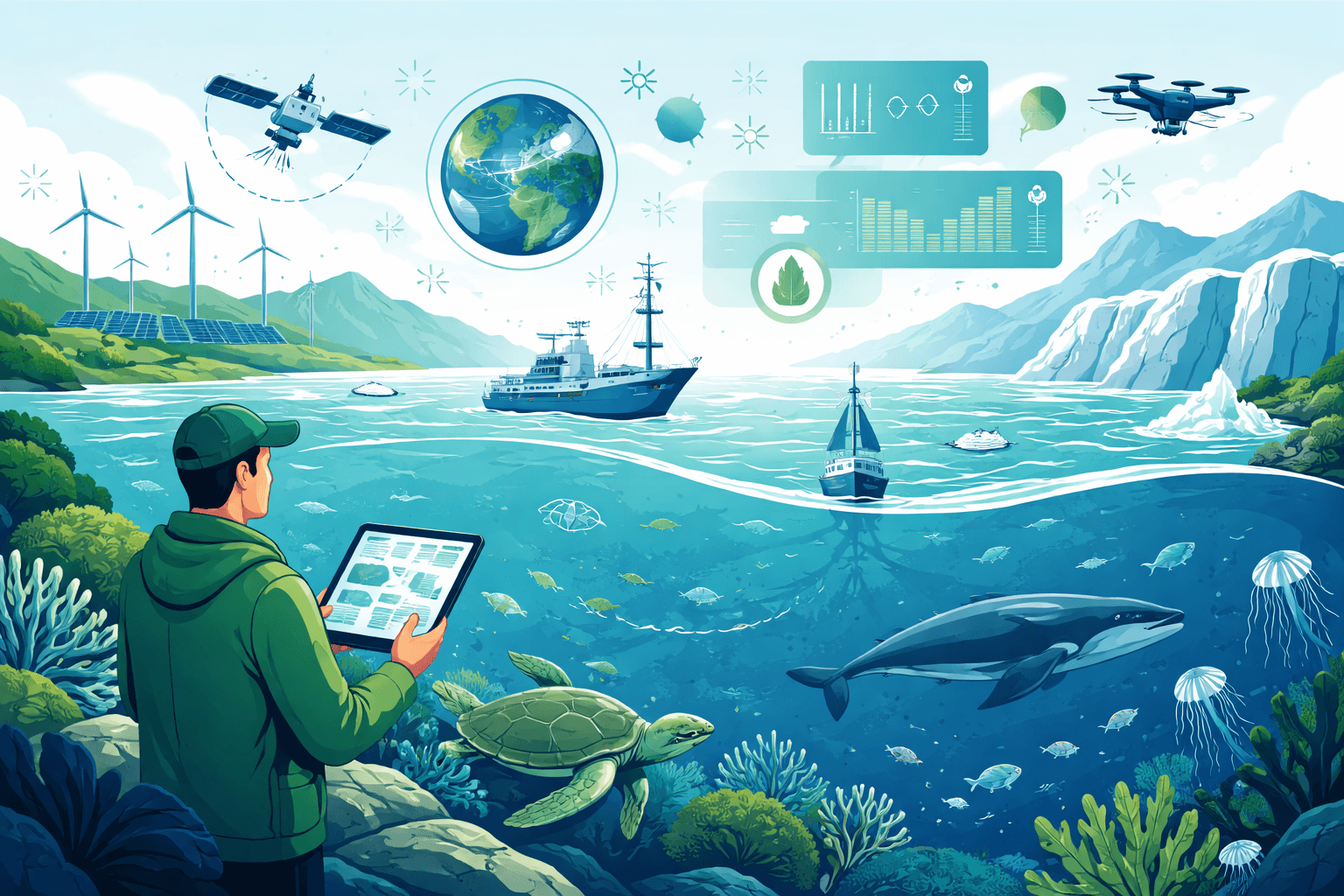
The oceans are the planet’s climate flywheel — absorbing more than 90% of the excess heat from human-caused warming and roughly a quarter of our CO₂ emissions. That buffering has limits. In 2023, global ocean heat content hit another record high, marine heatwaves doubled in frequency compared with the 1980s, and global mean sea level rose at an accelerated pace of roughly 4.5 mm per year over the last decade (NASA, WMO, IPCC AR6). This explainer examines the impact of climate change on oceans — what’s changing, what it means for ecosystems and people, and where science and solutions are heading.
The impact of climate change on oceans: physical changes
Ocean physics sets the stage for everything that lives in the sea and everything the sea does for us. Four shifts dominate the picture: warming (and marine heatwaves), sea-level rise, acidification, and deoxygenation.
The Ocean and Cryosphere in a Changing Climate: Special Report of the Intergovernmental Panel on Climate Change: Intergovernmental Panel on Climate Change (IPCC)
This title is also available as Open Access on Cambridge Core. ... This IPCC Special Report <strong>provides the latest comprehensive assessment of the ocean and cryosphere in a changing climate</stro
Check Price on AmazonOcean warming and marine heatwaves
- Heat uptake: The ocean has absorbed over 90% of the excess heat trapped by greenhouse gases since the 1970s (IPCC AR6 WGI). Measurements of ocean heat content to 2,000 meters show record highs in recent years, with strong increases since the 1990s (Cheng et al., Earth Syst. Sci. Data, 2024).
- Marine heatwaves (MHWs): Periods of abnormally high sea-surface temperatures have roughly doubled in frequency and become longer and more intense since the 1980s (IPCC AR6; Oliver et al., 2018). These events now blanket large ocean basins for weeks to months.
- Stratification: Warmer surface waters strengthen layering (“stratification”), which reduces vertical mixing. Global average stratification has increased by more than 5% since the 1960s, affecting nutrient supply from the deep and oxygen exchange (Li et al., 2020).
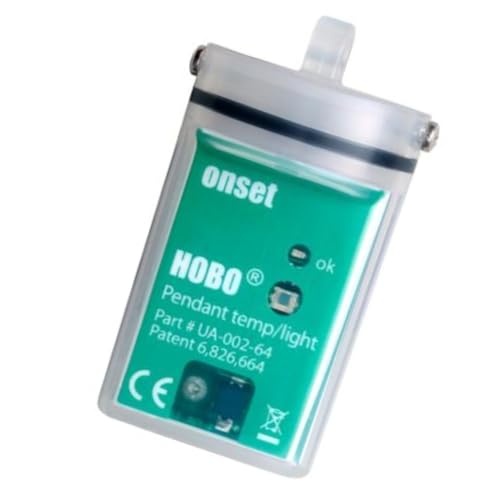
UA-002-64 Onset Hobo Temperature/Light 64K Data Logger. Waterproof. Record Light and Temp at User-Selectable Intervals.: Amazon.com: Industrial & Scientific
View on AmazonProjected trajectories: Under low emissions (SSP1-2.6), ocean heat content continues to rise this century but more slowly; under high emissions (SSP5-8.5), warming of the upper 2,000 m could be more than double relative to a low-emissions path by 2100 (IPCC AR6).
Sea-level rise and coastal extremes
- Observed rise: Satellite altimetry shows global mean sea level has risen about 10 cm since 1993, with the rate accelerating from ~3.3 mm/yr (1993–2018) to ~4.5 mm/yr in the last decade (NASA/NOAA/Sentinel-6). Thermal expansion explains roughly half of the rise; glacier and ice-sheet melt make up the rest, with the ice-sheet share increasing (IPCC AR6).
- Extremes: Events that were once “1-in-100-year” high water levels are projected to occur annually at many locations by 2050 due to mean sea-level rise alone (IPCC SROCC, AR6), even without changes in storms.
Projected trajectories: By 2100, global mean sea level is likely 0.28–0.55 m higher under SSP1-2.6 and 0.63–1.01 m under SSP5-8.5 (IPCC AR6). Deep uncertainties remain about ice-sheet dynamics; higher outcomes cannot be ruled out.
Ocean acidification
- Chemistry shift: Surface ocean pH has fallen by ~0.1 units since preindustrial times, a ~26% increase in acidity (concentration of hydrogen ions) as the ocean absorbs CO₂ and forms carbonic acid (IPCC AR6). The aragonite saturation state — critical for coral and shell formation — is declining, especially in high-latitude and upwelling regions.
Projected trajectories: Continued CO₂ emissions could drive an additional 0.1–0.3 pH unit decline by 2100, with high-latitude waters crossing thresholds for corrosive conditions to aragonite seasonally or persistently under high-emissions scenarios (IPCC AR6).
Deoxygenation
- Observed loss: The ocean has lost about 2% of its oxygen inventory since the 1960s, with oxygen minimum zones expanding and coastal hypoxia events increasing (Schmidtko et al., 2017; IPCC AR6). Warming reduces oxygen solubility and strengthens stratification, curbing re-oxygenation of deeper layers.

Apera Instruments AI480 DO850 Optical Dissolved Oxygen Meter Kit, with 10 Ft Optical DO Probe, Hassle-Free Testing Experience: Amazon.com: Industrial & Scientific
View on AmazonProjected trajectories: Global oxygen content is projected to decline further this century, by several additional percent under high emissions, with the largest losses in intermediate waters (IPCC AR6).
By the numbers
90%: Share of excess planetary heat absorbed by the ocean since the 1970s (IPCC AR6)
- ~4.5 mm/yr: Current decadal rate of global mean sea-level rise (NASA)
- ~10 cm: Global sea-level rise since 1993 (satellite era)
- ~0.1 pH: Drop in average surface ocean pH since 1750 (~26% more acidic) (IPCC AR6)
- ~2%: Decline in global ocean oxygen since 1960 (Nature; IPCC AR6)
- 2x: Approximate increase in marine heatwave frequency since the 1980s (IPCC AR6)
Ecosystems and biodiversity: what changes mean for life in the sea
Physical changes cascade through marine ecosystems — from coral reefs and kelp forests to plankton communities that underpin fisheries.
Coral bleaching and reef futures
- Bleaching drivers: Heat stress disrupts the symbiosis between corals and algae (zooxanthellae). Repeated or prolonged marine heatwaves cause mass bleaching and mortality.
- Recent events: 2023–2024 marked the fourth global bleaching event on record, with widespread impacts across the tropics (NOAA). The Great Barrier Reef saw recurrent severe bleaching, including record-setting heat stress in parts of 2024, following events in 2016–2017 that killed an estimated 30% of shallow-water corals in some regions (AIMS, peer-reviewed assessments).
- Acidification stress: Lower carbonate saturation hinders calcification, making recovery slower and structural collapse more likely.
- Knock-on effects: Reef degradation reduces fish recruitment and diversity, eroding the productivity of reef-associated fisheries and weakening natural coastal defenses that attenuate wave energy by up to 97% (Ferrario et al., 2014).
Kelp forests and temperate reefs
- Marine heatwaves off California (2014–2016) triggered >90% loss of bull kelp canopy in northern California, exacerbated by sea urchin population booms after predator declines — a shift that persists (Rogers-Bennett & Catton, 2019).
- In Tasmania, warming waters have driven a >95% decline in giant kelp over recent decades, reshaping temperate reef communities and associated fisheries (peer-reviewed regional studies).
Species range shifts and altered food webs
- Poleward and deeper: Marine species are shifting ranges poleward at tens of kilometers per decade and moving deeper by several meters per decade to track cooler conditions (Poloczanska et al., 2013; IPCC AR6). These shifts are reorganizing community interactions and fisheries distributions (e.g., North Atlantic mackerel and Northeast Arctic cod).
- Phenology mismatches: Earlier spring blooms in some regions and altered stratification can decouple plankton timing from fish larval stages, reducing recruitment.
- Arctic amplification: Retreating sea ice and warmer waters are restructuring Arctic food webs, with boreal species encroaching and ice-dependent species declining.
Fisheries productivity under pressure
- Global signal: Warming has reduced the maximum sustainable yield (MSY) of marine fisheries by an estimated 4.1% since 1930, with pronounced regional losses of 15–35% in the North Sea, Sea of Japan, and other hotspots (Free et al., Science, 2019).
- Regional equity: Tropical developing regions — notably West Africa and parts of the Pacific — face declining productivity and poleward shifts of target species, challenging food security and governance.
Ocean carbon cycle and climate feedbacks
The ocean is a central regulator of Earth’s climate through carbon and heat uptake — but that service is changing.
Carbon sink: powerful but not limitless
- Contemporary uptake: In the 2010s, the ocean absorbed roughly 2.5–3.0 gigatonnes of carbon per year (PgC/yr), about a quarter of anthropogenic CO₂ emissions (Global Carbon Budget; Gruber et al., 2019). Cumulatively, the ocean has taken up around 30% of emitted CO₂ since the industrial era.
- Processes: The solubility pump draws CO₂ into cold surface waters that sink; the biological pump transfers carbon as plankton fix CO₂ and sink as particles or are transported in food webs.
- Constraints: Warming reduces CO₂ solubility; increased stratification can limit nutrient supply, dampening biological productivity in parts of the ocean. Acidification alters carbonate chemistry and can affect calcifying plankton central to the carbonate pump.
Feedbacks and large-scale circulation
- Reduced sequestration: If nutrient limitation intensifies and oxygen declines, the efficiency of the biological pump could weaken regionally, leaving more CO₂ in the atmosphere (medium confidence, IPCC AR6).
- AMOC weakening: The Atlantic Meridional Overturning Circulation is very likely to weaken this century (IPCC AR6), which would alter heat and carbon transport. A rapid collapse by 2100 is considered unlikely but cannot be excluded under very high emissions; if it occurred, it would strongly shift regional climates and sea levels around the North Atlantic.
- Methane hydrates and permafrost carbon: Subsea methane hydrates and Arctic carbon stocks pose potential long-term feedbacks. Large, abrupt releases this century are considered unlikely (low confidence), but sustained warming increases risks over multi-century scales (IPCC AR6).
Human and socioeconomic consequences
Climate-driven ocean changes touch billions of lives — through coasts, food systems, and economies.
Coastal flooding, erosion, and storms
- Rising baselines: Higher mean sea level lifts the floor for storm surge and high tides. Without adaptation, global average annual losses from coastal flooding in major cities could approach USD 1 trillion by 2050 as exposure grows (Hallegatte et al., Nature Climate Change, 2013).
- Event frequency: What used to be 1-in-100-year floods will often occur yearly by mid-century in many regions (IPCC SROCC/AR6). Low-lying deltas and urban coasts in Asia, small island developing states (SIDS), and parts of the U.S. Gulf and Atlantic coasts are especially exposed.
- Cyclones and rainfall: Warmer oceans are increasing tropical cyclone rainfall rates (~7% more moisture in air per 1°C of warming) and the proportion of high-intensity storms in several basins (IPCC AR6, high confidence). Combined with sea-level rise, damages scale nonlinearly.
Fisheries, aquaculture, and food security
- Protein dependence: Aquatic foods provide at least 20% of animal protein for about 3.3 billion people, with reliance exceeding 50% in many SIDS and coastal nations (FAO SOFIA 2022).
- Livelihoods: Roughly 60 million people are directly employed in fisheries and aquaculture, and hundreds of millions more depend on associated value chains (FAO).
- Climate impacts: Range shifts and reduced productivity can strain management, pushing fleets farther, raising costs, and heightening international allocation disputes. Aquaculture faces heat stress, harmful algal blooms, and disease risks.
Climate justice and cultural impacts
- Disproportionate burdens: Communities contributing least to emissions — from low-lying atolls to Arctic Indigenous peoples — are on the frontlines of coastal loss, ecosystem change, and resource disruption. Cultural ties to reefs, mangroves, and fisheries are at risk alongside livelihoods.
Responses, monitoring, and knowledge gaps
Slowing and managing the impact of climate change on oceans requires both rapid emissions cuts (mitigation) and smarter ways to live with change (adaptation) — backed by better observing systems and targeted research.
Mitigation: tackling the root cause
- Cut greenhouse gases fast: Meeting the Paris Agreement’s 1.5–2°C goals substantially limits long-term ocean warming, sea-level rise, acidification, and deoxygenation. Every tenth of a degree matters for reducing marine heatwaves and preserving coral refugia (IPCC AR6).
- Protect and restore blue carbon ecosystems: Mangroves, tidal marshes, and seagrasses store carbon at high densities (often 3–5 times per area of tropical forests) and continue sequestering over time. Avoided losses and restoration could deliver on the order of 0.1–0.3 GtCO₂ per year of sequestration by 2030, with additional avoided emissions potentially pushing total benefits toward ~0.5 GtCO₂e/yr (IUCN; IPCC SRCCL), while also buffering coasts and nurturing fisheries.
- Decarbonize the ocean economy: Offshore wind, responsibly sited and operated, can displace fossil generation and reduce shipping and port emissions when paired with electrification and green fuels. See our analysis of offshore wind trends and ecological considerations: Wind Energy Growth: Analyzing the Global Shift to Offshore Wind Farms (/renewable-energy/wind-energy-growth-global-offshore-wind-farms).
Adaptation: reducing risk and enhancing resilience
- Nature-based coastal protection: Healthy reefs and mangroves attenuate waves and trap sediments, reducing erosion and surge. Restoring these systems can be cost-competitive with grey infrastructure in many settings and provides co-benefits for biodiversity and fisheries. For broader community guidance, see Climate Change Adaptation Strategies: Practical, Equitable Solutions for Communities, Infrastructure, and Nature (/sustainability-policy/climate-change-adaptation-strategies-guide).
- Climate-smart fisheries: Adaptive harvest control rules, dynamic ocean management (shifting closures with species distributions), transboundary agreements that anticipate range shifts, and investment in monitoring can sustain yields and equity as ecosystems move.
- Marine protected areas (MPAs): Fully and highly protected MPAs typically boost biomass 2–5x within boundaries and can enhance spillover to surrounding areas. Strategic MPA networks can protect climate refugia, nursery habitats, and blue carbon stores. Yet as of 2026, only about 8–9% of the ocean is protected, and a smaller fraction is strongly protected; achieving the global “30x30” biodiversity target will require rapid, inclusive expansion.
- Infrastructure and planning: Elevation of assets, setback policies, managed retreat in some locales, and upgraded drainage can drastically cut flood risk. Early warning systems for storm surge and compound flooding save lives.
For complementary conservation measures beyond climate drivers, see Ocean Conservation: A Guide to Protecting Marine Biodiversity (/conservation/ocean-conservation-protecting-marine-biodiversity).
Monitoring and technology: seeing change to manage it
- Argo and Deep Argo: A global fleet of >4,000 profiling floats has revolutionized ocean heat content and circulation monitoring to 2,000 m. Deep Argo extends coverage to 6,000 m, filling a critical gap for deep-ocean warming.
- Biogeochemical Argo (BGC-Argo): Hundreds of floats now carry sensors for oxygen, pH, nitrate, chlorophyll, and backscatter, enabling real-time tracking of deoxygenation, acidification, and productivity.
- Satellites and gravimetry: Altimeters (TOPEX/Poseidon, Jason series, Sentinel-6) track sea level; GRACE-FO measures mass changes from ice sheets and land water; ocean color satellites monitor phytoplankton.
- Gliders, moorings, and eDNA: Autonomous vehicles and fixed platforms resolve regional dynamics; environmental DNA enables sensitive biodiversity detection from water samples.
- Data and AI: Advanced data assimilation and machine learning are improving predictions of marine heatwaves, harmful algal blooms, and fish distributions — and integrating sparse biogeochemical observations. Explore how AI is accelerating climate research: How Artificial Intelligence Is Accelerating Climate Science Research (/ai-technology/artificial-intelligence-accelerating-climate-science).
Knowledge gaps that matter for policy
- Ice-sheet dynamics and tail risks: How fast could Antarctic and Greenland mass loss accelerate under sustained warming, and what are plausible 21st–22nd century sea-level “high-end” scenarios for planning?
- AMOC futures: Better constraints on thresholds, rates of weakening, and regional impacts are essential for European and Atlantic basin adaptation.
- Tipping points for coral reefs and kelp: What combinations of thermal stress, acidification, and local pressures define persistence or collapse — and where are climate refugia most likely?
- Biological pump sensitivity: How will nutrient limitation, community shifts (e.g., from diatoms to smaller phytoplankton), and deoxygenation alter carbon export efficiency across basins?
- Blue carbon permanence: Long-term carbon burial rates, vulnerability to disturbance, and robust accounting methods for coastal wetlands and emerging approaches (e.g., seaweed farming) need tighter uncertainty bounds.
- Compound extremes: Joint probabilities of marine heatwaves, hypoxia, and harmful algal blooms — and their ecological and economic impacts — require more integrated observing and modeling.
Practical implications for decision-makers
- Every fraction of a degree of avoided warming sharply reduces marine heatwave exposure and preserves more coral and kelp habitat, lowering adaptation burdens.
- Coastal investments pay: Combining nature-based solutions with targeted grey infrastructure can cut flood damages by orders of magnitude relative to doing nothing.
- Fisheries governance must get predictive: Build flexibility now for species that will cross boundaries; invest in monitoring and dynamic tools to avoid conflict and protect food security.
- Equity lens: Direct finance and technical support to SIDS and low-income coastal nations where risks are highest and adaptive capacity is limited.
What’s next
The ocean has shielded us from the full brunt of climate change — at the cost of warming, rising, acidifying, and losing oxygen. The physical momentum in the ocean–ice–climate system means changes will continue for decades, but their scale is still very much under our control. Rapid emissions cuts, protection and restoration of coastal ecosystems, climate-smart fisheries and coastal planning, and a step change in ocean observing can keep marine systems productive and coasts safer through this century. The science is clear: stabilizing the climate is the single most important ocean policy we can enact, and the sooner we act, the more ocean futures we keep open.
Recommended Products
The Ocean and Cryosphere in a Changing Climate: Special Report of the Intergovernmental Panel on Climate Change: Intergovernmental Panel on Climate Change (IPCC)
This title is also available as Open Access on Cambridge Core. ... This IPCC Special Report <strong>provides the latest comprehensive assessment of the ocean and cryosphere in a changing climate</stro
UA-002-64 Onset Hobo Temperature/Light 64K Data Logger. Waterproof. Record Light and Temp at User-Selectable Intervals.: Amazon.com: Industrial & Scientific
UA-002-64 Onset Hobo Temperature/Light 64K Data Logger. Waterproof. <strong>Record Light and Temp at User-Selectable Intervals</strong>.: Amazon.com: Industrial & Scientific
Apera Instruments AI480 DO850 Optical Dissolved Oxygen Meter Kit, with 10 Ft Optical DO Probe, Hassle-Free Testing Experience: Amazon.com: Industrial & Scientific
Equipped with state-of-the-art optical DO probe, the DO850 meter <strong>generates quick and accurate dissolved oxygen readings in a hassle-free manner</strong>. No membrane or solution needed for the
More in Sustainability Policy
- How Climate Change Is Reshaping Wildlife: Impacts, Evidence, and Solutions
- Ocean Conservation: A Guide to Protecting Marine Biodiversity
- Climate Change Explained: Causes, Impacts, and Practical Actions
- High-Impact Ways to Combat Climate Change: Practical Solutions for Policy, Nature, Technology, and Everyday Life