
How Climate Change Is Reshaping Wildlife: Impacts, Evidence, and Solutions
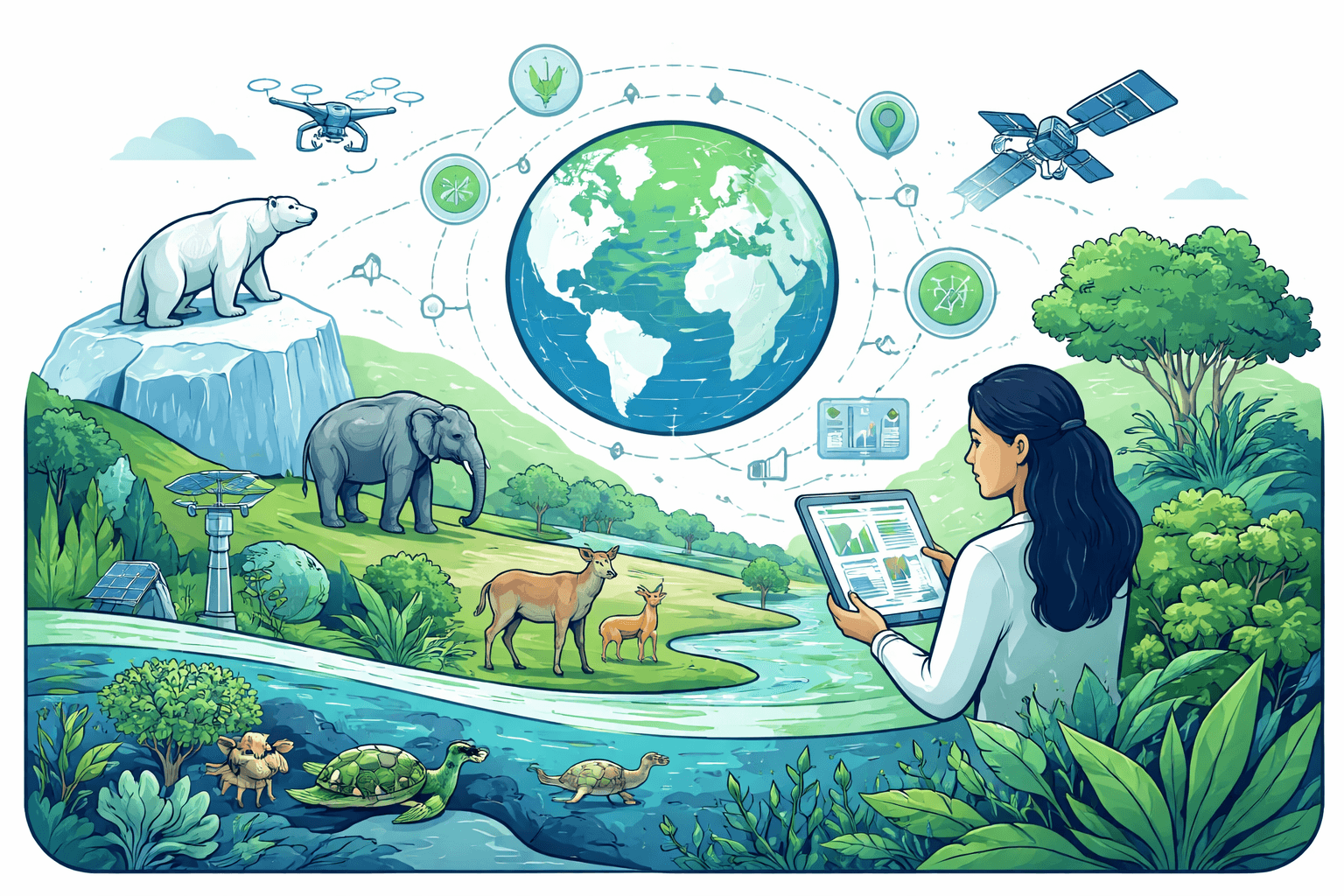
Climate change is already reshaping the natural world at a planetary scale. The impact of climate change on wildlife is visible in shifting species ranges, disrupted migrations, unprecedented coral bleaching, and growing risks of local extinction. The IPCC reports that Earth has warmed about 1.1–1.3°C above 1850–1900 levels (2011–2020 average), and documents “widespread and pervasive” impacts on ecosystems with very high confidence. That warming, combined with altered precipitation, sea‑level rise, extreme events, and ocean acidification, is changing the rules of survival.
By the Numbers: Wildlife and Climate
- ~1.2°C: Global mean surface warming since preindustrial (2011–2020 average), IPCC AR6
- 0.20 m: Global mean sea‑level rise since 1901, accelerating to 3.7 mm/year (2006–2018), IPCC AR6
- +54%: Increase in marine heatwave days since 1925, Nature Communications (Oliver et al., 2018)
- ~0.1: Decrease in global surface ocean pH since preindustrial, a ~26% increase in acidity, IPCC/NOAA
- 70–90%: Projected decline in warm‑water coral reefs at 1.5°C; >99% at 2°C, IPCC SR1.5 and AR6
- 17 km/decade: Median poleward range shift on land; 40–70 km/decade in the ocean, meta‑analyses summarized by IPCC AR6
- 2–5 days/decade: Earlier timing of spring biological events (phenology) across taxa, global meta‑analyses
- 4.1%: Decline in global maximum sustainable yield for marine fisheries since 1930 (with regional losses up to ~35%), Science (Free et al., 2019)
- 69%: Average decline in monitored vertebrate populations since 1970 (multiple drivers including climate), WWF Living Planet Report 2022
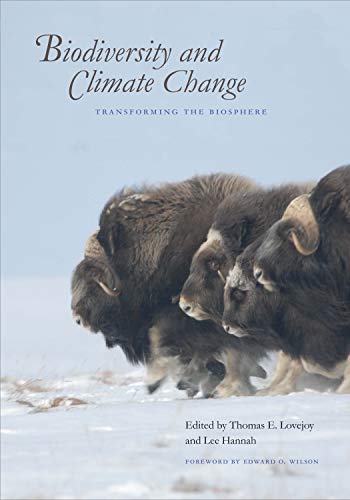
Biodiversity and Climate Change: Transforming the Biosphere: Lovejoy, Thomas E., Hannah, Lee, Wilson, Edward O.
Tom Lovejoy and Lee Hannah have assembled a book that <strong>chronicles these emerging ecological and climatic disasters</strong>; yet gives hope that we can still help Earth’s systems heal, and blun
Check Price on AmazonThe impact of climate change on wildlife: key stressors and mechanisms
Climate change acts through multiple, interacting stressors. Each one alters physiology, behavior, reproduction, and survival in distinct ways.
Warming temperatures
- Physiology and metabolism: Many species have thermal performance curves—narrow temperature ranges where growth and reproduction peak. Exceeding these thresholds reduces survival and fecundity. Heat stress can impair enzyme function, elevate energy needs, and cause mortality in ectotherms (reptiles, amphibians, insects) and intertidal organisms.
- Behavior: Animals shift activity to cooler times (nocturnality), seek shade or refuges, and change foraging to avoid heat, sometimes trading safety or nutrition for cooling.
- Reproduction: Temperature-dependent sex determination in reptiles can skew sex ratios; heat can reduce sperm viability or egg survival across taxa.
- Survival: Arctic amplification—warming roughly four times the global average in recent decades—shortens the sea-ice season, undermining ice-dependent predators and prey.
Altered precipitation and hydrology
- Drought: Water scarcity reduces plant productivity, compresses breeding windows for amphibians, and concentrates wildlife at remaining waterholes, increasing disease and predation.
- Floods and snowpack shifts: Earlier spring melt disrupts nesting birds; altered flow regimes affect fish spawning cues; extreme rainfall can drown ground nests and den sites.
Extreme events (heatwaves, wildfires, storms)
- Heatwaves: Marine heatwaves trigger mass coral bleaching; terrestrial heatwaves cause die-offs of flying foxes, birds, and young ungulates.
- Wildfire: Hotter, drier conditions increase fire extent and severity, converting forests to shrublands or grasslands and fragmenting habitat. Post-fire erosion and invasive grasses can lock in new, less biodiverse states.
- Storms: Stronger cyclones and hurricanes damage nesting beaches and forests, displace seabird colonies, and alter coastal food webs.
Sea-level rise and coastal change
- Habitat loss: Tidal marshes, mangroves, and nesting beaches for turtles and shorebirds are being squeezed between rising seas and coastal development. Where inland migration is blocked, “coastal squeeze” drives net habitat loss.
- Salinization: Intrusion of saltwater into freshwater wetlands and aquifers alters plant communities and stresses freshwater fauna.
Ocean acidification and deoxygenation
- Calcification: Lower pH impairs shell and skeleton formation in corals, mollusks, and some plankton. Acidification acts synergistically with warming to reduce reef growth.
- Food webs: Acidification and warming can shift plankton communities at the base of marine food webs, reverberating to fish, seabirds, and marine mammals.
- Low oxygen: Warmer water holds less oxygen; expanding “oxygen minimum zones” and coastal hypoxia stress fish and benthic communities.
Observed and projected biological responses
Thousands of studies now document consistent biological changes aligned with climate drivers across continents and oceans (IPCC AR6).
Range shifts
- On land, species are moving poleward and upslope to track cooler climates, with median poleward shifts around 17 km per decade and upslope shifts ~11 m per decade in meta-analyses.
- In the ocean, median poleward shifts of 40–70 km per decade are common because currents rapidly transmit heat.
- Conservation implications: Protected areas designed for past climates may no longer overlap with suitable conditions, necessitating connectivity and dynamic management.
Phenological mismatches
- Earlier springs: Leaf-out, insect emergence, and flowering have advanced by 2–5 days per decade. Migratory birds cued by day length can arrive “on time” to find peak insect abundance already past.
- Case study—migratory birds: In parts of Europe, pied flycatchers have suffered local breeding declines exceeding 90% where the caterpillar peak has advanced beyond their arrival (Both et al., Nature 2006).
- Trophic ripple effects: Mismatches can depress chick growth, reduce pollination efficiency, and shift predator-prey dynamics.
Population declines and extinctions
- Corals: Repeated marine heatwaves caused mass bleaching on the Great Barrier Reef in 2016, 2017, 2020, and 2022, with severe mortality in northern sections documented by reef surveys (Hughes et al., Nature). At 1.5°C, 70–90% of reefs are projected to decline; >99% at 2°C (IPCC).
- Polar bears: Earlier sea-ice breakup shortens the hunting season for seals. Modeling indicates that under high emissions, most subpopulations are likely to experience reproductive failure before 2100 as fasting periods exceed energy reserves (Molnár et al., Nature Climate Change 2020). September Arctic sea ice has declined by roughly 13% per decade since 1979 (NSIDC), shrinking critical habitat.
- Amphibians: The IUCN’s 2023 update finds 41% of amphibian species threatened—climate change is accelerating risks, especially for montane species and where warming interacts with disease (chytridiomycosis). Earlier breeding in ephemeral pools can strand eggs and larvae during drought.
- Seabirds and kelp forests: A 2015–2016 northeast Pacific marine heatwave (“the Blob”) led to mass starvation and the death of roughly a million Common Murres (Piatt et al., PNAS 2020). In northern California, canopy-forming kelp declined by ~95% after heatwaves and a urchin outbreak, collapsing abalone and nearshore fish habitat (Rogers‑Bennett & Catton, 2019).
Altered species interactions and invasive dynamics
- Novel assemblages: As species move at different speeds, new predator-prey and competitor pairings emerge, sometimes destabilizing communities.
- Invasives: Warming can expand ranges of invasive plants, insects, and pathogens. Mountain pine beetle outbreaks intensified and expanded under warmer winters and drought-stressed trees, transforming millions of hectares of North American forests and their wildlife habitat.
- Disease: Warmer, wetter conditions can expand the range of vectors (ticks, mosquitoes), altering disease pressure on birds, mammals, and reptiles.
Ecosystem-level consequences and impacts on services
Climate-driven changes cascade from organisms to entire ecosystems, with direct implications for people.
Biodiversity integrity and resilience
- Homogenization: Local extirpations combined with fast-moving generalists can make communities more similar across regions, reducing ecological resilience.
- Tipping risks: Reefs shifting to algal-dominated states, forests converting to savannas after repeated drought-fire cycles, and loss of sea-ice algae that support Arctic food webs are examples of regime shifts that are hard to reverse.
Food, water, and livelihoods
- Fisheries: Warming waters drive poleward shifts of commercial stocks, challenging fixed national quotas. Historical data indicate a 4.1% global decline in maximum sustainable yield since 1930, with much larger regional losses (Science, 2019). Small-scale fishers in the tropics face the greatest near-term risks.
- Pollination: IPBES estimates the annual economic value of pollination at $235–577 billion. Climate-driven phenology shifts and heat extremes can reduce pollinator abundance and flower resources, compounding pesticide and habitat-loss pressures.
- Carbon storage: Die-offs from drought, heat, and pests reduce forest carbon sinks; peatlands and permafrost thaw release greenhouse gases. Coastal “blue carbon” ecosystems—mangroves, salt marshes, seagrasses—buffer coasts from storms and store carbon but are threatened by sea-level rise where landward migration is blocked.
For a deeper dive on marine systems and mitigation pathways that protect biodiversity, see Ocean Conservation: A Guide to Protecting Marine Biodiversity (/conservation/ocean-conservation-protecting-marine-biodiversity).
How much can species adapt—and what are the limits?
Species respond via three main pathways, but each has constraints under rapid climate change.
Phenotypic plasticity
Individuals can adjust behavior, physiology, or timing without genetic change—shifting activity to cooler hours, altering breeding dates, or deepening roots. Plasticity can buffer short-term shocks but may not track multi-decadal warming, especially when trade-offs reduce fitness (e.g., night foraging increases predation risk).
Microevolution
Populations can evolve heat tolerance, drought resistance, or new timing cues if there is heritable variation and sufficient time. Rapid evolution is documented in some insects and plants, but long-lived species with low reproductive rates (large mammals, many trees) evolve too slowly to match current change rates.
Dispersal and range shifts
Mobile species and wind/animal-dispersed plants can relocate to suitable climates—if corridors exist and land uses are permeable. Fragmented landscapes, high-elevation “sky islands,” and geographic barriers limit options.
Monitoring, modeling, and uncertainties
- Monitoring: Satellite remote sensing tracks habitat condition and surface temperatures; bio-logging and telemetry reveal movement; eDNA and automated acoustic sensors detect elusive or nocturnal species; global networks like eBird (over a billion bird observations curated by Cornell Lab) inform migration and abundance trends. Emerging AI tools are accelerating pattern detection and forecasting; see How AI Is Used in Conservation: Technologies, Real-World Uses, and Key Challenges (/sustainability-policy/how-ai-is-used-in-conservation-technologies-applications-challenges).
- Modeling: Species distribution models (e.g., MaxEnt) relate occurrences to climate envelopes; mechanistic models incorporate physiology, energy balance, and demography; coupled Earth system–ecology models explore feedbacks.
- Key uncertainties: Extremes and compound events (heat + drought + fire), adaptive capacity for non-charismatic and data-poor taxa, microrefugia availability, species interactions, and the pace of land-use change. These uncertainties argue for flexible, risk-based strategies rather than precise point predictions.

Ambient Weather WS-2902 WiFi Smart Weather Station : Patio, Lawn & Garden
View on AmazonConservation and policy responses that work
No single lever is sufficient. Solutions are most effective when they pair rapid emissions reductions with climate‑smart conservation on land and at sea.
Protect, connect, and restore habitats
- Climate-smart protected areas: Expand and manage protected and conserved areas (including Indigenous lands and other effective area-based conservation measures) to the 30x30 target, prioritizing climate refugia and elevational/latitudinal gradients.
- Corridors and permeability: Maintain riparian corridors, stepping-stone habitats, and wildlife-friendly infrastructure (road underpasses/overpasses) to support range shifts.
- Restoration at scale: Rewild degraded landscapes, reforest with climate-resilient species mixes, reconnect floodplains, and restore coastal blue carbon habitats that buffer storms and store carbon. For practical, field-tested approaches, see Wildlife Conservation Methods: Practical Approaches, Tech Tools, and How to Measure Success (/sustainability-policy/wildlife-conservation-methods-practical-approaches-tech-tools-measure-success).
Climate-ready species management
- Dynamic ocean management: Shift fishing effort with moving stocks; update quotas and transboundary agreements using real-time data.
- Assisted migration and gene flow: In carefully vetted cases, move populations or exchange genetic material to bolster climate tolerance while minimizing ecological risk.
- Ex situ safeguards: Seed banks, cryopreservation, and assurance colonies for highly threatened amphibians and plants buy time while in situ threats are addressed.
Reduce non-climate stressors
- Habitat and water: Curb land conversion, protect environmental flows, and control pollution to increase resilience to heat and drought.
- Invasives and disease: Strengthen biosecurity, rapid response, and integrated pest management to reduce climate-amplified risks.
Cut greenhouse gas emissions fast
- The IPCC finds that limiting warming to ~1.5°C requires rapid, deep, and sustained global greenhouse gas reductions this decade (around 43% CO2 reduction by 2030 from 2019 levels), with net-zero CO2 by mid-century. Ambitious climate policy is biodiversity policy. See Global Climate Change Initiatives: Progress, Gaps, and Scalable Solutions (/sustainability-policy/global-climate-change-initiatives-progress-gaps) for policy pathways with the greatest leverage.
Engage people and communities
- Indigenous and local leadership: Co-management and recognition of Indigenous rights consistently improve conservation outcomes and resilience.
- Citizen science: eBird, iNaturalist, Reef Life Survey, and local monitoring expand data and stewardship.
- At home: Create pollinator-friendly yards, reduce pesticide use, and support urban greening that cools cities and provides habitat; see How to Practice Conservation at Home: Practical Steps to Save Energy, Water, Waste and Support Wildlife (/conservation/how-to-practice-conservation-at-home-practical-steps-save-energy-water-waste-wildlife).
Vortex Optics Diamondback 10x42 Roof Prism Binocular ...
View on AmazonMetrics that matter
Track progress with transparent, repeatable indicators:
- Species and populations: IUCN Red List status, population trends (Living Planet Index), occupancy and breeding success metrics, migration timing.
- Habitats: Extent and condition of key ecosystems (reefs, wetlands, old-growth forests), connectivity indices, coral cover and recruitment rates.
- Threats: Temperature and heatwave exposure, sea-ice duration, streamflow and drought indices, invasive species spread.
- Management outcomes: Protected area coverage and representativeness, corridor completion, adaptive fishery rules adopted, blue carbon restoration hectares and carbon gains.
Practical implications
- For policymakers: Bake climate risk into every conservation decision—site selection, water allocations, fishery quotas, disaster recovery—and fund corridor and restoration projects that deliver both biodiversity and climate resilience benefits.
- For businesses: Integrate nature and climate risk into operations and supply chains; support restoration and science-based targets for nature; avoid siting that fragments climate corridors.
- For communities and individuals: Back local habitat projects, participate in monitoring, and push for rapid emissions cuts and climate-smart land-use.
What’s next
The decisive variable for wildlife is the pace and peak of warming. Every tenth of a degree avoided reduces the area exposed to lethal heat, the frequency of mass bleaching, and the length of predator fasting seasons on a shrinking ice cover. Even with aggressive mitigation, ecosystems will keep changing; success looks like thriving, connected landscapes and seascapes where species can move, adapt, and persist.
Three priorities stand out:
- Halve emissions this decade to keep 1.5–2°C within reach and avoid the worst coral and polar losses.
- Build a connected, climate-smart conservation network on land and at sea, with durable funding and Indigenous leadership.
- Supercharge monitoring and adaptive management with open data, AI, and community science so actions track moving targets in real time.
The impact of climate change on wildlife is no longer a future scenario; it’s a measurable, accelerating shift in who lives where, when, and how. We have the tools to bend that curve toward persistence and renewal—if we use them at the speed the climate now demands.
Recommended Products
Biodiversity and Climate Change: Transforming the Biosphere: Lovejoy, Thomas E., Hannah, Lee, Wilson, Edward O.
Tom Lovejoy and Lee Hannah have assembled a book that <strong>chronicles these emerging ecological and climatic disasters</strong>; yet gives hope that we can still help Earth’s systems heal, and blun
Ambient Weather WS-2902 WiFi Smart Weather Station : Patio, Lawn & Garden
The AmbientWeather server features ... JSON formatted data · The WS-2902 is <strong>STEM authenticated, and helps provide a hands-on, practical approach to learning about meteorology</strong> and enab
Vortex Optics Diamondback 10x42 Roof Prism Binocular ...
Vortex Optics Diamondback HD 8x42 Binoculars - HD Optical System, Non-slip Grip, Waterproof, Fogproof, Shockproof, Included GlassPak - Unlimited, Unconditional Warranty
More in Sustainability Policy
- How Climate Change Is Reshaping the Oceans: Impacts, Evidence, and Responses
- Climate Change Explained: Causes, Impacts, and Practical Actions
- High-Impact Ways to Combat Climate Change: Practical Solutions for Policy, Nature, Technology, and Everyday Life
- Why Wildlife Conservation Matters: Ecosystems, People, and Practical Solutions