
Climate Change Explained: Causes, Impacts, and Practical Actions
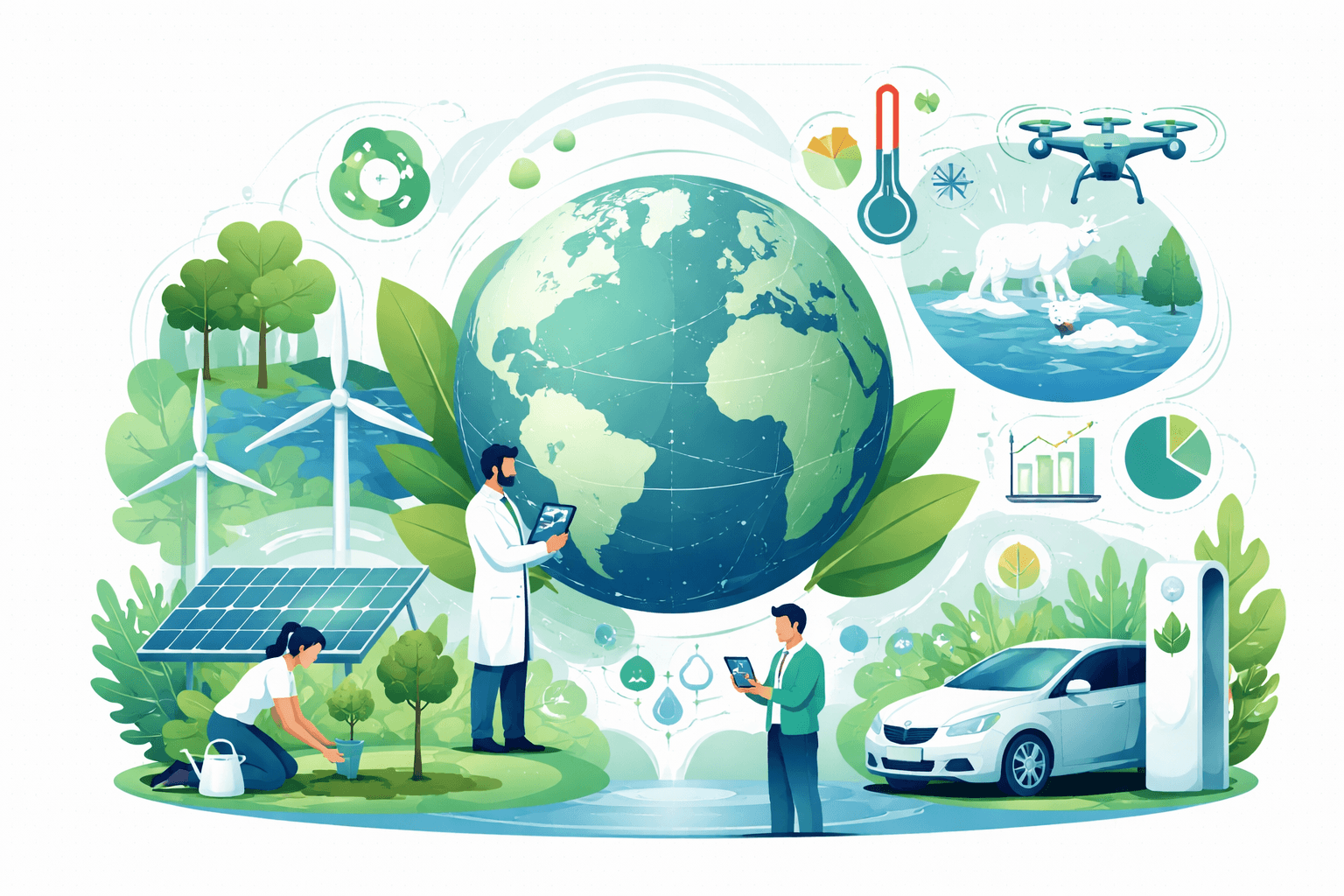
Climate change is no longer a distant risk; it is shaping weather, economies, and ecosystems right now. In 2023, global average temperature reached the highest on record—about 1.45°C above the 1850–1900 baseline—while the 12 months into 2024 briefly exceeded 1.5°C relative to preindustrial levels (WMO/ECMWF). Atmospheric CO2 surpassed 420 ppm in 2023 and set new monthly records above 425 ppm in 2024 (NOAA). At the same time, clean energy is scaling fast: global renewable capacity additions jumped by roughly 50% in 2023 to about 510 GW, led by solar PV (IEA). This guide explains the science of climate change, why it matters, and what practical steps households and communities can take.
What is climate change?
Climate change refers to long-term shifts in Earth’s climate—especially persistent changes in average temperature and precipitation patterns—driven primarily by increased greenhouse gas (GHG) concentrations from human activities. The Intergovernmental Panel on Climate Change (IPCC) concludes it is “unequivocal” that human influence has warmed the atmosphere, ocean, and land.

Drawdown: Paul Hawken
Follow authors to get new release updates, plus improved recommendations. Brief content visible, double tap to read full content. Full content visible, double tap to read brief content. Paul Hawken ha
Check Price on Amazon- Greenhouse effect: GHGs like carbon dioxide (CO2), methane (CH4), and nitrous oxide (N2O) trap heat by absorbing and re-emitting infrared radiation. This raises Earth’s energy balance and surface temperature.
- Radiative forcing: The change in Earth’s energy balance (watts per square meter) caused by factors such as GHGs and aerosols. Positive forcing warms; negative forcing cools.
- Climate sensitivity: The long-term warming from a doubling of CO2, best estimated near 3°C (likely range ~2–4°C) in IPCC AR6.
Natural variability (e.g., El Niño/La Niña, volcanic eruptions) can amplify or temporarily mask warming, but the trend is dominated by human-caused increases in GHGs.
Key drivers: greenhouse gases, land-use change, and feedbacks
Greenhouse gases
- CO2 from fossil fuel combustion, cement production, and land-use change accounts for about three-quarters of total anthropogenic GHG emissions (IPCC AR6). Global energy-related CO2 hit a record ~37.4 Gt in 2023 (IEA).
- Methane (CH4), a potent GHG with a stronger short-term warming effect than CO2, has risen sharply; atmospheric CH4 exceeded 1,920 ppb in 2023 (NOAA), with major sources in energy (oil, gas, coal), agriculture (livestock, rice), and waste.
- Nitrous oxide (N2O), driven largely by fertilizer use and industrial processes, also reached record levels above 335 ppb (NOAA).
Land-use change
- Deforestation and ecosystem degradation release carbon and reduce natural carbon sinks. Conversely, afforestation, reforestation, and peatland restoration increase carbon storage and provide biodiversity benefits (IPCC AR6).
Feedbacks that amplify or dampen warming
- Ice–albedo feedback: As sea ice and snow retreat, darker surfaces absorb more sunlight, accelerating warming.
- Water vapor feedback: Warmer air holds more moisture, a greenhouse gas itself, further intensifying warming.
- Permafrost carbon: Thawing permafrost can release CO2 and CH4, potentially creating a long-lived feedback.
- Vegetation and wildfire: Drought and heat increase wildfire risk, emitting CO2 and reducing carbon sinks.
Observed evidence and recent trends: temperature, sea level, extremes
- Temperature: The last nine years were the warmest since instrumental records began. The warming signal is global and strongest over land and at high latitudes (IPCC/WMO).
- Ocean heat: 2023 marked a record for ocean heat content, with more than 90% of excess heat stored in the ocean (IPCC). Marine heatwaves covered over 40% of the global ocean at times in 2023–2024 (NOAA).
- Sea level rise: Satellite data show global mean sea level has risen about 9–10 cm since 1993, with the rate accelerating to roughly 4.5–5 mm per year in the last decade (NASA/NOAA). Thermal expansion and land-ice loss (Greenland and Antarctica) are principal drivers.
- Cryosphere: Arctic sea ice minimum extent continues to decline at about 13% per decade relative to the 1981–2010 average (NSIDC). Antarctica saw record-low sea ice in 2023–2024.
- Extremes: Attribution science links many recent extremes to climate change, including stronger heatwaves, more intense heavy rainfall, and longer wildfire seasons (IPCC AR6). Drought trends are pronounced in some regions (e.g., the Mediterranean, parts of Africa), while pluvial flooding risk has increased elsewhere.
By the Numbers
- 1.45°C: Global average temperature above preindustrial in 2023 (WMO/ECMWF)
425 ppm: Peak CO2 concentration reached in 2024 monthly records (NOAA)
- ~37.4 Gt: Energy-related CO2 emissions in 2023 (IEA)
- 9–10 cm: Global sea level rise since 1993; rate now ~4.5–5 mm/yr (NASA/NOAA)
- ~510 GW: Global renewable capacity added in 2023, +50% year-over-year (IEA)
- 14 million: Global EV sales in 2023, ~18% of new car sales (IEA)
- 250,000: Additional annual climate-related deaths projected 2030–2050 without stronger action (WHO)
Projected impacts: ecosystems, weather, food, health, and the economy
Ecosystems and biodiversity
- Coral reefs: At ~1.5°C warming, IPCC finds 70–90% of tropical coral reefs are at risk of severe decline; near 2°C, most are likely to be lost.
- Terrestrial ecosystems: Increased wildfire, drought, and heat stress threaten forests (e.g., boreal and Amazon), altering carbon balance and habitat.
- Freshwater and oceans: Warming reduces oxygen and alters circulation, shifting species ranges and increasing harmful algal blooms. For a deeper dive on marine impacts, see our explainer on how climate change is reshaping the oceans.
Weather and extremes
- Heatwaves will become more frequent and intense with each increment of warming. What used to be rare “1-in-50-year” heat extremes are already several times more likely in many regions (IPCC AR6).
- Heavy precipitation and flooding will intensify in many mid- and high-latitude regions as a warmer atmosphere holds more moisture.
- Tropical cyclones: While overall frequency changes are uncertain, the proportion of intense storms and rainfall rates are projected to increase.
Food and water
- Crop yields: Without adaptation, yields for major staples (wheat, maize) are projected to decline beyond 2°C of warming, with increased year-to-year volatility (IPCC). Regional impacts vary widely and are sensitive to water stress and heat. Explore sectoral risks and responses in our guide to how climate change affects agriculture.
- Water security: Glacier retreat reduces long-term dry-season flows for millions dependent on snow and ice melt (Hindu Kush–Himalaya, Andes). Drought risk intensifies in dry subtropical regions.
Health and livelihoods
- Heat stress increases mortality and reduces labor productivity, particularly in outdoor and non-air-conditioned workplaces (The Lancet Countdown, WHO).
- Vector-borne disease ranges (e.g., dengue, malaria) can expand with warmer temperatures and altered precipitation patterns.
- Air quality: Wildfire smoke and ozone formation worsen respiratory and cardiovascular risks.

IQAir AirVisual Air Quality Monitor Bundle, Swiss-Designed Indoor & Outdoor Sensors, Professional Grade Real-Time Air Quality Tracking
View on AmazonEconomy and infrastructure
- Physical risks: More frequent floods, storms, and heat waves damage assets, disrupt supply chains, and strain power and water systems. Global economic losses from natural catastrophes reached about $250 billion in 2023 (Munich Re).
- Transition risks: Policy shifts, technology disruption, and changing markets will reprice carbon-intensive assets while creating new low-carbon opportunities.
Tipping points, uncertainty, and climate scenarios (RCPs/SSPs)
Tipping elements and risks
Potential “tipping points” are thresholds beyond which large-scale, self-reinforcing changes may occur:
- West Antarctic and Greenland ice sheets: Instabilities could commit the world to meters of sea level rise over centuries if thresholds are crossed; risks rise with higher warming (IPCC).
- AMOC (Atlantic Meridional Overturning Circulation): Observations suggest a weakening trend; substantial slowdown would shift regional climates, but timing and thresholds remain uncertain.
- Permafrost carbon: Widespread thaw could release additional CO2 and CH4, complicating mitigation goals.
- Amazon rainforest: Deforestation and drying increase risk of dieback in some scenarios.
Uncertainty is not our ally: most tail risks grow with higher temperatures. Limiting warming reduces the chance of crossing tipping thresholds.
Climate scenarios: RCPs and SSPs explained
- RCPs (Representative Concentration Pathways) describe different greenhouse gas concentration trajectories and the resulting radiative forcing by 2100 (e.g., RCP2.6 low forcing, RCP4.5 intermediate, RCP8.5 high).
- SSPs (Shared Socioeconomic Pathways) pair socioeconomic narratives with emissions (e.g., SSP1-2.6 reflects sustainability-oriented development with strong mitigation; SSP2-4.5 is a middle-of-the-road pathway; SSP5-8.5 is fossil-fueled development with high emissions).
Under current policies, the UN and IPCC estimate end-century warming around 2.5–2.9°C; fully implementing current national pledges would still overshoot 2°C (UNEP Emissions Gap, UNFCCC NDC Synthesis). IPCC indicates the remaining carbon budget consistent with a 50% chance to limit warming to 1.5°C will likely be exhausted in the early 2030s at current emissions.
Solutions overview: mitigation, adaptation, and climate justice
Mitigation cuts emissions and enhances carbon sinks. Adaptation reduces vulnerability to impacts already locked in. Climate justice ensures the transition is fair, addressing disproportionate burdens on low-income communities and countries.
Mitigation pillars
- Power: Scale renewables, storage, and flexible demand; retire unabated coal; modernize grids. IRENA reports the cost of utility-scale solar fell ~89% since 2010 and onshore wind ~69%, making them among the cheapest new power sources in many regions.
- Buildings: Electrify heating and cooking; deploy high-efficiency heat pumps (2–4x more efficient than resistance heating) and improve insulation and ventilation.
- Transport: Electrify vehicles and expand transit, biking, and walking. EVs reached ~14 million sales in 2023 (IEA), with lifecycle emissions far lower than internal combustion vehicles as grids decarbonize.
- Industry: Efficiency, electrification, green hydrogen for high-temperature heat and feedstocks, and carbon capture for hard-to-abate processes (cement, steel, chemicals).
- Land and food: Protect and restore forests, peatlands, and mangroves; reduce food loss and waste (8–10% of global emissions); shift to healthier, more plant-rich diets.
For an in-depth catalog of science-backed options across energy, nature, technology, and policy, see our overview of climate change mitigation techniques.
Adaptation priorities
- Climate-resilient infrastructure: Upgrade stormwater systems, elevate critical assets in flood zones, expand urban cooling with trees and reflective surfaces.
- Water and agriculture: Improve drought planning, expand water reuse, and adopt climate-resilient crops and soil moisture conservation practices.
- Health systems: Heat action plans, early warning systems, and cooling centers reduce mortality during extremes.
- Ecosystems: Protect and restore coastal wetlands that buffer storms, and designate climate corridors for species migration.
Practical, equitable pathways are detailed in our guide to climate change adaptation strategies.
Climate justice
- Finance: Low- and middle-income countries face the highest damages relative to GDP yet contributed the least to cumulative emissions. Scaling concessional finance, loss-and-damage mechanisms, and technology transfer is central to credible global progress.
- Just transition: Support workers and communities reliant on high-carbon sectors with retraining, social protection, and investment in new industries.
Practical actions for households and communities
You can’t solve climate change alone, but individual and community choices—combined with policy—add up. The biggest levers: energy, transport, food, and consumption.
Home energy
- Electrify heating with heat pumps: Even on relatively carbon-intensive grids, heat pumps typically lower emissions 20–50%; on cleaner grids, 60–80% (IEA). Modern cold-climate models work efficiently well below freezing.
- Weatherize first: Air sealing, insulation, and high-performance windows cut heating/cooling loads 20–50% and improve comfort.
- Smart controls: Programmable thermostats and smart heat pump water heaters shift demand to off-peak hours, lowering bills and supporting grid reliability.
- Rooftop solar and community solar: Where feasible, solar can offset a large share of annual electricity use. Costs have fallen sharply, and community programs help renters and shaded-roof households participate.
- Induction cooking: Faster, efficient, and improves indoor air quality compared with gas stoves.

ecobee Smart Thermostat Premium with Smart Sensor and Air Quality Monitor - Programmable Wifi Thermostat - Works with Siri, Alexa, Google Assistant - Amazon.com
View on AmazonTransportation
- Drive electric when possible: Total cost of ownership for EVs is increasingly competitive, especially with high fuel prices. Charging off-peak or with home solar maximizes savings and emissions cuts.
- Mode shift: Replace short car trips with walking, biking, or transit. E-bikes dramatically expand practical range and hill-climbing, cutting both emissions and congestion.
- Trip chaining and remote options: Combine errands and use virtual meetings to reduce unnecessary travel.
Food and water
- Eat more plant-rich meals: Shifting to plant-forward diets can halve food-related household emissions in high-income countries (IPCC, multiple meta-analyses).
- Cut food waste: Plan meals, store food properly, and compost. Globally, food loss and waste represent 8–10% of GHG emissions.
- Smart water use: Fix leaks, install efficient fixtures, and consider drought-tolerant landscaping to cut water and energy used for pumping/heating.
Consumption and community
- Buy less, choose durable, repairable goods, and share tools/appliances via neighborhood libraries.
- Electrify community spaces: Schools and public buildings can adopt heat pumps, solar + storage, and EV buses—lowering operating costs and pollution.
- Advocate locally: Support building codes that enable all-electric construction, safe bike infrastructure, tree canopy expansion, and clean energy siting.
How much does this matter?
The International Energy Agency estimates efficiency and demand-side actions can deliver more than one-third of the emissions reductions needed by 2030 in a net-zero pathway. At the household level, combining weatherization, a heat pump, an EV, and a plant-rich diet can cut personal carbon footprints by several tonnes of CO2e per year, depending on local grid mix and travel patterns.
How technology and policy accelerate change: renewables, EVs, AI, carbon removal, and legislation
Clean electricity at scale
- Renewables: Solar and wind are now the cheapest new power in most regions. Hybrid plants pairing renewables with batteries are rapidly expanding; battery pack prices fell ~89% from 2010 to 2023 to about $139/kWh (BloombergNEF), enabling economical storage and electric mobility.
- Grids: Modernization (advanced inverters, dynamic line rating), transmission build-out, and demand response will unlock higher shares of variable renewables. Flexible loads—EV charging, heat pumps, water heaters—can balance daily and seasonal variations.
Transport transformation
- EVs and charging: Global EV sales hit ~14 million in 2023 (IEA), with charging networks expanding and fast-charging improving. Heavy-duty electrification and battery-electric buses are scaling quickly in several markets; for long-haul and industrial heat, clean hydrogen and synthetic fuels are candidates.
Industry, buildings, and cities
- Heat pumps, district energy, and high-performance building envelopes cut demand. Industrial shifts include electrified process heat, green hydrogen for steel and chemicals, and carbon capture where alternatives are limited.
- Urban design: Transit-oriented development, safe active mobility, and green roofs/trees reduce transport emissions and urban heat islands.
Carbon dioxide removal (CDR)
- Nature-based: Reforestation, afforestation, and peatland/mangrove restoration offer cost-effective CDR with co-benefits, but require durable protection to avoid reversal.
- Engineered: Direct air capture, enhanced weathering, and bioenergy with carbon capture and storage are in early stages—tens of thousands of tonnes captured globally in 2023. IPCC sees CDR as a complement, not a substitute, for rapid emissions cuts.
AI and digital tools
- Climate science and forecasting: Machine learning accelerates climate model emulation, extreme-event prediction, and satellite data analysis. It also optimizes building energy use, grid operations, and EV charging. Explore examples in how artificial intelligence is accelerating climate science.
Policy and markets
- Standards and incentives: Building codes, appliance standards, clean electricity standards, and zero-emission vehicle mandates create predictable demand and reduce costs through scale.
- Carbon pricing: The World Bank tracks more than 70 carbon pricing instruments in operation worldwide in 2024, covering roughly a quarter of global emissions.
- Public investment: Recent policies—including major clean energy legislation in the U.S. and components of the EU Green Deal—are catalyzing hundreds of billions in private capital, domestic manufacturing, and grid upgrades.
What this means for consumers, businesses, and policymakers
- Consumers: Electrification and efficiency lower bills over the asset life, improve comfort and health, and reduce exposure to fuel price volatility. The biggest returns often come from insulation, heat pumps, and EVs where practical.
- Businesses: Transition risk is real; supply chains and assets must be resilient to physical hazards and policy shifts. Clean energy procurement (PPAs), fleet electrification, and building retrofits are mainstream cost-control strategies.
- Policymakers: Rapid renewables deployment must be matched by permitting reform, transmission build-out, workforce training, and targeted support for low-income households. Methane abatement in oil and gas—using proven leak detection and repair—offers some of the fastest, cheapest emissions cuts this decade (IEA).
Where the trajectory is heading
Three trends are accelerating: cheaper clean technologies, better risk detection, and stronger policy signals. In energy, solar, wind, storage, and heat pumps are on steep learning curves. In mobility, EVs are becoming the default choice in more markets. In digital, AI and satellite data are sharpening our understanding of risk and enabling faster responses. Yet timelines matter: the carbon budget compatible with 1.5°C will likely be consumed early in the 2030s at current emissions. Scaling solutions in the 2020s—paired with robust adaptation and climate justice—determines whether we stabilize near 1.5–2°C or drift toward more dangerous territory.
If you’re looking to go deeper on policy pathways and systemic solutions, see our piece on global climate change initiatives. For hands-on resilience planning across communities and ecosystems, read our guide to climate change adaptation strategies. And for mitigation options you can act on today, explore climate change mitigation techniques.
Recommended Products
Drawdown: Paul Hawken
Follow authors to get new release updates, plus improved recommendations. Brief content visible, double tap to read full content. Full content visible, double tap to read brief content. Paul Hawken ha
ecobee Smart Thermostat Premium with Smart Sensor and Air Quality Monitor - Programmable Wifi Thermostat - Works with Siri, Alexa, Google Assistant - Amazon.com
ecobee Smart Thermostat Premium with Smart Sensor and Air Quality Monitor - Programmable Wifi Thermostat - <strong>Works with Siri, Alexa, Google Assistant</strong> - Amazon.com
IQAir AirVisual Air Quality Monitor Bundle, Swiss-Designed Indoor & Outdoor Sensors, Professional Grade Real-Time Air Quality Tracking
The AirVisual Outdoor air quality monitor <strong>can measure up to 8 environmental parameters including PM1, PM2.5, PM10, CO2 (optional sensor module required), AQI, temperature, humidity, and atmosp
More in Sustainability Policy
- High-Impact Ways to Combat Climate Change: Practical Solutions for Policy, Nature, Technology, and Everyday Life
- How Climate Change Affects Agriculture: Impacts, Risks, and Responses
- Climate Change Adaptation Strategies: Practical, Equitable Solutions for Communities, Infrastructure, and Nature
- How Climate Change Is Reshaping Wildlife: Impacts, Evidence, and Solutions