
Why Marine Biodiversity Matters: Services, Risks, and Practical Solutions
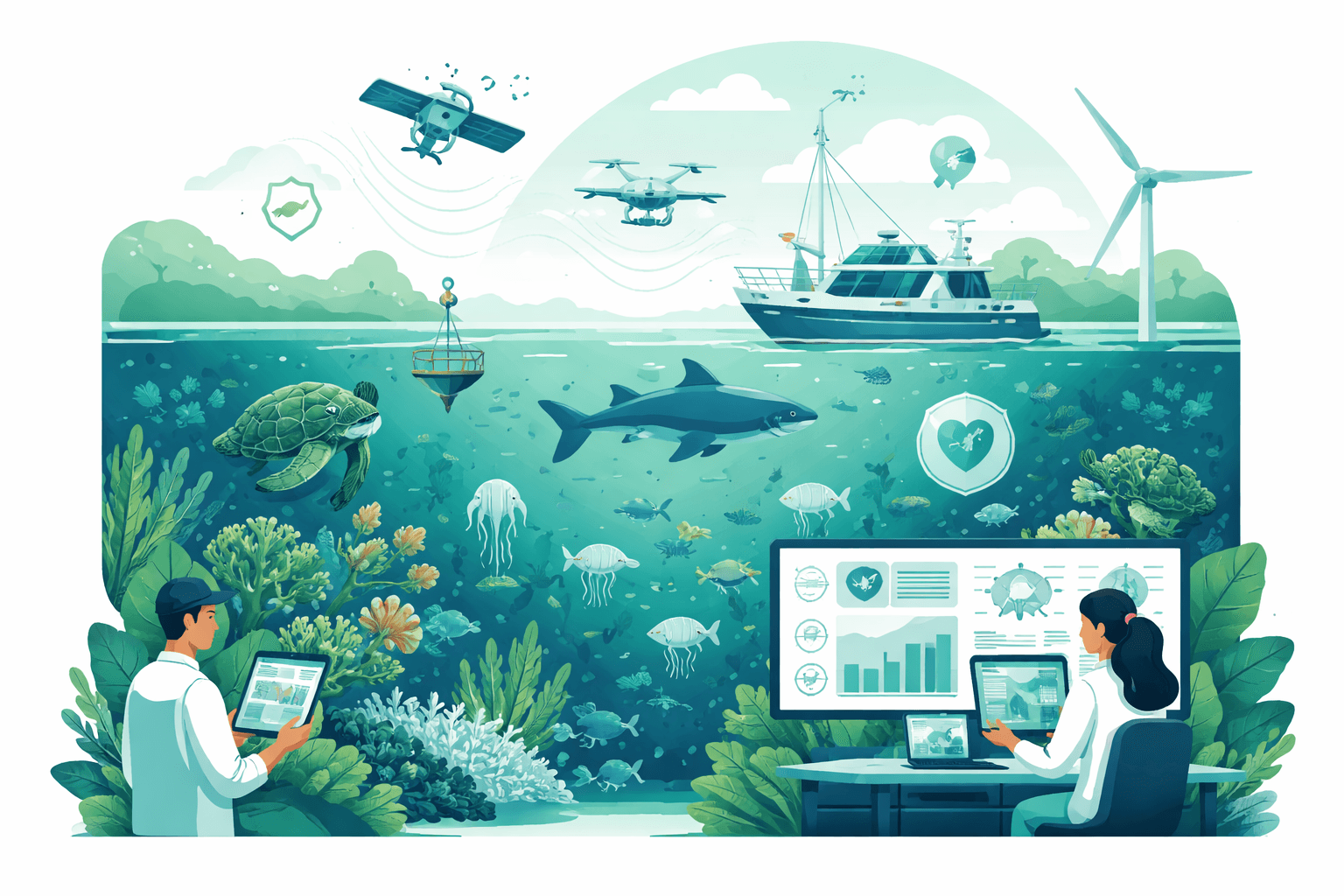
Marine biodiversity is not just about charismatic whales and coral reefs; it is the living infrastructure that feeds billions, buffers coasts, supports jobs, and stabilizes climate. Understanding the importance of marine biodiversity is urgent: more than one‑third of assessed marine fish stocks are overfished (FAO, 2024), tropical coral reefs reduce wave energy by up to 97% and help protect over 200 million people from floods (USGS/The Nature Conservancy, 2018), and the ocean has absorbed about 90% of excess heat from human‑caused warming (IPCC AR6). When biodiversity declines, those services weaken.
This explainer unpacks how marine life creates value you can measure—in food, dollars, and avoided disasters—what is putting that value at risk, and the most evidence‑backed solutions for protecting it.
Core ecosystem functions and services
Ecosystem services are the benefits people receive from nature. In the ocean, biodiversity—the variety of genes, species, and habitats—drives these services by sustaining food webs, cycling nutrients, building habitats, and damping storm energy. The importance of marine biodiversity shows up in quantifiable ways.
The Ocean of Life: The Fate of Man and the Sea: Roberts, Callum
In this vibrant hymn to the sea, ... as we know them today. In the process, Roberts <strong>looks at how the taming of the oceans has shaped human civilization and affected marine life</strong>....
Check Price on AmazonFood webs and nutrient cycling
- Microbes to megafauna: Microscopic phytoplankton fix roughly half of global oxygen and form the base of marine food webs (NOAA; Falkowski, 2012). Zooplankton, fish, and predators transfer this energy upward.
- The “biological pump”: Organisms move carbon and nutrients from surface waters to the deep ocean via feeding, fecal pellets, and vertical migration, sequestering carbon for decades to millennia (IPCC AR6). Diverse communities increase stability and efficiency of this pump.
Habitat provision: reefs, mangroves, seagrasses
- Coral reefs: Occupying <1% of the ocean floor, reefs support an estimated 25% of marine species and provide nurseries for fisheries (IUCN). Reef structural complexity, built by living corals and calcareous algae, underpins fisheries productivity and tourism.
- Mangroves and saltmarshes: These intertidal forests and wetlands trap sediments, build land, and provide nursery habitat for commercially important fish and crustaceans (FAO). They also filter pollutants and improve water quality.
- Seagrass meadows: Among the planet’s most productive habitats, seagrasses stabilize sediments, damp waves, and host invertebrates and juvenile fish. They can improve water clarity by slowing currents that drop suspended particles.
Coastal protection
- Wave attenuation: Fringing coral reefs can reduce wave energy by 97% and wave height by 84%, supporting flood risk reduction for >200 million people (Ferrario et al., 2014; USGS/TNC, 2018).
- Storm surge buffering: Mangroves reduce annual flood damages by an estimated US$65 billion and protect 15 million people each year (Beck et al., 2018). Even 100 meters of mangroves can substantially cut wave heights.
Cultural and heritage values
Marine biodiversity shapes identities, food traditions, and livelihoods of coastal and Indigenous communities. Cultural ecosystem services—recreation, spiritual value, heritage—are more difficult to monetize but strongly influence well‑being and conservation success.
For readers seeking broader context on protecting marine life, see Ocean Conservation: A Guide to Protecting Marine Biodiversity (/conservation/ocean-conservation-protecting-marine-biodiversity).
Economic and human‑wellbeing benefits
Food security and nutrition
- Protein and micronutrients: Seafood provides at least 20% of animal protein to about 3.3 billion people and is a critical source of omega‑3 fatty acids, vitamin D, and essential minerals (FAO, 2024). Small‑scale fisheries are especially important for nutrition in low‑income coastal states.
- Livelihoods: Fisheries and aquaculture provide around 60 million direct jobs and support the livelihoods of up to 600 million people along the value chain (FAO, 2024).
Fisheries and tourism market values
- First‑sale value: Global capture fisheries and aquaculture generate hundreds of billions of dollars in first‑sale value annually—US$406 billion in 2018 and rising with aquaculture growth (FAO, 2022/2024).
- Reef tourism: Coral reef tourism alone is valued at roughly US$36 billion per year globally, supporting local businesses from dive shops to hotels (Spalding et al., 2017).
Pharmaceutical and biotech innovation
- Marine natural products: Compounds from sponges, tunicates, cone snails, and algae have yielded FDA‑approved drugs for pain, cancer, and antiviral therapies, with dozens more in clinical trials (Martins et al., 2023). Biodiversity expands the chemical “innovation library” available to medicine and biotechnology.
Macro‑scale valuation
- Ecosystem service valuations: Global studies estimate coastal and marine ecosystems deliver trillions of dollars in services each year, including storm protection, carbon storage, and fisheries. While methods vary and figures are debated, the consistent finding is that these services rival or exceed many traditional sectors (Costanza et al., 2014; OECD Ocean Economy).
Climate regulation and resilience
Blue carbon: what it is and why it matters
Blue carbon refers to carbon captured and stored by coastal ecosystems—primarily mangroves, seagrasses, and saltmarshes. These systems are disproportionately powerful carbon sinks:
- High carbon density: Coastal wetlands can store 3–5 times more carbon per hectare than tropical forests, largely in waterlogged soils where decomposition is slow (IUCN; IPCC SRCCL).
- Fast sequestration: Typical sequestration rates range from ~1–2 t C/ha/yr in seagrasses to ~2–4 t C/ha/yr in mangroves and saltmarshes (equivalent to ~3.7–14.7 t CO2e/ha/yr), with site variability (Nellemann et al., 2009; IPCC AR6).
- Long‑term storage: Much of the carbon is in deep, anoxic sediments stable over centuries.
Buffering storms and supporting adaptation
- Nature‑based adaptation: Maintaining or restoring mangroves, reefs, and marshes can cost‑effectively reduce flood risk, erosion, and saltwater intrusion while providing co‑benefits for fisheries and biodiversity (IPCC AR6 WG2).
Warming, acidification, and deoxygenation risks
- Ocean heat: The ocean has absorbed about 90% of the excess heat since the 1970s; marine heatwaves have increased in frequency and duration, stressing corals, kelp forests, and fisheries (IPCC AR6).
- Acidification: Average surface ocean pH has fallen by ~0.1 since preindustrial times, a ~26% increase in acidity, impairing calcifiers like corals, oysters, and some plankton (NOAA/IAEA).
- Oxygen loss: The ocean has lost about 2% of its oxygen since the 1960s, expanding low‑oxygen zones and compressing habitat for species such as tuna (IUCN, 2019).
For a deeper dive into the physical changes reshaping seas, see How Climate Change Is Reshaping the Oceans: Impacts, Evidence, and Responses (/sustainability-policy/impact-of-climate-change-on-oceans-impacts-evidence-responses).
By the Numbers
1/3: Proportion of assessed marine fish stocks that are overfished (FAO, 2024)
- 200 million: People protected by coral reefs from coastal flooding (USGS/TNC, 2018)
- US$65 billion/yr: Flood damages avoided by mangroves (Beck et al., 2018)
- ~90%: Share of excess planetary heat absorbed by the ocean (IPCC AR6)
- ~26%: Increase in surface ocean acidity since preindustrial (NOAA/IAEA)
- 11 million metric tons: Annual plastic waste entering oceans today, projected to nearly triple by 2040 without action (Pew/UNEP, 2020–2021)
Drivers of biodiversity loss and cascading risks
Overfishing and illegal, unreported, and unregulated (IUU) fishing
- Status: Over one‑third of assessed stocks are fished at biologically unsustainable levels (FAO, 2024).
- Ecological cascades: Removing top predators or key forage fish can reorganize food webs, reduce resilience, and trigger trophic cascades.
- Socio‑economic risks: Stock collapses can take decades to rebuild, threatening food security and livelihoods, particularly for small‑scale fishers.
Habitat destruction
- Coastal squeeze: Dredging, coastal development, and hard infrastructure degrade reefs, mangroves, marshes, and seagrasses, reducing nursery habitat and storm protection.
- Bottom trawling: Repeated disturbance of seabed habitats collapses structural complexity and resuspends carbon stored in sediments, potentially increasing CO2 emissions (Sala et al., 2021, Nature; debate continues on net fluxes).
Pollution: nutrients, chemicals, and plastics
- Nutrient loading: Agricultural runoff drives harmful algal blooms and hypoxia; more than 400 coastal dead zones have been documented globally (UNEP/NOAA).
- Plastics: Around 11 million metric tons of plastic enter the ocean each year; entanglement and ingestion affect species from seabirds to turtles, while microplastics infiltrate food webs (Pew, 2020; UNEP, 2021).
- Chemical contaminants: Persistent organic pollutants and heavy metals bioaccumulate, posing risks to top predators and human health.
Invasive species
- Vectors: Shipping ballast water and hull fouling remain dominant pathways. Introduced species can outcompete natives, alter habitats, and spread disease (IMO; IUCN).
Climate change stressors
- Heatwaves, acidification, deoxygenation, and sea‑level rise interact with all of the above. The IPCC projects 70–90% losses of warm‑water corals at 1.5°C of warming and >99% at 2°C, imperiling fisheries and coastal protection that depend on reef structure.
The cascading result is a narrowing margin of safety for coastal communities: more flood risk, weaker fisheries, higher disaster costs, and reduced adaptive capacity. This is the crux of the importance of marine biodiversity for risk management.
Evidence‑based solutions and monitoring
Protecting and restoring marine biodiversity is feasible and measurable. The strongest results come when spatial protection, sustainable fisheries, pollution control, and climate action move together.
Spatial protection: Marine Protected Areas (MPAs)
- Effectiveness: Well‑designed, well‑enforced MPAs typically increase fish biomass, size, and diversity inside their boundaries, often by 2–5x relative to unprotected areas (Lester et al., 2009; Sala & Giakoumi, 2018). Spillover of adults and larvae can boost nearby fisheries.
- Coverage and targets: Roughly 8% of the global ocean has some protection, but highly protected “no‑take” areas cover only a few percent. The Kunming–Montreal Global Biodiversity Framework’s 30x30 target aims for 30% effective conservation by 2030.
- Case study: Cabo Pulmo (Mexico), a community‑enforced no‑take reserve, saw a 463% increase in fish biomass within a decade (Aburto‑Oropeza et al., 2011, PNAS), alongside local tourism benefits.
Sustainable fisheries management
- Science‑based harvest control: Implementing catch limits aligned with biomass reference points (e.g., BMSY), harvest control rules, and precautionary buffers reduces overfishing risk. Where comprehensive reforms were applied, about half of depleted stocks have rebuilt within one to two decades (Costello et al., 2016, PNAS).
- Rights‑based and community co‑management: Territorial user rights for fisheries (TURFs) and co‑management improve compliance and stewardship. Bycatch can be cut with gear modifications (circle hooks, turtle excluder devices), real‑time spatial closures, and on‑board monitoring.
- Market tools: Traceability and legality assurance reduce IUU fishing; ecolabels can reward sustainable practices when coupled with robust standards.
Blue‑carbon conservation and restoration
- Protect first: Avoided conversion of mangroves, seagrasses, and marshes prevents large, immediate emissions from disturbed sediments.
- Restore where viable: Target sites with strong biophysical suitability and community buy‑in. Verified carbon methodologies now support financing for mangrove and marsh restoration; permanence and social safeguards are critical.
- Co‑benefits: Projects deliver shoreline stabilization, fisheries nurseries, and water quality improvements along with carbon outcomes.
Pollution prevention
- Nutrients: Precision agriculture, wetland restoration, and improved wastewater treatment cut nitrogen and phosphorus loads.
- Plastics: Extended producer responsibility, product redesign, and improved collection and recycling address upstream leakage; targeted cleanup reduces local impacts.
Technology‑enabled monitoring and enforcement
- Satellites and AIS: Vessel tracking via Automatic Identification System (AIS) and satellite radar helps detect suspicious activity and enforce closures; analysis platforms have revealed effort patterns in previously opaque areas.
- eDNA and autonomous sensors: Environmental DNA sampling detects species presence from shed genetic material, enabling cost‑effective biodiversity monitoring. Gliders, Argo floats, and passive acoustic monitoring add continuous observations for whales and fish.
- Drones and computer vision: Unmanned aerial systems map habitats and wildlife with high resolution; AI‑assisted image analysis speeds up classification and detection. For a cross‑sector view of how these tools are changing conservation, see How AI Is Used in Conservation: Technologies, Real‑World Uses, and Key Challenges (/sustainability-policy/how-ai-is-used-in-conservation-technologies-applications-challenges).

DJI Mini 4 Pro Fly More Combo Plus with DJI RC 2, Drones with Camera for Adults 4K, 3 Intelligent Flight Battery Plus for up to 135 Mins Flight Time, Smart Return to Home, Drone for Beginners : Toys & Games
DJI Mini 4 Pro Drone Fly More Combo Plus with <strong>RC 2 Controller (With Screen) Folding Drone with 4K Video, Under 249g, 45 Mins Flight Time, Vision Sensing 3 Batteries Bundle with 2x 128GB Memory
Check Price on AmazonPolicy levers that align incentives
- 30x30 biodiversity targets with financing for implementation and enforcement
- Elimination of harmful fisheries subsidies in line with WTO agreements; redirect support to monitoring and gear innovation
- Stronger port state measures, catch documentation, and traceability to curb IUU fishing
- Coastal zone planning that prioritizes nature‑based defenses and avoids high‑value habitats
- Integration of blue‑carbon into nationally determined contributions (NDCs) and climate finance
Trade‑offs and co‑design with offshore renewable energy
Offshore wind and other marine renewables are essential for decarbonization but must be planned to avoid sensitive habitats and migration corridors. Key practices include:
- Siting and timing: Avoid known biodiversity hotspots (reefs, spawning grounds), route cables to minimize impacts on seagrass and saltmarsh, and schedule pile‑driving to reduce overlap with marine mammal presence.
- Noise mitigation: Bubble curtains, soft‑start procedures, and newer foundation types reduce underwater noise impacts; passive acoustic monitoring and real‑time shutdowns further lower risk.
- Vessel management: Speed limits and lookout protocols reduce collision risk with marine mammals and turtles.
- Adaptive management: Baseline surveys, clear indicators, and transparent post‑construction monitoring allow course correction. The emerging literature suggests well‑sited projects with mitigation have limited long‑term biodiversity impacts, but cumulative effects require regional planning and continued research.
Measuring progress: indicators that matter
To make conservation count—and course‑correct—we need measurable indicators tied to outcomes. Useful metrics include:
- Biological: Biomass and abundance of key species; size structure; live coral cover; seagrass extent; mangrove canopy cover and recruitment; presence/absence from eDNA.
- Fisheries: Stock status relative to BMSY; fishing mortality (F/FMSY); bycatch rates; compliance data from observers or electronic monitoring.
- Habitat condition: Reef rugosity/complexity; water clarity; macroalgal cover; sediment accretion rates in marshes/mangroves.
- Climate: Blue‑carbon accumulation rates; marine heatwave days; local pH and dissolved oxygen.
- Socio‑economic: Fishers’ income and catch per unit effort; tourism revenue; avoided flood damages; community participation and equity indicators.

Apera Instruments PCO60-Z Bluetooth pH/Conductivity/ORP/Redox/TDS/Salinity/Resistivity Smart Multi-Parameter Meter Tester Kit Powered by ZenTest Mobile App with Cloud-Based Datalogger: Amazon.com: Industrial & Scientific
View on AmazonFor a data‑focused look at how to evaluate conservation impact, see Beyond Intentions: A Data‑Driven Analysis of the Impact of Conservation Efforts (/conservation/beyond-intentions-impact-of-conservation-efforts).
Practical implications for decision‑makers
- Cities and planners: Preserve and restore mangroves, reefs, and marshes as part of coastal defense portfolios; it’s often cheaper than grey infrastructure with co‑benefits for fisheries and recreation.
- Fisheries agencies: Invest in stock assessments, observer programs, and electronic monitoring; implement harvest control rules and rebuild plans with transparent reference points.
- National governments: Align blue‑carbon projects with NDCs; phase out harmful subsidies; strengthen port state measures and traceability.
- Businesses and investors: Screen for biodiversity risk in supply chains; support certified or verified sustainable seafood and blue‑carbon projects with strong social safeguards.
- Communities: Co‑design MPAs and restoration; local stewardship and compliance make or break outcomes.
What’s next
The scientific case for the importance of marine biodiversity is stronger than ever, and the toolbox is mature: MPAs that actually rebuild biomass, fisheries rules that prevent collapse, blue‑carbon projects that finance protection while storing carbon, and monitoring technologies that put illegal fishing in the spotlight. The decisive variables now are scale, financing, and governance. Meeting 30x30 with effective protection, cutting overfishing by aligning incentives, and pairing offshore renewables with rigorous biodiversity planning are achievable this decade.
If we treat biodiversity as the ocean’s operating system—and invest accordingly—the returns arrive as safer coasts, steadier fisheries, healthier communities, and a more stable climate. That is the value proposition in plain numbers, and the reason marine biodiversity belongs at the center of ocean policy and climate strategy.
Recommended Products
The Ocean of Life: The Fate of Man and the Sea: Roberts, Callum
In this vibrant hymn to the sea, ... as we know them today. In the process, Roberts <strong>looks at how the taming of the oceans has shaped human civilization and affected marine life</strong>....
DJI Mini 4 Pro Fly More Combo Plus with DJI RC 2, Drones with Camera for Adults 4K, 3 Intelligent Flight Battery Plus for up to 135 Mins Flight Time, Smart Return to Home, Drone for Beginners : Toys & Games
DJI Mini 4 Pro Drone Fly More Combo Plus with <strong>RC 2 Controller (With Screen) Folding Drone with 4K Video, Under 249g, 45 Mins Flight Time, Vision Sensing 3 Batteries Bundle with 2x 128GB Memory
Apera Instruments PCO60-Z Bluetooth pH/Conductivity/ORP/Redox/TDS/Salinity/Resistivity Smart Multi-Parameter Meter Tester Kit Powered by ZenTest Mobile App with Cloud-Based Datalogger: Amazon.com: Industrial & Scientific
Apera PCO60-Z Smart Multi-parameter Tester Kit is <strong>designed to simplify professional measurement of pH, conductivity/TDS/salinity/resistivity, and ORP (redox),</strong> suitable for general wat
More in Sustainability Policy
- Ocean Conservation: A Guide to Protecting Marine Biodiversity
- Why Wildlife Conservation Matters: Ecosystems, People, and Practical Solutions
- Protecting Wildlife Habitats: A Practical Guide to Conservation, Technology, and Action
- How to Protect Endangered Species: Practical Actions, Policy & Technology