
Why Wildlife Conservation Matters: Ecosystems, People, and Practical Solutions
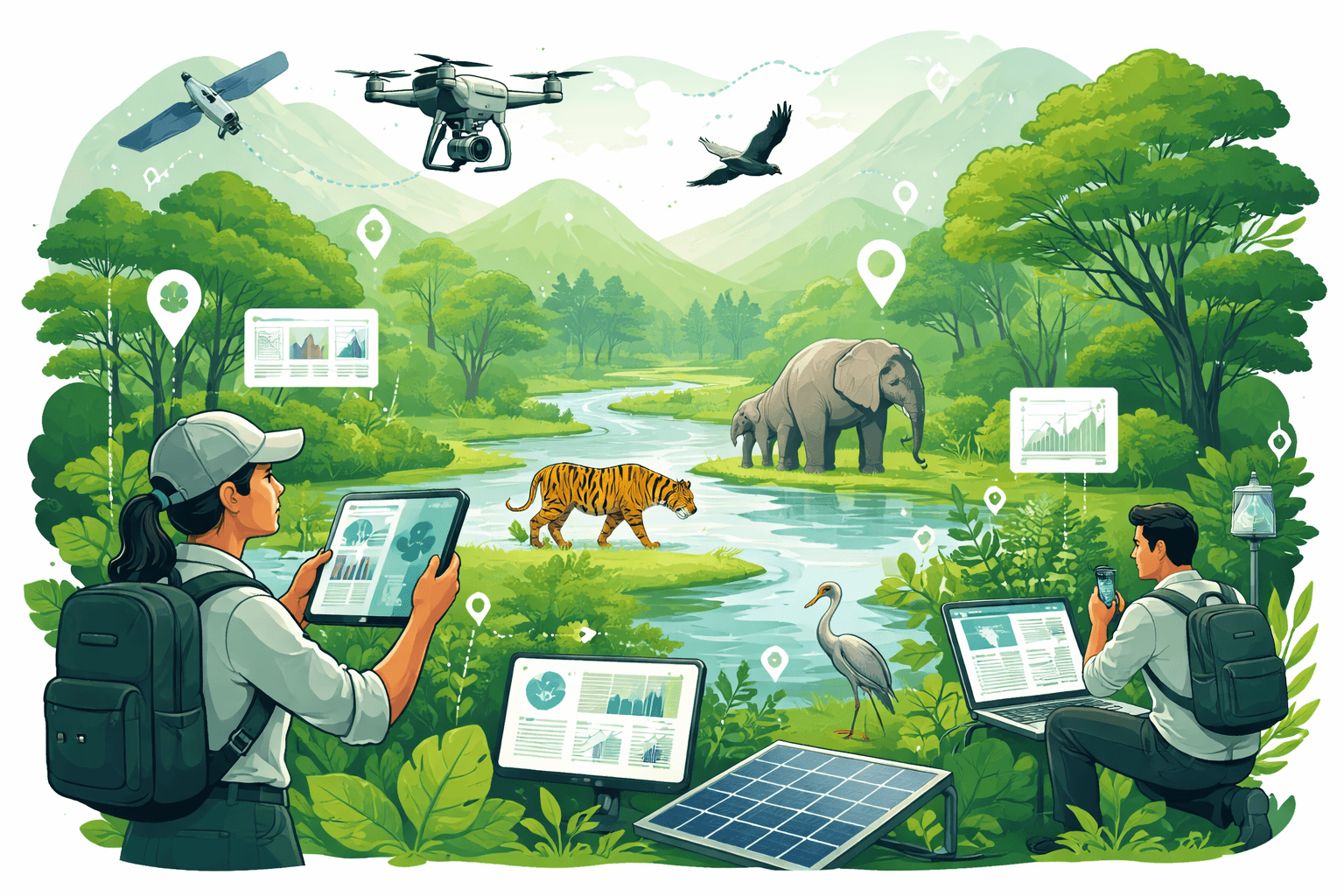
In 2019, the Intergovernmental Science-Policy Platform on Biodiversity and Ecosystem Services (IPBES) warned that up to 1 million species face extinction, many within decades, because of human activity. The WWF Living Planet Report 2022 found an average 69% decline in vertebrate wildlife populations since 1970. Against this backdrop, the importance of wildlife conservation is not abstract. It’s about stabilizing the climate, securing food systems, protecting health and livelihoods, and sustaining the natural processes that make economies and communities viable.
The importance of wildlife conservation: how nature works for us
Ecosystems are networks of interactions. Wildlife—from microbes and insects to birds, fish, and large mammals—perform critical “ecosystem functions” that underpin services we rely on every day. When species decline, those functions weaken or disappear.

Nature's Best Hope: A New Approach to Conservation That Starts in Your Yard - Kindle edition by Tallamy, Douglas W.. Crafts, Hobbies & Home Kindle eBooks @ Amazon.com.
In this new book, Tallamy takes the next step and outlines his vision for a grassroots approach to conservation. Nature’s Best Hope <strong>shows how homeowners everywhere can turn their yards into co
Check Price on AmazonPollination and pest control
- Animal pollinators (bees, bats, birds, butterflies) are essential to roughly 75% of leading global food crops and contribute an estimated $235–$577 billion in annual crop value (IPBES, 2016). Crop yields and quality fall where pollinator diversity and abundance decline.
- Natural pest control by predators can be equally consequential. For example, insect-eating bats save U.S. farmers an estimated $3.7 billion per year in avoided crop damage and pesticide costs (Boyles et al., Science, 2011). Where raptors and other predators are removed, rodent and pest outbreaks rise.
Seed dispersal and forest regeneration
- Many trees and shrubs depend on animals to move seeds. A 2022 global analysis found that defaunation—especially the loss of large birds and mammals—has reduced long-distance seed dispersal capacity by roughly 60%, threatening forest regeneration and climate resilience (Fricke et al., Science, 2022).
- Elephants, tapirs, hornbills, and primates are “forest gardeners,” transporting large, high-carbon-density tree seeds and shaping forest composition over centuries.
Nutrient cycling and water quality
- Salmon carry marine nutrients inland when they spawn and die, fertilizing riparian forests and even influencing bear and bird populations; where salmon runs collapse, those nutrient subsidies to entire watersheds disappear.
- Scavengers like vultures clean carcasses, suppressing disease risk; their declines (e.g., South Asia’s diclofenac-linked vulture crash) have been associated with increases in feral dog populations and public health burdens.
Carbon storage and climate regulation
- Intact ecosystems store vast carbon stocks: global forests hold on the order of 860 gigatons of carbon (Pan et al., Science, 2011), peatlands roughly 550 gigatons, and coastal wetlands (mangroves, seagrasses, tidal marshes) sequester carbon at rates up to 3–5 times higher per area than most terrestrial forests.
- Wildlife can amplify carbon capture. For example, whales fertilize surface waters through the “whale pump,” boosting phytoplankton that fix carbon; herbivores and predators shape vegetation structure and fire regimes, influencing carbon dynamics at landscape scales.
The takeaway: conserve wildlife and you conserve the life-support functions—pollination, seed dispersal, nutrient cycling, and carbon storage—that keep food systems, water, and climate stable.
Biodiversity is resilience: buffering shocks and stabilizing systems
Diverse ecosystems are more productive and stable through time, a concept often called the “insurance effect.” If one species declines due to disease, heat, or drought, others can perform similar roles, keeping core functions intact.
- Decades-long grassland experiments show that plots with higher plant diversity have more stable productivity and better drought resistance than low-diversity plots (Tilman et al., Nature, 2006; Isbell et al., Nature, 2015).
- Coral reefs with higher functional diversity recover faster after bleaching events; forests with a diversity of seed dispersers and pollinators regenerate more reliably after storms or fires.
- In agriculture and fisheries, more diverse systems are less prone to catastrophic failures. Mixed-species fisheries and diversified farms reduce variability in yields, buffering communities against price shocks and climate extremes.
In short, biodiversity underpins resilience—the capacity of ecosystems and economies to absorb shocks without collapsing.
What’s driving wildlife declines—and why it matters beyond nature
IPBES estimates that more than 75% of Earth’s land and 66% of the marine environment have been significantly altered by humans. About 85% of wetlands present in 1700 had been lost by 2000. Five direct drivers account for most biodiversity loss, with cascading ecological, economic, and social impacts.
1) Habitat loss and fragmentation
- Agriculture, logging, mining, and urban expansion convert or degrade habitats. Fragmentation isolates populations, reducing gene flow and making species more vulnerable to local extinction.
- Consequences: lost pollination and seed dispersal, increased flood risk where wetlands and mangroves are removed, reduced carbon storage, and higher infrastructure costs to buffer against storms and erosion.
- Solution pathway: strategically placed protected areas, connectivity measures like wildlife corridors, and land-use planning that avoids high-biodiversity areas. See our explainer on connectivity: Understanding Wildlife Corridors: Why Connectivity Matters and How It Works (/sustainability-policy/understanding-wildlife-corridors-why-connectivity-matters-how-it-works).
2) Climate change
- Warming shifts species ranges, alters migration and breeding timing, and intensifies heatwaves, droughts, and wildfires. IPCC assessments document widespread, ongoing shifts in species distributions on land and in the ocean.
- Consequences: coral bleaching (with 14% of reefs lost globally between 2009–2018), stressed forests more prone to pests and fire, and mismatches between crops and pollinators.
3) Pollution
- Nutrient runoff fuels algal blooms and coastal dead zones; pesticides diminish insect populations and disrupt food webs.
- Each year an estimated 8–11 million metric tons of plastic enter the ocean, entangling and poisoning marine life and fragmenting into microplastics (Pew, 2020; Jambeck et al., Science, 2015).
4) Invasive alien species
- Introduced predators, pests, and pathogens outcompete or prey on native species. IPBES (2023) estimated global economic costs exceeding $423 billion annually—damaging agriculture, fisheries, infrastructure, and human health.
5) Overexploitation and illegal trade
- According to FAO (2022), 35.4% of assessed marine fish stocks are overfished; many others are fully exploited. Unsustainable hunting and wildlife trade further pressure terrestrial species.
- Consequences: food insecurity for coastal and riverine communities, collapse of nature-based tourism, and cultural loss.
These drivers do not act in isolation. Overfished reefs are less resilient to heat stress; fragmented forests are more exposed to invasive pests and fire. The social costs compound across sectors and generations.
Why conservation matters to people, communities, and economies
Wildlife conservation is not just about species for their own sake—it’s about human welfare and economic stability.
Food security and nutrition
- Small-scale fisheries provide livelihoods for around 90% of the world’s capture fishers and fish workers and supply essential protein and micronutrients to hundreds of millions (FAO, 2022). Rebuilding overfished stocks increases long-term catches and incomes.
- Pollinators influence the yields and quality of fruits, nuts, and vegetables that supply key vitamins and minerals. Declines can exacerbate malnutrition, especially in regions reliant on nutrient-dense, pollinator-dependent crops.
Medicines and biotechnology
- Natural products and their derivatives account for over 50% of approved medicines, including antibiotics, anticancer agents (e.g., paclitaxel from Pacific yew), and cardiovascular drugs (e.g., captopril inspired by snake venom) (Newman & Cragg, J. Nat. Prod., 2020).
- Biodiversity is a library of biochemical innovation. Extinctions close off options for future therapeutics and bio-based industries.
Jobs, incomes, and cultural values
- Nature-based tourism and recreation generate significant revenue and employment in many regions. Healthy wildlife populations draw visitors, sustain guiding and hospitality businesses, and support community enterprises.
- Many Indigenous Peoples and local communities have deep cultural ties to wildlife and manage lands that harbor a large share of remaining biodiversity (IPBES, 2019). Supporting their stewardship can improve conservation outcomes and uphold rights.
Climate mitigation and disaster risk reduction
- Nature-based solutions—protecting, restoring, and better managing forests, wetlands, and grasslands—could deliver roughly one-third of the cost-effective climate mitigation needed by 2030 (Griscom et al., PNAS, 2017).
- Mangroves, reefs, and coastal marshes reduce storm surge and wave energy. Mangroves alone prevent an estimated $65 billion in flood damages annually and protect 15 million people each year (The Nature Conservancy/World Bank modeling, 2020–2022).
When wildlife thrives, economies save on inputs, avoid disaster losses, and gain steady, local jobs.
Effective conservation approaches: what works and how to scale it
Safeguarding wildlife requires action at multiple scales—from backyards and businesses to national policy and international agreements. Evidence points to several strategies with strong returns.
Protected and conserved areas: quantity and quality
- As of 2022, about 17% of land and 8% of the ocean are formally protected (UNEP-WCMC). The Kunming–Montreal Global Biodiversity Framework commits countries to protect at least 30% of land and sea by 2030 (“30x30”).
- Effectiveness depends on placement and management. Fully protected, well-enforced marine reserves can increase fish biomass several-fold compared to fished areas, with spillover benefits to adjacent fisheries (Edgar et al., Nature, 2014).
- Connectivity is essential to allow species to move and adapt to climate change. Learn how corridors keep landscapes functional: Understanding Wildlife Corridors: Why Connectivity Matters and How It Works (/sustainability-policy/understanding-wildlife-corridors-why-connectivity-matters-how-it-works).
For planning and stewardship of conserved lands, see Land Conservation Best Practices: Planning, Protection, Stewardship, and Long-Term Management (/conservation/land-conservation-best-practices-planning-protection-stewardship-long-term-management).
Restoration and rewilding
- The UN Decade on Ecosystem Restoration (2021–2030) highlights the economic case: every dollar invested in restoration can return $7–30 in ecosystem service benefits.
- Rewilding—reestablishing ecological processes and, where appropriate, keystone species—can accelerate recovery of pollination, herbivory, and predation dynamics. Explore the concept: What Is Rewilding? How Ecosystem Restoration Is Changing Conservation (/conservation/what-is-rewilding-ecosystem-restoration-conservation).
Policy, law, and enforcement
- Strong legal frameworks work. In the United States, more than 99% of species listed under the Endangered Species Act have avoided extinction since listing, with many showing population gains (U.S. Fish & Wildlife Service assessments).
- International agreements like CITES regulate trade in endangered species; national fisheries reforms that set science-based catch limits and secure tenure can rebuild stocks and revenues.
Community-led stewardship and Indigenous leadership
- Where communities share in benefits and decision-making, outcomes improve. Examples include community conservancies in Namibia and co-managed marine areas in the Pacific that have increased wildlife abundance and household incomes while reducing conflict.
Sustainable production and consumer choices
- In fisheries, harvest rules, bycatch reduction, spatial protections, and traceability systems can turn depletion into recovery.
- In agriculture and forestry, practices that retain habitat (hedgerows, riparian buffers), reduce pesticide use, and maintain structural diversity support pollinators and natural enemies—often lowering costs over time.
Practical tools and measurement frameworks are advancing quickly; see Wildlife Conservation Methods: Practical Approaches, Tech Tools, and How to Measure Success (/sustainability-policy/wildlife-conservation-methods-practical-approaches-tech-tools-measure-success) and AI for Wildlife Monitoring: Technologies, Data Needs, and Practical Conservation Applications (/sustainability-policy/ai-for-wildlife-monitoring-technologies-data-needs-practical-conservation).
Technology, data, and finance
- Low-cost sensors, satellites, environmental DNA (eDNA), and AI analytics make it easier to detect species, target enforcement, and track outcomes.
- Innovative finance—from results-based payments and green bonds to debt-for-nature swaps—is closing parts of the biodiversity funding gap, though global needs still dwarf current flows.

Browning Trail Cameras Strike Force Pro X 1080 Full HD, Night Vision Wildlife Motion-Activated Camera with Radiant 6 Flash Technology and Illuma-Smart Technology (Camo)
View on AmazonFor ocean-specific strategies and why marine biodiversity matters to climate and economies, see Ocean Conservation: A Guide to Protecting Marine Biodiversity (/conservation/ocean-conservation-protecting-marine-biodiversity).
By the Numbers
- 1 million: Species at risk of extinction due to human activities (IPBES, 2019).
- 69%: Average decline in monitored vertebrate populations since 1970 (WWF, 2022).
- $235–$577 billion: Annual crop value dependent on animal pollinators (IPBES, 2016).
- 35.4%: Assessed marine fish stocks that are overfished (FAO, 2022).
$423 billion: Annual global costs of invasive alien species (IPBES, 2023).
- ~860 gigatons: Carbon stored in global forests (Pan et al., 2011).
- $65 billion: Annual flood damages avoided by mangroves (TNC/World Bank, 2020–2022).
What this means for different stakeholders
- Households and communities
- Support local habitat: plant native species, retain hedgerows and water features, and reduce pesticide use to aid pollinators and birds.
- Choose sustainable seafood (check labels and local advisories) and reduce food waste—both cut pressure on wild populations.
- Join citizen science platforms (eBird, iNaturalist) to contribute data that inform conservation planning.

Vortex Optics Diamondback HD 8x42 Binoculars & Optics Ranger 1800 Laser Rangefinder Black
View on AmazonBusinesses and investors
- Map biodiversity dependencies and risks in supply chains; support suppliers adopting habitat-friendly practices.
- Align with emerging disclosure frameworks and set science-based targets for nature to manage regulatory and market risk.
Policymakers and practitioners
- Prioritize protection of intact ecosystems and ecological corridors in spatial plans.
- Pair conservation with livelihoods—payments for ecosystem services, community conservancies, and co-management.
- Invest in monitoring and enforcement; link funding to measurable outcomes and transparency.
The road ahead
The Kunming–Montreal Global Biodiversity Framework sets a clear direction: halt and reverse biodiversity loss by 2030, protect and manage at least 30% of land and ocean, and restore degraded ecosystems. Meeting these goals is inseparable from climate action. Nature can provide roughly one-third of cost-effective mitigation this decade, and healthy wildlife populations are agents—not bystanders—of that climate stability.
Getting there requires three things. First, protect what’s still intact—because prevention is cheaper than cure. Second, restore function where it’s been lost—especially pollination, seed dispersal, and predator-prey dynamics that make ecosystems self-sustaining. Third, align incentives—so communities, producers, and investors benefit from keeping wildlife and habitats alive and connected.
The importance of wildlife conservation is ultimately pragmatic: it keeps the biological machinery of Earth running. When we safeguard wildlife, we stabilize food systems, reduce disaster losses, lower input costs for farmers and fishers, preserve options for medicine and innovation, and keep more carbon in forests, soils, and seas. That is resilience—and it’s a foundation for prosperity in a warming world.
Recommended Products
Nature's Best Hope: A New Approach to Conservation That Starts in Your Yard - Kindle edition by Tallamy, Douglas W.. Crafts, Hobbies & Home Kindle eBooks @ Amazon.com.
In this new book, Tallamy takes the next step and outlines his vision for a grassroots approach to conservation. Nature’s Best Hope <strong>shows how homeowners everywhere can turn their yards into co
Vortex Optics Diamondback HD 8x42 Binoculars & Optics Ranger 1800 Laser Rangefinder Black
Amazon.com : Vortex Optics Diamondback HD 8x42 Binoculars & Optics Ranger 1800 Laser Rangefinder Black : Sports & Outdoors
Browning Trail Cameras Strike Force Pro X 1080 Full HD, Night Vision Wildlife Motion-Activated Camera with Radiant 6 Flash Technology and Illuma-Smart Technology (Camo)
The Browning Trail Cameras Strike ... for 2023, featuring a <strong>1.5-inch color view screen, less than a quarter-second trigger speed, and an all-steel adjustable mounting bracket for easy set-up i
More in Conservation
- Effective Wildlife Conservation Practices: Practical Strategies, Monitoring, and Community-Led Solutions
- Wildlife Conservation: Key Strategies, Threats, and How You Can Help
- Protecting Wildlife Habitats: A Practical Guide to Conservation, Technology, and Action
- Wildlife Conservation Methods: Practical Approaches, Tech Tools, and How to Measure Success