
Sustainable Supply Chain Management: A Practical Guide to Greener, More Responsible Operations
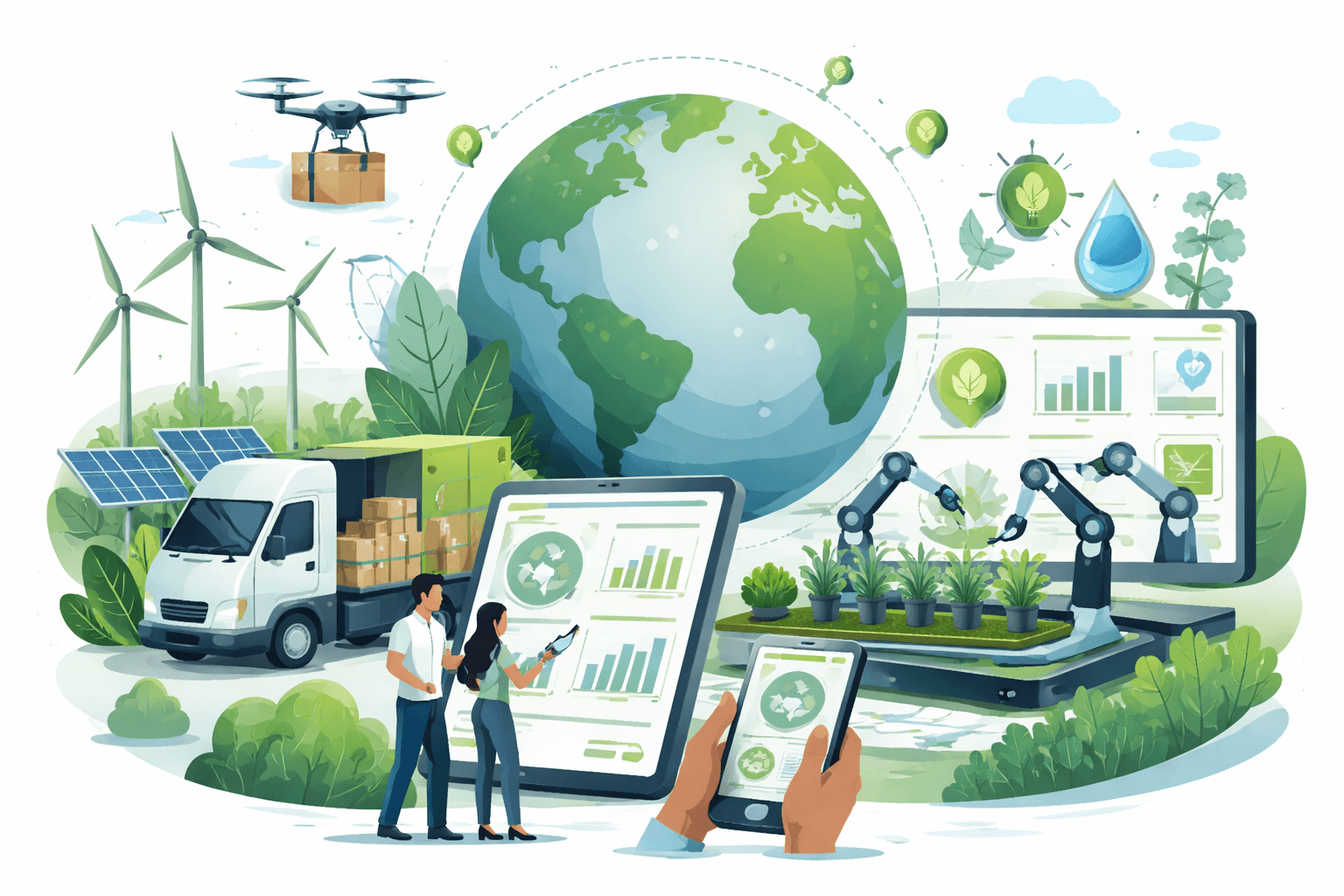
Sustainable supply chain management isn’t a nice-to-have—it’s where most of a company’s environmental and social footprint actually sits. CDP reports that supply chain (Scope 3) emissions are, on average, 11.4 times greater than a company’s direct operational emissions (CDP, 2020). For many consumer-facing sectors, McKinsey estimates 80–90% of total emissions are upstream in purchased goods and services. And the UN International Resource Panel finds that resource extraction and processing drive roughly 90% of global biodiversity loss and water stress. That’s why sustainable supply chain management now anchors climate targets, human-rights due diligence, and resilience planning across industries.
This guide explains what sustainable supply chain management is, the practices that move the needle, how to measure and report progress, the hard trade-offs, and the business benefits—from risk reduction and compliance readiness to stronger brands and more resilient operations.
What is sustainable supply chain management—and why it matters
Sustainable supply chain management (SSCM) integrates environmental, social, and governance (ESG) principles into how an organization sources materials, manufactures products, moves goods, manages suppliers, and handles end-of-life. It expands performance beyond cost, quality, and delivery to include climate, nature, labor rights, and ethics.
Why it matters now:
- Emissions: Supply chain emissions (Scope 3) often dominate corporate footprints—8–10x direct emissions on average, and up to 90% in sectors like retail, apparel, and food (CDP; McKinsey).
- Nature and water: Extraction and processing of materials account for ~90% of biodiversity loss and water stress (UN International Resource Panel).
- Social risk: The ILO estimates 27.6 million people are in forced labor globally (ILO, 2022), with risks concentrated in complex global supply chains.
- Regulation: The EU Corporate Sustainability Reporting Directive (CSRD) expands mandatory ESG reporting to ~50,000 companies, with supply chain impacts central to materiality assessment. The EU Corporate Sustainability Due Diligence Directive (CSDDD, adopted in 2024) introduces mandatory human-rights and environmental due diligence for large companies and certain non-EU firms. Germany’s Supply Chain Due Diligence Act (LkSG) applies to companies with 1,000+ employees from 2024. In the U.S., the Uyghur Forced Labor Prevention Act (UFLPA) restricts imports linked to forced labor in Xinjiang, and California’s SB 253 and SB 261 require emissions and climate-risk disclosures for large companies operating in the state.
- Logistics emissions: Freight transport accounts for roughly 8% of global CO2 emissions from energy use (International Transport Forum).
The business case goes beyond compliance: resilient sourcing, stable quality, lower energy and material costs, and credible ESG performance that investors, customers, and employees increasingly demand.
Core practices of sustainable supply chain management
1) Ethical and responsible sourcing
- Supplier Code of Conduct: Align with ILO core conventions, OECD Due Diligence Guidance, and UN Guiding Principles on Business and Human Rights. Include zero tolerance for forced labor and worst forms of child labor, and set clear remediation expectations (not “cut and run”).
- Risk-based due diligence: Map suppliers, materials, and geographies to identify salient risks (forced labor in cotton, palm, or electronics; deforestation in cattle, soy, palm, cocoa; tailings and safety in mining).
- Certifications and chain of custody: Use credible standards where appropriate (e.g., FSC for timber, RSPO for palm oil, Rainforest Alliance/Fairtrade for certain commodities, RMAP for conflict minerals). Ensure claims are verified and traceable.
- Traceability: Establish provenance to farm/mine or mill where risks are high, using batch-level documentation, satellite monitoring for deforestation, or digital traceability tools. Avoid over-relying on self-attestations.
2) Carbon reduction and climate alignment
- Scope 3 target-setting: Adopt science-based targets (SBTi) covering purchased goods/services, upstream transport, and end-of-life where material. Prioritize near-term abatement over offsets.
- Supplier engagement: Require key suppliers to set their own science-based targets and disclose emissions via CDP or equivalent. Offer technical support and pooled procurement.
- Clean energy in the supply base: Facilitate supplier access to renewable electricity via power purchase agreements (PPAs), green tariffs, or buyer consortiums; combine with energy-efficiency programs.
- Low-carbon materials and processes: Shift to recycled content (aluminum, plastics, paper), lower-carbon steel (EAF with high scrap or DRI with green hydrogen), cement/clinker substitution, bio-based or mass-balanced inputs where robust sustainability criteria are met.
- Product and packaging design: Reduce material use, switch to lighter/low-impact materials, design for disassembly and recycling.
3) Waste minimization and circularity
- Lean, reuse, and repair: Cut process scrap, standardize parts, enable remanufacturing and component reuse.
- Closed-loop systems: Establish take-back for products and packaging, prioritize recycled feedstocks, and collaborate on industry-wide recycling infrastructure.
- Hazardous waste: Substitute safer chemicals and ensure compliant treatment and disposal.
4) Supplier transparency and continuous improvement
- Data expectations: Define what suppliers must report (energy use, renewable share, Scope 1–2 emissions, water withdrawal/discharge, waste, injury rates, overtime hours, diversity metrics).
- Audit plus capability-building: Combine audits with coaching, shared tools, and financing to fix root causes. Track non-conformance closure rates and time-to-remediation.
- Incentives: Link scorecards and preferred-supplier status to ESG performance; use longer contracts or co-investment to reward improvements.
Measuring, auditing, and reporting: how companies assess and improve
Metrics that matter
Select a concise, decision-useful set of KPIs, then expand as capability grows.
- Climate
- Total Scope 3 (purchased goods/services, upstream transport, use-phase where relevant, end-of-life)
- Emissions intensity (kg CO2e per unit, per $ spend, or per functional unit)
- % of spend and emissions covered by primary supplier data vs. spend-based estimates
- % of Tier 1/Tier 2 suppliers with science-based targets or renewable electricity targets
- Nature and resources
- % deforestation- and conversion-free volumes (by commodity, with cutoff dates and geolocation verification)
- Water intensity in high-stress basins (m3/unit), % suppliers with basin-level targets (WRI Aqueduct)
- Material circularity: % recycled content, scrap rate, take-back/return rate
- Labor and safety
- Lost-time injury frequency rate (LTIFR)
- Overtime hours vs. legal limits; wage compliance vs. living-wage benchmarks (where available)
- Grievance mechanism uptake and resolution time
- Management and performance
- % of spend under a Supplier Code of Conduct
- Audit coverage, major non-conformities per audit, closure rate and lead time
- On-time delivery vs. ESG score to test integration of sustainability with commercial performance
Data collection and estimation
- Start with a spend-based inventory using the GHG Protocol Scope 3 Standard to identify hotspots, then refine with supplier-specific primary data where impact is material.
- For logistics, use the Smart Freight Centre’s GLEC Framework to calculate and report emissions consistently across modes.
- For product-level decisions, use life-cycle assessment (LCA) aligned to ISO 14040/44 and product carbon footprints per ISO 14067. Environmental Product Declarations (EPDs) can provide verified data for key materials.
Audits and verification
- Use risk-based supplier audits that consider sector, country risk, and past performance. Combine desk reviews with on-site or virtual audits and worker interviews.
- Shift from pass/fail to maturity models that track capability building and systemic improvements.
- Where feasible, leverage third-party certifications and recognized schemes (e.g., FSC, RSPO, RMI) as partial assurance, but verify scope and chain-of-custody rigor.
Reporting frameworks and disclosure
- GHG Protocol: Foundation for Scope 1–3 accounting; disclose methods, boundaries, emission factors, and data-quality scores.
- CDP: Widely used for supplier and corporate climate, water, and forests disclosures; aligns with ISSB/TCFD.
- GRI Standards: Comprehensive impact reporting across environmental and social topics.
- ISSB (IFRS S1/S2): Global baseline for investor-focused sustainability and climate disclosures, building on TCFD.
- EU CSRD/ESRS: Mandatory for many EU and non-EU companies with significant EU operations; requires double materiality assessment and detailed supply chain data.
For organizations setting net-zero or neutrality claims, ensure rigor in measurement and reduction before using offsets. See our guide to credible approaches in Carbon Neutral Strategies for Businesses: Practical Approaches to Measure, Reduce, and Credibly Offset Emissions (/sustainability-policy/carbon-neutral-strategies-for-businesses-practical-approaches).
Sustainable supply chain management: common challenges and how to navigate them
Data gaps and quality
- Challenge: Early Scope 3 inventories rely heavily on generic emission factors, blending high- and low-performers.
- Strategy: Prioritize high-impact categories for primary data collection; set a roadmap to increase data quality over time with supplier-specific data and verification.
Supplier capability and cost constraints
- Challenge: Small and medium suppliers may lack capital or expertise for energy upgrades, traceability, or remediation.
- Strategy: Co-invest with suppliers (e.g., on-site solar/efficiency financed via shared-savings), offer toolkits and audits, aggregate demand via buyer coalitions or local green-power programs, and provide longer-term contracts to derisk investments.
Audit fatigue and perverse incentives
- Challenge: Multiple customers request duplicative audits, encouraging box-ticking.
- Strategy: Harmonize requirements using industry platforms (e.g., Responsible Business Alliance in electronics, Cascale/Higg in apparel), accept shared assessments where appropriate, and focus on corrective action plans and outcomes.
Trade-offs: cost, lead time, and impact
- Moving production closer to demand can cut logistics risk and emissions but may increase labor or energy costs; ocean freight is carbon-efficient per ton-km but can add lead time; air freight is fast but carbon-intensive.
- Some bio-based materials reduce fossil carbon but can increase land-use pressures; apply strong safeguards (no-deforestation, high-conservation-value protection) and verify with geospatial data.
- Recycled content reduces upstream emissions but may face quality, availability, or price volatility; build offtake agreements to stabilize supply.
Fragmented visibility beyond Tier 1
- Challenge: Most risks sit beyond direct suppliers (Tier 2+), where brands have little leverage.
- Strategy: Map critical sub-tiers for key materials, collaborate through industry initiatives (e.g., Responsible Minerals Initiative), and use traceability plus supplier-development programs to extend expectations upstream.
Evolving regulation and assurance
- Challenge: Requirements differ across jurisdictions (CSRD, CSDDD, LkSG, UFLPA, EUDR), and verification is tightening.
- Strategy: Build a global baseline policy with the strictest common denominators, then localize. Stand up legal-ready due diligence processes with documented risk assessments, grievance mechanisms, remediation, and board oversight.
For practical change management inside the business—governance, cross-functional teams, and scaling pilots—see How to Implement Sustainable Practices: A Practical Guide to Assessment, Action and Scaling (/sustainability-policy/how-to-implement-sustainable-practices-assessment-action-scaling) and Why Every Business Needs a Sustainability Strategy — Not Just the Big Ones (/green-business/why-every-business-needs-sustainability-strategy).
A step-by-step roadmap to improve supply chain sustainability
- Map and prioritize
- Build a supply map for critical categories and geographies. Identify hotspots with spend- and impact-based screening (GHG, water stress, deforestation, labor risk).
- Set goals and governance
- Adopt science-based climate targets including Scope 3; define nature and human-rights objectives. Assign executive ownership, define procurement accountabilities, and create an ESG steering group.
- Update policies and contracts
- Publish a Supplier Code of Conduct and detailed standards (environment, labor, ethics). Embed requirements in contracts, including data-sharing, audit rights, and remediation expectations.
- Launch supplier engagement
- Segment suppliers by spend, emissions, and risk. For strategic suppliers, co-create roadmaps with milestones (e.g., renewable-energy uptake, efficiency upgrades, deforestation-free verification). Offer training, financing, and shared tools.
- Decarbonize materials and energy
- Prioritize recycled, low-carbon, or certified materials where life-cycle benefits are clear. Support suppliers to shift to renewable electricity and efficient equipment; pool demand for PPAs or green tariffs.
- Clean up logistics
- Apply the avoid–shift–improve hierarchy: avoid shipments via better planning and inventory optimization; shift to rail or sea from air/road where possible; improve via higher load factors, route optimization, alternative fuels (sustainable aviation fuel blends, renewable diesel, methanol/e-fuels pilots), and efficient warehousing.
- Design for circularity
- Reduce material intensity through lightweighting and modular design. Enable repair, remanufacture, and high-quality recycling with standardized fasteners and clear material labeling. See Circular Economy Leaders: How Companies Are Eliminating Waste (/green-business/circular-economy-leaders-companies-eliminating-waste) for examples of closed-loop models.
- Strengthen traceability for high-risk commodities
- Collect geolocation data to plot farms or forest plots; use satellite alerts to verify no-deforestation compliance. Implement chain-of-custody controls and spot checks.
- Monitor, verify, and report
- Track KPIs monthly/quarterly; audit high-risk sites; publish annual progress aligned with GHG Protocol, ISSB, and GRI. Disclose methodologies and data quality.
- Iterate and scale
- Expand beyond Tier 1; align incentives in category strategies and buyer performance reviews. Use internal carbon pricing to weight bids that lower long-term emissions and risk.
By the Numbers
- 11.4x: Average multiple of supply chain (Scope 3) emissions vs. operational emissions (CDP)
- 80–90%: Share of total emissions in upstream supply chains for many consumer sectors (McKinsey)
- ~90%: Portion of global biodiversity loss and water stress linked to resource extraction and processing (UN International Resource Panel)
- 27.6 million: People in forced labor globally (ILO, 2022)
- ~8%: Share of global CO2 from freight transport energy use (International Transport Forum)
- ~50,000: Companies covered by EU CSRD sustainability reporting (European Commission)
Practical implications for different organization sizes
Small and midsize enterprises (SMEs)
- Focus: A concise code of conduct, a spend-based Scope 3 screen, priority supplier engagement, and easy wins (energy efficiency, recycled packaging, better logistics planning).
- Leverage: Industry tools and buyer programs; join regional renewable-energy or efficiency cohorts; use shared audits.
- Reporting: Start with GHG Protocol-aligned Scope 1–3 estimates and a simple annual progress update.
Mid-market companies
- Focus: Expand primary data collection to top suppliers covering >60–80% of spend/emissions. Co-invest in key decarbonization projects and traceability for high-risk commodities.
- Leverage: Aggregated PPAs, supplier financing, dedicated sustainability procurement roles.
- Reporting: Align with CDP and, if in scope, prepare for CSRD double materiality and ESRS metrics.
Large multinationals
- Focus: Set category-specific decarbonization and due-diligence pathways (steel, chemicals, agri-commodities, electronics). Extend programs to Tier 2/3; deploy digital product passports where regulations require.
- Leverage: Long-term offtake agreements for near-zero materials; supplier scorecards tied to business awards; internal carbon pricing in sourcing decisions.
- Reporting: ISSB/GRI-aligned public reports with external assurance of key metrics; jurisdiction-specific filings (CSRD, CSDDD readiness, UFLPA compliance).
The business benefits: risk, resilience, and returns
Risk reduction
- Lower exposure to supply disruptions from climate shocks, deforestation crackdowns, or labor-rights violations.
- Better compliance posture across CSRD, CSDDD, LkSG, UFLPA, California SB 253/261.
Cost and efficiency
- Energy efficiency and materials reduction typically deliver rapid paybacks. Consolidated shipments, modal shifts, and route optimization cut logistics costs while reducing emissions.
Market access and customer preference
- Buyers increasingly require GHG disclosure, deforestation-free assurance, or living-wage progress. Credible sustainable supply chain management can be a prerequisite to win contracts.
Innovation and resilience
- Collaboration with suppliers unlocks process innovation, alternative materials, and design improvements that buffer against price volatility and scarcity.
Brand and investor confidence
- Transparent, assured reporting and measurable progress bolster reputation and access to capital.
For organizations building the broader operating model around these practices, see Circular Economy Business Models: How Companies Create Value by Doing More with Less (/sustainability-policy/circular-economy-business-models-create-value-doing-more-with-less).
What’s next: the future of sustainable supply chain management
- Data gets more granular: Satellite-based monitoring for deforestation, basin-level water targets, and facility-level energy data will replace averages. Digital product passports in the EU will carry verified material and carbon data along value chains.
- Materials go near-zero: Commercial-scale green steel, low-clinker cements, recycled plastics with mass-balance chain of custody, and verified deforestation-free agri-commodities will become default in key markets.
- Logistics decarbonizes: Green shipping corridors, methanol- and ammonia-capable vessels, expanded rail electrification, and scaled SAF markets will shift emissions curves for freight.
- Assurance tightens: External assurance of Scope 3 and social due diligence will become standard, elevating the importance of robust controls and remediation pathways.
- Procurement transforms: Category strategies and supplier awards will internalize carbon, nature, and human-rights risks alongside price, quality, and delivery—turning sustainability from a sidecar into a sourcing default.
Companies that start now—mapping hotspots, setting credible targets, partnering deeply with suppliers, and aligning procurement with climate and human-rights goals—will be better positioned to meet tightening regulations, volatile markets, and shifting customer expectations.
Decarbonizing Logistics: Distributing Goods in a Low Carbon World: McKinnon, Prof Alan
― Rasmus Valanko, Director of Climate and Energy, World Business Council for Sustainable Development · Alan McKinnon is <strong>Professor of Logistics at Kühne Logistics University, Hamburg</strong>.
Check Price on Amazon
FLIR ONE Pro LT - High resolution Thermal Imaging Camera for iOS Smartphones (iPhone w/Lightning Port Only) : FLIR: Industrial & Scientific
Amazon.com: FLIR ONE Pro LT - High resolution Thermal Imaging Camera for iOS Smartphones (iPhone w/Lightning Port Only) : FLIR: Industrial & Scientific
Check Price on Amazon
P3 International P4460 Kill A Watt EZ Electricity Usage ...
View on AmazonRecommended Products
Decarbonizing Logistics: Distributing Goods in a Low Carbon World: McKinnon, Prof Alan
― Rasmus Valanko, Director of Climate and Energy, World Business Council for Sustainable Development · Alan McKinnon is <strong>Professor of Logistics at Kühne Logistics University, Hamburg</strong>.
FLIR ONE Pro LT - High resolution Thermal Imaging Camera for iOS Smartphones (iPhone w/Lightning Port Only) : FLIR: Industrial & Scientific
Amazon.com: FLIR ONE Pro LT - High resolution Thermal Imaging Camera for iOS Smartphones (iPhone w/Lightning Port Only) : FLIR: Industrial & Scientific
P3 International P4460 Kill A Watt EZ Electricity Usage ...
Discover versatile watt meters that measure voltage, current, power, and energy usage. Get overload protection, backlit displays, and cost-tracking features.
More in Sustainability Policy
- Scope 3 Emissions Measurement: A Practical Guide to Measuring Value Chain Carbon
- Carbon Accounting for Small Business: A Practical Guide to Tracking and Reducing Emissions
- Tech-Driven Sustainable Living: A Practical Guide to Lower Your Footprint
- How to Choose Truly Sustainable Products: Criteria, Trusted Picks, and Smart Buying Tips