
Coral Reef Restoration Methods: What Works and How Reefs Recover
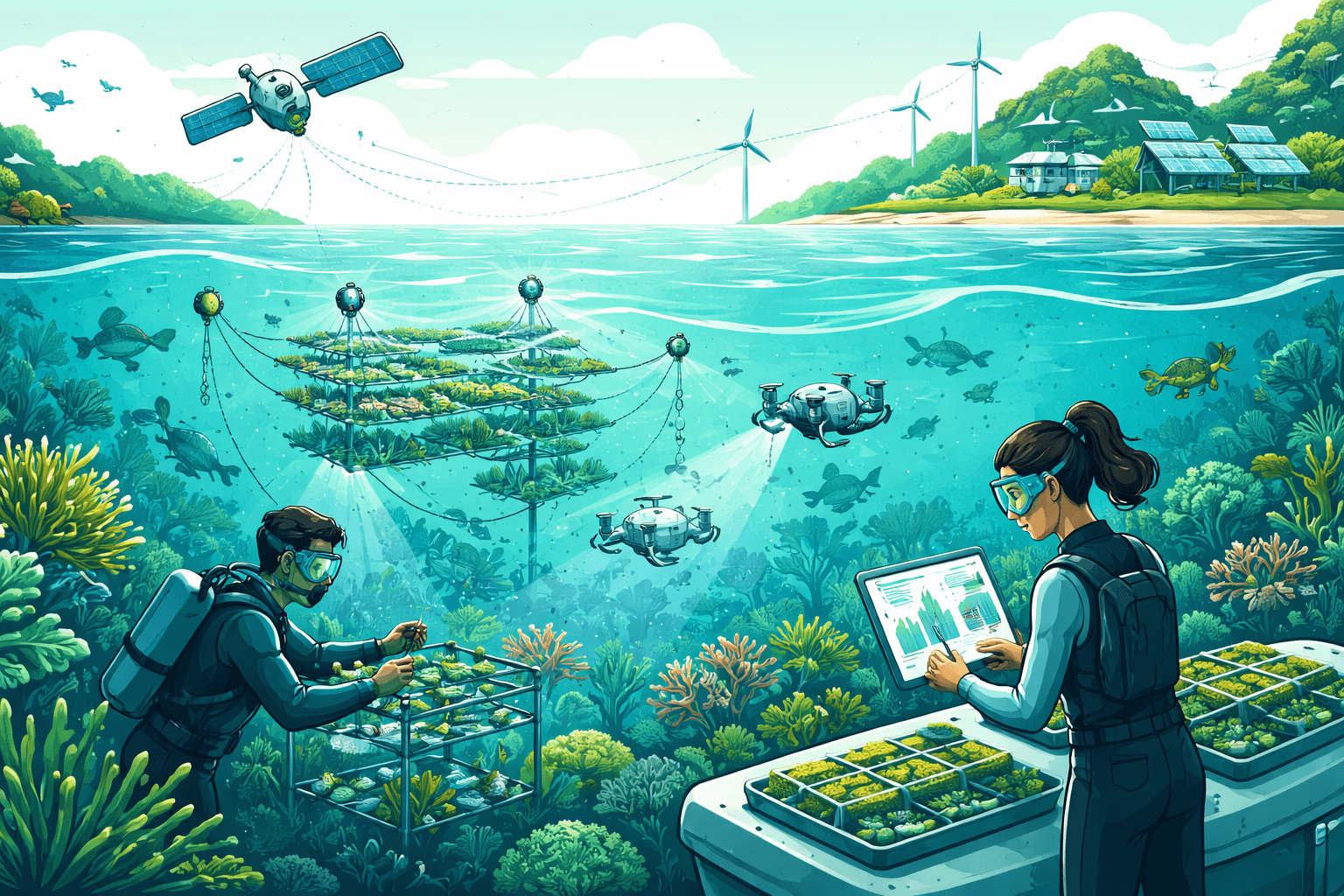
Coral reefs are experiencing record heat stress and disease, pushing practitioners to refine coral reef restoration methods that can help reefs recover function while broader threats are reduced. The Global Coral Reef Monitoring Network reported a 14% loss of live coral cover between 2009 and 2018, largely from mass bleaching events (GCRMN 2021). In April 2024, NOAA confirmed the fourth global bleaching event on record, with widespread heat stress across the Caribbean, Atlantic, Indian, and Pacific basins. Reefs support an estimated 25% of marine species, provide coastal protection by dissipating up to 97% of wave energy, and generate billions in tourism and fisheries revenue annually (Ferrario et al. 2014; UNEP/WWF; Spalding et al. 2017). Against this backdrop, restoration is no longer niche—it’s a triage tool to sustain biodiversity, livelihoods, and coastal resilience while emissions and local stressors are addressed.
This guide explains why restoration is needed now, compares the main techniques in use, and outlines how to choose sites, monitor results, and scale what works—all with a clear picture of costs and limitations.
Links to broader context and marine stewardship can be found in our Ocean Conservation guide: /conservation/ocean-conservation-protecting-marine-biodiversity
Why coral reef restoration is needed now
- Escalating heat stress: The IPCC projects that 70–90% of tropical coral reefs will decline severely at 1.5°C of warming, and more than 99% at 2°C (IPCC SR1.5, 2018; AR6, 2021–2022). Marine heatwaves are becoming more frequent and intense, pushing corals past thermal thresholds and triggering bleaching.
- Disease and outbreaks: The Caribbean has faced Stony Coral Tissue Loss Disease (SCTLD) since 2014, with mortalities exceeding 50–90% for some species at affected sites. Crown-of-thorns starfish outbreaks in the Indo-Pacific can remove most living coral from reefs if uncontrolled.
- Local stressors: Nutrient pollution, sedimentation, and destructive fishing reduce coral recruitment and resilience. Overfishing of herbivores allows macroalgae to dominate, suppressing coral recovery.
Coral Reef Restoration Handbook: Precht, William F.
Contributors from a variety of disciplines discuss engineering, geological, biological, and socioeconomic factors to create a text that is designed to guide scientists and resource managers in the dec
Check Price on AmazonRestoration goals should be explicit and measurable. Common objectives include:
- Biodiversity and genetic diversity: Rebuild populations of keystone and threatened coral species with multiple genotypes to preserve adaptive potential.
- Reef structure and function: Increase three-dimensional complexity and carbonate accretion that support fish habitat and coastal protection.
- Fisheries and livelihoods: Enhance nursery habitat for fish and invertebrates, support tourism, and create local restoration jobs.
- Climate resilience: Pilot heat-tolerant genotypes and facilitate assisted gene flow while keeping genetic risks in check.
Coral reef restoration methods: what practitioners use today
Most coral reef restoration methods fall into two categories: asexual propagation (cloning coral fragments) and sexual propagation (producing new genetic combinations via larvae). Many projects combine approaches, along with interventions that improve substrate stability and herbivory.
Coral gardening (nurseries and outplanting)
What it is: Asexual propagation of coral fragments in nurseries—either ocean-based (rope “trees,” tables, or racks) or land-based raceways—followed by outplanting to the reef using epoxies, cement, or ties.
Why it’s used: It’s comparatively cost-effective, scalable with trained community divers, and produces high numbers of fragments for fast-growing branching corals like Acropora.
Evidence: Reviews of hundreds of projects report short-term (6–24 month) survivorship often in the 60–80% range, though results vary widely by species, site conditions, and maintenance (Boström‑Einarsson et al. 2020; IUCN Best Practice Guidelines 2019). Genetic diversity matters: projects that mix 10–20+ genotypes per species better preserve adaptive capacity (NOAA/Florida Keys guidance).
Practical notes:
- Clean nurseries regularly to remove biofouling and predators (fireworms, snails).
- Outplant at densities and microhabitats that reduce sediment accumulation and predation.
- Pair with herbivore protection to suppress macroalgae.
Microfragmentation and fusion
What it is: Slow-growing massive corals (e.g., brain, boulder, star corals) are cut into ~1 cm² “microfragments,” which grow rapidly and fuse into larger colonies when placed close together.
Why it’s used: Speeds growth of massive corals by 10–40x under controlled conditions compared with natural growth, enabling practical restoration of species once thought too slow to help (developed by Mote Marine Laboratory and partners; Vaughan et al.).
Evidence: Laboratory and field trials show microfragments can fuse and reach sexually mature sizes faster than traditional fragments. Survival remains sensitive to heat stress and disease once outplanted; ongoing selection of resilient genotypes is key.
Practical notes:
- Labor- and equipment-intensive (diamond saws, husbandry). Scaling relies on standardized workflows and technician training.
- Combine with genetic screening for disease and heat tolerance where possible.
Larval propagation (assisted sexual reproduction)
What it is: Collect spawn during mass coral spawning events, fertilize and rear larvae ex situ or in situ, then seed competent larvae onto reefs or settle them on substrates for later outplanting. Variants include larval “slick” capture, in-water cones, and settlement on engineered tiles (e.g., SECORE).
Why it’s used: Generates new genetic diversity essential for long-term adaptation, and can, in principle, be scaled to millions of larvae per event.
Evidence: Field trials on the Great Barrier Reef and in the Philippines have achieved order-of-magnitude increases in settlement on treated plots versus controls, with some recruits surviving to multiple years (AIMS; Southern Cross University; SECORE). Early life stages are vulnerable; survival bottlenecks can reduce recruits to low densities without careful site selection, microhabitat provisioning, and grazer management.
Practical notes:
- Timing is critical—spawning windows may last hours.
- Conditioning substrates (biofilm, crustose coralline algae cues) improves settlement.
- Post-seeding protection from sediment and algal overgrowth is often decisive.
Substrate stabilization and artificial reef structures
What it is: Stabilizing loose rubble and adding structure using modules (reef balls, 3D-printed ceramics or concrete), limestone rock, or metal frames. The Mars “spider” frames and Reef Ball Foundation modules are widely used. Mineral accretion (“Biorock”) uses low-voltage current to precipitate calcium carbonate on metal frames.
Why it’s used: Many degraded reefs are reduced to shifting rubble where coral larvae cannot settle and outplants cannot attach. Stabilization restores a foundation for natural recruitment and outplant survival.
Evidence: Where water quality and herbivory are adequate, modules combined with coral outplanting have increased coral cover from <10% to >40–60% within 3–5 years at some Indonesian and Caribbean sites (peer‑reviewed case studies; project reports). Artificial structures alone often attract fish without rebuilding coral communities. Independent assessments of mineral accretion show mixed, site‑specific results; benefits beyond solid substrate provision remain debated.
Practical notes:
- Match materials to local ecology (pH-neutral, roughness for settlement) and hydrodynamics.
- Avoid smothering living reef or sensitive habitats during installation.
- Plan for cyclone/ hurricane loads and corrosion.
Herbivore restoration and predator control
What it is: Rebuilding populations of key herbivores (e.g., Diadema urchins in the Caribbean) through hatchery rearing and outplanting; protecting parrotfish through fisheries rules; targeted removal of coral predators like crown-of-thorns starfish (COTS) and Drupella snails.
Why it’s used: Herbivory suppresses macroalgae, increasing coral settlement and growth; predator control protects vulnerable outplants and recruits.
Evidence: After the 1980s Diadema die-off, reefs with recovering urchins showed higher coral recruitment and lower algal cover. Large-scale COTS control programs on the Great Barrier Reef have reduced local coral loss rates where implemented (AIMS, GBRMPA).
Assisted evolution, symbionts, and probiotics (early-stage)
What it is: Selecting or breeding heat‑tolerant coral genotypes; manipulating algal symbionts (Symbiodiniaceae) toward more heat‑tolerant strains; exposing corals to sublethal heat (“hardening”); deploying beneficial microbial consortia (probiotics).
Why it’s used: To enhance tolerance to forecast heat stress while maintaining genetic diversity.
Evidence: Laboratory and mesocosm studies by AIMS, NOAA, and universities show improved bleaching tolerance in some genotypes and symbiont pairings. Field deployment is cautious and tightly regulated; long-term fitness trade‑offs are under evaluation.
Enabling tools
- Cryopreservation of gametes and symbionts (Smithsonian Coral Biobank) to safeguard genetic resources.
- 3D‑printed substrates with microtopography that cues settlement.
- AI-assisted monitoring and photogrammetry to reduce survey costs. See our overview on how technology is reshaping conservation: /sustainability-policy/role-of-technology-in-conservation
Choosing, monitoring, and maintaining restoration sites
Restoration success is determined as much by site conditions and maintenance as by the method chosen.
Site selection
Key factors and decision tools:
- Heat stress history and outlook: Use NOAA Coral Reef Watch metrics such as Degree Heating Weeks (DHW) to identify refugia and avoid peak heat windows.
- Water quality: Aim for low turbidity and nutrient loads; chronic eutrophication suppresses coral recruitment and favors macroalgae.
- Hydrodynamics and depth: Moderate flow reduces sedimentation and enhances food delivery; depth buffers heat extremes but limits light.
- Herbivory and fish biomass: High herbivore presence correlates with better post‑outplant outcomes.
- Disease and predator pressure: Avoid active SCTLD fronts; plan predator control where needed.
- Governance and access: Favor sites within effective management (e.g., no‑take zones, enforced MPAs) and with community buy‑in.
Triage frameworks from IUCN and The Nature Conservancy recommend prioritizing sites where chronic stressors are mitigated and restoration can reinforce natural recovery processes.
Species and genotype choice
- Ecological roles: Mix fast-growing branching corals (structural complexity, fish habitat) with massive/encrusting species (longer-term reef building and storm resistance).
- Genetic diversity: Outplant 10–20+ genotypes per species when possible to reduce inbreeding and spread risk (NOAA/Florida guidance). Track genotypes to evaluate performance under heat and disease.
- Local adaptation: Favor locally sourced stock unless assisted gene flow is a defined objective with risk assessment and permits.
Installation and maintenance
- Attachment: Use marine epoxy, cement, nails, or cable ties matched to substrate and energy regime. Microhabitat placement (on stable, upward-facing surfaces) reduces sediment burial.
- Maintenance: Schedule monthly–quarterly visits for the first year to clean fouling, re-secure loose colonies, and remove corallivores. Expect increased effort after storms and bleaching.
- Integrated management: Coordinate with fisheries and land-use managers to reduce local stressors during and after restoration.
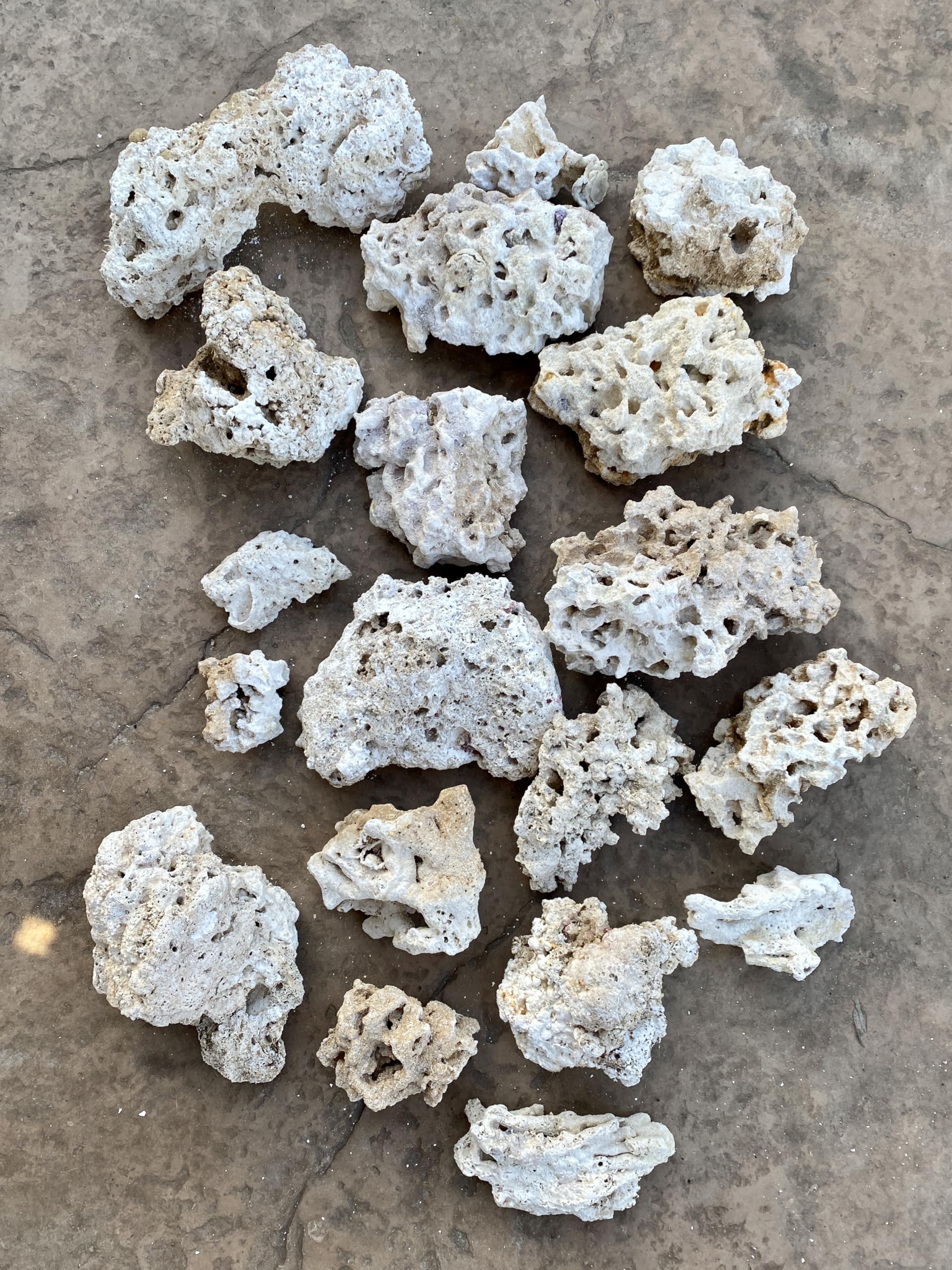
Marco Rocks Reef Saver - 40 lbs : Pet Supplies
View on AmazonMonitoring and measuring success
Define success beyond “coral survival.” Build monitoring plans with Before–After–Control–Impact (BACI) designs, adequate replication, and multi-year horizons.

HOBO by Onset MX1101 - Temperature/Relative Humidity Data Logger : Industrial & Scientific
View on AmazonCore indicators:
- Outplant/recruit survival at 6, 12, 24, and 36+ months; partial mortality.
- Growth rates (cm/year), tissue condition, and bleaching/disease incidence.
- Coral cover by species/functional groups; size-frequency distributions.
- Structural complexity (rugosity), carbonate accretion/erosion balance.
- Fish and urchin biomass; macroalgal cover.
- Coastal protection proxies (e.g., crest elevation change) where relevant.
Methods:
- Standardized protocols (AGRRA, Reef Check) and photo/video quadrats.
- Structure‑from‑motion photogrammetry for 3D models of growth and complexity.
- AI annotation platforms (e.g., CoralNet) to cut analysis time.
- eDNA and settlement tiles to track early recruitment pulses.
For a deeper look at rigorous evaluation frameworks, see our data‑driven analysis of conservation impact: /conservation/beyond-intentions-impact-of-conservation-efforts
By the numbers
- 14%: Global loss of live coral cover from 2009–2018 (GCRMN 2021).
- 70–90%: Share of tropical reefs projected to decline severely at 1.5°C warming; >99% at 2°C (IPCC SR1.5).
- Up to 97%: Wave energy reduced by healthy reef crests (Ferrario et al. 2014).
- 60–80%: Typical short-term survivorship reported for nursery-grown outplants at 6–24 months, varying by site and species (IUCN; Boström‑Einarsson et al. 2020).
- Scale: Many documented projects to date are small (<1 ha), though emerging larval seeding and community programs are expanding footprints (Boström‑Einarsson et al. 2020; TNC).
- Costs: Reported costs vary by method and context from tens to hundreds of thousands of USD per hectare, with per-coral costs spanning roughly USD $10–$50 for nursery-grown outplants in some programs (IUCN 2019; Bayraktarov et al. 2016; practitioner reports).
Science, communities, and policy: scaling what works
Science and technology
- Forecasting and planning: Seasonal heat outlooks and near‑real‑time DHW help time fieldwork to cooler periods, reducing early mortality.
- Scaling sexual reproduction: Institutions like AIMS and Southern Cross University are scaling larval collection and in‑water seeding to millions of larvae per event, exploring automated dispersal.
- Genomics and selective breeding: Genotyping identifies resilient lineages; assisted gene flow is being trialed under strict protocols.
- Monitoring at scale: Satellites (e.g., Allen Coral Atlas), drones, and AI reduce survey costs and standardize data.
Local communities and co-management
- Stewardship boosts survival: Community-led cleaning, predator removal, and compliance with fishing rules are correlated with better outcomes and lower costs.
- Skills and jobs: Training local divers and technicians creates restoration brigades and tourism-linked employment.
- Cultural values: Restoration can align with customary management, enhancing legitimacy and long-term care.
Policy and finance
- Tackle root causes: Effective sewage and watershed management, herbivore protection, and coastal development controls are prerequisites for success.
- Protected areas with enforcement: No‑take zones and well‑managed MPAs increase herbivory and recruitment, making restoration pay off.
- Rapid-response and insurance: Parametric reef insurance and post‑storm repair brigades (e.g., in Quintana Roo, Mexico) fund immediate stabilization, reducing long-term damage.
- Climate policy: Deep emissions cuts remain the single most important “restoration” action for reefs globally; field interventions cannot offset unmitigated warming.
For broader marine stewardship context, see Why Marine Biodiversity Matters: /sustainability-policy/importance-of-marine-biodiversity
Limits, costs, and ecological risks
What restoration can and cannot do
- Restoration buys time and protects priority assets (biodiversity hotspots, tourism sites, coastal defenses). It cannot replace the need to cut greenhouse gas emissions or to stop local pollution and overfishing.
- Heatwaves can erase years of work. The 2023–2024 marine heat stress in Florida and the Caribbean led to mass bleaching and mortality in wild and restored corals, prompting emergency moves of broodstock to cooler facilities (NOAA, state agencies).
Costs and scale
- Budget for years, not months: Ongoing maintenance and monitoring are critical and can equal or exceed initial outplanting costs over 3–5 years.
- Heterogeneous costs: Systematic reviews report wide ranges due to labor, logistics, and method. Planning should include sensitivity analyses for fuel costs, vessel time, permitting, and contingency for storms/disease (IUCN; Bayraktarov et al.).
Ecological and genetic risks
- Genetic homogenization: Overusing a few fast‑growing genotypes risks reducing adaptive potential; target diverse, tracked genotypes.
- Disease and biosecurity: Moving stock between sites can spread pathogens; quarantine and health screening are essential.
- Materials and placement: Poorly sited artificial structures can damage natural habitat or become debris during storms. Avoid toxic materials; design for storm loads.
- Ecological traps: Structures may aggregate fish without improving production if underlying habitat quality is not restored.
When to restore—and when not to
- Do restore when chronic stressors are demonstrably reduced, governance is strong, and goals are clear, measurable, and socially supported.
- Don’t restore in sites with ongoing, unmitigated threats (e.g., persistent sewage discharges, chronic sediment plumes, active disease fronts). Invest first in threat abatement, protection, and community engagement.
Practical implications
For practitioners
- Match method to context: Use coral gardening for fast-growing species; microfragmentation for massive corals; larval propagation to build diversity; stabilization where rubble dominates.
- Plan for maintenance: Budget and schedule cleaning, predator control, and reattachment for 24–36 months.
- Diversify: Mix species and 10–20+ genotypes per species; spread risk across microhabitats and depths.
- Measure outcomes: Use BACI designs, 3D photogrammetry, and standardized protocols to track survival, growth, and function.
For policymakers and funders
- Make restoration conditional on water quality, herbivore protection, and enforcement.
- Fund long-term O&M and monitoring, not just installation.
- Support regional broodstock/genotyping hubs, disease response labs, and community training.
- Align with climate policy: Every 0.1°C of avoided warming increases the odds that restored reefs persist.
For communities and businesses
- Participate in stewardship: Citizen science and local brigades lower costs and raise survival.
- Integrate with ecotourism: Visitor fees can fund maintenance; trained guides can help monitor sites.
Where coral reef restoration is heading
The field is moving from pilot projects to programmatic restoration that integrates threat reduction, genetic diversity, and function-focused targets like coastal protection. Expect:
- Larger-scale larval seeding synchronized with heat forecasts.
- More attention to carbonate budgets and reef crest elevation as success metrics.
- Industrialized coral aquaculture hubs supplying diverse, traceable genotypes.
- Smarter siting using AI, satellites, and ocean forecasts.
- Tighter coupling of restoration with watershed management and climate mitigation.
Restoration will not save all reefs under unchecked warming, but it can safeguard biodiversity, buy time for adaptation, and protect shorelines and livelihoods where local conditions support recovery. Used strategically with science-based methods and strong community and policy support, it’s a powerful tool in the broader effort to keep reefs—and the people who depend on them—thriving.
Recommended Products
Coral Reef Restoration Handbook: Precht, William F.
Contributors from a variety of disciplines discuss engineering, geological, biological, and socioeconomic factors to create a text that is designed to guide scientists and resource managers in the dec
Marco Rocks Reef Saver - 40 lbs : Pet Supplies
Natural top and a smooth cut bottom making it the perfect choice for smart aquascaping.
HOBO by Onset MX1101 - Temperature/Relative Humidity Data Logger : Industrial & Scientific
Full content visible, double tap to read brief content. ... Onset’s HOBO MX1101 data logger <strong>measures and transmits temperature and relative humidity data wirelessly to mobile devices via Bluet
More in Conservation
- Wildlife Habitat Restoration Projects: Goals, Techniques, and Measuring Long-Term Success
- Endangered Species Recovery Programs: How Conservation Brings Species Back
- Wildlife Conservation Methods: Practical Approaches, Tech Tools, and How to Measure Success
- How Climate Change Is Reshaping the Oceans: Impacts, Evidence, and Responses