
Wildlife Habitat Restoration Projects: Goals, Techniques, and Measuring Long-Term Success
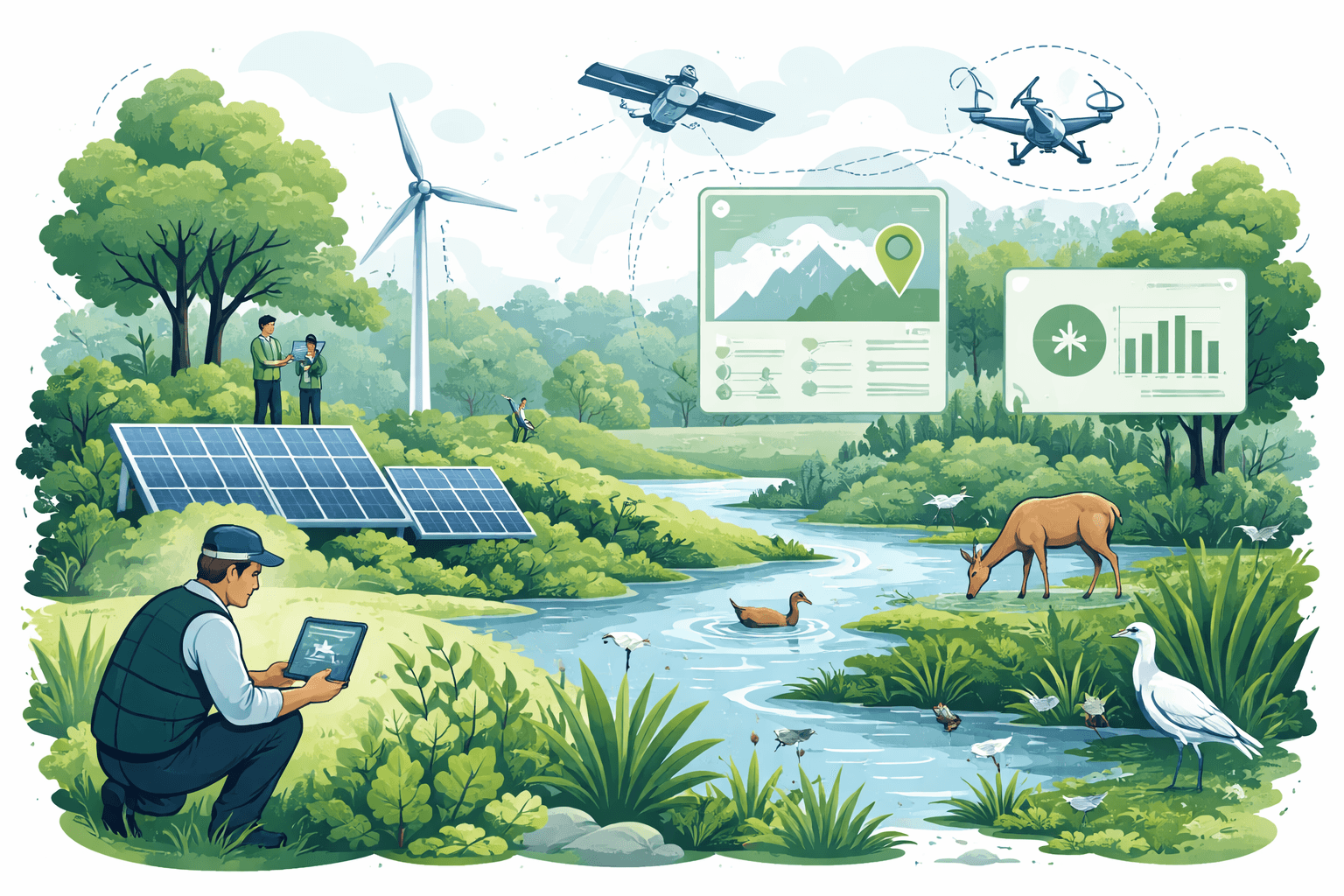
Wildlife habitat restoration projects are moving from “nice to have” to essential climate and biodiversity infrastructure. The WWF’s Living Planet Report estimates average global vertebrate population declines of 69% since 1970, and IPBES finds that up to one million species face extinction, many within decades, largely due to habitat loss and degradation. The UN Decade on Ecosystem Restoration (2021–2030) calls for restoring 1 billion hectares worldwide—an effort that evidence suggests can deliver large returns: IPBES and UNEP report that every dollar invested in restoration can yield $7–30 in benefits from flood protection, carbon storage, improved water quality, and livelihoods.
This guide distills what it takes to design, fund, and run effective wildlife habitat restoration projects—from setting measurable goals to applying proven techniques and tracking long-term ecological outcomes.
By the numbers: why restoration now
- 69%: Average decline in monitored vertebrate populations since 1970 (WWF, 2022)
- 1 million: Species at risk of extinction without transformative action (IPBES, 2019)
- 7–30x: Typical benefit–cost ratios reported for ecosystem restoration (IPBES/UNEP)
- $65 billion/year: Flood damages averted by mangroves globally, protecting 15 million people (Beck et al., 2018)
- 60%: Potential reduction in expected species extinctions by restoring the right 15% of converted lands (Strassburg et al., Nature, 2020)
- 3–4x: Faster carbon burial rates in coastal wetlands (mangroves, marshes, seagrasses) versus many terrestrial forests (UNEP, IOC-UNESCO blue carbon syntheses)

Foundations of Restoration Ecology (The Science and Practice of Ecological Restoration Series)
Amazon.com: Foundations of Restoration Ecology (The Science and Practice of Ecological Restoration Series): 9781610916974: Palmer, Margaret A., Zedler, Joy B., Falk, Donald A., Holl PhD, Dr. Karen: Bo
Check Price on Amazon1) Clarify project goals and expected ecological outcomes
Strong wildlife habitat restoration projects start with precise, testable goals that state what will be restored, for whom (target species or communities), and how success will be measured.
Define focal biodiversity targets
- Species: Identify focal or umbrella species (those whose needs overlap with many others). Use conservation status (IUCN Red List), population trends, ecological role (e.g., keystone species), and feasibility. Example: “Increase breeding productivity of a grassland-nesting bird by 20% within five years.”
- Communities/habitats: Prairie–savanna mosaics, riparian corridors, mangrove fringes, or oyster reefs. Tie habitat type to explicit ecosystem functions (e.g., nursery habitat, pollination support, thermal refugia).
State the ecosystem services to restore
- Flood mitigation: Quantify as acre-feet of storage or peak-flow reductions for 10- or 25-year storms.
- Water quality: Target reductions in nutrient loads (e.g., mg/L nitrate) or sediment (tons/year).
- Carbon storage: Estimate tons CO2e sequestered via peer-reviewed coefficients for the habitat type (e.g., blue carbon for marsh/mangrove; soil organic carbon for grasslands). Clearly define permanence and monitoring methods.
Set measurable success indicators (SMART)
- Biodiversity: Occupancy rates, population size or trend (lambda), reproductive success (fledglings/nest), species richness and evenness indices, and functional diversity metrics.
- Habitat condition: Native plant cover (%), structural complexity (e.g., canopy layers, coarse woody debris volume), hydrologic metrics (water table depth, baseflow persistence), and invasive species cover (%).
- Connectivity: Modeled resistance to movement, least-cost path or circuit-theory current density between core habitats; verified with detections (camera traps, telemetry, eDNA).
Use a theory of change and a monitoring plan from day one
- Map each action (e.g., re-wetting a drained wetland) to intermediate outcomes (water table recovery, native sedge recruitment) and ultimate outcomes (waterfowl nesting, nutrient retention). Select indicators and sampling designs up front.
- Follow standards such as the Society for Ecological Restoration (SER) International Principles and Standards and the IUCN Global Standard for Nature-based Solutions to ensure clarity, transparency, and accountability.
2) Conduct site and landscape assessment to prioritize actions
Restoration outcomes depend on matching interventions to on-the-ground constraints and opportunities.

RECONYX HyperFire 2 Covert IR Camera (OD Green)
View on AmazonBaseline biodiversity and habitat surveys
- Flora: Stratified vegetation plots to capture heterogeneity; seedbank assays if soil legacy effects are suspected.
- Fauna: Camera traps, point counts, acoustic recorders (for bats, birds), pitfall traps (herps, invertebrates), and environmental DNA (eDNA) to detect elusive species.
- Soil and water: Texture, compaction, pH, salinity, nutrient status, contaminants; surface/groundwater dynamics and hydroperiod (seasonal inundation timing and duration).
Threat and pressure analysis
- Invasive species: Map current extent, vectors, and re-invasion risk; assess propagule pressure from adjacent lands.
- Hydrology: Identify ditching, tile drains, levees, culverts, or hardened shorelines altering natural regimes.
- Fragmentation: Quantify edge-to-core ratios; identify barriers (roads, fences, canals) and mortality hotspots.
- Climate risks: Heat, drought, wildfire, sea-level rise, saltwater intrusion; consider mid-century climate projections for stress testing designs.
Connectivity and landscape context
- Model habitat suitability for focal species using GIS layers (land cover, slope, NDVI, water proximity) and empirical records.
- Incorporate movement ecology: least-cost paths and circuit theory to pinpoint where small restorations unlock outsized connectivity benefits. See our explainer on corridor design and function in Understanding Wildlife Corridors: Why Connectivity Matters and How It Works.
Prioritize with transparent criteria
- Feasibility: Land control, permitting likelihood, partner capacity.
- Impact: Biodiversity uplift potential, ecosystem service gains, benefits to vulnerable communities.
- Additionality and durability: Would benefits occur without the project? Can they persist 20–50 years with reasonable maintenance?
3) Proven restoration techniques and design considerations
The best designs emphasize native diversity, structural complexity, and natural processes. Techniques should be tailored to site conditions and focal species.
Native planting and seed mixes
- Use local or climate-resilient provenance
- Source seeds/cuttings from within the ecoregion to maintain local adaptations, or blend sources along climate gradients (“assisted gene flow”) to hedge against future conditions—following regional guidelines.
- Design multi-strata plantings
- Combine canopy, midstory, shrub, and ground layers to create thermal refuges and microhabitats. In grasslands, diversify functional groups (C3/C4 grasses, forbs, nitrogen-fixers) and phenology to ensure nectar/pollen availability across seasons.
- Right plant, right place
- Match hydric/mesic/xeric tolerances, light requirements, and salinity thresholds to microtopography and soils.
- Establishment practices
- Prepare seedbeds (scalping, light till, solarization) to reduce weed competition; calibrate seed drills for fluffy seeds; mulch judiciously; time plantings to moisture windows.
Hydrological and soil interventions
- Re-wet drained wetlands: Break tile drains, plug ditches, notch levees, and install adjustable weirs to re-establish target hydroperiods.
- Remove or right-size barriers: Replace perched culverts with open-bottom crossings; restore floodplain connectivity by setting back levees.
- Regrade microtopography: Create hummock–hollow patterning to boost plant diversity and amphibian habitat.
- Rebuild soils: Amend with clean compost or biochar to jumpstart nutrient cycling; inoculate with mycorrhizae or native microbial communities where degradation is severe.
Structural habitat features
- Coarse woody debris and snags: Retain or add logs and standing dead trees for cavity nesters, invertebrates, and fungi.
- Brush piles, rock piles, and basking sites: Support small mammals, reptiles, and amphibians.
- Nest boxes, bat houses, and raptor perches: Bridge short-term cavity deficits; size and orientation must match target species.
- Aquatic structure: Install engineered log jams to restore channel complexity; build living shorelines and oyster reefs for wave attenuation and nursery habitat.
Invasive species control (integrated and sustained)
- Prevention first: Clean–drain–dry protocols, boot and gear hygiene, weed-free mulch and fill.
- Early detection, rapid response: Regular sweeps during establishment years, aided by drones or high-resolution imagery for spotting outbreaks.
- Integrated control: Combine mechanical (cutting, girdling, hand-pulling), cultural (shading, competitive plantings), biological (approved biocontrol agents), and chemical methods with precise timing to avoid non-target impacts.
- Follow-up is non-negotiable: Re-treat hotspots and backfill with natives to occupy niches and prevent rebound.
Principles for complexity and resilience
- Heterogeneity: Vary patch sizes, edges, and microhabitats to support more species and buffer climate extremes.
- Redundancy: Provide multiple resource types (nest sites, foraging substrates) to reduce single-point failures.
- Process over pattern: Where possible, restore the processes (fire regimes, hydrology, grazing) that maintain habitat, rather than only the structure.
- Climate readiness: Include drought- and heat-tolerant natives, account for future salinity lines or flood profiles, and protect upslope or inland migration corridors.
For practical tools spanning planning through measurement, see Wildlife Conservation Methods: Practical Approaches, Tech Tools, and How to Measure Success.
4) Regulatory, funding, and partnership needs
Even the best technical plan will stall without the right approvals, financing, and relationships.
Regulatory considerations
- Environmental impact assessment: Many jurisdictions require EIAs or project screening for protected species and habitats.
- Water and wetlands: In the U.S., Section 404 (Clean Water Act) and state equivalents govern discharge/fill; in the EU, Water Framework and Habitats Directives apply; Ramsar sites require special care.
- Species protections: Permits for handling, relocation, or work near nests/rookeries (e.g., U.S. ESA, MBTA; EU Birds and Habitats Directives). Seasonal work windows can reduce take risk.
- Fire and air: Prescribed burns require burn plans, smoke management, and trained crews.
- Cultural resources and FPIC: Survey for archaeological sites; obtain Free, Prior, and Informed Consent (FPIC) when working with Indigenous communities and on customary lands.
Funding models and sources
- Public grants: Environment and natural resources agencies, watershed authorities, climate resilience funds, disaster risk reduction programs.
- Philanthropy and impact funds: Foundations focused on biodiversity, climate, and community benefits; blended finance to de-risk early stages.
- Mitigation and offsets: Regulatory mitigation, biodiversity offsetting, and habitat banks—only when robust additionality, equivalence, and long-term stewardship are assured.
- Carbon and blue carbon credits: Where scientifically defensible and compliant with high-integrity standards (e.g., additionality, permanence, leakage safeguards), carbon finance can co-fund restoration.
- Corporate partnerships: Supply-chain resilience (e.g., pollinator habitat), insurance-linked nature-based solutions for risk reduction.
For a deeper look at where to find support and how to compete successfully, explore Conservation Funding Opportunities: Where to Find Support and How to Win It.
Partnerships and governance
- Landowners and producers: Conservation easements, management agreements, and incentive programs align long-term stewardship with private land objectives. See best practices in Land Conservation Best Practices: Planning, Protection, Stewardship, and Long-Term Management.
- Indigenous knowledge holders: Co-design projects to integrate cultural fire, seasonal calendars, traditional harvesting practices, and biocultural objectives; ensure equitable benefit-sharing.
- Local communities: Employment, training, and co-management boost legitimacy and maintenance capacity. Citizen science can extend monitoring reach.
- Academic and NGO partners: Provide technical expertise, lab capacity (eDNA, soils), and long-term datasets.
5) Monitoring, adaptive management, and long-term maintenance
Monitoring is not a postscript—it is a core project activity that turns restoration into a cumulative learning process.
Monitoring design
- Compare against references and controls
- Use Before–After–Control–Impact (BACI) designs where feasible. Pair restored sites with intact reference sites and unrestored controls to detect effect sizes amid natural variability.
- Power analysis and sampling effort
- Estimate the number of plots, points, or camera-nights needed to detect target changes (e.g., +15% native cover, +0.2 occupancy probability) with ≥80% statistical power.
- Indicators and methods
- Vegetation: Percent cover, species composition, structural indices; permanent plots for trend detection.
- Wildlife: Occupancy models from camera trap or acoustic detections; mark–recapture for population estimates; nest monitoring for productivity.
- Water and soils: Continuous loggers for water level/temperature; grab samples for nutrients; soil cores for organic carbon.
- Remote sensing: Drones and satellites (NDVI, EVI, LiDAR) to track canopy recovery, wetness, and geomorphic change.
- eDNA and metabarcoding: Rapid biodiversity screening, especially for aquatic systems and elusive species.
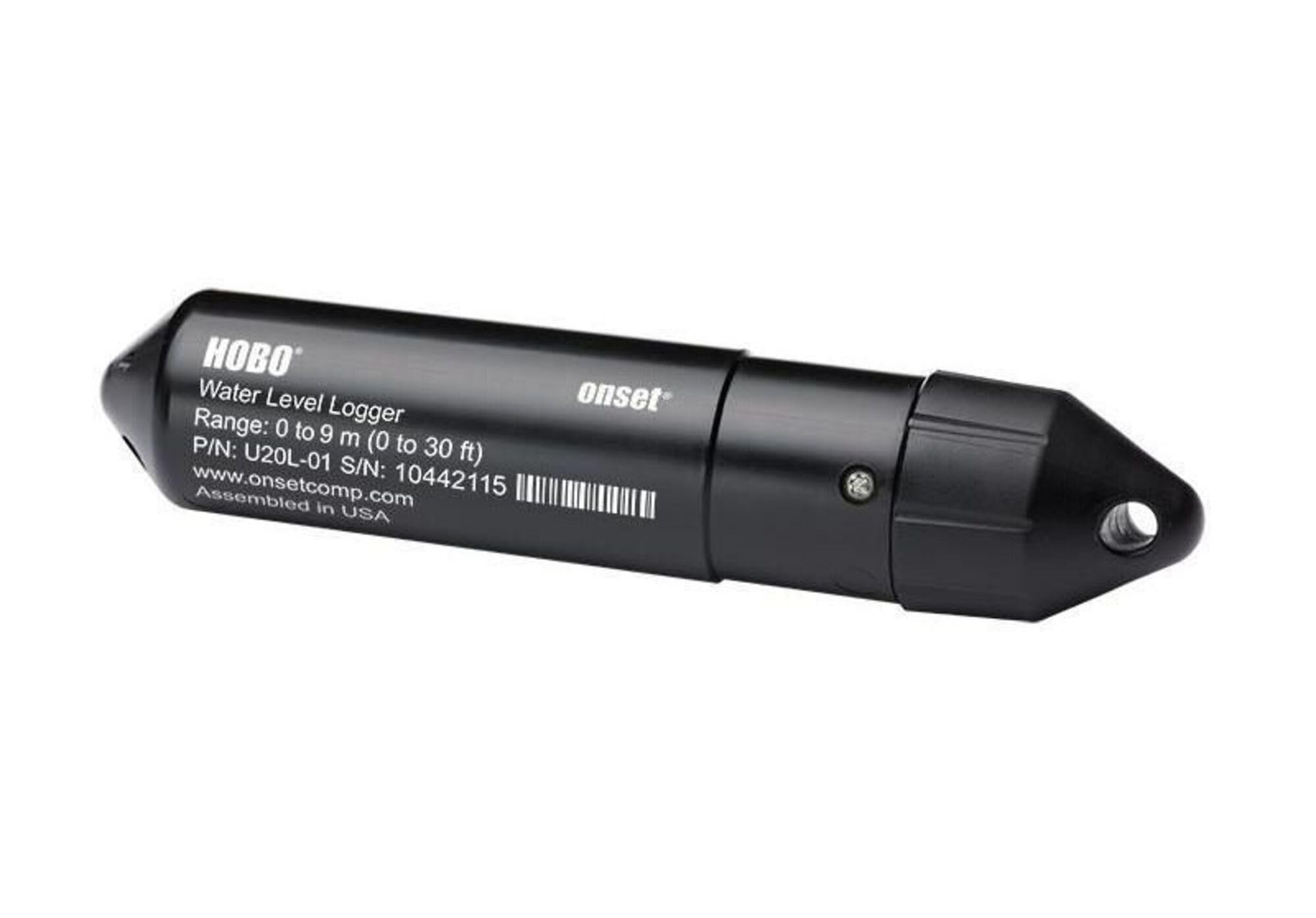
Onset U20L-01, HOBO Water Level Logger (30 ft): Amazon.com: Industrial & Scientific
View on AmazonAdvanced monitoring tools, including AI-assisted image and sound recognition, can cut costs and increase data quality. See AI for Wildlife Monitoring: Technologies, Data Needs, and Practical Conservation Applications.
Data management and reporting
- Follow FAIR principles (Findable, Accessible, Interoperable, Reusable). Use standardized schemas (e.g., Darwin Core for biodiversity records), version-controlled repositories, and clear metadata.
- Dashboards and feedback loops: Summarize progress for partners and funders; define thresholds that trigger management actions (e.g., invasive cover >10% in Year 2 prompts re-treatment; post-planting survival <70% triggers supplemental seeding).
- Independent review: Periodic third-party audits or academic partnerships enhance credibility.
Adaptive management
- Treat restoration as a sequence of experiments. Document hypotheses, interventions, and outcomes; adjust seeding rates, hydrology, or burn intervals based on data.
- Prepare for climate variability: Drought-year playbooks (e.g., temporary irrigation or shading), flood-resilient plant palettes, and refugia mapping.
Long-term stewardship
- Budget for maintenance: Invasive control, fence repair, signage, trail management, prescribed fire, grazing rotations, or water-control structure upkeep.
- Secure durability: Conservation easements, stewardship endowments, or dedicated O&M lines in public budgets; community-led governance strengthens continuity.
- Risk management: Plan for fire, storms, pests, and vandalism; insure critical infrastructure; diversify funding sources.
Practical planning checklist
- Define measurable biodiversity and ecosystem service targets with timelines.
- Map baseline conditions, pressures, and connectivity; identify climate risks.
- Select site-appropriate techniques to restore processes, structure, and diversity.
- Align permits early; co-design with landowners, communities, and Indigenous partners.
- Build a diversified funding stack with clear additionality and long-term O&M.
- Implement robust monitoring (BACI where possible) with pre-defined triggers for adaptive actions.
- Share data and lessons learned to improve future restorations across the landscape.
Where wildlife habitat restoration projects are heading
Three forces are accelerating restoration:
- Better spatial planning: High-resolution satellite data, open biodiversity layers, and connectivity models help target the “right 15%” of lands and waters for outsized gains, echoing findings in Nature that strategic restoration can cut expected extinctions by ~60%.
- Cheaper, smarter monitoring: eDNA, low-cost sensors, and AI are reducing the cost per datapoint and enabling near-real-time management.
- Climate-aligned finance: Risk reduction, carbon markets, and public resilience funding are increasingly recognizing nature as infrastructure—backed by IPBES and UNEP analyses showing restoration’s strong returns.
Done well, wildlife habitat restoration projects deliver compounding benefits: species recovery, resilient communities, and climate mitigation. The technical steps are clear, but durable success depends on governance, funding, and a commitment to long-term care. As thousands of projects scale under the UN Decade on Ecosystem Restoration, the projects that plan meticulously, measure honestly, and adapt quickly will define what success looks like for biodiversity and people alike.
Recommended Products
Foundations of Restoration Ecology (The Science and Practice of Ecological Restoration Series)
Amazon.com: Foundations of Restoration Ecology (The Science and Practice of Ecological Restoration Series): 9781610916974: Palmer, Margaret A., Zedler, Joy B., Falk, Donald A., Holl PhD, Dr. Karen: Bo
RECONYX HyperFire 2 Covert IR Camera (OD Green)
Buy RECONYX HyperFire 2 Covert IR Camera (OD Green): Game & Trail Cameras - Amazon.com ✓ FREE DELIVERY possible on eligible purchases
Onset U20L-01, HOBO Water Level Logger (30 ft): Amazon.com: Industrial & Scientific
Onset U20L-01 HOBO Water Level Data Logger, 30 ft.
More in Sustainability Policy
- Wildlife Conservation Methods: Practical Approaches, Tech Tools, and How to Measure Success
- Effective Wildlife Conservation Practices: Practical Strategies, Monitoring, and Community-Led Solutions
- Wildlife Conservation: Key Strategies, Threats, and How You Can Help
- Protecting Wildlife Habitats: A Practical Guide to Conservation, Technology, and Action