
How Technology Is Transforming Conservation: Tools, Impacts, and Responsible Deployment
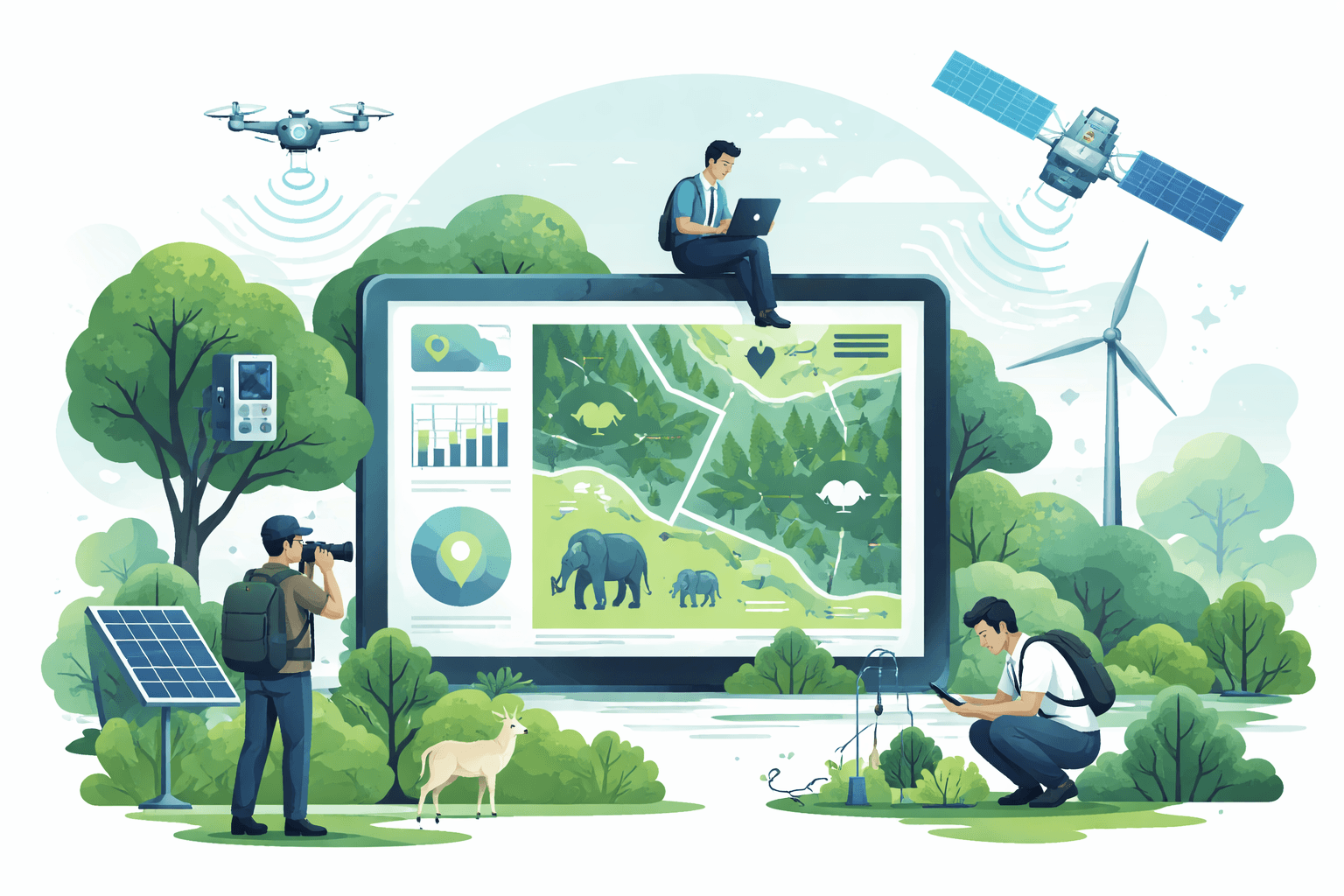
Conservation is racing against the clock: The Intergovernmental Science-Policy Platform on Biodiversity and Ecosystem Services (IPBES) estimates up to 1 million species are threatened with extinction, with habitat loss, overexploitation, and climate change as dominant drivers. Against this backdrop, the role of technology in conservation has shifted from pilot projects to core practice. Satellites, drones, eDNA sampling, IoT sensors, AI, and even blockchain now underpin day-to-day decisions by protected area managers, communities, and policymakers. The key question is not whether to use technology, but how to deploy it responsibly and at scale—backed by evidence of real-world impact.
The role of technology in conservation: tools and what they enable
Emerging and maturing technologies map habitats, monitor wildlife, deter illegal activity, and guide restoration. Here’s how each major tool works in practice and where it fits.

Remote Sensing for Ecology and Conservation: A Handbook of Techniques (Techniques in Ecology & Conservation): Horning, Ned, Robinson, Julie A., Sterling, Eleanor J., Turner, Woody, Spector, Sacha
This book <strong>describes the ways that remotely sensed data from research on biodiversity and its conservation can be captured and used, especially for evaluating human impacts on ecological system
Check Price on AmazonSatellite and remote sensing
- What it is: Earth observation from optical satellites (e.g., Landsat at 30 m, Sentinel-2 at 10 m), radar (Sentinel-1, all-weather), and commercial constellations (3–5 m, sub-meter). Cloud computing (e.g., Google Earth Engine) enables large-scale analysis.
- Use-cases:
- Habitat mapping and change detection: Annual deforestation and degradation tracking (e.g., Brazil’s INPE PRODES/DETER). WRI’s Global Forest Watch serves near-real-time loss alerts derived from Landsat.
- Restoration planning: Mapping soil moisture, vegetation indices (NDVI/EVI), and mangrove extent to target sites for reforestation and blue carbon.
- Fire and drought risk: Thermal bands and radar support early warning and post-fire severity mapping.
- Why it matters: Peer-reviewed evaluations indicate Brazil’s command-and-control policies, enabled by satellite monitoring, contributed to a 70–80% decline in Amazon deforestation from 2004 to 2012 (INPE; Assunção et al., PNAS 2015), illustrating how remote sensing can unlock effective enforcement when coupled with policy.
Drones (UAVs)
- What it is: Uncrewed aircraft ranging from multi-rotor platforms for site mapping (2–5 cm ground sampling distance) to fixed-wings for extended patrols. Payloads include RGB, thermal, and multispectral sensors.
- Use-cases:
- Wildlife surveys: Counting nesting seabirds or seals with thermal/RGB imagery, reducing disturbance versus on-foot counts.
- Anti-poaching support: Night patrols with thermal cameras to locate incursions while improving ranger safety.
- Restoration: High-resolution site assessments and, in some contexts, precision seeding; drones accelerate baseline mapping and post-planting survival checks.
- Why it matters: For small to medium areas, drones can cut mapping costs and time by an order of magnitude versus crewed aircraft and manual transects, while providing repeatable, auditable imagery. Their main limits are battery life, weather, and regulatory airspace constraints.
Camera traps and bioacoustics
- What it is: Motion-triggered cameras and autonomous recorders that capture images, video, and soundscapes; increasingly paired with on-device or cloud AI.
- Use-cases:
- Occupancy and abundance: Camera-trap data feed statistical models to estimate species presence and trends with far lower field effort than visual line transects.
- Threat detection: Acoustic models flag chainsaws or gunshots in near real time; marine hydrophones detect whale calls and vessel noise to inform dynamic ship slowdowns.
- Why it matters: Platforms like Wildlife Insights report AI pipelines that cut image labeling time from months to hours by auto-identifying species from millions of photos. Acoustic systems extend detection into dense forests or dark hours where cameras or human patrols struggle.

RECONYX HyperFire 2 Covert IR Camera (OD Green)
View on AmazonEnvironmental DNA (eDNA)
- What it is: Traces of DNA shed by organisms into water, soil, or air; captured with filters and identified via qPCR or metabarcoding.
- Use-cases:
- Early detection of invasive species (e.g., Asian carp DNA in North American waterways) before populations explode.
- Surveying rare or cryptic species (amphibians, fish) where visual methods have low detection probability.
- Why it matters: Meta-analyses find eDNA often yields higher detection probabilities than conventional surveys—frequently 10–40 percentage points higher—particularly for aquatic taxa. It enables rapid, non-invasive sampling across large areas with minimal field time. Constraints include contamination risk, primer specificity, and lab logistics.
IoT sensors and wildlife telemetry
- What it is: Low-power devices—GPS collars, LoRaWAN/Iridium tags, soil-moisture and microclimate sensors—networked to gateways or satellites. Battery/solar-powered for months to years.
- Use-cases:
- Human–wildlife coexistence: Elephant or carnivore geofences send SMS alerts to communities; flashing beehive fences and lights deter crop-raiding.
- Habitat and hydrology monitoring: Stream gauges and soil moisture arrays quantify restoration outcomes and drought stress.
- Marine conservation: Smart buoys and receivers track tagged sharks/turtles; data support time–area closures to reduce bycatch.
- Why it matters: Continuous, high-frequency data transform reactive management into proactive response, from moving herds away from farms to triggering temporary fishing slowdowns when protected species enter hotspots.
AI and machine learning
- What it is: Computer vision, acoustic classification, anomaly detection, and forecasting models running on the cloud or at the edge.
- Use-cases:
- Automated species ID in camera traps and acoustic files; triaging by confidence to speed expert review.
- Vessel detection and compliance: Classifying fishing effort from AIS/VMS tracks to flag suspicious behavior.
- Ecological forecasting: Predicting fire risk, coral bleaching, or species range shifts under climate scenarios.
- Why it matters: AI turns raw data streams into actionable insights at operational speed. Accuracy hinges on representative training data and continual validation. For deeper exploration of models, datasets, and pitfalls, see our explainer on How AI Is Used in Conservation: Technologies, Real-World Uses, and Key Challenges.
Blockchain and digital traceability
- What it is: Distributed ledgers and secure identifiers linking products to origin; often combined with IoT (e.g., QR/NFC tags) and geospatial data. Modern proof-of-stake blockchains reduce energy use by over 99% versus proof-of-work.
- Use-cases:
- Timber and seafood supply chains: Verifying that wood is from certified concessions or that tuna was caught in legal waters with recorded gear and vessel IDs.
- Compliance with emerging regulations: The EU Deforestation Regulation requires traceability to plot of origin for commodities such as soy, beef, and cocoa.
- Why it matters: Traceability systems can close loopholes that allow laundered or illegally sourced goods to enter global markets. Effectiveness depends on data integrity at each handoff and the ease of verification by auditors and buyers.
Evidence of impact: what the data shows (and what it doesn’t)
Technology is not a silver bullet; outcomes depend on policy, people, and incentives. Still, multiple lines of evidence show measurable conservation gains when tech is integrated into well-designed programs.
By the numbers
- 70–80%: Reduction in Amazon deforestation from 2004–2012 as Brazil combined satellite alerts with enforcement and protected areas (INPE; peer-reviewed analyses attribute over half the drop to command-and-control policies supported by remote sensing).
- Minutes, not days: Acoustic monitoring systems can detect chainsaws or gunshots in forest soundscapes and dispatch alerts to rangers in near real time, shrinking response windows from days to minutes in pilot projects.
1 billion: Bird observations contributed to eBird (Cornell Lab of Ornithology), enabling fine-scale migration models and habitat prioritization where traditional surveys are sparse.
- 90%+: Time savings in camera-trap workflows using AI-assisted classification pipelines, allowing biologists to focus on quality control and analysis rather than sorting images.
- 2–4x: Typical increase in detection rates reported for some amphibians and fish with eDNA compared to conventional methods in peer-reviewed studies, improving early detection and monitoring of rare taxa.
- 90% drop in illegal foreign fishing effort: After Indonesia implemented transparency and enforcement reforms informed by AIS-based monitoring, foreign fishing inside its EEZ plunged (Science, 2018; government data corroborate large reductions), illustrating how open vessel data plus policy can shift behavior at scale.
Representative case examples
- Forest enforcement: In Peru and the Republic of Congo, near-real-time deforestation alerts (Landsat-based GLAD) have been linked to reduced clearing when paired with targeted patrols and community engagement, though effects vary by governance capacity and accessibility of sites.
- Zero-poaching periods: Protected areas in Nepal have reported extended “zero rhino poaching” years, achieved through community-based anti-poaching units, SMART patrol data, and targeted tech (including drones and camera networks). Rigorous attribution to any single tool is difficult; the lesson is integration.
- Coral reef heat stress: NOAA’s satellite-derived Degree Heating Weeks index underpins coral bleaching warnings and triage of response teams, helping prioritize limited restoration and monitoring resources during marine heatwaves.
- Bycatch avoidance: Acoustic receivers and satellite-linked tags identify marine megafauna aggregations; combining this with dynamic fishery closures has reduced bycatch rates in pilot fisheries by double-digit percentages, while maintaining target catch—demonstrating tech-enabled adaptive management.
Limits of current evidence
- Selection bias: Many published successes come from well-resourced sites. Underfunded areas may lack the baseline data or staffing to demonstrate impact.
- Counterfactuals are rare: Before–after–control–impact (BACI) designs or quasi-experimental methods (difference-in-differences) are still the exception in conservation tech evaluations. For frameworks and examples of credible impact assessment, see Beyond Intentions: A Data‑Driven Analysis of the Impact of Conservation Efforts.
- Scale and sustainability: Short-term pilots may perform well but falter when scaled due to maintenance costs, staff turnover, or connectivity issues.
Implementation challenges and risks—and how to mitigate them
Data quality and interoperability
- Challenges: Inconsistent metadata, mislabeled images, and sampling bias (e.g., camera traps clustered near trails) can skew models. Fragmented formats hinder synthesis.
- Mitigations:
- Adopt open standards (e.g., Darwin Core for biodiversity records), controlled vocabularies, and audit trails.
- Use stratified sampling and standardized field protocols; log effort explicitly.
- Validate models out of sample and report error bars, not just point estimates.
- Share cleaned datasets with GBIF-like repositories where appropriate to enable reuse and scrutiny.
Costs, capacity, and total cost of ownership
- Challenges: Hardware often gets funded, but operations and maintenance (O&M), connectivity, and data curation are ongoing costs. Staff need new skills for sensor deployment, data science, and cyber security.
- Mitigations:
- Budget for full lifecycle: spares, repairs, batteries, solar, data plans, cloud compute, and training.
- Choose appropriate tech: rugged, repairable devices; edge AI to reduce bandwidth; low-power networks (LoRaWAN) to cut energy and airtime costs.
- Build local capacity and career pathways, not just short trainings. Partner with regional universities and tech hubs.
Privacy, surveillance, and community impacts
- Challenges: Drones, acoustic recorders, and camera traps can capture people along with wildlife. Vessel tracking may expose small-scale fishers to risks. Data can reveal sacred sites or sensitive resources.
- Mitigations:
- Obtain Free, Prior, and Informed Consent (FPIC) with Indigenous Peoples and local communities for monitoring on or near their lands and waters.
- Apply CARE (Collective Benefit, Authority to Control, Responsibility, Ethics) and OCAP data sovereignty principles. Restrict access to sensitive layers; anonymize or blur human images; implement role-based permissions.
- Establish clear grievance mechanisms and community oversight for surveillance technologies. Co-design deployments and share benefits transparently.
Perverse incentives and operational risks
- Challenges: Over-reliance on easily measured metrics (e.g., snares removed) can overshadow long-term outcomes (population recovery). Gamified bounties for invasives risk laundering or perverse take. Tech failures can erode trust.
- Mitigations:
- Tie indicators to theory of change and species/habitat outcomes, not just activity counts.
- Run small, time-limited pilots for incentive schemes with strong safeguards and independent monitoring.
- Plan for redundancy: blended detection (e.g., satellite alerts plus patrols plus community intel) to avoid single points of failure.
Environmental footprint and e-waste
- Challenges: Batteries, solar panels, and electronics have embodied impacts; AI workloads consume energy.
- Mitigations:
- Favor low-power hardware, energy-aware firmware, and edge processing to transmit only events (often reducing data volumes >90%).
- Use proof-of-stake blockchains (where relevant) to minimize energy use. Procure recycled or responsibly sourced materials and design for repair.
- Establish take-back programs for sensors and batteries; track e-waste responsibly.
Near-term trends and what to do next
Four trends are set to make conservation tech more scalable, affordable, and accountable over the next 2–5 years—and there are actionable steps for practitioners, funders, and policymakers to align with them.
1) Scaling renewable-powered, connected deployments
- Trend: Solar-plus-battery systems, low-power radios (LoRaWAN), and expanding low-Earth-orbit (LEO) satellite connectivity are making always-on monitoring feasible in remote areas. Edge AI chips enable real-time inference on cameras and recorders.
- Actions:
- Standardize on modular solar/battery kits and rugged enclosures; maintain a spares inventory.
- Push inference to the edge to cut airtime and cloud costs. Transmit thumbnails/metadata first; sync raw data later.
- Integrate management platforms (e.g., SMART, EarthRanger) to fuse sensors, patrols, and reports into a single operational picture. For field-tested tactics, see AI for Wildlife Monitoring: Technologies, Data Needs, and Practical Conservation Applications.
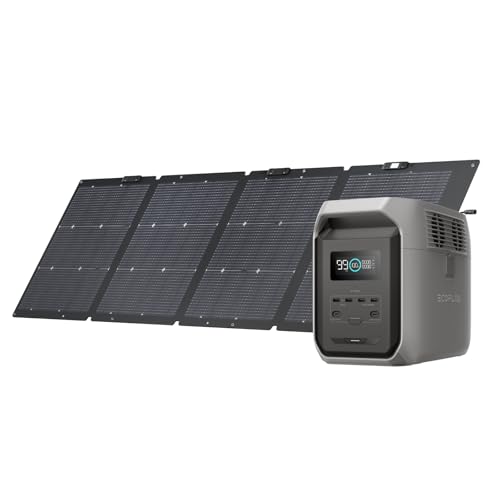
EF ECOFLOW Solar Generator DELTA 2 with 220W Solar Panel, 1024Wh LFP(LiFePO4) Battery, 1800W AC/100W USB-C Output, Fast Charging Portable Power Station for Home Backup Power, Camping & RVs : Patio, Lawn & Garden
View on Amazon2) Open data, shared infrastructure, and public–private partnerships
- Trend: Governments are opening vessel, land-use, and environmental data; NGOs and companies are pooling AI models and training data for species ID and threat detection.
- Actions:
- Publish non-sensitive datasets under open licenses with complete metadata; align to Darwin Core where possible. Participate in regional mapping efforts (e.g., MapBiomas-style collaborations).
- Co-develop AI models with diverse datasets to reduce bias; run shared benchmarks and error challenges.
- Tie open data to open workflows: notebooks, reproducible pipelines, and code repositories that others can audit and extend.
3) Citizen science as a force multiplier
- Trend: Platforms like eBird and iNaturalist now contribute billions of geo-referenced records and photos. Combined with remote sensing and AI, they enable high-resolution biodiversity atlases and change detection.
- Actions:
- Co-design projects with communities; provide feedback loops so contributors see how their data informs management.
- Use hybrid approaches: expert-validated subsets train models to improve auto-ID for the long tail of rare species.
- Leverage citizen data for rapid habitat prioritization, then task satellites/drones for verification. For broader practice context, see Wildlife Conservation Methods: Practical Approaches, Tech Tools, and How to Measure Success.
4) Standardizing ethics and impact evaluation
- Trend: Funders and journals increasingly require data governance, consent protocols, and credible counterfactuals.
- Actions:
- Embed FPIC, CARE/OCAP, and privacy-by-design in project charters. Maintain a risk register for surveillance impacts.
- Pre-specify evaluation plans with BACI or quasi-experimental methods and publish results—positive or negative. Utilize standardized indicators (e.g., IUCN Green List metrics, Key Biodiversity Area status) linked to outcomes. See our analysis on Beyond Intentions: A Data‑Driven Analysis of the Impact of Conservation Efforts.
- Fund long-term monitoring, not just deployment. Allocate at least 10–20% of budgets to data stewardship and evaluation.
Policy priorities that unlock impact
- Make public data truly public: Release timely, machine-readable environmental and enforcement datasets (forest alerts, fishing licenses, protected area boundaries) with APIs.
- Require transparency for high-risk sectors: Mandate AIS/VMS for industrial fishing and traceability for deforestation-linked commodities, with robust small-scale fisher safeguards.
- Support Indigenous and community stewardship: Fund tech that communities choose and control; recognize land rights that make monitoring actionable.
- Invest in training and local enterprises: Build regional repair and integration capacity to keep systems running and create green jobs.
What this means for practitioners and funders
- Start with the conservation question, not the gadget. Map a theory of change linking tech outputs (alerts, maps) to decisions (patrols, closures) to outcomes (reduced illegal activity, population trends).
- Choose “minimum viable data.” Collect the least data needed to make a decision reliably; over-collection increases costs and risks.
- Plan for the long haul. Budgets should reflect total cost of ownership and a clear exit or handover strategy.
- Measure what matters. Pair operational metrics (alerts responded to, survey coverage) with biological indicators (occupancy, recruitment, habitat condition) and socio-economic outcomes.
- Mind the ethics. Build consent, privacy, and data sovereignty into design. Share benefits—from jobs to co-authorship—to strengthen legitimacy.
For practical habitat-focused tactics that pair policy and technology, see our guide on Protecting Wildlife Habitats: A Practical Guide to Conservation, Technology, and Action.
Where the field is heading
The next phase is less about inventing new gadgets and more about integrating, powering, and governing the ones we have. Expect:
- Seamless data fusion across satellites, drones, sensors, and citizen observations—served through operational dashboards and APIs.
- Edge-first AI that is faster, cheaper, and more private by default.
- Stronger norms for consent, data governance, and independent evaluation—separating what works, where, and at what cost from what merely sounds promising.
- A shift from reactive enforcement to predictive, preventative management as models learn from richer time series.
The role of technology in conservation is no longer hypothetical—it’s a set of tools with demonstrated potential to protect habitats, reduce illegal activity, and guide restoration when embedded in capable institutions and respectful partnerships. The opportunity now is to scale what works, close evidence gaps, and ensure communities and ecosystems—not just datasets—benefit.
Recommended Products
Remote Sensing for Ecology and Conservation: A Handbook of Techniques (Techniques in Ecology & Conservation): Horning, Ned, Robinson, Julie A., Sterling, Eleanor J., Turner, Woody, Spector, Sacha
This book <strong>describes the ways that remotely sensed data from research on biodiversity and its conservation can be captured and used, especially for evaluating human impacts on ecological system
RECONYX HyperFire 2 Covert IR Camera (OD Green)
Buy RECONYX HyperFire 2 Covert IR Camera (OD Green): Game & Trail Cameras - Amazon.com ✓ FREE DELIVERY possible on eligible purchases
EF ECOFLOW Solar Generator DELTA 2 with 220W Solar Panel, 1024Wh LFP(LiFePO4) Battery, 1800W AC/100W USB-C Output, Fast Charging Portable Power Station for Home Backup Power, Camping & RVs : Patio, Lawn & Garden
Clean, Green Charging. With up to 500W of solar panel input, DELTA 2 is a solar generator that can be charged while camping, on an RV trip or off-grid. <strong>Includes a 220W Bifacial solar panel to
More in Sustainability Policy
- Wildlife Conservation Methods: Practical Approaches, Tech Tools, and How to Measure Success
- Protecting Wildlife Habitats: A Practical Guide to Conservation, Technology, and Action
- Effective Wildlife Conservation Practices: Practical Strategies, Monitoring, and Community-Led Solutions
- How Conservation Changes Ecosystems: Mechanisms, Evidence, Measurement, and Policy Trade‑offs