
Forest Conservation Strategies: Practical, Science-Based Approaches to Protect, Restore, and Manage
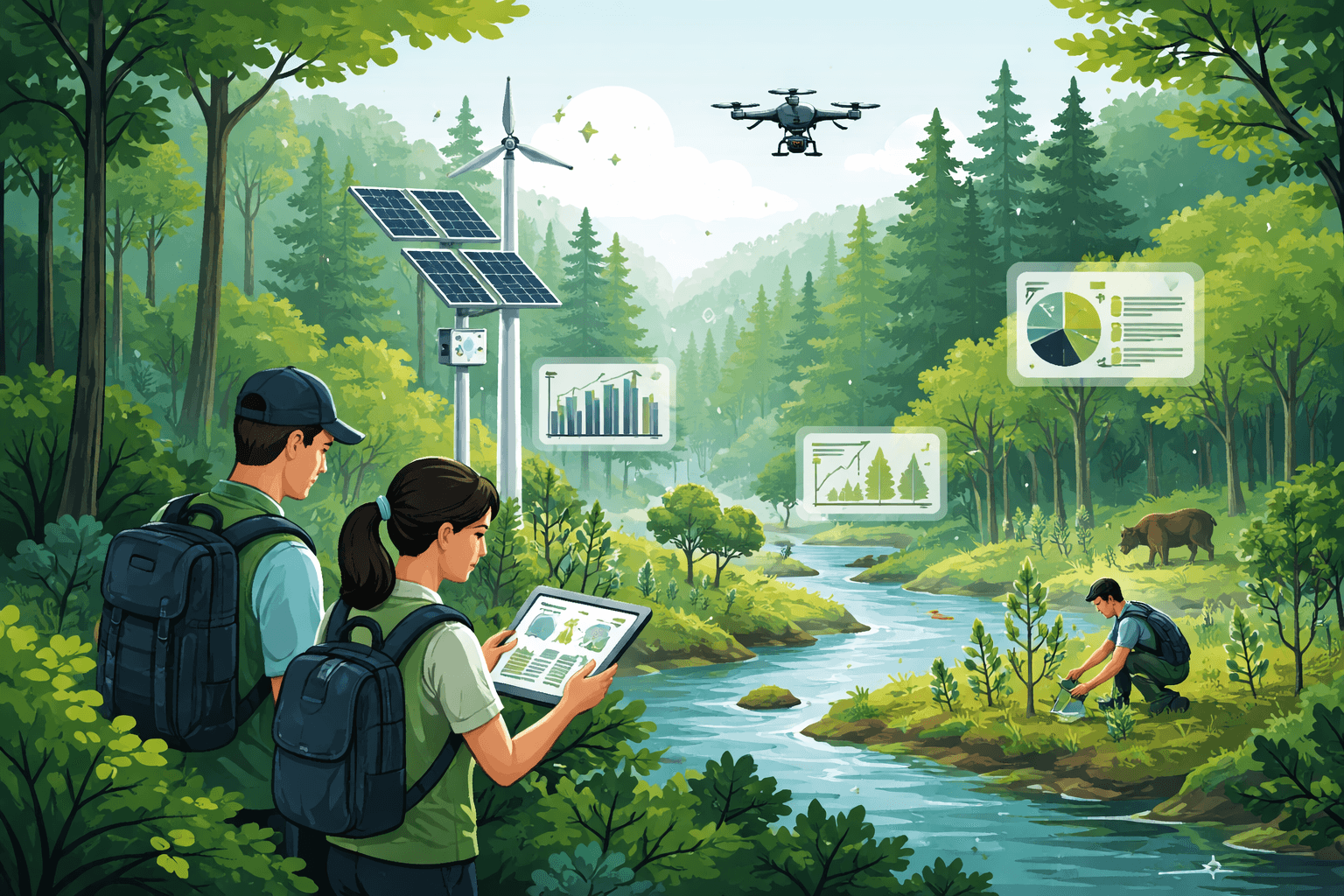
Forests cover 31% of Earth’s land—about 4.06 billion hectares—and store roughly 662 gigatons of carbon in biomass and soils (FAO Global Forest Resources Assessment 2020). Yet the world still loses around 10 million hectares of forest annually to deforestation (2015–2020 average, FAO). Getting conservation strategies for forests right matters for biodiversity—home to ~80% of terrestrial species (CBD/FAO)—for climate, for water security, and for the 1.6 billion people whose livelihoods depend on forests (World Bank). This guide synthesizes the most effective, evidence-based tactics to prevent loss, manage forests sustainably, restore degraded lands, and build resilience, while aligning policy, finance, and community priorities.
Why forests matter—and how to set clear conservation objectives
Effective forest conservation starts with explicit goals and a shared ecological rationale. Objectives focus intervention choices, metrics, and budgets.
- Biodiversity: Forests harbor most terrestrial species and many endemics. Intact, connected habitats reduce extinction risk and sustain ecological functions like pollination and pest control.
- Climate: Forests act as carbon sinks and stocks. The IPCC estimates land-use change (including deforestation) contributes roughly 10–12% of global CO2 emissions; protecting and restoring forests is among the highest-impact nature-based climate solutions.
- Water and soils: Forested watersheds regulate flows, reduce sedimentation, and improve water quality. Riparian forests stabilize banks; upland forests increase infiltration and reduce peak floods.
- Livelihoods and equity: Forest value chains—from timber and non-timber forest products (NTFPs) to ecotourism—support tens of millions of jobs and underpin cultural identity for Indigenous Peoples.
Translate this rationale into measurable goals:
- Species protection: Maintain or increase populations of focal threatened species (IUCN Red List), ensure viable habitat area and connectivity, reduce poaching and human-wildlife conflict.
- Carbon sequestration and storage: Avoid gross deforestation in high-carbon ecosystems; increase aboveground biomass (AGB) by x% and sequester y tCO2e/year through regeneration and improved management.
- Watershed health: Reduce sediment loads by x%, improve dry-season baseflows, or bring nitrate/turbidity below target thresholds.
- Social outcomes: Secure land tenure, uphold Free, Prior, and Informed Consent (FPIC), increase equitable benefit-sharing, and improve local incomes from sustainable forest enterprises.
For planning frameworks that link goals, baselines, and stewardship, see Land Conservation Best Practices: Planning, Protection, Stewardship, and Long-Term Management (/conservation/land-conservation-best-practices-planning-protection-stewardship-long-term-management).
By the numbers
- 4.06 billion ha: global forest area (FAO 2020), 31% of land
- ~10 million ha/year: gross deforestation (2015–2020, FAO)
- ~662 Gt C: carbon stored in forests (FAO 2020)
- ~80%: share of terrestrial biodiversity in forests (CBD/FAO)
- Up to 70%: forests within 1 km of an edge globally, increasing edge effects (Haddad et al., Science 2015)
Preventing loss and promoting sustainable forest management
Avoided deforestation and degradation deliver the fastest climate and biodiversity gains. Strategies must address direct and underlying drivers.
Know the drivers
- Agricultural expansion: Pasture and commodity crops (cattle, soy, palm oil, cocoa) are the largest global driver of tropical deforestation (FAO, WRI).
- Illegal or unsustainable logging: Overharvesting and poor felling/road practices drive degradation and emissions.
- Mining and infrastructure: Road building, energy projects, and extractives fragment habitats and enable encroachment.
- Fire: In many regions, escaped burns and drought-fueled wildfires (amplified by climate change) convert forests to lower-carbon states.
Policy tools and enforcement
- Spatial planning and protection: Establish and effectively manage protected areas and Other Effective area-based Conservation Measures (OECMs) in high-biodiversity, high-carbon, and high-integrity forests. Use High Conservation Value (HCV) and High Carbon Stock (HCS) frameworks to prioritize.
- Land-use zoning and moratoria: Brazil’s 2004–2012 policy mix—protected areas, supply-chain agreements, and real-time enforcement—cut Amazon deforestation by ~80% relative to the peak (INPE, peer-reviewed syntheses). Indonesia’s primary forest/peat moratoria and concession reforms helped reduce loss in the late 2010s (Global Forest Watch analyses).
- Satellite-enabled enforcement: Near-real-time alerts (e.g., GLAD, Brazil’s DETER) and radar (Sentinel‑1) enable rapid response even under clouds. Public disclosure combined with targeted patrols reduces illegal clearing.
- Supply-chain regulation and corporate commitments: Due diligence laws (e.g., emerging import regulations) and credible zero-deforestation pledges can shift purchasing. Independent verification and cut-off dates are essential to avoid leakage and greenwashing.
For links between conservation mechanisms and system-wide ecological change, see How Conservation Changes Ecosystems: Mechanisms, Evidence, Measurement, and Policy Trade‑offs (/conservation/how-conservation-changes-ecosystems-mechanisms-evidence-measurement-policy-trade-offs).
Sustainable forest management (SFM) and reduced-impact logging (RIL)
Where timber harvest is permitted, SFM minimizes ecological damage while maintaining yields.
- Reduced-impact logging: Careful tree selection, directional felling, vine cutting, and planned skid trails can reduce collateral damage by 30–50% and lower logging emissions by roughly 20–40% compared to conventional logging (meta-analyses in tropical forestry literature). RIL maintains higher residual biomass and accelerates recovery.
- Rotation and retention: Longer cutting cycles, minimum diameter limits, and retention of seed trees and key habitat structures (snags, coarse woody debris) protect biodiversity.
- Road density control: Limiting permanent roads and rapid decommissioning reduce fragmentation and hunting access.
Certification and transparency
Forest certification (e.g., FSC, PEFC) requires management plans, monitoring, and safeguards. As of 2024, roughly 500 million hectares are certified globally across schemes (FSC/PEFC data)—about one-eighth of the world’s forests—concentrated in temperate/boreal regions. Certification is most effective when paired with strong legality verification, grievance mechanisms, and market demand for certified products.
Secure land tenure and community- and Indigenous-led management
Evidence is strong that secure Indigenous and community forest rights reduce deforestation and improve social outcomes. Studies in Latin America show titled Indigenous territories have 20–50% lower deforestation rates than similar untitled areas (WRI, Blackman & Veit 2018). Priorities include:
- Legal recognition of customary rights and mapping of boundaries
- FPIC for any project affecting community lands
- Co-management agreements, community rangers, and local benefit-sharing from sustainable enterprises
- Gender-equitable governance and support for youth forest stewardship
Incentive mechanisms: PES and REDD+
- Payments for Ecosystem Services (PES): Direct incentives for landholders to conserve or restore. Costa Rica’s national PES program contributed to forest cover rising from ~21% in the 1980s to over 50% today (World Bank/TNC evaluations), alongside strong policy.
- REDD+ (Reducing Emissions from Deforestation and forest Degradation): Results-based finance for jurisdictional or project-level emission reductions, with required monitoring, reporting, and safeguards. High-integrity programs align with national forest reference levels and social safeguards.
For the climate context and complementary mitigation pathways, see Climate Change Mitigation Techniques: Practical, Scalable Strategies for Energy, Nature, Policy & Technology (/sustainability-policy/climate-change-mitigation-techniques-practical-scalable-strategies).
Restoration and resilience-building interventions
Restoration targets degraded forests and deforested lands, aiming to recover ecosystem functions, biodiversity, and carbon. Strategy depends on degradation level, seed sources, soils, hydrology, and social objectives.
Passive vs. active restoration
- Natural regeneration (passive): Allowing forests to recover on their own—or with Assisted Natural Regeneration (ANR) interventions like protecting seedlings, managing fire/grazers, and removing competition—often delivers higher biodiversity and structural complexity at lower cost. Typical costs can be several times lower than active planting (orders of magnitude: hundreds vs. thousands of dollars per hectare, World Bank/FAO project syntheses). Natural regeneration is especially effective where seed sources and soils remain.
- Active planting: Necessary when seed sources are distant, invasive grasses dominate, or severe degradation has occurred. Use native, site-appropriate species; avoid planting trees in natural grasslands or peatlands. Mixed-species plantings improve resilience, pest resistance, and multifunctionality compared to monocultures; meta-analyses show polycultures often outperform monocultures in biomass accumulation and nutrient cycling over time.
Practical design tips:
- Right species, right place: Match functional traits (nitrogen-fixers, deep-rooted species, drought tolerance) to site conditions and future climate scenarios.
- Structural diversity: Plant mixtures across canopy strata and successional stages; leave legacy structures and nurse plants.
- Genetic diversity: Source from multiple provenances (within ecological and regulatory limits) to hedge against climate uncertainty.
Soil, hydrology, and road rehabilitation
- Soil recovery: Decompact skid trails and landings, add coarse woody debris/mulch, and seed native groundcovers to reduce erosion.
- Riparian buffers and wetland reconnection: Restore floodplains and meanders; re-wet drained peat by blocking canals. Hydrological repair can rapidly increase carbon accumulation and biodiversity in peat and riparian forests.
- Road decommissioning: Close and recontour unused roads; upgrade necessary crossings to fish-friendly culverts to reduce sediment and improve connectivity.
Invasive species and herbivory control
- Integrated management: Combine mechanical removal, targeted herbicides, and biocontrol under strict protocols. Follow-up is essential to prevent reinvasion.
- Herbivory and grazing: Manage deer or livestock browsing with exclosures or population management to allow regeneration.
Connectivity and landscape-scale design
Edge effects reduce interior habitat quality and carbon stability. Globally, up to 70% of forests lie within 1 km of an edge (Haddad et al., 2015). Design restoration to:
- Expand and buffer core habitat
- Establish corridors and stepping-stone patches between fragments
- Prioritize ridgelines and riparian corridors for multi-benefit connectivity (biodiversity, water, fire breaks)
Fire-smart forests
- Use prescribed/controlled burns and cultural burning where ecologically appropriate to reduce fuel loads and restore fire-adapted ecosystems.
- Thin overly dense stands (especially in fire-excluded pine/oak systems) while retaining large, fire-resistant trees and structural diversity.
- Create defensible space near communities to reduce wildfire risk while protecting high-value conservation areas from high-severity burns.
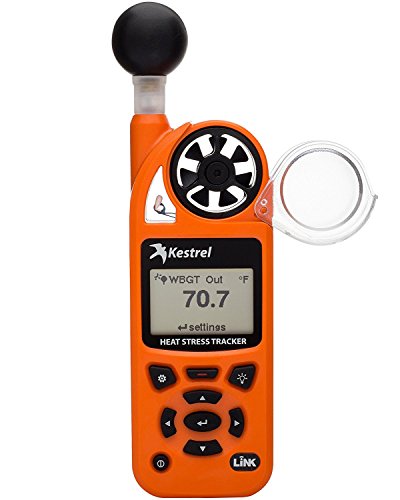
Kestrel 5500FW Fire Weather Meter Pro with Link, Orange : Patio, Lawn & Garden
View on AmazonFor practical habitat-focused tactics and technology, see Protecting Wildlife Habitats: A Practical Guide to Conservation, Technology, and Action (/sustainability-policy/protecting-wildlife-habitats-guide-conservation-technology-action).
Monitoring, data, and adaptive management
Monitoring underpins credible outcomes and adaptive management—learning and adjusting as data arrive. Couple remote sensing with field and community-based observations.
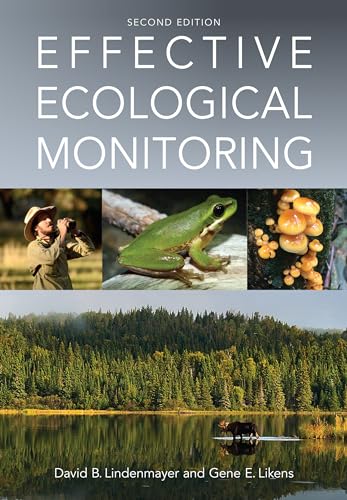
Effective Ecological Monitoring: Lindenmayer, David B., Likens, Gene E.
Review of the first edition: "Lindenmayer and Likens have distilled decades of experience into <strong>a book about how to study the long, large, and slow processes of ecological change</strong>.
Check Price on AmazonRemote sensing and mapping
- Optical satellites: Landsat (30 m, every 8–16 days) and Sentinel‑2 (10 m, 5 days) track canopy cover, disturbance, and regrowth. Cloud-based platforms (e.g., Global Forest Watch) provide tree cover loss alerts and historical trends.
- Radar (SAR): Sentinel‑1 and other synthetic aperture radar penetrate clouds, critical in the humid tropics, and are sensitive to structure and moisture.
- LiDAR: NASA’s GEDI provides canopy height and biomass estimates from the International Space Station; airborne/droned LiDAR captures fine-scale structure for carbon and habitat modeling.
- Very high-resolution imagery: Commercial constellations (e.g., 3–5 m daily) enable rapid enforcement and detailed restoration progress checks.
Field surveys and biodiversity monitoring
- Permanent sample plots: Measure diameter at breast height (DBH), height, species, basal area, regeneration, and mortality. Calibrate allometric equations to estimate AGB and carbon.
- Camera traps and acoustics: Track wildlife occupancy and activity; bioacoustic indices can proxy biodiversity.
- Environmental DNA (eDNA): Water or soil samples detect species presence, including cryptic taxa, at relatively low cost.
- Citizen science: Community rangers and local observers using standardized apps improve coverage and ownership.

Bushnell Core DS-4K No Glow Trail Camera. Hunting ...
View on AmazonFor practical methods and tech tools, see Wildlife Conservation Methods: Practical Approaches, Tech Tools, and How to Measure Success (/sustainability-policy/wildlife-conservation-methods-practical-approaches-tech-tools-how-to-measure-success).
KPIs, reporting, and adaptive cycles
Define baselines and targets, monitor on fixed intervals, and adjust actions:
- Forest condition: Annual tree cover loss (ha/yr), canopy closure (%), AGB (Mg/ha), carbon flux (tCO2e/yr), road density (km/km²)
- Biodiversity: Occupancy/abundance of focal species, species richness indices, habitat connectivity metrics
- Watershed: Turbidity (NTU), sediment yield (t/ha), nitrate/phosphate levels, dry-season baseflow
- Social: Tenure security indicators, FPIC compliance, benefit-sharing participation, household income from sustainable enterprises
Reporting frameworks include national forest inventories; REDD+ MRV systems; and standards like Verra VCS and ART-TREES for carbon. Apply QA/QC, document uncertainty, and publish open summaries to build trust. Use “plan–do–check–adjust” cycles to iterate: e.g., if regeneration lags, intensify ANR, adjust species mix, or enhance protection from fire/grazers.
Social, financial, and policy enablers
Conservation succeeds when institutions, incentives, and communities align. Prioritize legitimacy, capacity, and durable finance.
Stakeholder engagement and governance
- FPIC and rights: Recognize and formalize Indigenous and community land rights; embed FPIC in all project phases.
- Inclusive governance: Ensure co-management bodies include women, youth, and marginalized groups; establish grievance redress.
- Benefit-sharing: Allocate revenues from timber, NTFPs, carbon, or tourism transparently with community-defined priorities (health, education, livelihood diversification).
- Capacity building: Train local monitors and rangers, strengthen community forestry enterprises (harvesting, processing, market access), and support data literacy for local decision-making.
Financing options
- Carbon markets: Jurisdictional and project-based REDD+ can finance avoided deforestation and restoration when aligned with national accounting and robust safeguards. Look for high-integrity credits assessed under Core Carbon Principles and jurisdictional standards (e.g., ART‑TREES) with transparent baselines and leakage controls.
- Green/sustainability bonds: Governments and companies can issue labeled bonds to fund restoration, fire management, and sustainable value chains; frameworks should use credible taxonomy (e.g., Climate Bonds Initiative) and outcome KPIs.
- Grants and concessional finance: Blended finance from multilateral funds (GEF, Green Climate Fund), bilateral donors, and philanthropy de-risks early-stage projects and community tenure formalization.
- Domestic incentives: Tax credits for restoration, performance-based transfers to subnational governments, and reform of agricultural subsidies that drive deforestation.
For funding leads and proposal strategies, see Conservation Funding Opportunities: Where to Find Support and How to Win It (/conservation/conservation-funding-opportunities-guide).
Legal protections and cross-sector collaboration
- Strengthen protected area systems and OECMs with adequate budgets and rangers; pair designations with livelihood alternatives to reduce pressure.
- Align agriculture and forestry: Promote deforestation-free commodity compacts, yield-improving agroforestry, and landscape-scale planning that steers expansion to low-carbon, low-biodiversity areas (degraded lands).
- Infrastructure safeguards: Apply biodiversity offsets only as a last resort under strict mitigation hierarchies (avoid–minimize–restore–offset), with transparent accounting and long-term stewardship funds.
Practical implementation roadmap
- Diagnose and set targets
- Map intact forests, high-carbon/ high-biodiversity areas, tenure, and drivers using satellite data and participatory surveys.
- Co-create explicit objectives (biodiversity, carbon, water, livelihoods) and thresholds with rightsholders.
- Protect and enforce first
- Lock in gains by securing legal status, deploying alerts, and resourcing patrols where pressure is acute.
- Improve management where harvest occurs
- Implement RIL, road limits, and retention; pursue certification where markets reward it.
- Restore strategically
- Favor ANR where feasible; apply active planting with diverse native species where necessary; repair soils and hydrology; design connectivity.
- Monitor and adapt
- Set KPIs, combine remote sensing with plots and biodiversity tools; publish results and adjust tactics.
- Finance and govern for durability
- Blend results-based carbon finance, bonds, and grants; embed FPIC and equitable benefit-sharing; build local capacity.
Where this is heading
Forestry is entering a data-rich era. Spaceborne LiDAR, daily high-resolution imagery, eDNA, and AI-enabled bioacoustics are making forest condition and biodiversity measurable at unprecedented scales and frequencies. High-integrity jurisdictional REDD+ and performance-based public finance can reward real outcomes over paper promises. Meanwhile, climate change is reshaping baselines—raising the urgency of climate-smart species selection, fire management, and connectivity to maintain function under stress.
The most successful programs are integrated: they secure rights; stop illegal clearing fast; manage working forests with RIL and transparency; restore strategically with ANR and diverse plantings; and measure what matters—adjusting as data come in. Done well, conservation strategies for forests can simultaneously protect species, lock up gigatons of carbon, safeguard water for downstream communities, and support dignified rural livelihoods—turning forests from a liability on balance sheets into a durable, living asset for people and planet.
Recommended Products
Effective Ecological Monitoring: Lindenmayer, David B., Likens, Gene E.
Review of the first edition: "Lindenmayer and Likens have distilled decades of experience into <strong>a book about how to study the long, large, and slow processes of ecological change</strong>.
Bushnell Core DS-4K No Glow Trail Camera. Hunting ...
Browse Bushnell trail cameras with crystal-clear image quality and weather-resistant design. Perfect for scouting and property monitoring.
Kestrel 5500FW Fire Weather Meter Pro with Link, Orange : Patio, Lawn & Garden
In addition to measuring the current environmental conditions, the Kestrel 5500FW <strong>tracks and logs over 10,000 sets of time-stamped data, providing a complete history of conditions on the fire
More in Conservation
- Deforestation Explained: Causes, Impacts, and Solutions
- Conservation Explained: Goals, Strategies, and How You Can Help
- Using AI for Habitat Conservation: Practical Applications, Data Needs, and Ethical Implementation
- Land Conservation Best Practices: Planning, Protection, Stewardship, and Long-Term Management