
Soil Health and Regenerative Agriculture: A Practical Guide to Restoring Living Soil
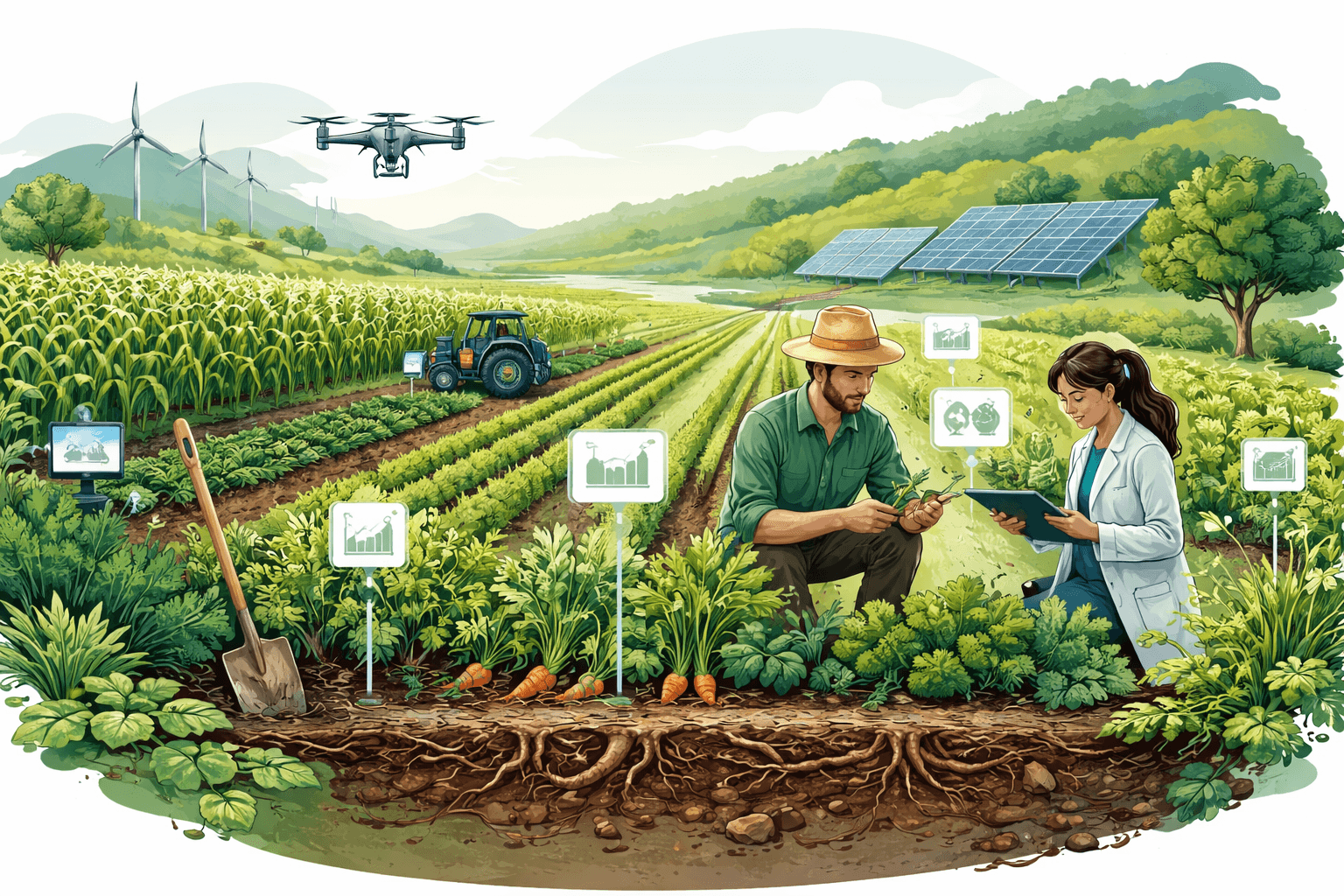
Healthy soil is a living system that powers farm productivity and climate resilience. Soils store more carbon than the atmosphere and all vegetation combined—about 1,500–2,400 gigatons in the top two meters (IPCC, 2019). Yet intensive tillage, bare fallows, and erosion are degrading this reservoir; FAO estimates 24 billion tons of fertile soil are lost annually to erosion, and one-third of the world’s soils are moderately to highly degraded (FAO, 2015). This guide explains soil health and regenerative agriculture—the practices that rebuild organic matter, restore microbial life, and make fields more profitable and resilient over time.
What “soil health” means on the ground
Soil health is the soil’s capacity to function as a vital living ecosystem that sustains plants, animals, and people (USDA NRCS). In practice, that capacity shows up in a few measurable indicators.
For the Love of Soil: Strategies to Regenerate Our Food Production Systems eBook : Masters, Nicole: Kindle Store
**UPDATED VERSION** 'For the Love of Soil' is a land manager’s roadmap to healthy soil, revitalized food systems in challenging times. This book equips producers with knowledge, skills and i
Check Price on AmazonKey indicators of soil health
- Organic matter (OM): The percentage of decomposed plant and animal residues in soil. Organic matter is a master variable: it improves nutrient supply, water holding, aggregation, and microbial habitat. Typical cultivated temperate soils often sit at 1–3% OM; well-managed systems can reach 4–6% or more depending on texture and climate.
- Soil structure and aggregation: How soil particles bind into stable aggregates. Good structure resists crusting and erosion, allows roots to penetrate, and improves aeration. Aggregate stability tests (slake tests) and bulk density (target ~1.1–1.4 g/cm³ for loams) are common metrics.
- Microbial activity and diversity: The “soil microbiome” drives nutrient cycling and soil aggregation. Indicators include soil respiration (CO₂ burst), microbial biomass carbon, and phospholipid fatty acid (PLFA) profiles.
- Water infiltration and retention: How fast water enters soil and how much the soil can store for later. USDA NRCS estimates that a 1% increase in soil organic matter in the topsoil can add roughly 20,000 gallons of plant-available water per acre (~0.75 acre‑inch), depending on texture (USDA NRCS).
- Nutrient cycling: The ability of soil organisms and minerals to supply nitrogen (N), phosphorus (P), potassium (K), and micronutrients as crops need them. Mineralization rates, cation exchange capacity (CEC), and soil test nutrient levels are proxies.
These indicators are interconnected. Improving one—like organic matter—tends to lift the rest, which is why regenerative agriculture focuses on systems that rebuild soil biology and structure over years, not just a single season.
Core principles of soil health and regenerative agriculture
Regenerative agriculture is a suite of practices guided by five principles: minimize disturbance; keep soil covered; keep living roots in the ground; diversify plants and rotations; and integrate livestock where feasible. These principles are designed to rebuild soil function and carbon.
Reduce or eliminate tillage
- What it does: Minimizing disturbance preserves soil aggregates and fungal networks (mycorrhizae), reduces oxidation of organic matter, and protects habitat for earthworms and microbes.
- Evidence: Conservation tillage and no‑till can reduce soil erosion by up to 90% compared with moldboard plowing on similar slopes (USDA NRCS, RUSLE2 estimates). No‑till systems often show higher earthworm abundance and biomass; a global analysis found earthworm abundance 137% higher under no‑till compared to conventional tillage (Briones & Schmidt, 2017, Global Change Biology).
- Practical note: Many farms transition via strip‑till or reduced passes before adopting full no‑till, often paired with residue managers and precision planters.
Plant cover crops to keep living roots
- What they do: Cover crops keep soil covered and biologically active between cash crops, reducing erosion and feeding soil microbes with root exudates that form stable soil carbon.
- Evidence: A meta‑analysis found cover crops increased water infiltration by ~35% and improved aggregate stability by ~32% on average (Jian et al., 2020, Soil & Tillage Research). Long‑term use is associated with gradual gains in soil organic carbon (SOC) on cropland (~0.3 Mg C/ha/yr on average; Poeplau & Don, 2015, Agriculture, Ecosystems & Environment).
- Nitrogen benefits: Legume cover crops (e.g., hairy vetch, crimson clover) can supply 40–150 lb N/acre (45–170 kg/ha), reducing synthetic N needs (SARE, Managing Cover Crops Profitably, 3rd ed.).
Diversify rotations and species
- What it does: Diverse rotations disrupt pest and disease cycles, balance nutrient demands, and support diverse microbial communities. Mixing functional groups (grasses, legumes, brassicas) in cover crops spreads risk and broadens rooting depth.
- Evidence: Rotational diversity is linked to higher microbial biomass and enzyme activity, greater aggregation, and more stable yields across years (e.g., Tiemann et al., 2015, PNAS).
Add organic amendments (composts and manures)
- What they do: Compost and well‑managed manures add organic carbon and nutrients in slow‑release forms, feed microbes, and improve cation exchange capacity.
- Evidence: Repeated compost applications increase particulate organic matter and aggregate stability, with SOC gains that can persist for years (Ryals & Silver, 2013, Ecosystems). Watch salinity and phosphorus accumulation; test sources and calibrate rates.
Integrate managed grazing where feasible
- What it does: Adaptive multi‑paddock (AMP) grazing—short grazing bouts with long rest periods—can enhance grassland productivity, root growth, and SOC while distributing manure evenly.
- Evidence: In Southeastern U.S. pastures transitioning to AMP, soils gained ~8 Mg C/ha in the top meter over 3 years (Machmuller et al., 2015, PNAS). Results vary widely with stocking rates, rest periods, and climate.
Minimize bare soil and traffic
- What it does: Residue cover and controlled traffic farming reduce compaction and protect aggregates from raindrop impact. Surface cover also buffers soil temperature and reduces evaporation.
Together, these practices operationalize soil health and regenerative agriculture: protecting soil surfaces, feeding soil life, and letting roots and microbes do more of the work that tillage and synthetic inputs used to do alone.
By the numbers: Soil health impacts
- 1,500–2,400 Gt: Soil organic carbon stock in top 2 m of soils globally (IPCC, 2019)
- 24 billion tons/yr: Fertile soil lost to erosion (FAO, 2015)
- Up to 90%: Erosion reduction with no‑till vs. moldboard till (USDA NRCS)
- ~35%: Average increase in water infiltration with cover crops (Jian et al., 2020)
- ~0.3 Mg C/ha/yr: Typical SOC sequestration from cover crops on cropland (Poeplau & Don, 2015)
- 40–150 lb N/acre: Nitrogen provided by legume cover crops (SARE)
- 31%: Higher organic grain yields in drought years in a 40‑year trial (Rodale Institute, Farming Systems Trial)
- 20,000 gal/acre: Extra plant‑available water with each 1% OM increase (USDA NRCS)
- 0.44–1.61 GtCO₂e/yr: Global mitigation potential from improved cropland management including SOC sequestration (IPCC, 2019 SRCCL)
Environmental and farm‑level benefits of healthier soil
Yield stability and profitability
- Short‑term yields can be flat or variable during transition, but multi‑year data show improvements as soil function recovers. A SARE/CTIC survey of U.S. farmers reported average yield increases after cover crops of ~2–3% for corn and soy, with larger gains after multiple years of adoption (SARE-CTIC Cover Crop Surveys).
- In the Rodale Institute’s 40‑year Farming Systems Trial, organic systems (which include cover crops, composts, and no synthetic inputs) matched conventional yields on average and produced 31% higher yields in drought years while using less energy (Rodale Institute).
Erosion control and water management
- Ground cover and no‑till protect soil from raindrop impact and runoff, sharply cutting erosion. Improved aggregate stability and pore structure increase infiltration, reducing ponding and irrigation needs. In dry regions, an extra 1% organic matter can translate to roughly an additional week of plant‑available moisture during rain‑free stretches, depending on rooting depth and weather patterns.
Nutrient efficiency and reduced inputs
- Living roots and organic amendments increase biological nitrogen fixation (with legumes), enhance mycorrhizal P uptake, and buffer nutrient release. Over time, some farms reduce synthetic N rates by integrating legumes and improving timing—without sacrificing yields. Reduced fertilizer and fuel use can lower operating costs and emissions.
Biodiversity and ecosystem services
- Healthier soils host more arthropods, fungi, and beneficial microbes, which can suppress pathogens and support pollinators indirectly via flowering cover crops. Earthworm abundance and diversity typically increase under reduced tillage and residue retention (Briones & Schmidt, 2017). These co‑benefits ripple beyond the farm, contributing to watershed health and habitat quality. For broader ecosystem context, see Ecological Benefits of Sustainability: How Sustainable Choices Restore Ecosystems and Build Resilience (/sustainability-policy/ecological-benefits-of-sustainability).
Carbon storage and climate resilience
- Building soil carbon sequesters atmospheric CO₂ and improves drought resilience simultaneously—a rare win‑win. The “4 per 1000” initiative popularized the idea that increasing topsoil carbon by 0.4% per year could offset a meaningful share of annual global emissions, though actual potentials vary by region and practice (INRA/4p1000). For how changing climate intensifies droughts, heat stress, and rainfall extremes that soils must buffer, see How Climate Change Affects Agriculture: Impacts, Risks, and Responses (/sustainability-policy/how-climate-change-affects-agriculture).
Challenges and tradeoffs in the transition
Adopting soil health and regenerative agriculture is a management shift. Expect a learning curve and plan for local conditions.
- Time to measurable results: Detectable SOC increases often take 3–7 years depending on climate, soil texture, and starting OM. Physical indicators like infiltration and aggregate stability can improve within 1–3 seasons of consistent cover cropping and reduced disturbance.
- Nutrient dynamics: High‑carbon residues or cereal cover crops can temporarily immobilize nitrogen, depressing early crop growth if N is not adjusted. Solutions include legume mixes, timely termination, starter N, or banded fertilizer.
- Pest and disease pressures: Residue can harbor slugs or diseases in some regions; diverse rotations, row cleaners, biologicals, and scouting help manage risks.
- Equipment and logistics: No‑till planters with residue managers, high‑clearance seeders for interseeding covers, and roller‑crimpers may be needed. Start with what you have and iterate.
- Water considerations: In semi‑arid zones, cover crops can reduce soil water at planting if not well timed; terminate early or shift to winter‑active species that die back before spring.
- Economics and labor: Costs for seed, equipment, and management time are front‑loaded; returns often accrue via reduced inputs, stabilized yields, and risk reduction. Use strip trials and enterprise budgets to validate economics on your fields.
- Local variability: Soil texture, drainage, and climate dictate what works. Sandy soils build OM more slowly; heavy clays need traffic control and drainage to avoid compaction. Collaborate with local extension, farmer networks, and researchers.
How to assess your soil and choose regenerative practices
A stepwise approach helps convert principles into a field‑ready plan.
1) Establish a baseline
Collect data before making major changes.
- Standard soil test: pH, CEC, OM, and nutrient levels (P, K, Ca, Mg, micronutrients). Sample by management zone at 0–6 in (0–15 cm) and, if feasible, deeper layers to track subsoil compaction and carbon.
- Infiltration test: Use a single‑ring infiltrometer or even a 6‑inch metal ring and stopwatch. Target higher infiltration over time and compare across zones.
- Aggregate stability: Perform a simple slake test with dry soil clods in water; more stable aggregates cloud the water less and hold together.
- Bulk density and compaction: A penetrometer or a simple steel rod identifies dense layers (root‑restrictive >300 psi in the growing season). Note depth and extent.
- Biological indicators: Count earthworms in a 12 in × 12 in × 6 in slice after a rain; track residue decomposition rate. If available, run a 24‑hour CO₂‑burst or Solvita test; PLFA gives a snapshot of microbial community structure.
- Mapping: Note slope, low spots, traffic lanes, and yield maps to stratify fields. Remote sensing (NDVI) and soil electrical conductivity (EC) can help delineate zones. For tools that pair sensors with conservation outcomes, see How Technology Aids Conservation: Sensors, AI, and Renewable Solutions (/sustainability-policy/how-technology-aids-conservation-sensors-ai-renewables).
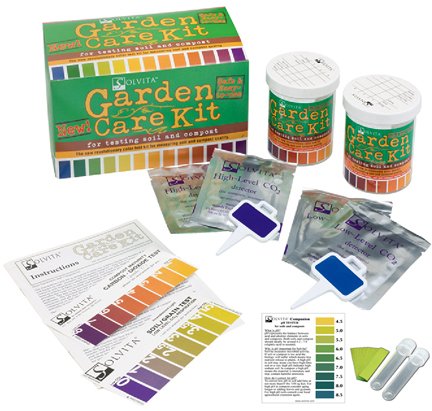
Solvita Garden Care Test Kit | 3-in-1 Soil Test Kit (CO2, NH3, pH) | Designed for Home Gardeners and Small Growers | pH Soil Test Kit | Soil & Compost | Precise, Accurate, Easy-to-Use : Patio, Lawn & Garden
View on Amazon
Soil Penetrometer, measure compaction and hardpan : Patio, Lawn & Garden
View on Amazon2) Set goals and prioritize fields
- Define 1–3 concrete targets for the next 3 years: e.g., raise OM by 0.3 percentage points, double infiltration, reduce applied N by 20 lb/acre with legumes, or cut erosion below the “T” value.
- Start with fields that show the biggest opportunity (e.g., erosion scars, low organic matter, compaction) or where logistics are easiest.
3) Select practices tailored to your climate, soil, and rotation
- Reduced tillage pathway: If full no‑till is too abrupt, move to strip‑till or vertical tillage with fewer passes. Preserve residue and avoid tilling when soils are wet.
- Cover crop design:
- Goals: Erosion control (rye, triticale), N supply (vetch, clovers), compaction busting (radish), grazing (oats/rye + brassicas + legumes), pollinator support (phacelia, clovers, buckwheat).
- Timing: In cold climates, winter rye or triticale establish late; in warm climates, multi‑species mixes can grow fall–spring. Terminate 2–3 weeks before planting, or roller‑crimp cereal covers at anthesis for mulch systems.
- Seeding: Calibrate drills; mind seed depth for small‑seeded species. Interseeding into standing crops at V4–V6 can extend the window.
- Nutrient management:
- Legume credits: Adjust N rates based on expected legume contribution (e.g., hairy vetch can deliver 80–120 lb N/acre under good biomass). Use PSNT or soil nitrate tests to fine‑tune side‑dress.
- Organic amendments: Apply compost/manure to meet carbon goals rather than just N. Test for salts and P; incorporate with minimal disturbance or surface‑apply onto living covers.
- Grazing integration:
- Stocking and rest: Use short, high‑density grazes (1–3 days) and 30–60+ days of rest depending on growth. Leave adequate residual to maintain cover.
- Infrastructure: Temporary fencing and mobile water reduce labor. Track animal performance and ground cover.
- Traffic and compaction management: Use controlled traffic lanes; avoid fieldwork when soils are near field capacity.
4) Pilot, compare, and de‑risk
- Run A/B strip trials or split fields to compare practices in your context. Track yields, moisture, input costs, and simple soil indicators (infiltration, slake test) each season.
- Use small equipment changes first (e.g., row cleaners, down‑pressure adjustments) before big capital purchases.
5) Monitor progress and adapt annually
- Annual checks: Repeat infiltration, slake, earthworm counts, and a 0–6 in soil test at the same time each year. Photo‑point monitoring helps visualize residue and cover.
- 2–3 year checks: Re‑run PLFA/microbial biomass and, if possible, SOC to 30 cm. SOC changes are slow; use consistent labs and methods.
- Economic metrics: Track net returns, input costs, and risk exposure (e.g., crop insurance claims, prevented planting). Many regenerative benefits show up as reduced variability rather than maximum yields.
Practical implications for producers and land stewards
- Risk management: Better infiltration and water holding reduce yield losses in wet and dry years, which matters as climate extremes intensify. Explore how shifting rainfall and heat patterns affect crop water and disease pressure at How Climate Change Affects Agriculture: Impacts, Risks, and Responses (/sustainability-policy/how-climate-change-affects-agriculture).
- Compliance and incentives: Many conservation programs (e.g., EQIP/CSP in the U.S.) support cover crops, no‑till, and grazing infrastructure. Align your plan with local cost‑share and watershed goals.
- Landscape benefits: Field‑scale soil improvements aggregate into watershed‑scale reductions in sediment and nutrient loads, supporting downstream habitats. For property‑level planning and stewardship beyond field edges, see Land Conservation Best Practices: Planning, Protection, Stewardship, and Long‑Term Management (/conservation/land-conservation-best-practices-planning-protection-stewardship-long-term-management).
Where soil health and regenerative agriculture are heading
Measurement and markets are catching up to management. Low‑cost sensors, remote sensing, and standardized soil health frameworks are making it easier to track change. Carbon and ecosystem service markets are experimenting with ways to pay for verified soil carbon gains and water quality benefits, though permanence and additionality standards are still evolving (IPCC, 2019; emerging protocols). Agronomy is shifting from a focus on “What do I add?” to “How do I manage biology and physics so the system does more on its own?”
Two practical takeaways stand out:
- Sequence matters: Start by reducing disturbance and keeping soil covered; then stack diversity and organic inputs; finally, integrate livestock or perennials where feasible. Each step compounds the last.
- Local context rules: The same practice behaves differently in Iowa loams, Georgia Ultisols, or Australian Vertisols. Use the principles as a compass and your fields as the proving ground.
Healthier soils pay back through resilience, input efficiency, biodiversity, and carbon storage. The transition is a marathon, not a sprint, but each season with more cover, less disturbance, and more living roots moves a farm toward a system that’s productive, profitable, and climate‑ready.
Recommended Products
For the Love of Soil: Strategies to Regenerate Our Food Production Systems eBook : Masters, Nicole: Kindle Store
**UPDATED VERSION** 'For the Love of Soil' is a land manager’s roadmap to healthy soil, revitalized food systems in challenging times. This book equips producers with knowledge, skills and i
Soil Penetrometer, measure compaction and hardpan : Patio, Lawn & Garden
This soil penetrometer is <strong>used to test the compaction levels of the soil</strong>. It has a detailed color coded gauge that lets you see the resistance of your soil based on how much pressure
Solvita Garden Care Test Kit | 3-in-1 Soil Test Kit (CO2, NH3, pH) | Designed for Home Gardeners and Small Growers | pH Soil Test Kit | Soil & Compost | Precise, Accurate, Easy-to-Use : Patio, Lawn & Garden
Solvita Garden Care Kit contains: <strong>2 Soil (low CO2) Detector Probes 2 Compost (high CO2) and 2 Ammonia (NH3) Detector Probes</strong> 2 Incubation Jars (plastic), Lids, and Gas Tight Gaskets 2
More in Conservation
- Practical Sustainable Gardening: Greener, Resilient Practices for Every Garden
- How to Live Sustainably: Practical, High‑Impact Actions for Everyday Life
- Forest Conservation Strategies: Practical, Science-Based Approaches to Protect, Restore, and Manage
- Precision Agriculture and Sustainability: Smarter Farming for a Greener Future