
How to Live Sustainably: Practical, High‑Impact Actions for Everyday Life
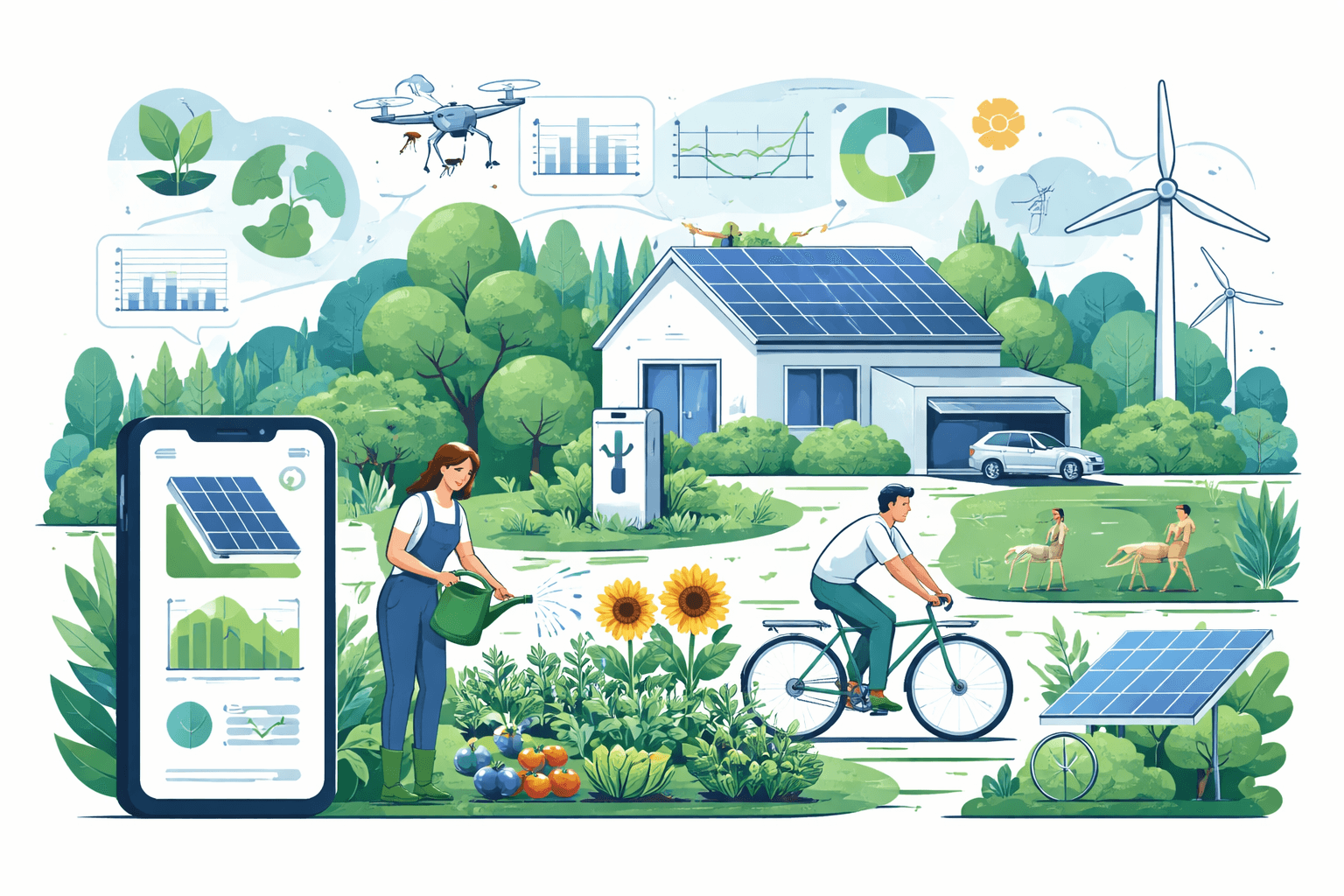
Living more sustainably isn’t abstract. The IPCC finds that demand‑side actions across buildings, transport, food, and materials can reduce greenhouse gas emissions 40–70% by 2050 while improving well‑being (IPCC AR6, 2022). This guide shows how to live sustainably at home and beyond, with data‑backed priorities, realistic carbon savings, and everyday steps that fit different budgets and commitment levels.
How to live sustainably at home: high‑impact changes
Electrify what you can, power it with clean energy, and reduce total energy needed through efficiency. These steps deliver the biggest climate and cost impact for most households.

Electrify: An Optimist's Playbook for Our Clean Energy Future
In Electrify, <strong>Griffith lays out a detailed blueprint—optimistic but feasible—for fighting climate change while creating millions of new jobs and a healthier environment</strong>. Griffith’s pl
Check Price on AmazonEfficiency first: seal, insulate, and manage heat
- Air sealing and insulation. Weatherization typically cuts heating and cooling energy 15–30% (U.S. DOE Building America). For a gas‑heated home using 600 therms/year, that’s 90–180 therms avoided (0.5–1.0 tCO2e), plus comfort gains. In warm climates, better attic insulation and radiant barriers often reduce cooling loads 10–20%.
- Smart thermostats and controls. Independent field studies show 8–15% reductions in HVAC energy from automated scheduling and setbacks. In an average U.S. home (10–11 MWh electricity; ~3–4 tCO2e from HVAC depending on grid), that’s roughly 0.2–0.5 tCO2e avoided and $50–$150/year saved at typical tariffs.
- LED lighting and right‑sizing appliances. LEDs use ~75% less electricity than incandescents and last 15–25× longer (U.S. DOE). Swapping 20 bulbs can save ~800 kWh/year (~0.3 tCO2e on the U.S. grid) and ~$120/year at $0.15/kWh. When replacing appliances, choose ENERGY STAR; lifetime savings often exceed purchase premiums.

ecobee Smart Thermostat Premium with Smart Sensor and Air Quality Monitor - Programmable Wifi Thermostat - Works with Siri, Alexa, Google Assistant - Amazon.com
View on AmazonFor device‑level upgrades and integrations, see our guide to Smart Home Technology for Sustainability: High‑Impact Upgrades, Integration, and Real‑World Guidance.
Electrify space and water heating with heat pumps
Heat pumps move heat rather than generate it. A modern cold‑climate air‑source heat pump has a seasonal coefficient of performance (COP) of 2–3+ (2–3 units of heat per unit of electricity). A heat pump water heater (HPWH) typically saves 50–70% versus electric resistance or gas.
- Space heating swap (gas furnace → heat pump). A household using 600 therms/year (≈3.2 tCO2e) might need ~5,900 kWh of electricity via a COP 3 heat pump. On the average U.S. grid (≈0.39 kg CO2/kWh; EPA eGRID, 2022), that equals ~2.3 tCO2e: a ~0.9 tCO2e annual reduction. On a cleaner grid (0.20 kg CO2/kWh), savings exceed 2 tCO2e.
- Water heating (gas → HPWH). Replacing a 250‑therm/year gas water heater (~1.3 tCO2e) with an HPWH using ~1,000 kWh/year reduces emissions to ~0.39 tCO2e on the average grid—saving ~0.9 tCO2e annually. Utility bill savings commonly range $150–$350/year depending on rates.
- Cooking (gas → induction). While cooking energy is a small share of home emissions, shifting from gas to induction cuts 0.1–0.3 tCO2e/year for many homes and dramatically improves indoor air, reducing nitrogen dioxide (NO₂) and particulates linked to asthma (multiple epidemiological studies; U.S. EPA/WHO health guidance).
Practical pathway: start with a home energy audit, plan for replacement at end‑of‑life to avoid stranded equipment, and ensure adequate electrical panel capacity. Pair HVAC right‑sizing with envelope upgrades to maximize COP and comfort.
Rooftop or community solar
- Rooftop solar. A typical 6 kW residential system produces ~8,000–10,000 kWh/year depending on location (NREL PVWatts). At the average U.S. grid intensity (~0.39 kg CO2/kWh), that avoids ~3.1–3.9 tCO2e annually. With retail electricity at $0.15/kWh, bill savings are ~$1,200–$1,500/year. Installed costs vary by region; simple paybacks often land in 7–12 years.
- Community solar. If a roof isn’t suitable, many regions offer community solar subscriptions. Typical programs offset 5,000–10,000 kWh/year and deliver 5–15% bill credits, yielding $100–$300/year savings and ~2–4 tCO2e avoided—without on‑site installation.
Maximize value by reducing loads first (efficiency), then sizing solar to remaining use. If you have a time‑of‑use tariff, shift flexible loads (EV charging, laundry, water heating) to solar‑heavy hours.
A realistic sequence and what to expect
- Year 1: low‑cost efficiency (air sealing, LEDs, smart thermostat) and induction countertop unit. Expect 10–20% electricity reduction and measurable air quality improvements.
- Years 1–3: plan and execute HVAC + water heating electrification when equipment fails or rebates align; consider rooftop or community solar.
- Result: Many households can cut home energy emissions 40–70% within three years while improving comfort and resilience.

Duxtop Portable Induction Cooktop, Countertop Burner Induction Hot Plate with LCD Sensor Touch 1800 Watts, Silver 9600LS BT-200DZ
View on AmazonFor water, wildlife, and household conservation co‑benefits (beyond energy), see How to Practice Conservation at Home: Practical Steps to Save Energy, Water, Waste and Support Wildlife.
Low‑waste living and resource management
Waste prevention is climate action. Materials production and waste drive upstream energy use and downstream methane from landfills.
Reduce, reuse, repair—make it easy
- Prioritize reuse. Use refill stations and durable containers; opt for repairable over disposable. Community “libraries of things” and tool‑sharing reduce infrequently used purchases.
- Repair and maintenance. Extending a product’s life by 50% can reduce its lifecycle impact by roughly a third to a half, depending on the product category (European Commission product environmental footprints). Seek right‑to‑repair options and local repair cafés.
- Borrow before you buy. For seldom‑used items (e.g., carpet cleaners, specialty cookware), borrowing avoids embodied carbon entirely.
Composting and organics management
Food waste is responsible for 8–10% of global emissions (UNEP/FAO). In 2019, households accounted for ~60% of global food waste by mass (UNEP Food Waste Index). Composting and prevention both matter:
- Prevent waste first. Meal planning, shopping lists, and correct storage lengthen shelf life. Date labels ("best by") often reflect quality, not safety.
- Compost the rest. Backyard or municipal composting keeps organics out of landfills, cutting methane. A typical household can divert 200–400 lb/year of food scraps and yard waste, improving soil health when returned to gardens.
Water conservation: save water and energy
The average home can save ~10,000 gallons/year by fixing leaks (EPA WaterSense). Hot water efficiency saves energy, too:
- Fixtures: WaterSense showerheads and faucet aerators cut flows 20–30%, preserving comfort.
- Practices: Wash full loads, use cold water cycles when possible, and mulch gardens to reduce irrigation 20–40% in dry seasons.
Apps, services, and simple systems
- Set up a home “materials station”: labeled bins for recycling, e‑waste, batteries, and donations near the exit you use most.
- Use local services: municipal compost pickup, textile recycling days, and hazardous waste drop‑offs.
- Track progress: a monthly “waste audit” by weighing trash and recycling for a week can reveal quick wins.
For vetted criteria when you do need to buy, use our guide: How to Choose Truly Sustainable Products: Criteria, Trusted Picks, and Smart Buying Tips.
Sustainable food and consumption choices
Shifting what we eat and buy is among the fastest ways to shrink a footprint while improving health and finances.
Eat more plant‑forward, cut high‑impact foods
Lifecycle analyses show wide differences in food emissions (Poore & Nemecek, Science 2018):
- Beef averages ~27 kg CO2e/kg; lamb ~24; cheese ~13.
- Chicken ~6; eggs ~4.5; fish varies widely.
- Legumes ~0.9; tofu ~3; root vegetables ~0.4–0.7.
Moving from a typical high‑meat Western diet to a plant‑rich pattern can reduce food‑related emissions 30–70% (IPCC; EAT‑Lancet), often 0.5–1.6 tCO2e per person per year. Even one red‑meat‑free day per week lowers an individual’s annual footprint by ~0.1–0.2 tCO2e.
Local and seasonal choices matter most for perishables with high refrigeration or air freight footprints (berries, asparagus out of season). For most foods, production dominates over transport, so prioritizing lower‑impact categories (swapping beef for legumes or chicken) beats small “food miles” gains.
Minimize food waste with simple routines
- Plan meals and use “eat‑first” bins in the fridge.
- Store smart: leafy greens last longer washed and spun dry; onions and potatoes separate; bread freezes well.
- Track: a weekly photo of your fridge before shopping helps avoid overbuying.
Household action pays: U.S. families of four waste food worth roughly $1,300–$1,800/year (USDA/NRDC analyses). Cutting waste by half often saves $600–$900/year and 0.2–0.5 tCO2e.
Buy fewer, better: clothing and electronics
- Clothing. Extending the life of garments by doubling wears reduces emissions, water, and waste by ~44% (Ellen MacArthur Foundation, 2017). Choose timeless, durable pieces, repair, and buy secondhand when possible.
- Electronics. Manufacturing represents 70–90% of a smartphone’s lifecycle emissions (company environmental reports, peer‑reviewed LCAs). Keep devices longer, replace batteries, and buy refurbished. When new, look for EPEAT‑registered and ENERGY STAR‑rated devices.
Support regenerative and biodiversity‑friendly producers
Practices like cover cropping, reduced tillage, diversified rotations, and well‑managed grazing can enhance soil carbon, water retention, and biodiversity, though climate outcomes vary by context (FAO, peer‑reviewed meta‑analyses). Support local CSAs, farmer’s markets, and certifications aligned with your priorities (organic, animal welfare, regenerative). Ask producers about soil health practices.
For day‑to‑day lifestyle tips that save money while lowering impact, see Everyday Sustainable Living: Practical Tips to Save Money, Reduce Waste, and Lower Your Carbon Footprint.
Collective action and measurement: scale your impact
Individual choices add up faster with community, workplace, and financial levers.
Community programs and local policy
- Community energy. Join or organize a community solar co‑op; explore community choice aggregation where available to secure higher renewable content.
- Buildings. Advocate for building performance standards, permitting that favors heat pumps, and streamlined rooftop solar approvals.
- Materials. Support municipal composting, repair cafés, and tool libraries. Neighborhood‑level programs increase participation and reduce costs per household.
See strategies in How to Promote Sustainability: Practical Strategies for Individuals, Businesses & Communities.
Workplace and housing: multiply results
- At work. Push for green commuting benefits, flexible schedules, and on‑site EV charging; update procurement to prioritize repairable, efficient equipment; reduce business travel with virtual defaults. Many organizations track and reward these gains.
- Multifamily housing. Encourage building owners/HOAs to add smart submeters, central heat pump retrofits, and organics collection. Bulk procurement can drop costs 10–20%.
For detailed playbooks, explore How to Promote Sustainability at Work: Practical Strategies, Metrics, and Engagement.
Financial choices: align your money with your values
Where your cash sleeps matters. Analyses of “financed emissions” show that the carbon linked to where companies (and by extension, their deposits and debt) bank can rival or exceed their direct emissions (Carbon Bankroll, 2022). For individuals:
- Banking. Consider institutions with robust fossil‑fuel exclusion policies and strong climate disclosures. Credit unions and community banks often have lower exposure to fossil project finance.
- Investments. Choose low‑fee index funds screened for climate risk or climate‑tilted strategies; exercise shareholder rights to support science‑based targets and transition plans.
- Insurance. Ask about climate risk practices and incentives for resilience retrofits (fire‑resistant landscaping, flood mitigation).
Measure what matters and iterate
- Track your footprint. Use reputable calculators (e.g., EPA Household Carbon Footprint Calculator; UC Berkeley CoolClimate) for a baseline. Update annually.
- Set stepwise goals based on commitment levels:
- Low commitment (first 30 days; ~10% footprint cut): LEDs, smart power strips, thermostat setbacks, weekly plant‑based meals, fix leaks, start composting.
- Medium (first year; ~30% cut): comprehensive weatherization; swap to induction for most cooking; enroll in community solar or 100% green electricity; halve food waste; buy fewer, better clothes; adopt a plant‑forward diet.
- High (3‑year plan; ~50–60%+ cut): electrify space and water heating; add rooftop solar; electrify yard tools; pursue mobility shifts where feasible (e‑bike, transit, carshare); engage in community programs and advocate for building/energy policy.
Progress, not perfection, is the goal. Track energy bills, waste volumes, and spending—what gets measured gets managed.
By the Numbers: high‑impact actions and typical savings
- Heat pump water heater: 50–70% less energy than standard; ~0.9 tCO2e/year avoided replacing a gas unit; $150–$350/year bill savings.
- Space heating electrification: ~0.9–2.0 tCO2e/year avoided versus gas, depending on grid; larger on cleaner grids or with rooftop solar.
- Rooftop solar (6 kW): ~8,000–10,000 kWh/year; ~3.1–3.9 tCO2e avoided; ~$1,200–$1,500 annual bill reduction at $0.15/kWh.
- Community solar: offsets ~2–4 tCO2e/year; typical 5–15% bill credit worth $100–$300/year.
- Weatherization: 15–30% HVAC energy reduction; ~0.5–1.0 tCO2e/year; comfort improved.
- Smart thermostat: 8–15% HVAC savings; ~0.2–0.5 tCO2e/year; $50–$150/year.
- LEDs (20 bulbs): ~800 kWh/year saved; ~0.3 tCO2e; ~$120/year.
- Plant‑forward diet shift: 0.5–1.6 tCO2e per person per year; health co‑benefits.
- Halve household food waste: $600–$900/year saved; 0.2–0.5 tCO2e avoided.
- Water fixes (leaks + low‑flow): 10,000+ gallons/year saved; energy savings if hot water is reduced.
Practical implications: costs, comfort, and co‑benefits
- Cost. Many measures pay back quickly (LEDs, air sealing, smart controls). Bigger electrification investments pair well with equipment replacement cycles and available incentives.
- Comfort and health. Better insulation, right‑sized heat pumps, and induction cooking deliver quieter operation, steadier temperatures, and cleaner indoor air.
- Resilience. Efficient, electrified homes pair well with solar and batteries for outage ride‑through and safer, combustion‑free interiors.
- Biodiversity and water. Composting and sustainable landscaping improve soils; reduced synthetic fertilizer use protects waterways.
Where this is heading
Technology and policy are aligning to make sustainable living easier: heat pump performance is advancing, rooftop solar costs remain historically low, and utilities are adding demand‑flexibility programs. Cities are scaling composting and electrification codes, and right‑to‑repair laws are expanding. According to IEA, efficiency and electrification are core to near‑term decarbonization, and IPCC shows lifestyle shifts can deliver large, rapid demand reductions.
Start with one or two high‑impact actions that fit your home—weatherization and hot water retrofits are often low‑friction—and build a three‑year plan to electrify, add clean power, and cut waste. You’ll likely see lower bills, healthier air, and a footprint trending 30–60% lower—all while helping accelerate the clean‑energy transition.
Recommended Products
Electrify: An Optimist's Playbook for Our Clean Energy Future
In Electrify, <strong>Griffith lays out a detailed blueprint—optimistic but feasible—for fighting climate change while creating millions of new jobs and a healthier environment</strong>. Griffith’s pl
ecobee Smart Thermostat Premium with Smart Sensor and Air Quality Monitor - Programmable Wifi Thermostat - Works with Siri, Alexa, Google Assistant - Amazon.com
ecobee Smart Thermostat Premium with Smart Sensor and Air Quality Monitor - Programmable Wifi Thermostat - <strong>Works with Siri, Alexa, Google Assistant</strong> - Amazon.com
Duxtop Portable Induction Cooktop, Countertop Burner Induction Hot Plate with LCD Sensor Touch 1800 Watts, Silver 9600LS BT-200DZ
PORTABLE INDUCTION BURNER: Duxtop induction cooktop <strong>uses 110/120 V 15 amp electrical outlet</strong>–standard in all North American homes. ETL listed and built to North American electrical sta
More in Sustainability Policy
- Practical Ways to Live Sustainably: Everyday Actions, Priorities, and Measurable Impact
- Everyday Sustainability: Practical, High-Impact Steps to Reduce Your Environmental Footprint
- Tech-Driven Sustainable Living: A Practical Guide to Lower Your Footprint
- Everyday Sustainable Living: Practical Tips to Save Money, Reduce Waste, and Lower Your Carbon Footprint