
Wildlife Conservation: Key Strategies, Threats, and How You Can Help
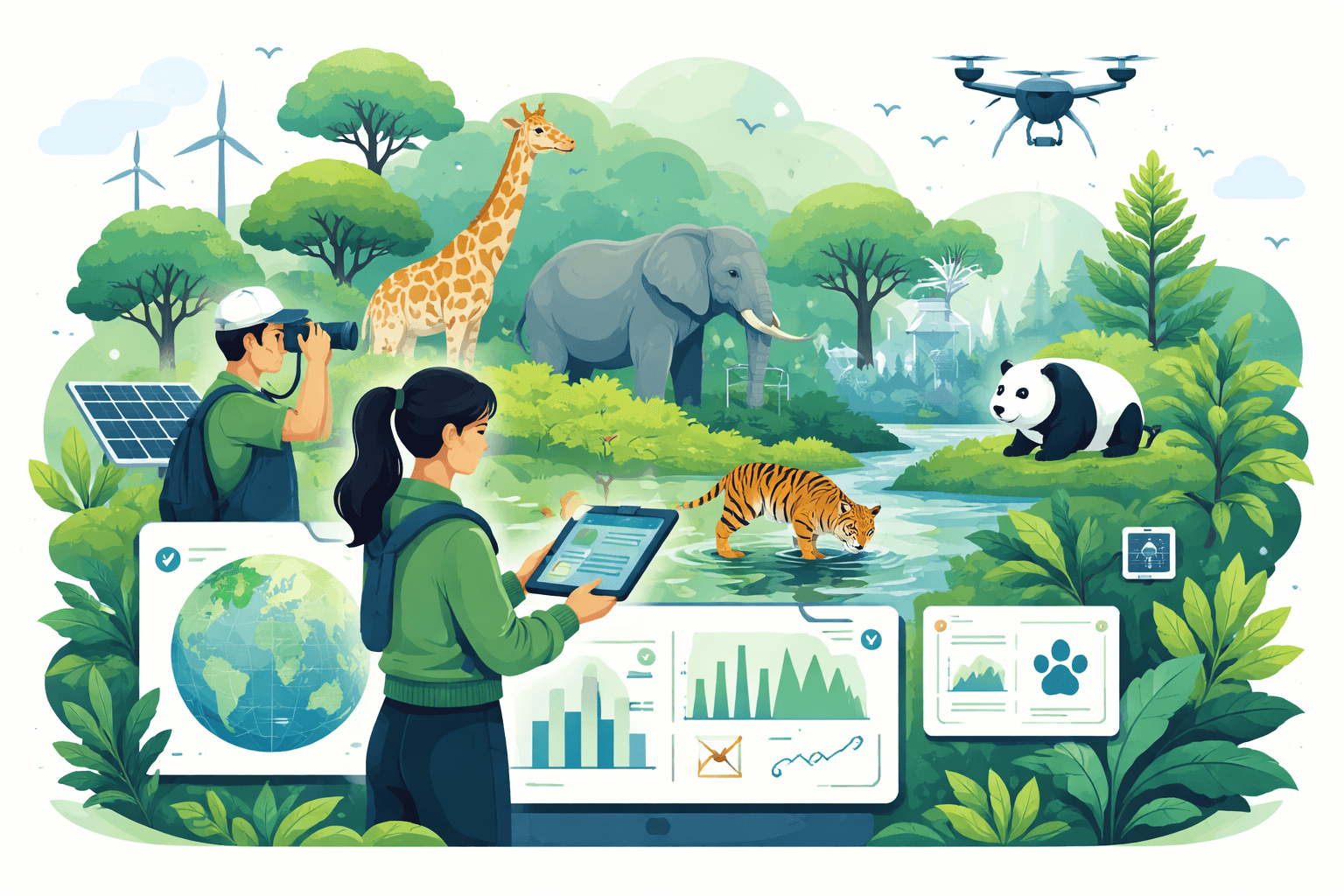
Wildlife conservation has never been more urgent—or more actionable. The WWF Living Planet Index reported a 69% average decline in monitored vertebrate population sizes from 1970 to 2018, with steeper drops in tropical regions (WWF, 2022). The Intergovernmental Science-Policy Platform on Biodiversity and Ecosystem Services (IPBES) estimates that up to one million species face extinction in coming decades without major changes to how we use land, water, and oceans (IPBES, 2019). At the same time, successful protections under laws like the U.S. Endangered Species Act have prevented extinction for more than 99% of listed species since 1973 (USFWS), and the world has adopted a new global plan—the Kunming–Montreal Global Biodiversity Framework—to protect 30% of land and sea by 2030. This is the moment to scale what works in wildlife conservation.
What is wildlife conservation? Definitions, goals, and scale
Wildlife conservation is the science and practice of sustaining wild species and the ecosystems they depend on—over generations, not news cycles. It blends ecology, policy, technology, and community action to reduce threats, restore habitats, and enable species to recover. Goals range from preventing extinctions to maintaining ecosystem services like pollination, water filtration, and climate regulation.

Conservation Biology for All
Sodhi and Ehrlich have created <strong>a comprehensive introduction to conservation biology that is accessible intellectually, and financially, to a broad audience</strong> - indeed it is conservation
Check Price on Amazon- Local scale: Removing invasive plants from a wetland, installing wildlife crossings over a highway, or community anti-poaching patrols.
- Landscape and seascape scale: Managing corridors across multiple jurisdictions, designing fisheries to protect spawning grounds, or restoring watersheds.
- National to global scale: Passing endangered species legislation, enforcing trade rules (CITES), financing protected areas, and coordinating data across borders.
At every scale, wildlife conservation is not only about animals; it’s about people. Healthy ecosystems underpin food security, disaster resilience, and livelihoods. For a broader primer on the human–ecosystem connection, see Why Wildlife Conservation Matters: Ecosystems, People, and Practical Solutions (/conservation/why-wildlife-conservation-matters-ecosystems-people-solutions).
The current state of wildlife: key statistics and trends
- Extinction risk: The IUCN Red List has assessed more than 157,000 species, with over 44,000—about 28%—threatened with extinction (IUCN, 2024).
- Population declines: The global Living Planet Index shows an average 69% decline in vertebrate populations since 1970 (WWF, 2022). Freshwater species have declined even faster—on the order of 83% in some assessments.
- Habitat change: Humans have significantly altered over 75% of terrestrial and 66% of marine environments; about 85% of wetlands lost since 1700 (IPBES, 2019).
- Forest loss: Primary tropical forest loss totaled about 3.7 million hectares in 2023, emitting roughly 2.7 gigatons of CO2 (Global Forest Watch, 2024).
- Marine pressure: FAO’s 2024 State of World Fisheries and Aquaculture reports roughly 37% of assessed fish stocks are overfished.
These statistics do not signal inevitability. They chart where interventions are needed—and where they are already working.
The main threats to wildlife: the big five
Science repeatedly identifies five interacting threats driving biodiversity loss. Their relative importance varies by place and species, but the pattern is consistent.
1) Habitat loss and fragmentation
- Agriculture drives roughly 90% of global deforestation, with livestock and cropland expansion as the primary causes (FAO, 2022). Urbanization and infrastructure fragment remaining habitat, isolating populations and impeding migration.
- Roads, pipelines, and fences create barriers; even small gaps in connectivity can reduce gene flow and resilience.
2) Climate change
- 2023 was the warmest year on record, with heat extremes and marine heatwaves stressing corals, seabirds, and marine mammals (Copernicus/ECMWF, 2024).
- Range shifts are accelerating; many species are moving poleward or upslope by tens of kilometers per decade. Phenological mismatches—like flowers blooming before pollinators emerge—lower reproductive success.
3) Pollution
- 8–11 million metric tons of plastic enter oceans each year (UNEP, 2020). Entanglement and ingestion affect hundreds of species from sea turtles to whales.
- Chemical pollution—pesticides, heavy metals, endocrine disruptors—damages reproduction and development across taxa. Nutrient runoff creates “dead zones” in coastal waters through eutrophication.
4) Invasive species
- Invasive predators, herbivores, and pathogens can decimate native species lacking evolved defenses. The global economic cost of biological invasions is estimated in the hundreds of billions of dollars annually (IPBES Invasive Alien Species Assessment, 2023).
5) Overexploitation and illegal wildlife trade
- Overharvesting, bycatch, and unsustainable hunting reduce populations directly.
- Illegal wildlife trade is valued at $7–23 billion annually (World Bank, 2019), targeting elephants, pangolins, timber, and marine species, often linked to organized crime.
These threats are synergistic: for example, climate change can weaken coral reefs already stressed by pollution, making them more vulnerable to disease and invasive species.
Conservation strategies that work
We know how to reverse course; the challenge is scale and speed. Evidence-based actions consistently deliver when well designed and funded.
Protected and conserved areas
- Coverage: As of 2023, approximately 17% of land and 8% of the global ocean are in protected areas; many countries are committing to 30% by 2030 (UNEP-WCMC/Protected Planet).
- Effectiveness matters: Areas with clear boundaries, adequate staff and funding, and local participation show stronger biodiversity outcomes. “Paper parks” without enforcement deliver little.
- Other effective area-based conservation measures (OECMs) recognize Indigenous and community lands that conserve biodiversity outside formal parks—often with high effectiveness.
Habitat restoration and rewilding
- Restoring degraded forests, grasslands, rivers, and reefs can rapidly increase biodiversity and carbon storage. Native vegetation, structural complexity, and hydrology are key design elements.
- Rewilding—re-establishing ecological processes via species reintroductions and reduced intensive management—has accelerated in Europe and North America, with keystone species like beavers reshaping water regimes and boosting biodiversity. For a deeper dive, see What Is Rewilding? How Ecosystem Restoration Is Changing Conservation (/conservation/what-is-rewilding-ecosystem-restoration-conservation) and Wildlife Habitat Restoration Projects: Goals, Techniques, and Measuring Long-Term Success (/sustainability-policy/wildlife-habitat-restoration-projects-goals-techniques-success).
Species recovery programs
- Targeted programs—captive breeding with reintroduction, nest protection, vaccination, predator-proof sanctuaries—have moved icons like the California condor, black-footed ferret, and giant panda away from the brink.
- Tigers in India have more than doubled since 2006, reaching an estimate of 3,167 individuals in 2022 through habitat protection, better monitoring, and community engagement (National Tiger Conservation Authority, India).
Connectivity and wildlife corridors
- Corridors link habitats so animals can migrate, disperse, and adapt to climate shifts. They can be restored river edges, hedgerows, overpasses, or protected riparian strips.
- Evidence shows corridors increase gene flow and population persistence; camera traps and GPS telemetry routinely document use within months of installation.
- Explore design, governance, and case studies in Understanding Wildlife Corridors: Why Connectivity Matters and How It Works (/sustainability-policy/understanding-wildlife-corridors-why-connectivity-matters-how-it-works).
Technology and innovation in wildlife conservation
Innovations in sensing, data science, and energy are transforming conservation from reactive to predictive.
Remote sensing from space and air
- Satellites: Landsat and Sentinel-2 provide free, frequent imagery to map deforestation, fire scars, and seasonal water. SAR (radar) penetrates clouds to monitor tropical forests and mangroves. Global Forest Watch compiles these data into near-real-time alerts.
- LiDAR: Airborne LiDAR captures 3D structure of forests, enabling biodiversity proxies such as canopy height variance and biomass.
- Drones: Unmanned aerial systems conduct rapid wildlife counts, detect illegal logging, and map coral reefs. Thermal cameras aid nocturnal surveys and anti-poaching patrols.
In-situ sensors and eDNA
- Camera traps and acoustic recorders operate continuously to detect elusive species and gunshots. Environmental DNA (eDNA) detects species from water or soil samples, useful for early detection of invasives or rare amphibians.

RECONYX HyperFire 2 Covert IR Camera (OD Green)
View on AmazonAI for detection, identification, and forecasting
- Machine learning classifies species in images, audio, and video; models can triage millions of camera trap photos with high accuracy.
- AI fuses satellite, weather, and patrol data to predict poaching risk or habitat encroachment hotspots, guiding rangers to where they’re most needed.
- For applications, case studies, and ethical considerations, see How AI Is Used in Conservation: Technologies, Real-World Uses, and Key Challenges (/sustainability-policy/how-ai-is-used-in-conservation-technologies-applications-challenges).
Renewable-energy-powered monitoring
- Power is the bottleneck for remote conservation tech. Solar-charged sensor hubs, satellite IoT terminals, and long-range low-power networks (LoRaWAN) now keep camera traps, acoustic arrays, and weather stations online for months.
- Solar-battery systems reduce generator fuel use and noise in protected areas, lowering operating costs and disturbance. Lightweight solar on collars powers GPS/VHF tags for years on large mammals and seabirds.
- Practical tip: Budget for energy as a system component—panel sizing, battery chemistry (LiFePO4 for safety/long life), charge controllers, and enclosures—so sensors don’t fail during peak poaching or migration windows.

EF ECOFLOW Portable Power Station RIVER 2 Pro, 768Wh LiFePO4 Battery, 70 Min Fast Charging, 4X800W (X-Boost 1600W) AC Outlets, Solar Generator for Outdoor Camping/RVs/Home Use Black : Patio, Lawn & Garden
EF ECOFLOW Portable Power Station RIVER 2, <strong>256Wh LiFePO4 Battery/ 1 Hour Fast Charging, 2 Up to 600W AC Outlets, Solar Generator (Solar Panel Optional) for Outdoor Camping/RVs/Home Use</strong
Check Price on AmazonOpen data and decision tools
- Platforms like SMART (law enforcement monitoring), Global Biodiversity Information Facility (GBIF), and the IUCN Red List integrate field data into decision-ready dashboards, supporting transparent, adaptive management.
- The Conservation Evidence database (University of Cambridge) aggregates peer-reviewed studies to show which actions work, where, and with what magnitude of effect.
For a critical look at opportunities and pitfalls, including algorithmic bias and surveillance ethics, see Beyond the Algorithm: How AI Is Transforming — and Challenging — Wildlife Protection (/sustainability-policy/impact-of-ai-on-wildlife-protection).
Policy, finance, and community approaches
Science and sensors are necessary but insufficient; laws, funding, and local stewardship determine what actually happens on the ground.
Law and governance
- Endangered species laws: The U.S. ESA, EU Habitats and Birds Directives, and analogous laws elsewhere provide legal backstops and recovery planning.
- International agreements: CITES regulates trade in listed species; the Convention on Biological Diversity (CBD) sets national targets under the Global Biodiversity Framework, including 30x30 and reducing subsidies harmful to biodiversity by at least $500 billion per year by 2030.
Conservation finance
- Funding gap: The Paulson Institute (2020) estimates a global biodiversity finance gap of $598–$824 billion annually.
- Mechanisms: Blended finance, green/blue bonds, debt-for-nature swaps (e.g., Belize, Barbados, Gabon) unlock capital for marine protected areas and watershed restoration.
- Markets and credits: Interest is rising in biodiversity credits; early pilots stress the need for robust baselines, additionality, and long-term stewardship to avoid greenwashing.
Indigenous and community-led conservation
- Indigenous peoples manage or have tenure rights over lands that contain a large share of the planet’s biodiversity. Numerous studies show these areas often have equal or better conservation outcomes than state-managed parks when rights are recognized and funded.
- Community conservancies in Kenya and Namibia, for example, combine wildlife tourism revenues with grazing management to stabilize populations of elephants, rhinos, and predators while improving livelihoods.
How individuals and businesses can help
Wildlife conservation scales when everyday decisions align with science.
Individuals
- Support habitat where you live: Plant native species, remove invasives, reduce lawn area, and add water features. Night-friendly lighting (warm, shielded, motion-activated) cuts insect and bird mortality. For step-by-step planning, see Create Wildlife Habitat: Practical Topics to Cover in a Step-by-Step Guide (/sustainability-policy/create-wildlife-habitat-step-by-step-guide).
- Make windows bird-safe: Use patterned films or screens; up to a billion birds die annually from window collisions in North America alone.
- Choose responsible consumption: Prefer certified seafood (MSC), timber (FSC), and palm oil (RSPO). Eat lower on the food chain to reduce land and water pressure.
- Reduce plastic and chemical footprints: Avoid single-use plastics; dispose of fishing line properly; minimize pesticide use.
- Engage and give: Participate in citizen science (eBird, iNaturalist), volunteer in local restoration, and donate to transparent, evidence-based organizations.
Businesses
- Map biodiversity dependencies and risks: Use the Taskforce on Nature-related Financial Disclosures (TNFD) framework to assess impacts and dependencies, set targets with the Science Based Targets Network (SBTN), and disclose progress.
- Eliminate deforestation and conversion from supply chains: Implement traceability for beef, soy, palm oil, pulp and paper, and cocoa. Pair procurement policies with supplier support and jurisdictional partnerships.
- Invest in habitat positive outcomes: Fund corridors and restoration in sourcing regions; structure long-term offtakes and maintenance contracts.
- Build and buy clean energy wisely: Decarbonization reduces climate risk to biodiversity, but site wind and solar to avoid key habitats and migratory flyways; use bird-safe turbine operation and pollinator-friendly solar groundcover.
- Reduce light and noise pollution: Adjust operations timing and shielding to protect nocturnal and marine life.
Measuring impact: metrics, monitoring, and organizations to follow
Effective wildlife conservation is measurable. The most credible efforts share three features: a clear counterfactual (what would have happened without the intervention), independent data, and transparent reporting timelines.
Core metrics
- Species-level: Abundance trends (e.g., Mark–Recapture estimates), occupancy (probability a species uses a site), recruitment and survival rates, genetic diversity.
- Habitat-level: Area and quality of habitat protected or restored, structural complexity (e.g., canopy height variability), water quality indicators, fire regime.
- Landscape-level: Connectivity metrics, barrier density, and use of corridors via telemetry.
- Pressure and threat indicators: Poaching incidents per kilometer patrolled (SMART data), illegal logging alerts, bycatch rates.
- Socioeconomic: Household income diversification, human–wildlife conflict incidents, governance indicators (tenure security, enforcement capacity).
Monitoring methods
- Camera-trap and acoustic indices with standardized protocols; AI-assisted classification to scale.
- eDNA for early detection of invasives and rare species presence; metabarcoding to assess community composition.
- Remote sensing for annual land-cover change and fire frequency; SAR for cloud-prone tropics.
- Before–After–Control–Impact (BACI) designs to attribute change to interventions rather than background variability.
Who to follow for data and guidance
- IUCN Red List and Red List Index for extinction risk.
- IPBES assessments for global drivers and policy options.
- UNEP-WCMC/Protected Planet for protected area coverage and OECMs.
- Global Forest Watch for near-real-time forest loss alerts.
- FAO (SOFIA) for fisheries status and trends.
- BirdLife International and Amphibian Survival Alliance for taxon-specific updates.
- TRAFFIC and CITES for wildlife trade data.
- NOAA Coral Reef Watch for heat stress and bleaching alerts.
- Conservation Evidence for intervention effectiveness summaries.
By the numbers
- 69%: Average decline in monitored vertebrate populations since 1970 (WWF, 2022)
- 28%: Proportion of assessed species threatened on the IUCN Red List (IUCN, 2024)
- 17% and 8%: Share of land and ocean, respectively, in protected areas globally (UNEP-WCMC, 2023)
- 3.7 million ha: Primary tropical forest lost in 2023 (Global Forest Watch, 2024)
- ~37%: Assessed marine fish stocks that are overfished (FAO SOFIA, 2024)
99%: ESA-listed U.S. species prevented from extinction since 1973 (USFWS)
Practical implications for policymakers, practitioners, and funders
- Prioritize places where multiple benefits align: biodiversity hotspots, high-carbon ecosystems (peatlands, mangroves), and climate corridors.
- Fund ongoing management, not just one-time capital costs: ranger salaries, community stewardship, energy for sensors, and maintenance are what keep parks real.
- Commit to monitoring and adapt: publish methods and code; pre-register indicators; adjust operations based on data.
- Center rights and livelihoods: co-design projects with Indigenous peoples and local communities; secure tenure and share benefits.
- Scale proven tools: strategic corridor networks, fisheries co-management, invasive species control, and renewable-powered monitoring infrastructure.
What’s next for wildlife conservation
The next decade will be defined by scale and integration. The 30x30 target—if implemented with respect for rights and real management—can lock in habitat at continental scales. Clean energy will decarbonize economies and power the sensor networks that make protection smarter. AI will turn raw imagery and soundscapes into real-time biodiversity intelligence—if we design it to be fair, transparent, and accountable. And conservation finance will mature, moving from pilots to portfolios that pay for results verified by independent, open data.
Perhaps most importantly, the center of gravity is shifting to local leadership. Indigenous guardians, community conservancies, and regional coalitions already steward some of the most intact and biodiverse places on Earth. Backing them with long-term finance, legal recognition, and technology that works off-grid may be the fastest, most durable path to bend the biodiversity curve.
Additional resources on connected topics:
- Effective Wildlife Conservation Practices: Practical Strategies, Monitoring, and Community-Led Solutions (/sustainability-policy/effective-wildlife-conservation-practices-guide)
- Protecting Wildlife Habitats: A Practical Guide to Conservation, Technology, and Action (/sustainability-policy/protecting-wildlife-habitats-guide-conservation-technology-action)
Recommended Products
Conservation Biology for All
Sodhi and Ehrlich have created <strong>a comprehensive introduction to conservation biology that is accessible intellectually, and financially, to a broad audience</strong> - indeed it is conservation
RECONYX HyperFire 2 Covert IR Camera (OD Green)
Buy RECONYX HyperFire 2 Covert IR Camera (OD Green): Game & Trail Cameras - Amazon.com ✓ FREE DELIVERY possible on eligible purchases
EF ECOFLOW Portable Power Station RIVER 2 Pro, 768Wh LiFePO4 Battery, 70 Min Fast Charging, 4X800W (X-Boost 1600W) AC Outlets, Solar Generator for Outdoor Camping/RVs/Home Use Black : Patio, Lawn & Garden
EF ECOFLOW Portable Power Station RIVER 2, <strong>256Wh LiFePO4 Battery/ 1 Hour Fast Charging, 2 Up to 600W AC Outlets, Solar Generator (Solar Panel Optional) for Outdoor Camping/RVs/Home Use</strong
More in Conservation
- Effective Wildlife Conservation Practices: Practical Strategies, Monitoring, and Community-Led Solutions
- Why Wildlife Conservation Matters: Ecosystems, People, and Practical Solutions
- Conservation Explained: Goals, Strategies, and How You Can Help
- Endangered Species Recovery Programs: How Conservation Brings Species Back