
Tesla Powerwall vs Competitors: Best Home Battery for EV Owners
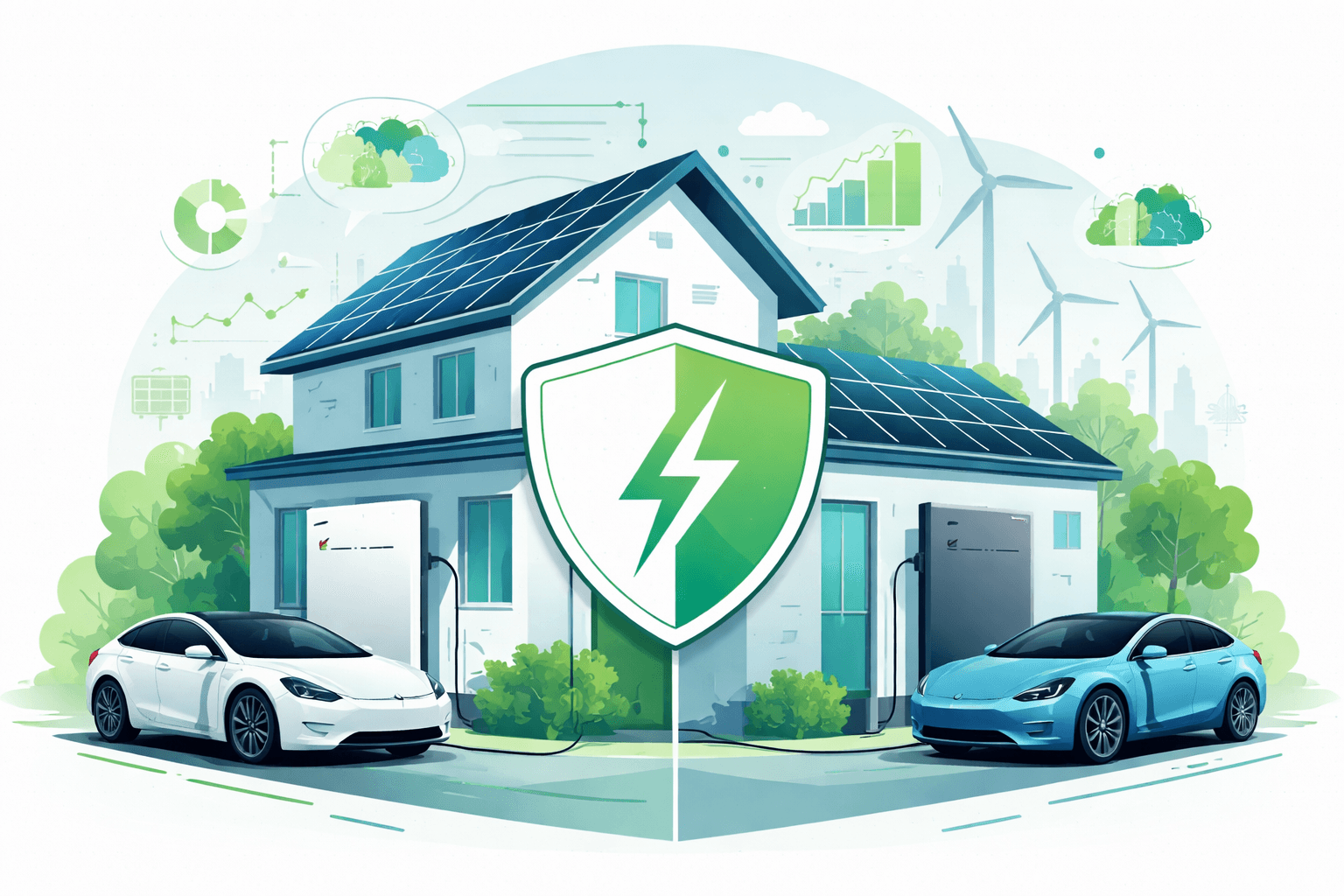
The short answer: if you’re an EV driver who wants rock-solid backup and a polished app, Tesla Powerwall remains the default choice. But the right pick depends on your priorities. This guide compares Tesla Powerwall vs competitors — Sonnen, LG Chem (RESU/RESU Prime), Enphase, and Generac — on specs, software, costs, and EV-specific use cases using the latest available data.
Why this matters now: battery storage is no longer niche. The IEA reports global battery additions more than doubled in 2023 (exceeding 40 GW across grid-scale and distributed systems), and U.S. utilities are rapidly shifting to time-of-use (TOU) rates. For EV owners, a home battery can reduce charging costs, smooth peak loads, and keep mobility powered during outages.
Quick takeaway: the best home battery for EV owners
- Best all-around for EV owners: Tesla Powerwall 3
- Why: high discharge power (up to ~11.5 kW), tight app integration with Tesla EV charging features, strong ecosystem, and competitive pricing. Solid for whole-home backup when stacked and for TOU arbitrage.
- Best premium energy management: Sonnen (sonnenCore+/eco/ecoLinx)
- Why: sophisticated load automation, long cycle-life reputation, excellent for demand response and virtual power plant (VPP) programs. Typically pricier.
- Best with Enphase solar: Enphase IQ Battery (5P/10T)
- Why: seamless integration with Enphase microinverters and the Enlighten app; reliable support. Power output per unit is lower, so plan to stack for EV-heavy homes.
- Best DC-coupled modular system: Generac PWRcell
- Why: efficient DC architecture with strong surge capability and flexible sizing; good match for solar-first designs. Software and installer network vary by market.
- Value pick for DC systems: LG Energy Solution RESU Prime 10H/16H
- Why: widely supported by third-party inverters, reliable value; good efficiency in DC-coupled setups. Requires careful inverter pairing and professional design.

Electrify: An Optimist's Playbook for Our Clean Energy Future
In Electrify, <strong>Griffith lays out a detailed blueprint—optimistic but feasible—for fighting climate change while creating millions of new jobs and a healthier environment</strong>. Griffith’s pl
Check Price on AmazonIf you live in a TOU-heavy market like California or experience frequent outages like parts of Texas, pairing rooftop solar + a right-sized battery + an EV charger can cut household peak costs by 20–50% and maintain mobility during grid events, according to utility tariff analyses and NREL modeling of solar-plus-storage arbitrage.
How Tesla Powerwall works — capacity, power, efficiency, and software
Tesla’s Powerwall is a lithium-ion (NMC) stationary battery with battery management, inverter, and gateway (controls) packaged for rapid install and whole-home backup.
- Energy: 13.5 kWh usable per unit (Powerwall 3 maintains 13.5 kWh, same as Powerwall 2)
- Power: Powerwall 2 delivers ~5 kW continuous (7 kW peak). Powerwall 3 significantly boosts discharge power, supporting up to ~11.5 kW continuous with an integrated solar inverter for whole-home backup and better large-appliance starts. This higher power matters for EV-heavy homes that may run HVAC, cooking, and Level 2 charging during outages.
- Round-trip efficiency: Tesla publishes ~90% round-trip efficiency. Real-world AC-coupled systems typically land in the 85–92% range depending on operating mode and temperature, consistent with NREL field studies of residential storage.
- Integration: The Tesla app unifies solar, Powerwall, and EV charging. Features include:
- Backup Reserve: user-set battery reserve for outages
- Time-Based Control: charge/discharge by TOU rates to lower bills
- Charge on Solar: bias EV charging to surplus PV when available
- Outage alerts and storm watch automation
- Scalability: Multiple units can be stacked for more energy and power. Many whole-home backup systems use 2–3 Powerwalls to cover HVAC and EV flexibility.
- Safety: UL 9540/9540A-tested, with thermal management and integrated gateway for islanding during outages.
For a deeper dive on costs and installation pathways, see our Tesla Powerwall buyer’s guide: Tesla Powerwall: Complete Buyer’s Guide — Cost, Installation & Alternatives.
Tesla Powerwall vs competitors: head-to-head specs and performance
Instead of a table, here are comparable highlights for the major systems. Specs vary by model and firmware; always confirm the exact SKU and inverter pairing with your installer.
Tesla Powerwall (Powerwall 2 and Powerwall 3)
- Usable energy: 13.5 kWh per unit
- Continuous power: ~5 kW (PW2), up to ~11.5 kW (PW3)
- Round-trip efficiency: ~90% (typical AC-coupled)
- Coupling: AC (PW2); PW3 integrates a solar inverter for DC-coupled PV
- Warranty: 10 years; typical end-of-warranty capacity ~70%
- App/software: Industry-leading app, robust TOU logic, deep Tesla EV integration
Sonnen (sonnenCore+/eco/ecoLinx families)
- Usable energy: common packages from ~10 to 20+ kWh (modular)
- Continuous power: ~4.8–7.5 kW depending on configuration
- Round-trip efficiency: commonly ~85–90% (architecture-dependent)
- Coupling: AC with integrated electronics
- Warranty: Often 10 years/10,000 cycles with 70% capacity target (model-dependent)
- App/software: Advanced energy management, load automation, strong VPP capabilities
LG Energy Solution RESU / RESU Prime (10H/16H)
- Usable energy: ~9.6–16 kWh per tower
- Continuous power: ~5–7 kW depending on the model/inverter
- Round-trip efficiency: ~90–95% when DC-coupled; lower as a full AC system
- Coupling: DC battery paired to an external hybrid inverter (e.g., SolarEdge)
- Warranty: 10 years, typical 70% end-of-warranty capacity; throughput limits may apply
- App/software: Via inverter OEM app (feature set varies)
Enphase IQ Battery (5P/10T)
- Usable energy: ~5.0 kWh (5P) and ~10.1 kWh (10T)
- Continuous power: ~3.8–3.9 kW per unit; stack to increase output
- Round-trip efficiency: ~89% typical for AC-coupled microinverter systems
- Coupling: AC, tightly integrated with Enphase microinverters
- Warranty: 10 years (cycle/throughput terms apply; ~70–80% capacity target)
- App/software: Enlighten app; excellent solar-battery visibility and reliability
Generac PWRcell
- Usable energy: modular ~9–18 kWh per cabinet (expandable)
- Continuous power: ~4.5–9 kW depending on module count
- Round-trip efficiency: strong in DC-coupled designs; full system typically ~90%+
- Coupling: DC with dedicated PWRcell inverter; robust surge capability
- Warranty: 10 years (throughput-limited tiers vary by configuration)
- App/software: PWRview; features vary by installer setup and utility program
Performance context
- Power rating vs. EV loads: A typical Level 2 EV charger draws 7.7 kW (32 A at 240 V) to 11.5 kW (48 A). Single-unit batteries under ~5 kW continuous won’t run full-speed EV charging during an outage without load management. Higher-power systems (Powerwall 3 or multi-battery stacks) are better suited for maintaining mobility while running other appliances.
- Efficiency: NREL and field data show DC-coupled systems often achieve 3–5 percentage points higher round-trip efficiency than AC-coupled setups, which can matter for daily TOU cycling.
- Cycle life: Most systems warranty to 70–80% remaining capacity after 10 years; Sonnen’s cycle count allowances are among the highest, which benefits heavy TOU/VPP cycling.
Pricing, incentives, and total cost of ownership
Prices vary widely by market and installer. The estimates below reflect typical U.S. residential installations in 2025.
Hardware price ranges (single-unit, battery only)
- Tesla Powerwall 3: ~$8,000–$9,500
- Enphase IQ Battery 10T: ~$8,500–$10,500
- LG RESU Prime 16H (battery only): ~$7,500–$9,500 (inverter extra)
- Generac PWRcell (mid-size config): ~$9,000–$12,000 (inverter included)
- Sonnen (sonnenCore+/eco): ~$12,000–$18,000 depending on capacity
Typical installed costs (one battery, balance of system, labor, permitting)
- Tesla Powerwall: ~$11,000–$15,000
- Enphase IQ Battery 10T: ~$12,000–$16,000
- LG RESU Prime 16H with hybrid inverter: ~$12,000–$17,000
- Generac PWRcell (mid-range): ~$15,000–$20,000
- Sonnen: ~$18,000–$30,000+
Stacking multiple batteries increases cost roughly linearly for hardware, with some savings on shared labor and BOS components. Whole-home backup with HVAC and EV support often uses 2–3 units.
Incentives and tax credits
- Federal Investment Tax Credit (ITC): 30% off eligible installed costs for standalone batteries ≥3 kWh, per the Inflation Reduction Act (residential clean energy credit). Applies whether or not you have solar.
- California SGIP: Rebates range by category; general-market incentives commonly in the ~$150–$250/kWh range, while Equity and Equity Resilience incentives can approach ~$850–$1,000/kWh for qualifying customers, based on CPUC program tiers. See our California-focused guide: Tesla Powerwall in California: Cost, Availability & Is It Worth It?.
- Utility demand response/VPP: Programs in MA, VT, NY, CA, and others pay for discharging during peak events. Annual value can be a few hundred dollars to over $1,000 depending on program rules and battery size. Vermont residents should explore the GMP Powerwall program: Tesla Powerwall in Vermont: Cost, Availability & Is It Worth It?.
- Sales tax exemptions and property tax abatements: Common in solar-friendly states; check state energy offices.
Operating savings and payback
- TOU arbitrage: In high-differential markets (e.g., California with summer peak rates of ~$0.40–$0.60/kWh vs. off-peak ~$0.20–$0.30/kWh), daily cycling 8–12 kWh can yield ~$400–$900/year in avoided costs at ~90% round-trip efficiency. Real value depends on accurate rate optimization and seasonal patterns.
- Backup value: Harder to monetize, but for homes with frequent outages (Texas, Gulf Coast, wildfire-prone regions), avoided costs and comfort can justify multi-battery setups. Read more in our Texas-focused overview: Tesla Powerwall in Texas: Cost, Availability & Is It Worth It?.
- Maintenance: Lithium-ion stationary systems are low-maintenance. Inverter or gateway repairs are the most common service events over a 10–15 year life.
Total cost of ownership (TCO) tips
- Model scenarios with and without an EV. An EV adds 8–15 kWh/day of load (see Use Cases), which can justify a second battery if you want to cover overnight charging with stored solar or maintain charging during grid outages.
- Consider warranty throughput. Some warranties limit total energy throughput; heavy daily cycling plus VPP participation can hit those limits sooner. Sonnen and Tesla are relatively permissive; verify terms for your exact model.
Installation, warranties, reliability, and ecosystem integration
Installation factors
- Electrical capacity: Level 2 EV charging (40–60 A circuits) plus a battery-backed panel often requires a service upgrade or a smart load panel. Smart panels can avoid costly service upgrades by load-shedding non-critical circuits.
- Placement and code: Garages and exterior walls are common; follow NEC clearances and ventilation guidelines. Flood/fire risk, temperature, and wall structure all matter.
- AC vs. DC coupling: If you’re adding storage to an existing AC solar array, AC-coupled batteries (Tesla Powerwall 2, Enphase IQ) can be simpler. New builds may favor DC-coupled hybrids (Powerwall 3 integrated inverter, Generac PWRcell, LG RESU with a hybrid inverter) for higher efficiency and fewer conversion steps.
Warranties
- Standard: 10 years is typical across brands, with end-of-warranty capacity guarantees around 70–80%.
- Terms: Look for cycle count or energy throughput caps, allowable operating modes (self-consumption, backup, TOU), and any VPP exceptions.
Reliability notes
- Tesla: Broad installer base, strong remote diagnostics. Powerwall 2 has a long field record; Powerwall 3 raises power and integrates a solar inverter to reduce components.
- Sonnen: Premium hardware with strong software; higher upfront cost but favored in advanced home automation projects.
- Enphase: Microinverter leadership, solid support network, and reliable monitoring; power per battery is modest, so stack for outage performance.
- LG Energy Solution: RESU Prime is widely deployed; an earlier generation of LG ESS cells faced recalls (2017–2019 era), and the company issued replacements and safety updates. Current models comply with UL 9540/9540A.
- Generac: Known for generators; PWRcell’s DC design is efficient with good surge capability. Software and installer experience can vary more by region.
Ecosystem and EV integration
- Tesla: Best-in-class for Tesla owners. The app coordinates solar, battery, and EV charging with features like Charge on Solar. Tesla’s vehicle-to-home (V2H) “Powershare” is emerging on select models with specific hardware; integration details continue to evolve.
- Non-Tesla ecosystems: Ford’s F-150 Lightning supports bidirectional power via Ford Charge Station Pro and Home Integration System; GM and Hyundai/Kia are piloting V2H solutions. Enphase has announced a bidirectional EV charger for select models. If V2H is a priority, confirm vehicle and charger compatibility and timelines before purchasing.
- Smart panels and load management: Pairing a battery with a smart panel can right-size your system by selectively powering critical loads or dynamically throttling EV charging.
Practical add-ons we like
- A smart Level 2 charger with load management, such as the Emporia Level 2 Smart EV Charger, can throttle charging by solar surplus or TOU windows.
- A smart panel like Span Smart Panel can avoid a costly service upgrade and sharpen backup performance by prioritizing circuits.
- If you’re all-in on Enphase solar, the Enphase IQ Battery 5P is a clean modular add for microinverter systems; stack for higher power.
Use cases and sizing guide for EV drivers
Key numbers
- Typical EV energy use: ~0.25–0.35 kWh per mile (EPA test cycles; depends on model and climate).
- Average U.S. driving: ~37 miles/day (FHWA), translating to ~9–13 kWh/day for the EV.
- Home loads: A high-efficiency fridge ~1–2 kWh/day; gas furnace blower ~0.5–1.5 kWh/day; central AC can add 10–30+ kWh/day during heat waves. Electric cooking and dryers add episodic peaks.
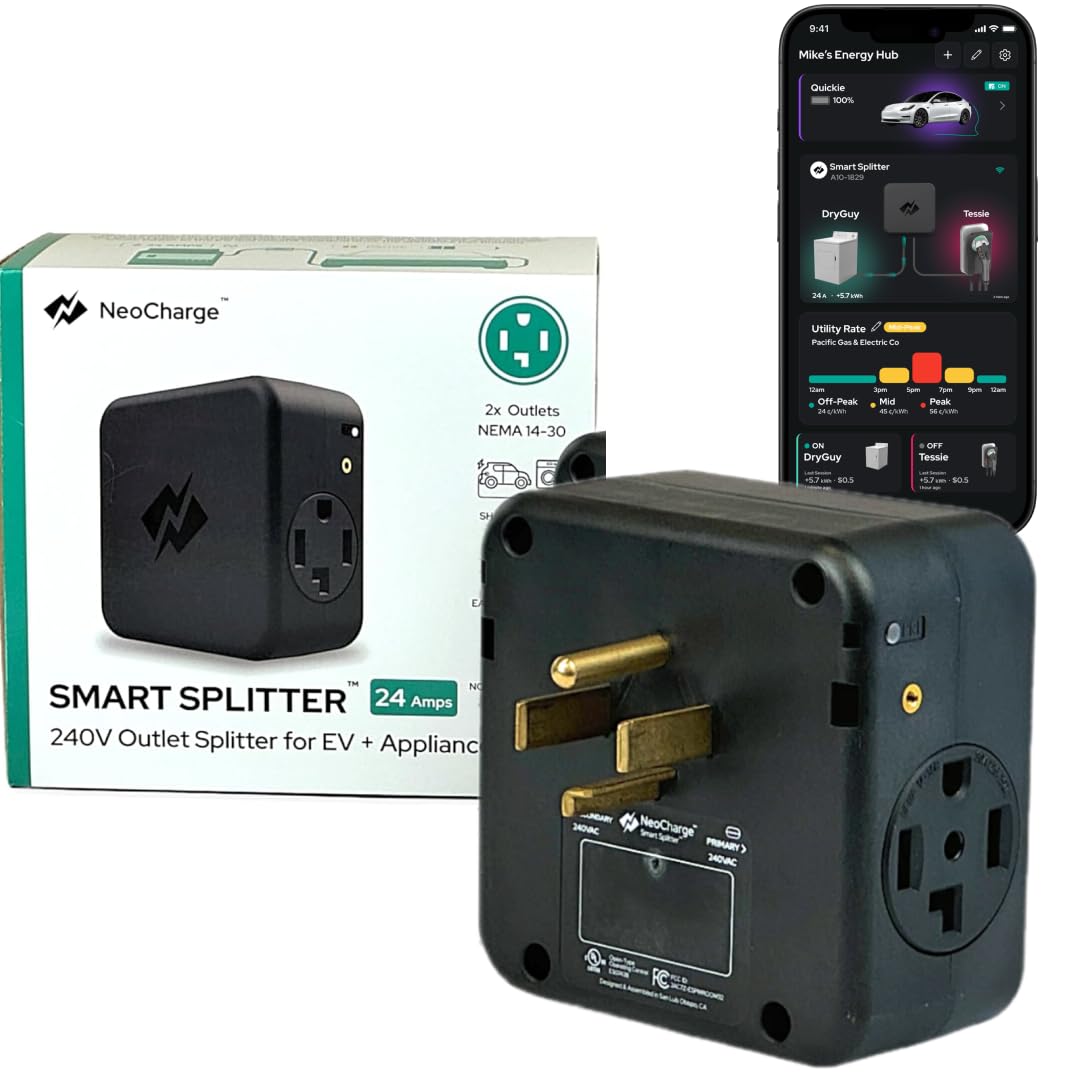
NeoCharge Smart Splitter 240V - Unlock Electric Vehicle (EV) Charging with Dryer, UL Certified, Auto-Switching, Avoid Panel Upgrades/Rewiring, Save Thousands (24 Amp, NEMA 14-30)… : Automotive
View on AmazonCommon scenarios
- Daily commuting with TOU savings
- Goal: Charge the EV when rates are low or when solar is abundant; avoid peak rates.
- Battery role: Store midday solar for evening EV top-off. A single 13.5 kWh unit can cover ~8–12 kWh/day of EV energy plus light household loads.
- Best fits: Tesla Powerwall 3 for higher power output and app control; Enphase IQ for Enphase PV owners; LG/Generac DC systems for new-build efficiency.
- Resilience for mobility during outages
- Goal: Maintain EV charging and critical home loads through multi-hour to multi-day outages.
- Battery role: High discharge power and multiple units to start HVAC and run a 7–11 kW EV charger at reduced duty cycle. Consider a critical loads panel to stretch runtime.
- Sizing: Two Powerwalls (27 kWh, higher power) or a ~20–30 kWh equivalent stack provides practical flexibility. Pair with ≥7–10 kW of solar to recharge during daylight.
- Best fits: Powerwall 3 stacks, Generac PWRcell with sufficient modules, or Sonnen for advanced load automation.
- Solar self-consumption and grid services (VPP)
- Goal: Maximize use of on-site solar and earn VPP revenue by discharging during grid peaks.
- Battery role: Reliable daily cycling, robust warranty terms, good aggregator integrations.
- Best fits: Sonnen (extensive VPP experience), Tesla (growing VPPs in multiple states), Enphase (utility partnerships via Enlighten).
- Apartment/condo or limited electrical capacity
- Goal: Manage EV charging without a service upgrade.
- Battery role: Not always feasible in multifamily, but smart load management and smaller AC-coupled systems can help. A smart charger and panel often deliver better ROI than a large battery.
Sizing rules of thumb for EV households
- Light EV use (≤30 miles/day) + typical home: 1 x 10–14 kWh battery can handle TOU shifting and backup of essentials.
- Moderate EV use (30–60 miles/day) or heat pump home: 1–2 batteries (15–27 kWh total) for comfortable TOU savings and outage flexibility.
- Heavy EV use (≥60 miles/day) or whole-home backup including HVAC: 2–3 batteries (25–40+ kWh) for meaningful resilience and near-whole-home coverage.
Pros, cons, and buying recommendations by priority
If your top priority is cost and simplicity
- Choose: Tesla Powerwall 3 or Enphase IQ Battery 10T
- Why: Competitive installed cost, strong installer networks, polished apps; good for TOU and moderate backup.
- Watch-outs: For larger HVAC/EV loads, you may need multiple units to maintain power during outages.
If your top priority is resilience and high power
- Choose: Tesla Powerwall 3 stacks or Generac PWRcell (larger configurations)
- Why: Higher continuous power to support HVAC and partial EV charging; DC-coupled options improve charging efficiency from solar.
- Watch-outs: Whole-home backup with EV charging can still outstrip a single unit. Model realistic outage scenarios.
If your top priority is smart features and VPP earnings
- Choose: Sonnen (sonnenCore+/eco/ecoLinx)
- Why: Strong automation, high cycle-life positioning, VPP track record.
- Watch-outs: Premium pricing and installer availability.
If your top priority is solar-inverter ecosystem fit
- Choose: Enphase IQ with Enphase PV; LG RESU Prime with a compatible hybrid inverter; Powerwall 3 for integrated PV+battery on new builds.
- Why: Fewer compatibility headaches, better monitoring, streamlined warranties.
- Watch-outs: Verify warranty throughput limits and power ratings match your EV and HVAC loads.
FAQs
- How many kWh do I need to “fuel” my EV daily? Most EVs use 9–13 kWh for an average U.S. commute (37 miles). If you already have evening household loads, a 13.5 kWh battery may split energy between the car and home; plan for two units if you want robust coverage plus backup.
- Can a battery charge my EV during an outage? Yes, but power limits matter. A single low-power battery may not sustain an 11.5 kW EV charger. Use load management to throttle charging or charge more slowly.
- AC-coupled vs. DC-coupled — which is better? AC-coupled (Tesla PW2, Enphase) is easier for retrofits. DC-coupled (PW3 integrated, Generac, LG+hybrid inverter) can be a few percentage points more efficient for solar-to-battery-to-load flows.
- What about vehicle-to-home (V2H)? It’s emerging. Ford’s F-150 Lightning offers it today with specific hardware. Tesla’s “Powershare” is rolling out on select vehicles with dedicated equipment. Enphase and others have announced V2H chargers. Confirm compatibility before relying on it.
- Are there safety standards to look for? Yes: UL 9540/9540A certifications, NEC-compliant disconnects, and installer adherence to manufacturer placement/clearance guidelines.
By the numbers
- 30%: Federal ITC for eligible residential batteries (standalone or solar-coupled)
- ~0.25–0.35 kWh/mile: Typical EV energy use (EPA)
- ~37 miles/day: Average U.S. daily driving (FHWA)
- 85–95%: Typical round-trip efficiency range depending on coupling (NREL)
- ~$0.20–$0.40/kWh: Common on-peak vs. off-peak spread in TOU-heavy markets (utility tariffs), the engine for arbitrage savings
What this means for EV owners
- If your EV is your primary car, a battery optimizes when you buy or use electricity. It can soak up midday solar and shift it to evening charging, flattening bills and providing resilience.
- The best “fit” is often ecosystem-driven: Tesla for Tesla-heavy homes, Enphase for Enphase PV, LG/Generac for DC-coupled new builds, and Sonnen for smart home/VPP enthusiasts.
Next steps
- Get at least two bids and ask installers to model your specific TOU rates, EV driving profile, and outage scenarios. Include a smart charger and, if needed, a smart panel in the design.
- Review warranty fine print on throughput and VPP participation.
- For a Powerwall-specific deep dive on pricing and alternatives, visit: Tesla Powerwall: Complete Buyer’s Guide — Cost, Installation & Alternatives.
Where this is heading
- Higher-power batteries (like Powerwall 3) are setting a new baseline for whole-home backup. Expect wider V2H availability across automakers, tighter integration between chargers, batteries, and smart panels, and more utility programs paying homeowners for flexible load and storage.
- As TOU rate differentials widen and grid stress events become more common, the value proposition for well-sized batteries in EV households will keep improving.

EMPORIA Level 2 EV Charger w/ J1772 Charger, 48 amp ...
View on AmazonRecommended Products
Electrify: An Optimist's Playbook for Our Clean Energy Future
In Electrify, <strong>Griffith lays out a detailed blueprint—optimistic but feasible—for fighting climate change while creating millions of new jobs and a healthier environment</strong>. Griffith’s pl
EMPORIA Level 2 EV Charger w/ J1772 Charger, 48 amp ...
Explore a wide selection of hardwired Level 2 EV charging stations. Features include 25-foot cables, app control, and weather-resistant construction.
NeoCharge Smart Splitter 240V - Unlock Electric Vehicle (EV) Charging with Dryer, UL Certified, Auto-Switching, Avoid Panel Upgrades/Rewiring, Save Thousands (24 Amp, NEMA 14-30)… : Automotive
NO REWIRING REQUIRED: <strong>Easy to plug into your existing dryer outlet in minutes to setup home EV charging</strong>. Tap into simple and effortless home EV charging access, no panel upgrades, no